Alishan Forest
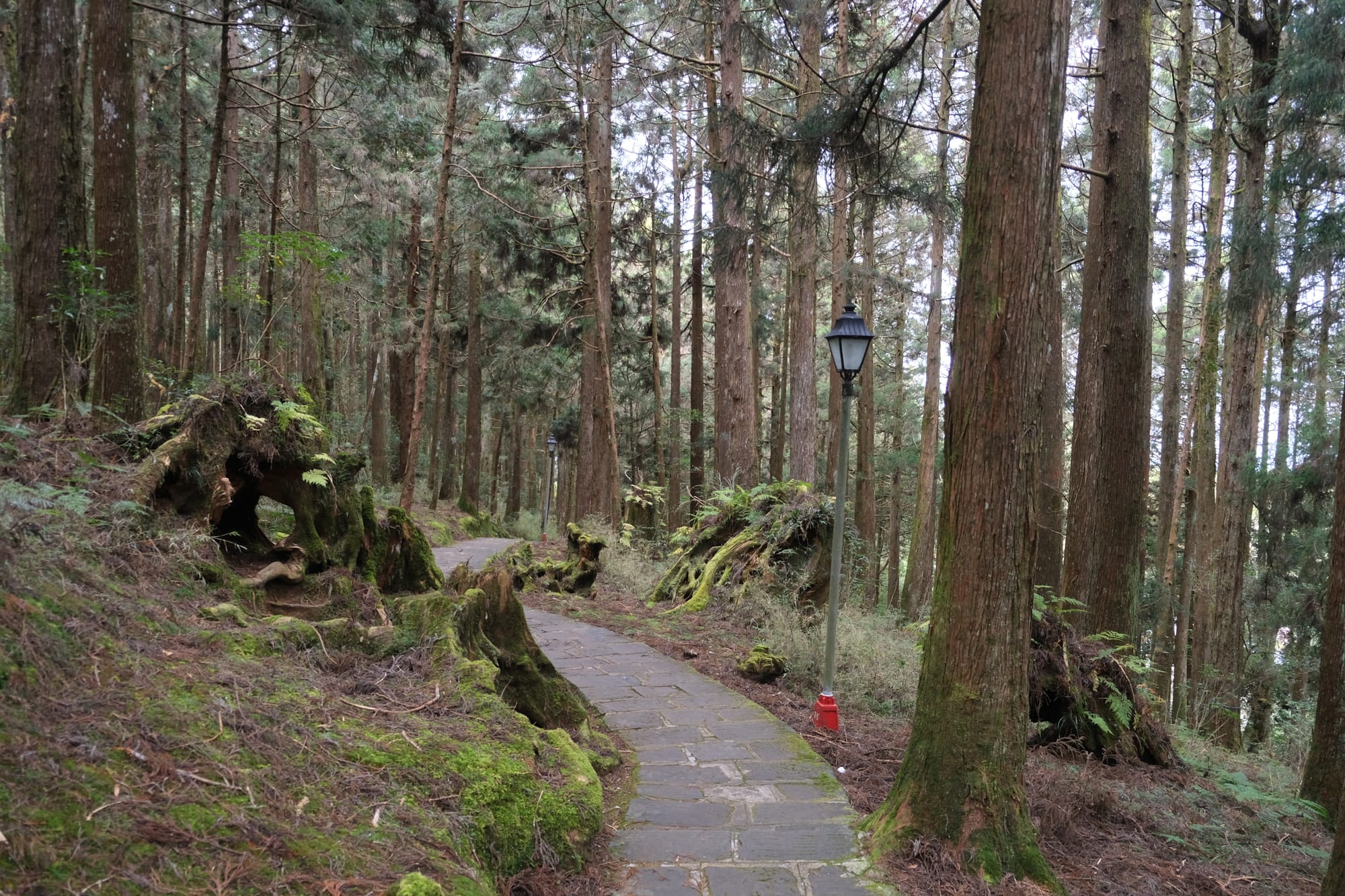
Alishan National Forest Recreation Area is located in the interior mountains of Taiwan. It is sort of like an arboretum and conservation area combined, there are sections of carefully cultivated magnolias and cherry trees while other sections are a preservation of the native forests. There are extensive trails throughout the park and the entire area is well serviced with: food, amenities, and even transportation within the park. During the Japanese occupation the area was harvested for its timber resources and a train line was built to extract the logs. Now that same train line brings tourists and shuttles them around the park.
Situated at about 2,000 meters above sea level, Alishan is a cloud forest. I had previously only known about a cloud forest from the Cloud Dome garden in Singapore. That garden had always fascinated me, I found it especially beautiful with such unique plant life I had never seen anywhere else; it is my favourite garden in the city. So naturally I was so excited to visit Alishan and visit a real cloud forest in nature.
If you don't know what a cloud forest is, it is essentially a rain forest but at a high elevation. They occur in regions of the world that would typically support a tropical environment, but because of the elevation the climate becomes temperate. The forest is literally lifted up into the clouds. Fog is a common occurrence in a cloud forest, being one of the primary method of watering the flora. In Singapore this fog was artificially re-created within the garden. Here in Alishan, I witnessed this natural event, of thick fog rolling through the forest, multiple times during my visit.
I was able to spend about three days at Alishan Forest and I loved every minute of it. I walked on nearly every hiking trail available and I took so many pictures. Here I am going to try and share some of the best ones. I have tried to arrange the photos into a logical flow for the post, but this differs to the order I took them in. The park is laid out like a network, sort of like a branching tree. There is a central core with many paths making various loops and intersections; then longer hiking trails branching out from that core. I walked on a number of paths multiple times and so I often took similar photos at different times in different conditions.
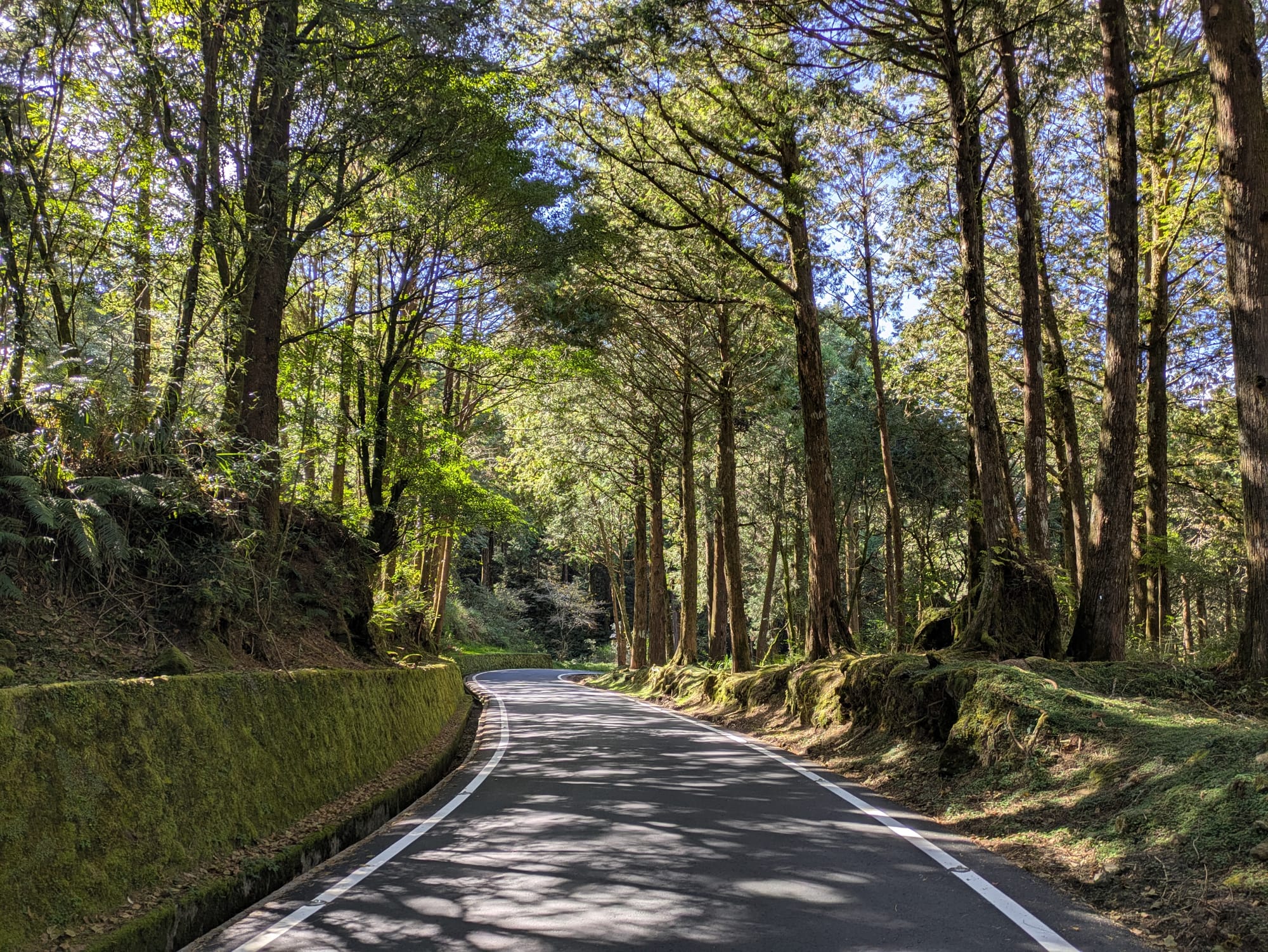
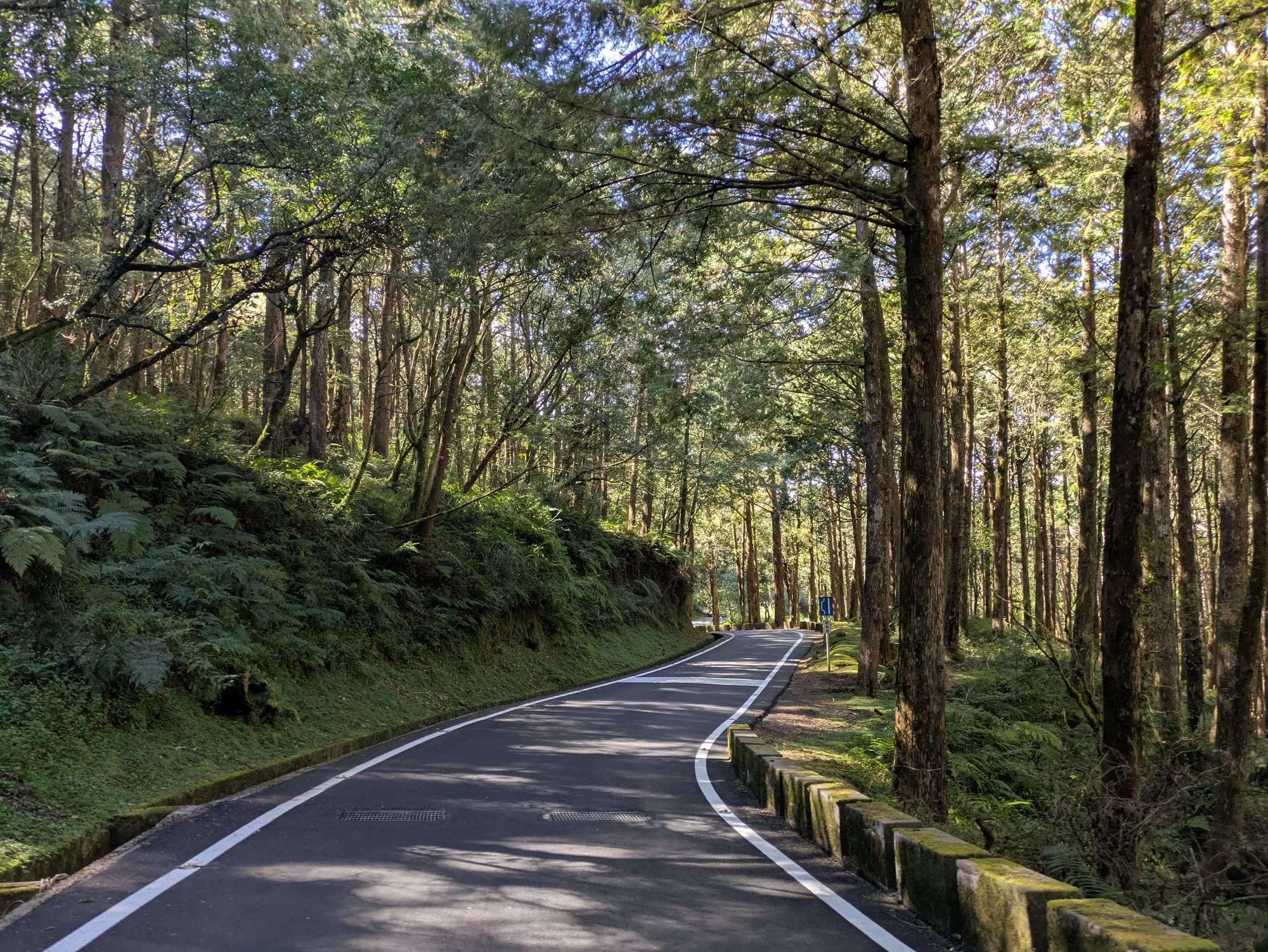
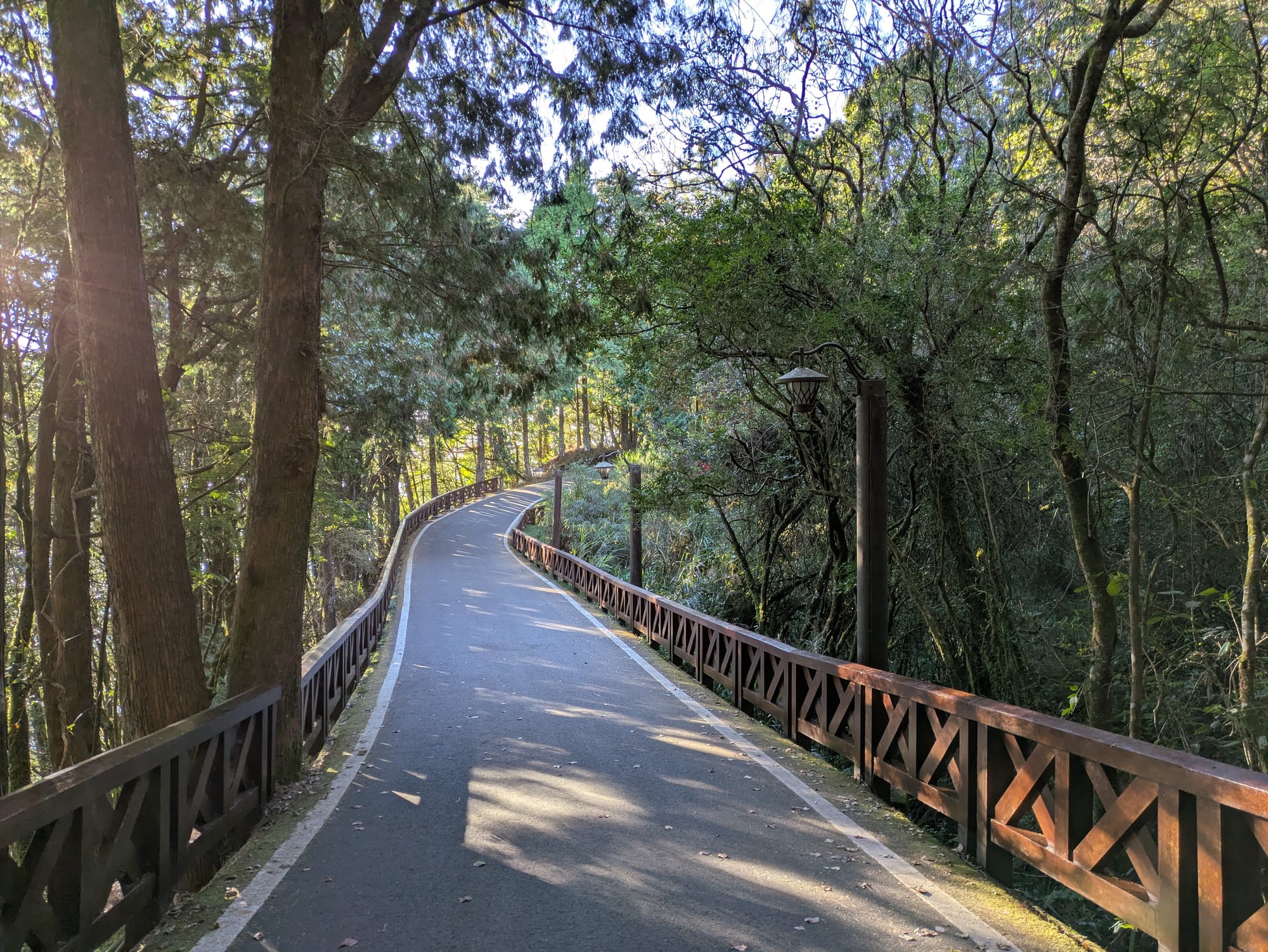
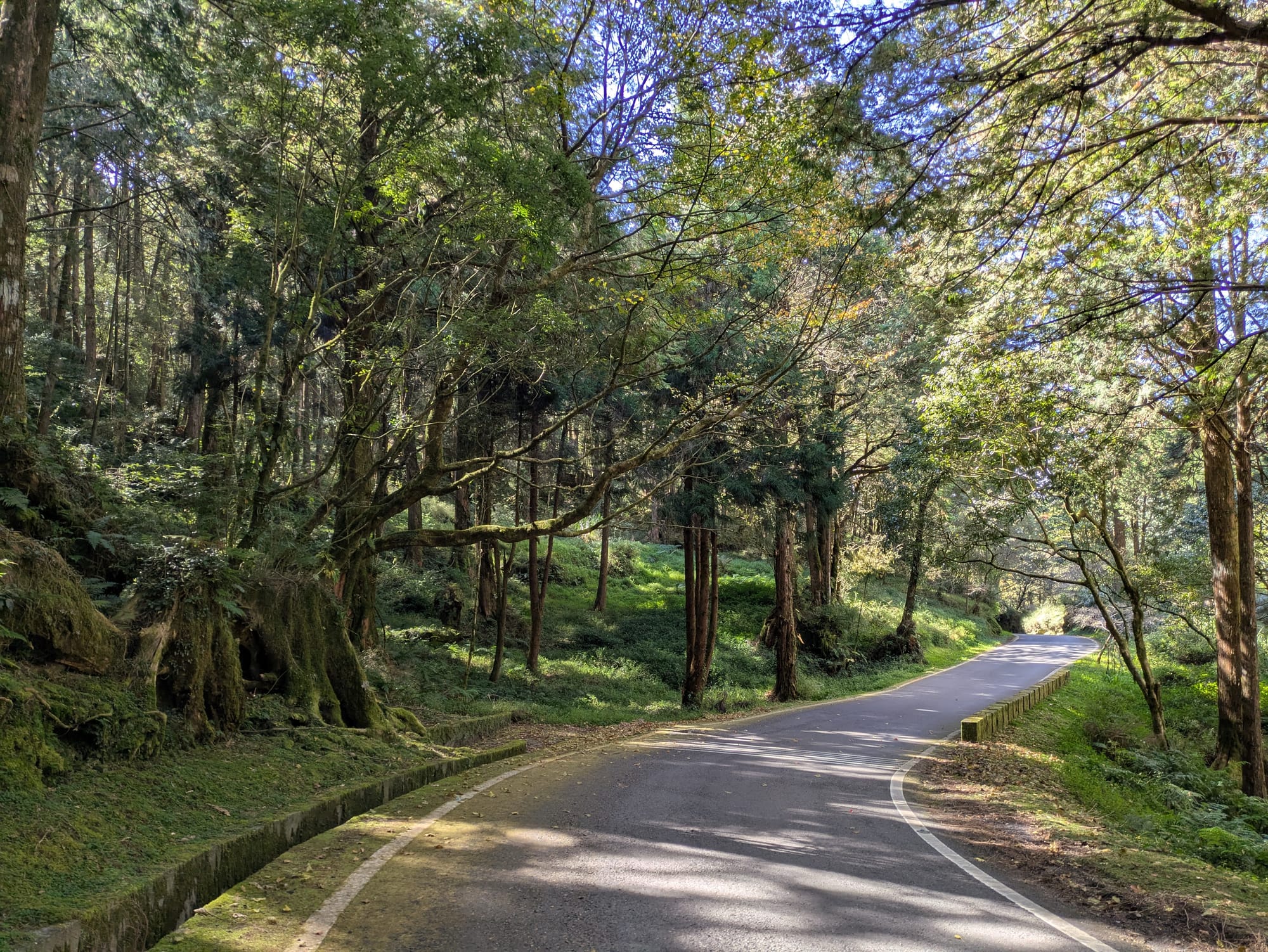
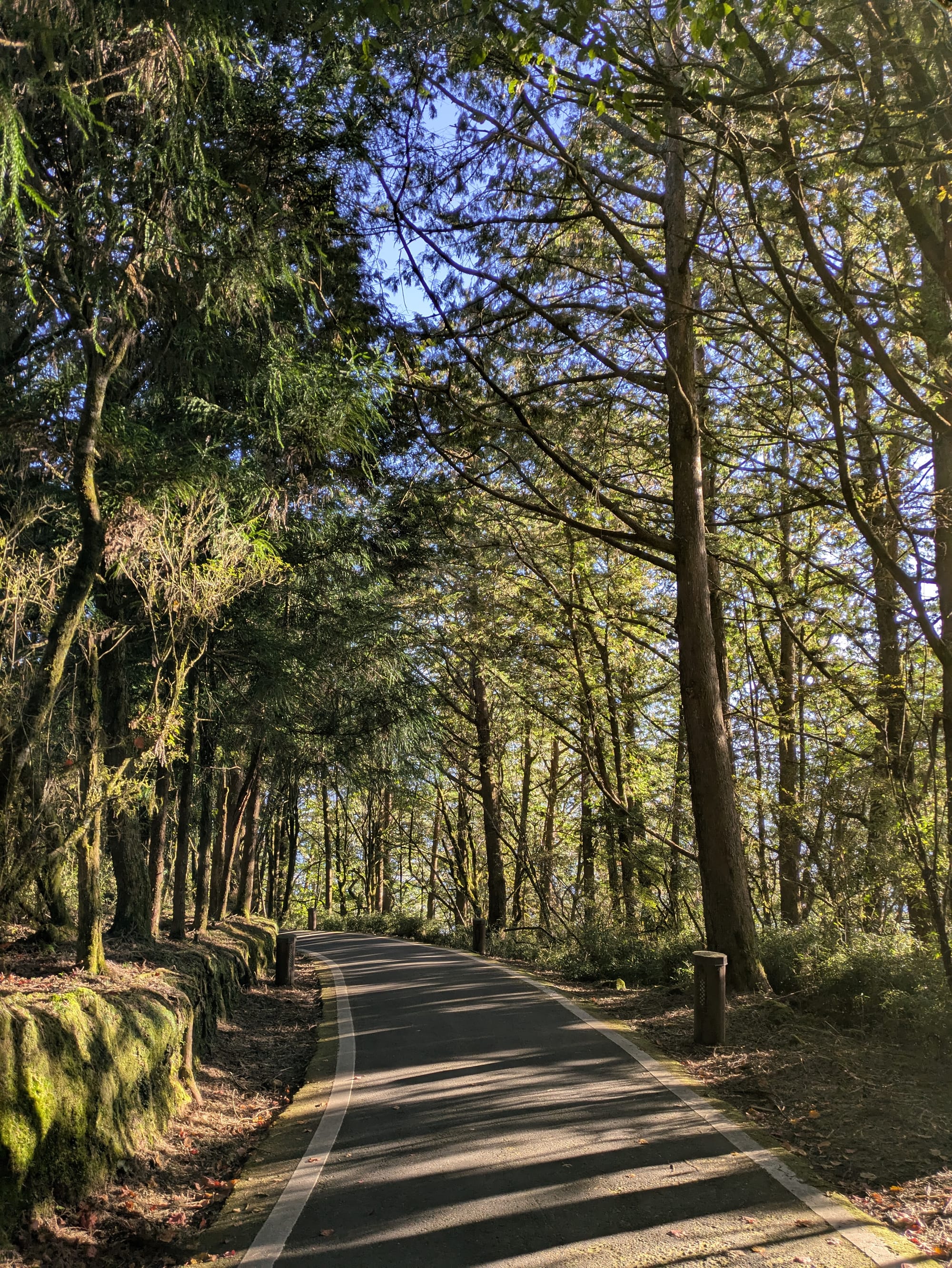
Major roads in Alishan Forest.
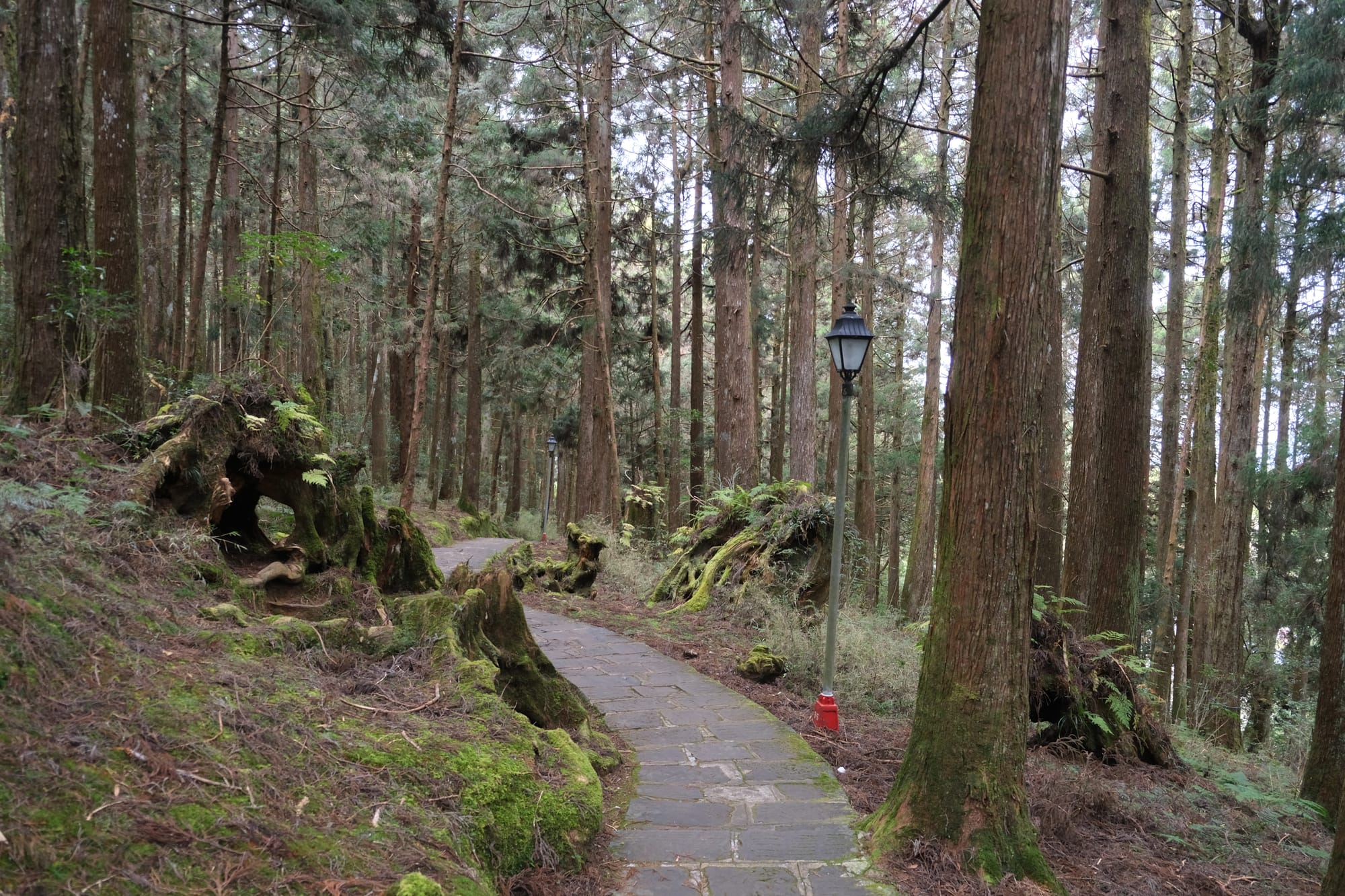
I wanted to start with some general vibe pictures. All these photos show case the major roads within the park. They were the easiest to walk on and were also used by shuttle buses to help less enthusiastic walkers get around. Even on these major roads the forest was just so vibrant, every rocky surface, or old stump, was almost always covered in green moss. When the sun was shining the canopy was lit up with a brilliant glowing green hue and the road was covered in the beautiful mottled pattern of light and shadow.
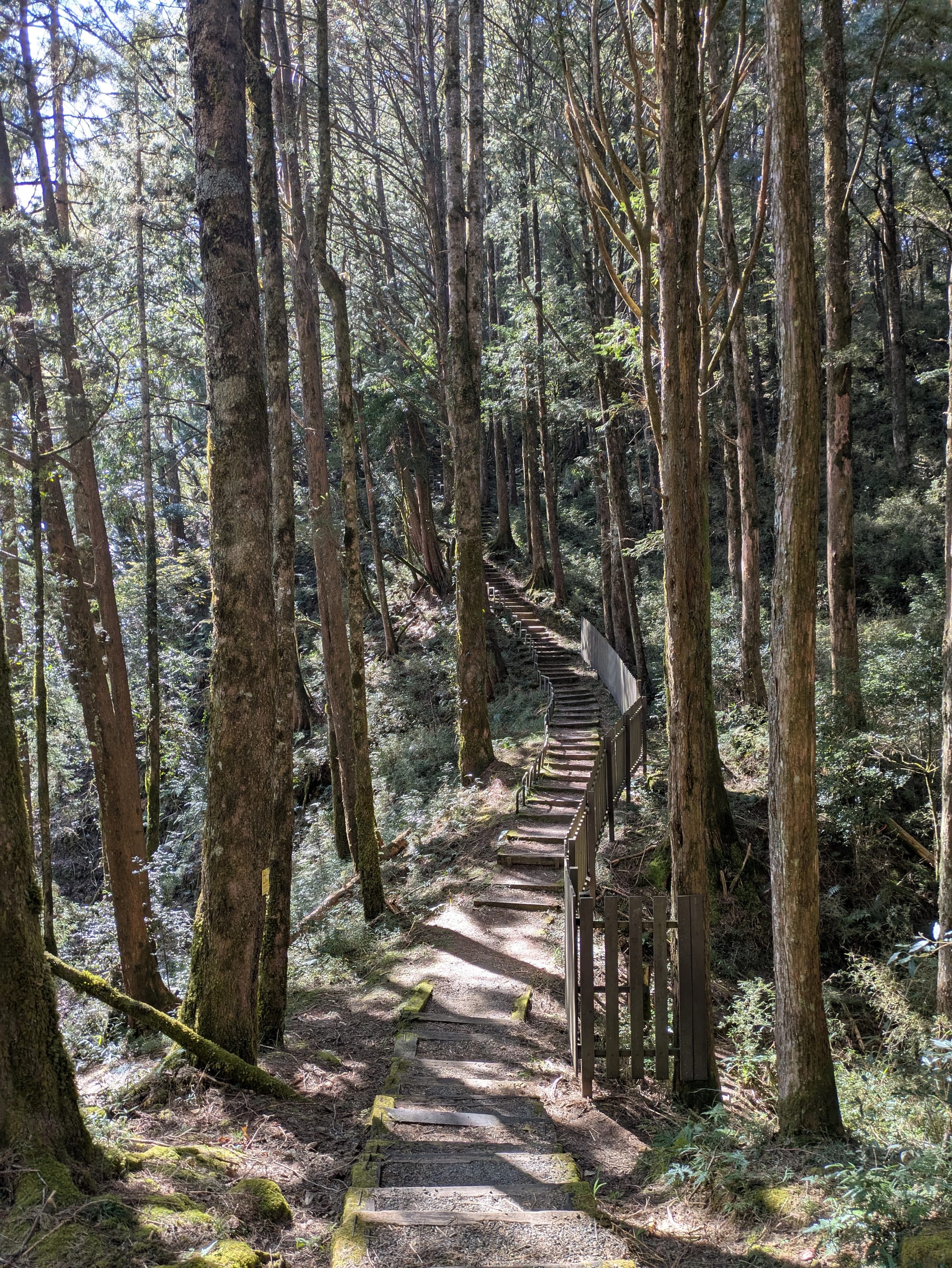
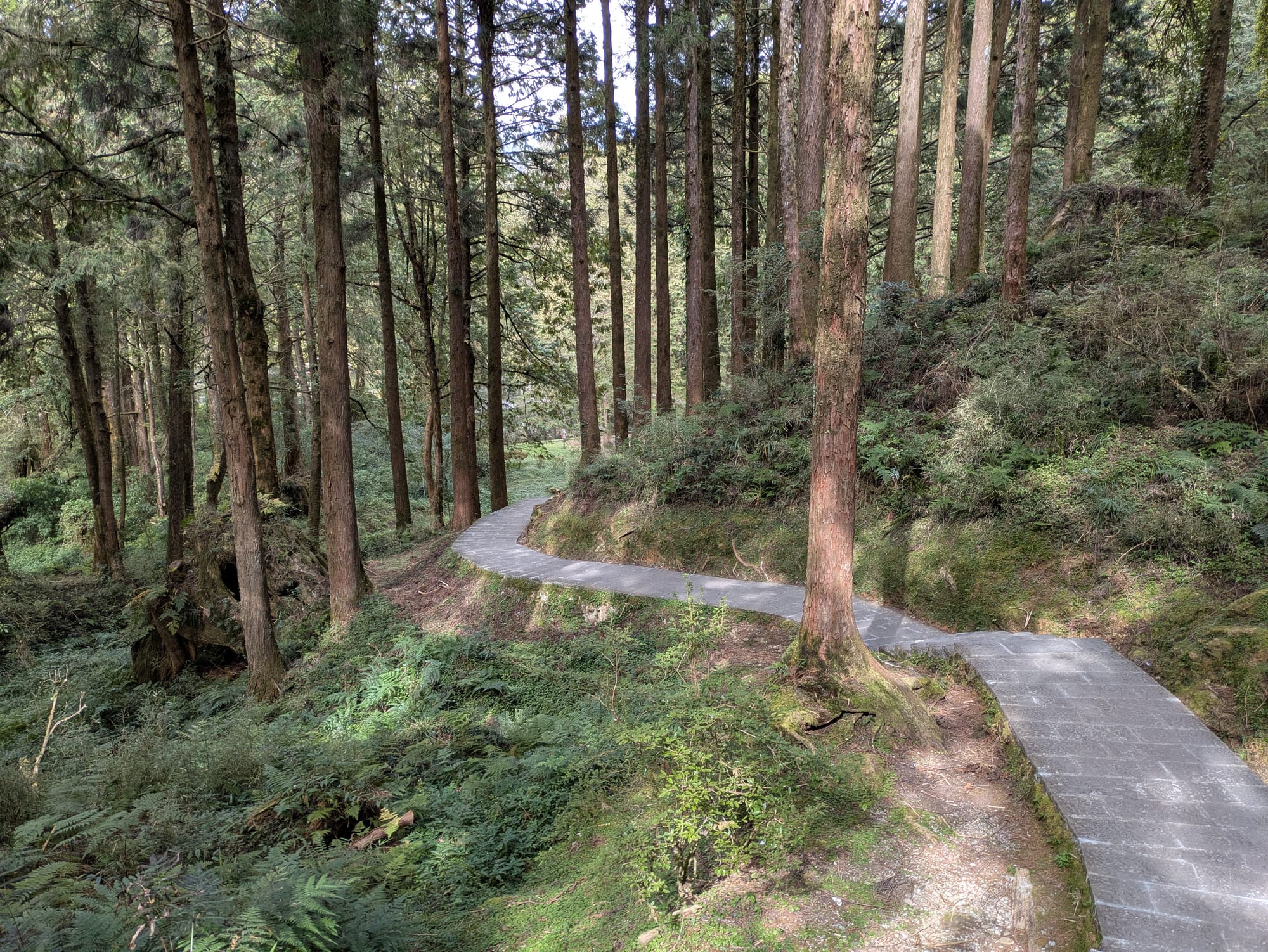
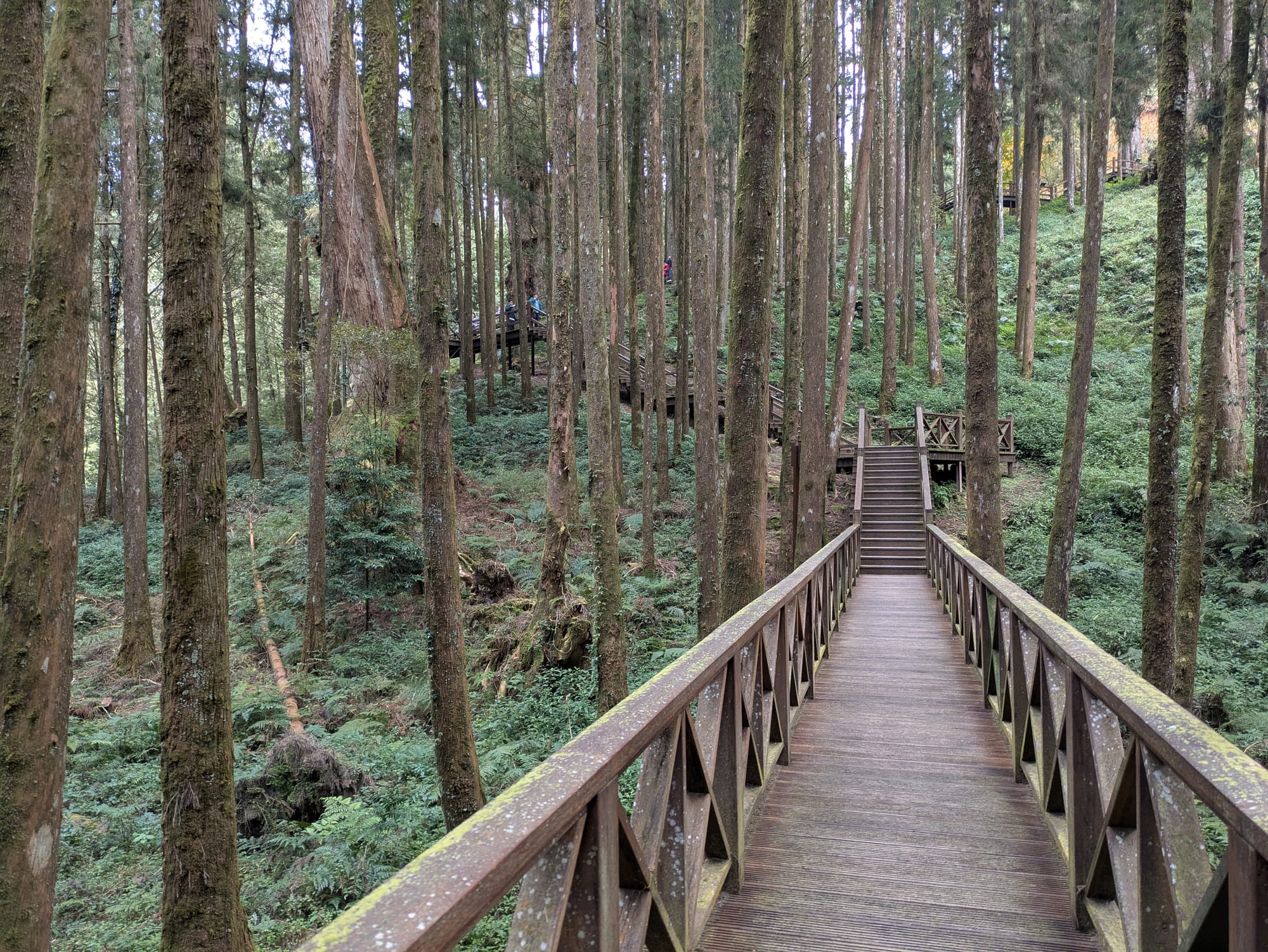
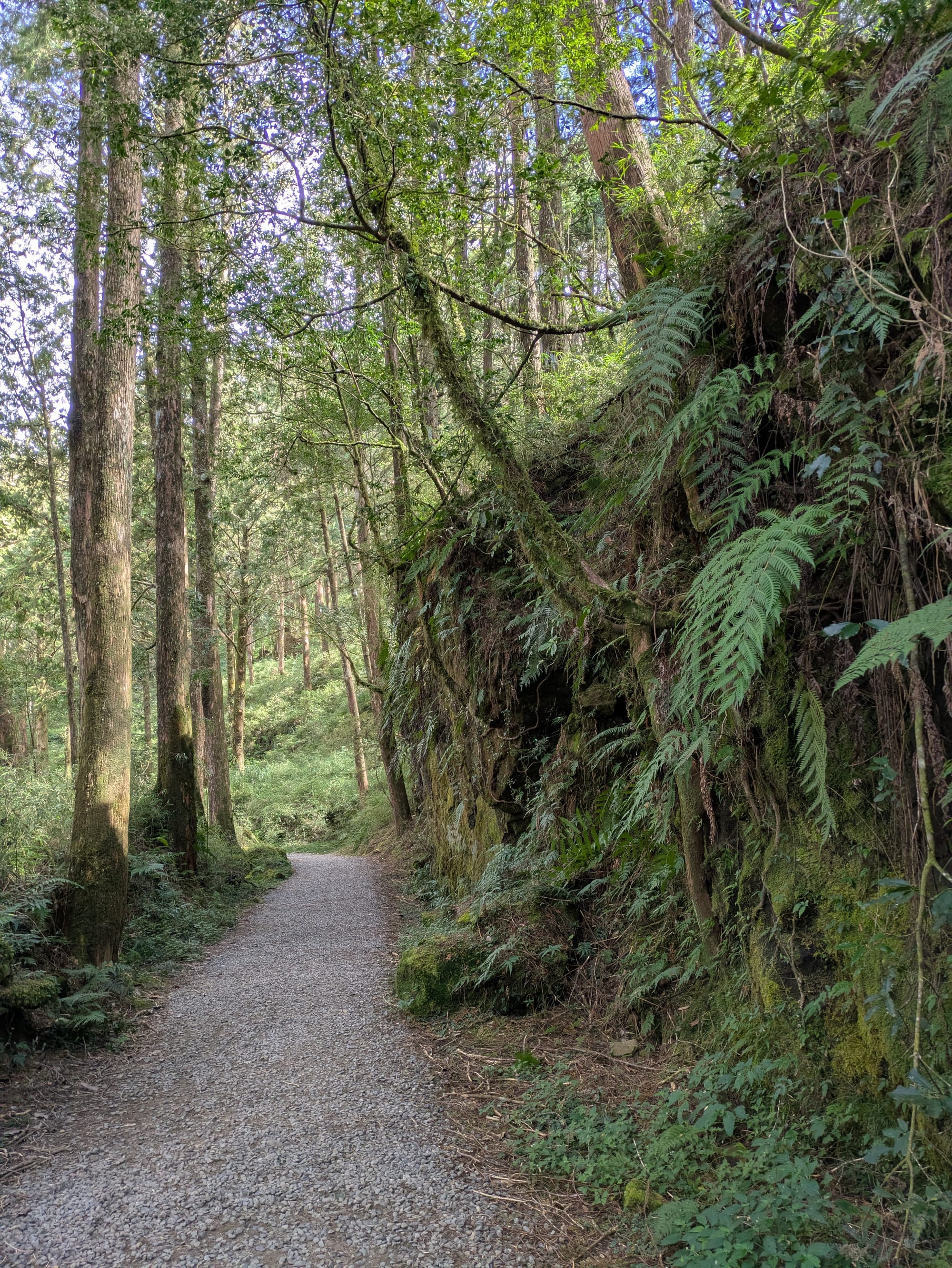
Hiking trails in Alishan.
There were plenty of hiking trails in Alishan and these were the main destination, I would spend most of my time on these trails. They varied in quality with the most popular trails being paved brick or wooden boards, but even the less popular trails were still well maintained with gravel and steps.
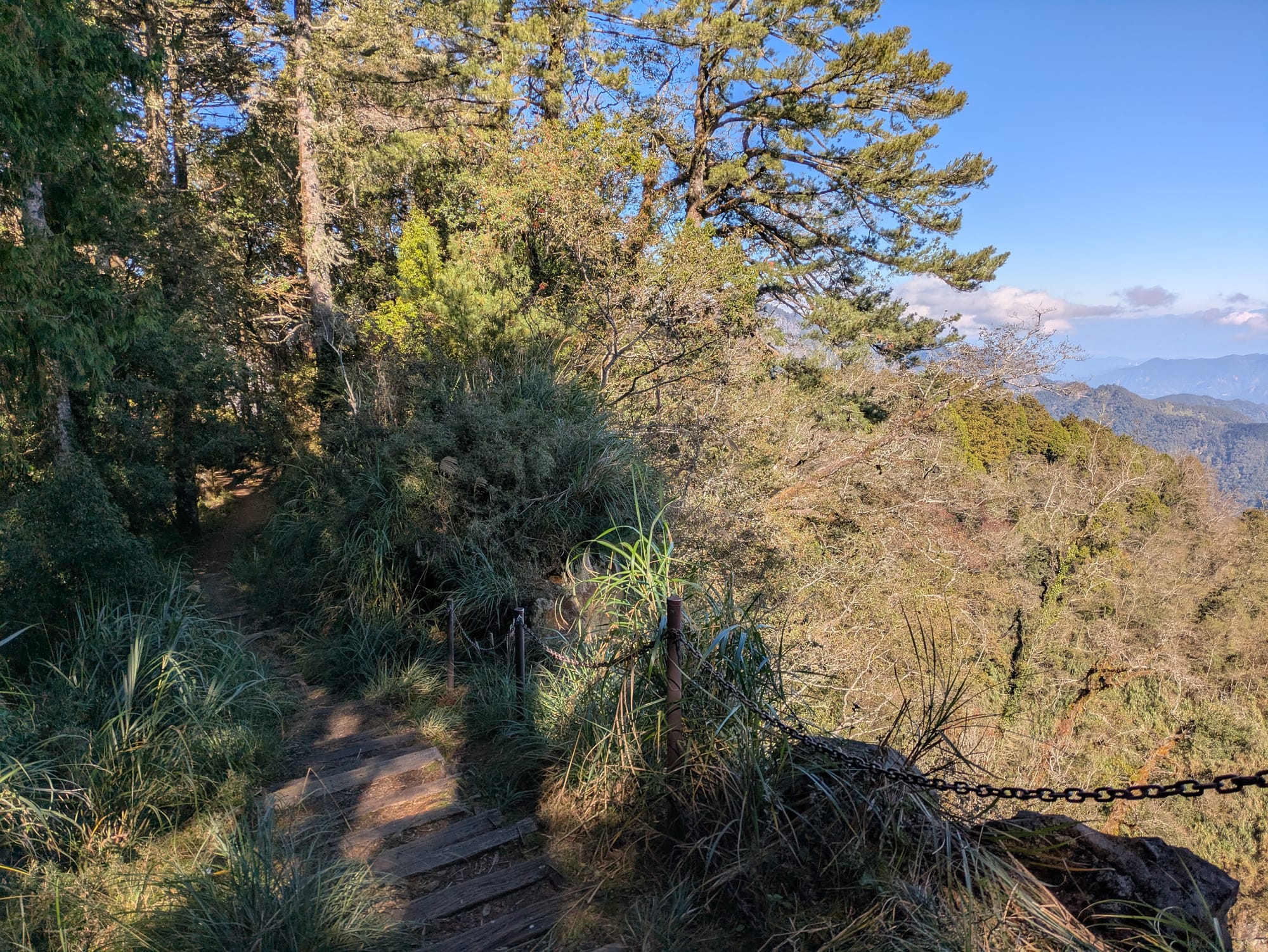
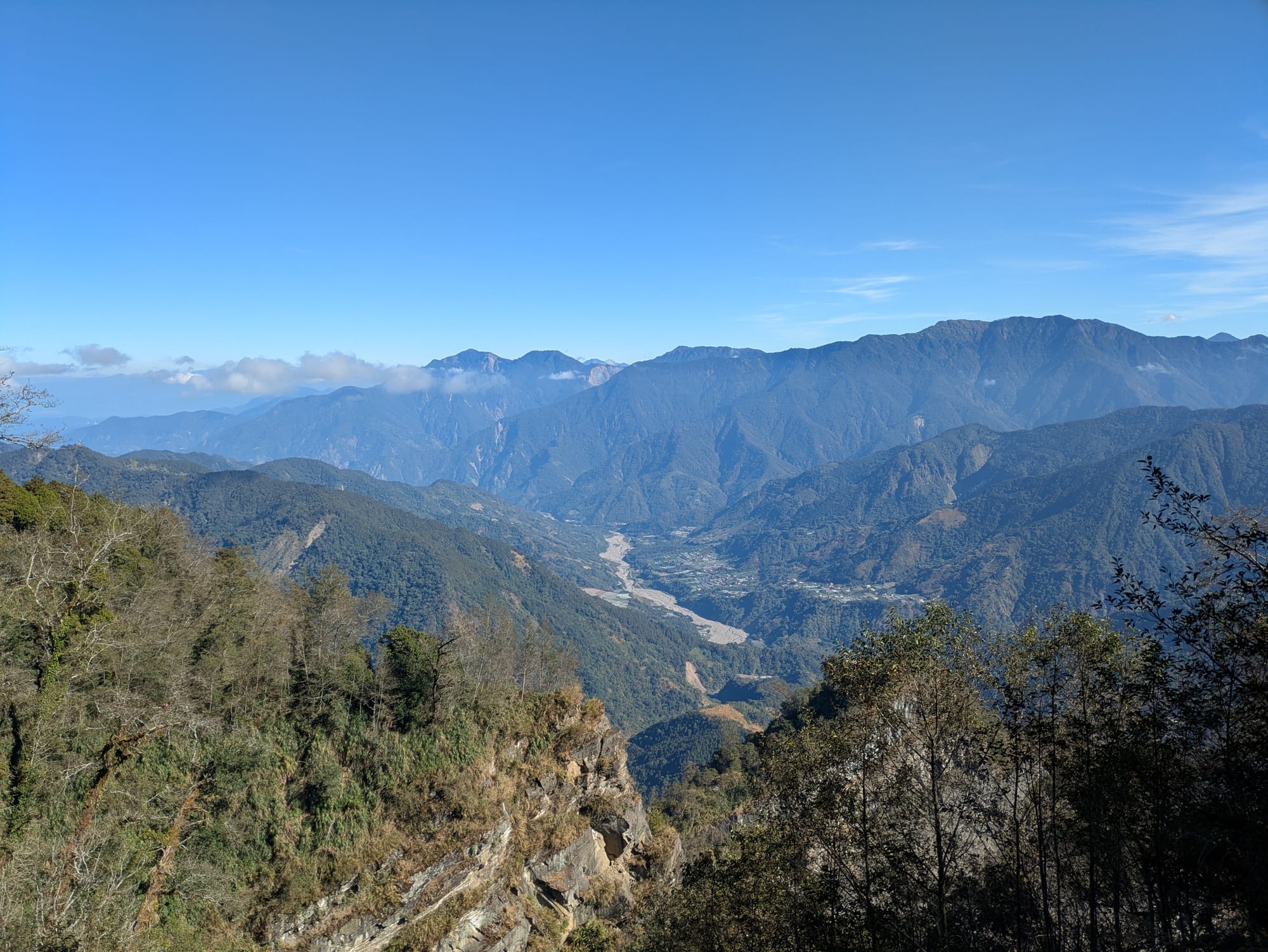
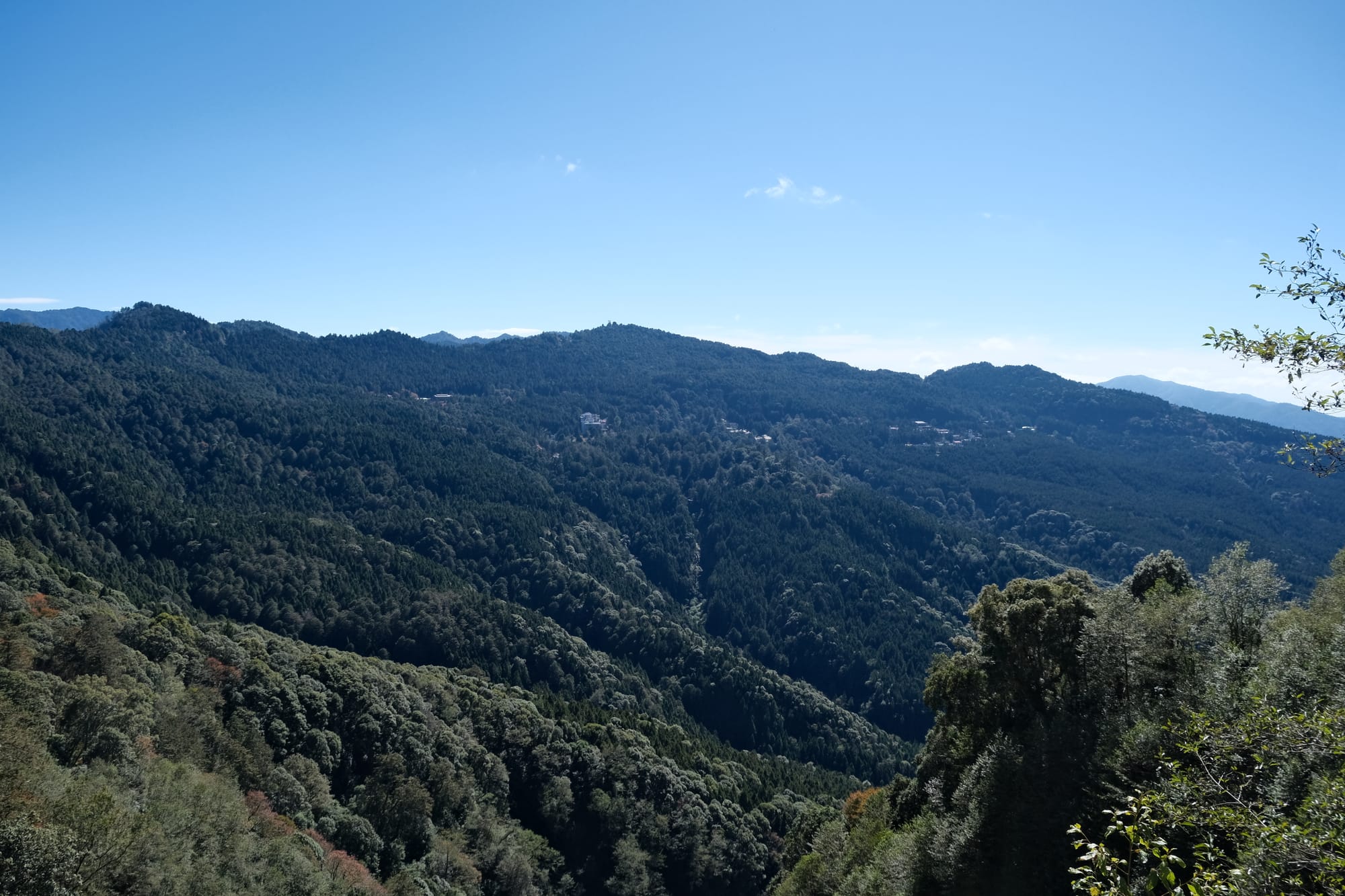
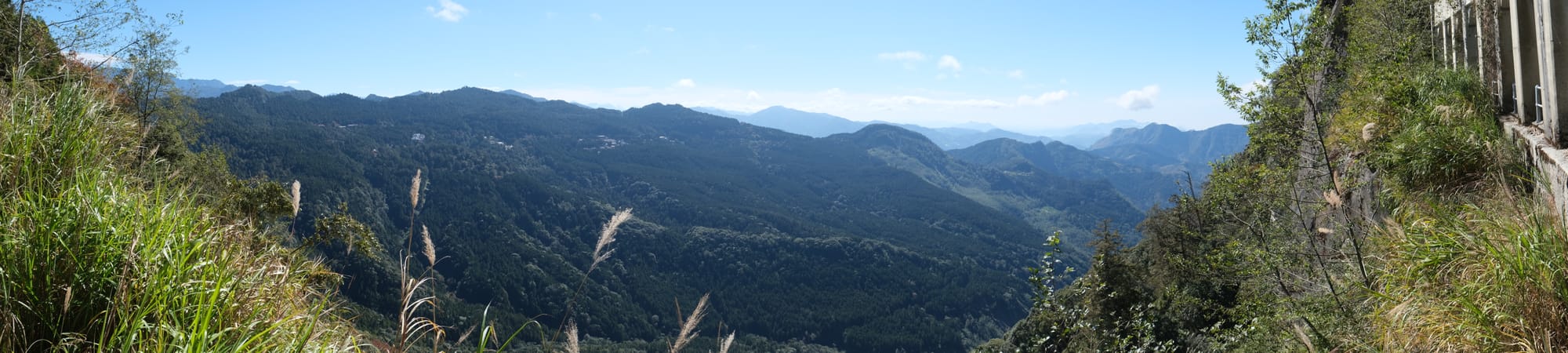
Photos taken while walking from the Duegao Pavillion back to the Duegaoyue viewing platform.
Most of the trails went through the forest but dotted throughout Alishan are a number of viewing platforms, usually at the top of of a peak or ridge, where I could get a look at the mountain scenery. But the view pictured above I saw not at a platform but just on the side of one of the less popular trails. The path goes up a ridge and at one point there is a cliff on the side preventing trees from growing, thus providing a clearing for the view. From there I could see the valley and mountains stretching far into the distance.
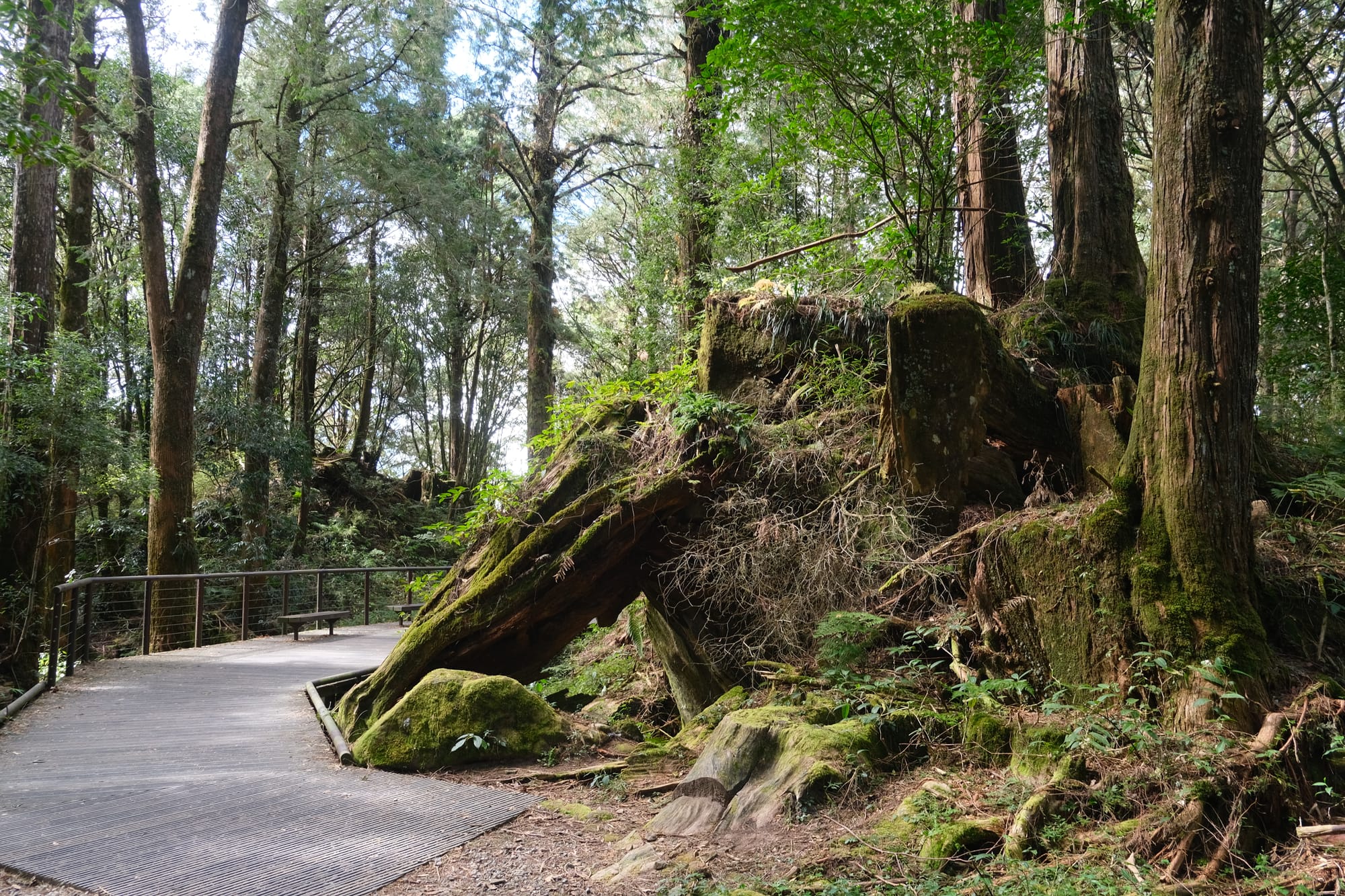
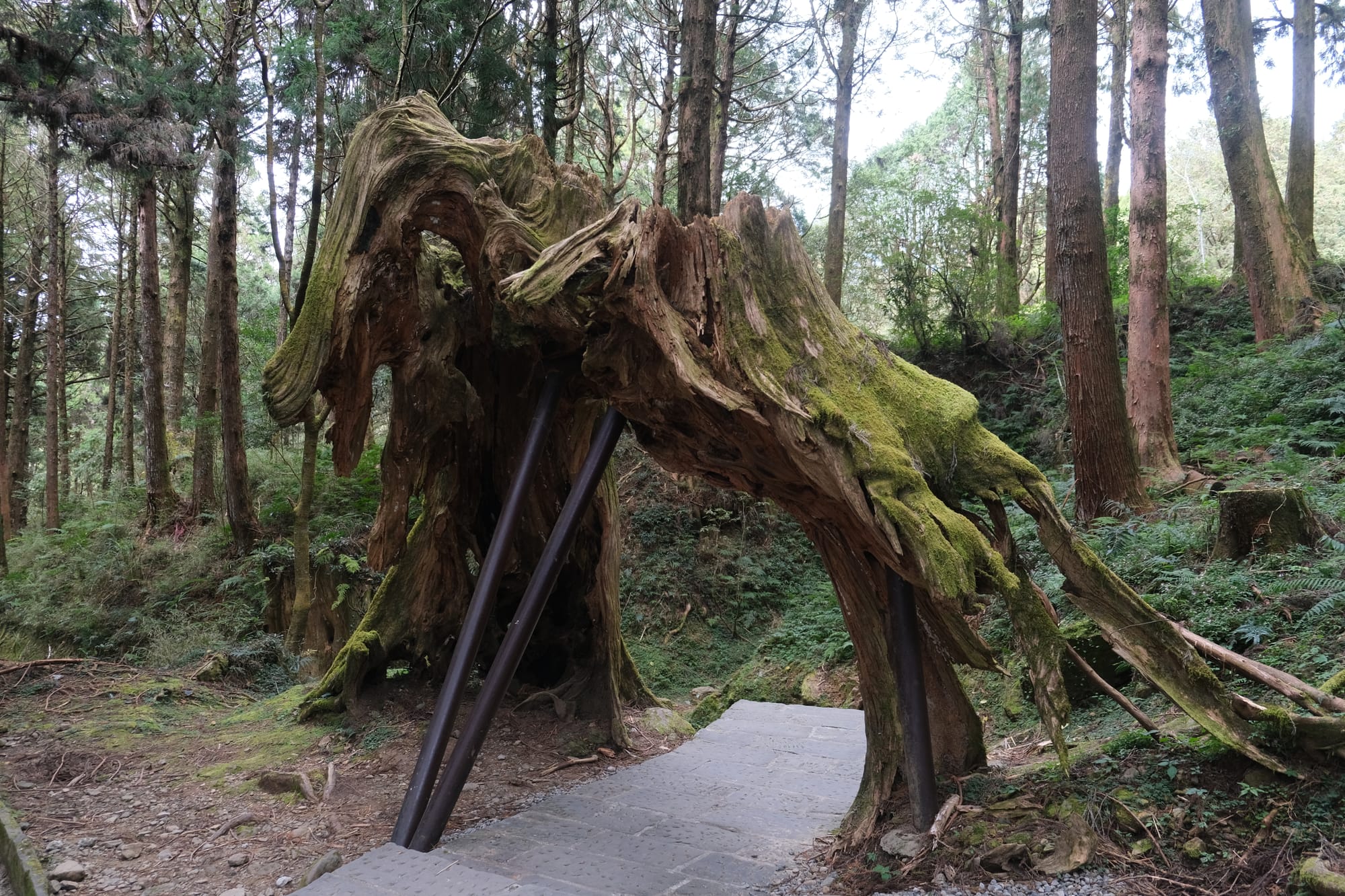
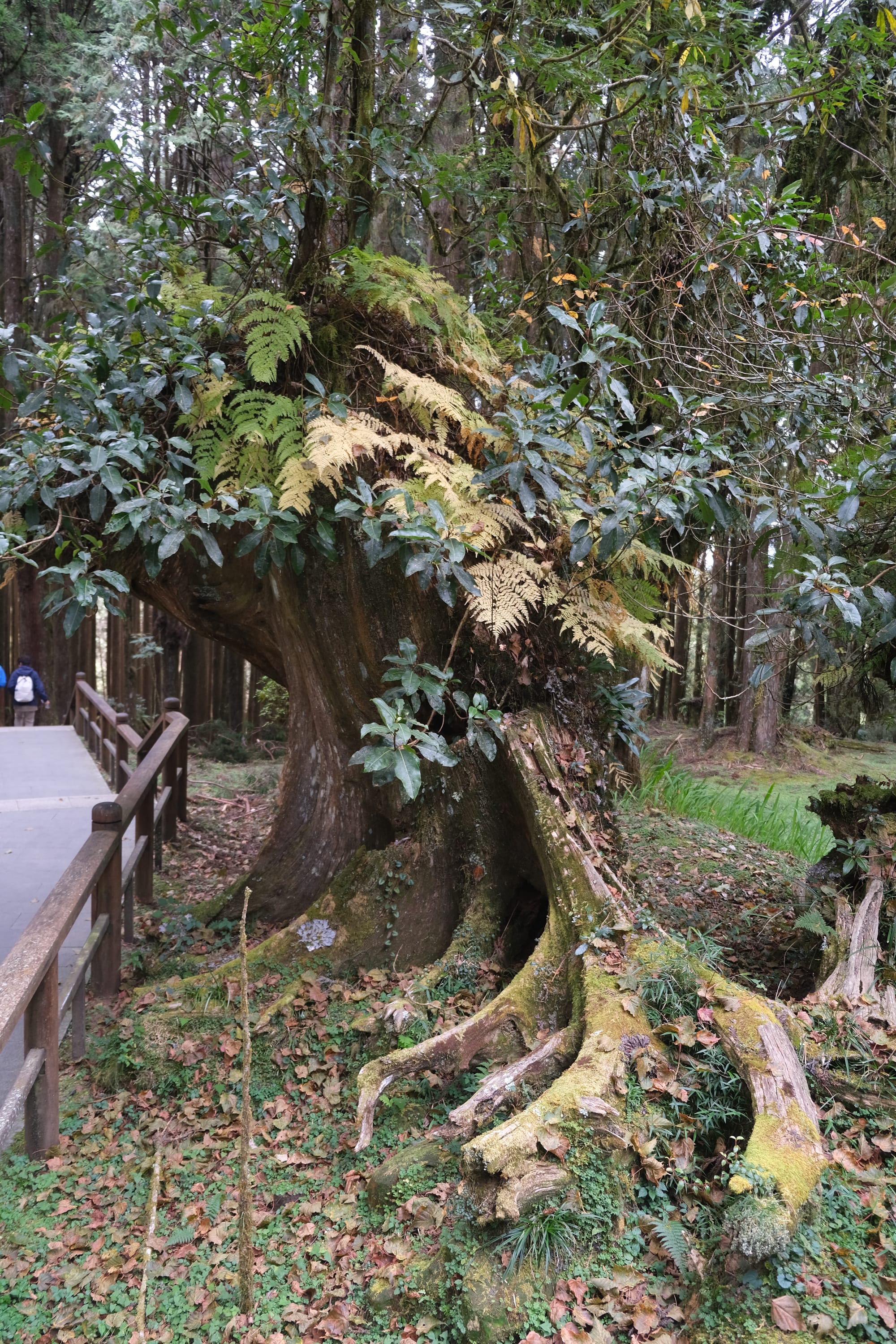
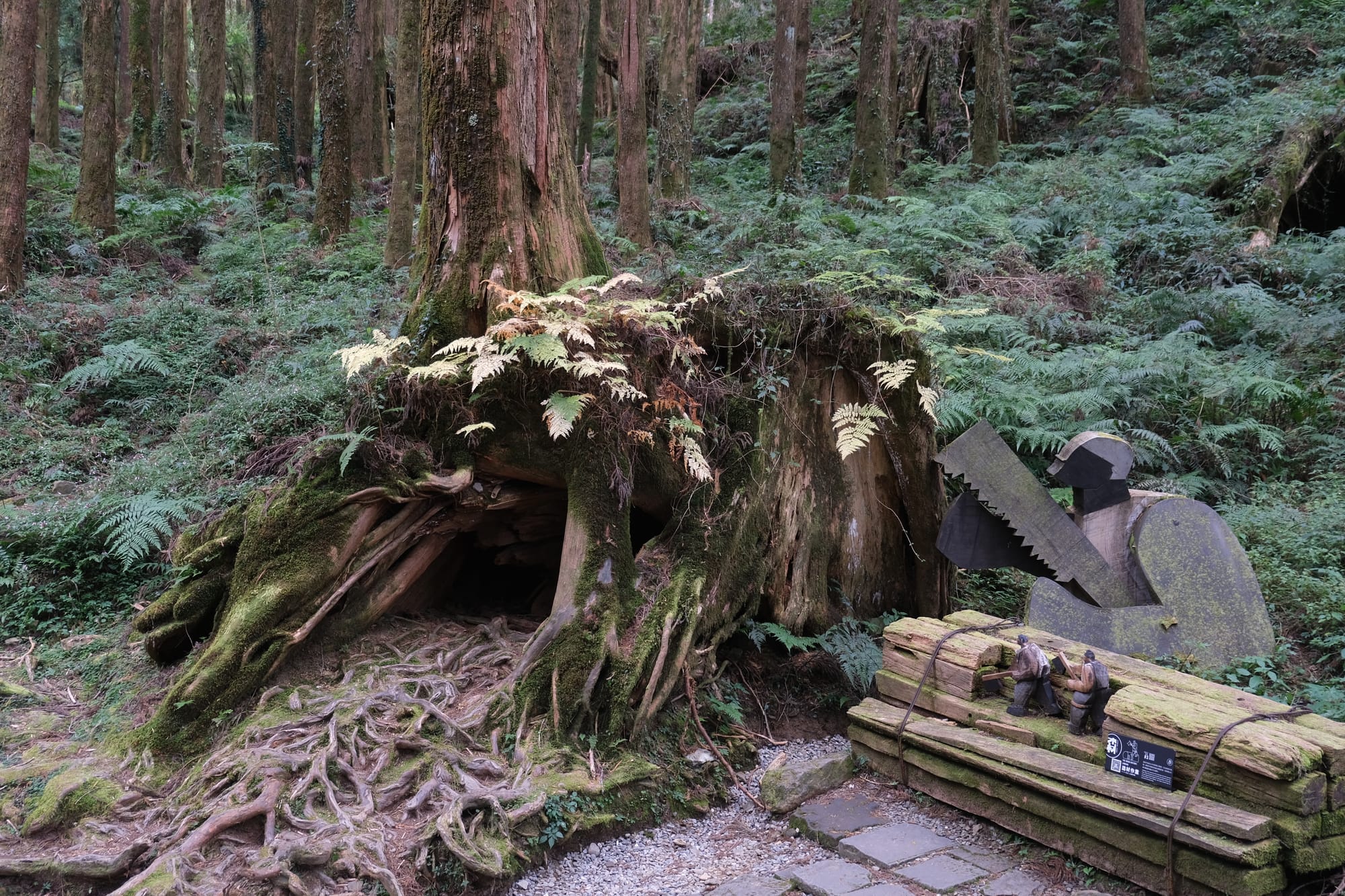
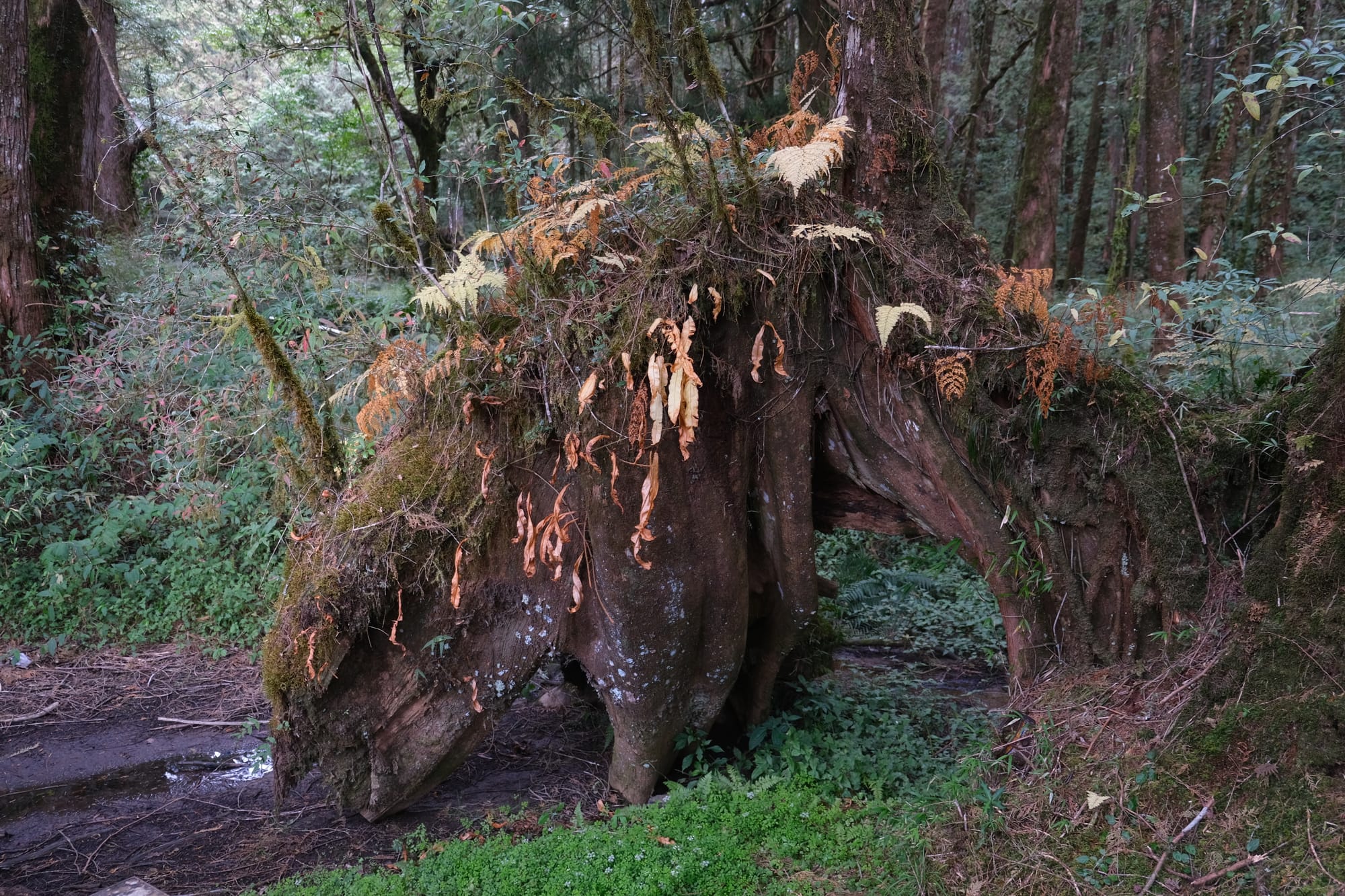
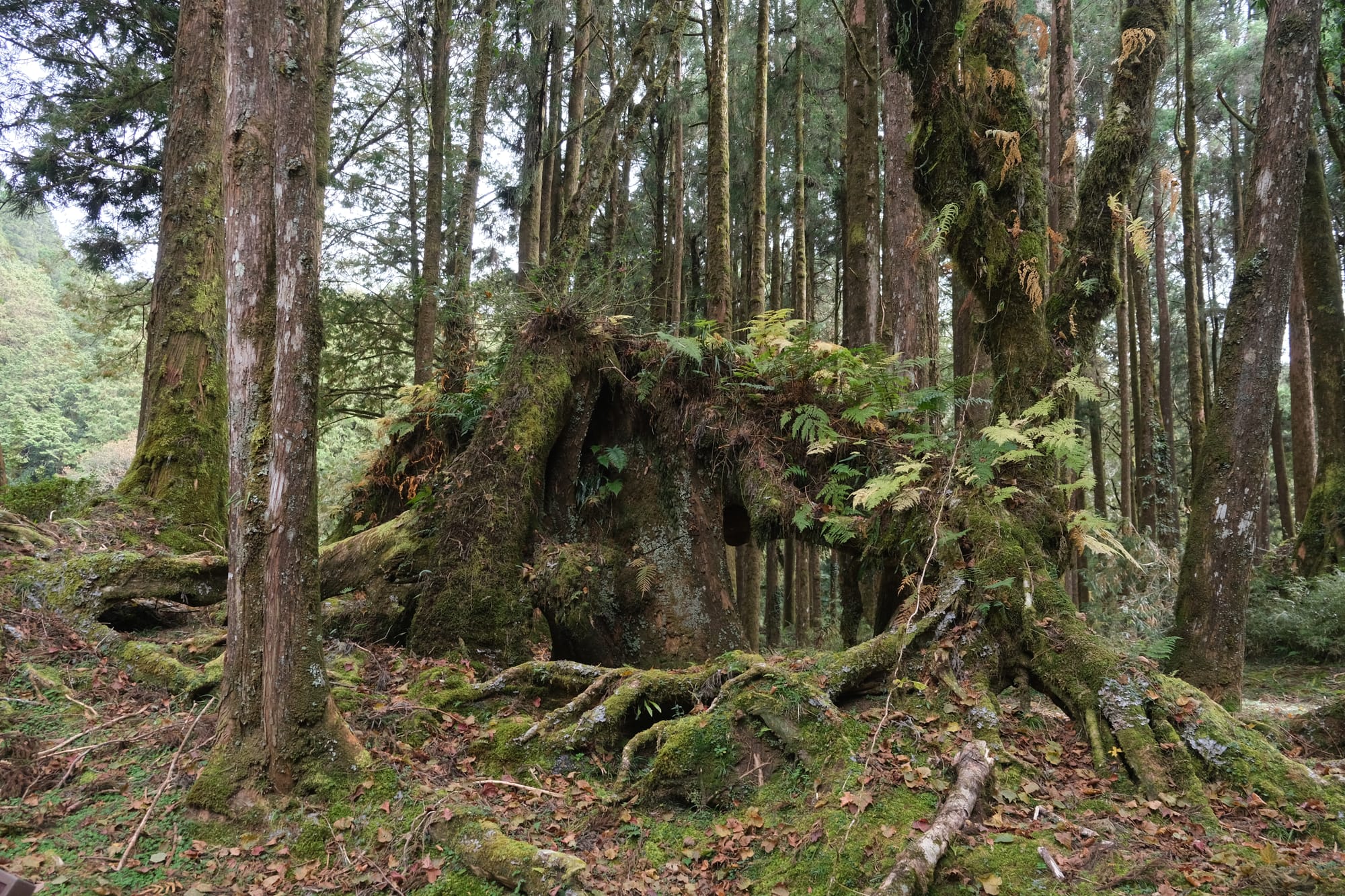
Old moss and fern covered stumps.
There are many giant stumps in the forest, some of these are the remains of ancient cypress trees that were harvested by the Japanese, but others are older still. Because the wood is so strong these stumps do not decay away easily and they remain in place, still firmly holding the soil on the mountain with their long dead roots.
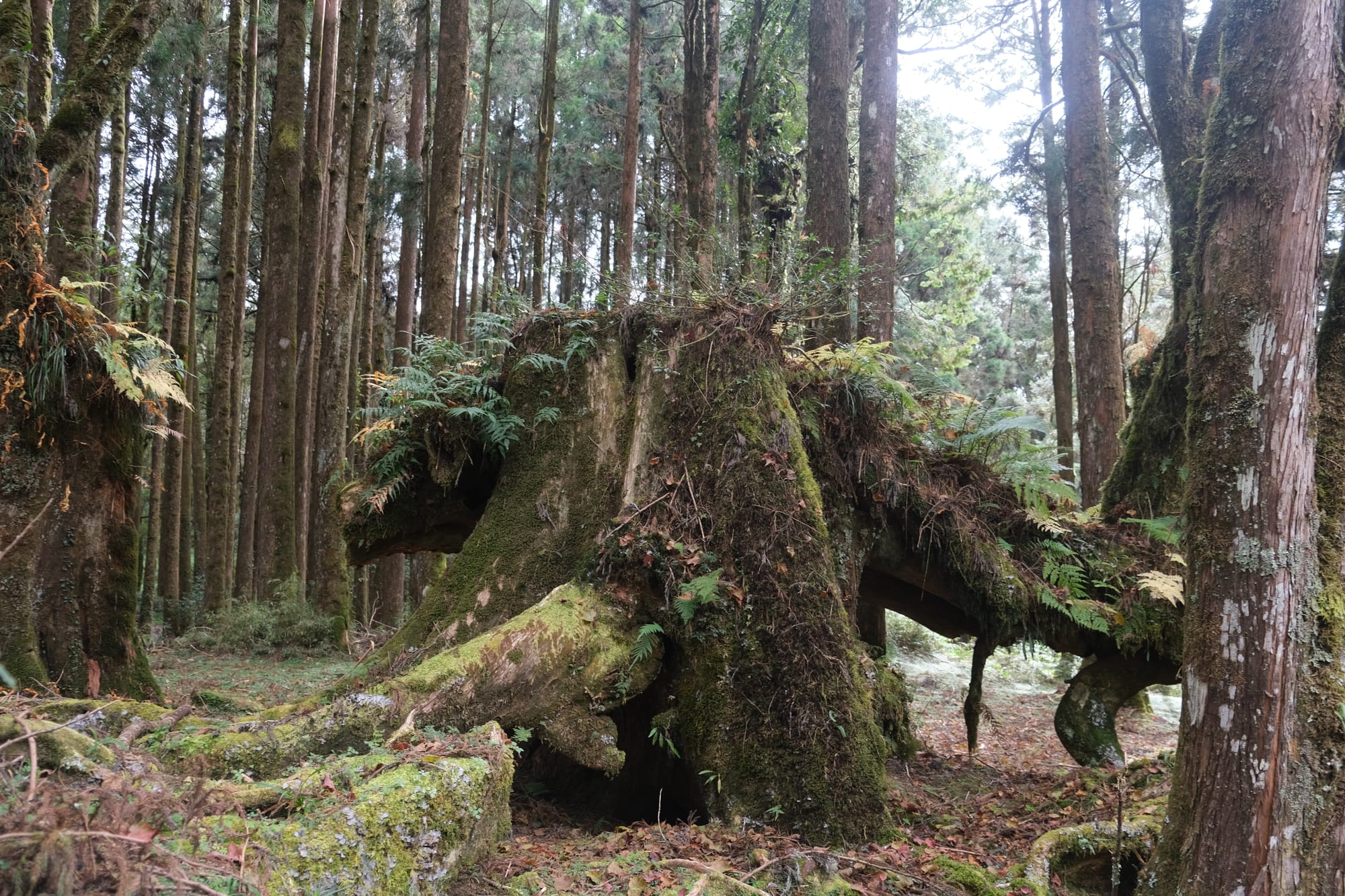
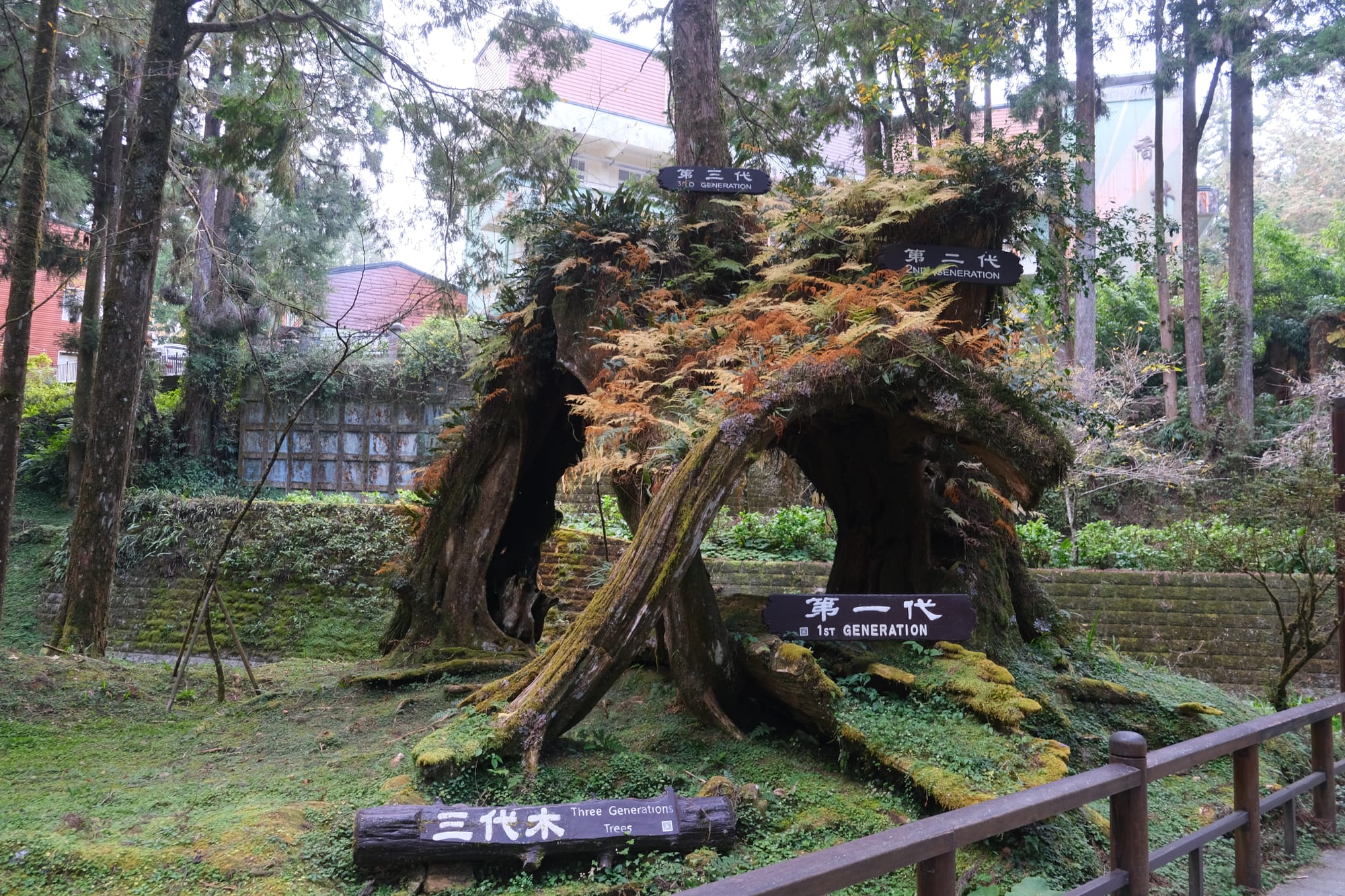
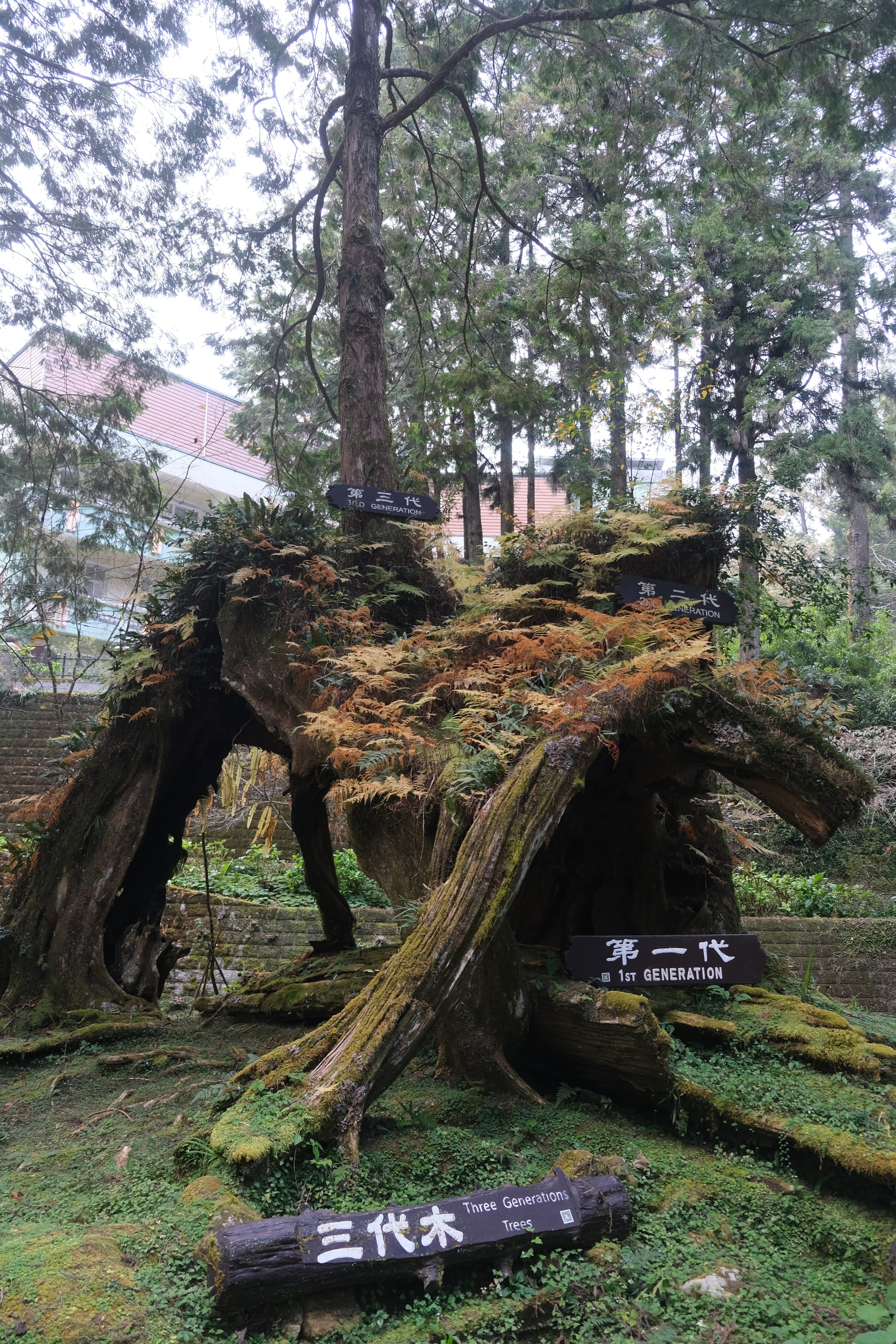
The three generations tree, one of the highlights of Alishan.
But out of the dead can spring forth life. If a seed falls on the stump of an old tree that seed can grow into the old stump and feed of the nutrients from the parent. When this happens the new tree can be seen as the next generation of the old tree. Here, a tree grew three times in the same spot thus it is called the three generations tree. The first generation is estimated to be 1,500 years old. I really enjoyed this attraction and it was perhaps my favourite spot in the park.
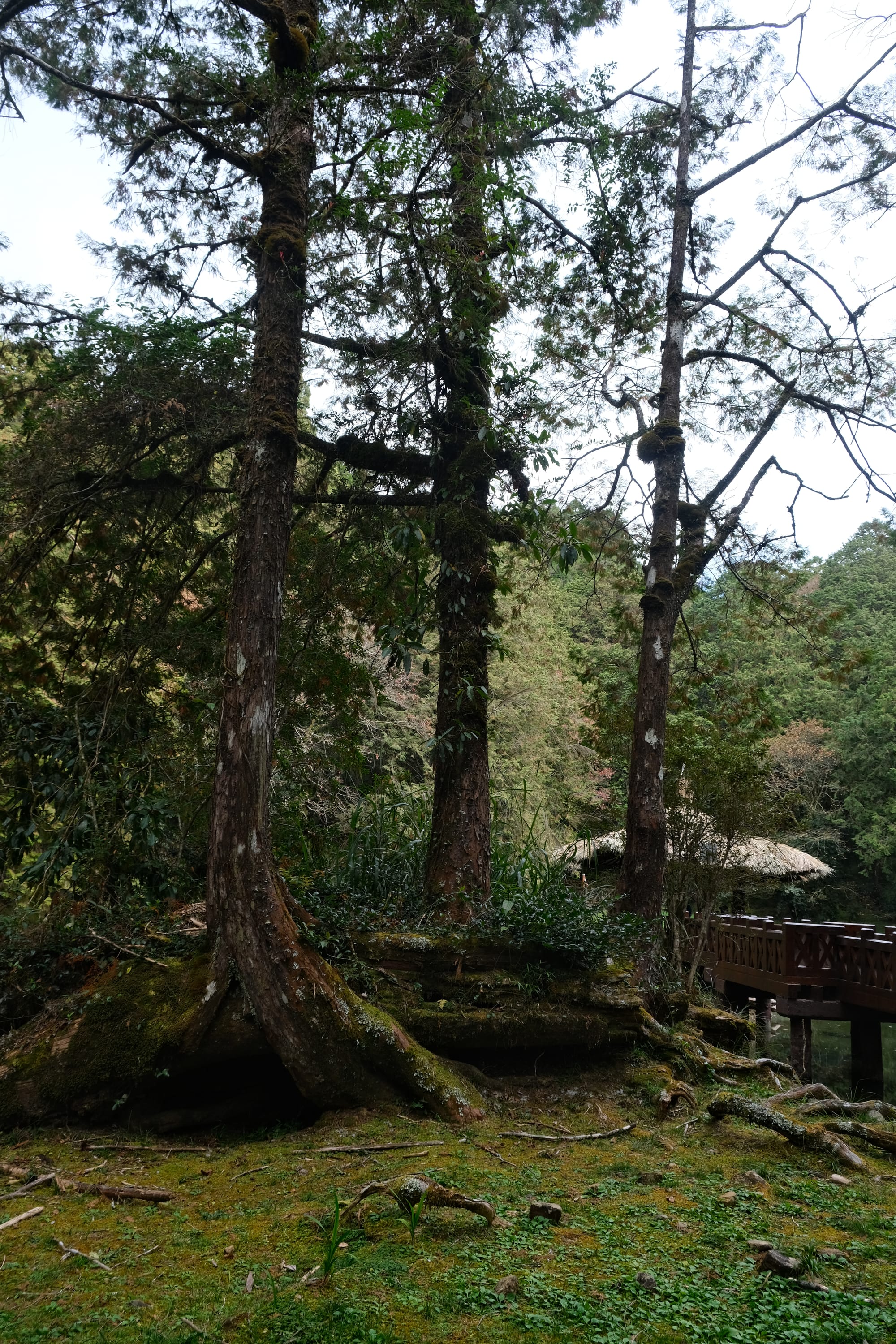
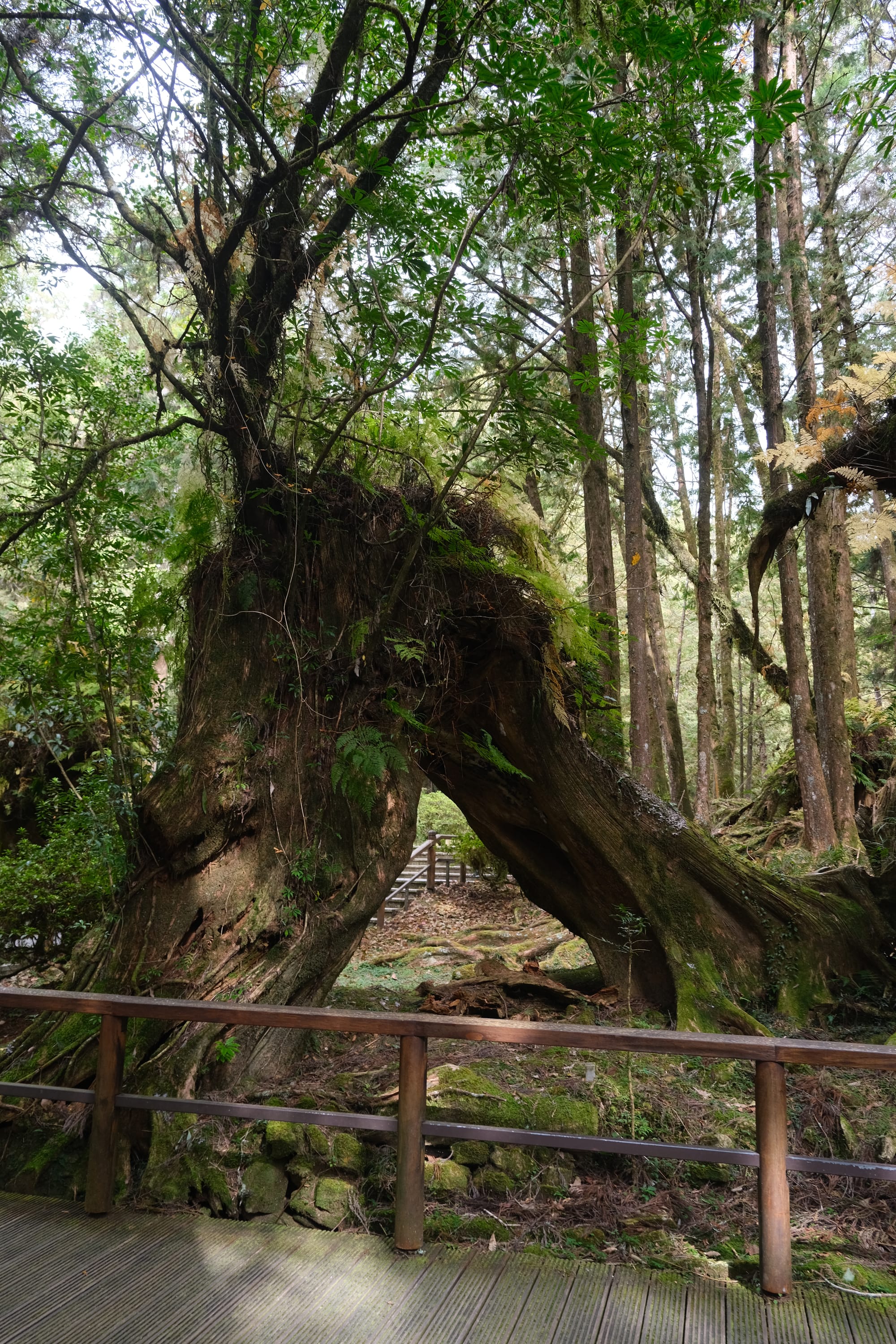
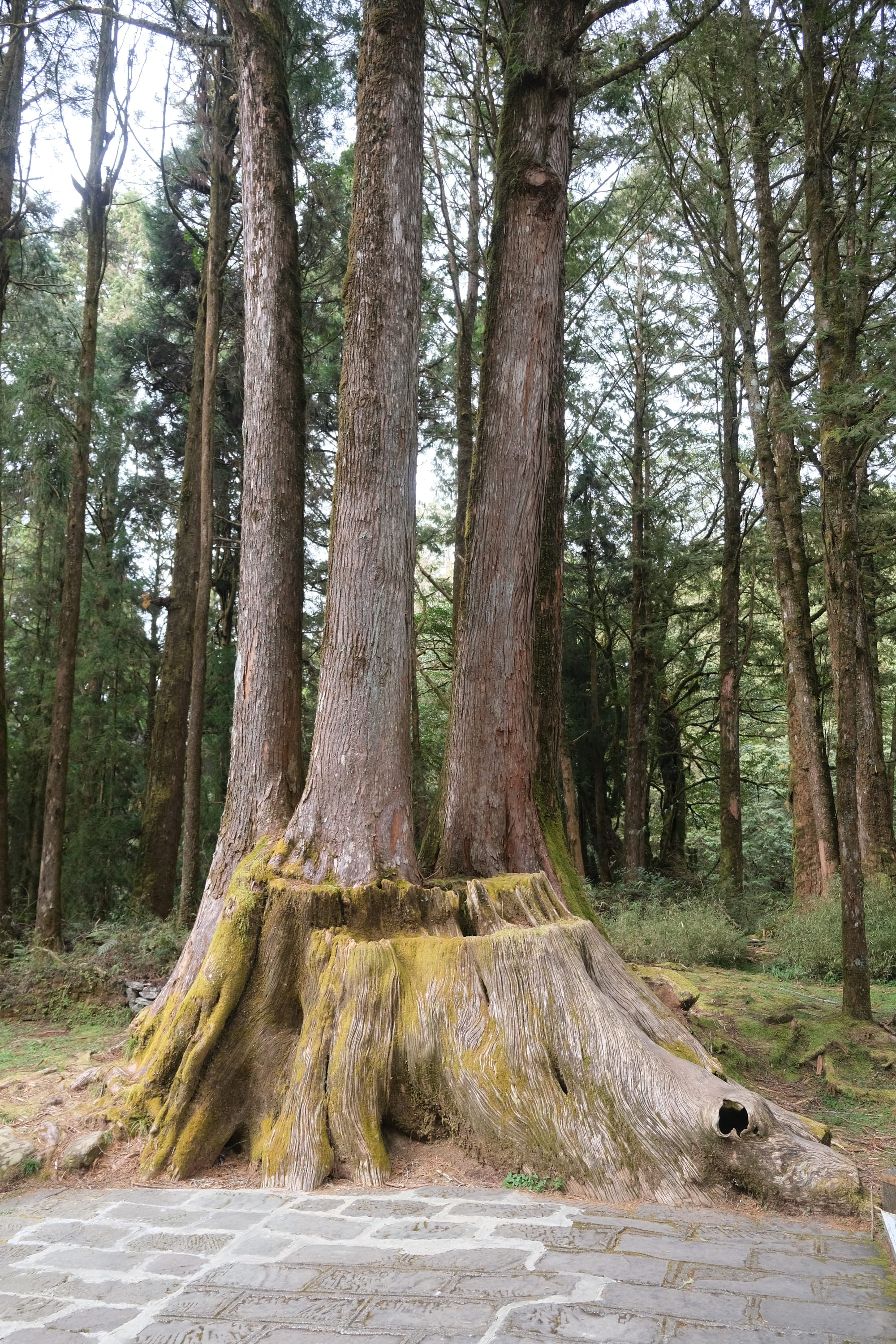
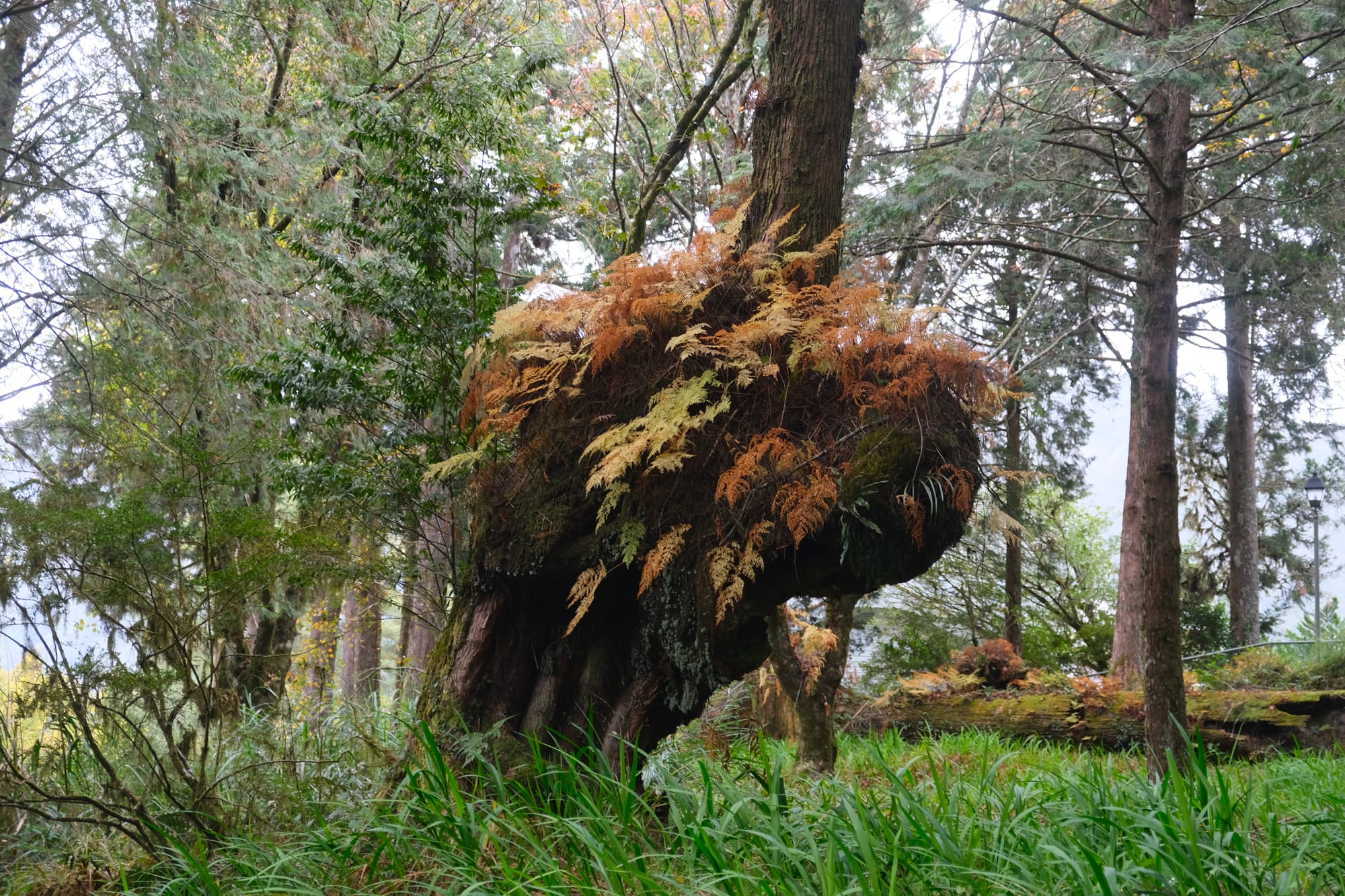
Some more examples of second generation trees growing from the stump of a parent tree.
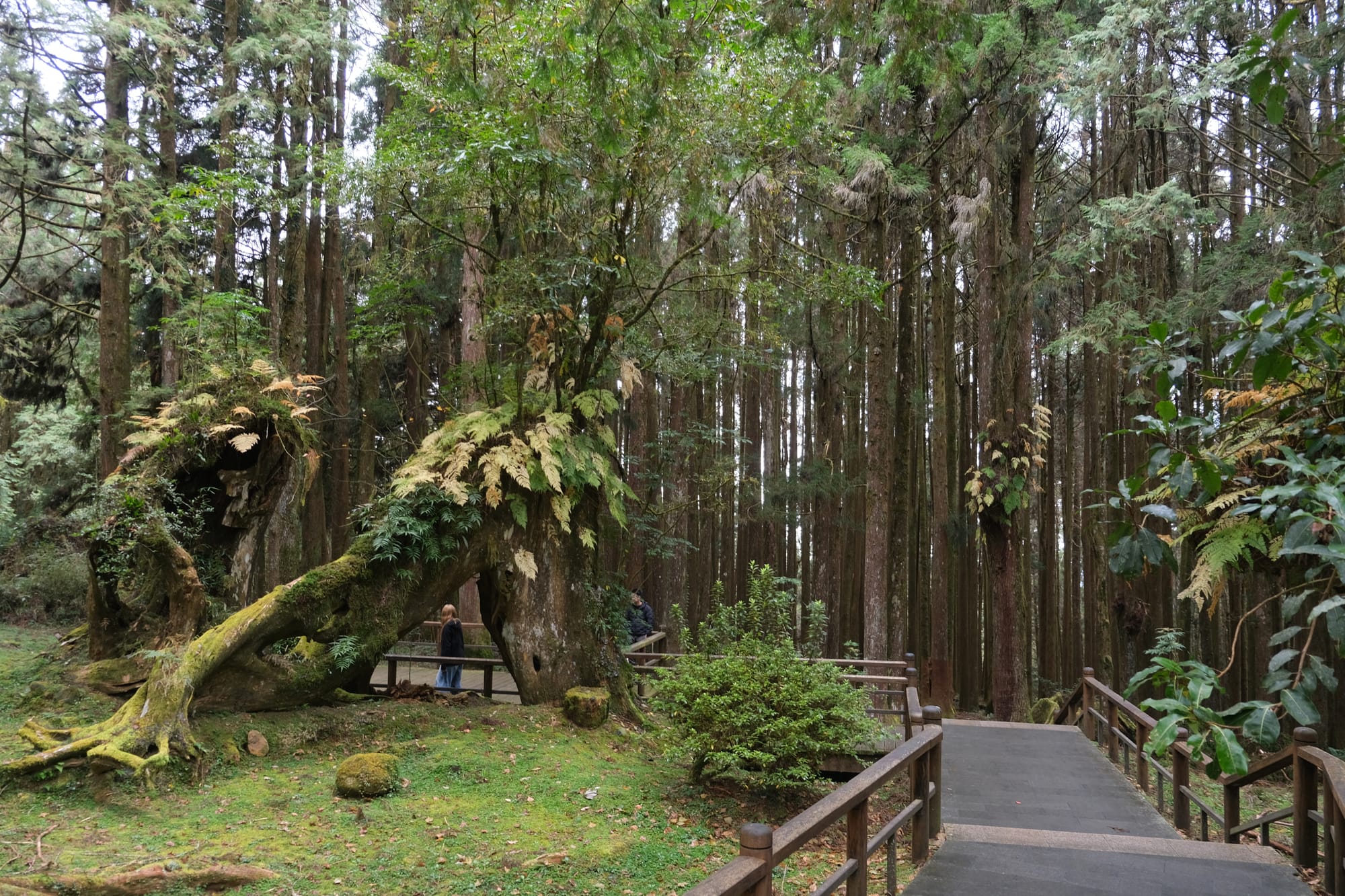
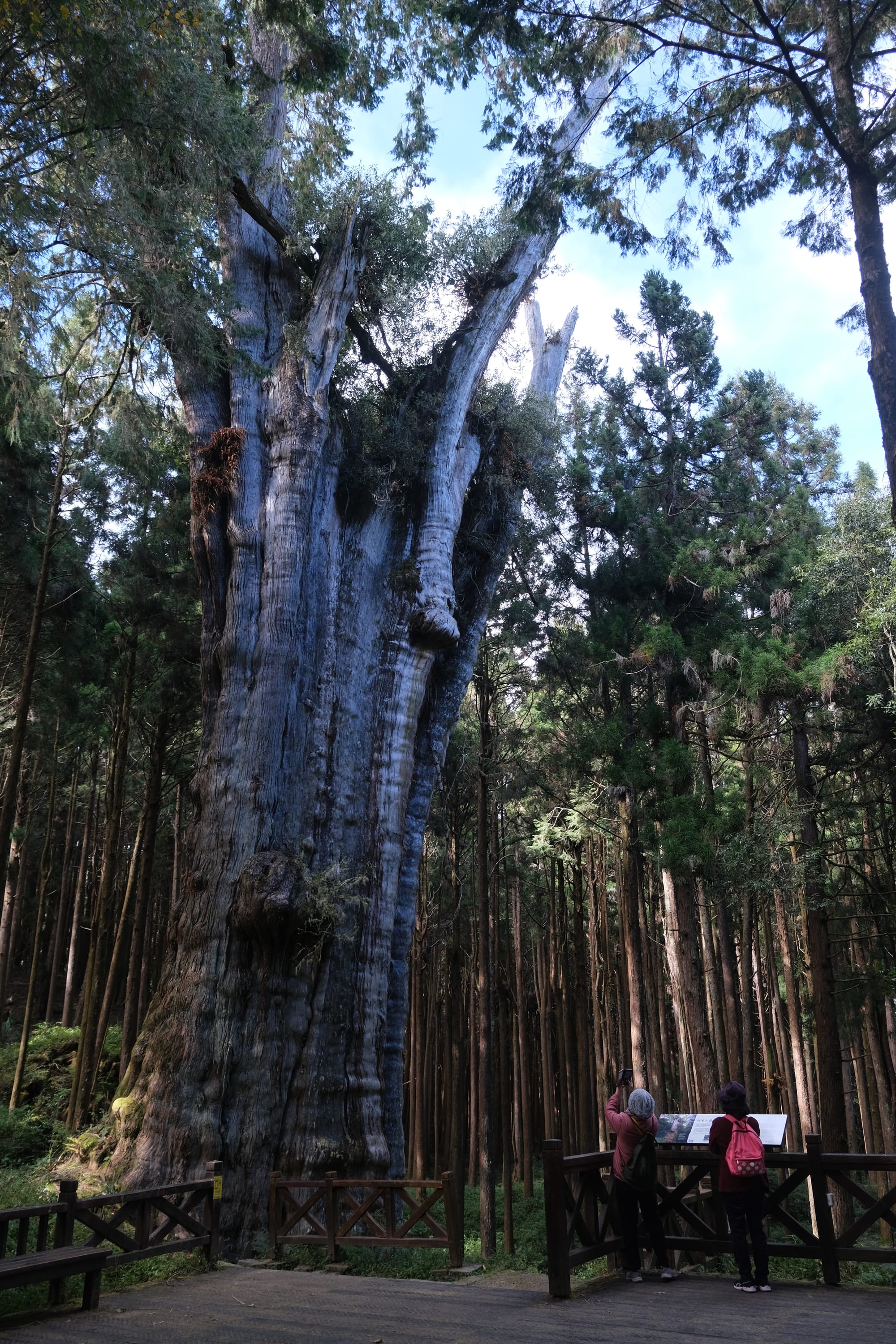
While many of the old trees were cut down, not all of them were, and there are still some ancient giant trees left standing in Alishan. This is the biggest one of them all and it was discovered by the Japanese when they were building the Shuishan branch of the railway. It is 16 meters in circumference and over 30 meters tall. Also, it technically is not one tree but rather a combination of 10 trees. When multiple trees grow in the same spot they often combine together to create a fusion tree. Many of the giant trees in Alishan are fusion trees.
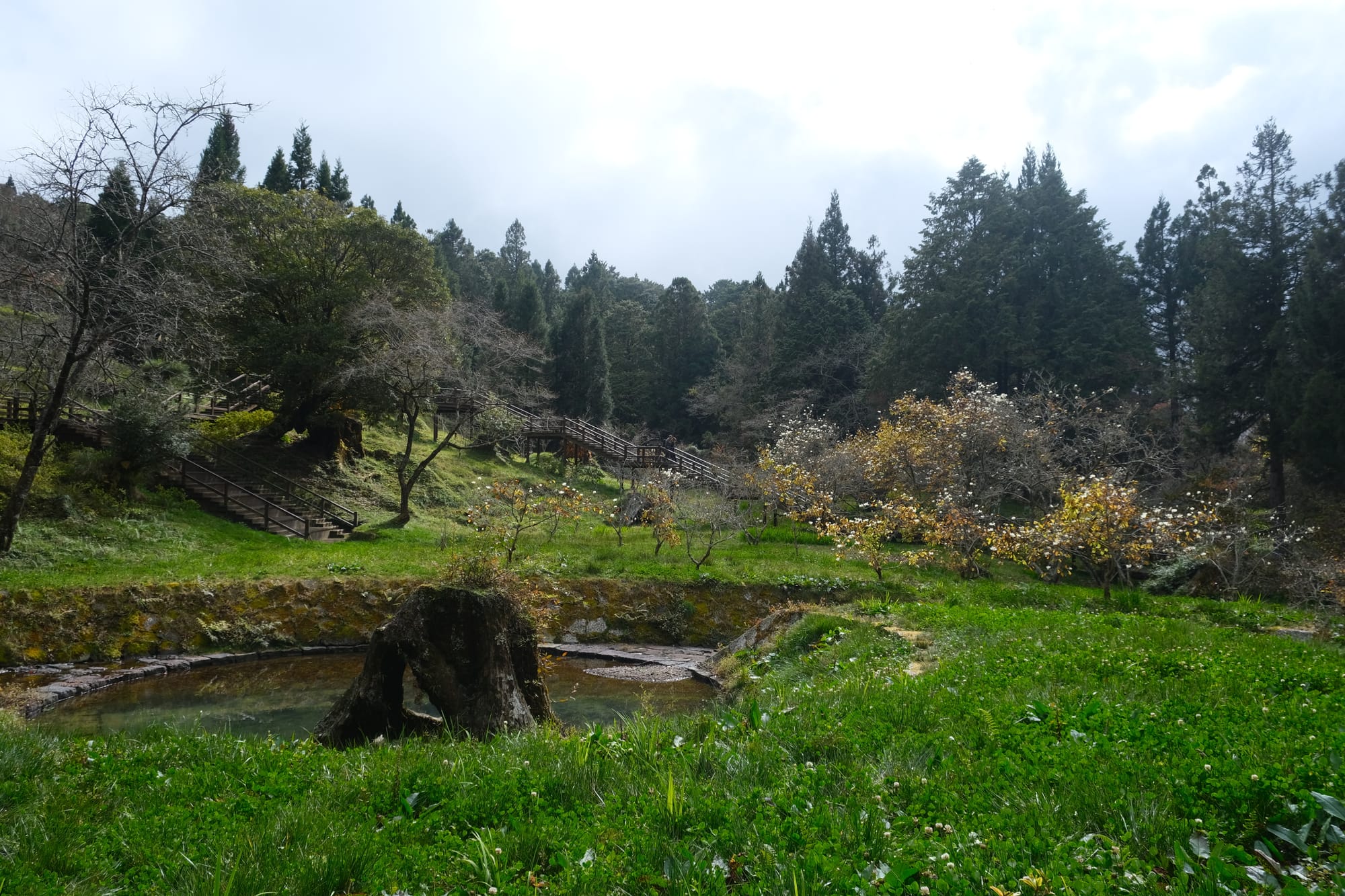
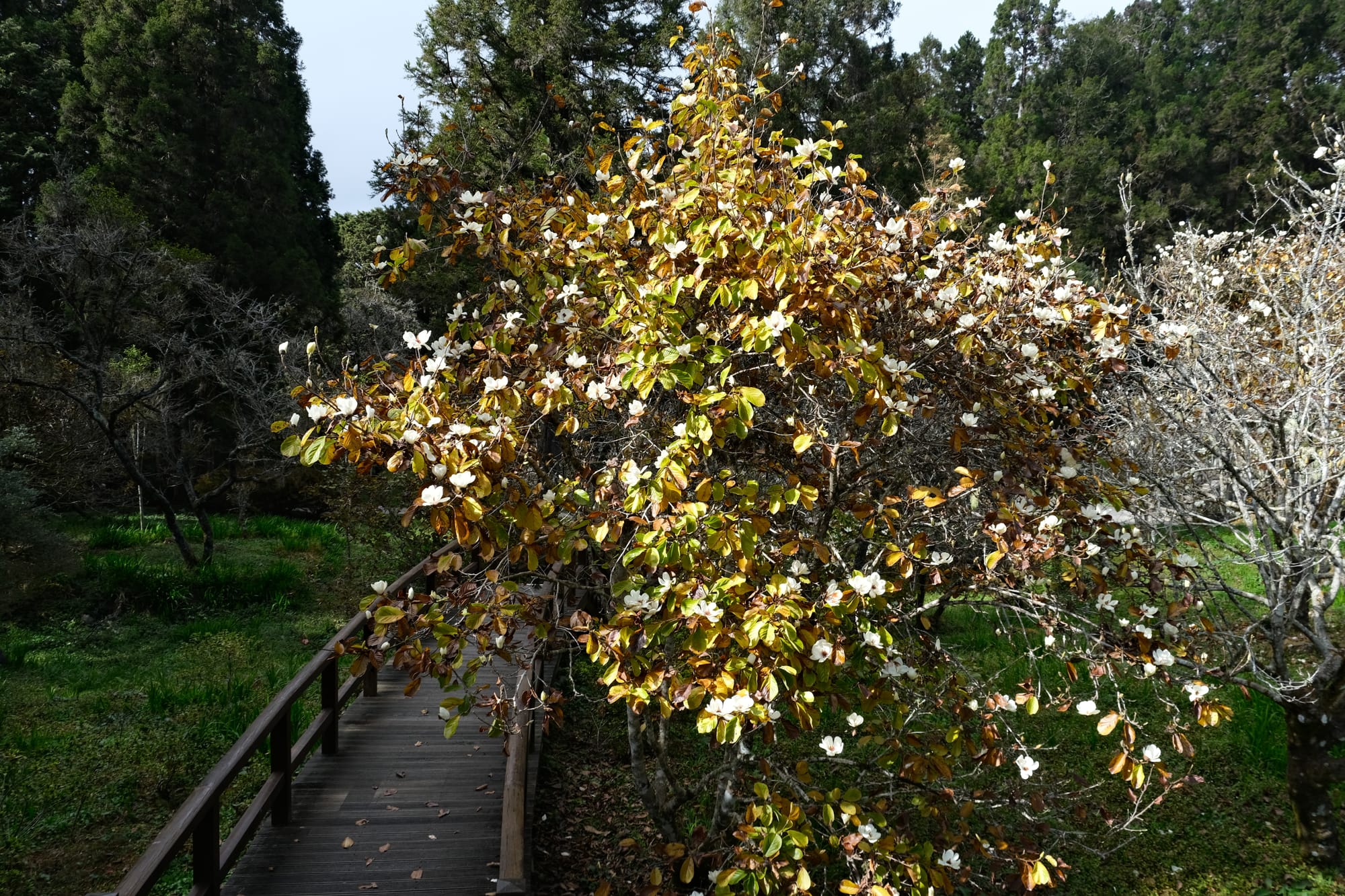
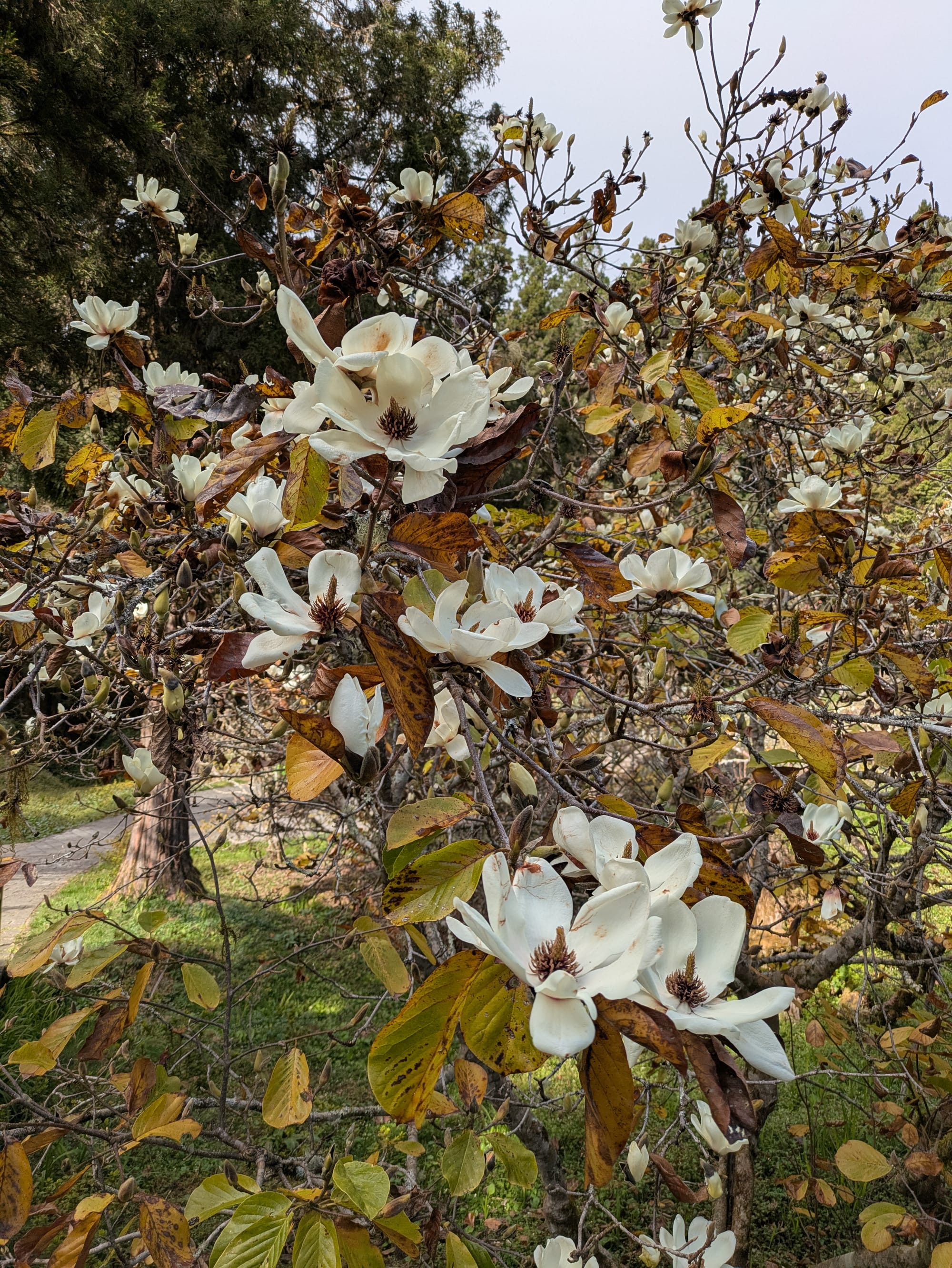
The Magnolia garden.
While the Cyprus trees were the most common (and native to the region) there were other species as well, including a Magnolia garden. Some of the trees were in flower when I visited them and they look spectacular in the sunlight.
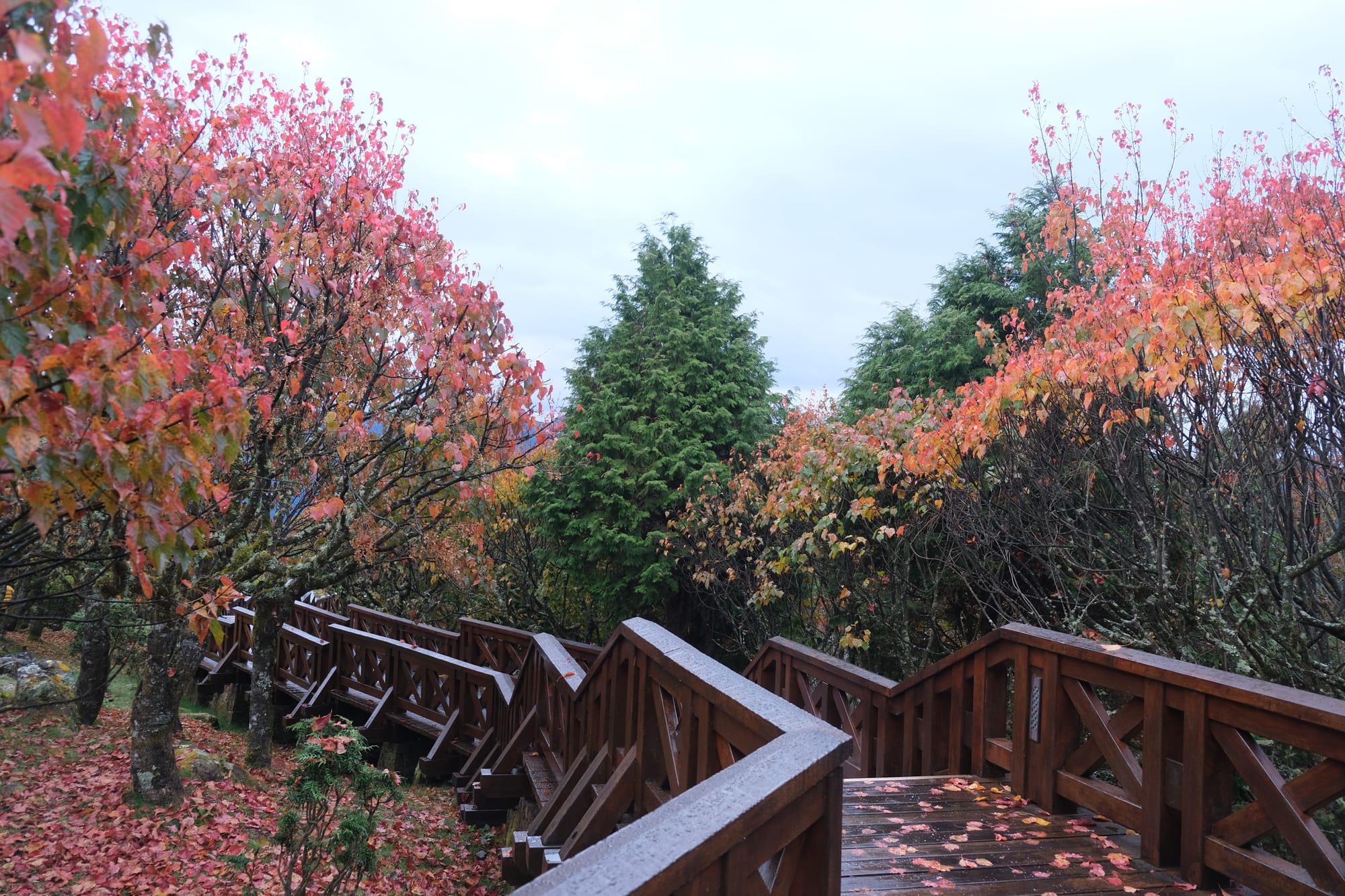
There were also quite a few patches of deciduous trees in the forest. This path here went through a small grove of maples that looked absolutely beautiful in the autumn.
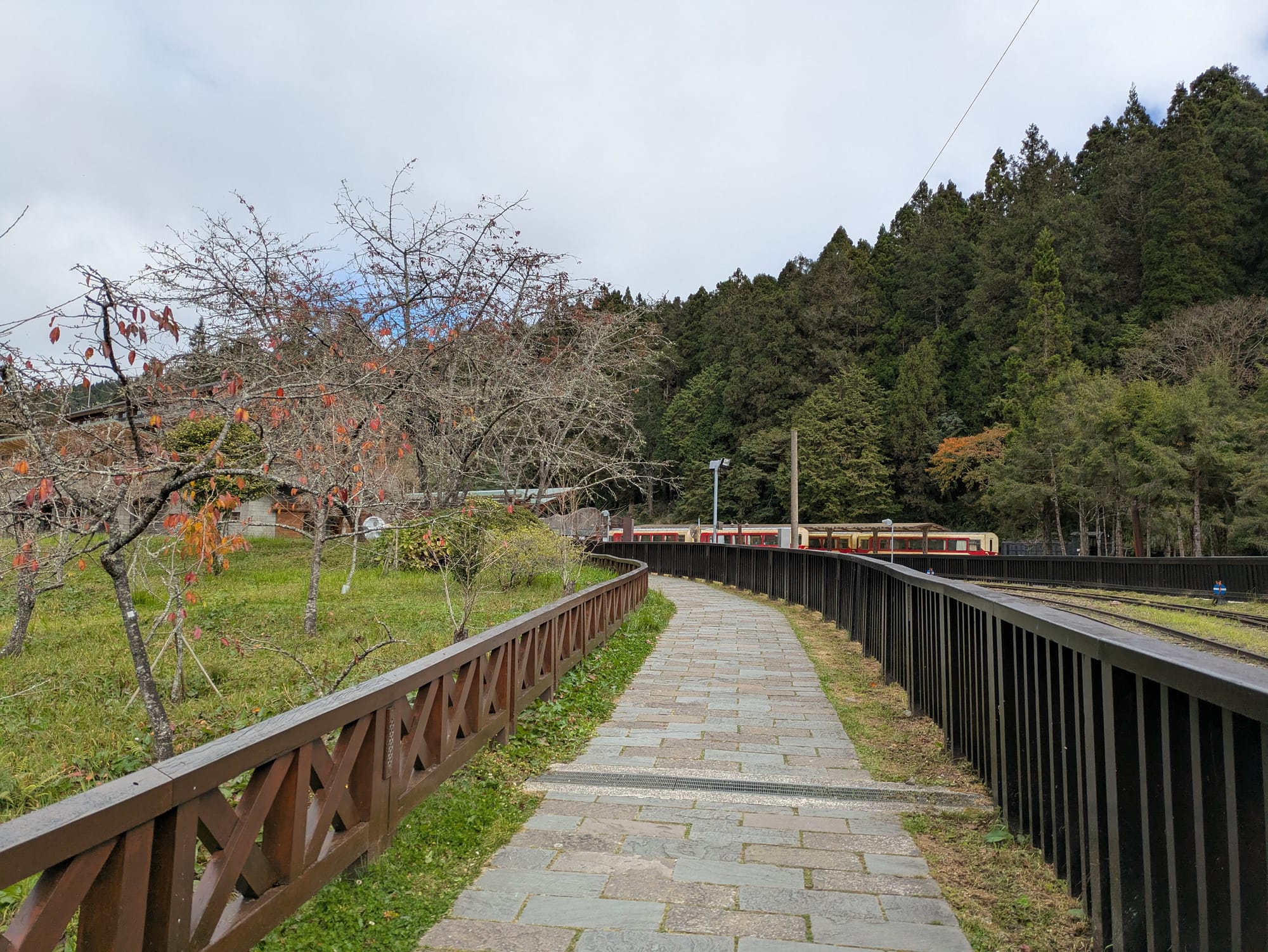
There were also many groves of cherry trees (I believe some cherry trees are pictured on the left side of the above image). I heard from a local that, during spring time, Alishan is absolutely packed with tourists wanting to see the cherry blossoms. When I visited though the branches were bare and empty for the winter.
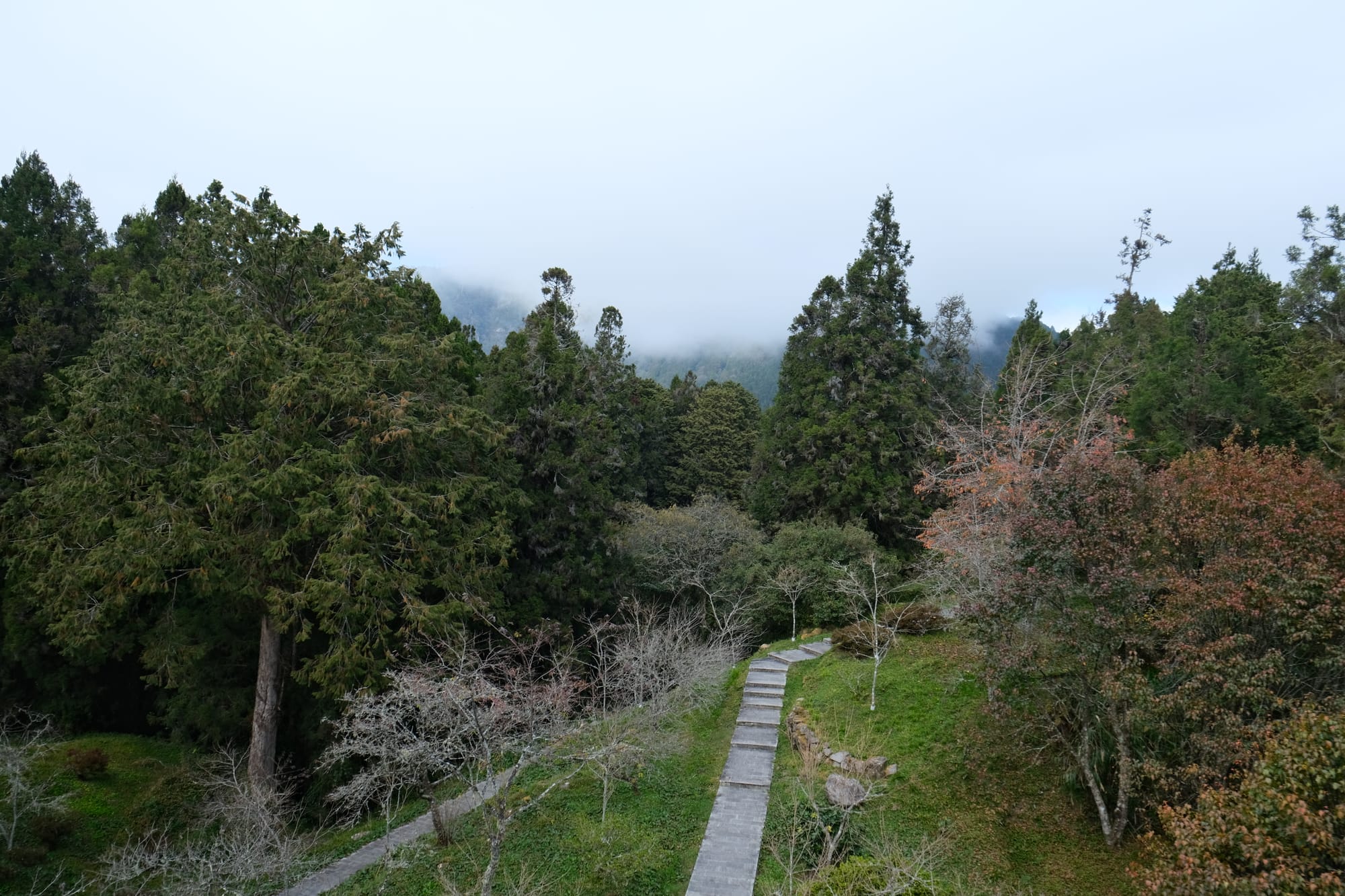
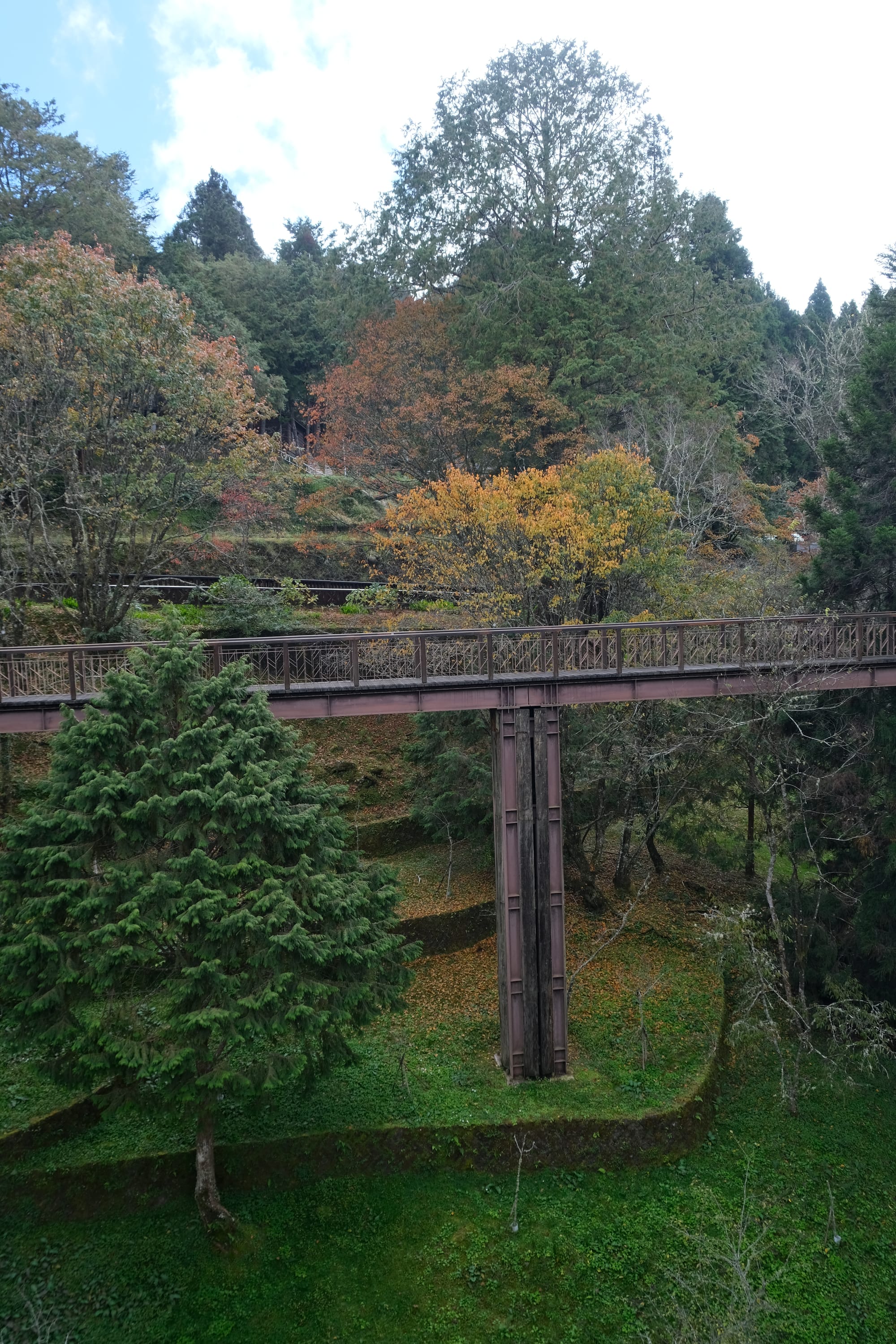
Another beautiful garden with some autumn and winter colouring.
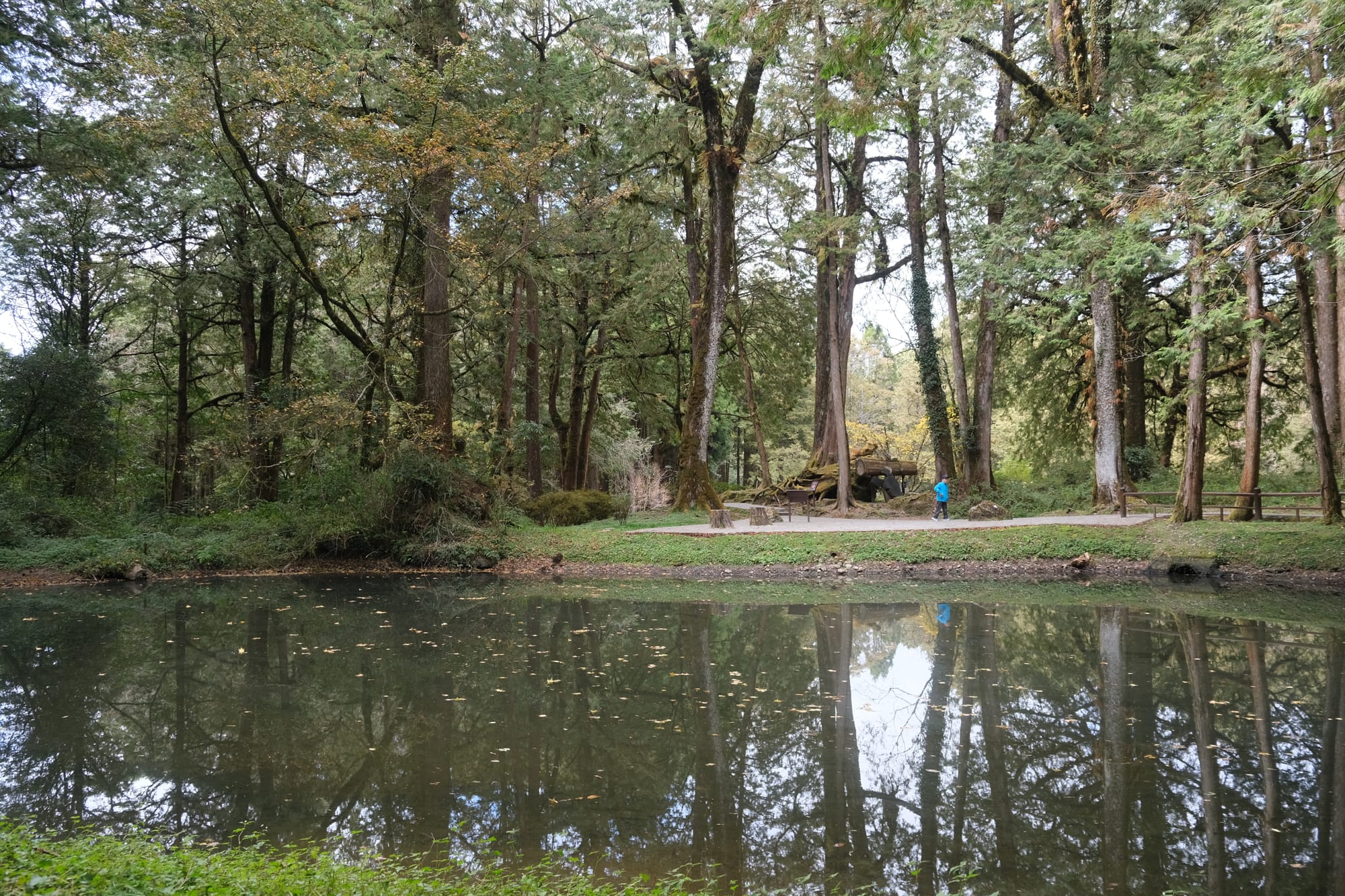
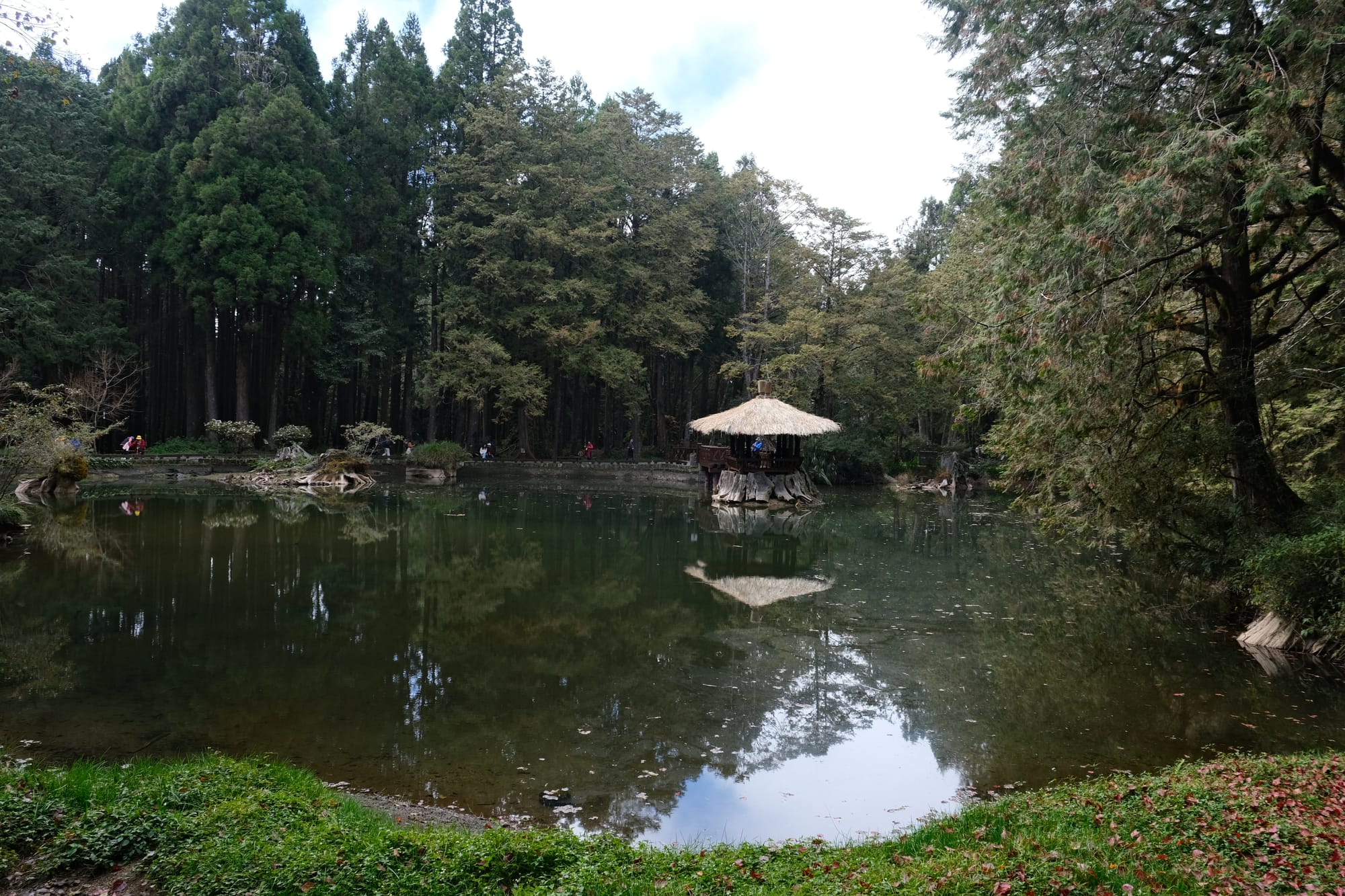
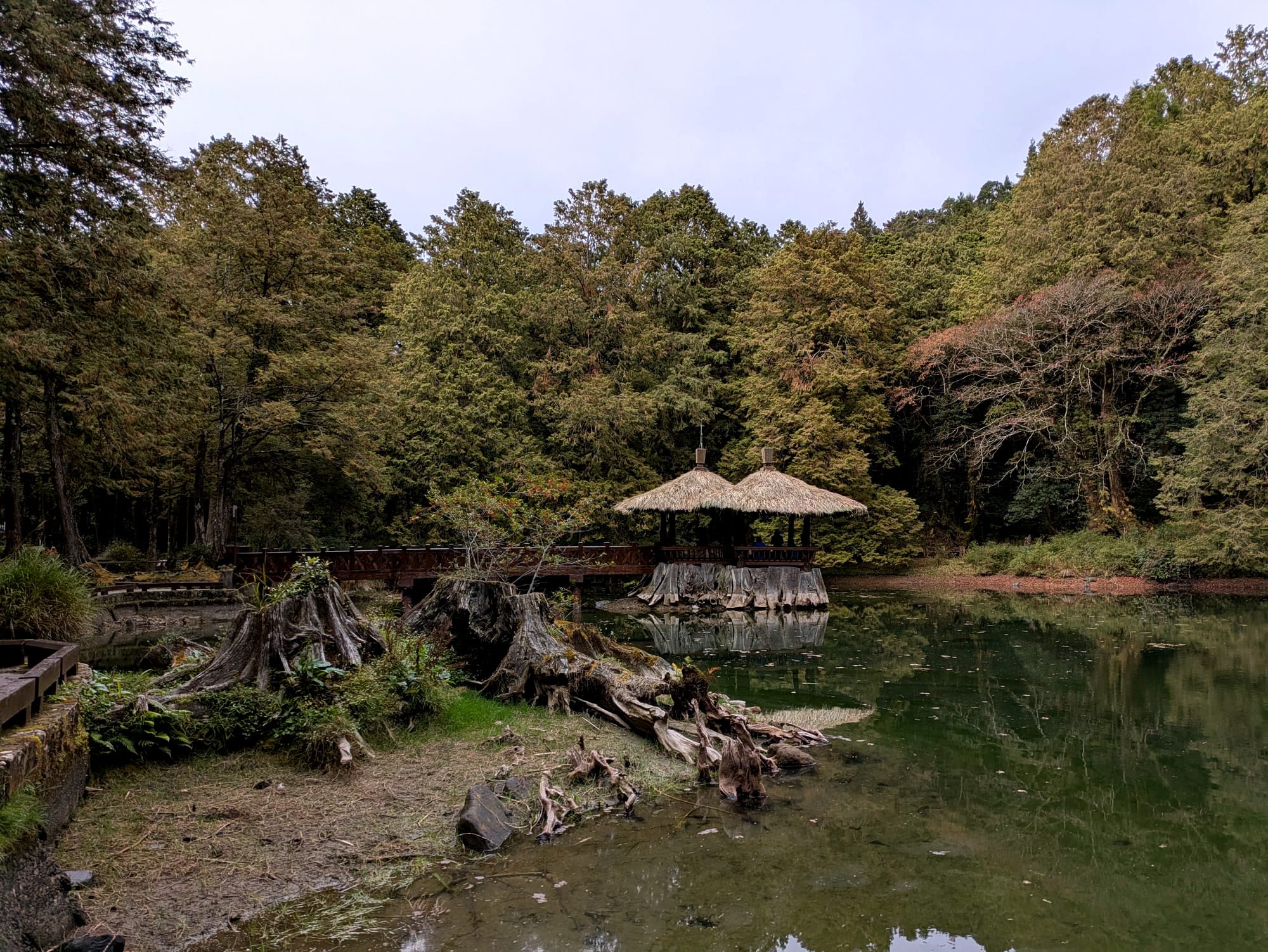
The sister lakes: the little sister lake is on the left and the big sister lake is on the right.
There were a couple of lakes in the forest. These were called the sister lakes with one being larger than the other. I was able to walk on the trail all around the lake and see it from multiple angles. The larger lake also has a little gazebo in the middle where I could take a quick rest from all the walking.
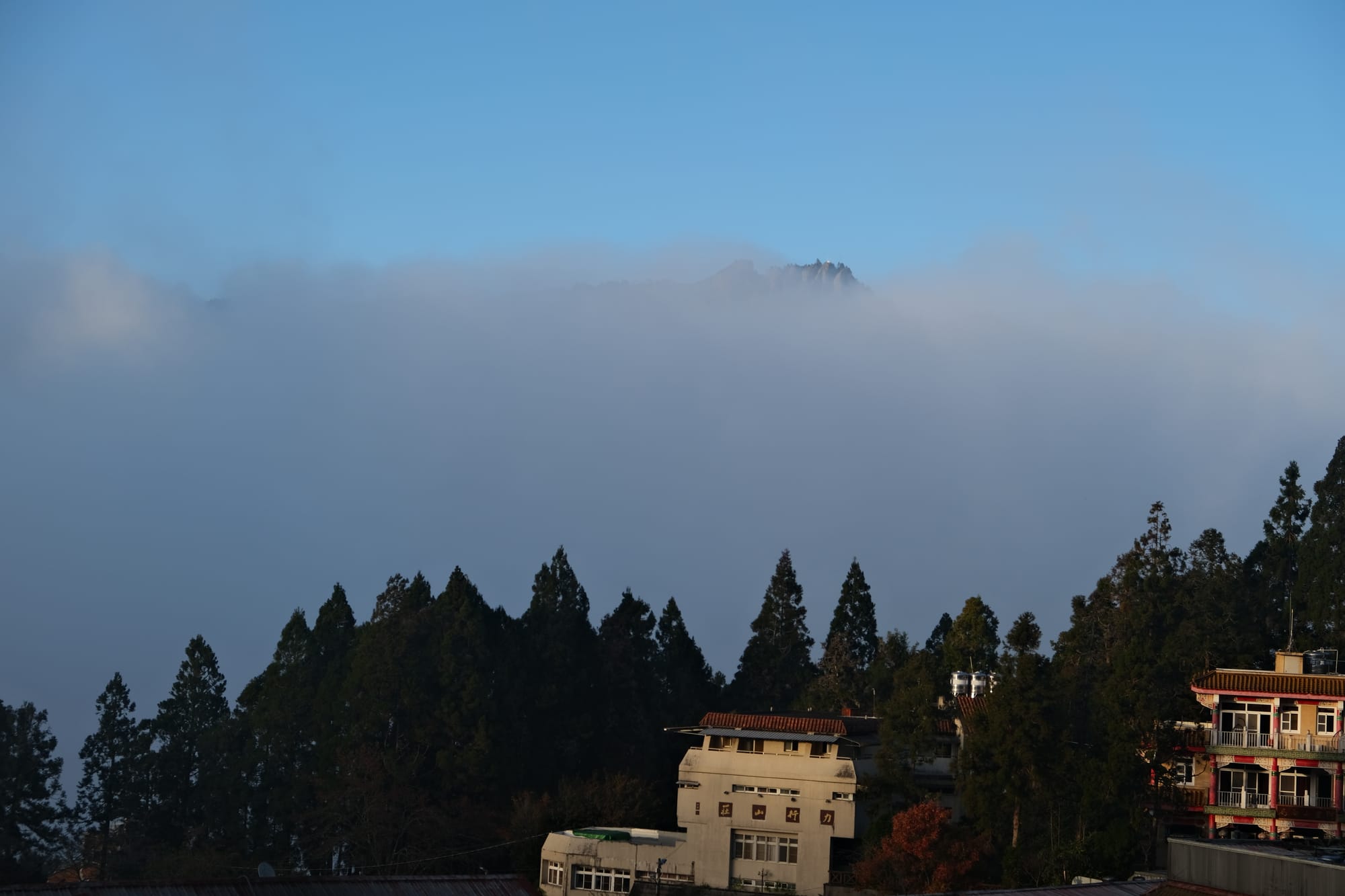
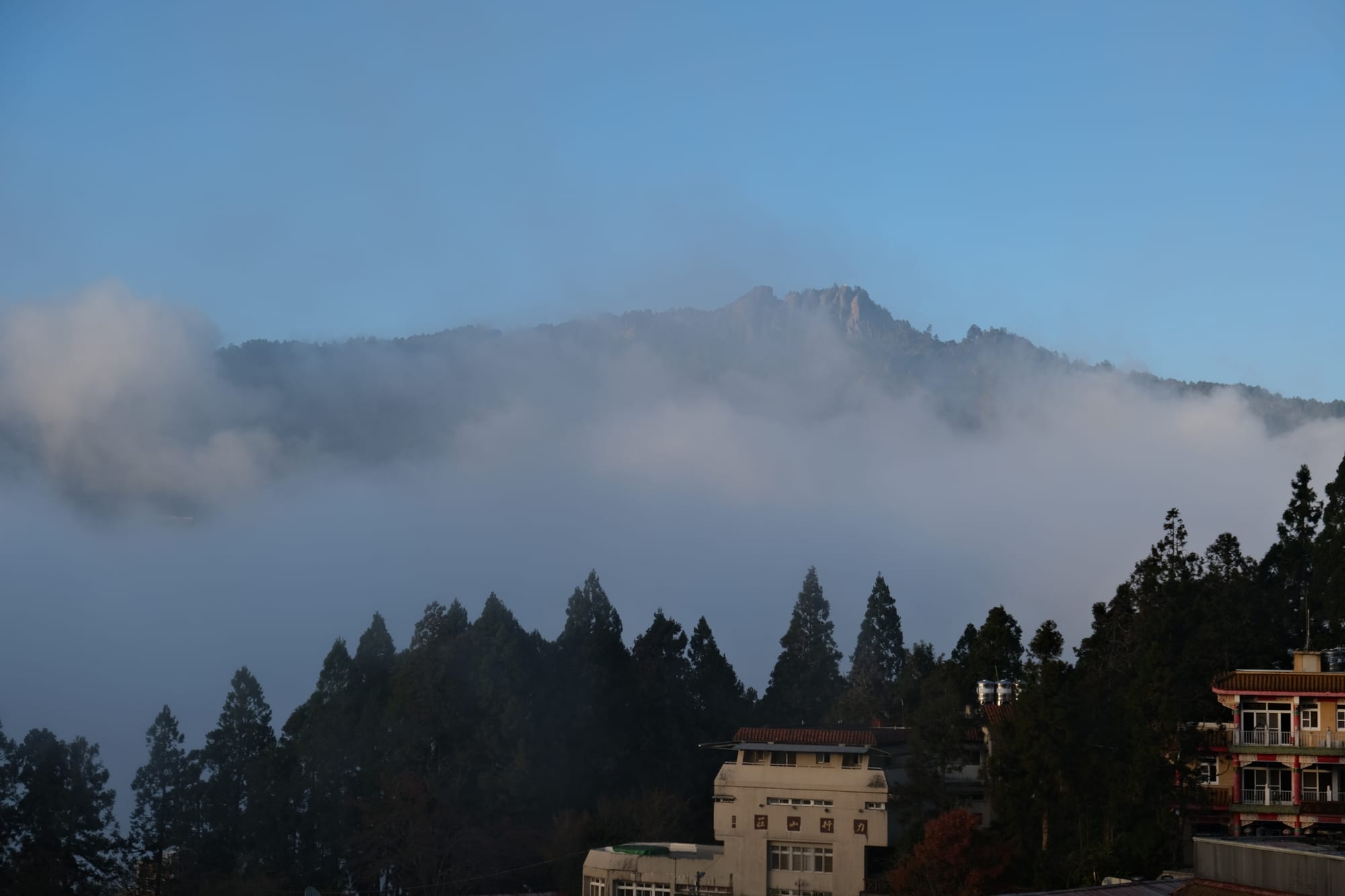
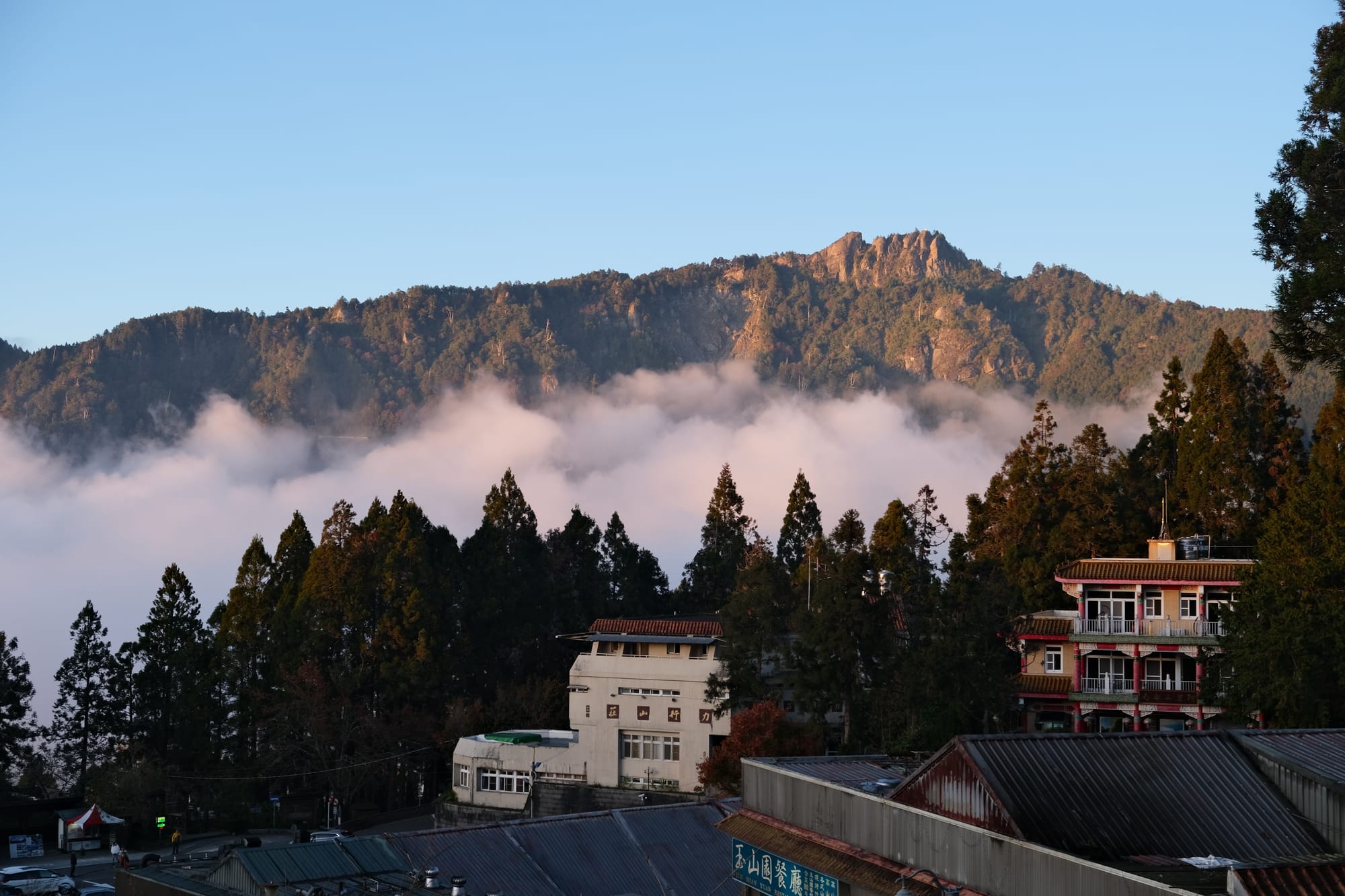
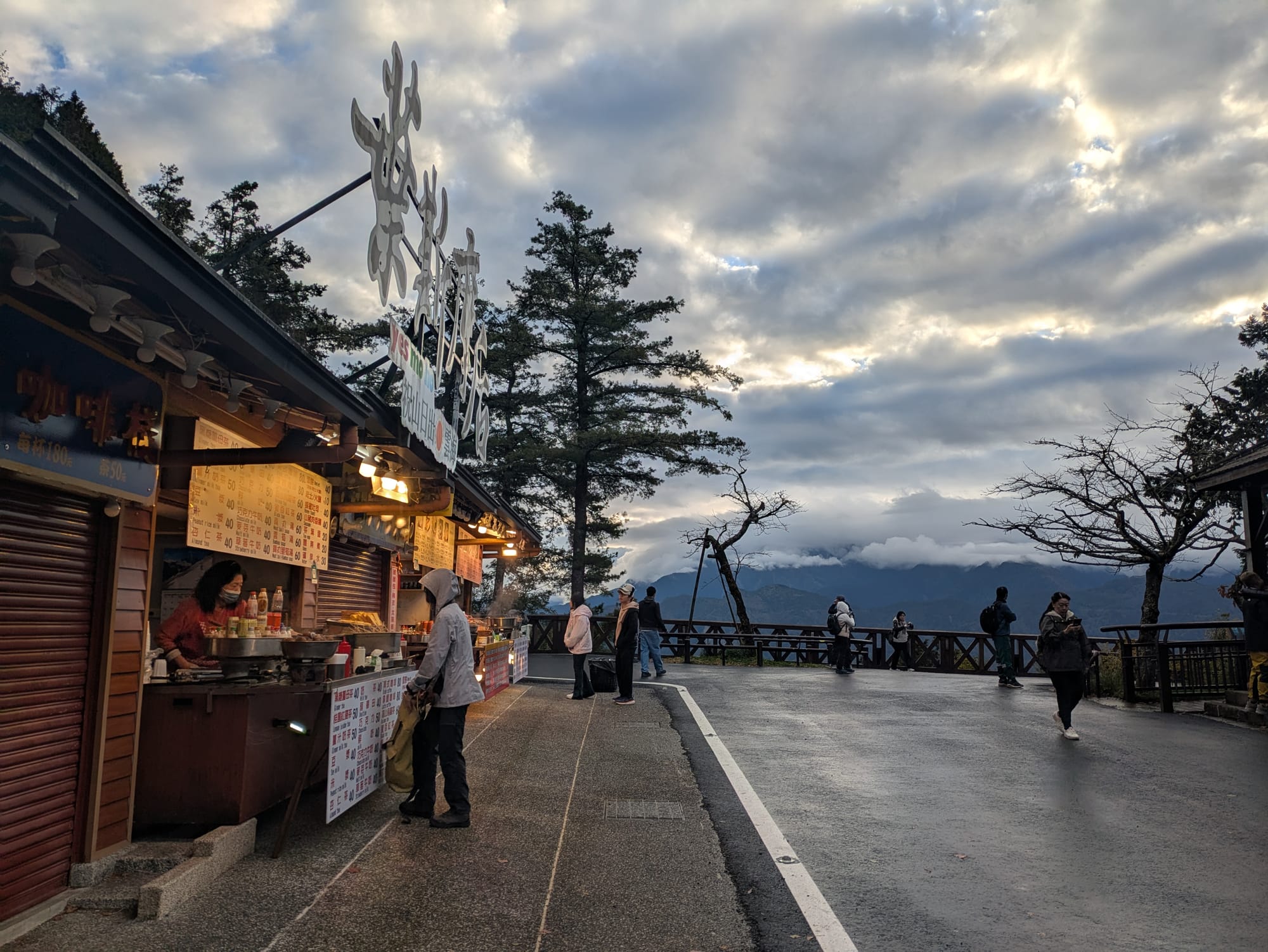
The clouds descending at sunset time. This view is taken from the main train station looking over the little village area.
The weather at Alishan was always changing and the clouds would sometimes move quickly. In the above gallery, the time difference between the first image and the last is just 15 minutes or so. These clouds were settling down into the mountain valley almost like a divine hand was pushing them down. I saw this on the second evening of my visit.
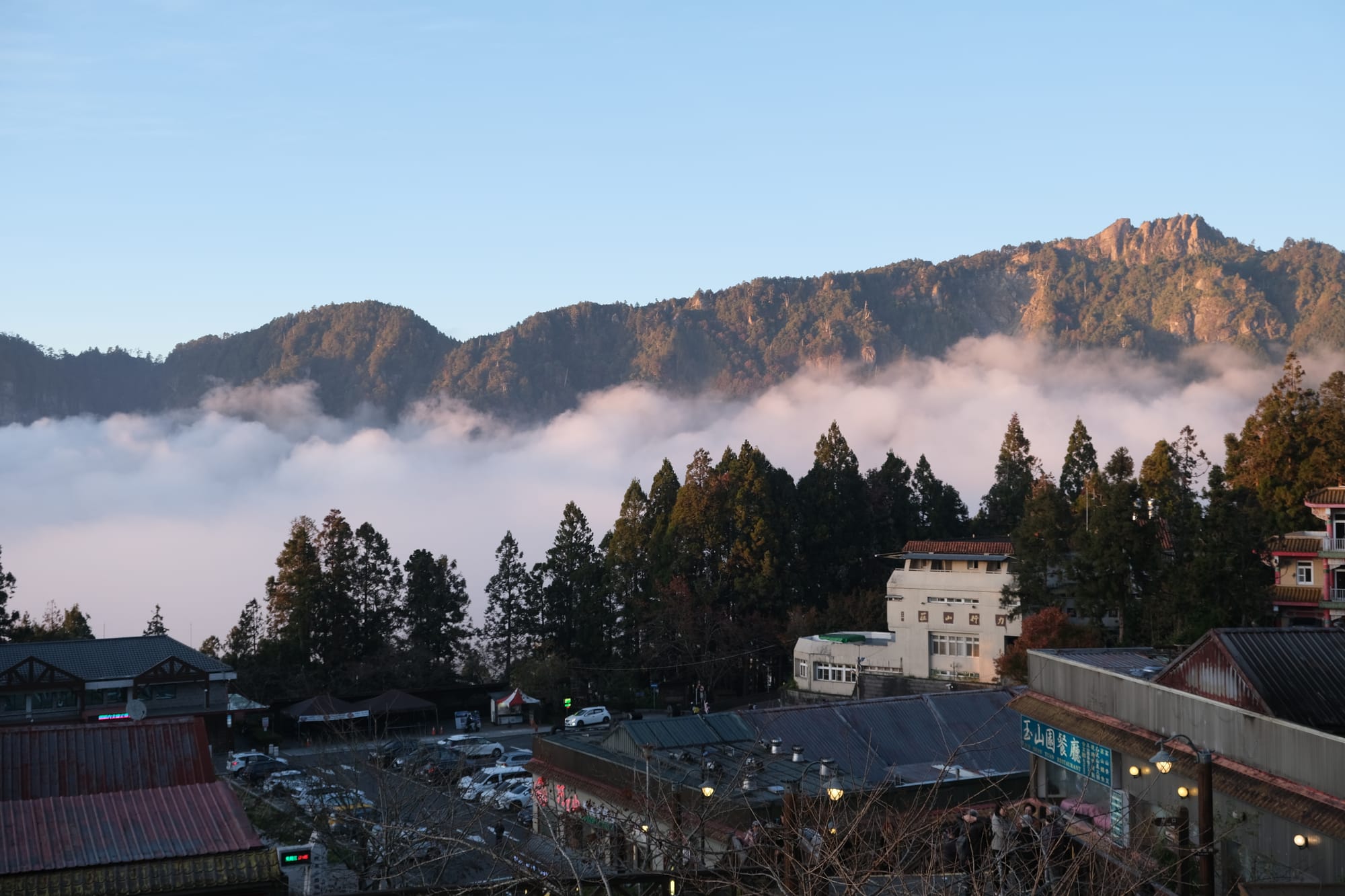
Right at the entrance to the park is a little village and parking area. Here there are: restaurants, stores, and the information centre. Only a short walk down the hill is the hotel district where I was staying. This tourist village was my base of operations and from here I could walk about ten minutes or so to get into the park proper where the trails branched to all the different corners of the forest.
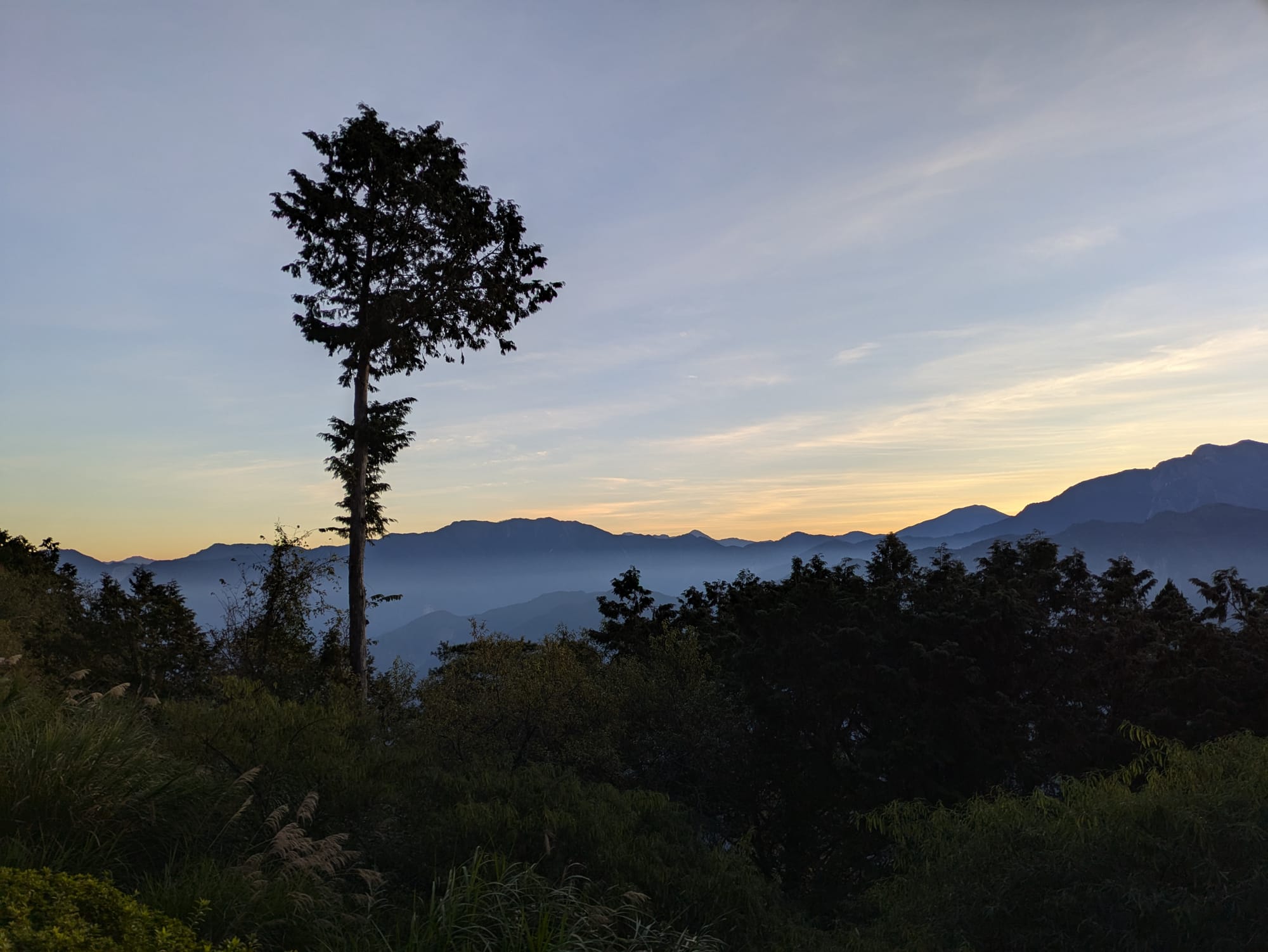
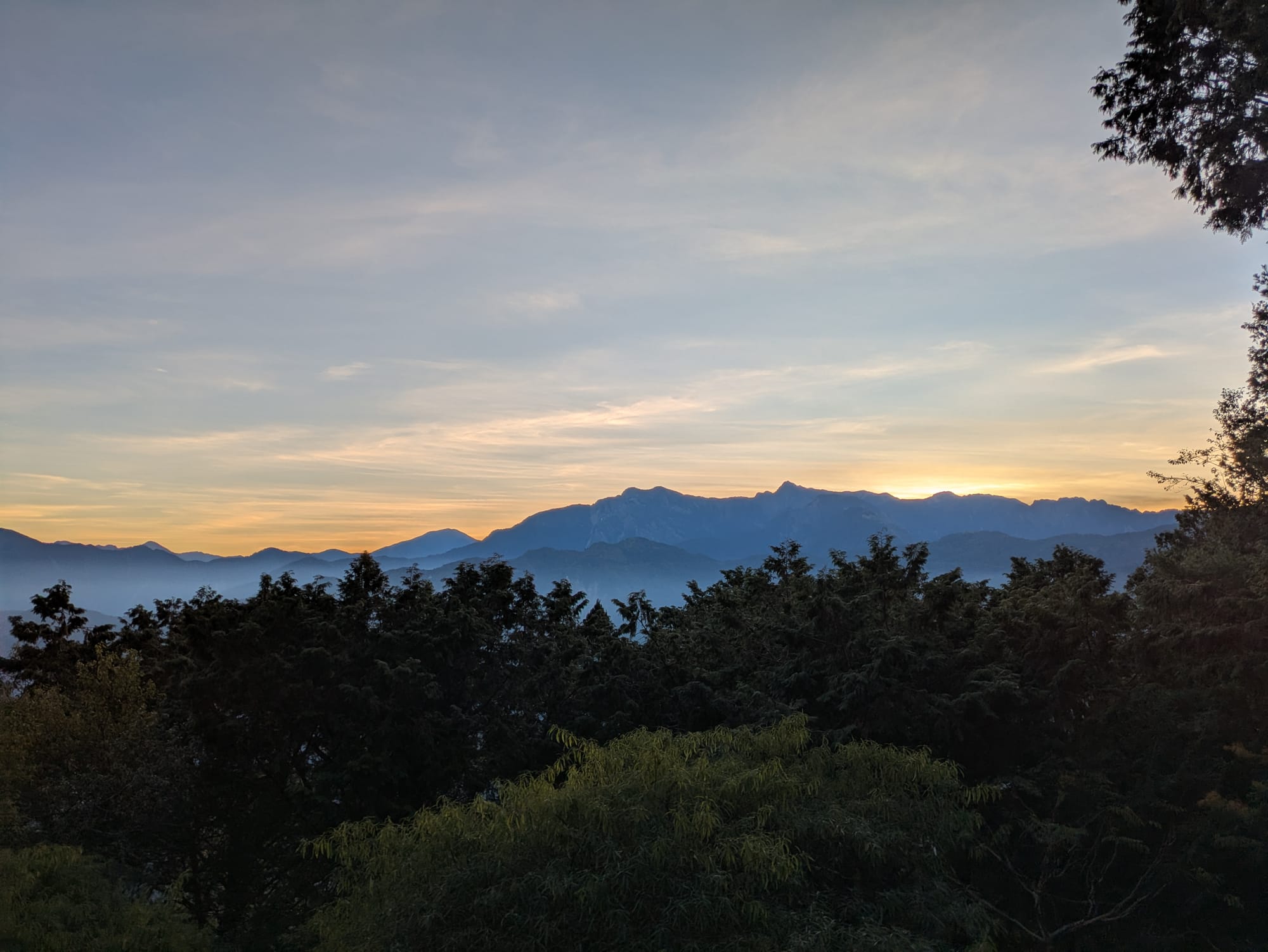
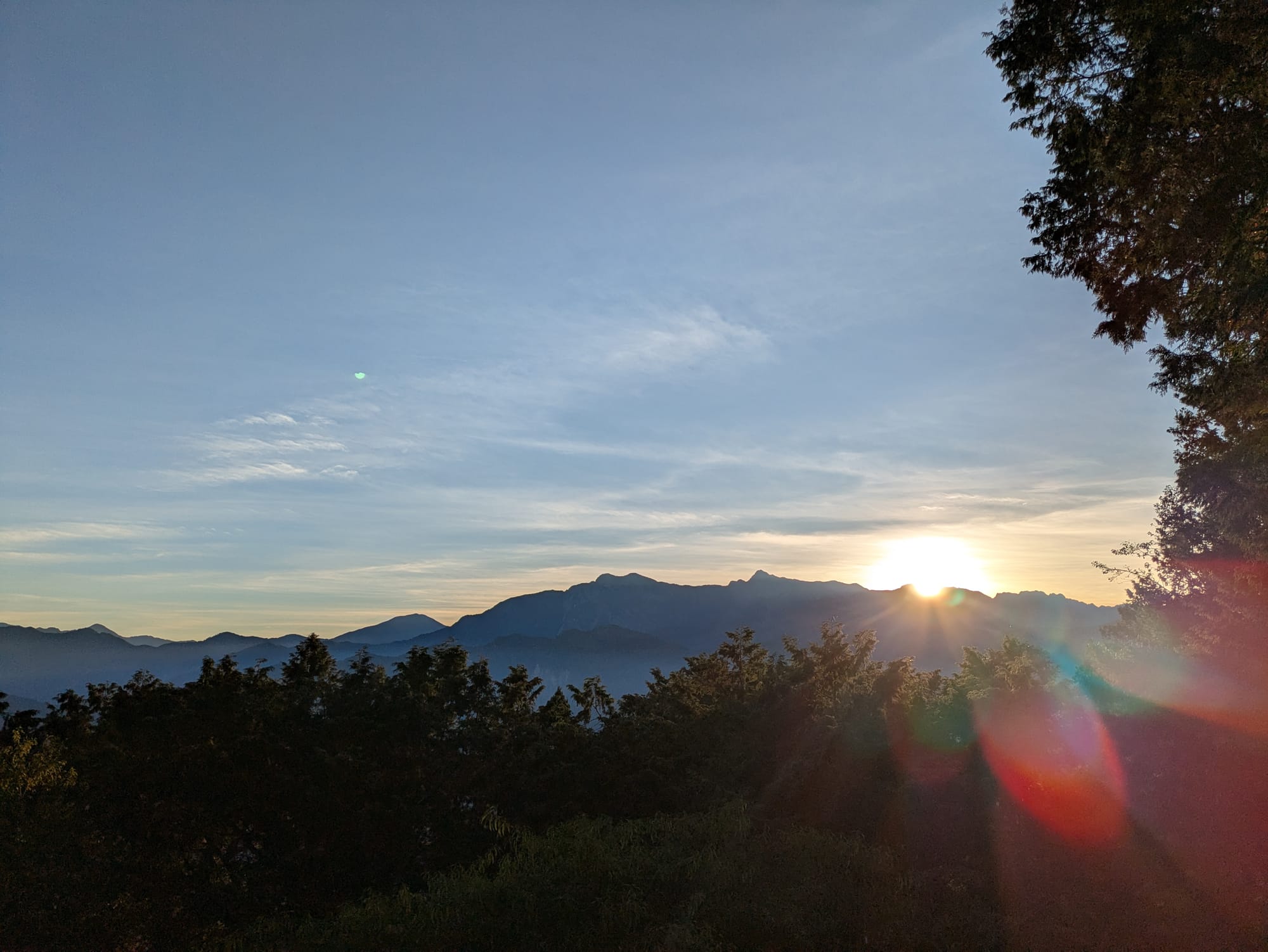
The sunrise as seen from Zushan Observation Deck.
On my first day in Alishan I learned that every day there is a sunrise train to Zushan mountain. This train only goes to the peak once a day and only for the sunrise. The station at Zushan is the highest railway station in Taiwan and it is the furthest active service station from the main Alishan village. I decided to take the sunrise train twice in a row, for the first day I watched the sunrise from Zushan, on the second day I walked to the nearby Ogasawara peak, although that day it was cloudy so we didn't see the sun. At both peaks there was a viewing platform looking east, towards the sunrise and the Jade mountains, the tallest mountains in Taiwan.
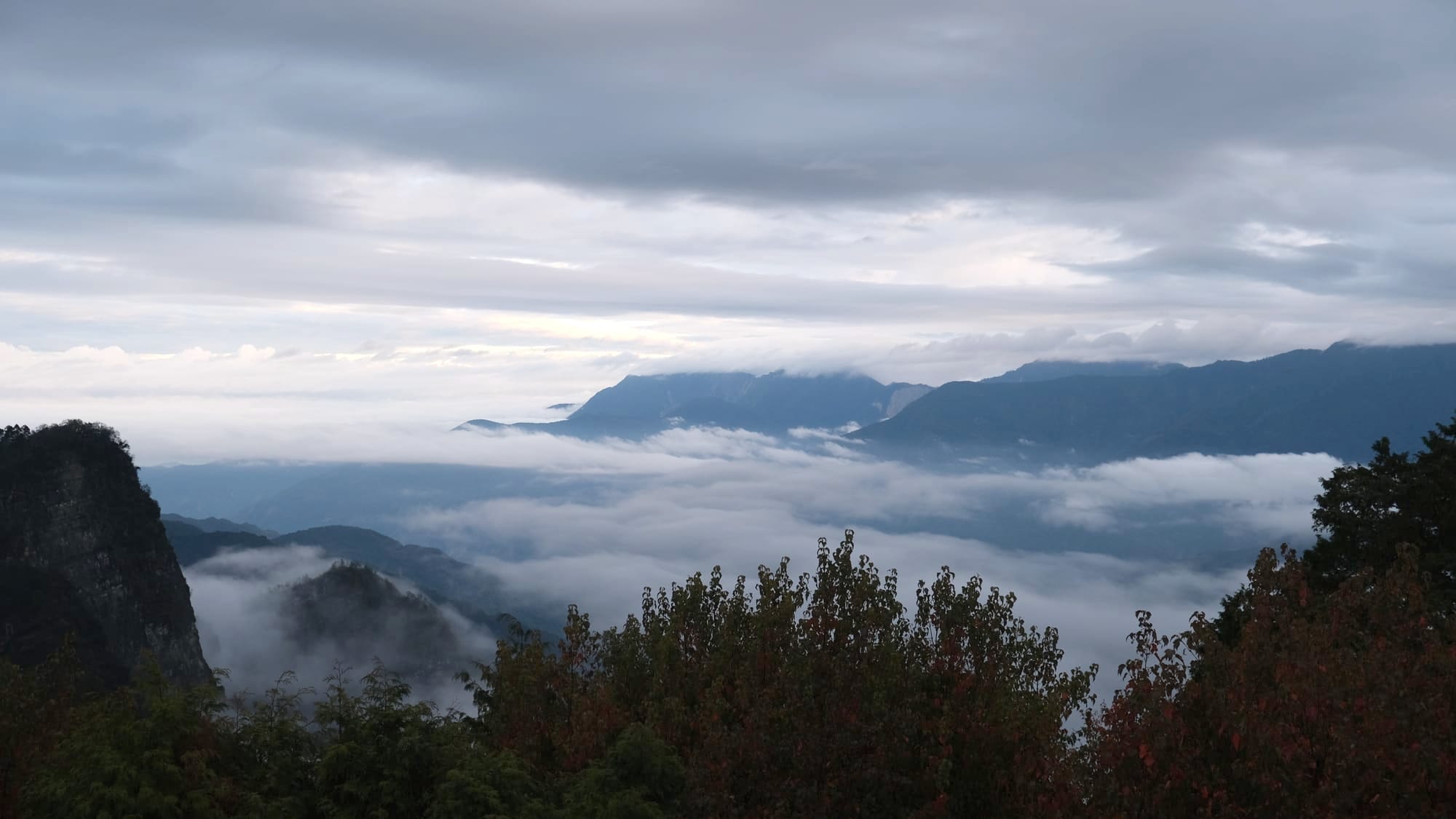
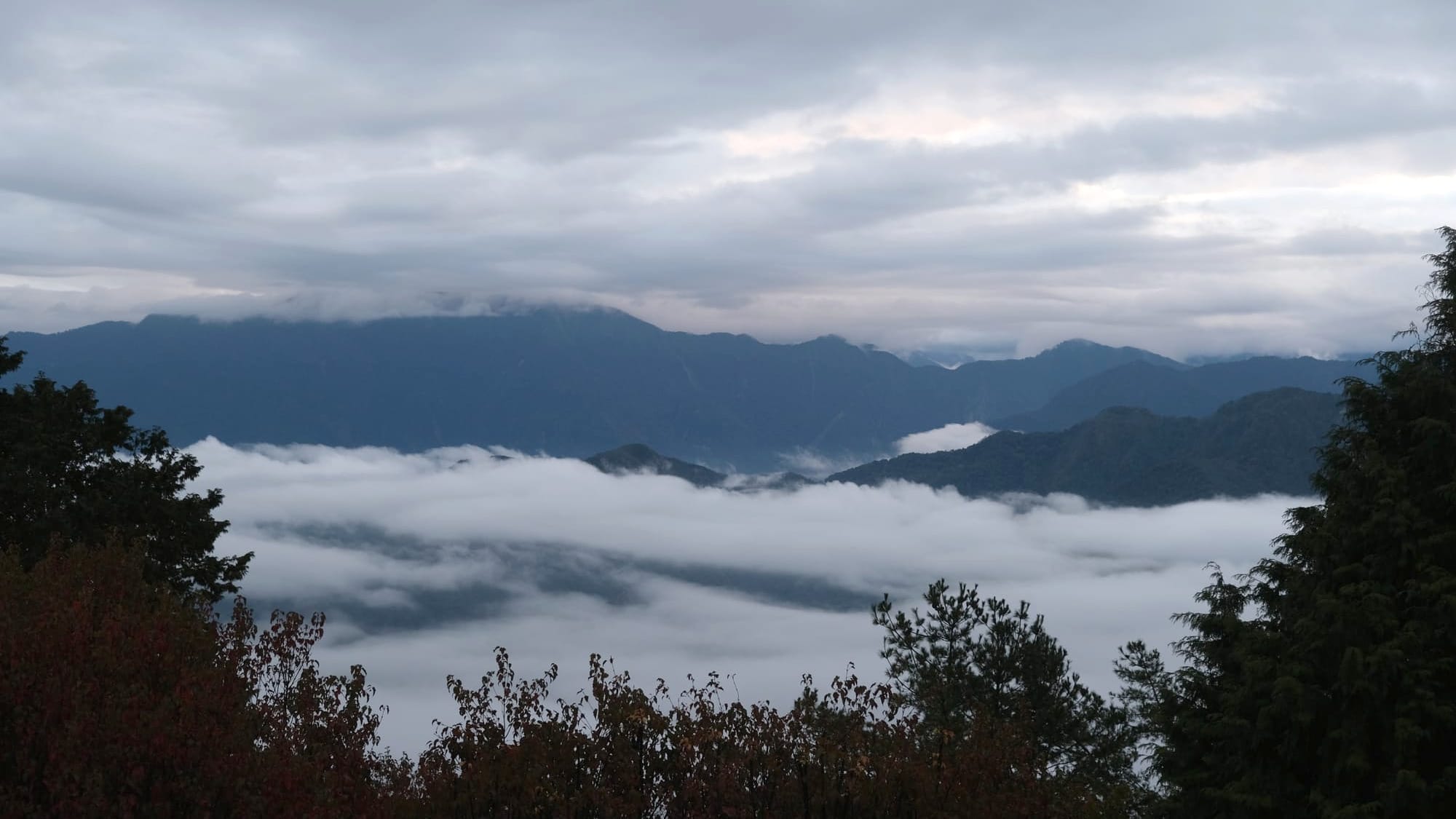
The Jade Mountains as seen from Ogasawara viewing platform on a cloudy morning.
While we couldn't see the sun on the second morning, the clouds did look beautiful. They covered the sky like a thick blanket and formed in the valley like cotton.
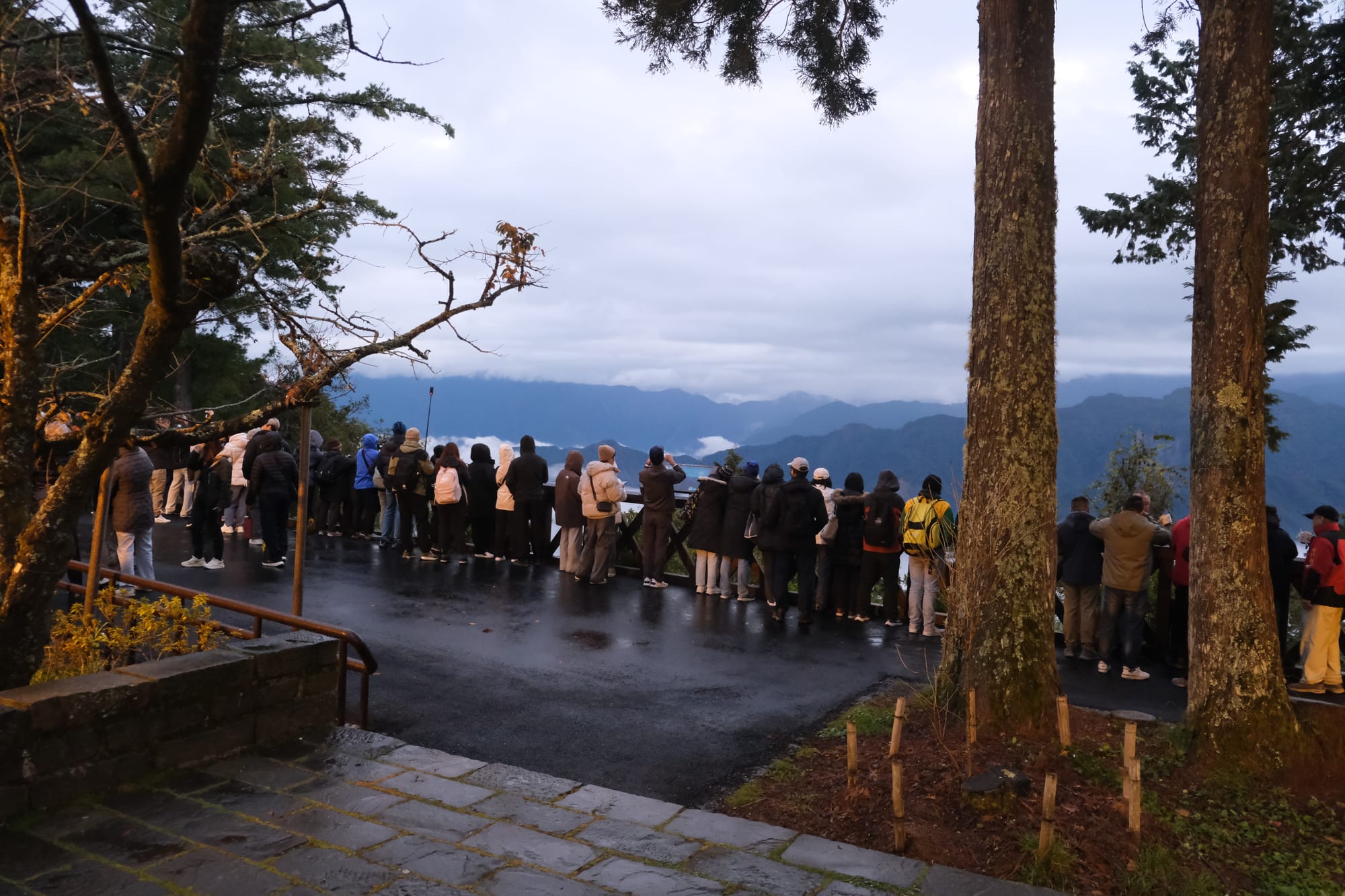
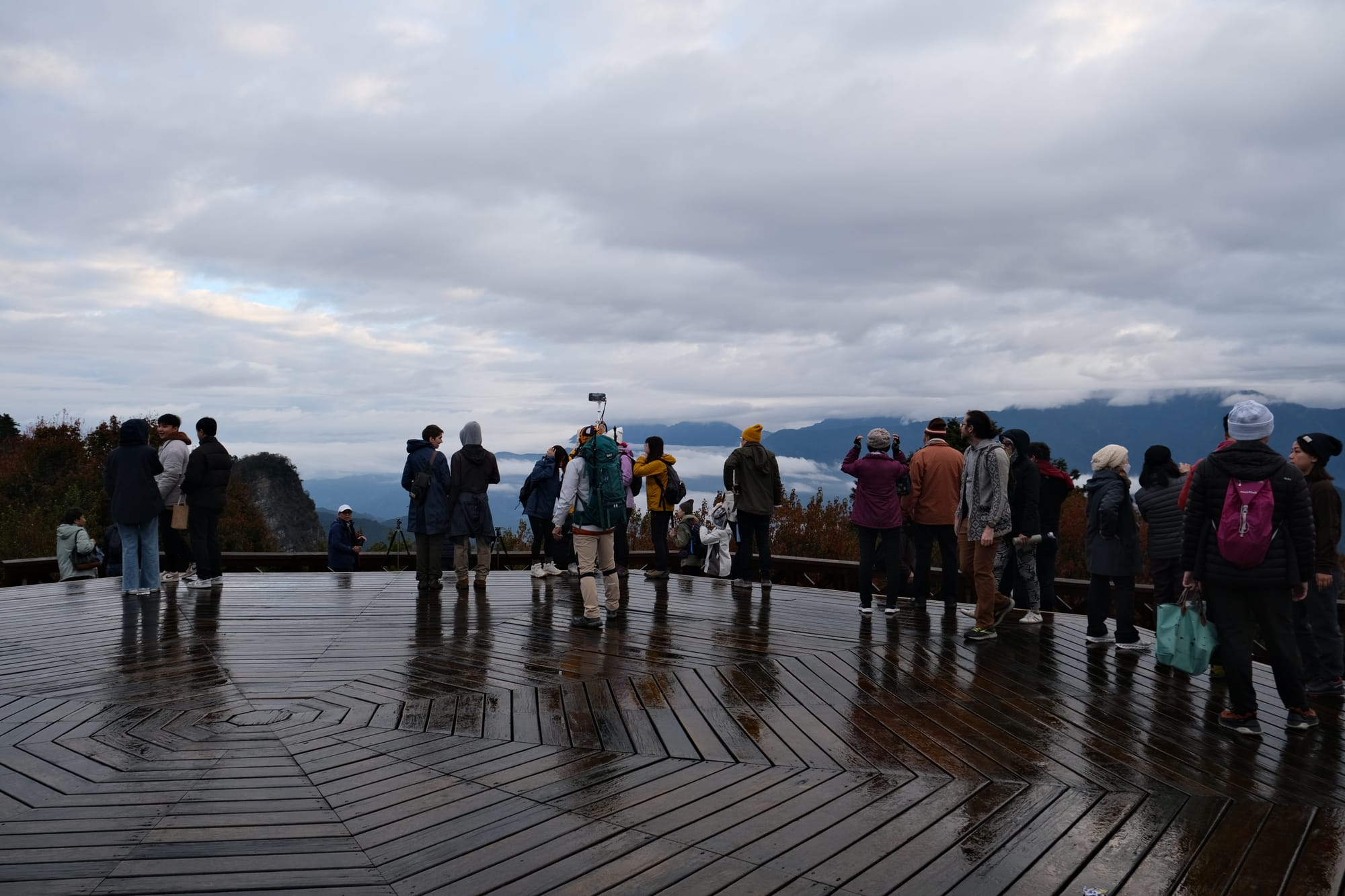
The first image shows the Zushan observation deck, the second shows the octagonal platform at Ogasawara peak.
The sunrise was popular, even on a cloudy day. For both days I was waking up before 5:00 AM to get ready for the train that would leave at 5:50 AM. They ran two trains up to Zushan station and both times the train was full. The train trip took about twenty-five minutes or so. After the sunrise many people took the train back down to the village but I walked back both times as the rest of the Alishan park is located between Zushan and the village. So essentially on both days I started my exploration of Alishan from Zushan and then worked my way back to the village, stopping at all the various attractions on the way.
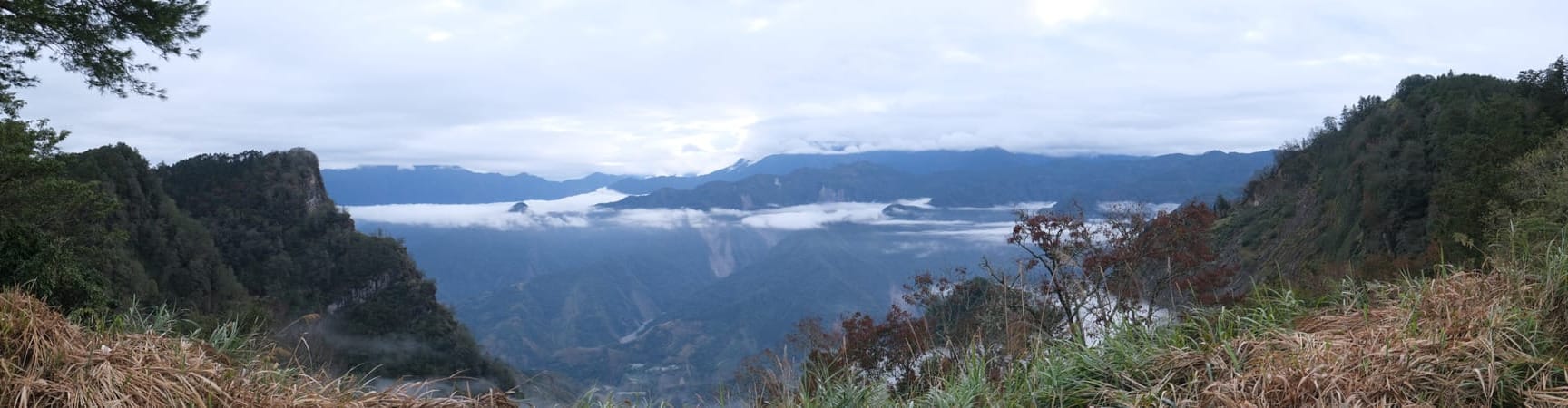
I spent about thirty minutes at this lookout and during my time here the sea of clouds formed in the valley then dissapeared, then re-formed, twice. It was an absolutely spectacular event to observe. There seemed to be this horizontal line at a certain elevation that was tinted with mist and it was in this area where the clouds formed and collapsed, but they did not ascend beyond it. Well you know I captured a time-lapse of this, so please enjoy the same spectacular view that I had.
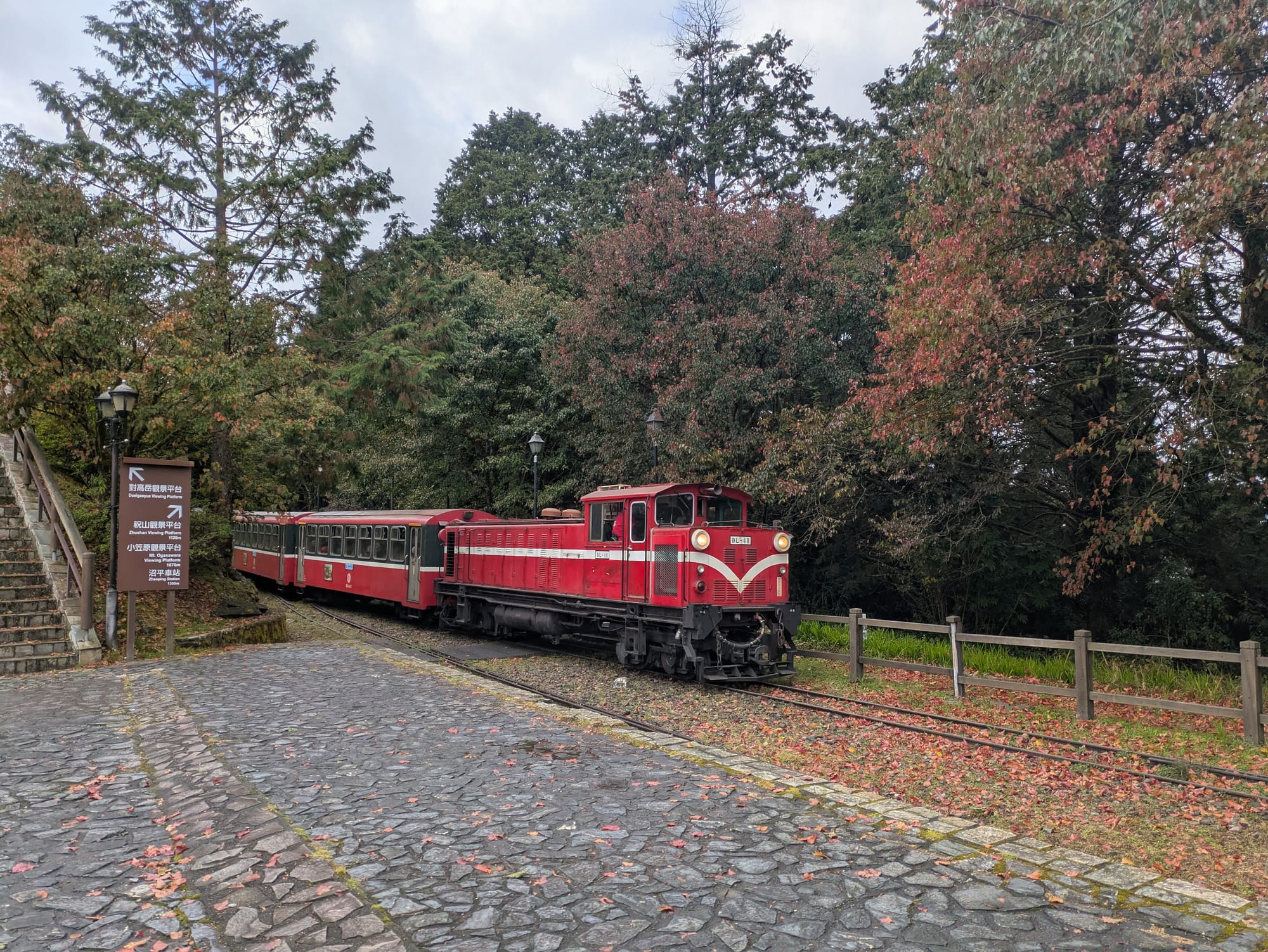
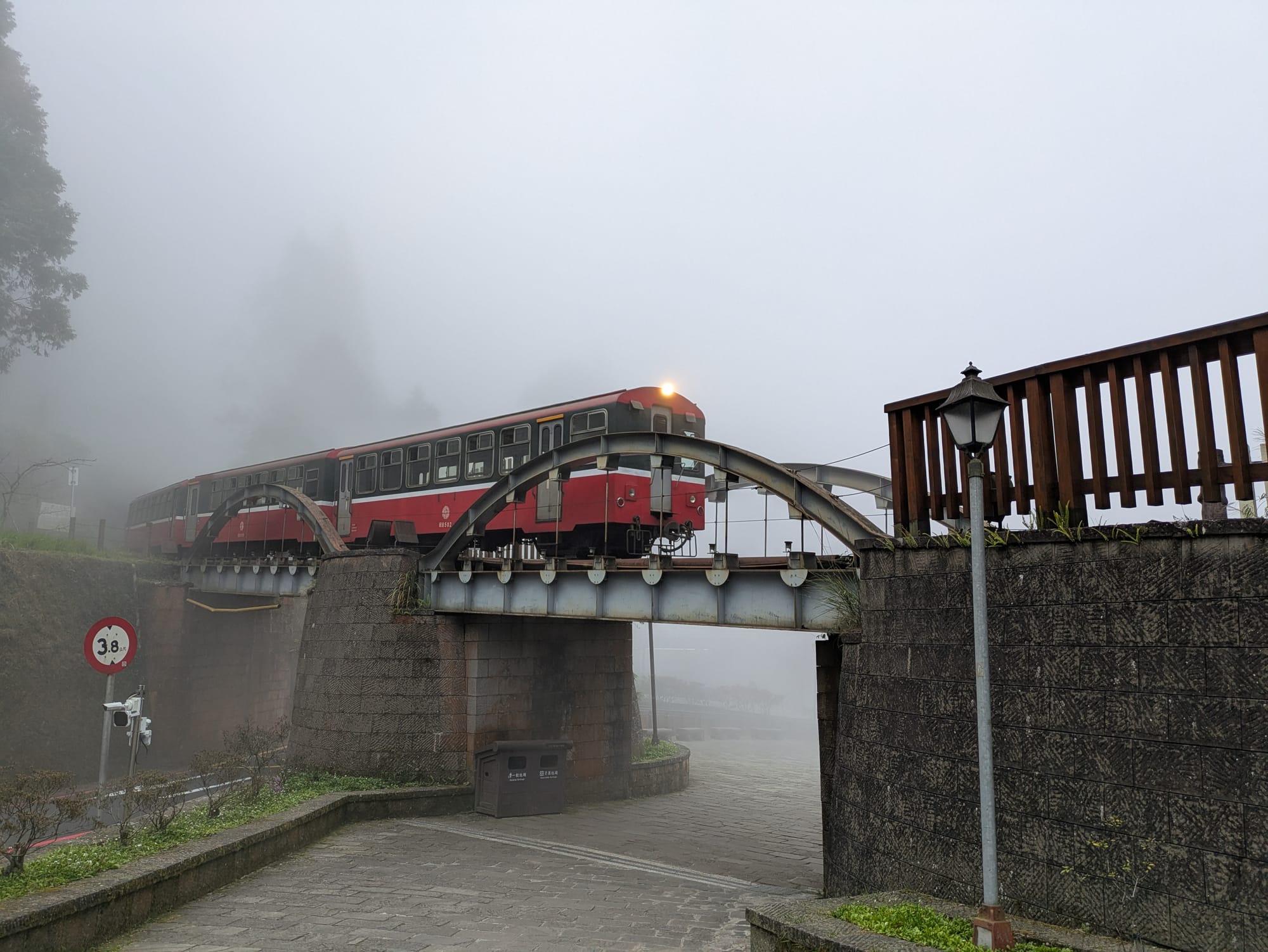
The Alishan mountain train photographed as they went past a crossing. The first image was taken near the Duigaoyue viewing platform. The second image was taken as I was returning to the main tourist village, exiting the park.
On a few occasions I saw a train go past and I always quickly tried to photograph it. The train tracks cross throughout the park using switchbacks to climb the mountain slopes. There are two lines that run throughout the day, and the special third line that only runs in the morning for the sunrise. The actual distance the two main lines cover is small and I could walk to the next train station in about twenty minutes. I never bothered with taking these trains, the only one I took was the sunrise train and the distance that track covered would have taken me over an hour to walk.
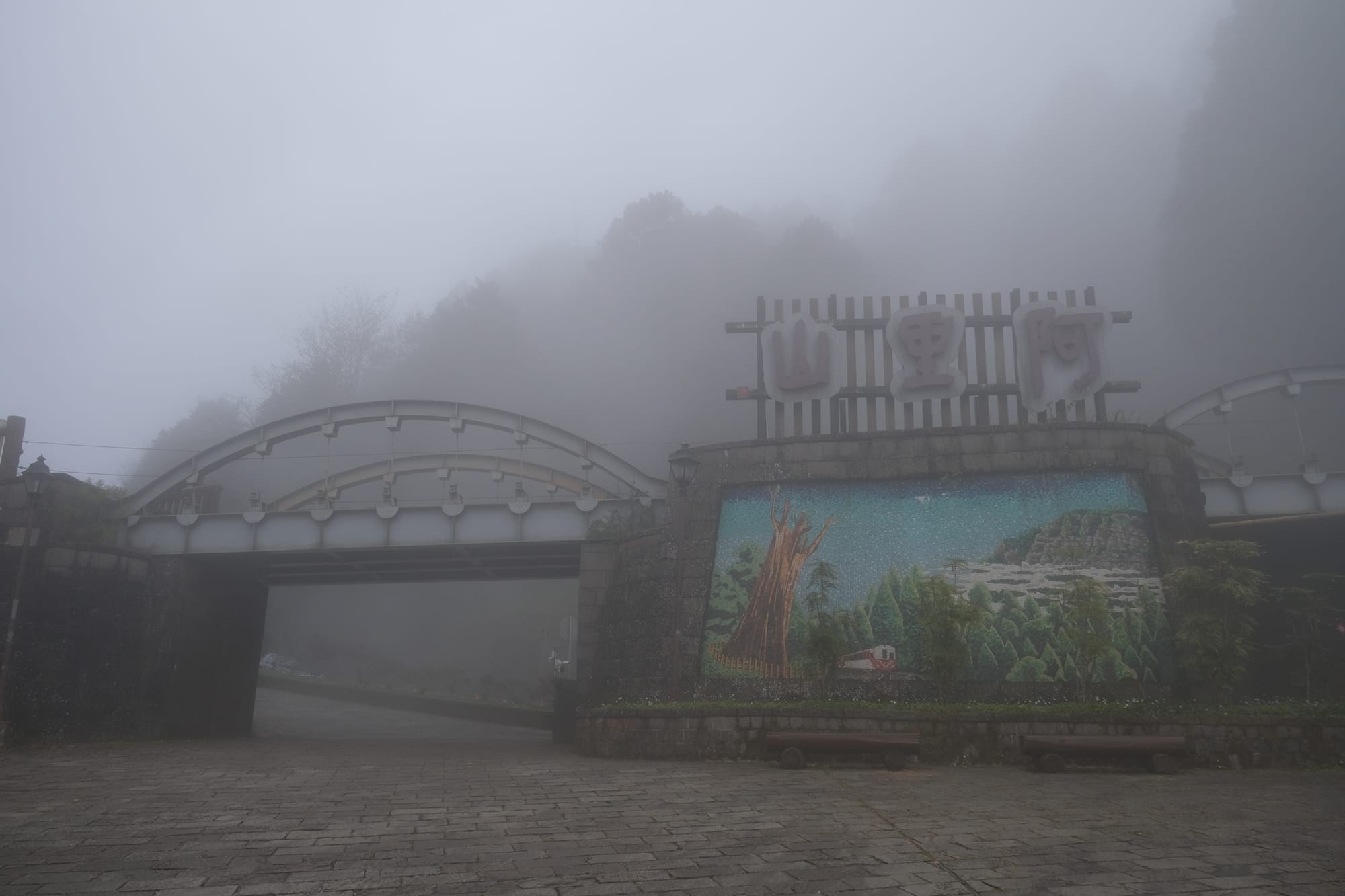
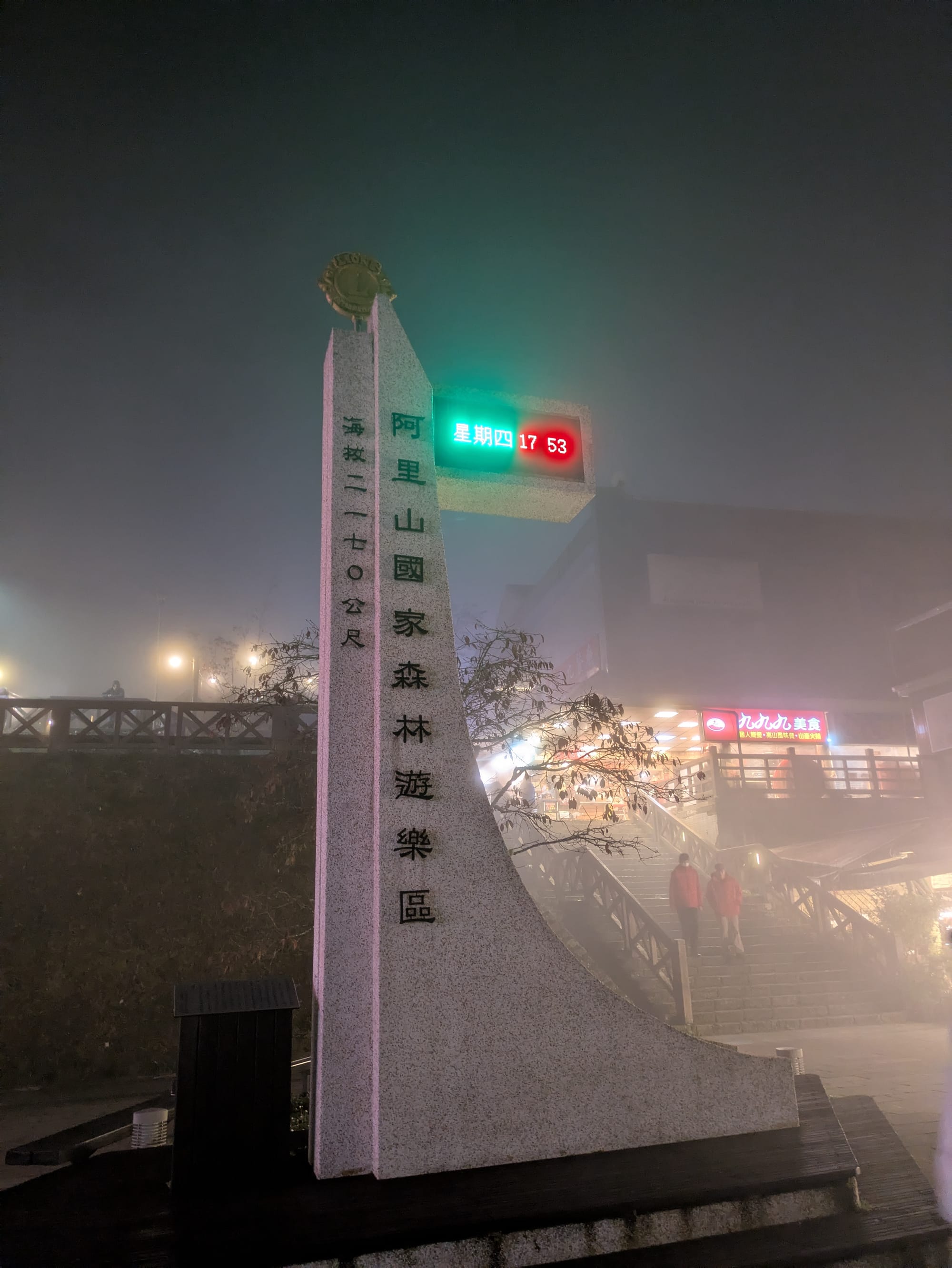
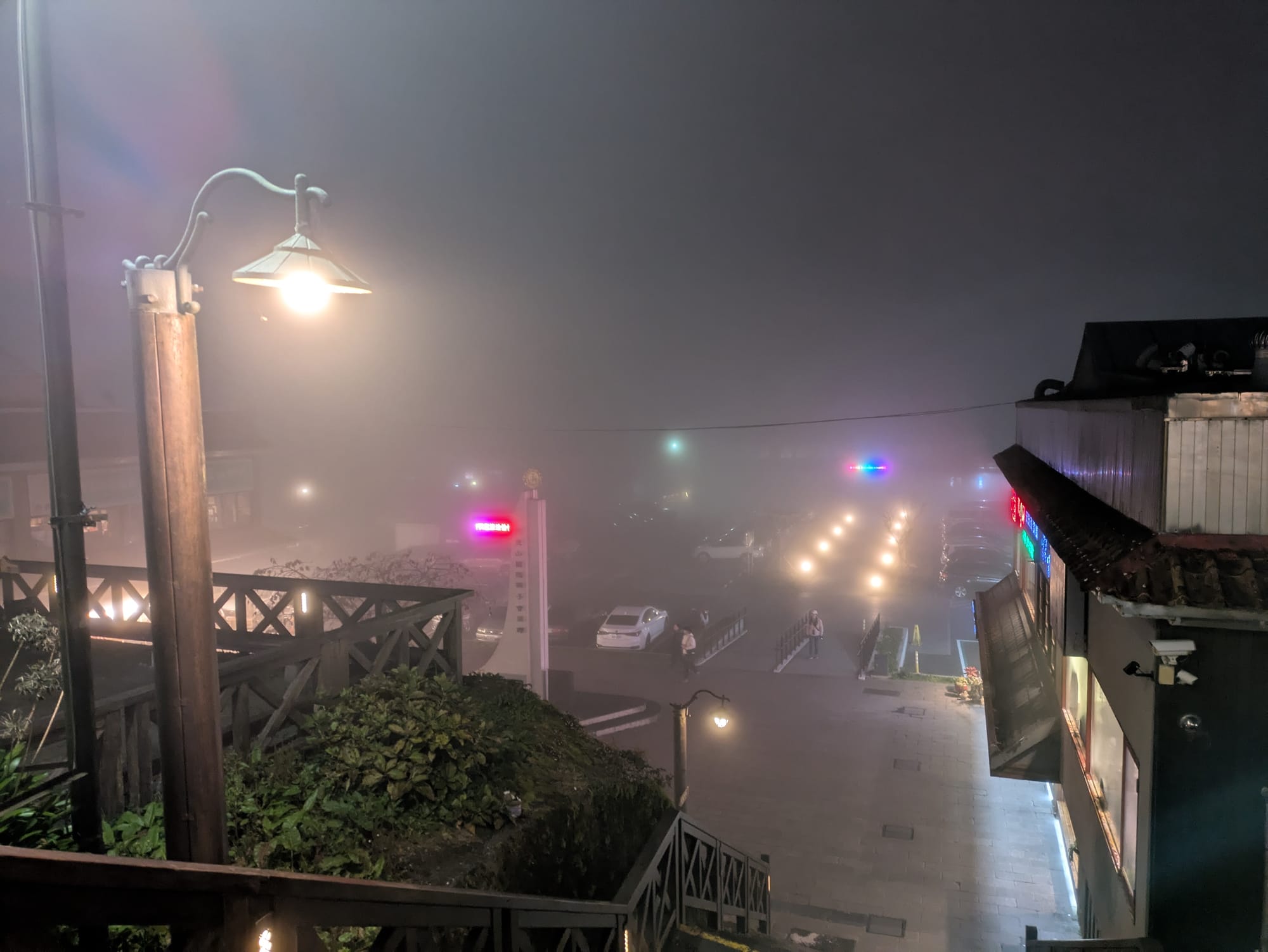
The park entrance and monument clock surrounded by mist.
The late afternoon and evening was the most likely time for fog to appear in Alishan. On my first and third nights (two out of three) the forest was drenched in mist, with the fog being thickest on the third night. I loved how the lights of the village seemed to glow in the fog giving the entire place a very ethereal sense.
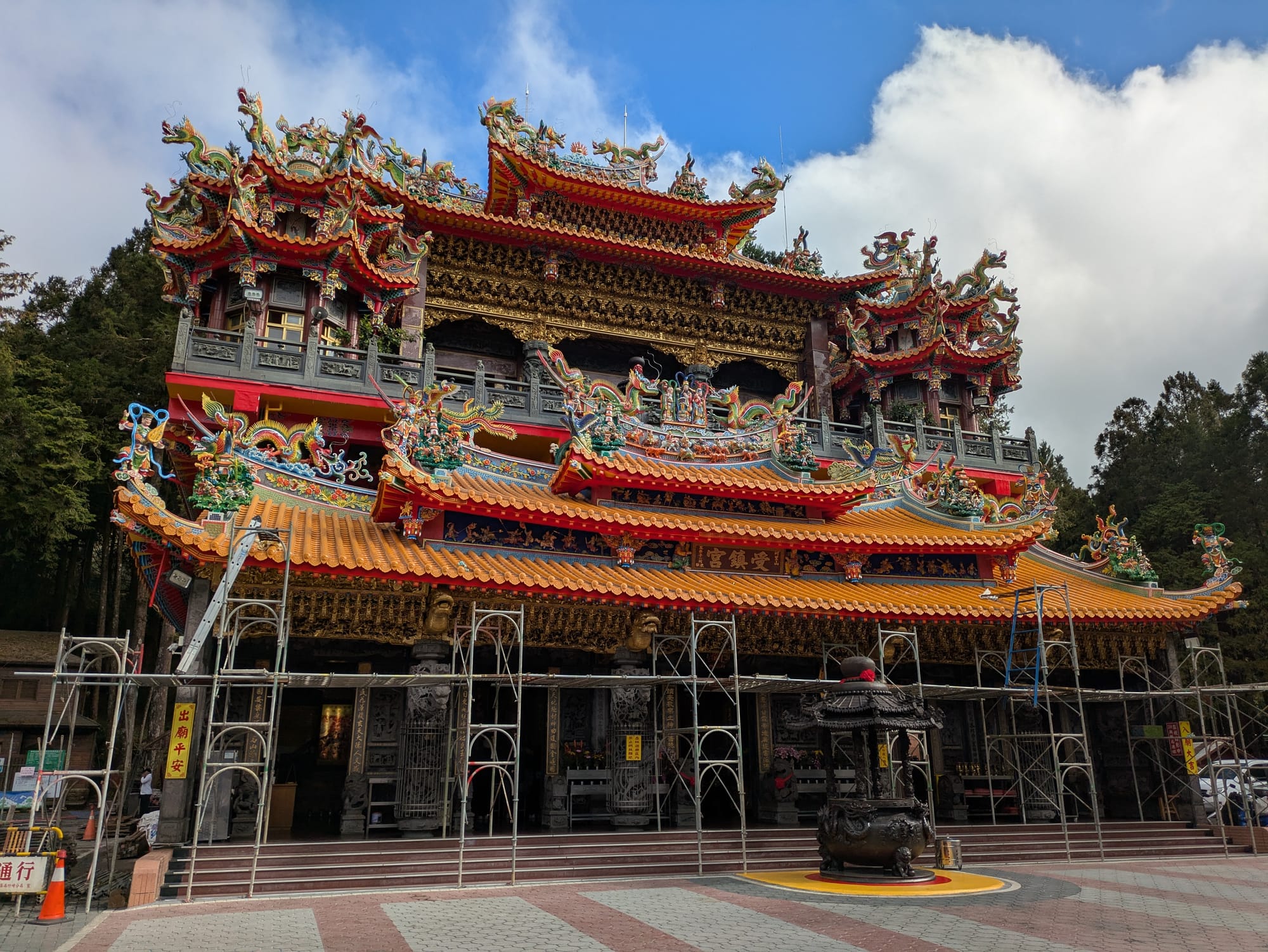
This was the largest temple in Alishan and it is located at the intersection of thee major walking trails. It was a little bit of a hub as opposite the temple is an open square with shops located in a long building that encompassed three sides of the square. This seemed to be a popular place to have lunch while visiting the forest. I picked up a lovely oolong tea from a local shop on my last day here while passing this temple.
Mianyue Line
On my first full day in Alishan I did the biggest hike in the area, the Mianyue Line hike. This hike actually extends outside of the Alishan forest area and crosses a conservation area for a rare orchid flower that has only one leaf. Because the track crosses this conservation area the government limits the number of people on the trail to just 300 per day and permits need to be organised in advance. To do this hike I booked a guide with a tour company that managed all the permitting process for me. The guide was really lovely and I learnt a lot from him not only about the local area but about Taiwan in general.
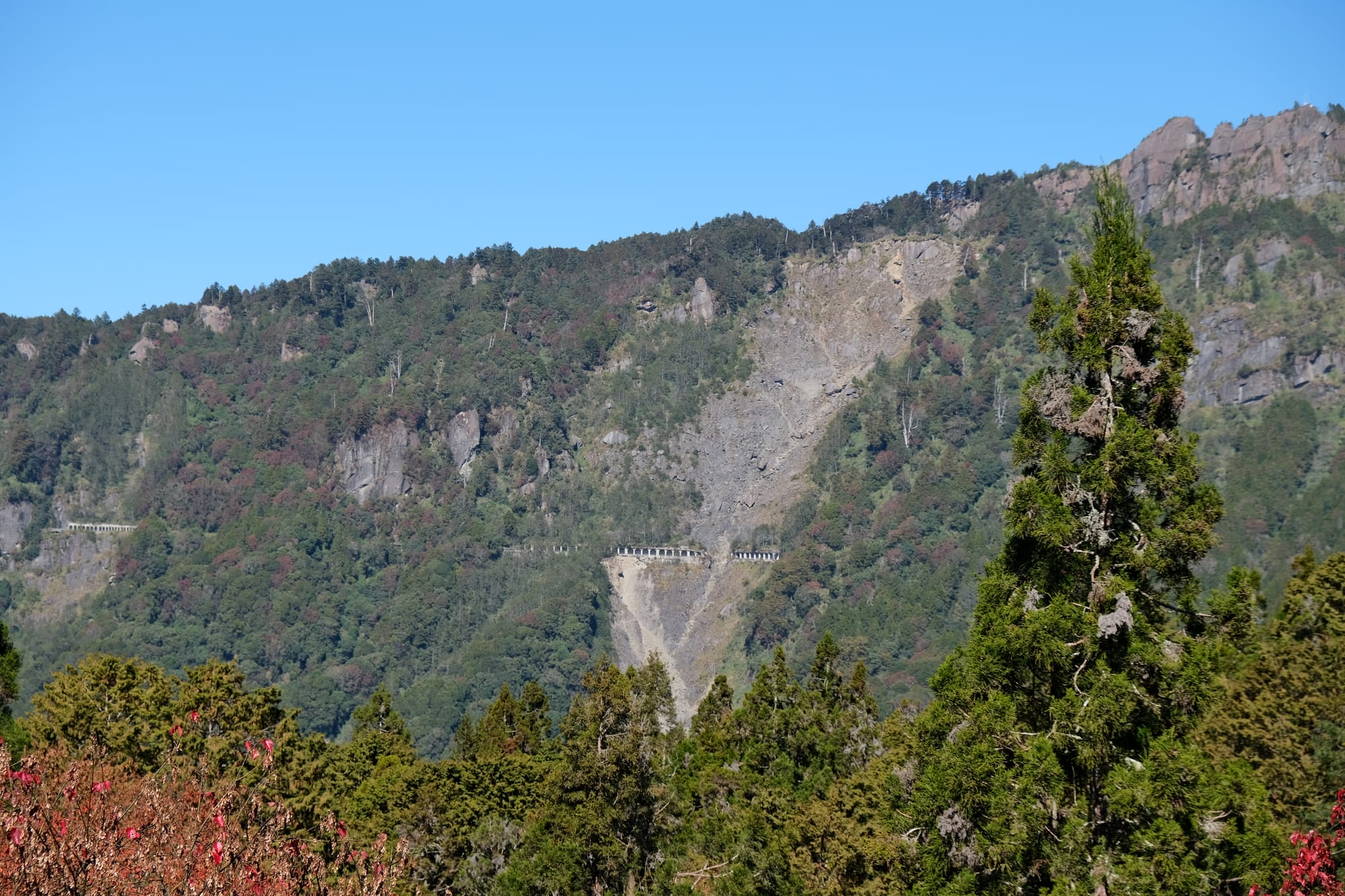
The hike is nine kilometers long one way and follows the Mianyue railway line. This railway line used to be operational but ten years ago a section of the slope collapsed during a typhoon, sweeping away part of the track. There was also a tunnel where part of the roof had collapsed during an earthquake. The above image is taken from an observation deck in Alishan showing the Mianyue railway line in the middle of the mountain slope, including the section that is broken. Since the line is closed to regular train service it has become a famous hike as the mountain area the railway line goes through is very beautiful.
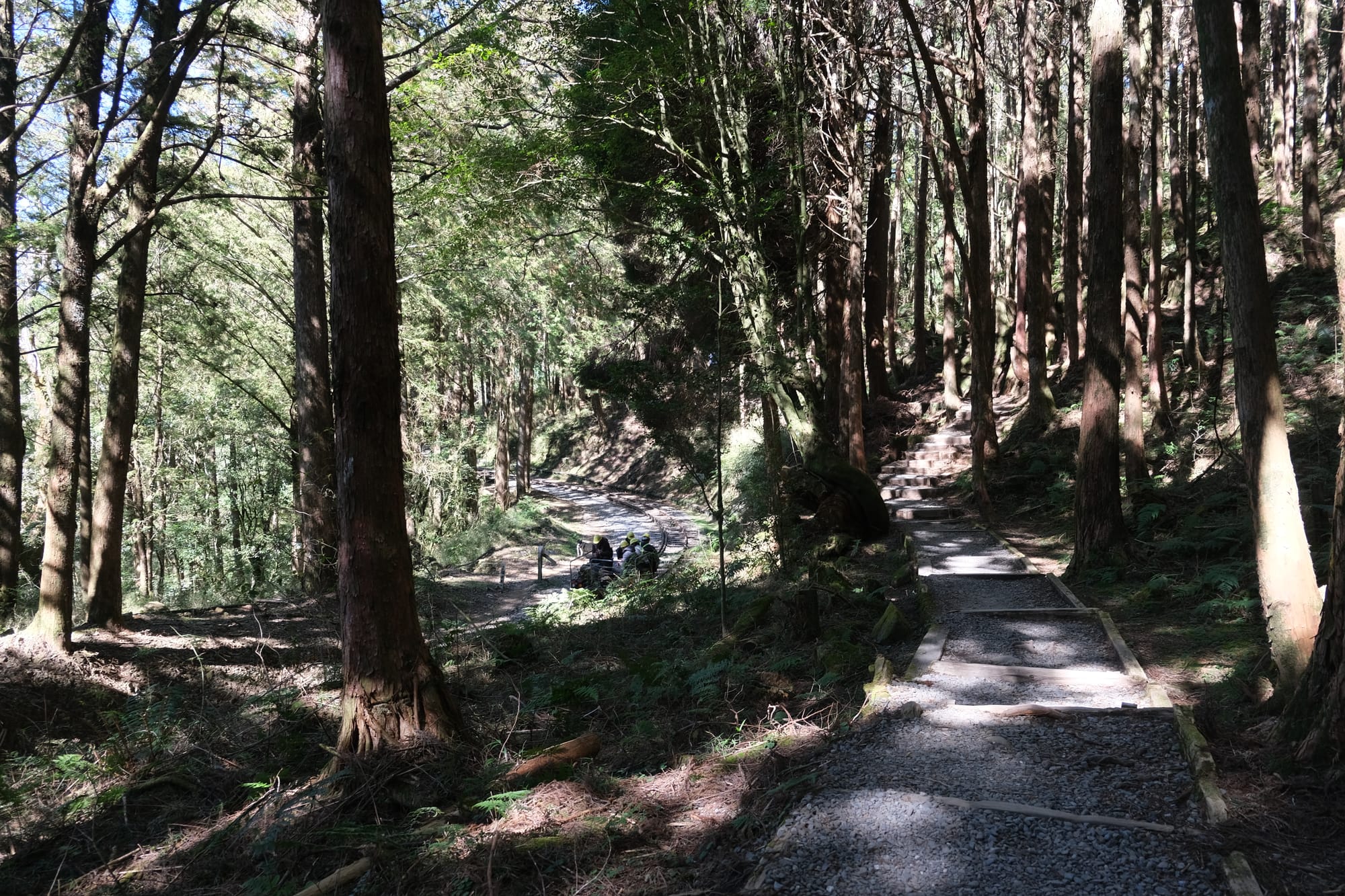
The first part of the hike was to get to where the Mianyue line branches of from the main Alishan line. This part of the railway is still regularly used (by the sunrise train) and so it is illegal to walk on the tracks and instead there is a hiking trail built up nearby.
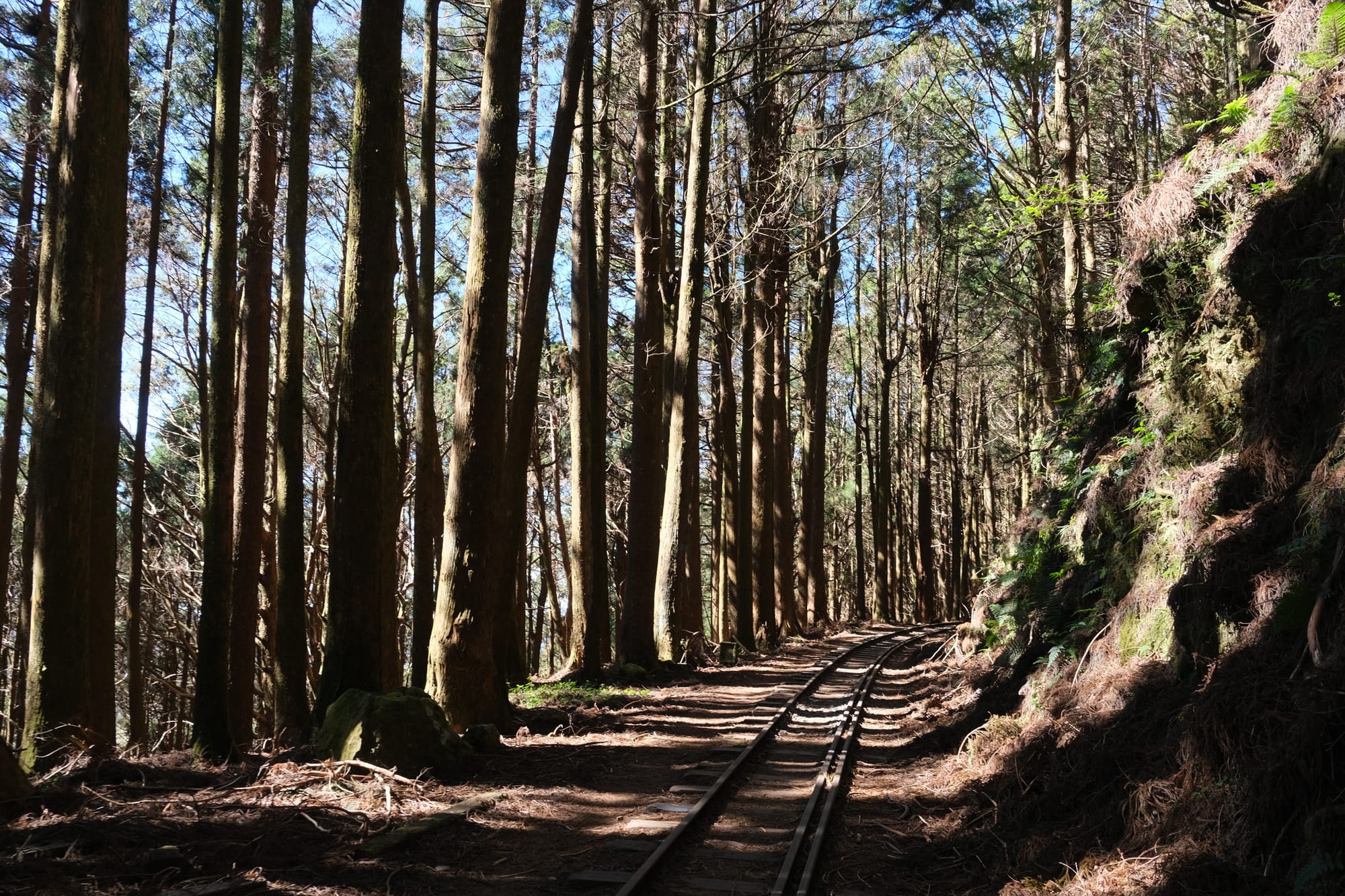
At the start of the Mianyue line proper there were plenty of signs giving warning and saying a permit is necessary (although the permit is only needed later on). Here the railway tracks are no longer shiny as they are no longer in regular use, and the further we walked there were more signs of disrepair.
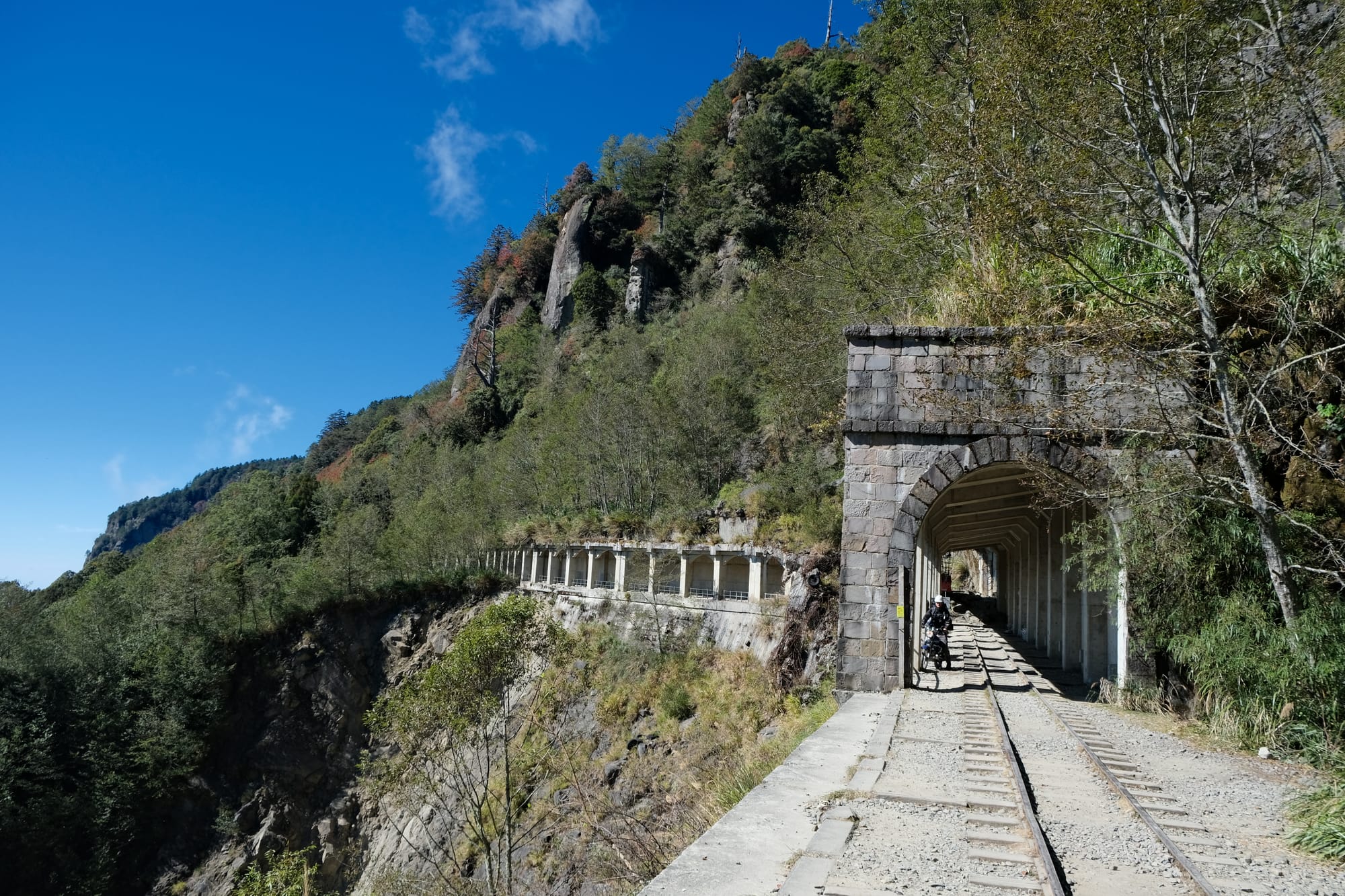
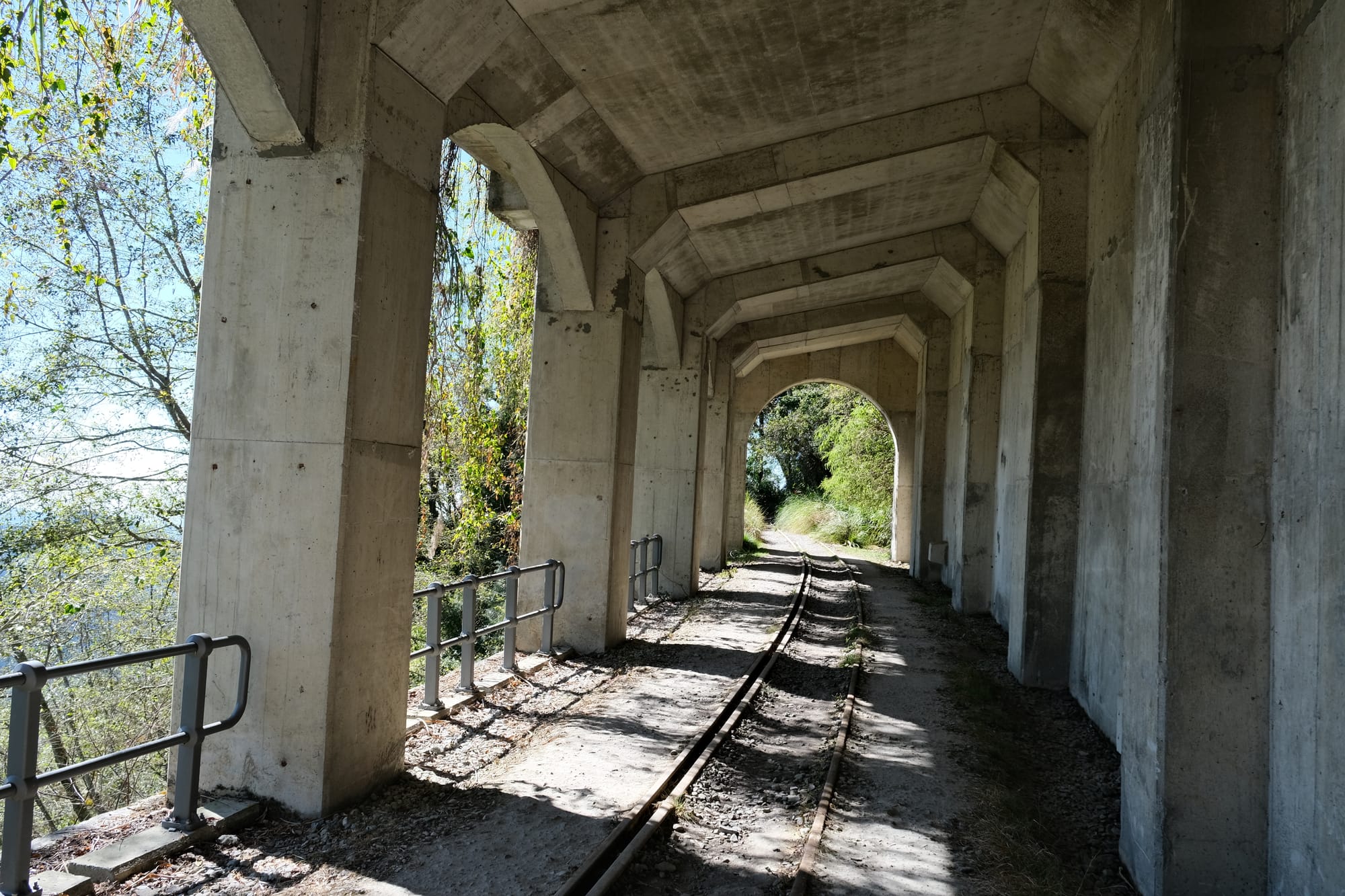
The open tunnel that I had seen from the other side of the valley back in Alishan.
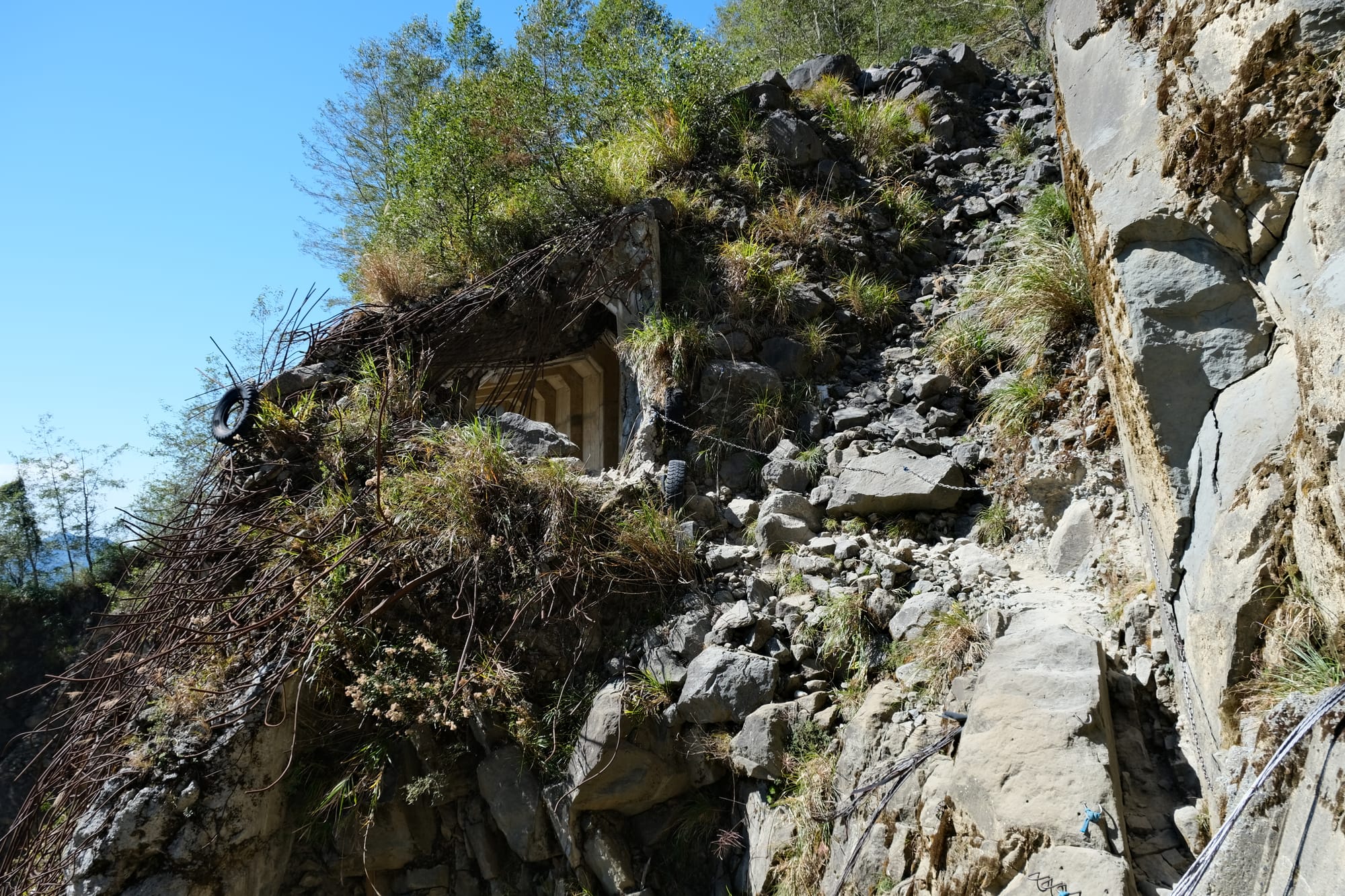
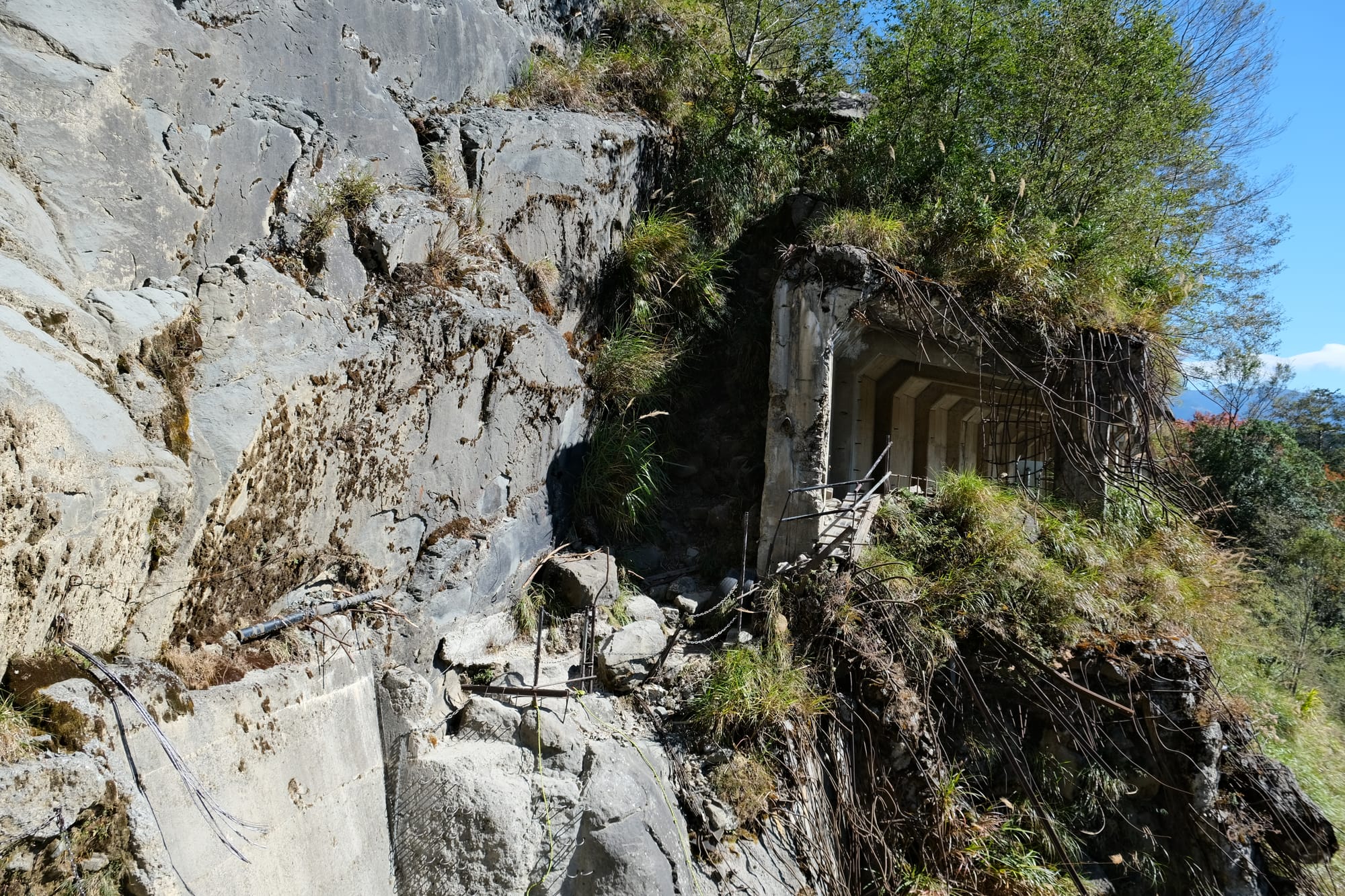
The section of train line that had been washed away by a landslide.
Crossing the ruins of this landslide was the most technical part of the hike. Thankfully there were chains and pegs inserted into the rocks to use as handholds and footholds. I also had the guide to help me out and direct me on the best way through the rubble.
The guide told me that the park plans to re-open the railway again and to do this they would be closing the trail to hikers so the repair work can begin. This work would start next year so this very well might be the last opportunity to do this hike, and in a couple years time I could visit the rail track again, but this time on a train. Although, I imagine it would require a lot of work to repair this section.
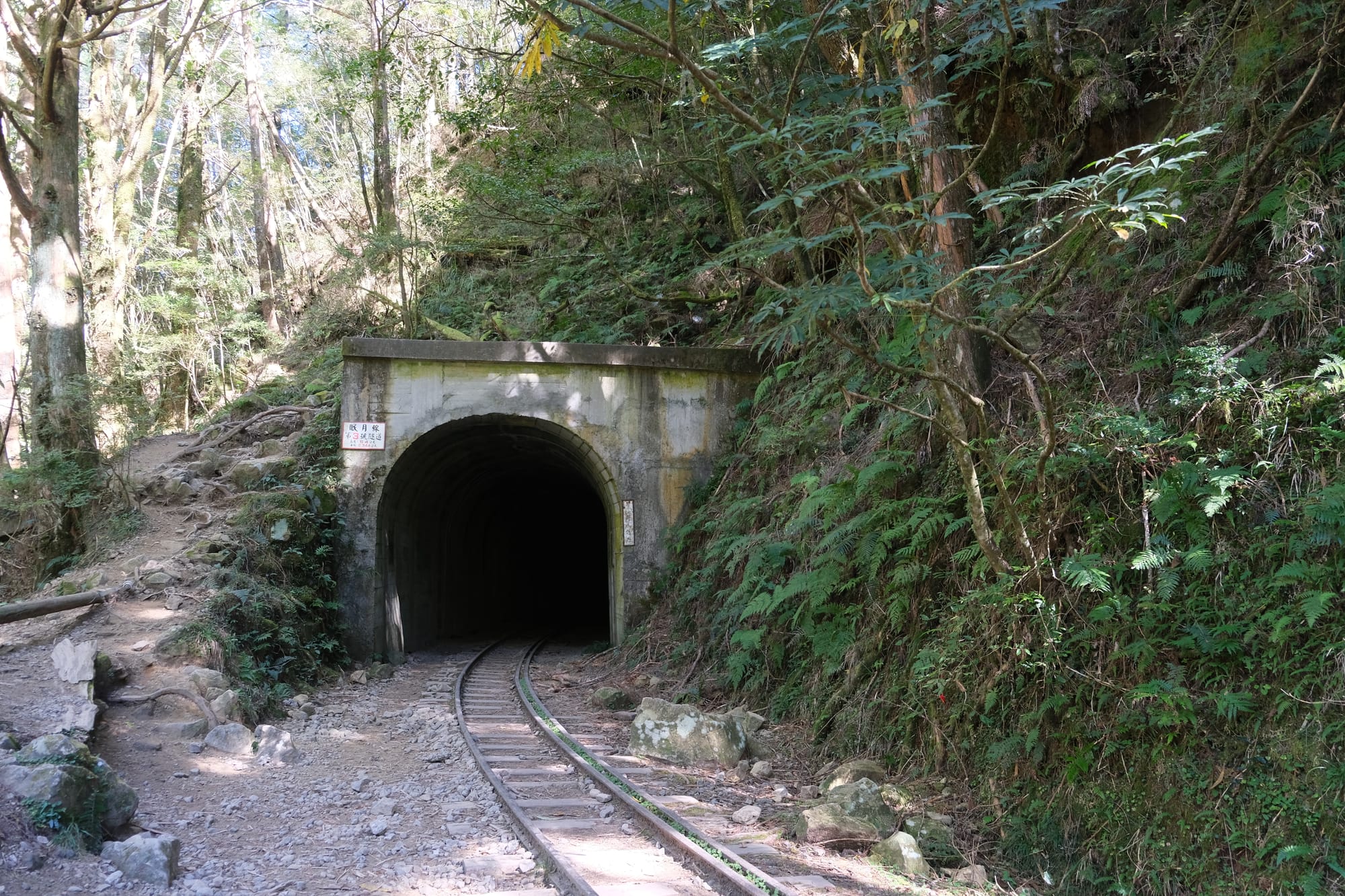
For parts of the hike we walked through the railway tunnels. I believe the entrance pictured above is for the longest tunnel (or this might be the tunnel before or after the longest tunnel). The longest tunnel was long enough that we needed torches to see by and in the middle there was a section where the roof had collapsed. This collapsed section, though, did not block our progress, we essentially climbed over the rubble into the cavity in the roof and then back down the other side. This added a little bit of a caving experience to the hike.
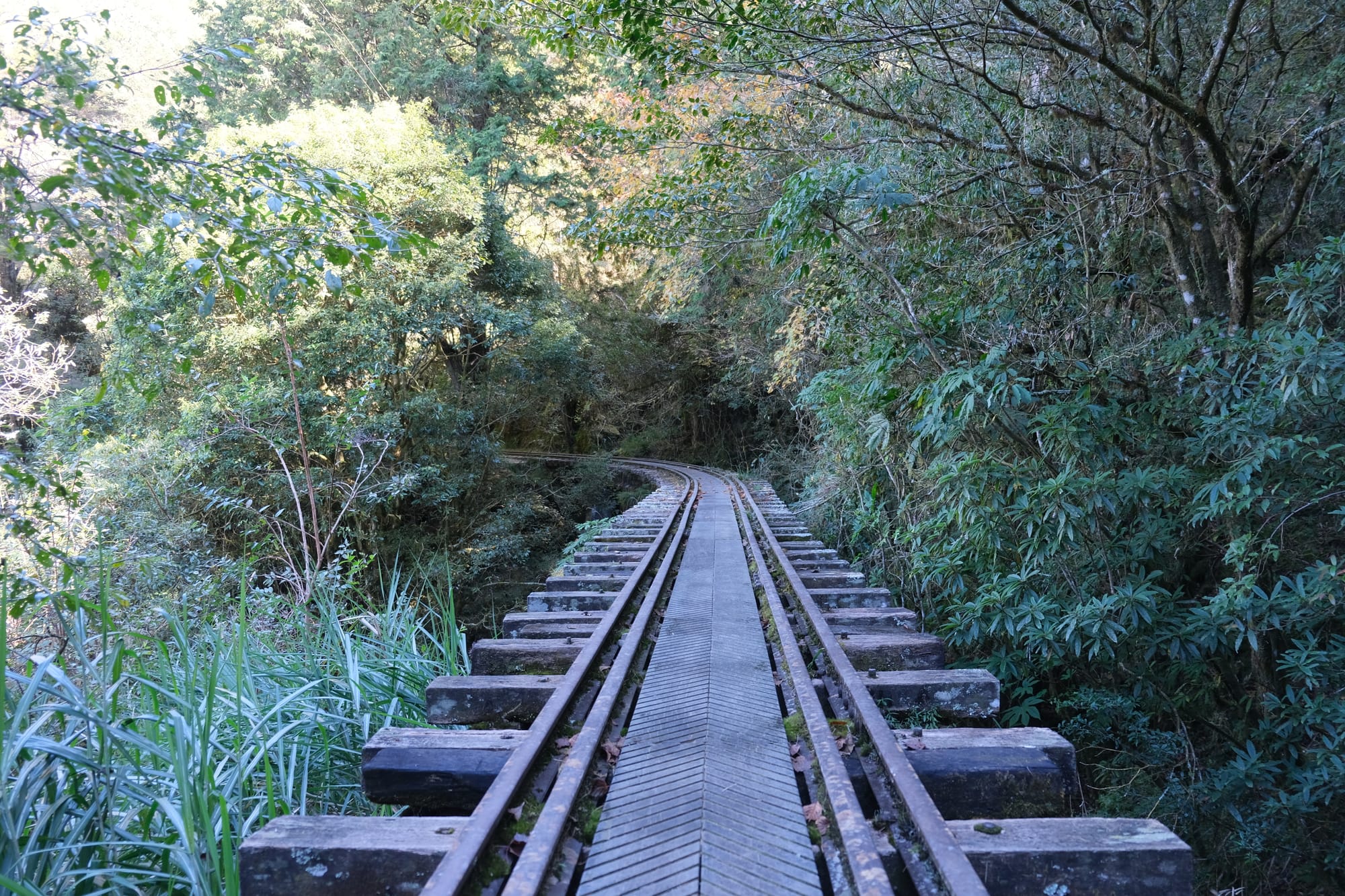
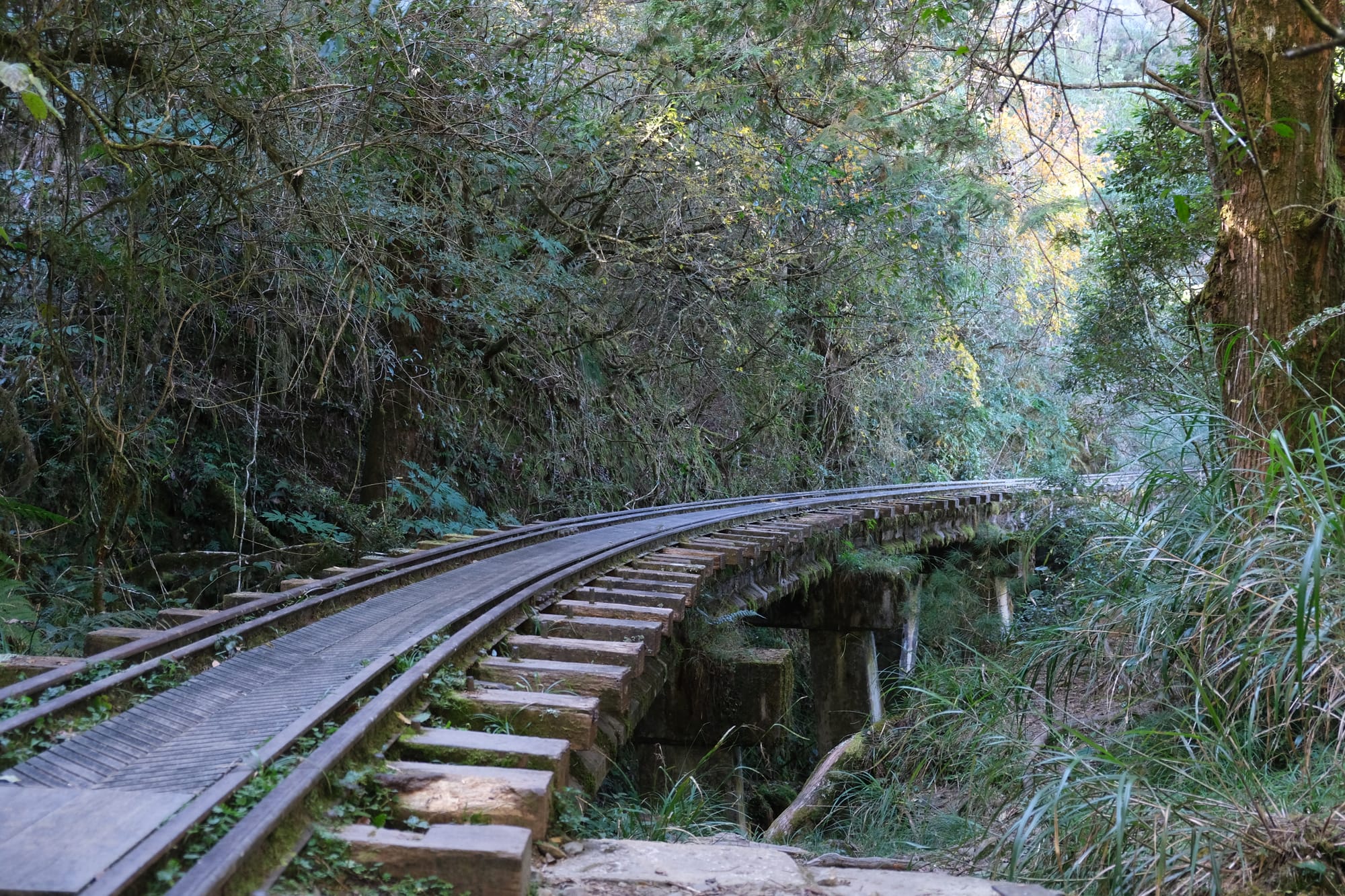
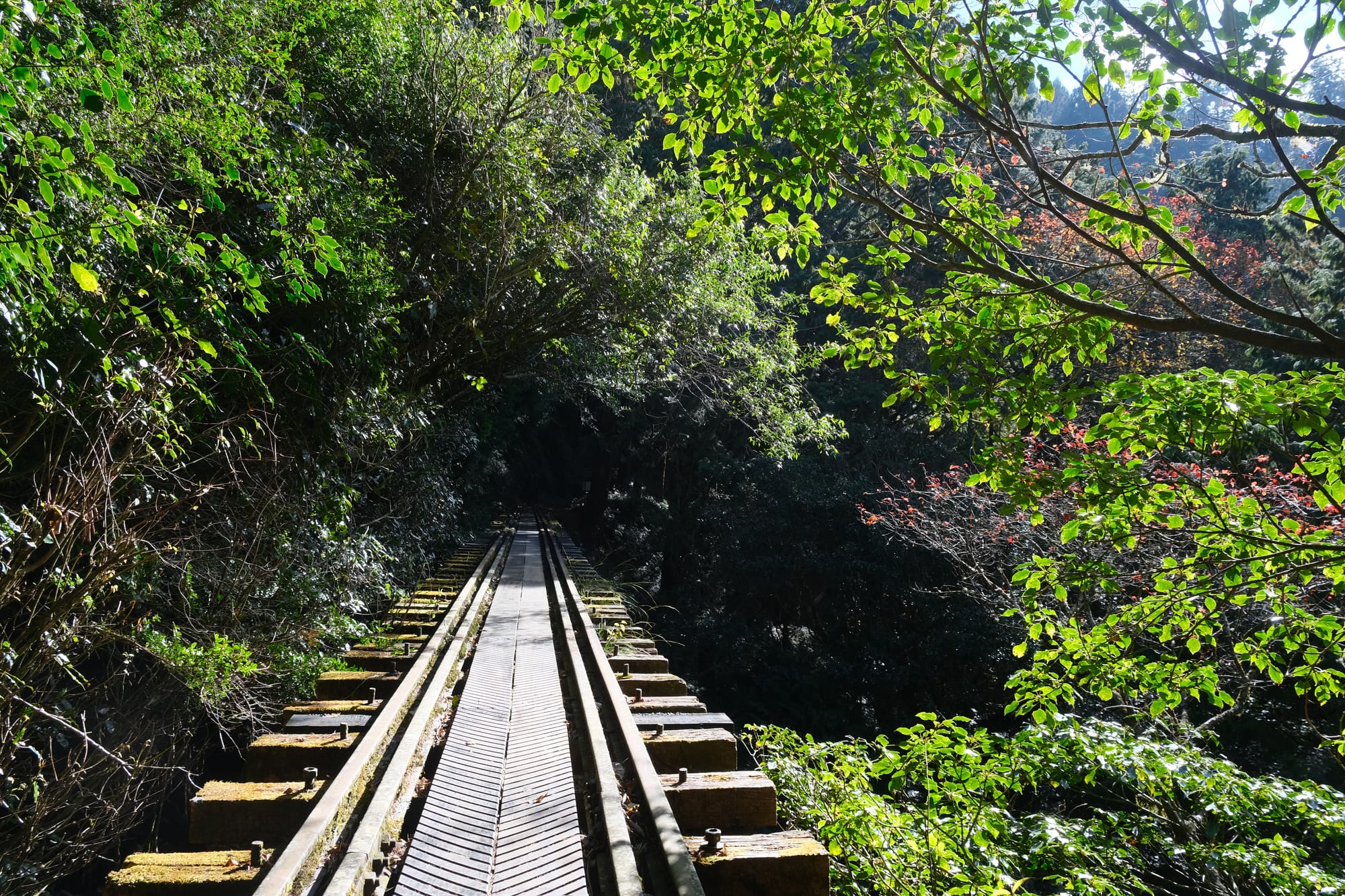
A couple of the bridges on the Mianyue line.
After some tunnels we started coming across these bridges. Since they were originally railway bridges there were no hand rails and we had to walk carefully over them. Going on these bridges, though, was perhaps my highlight of the hike, as the bridges took us through the canopy of the forest. Walking over one was like entering a green leafy world unconcerned with the troubles of humanity and where I was merely a visitor.
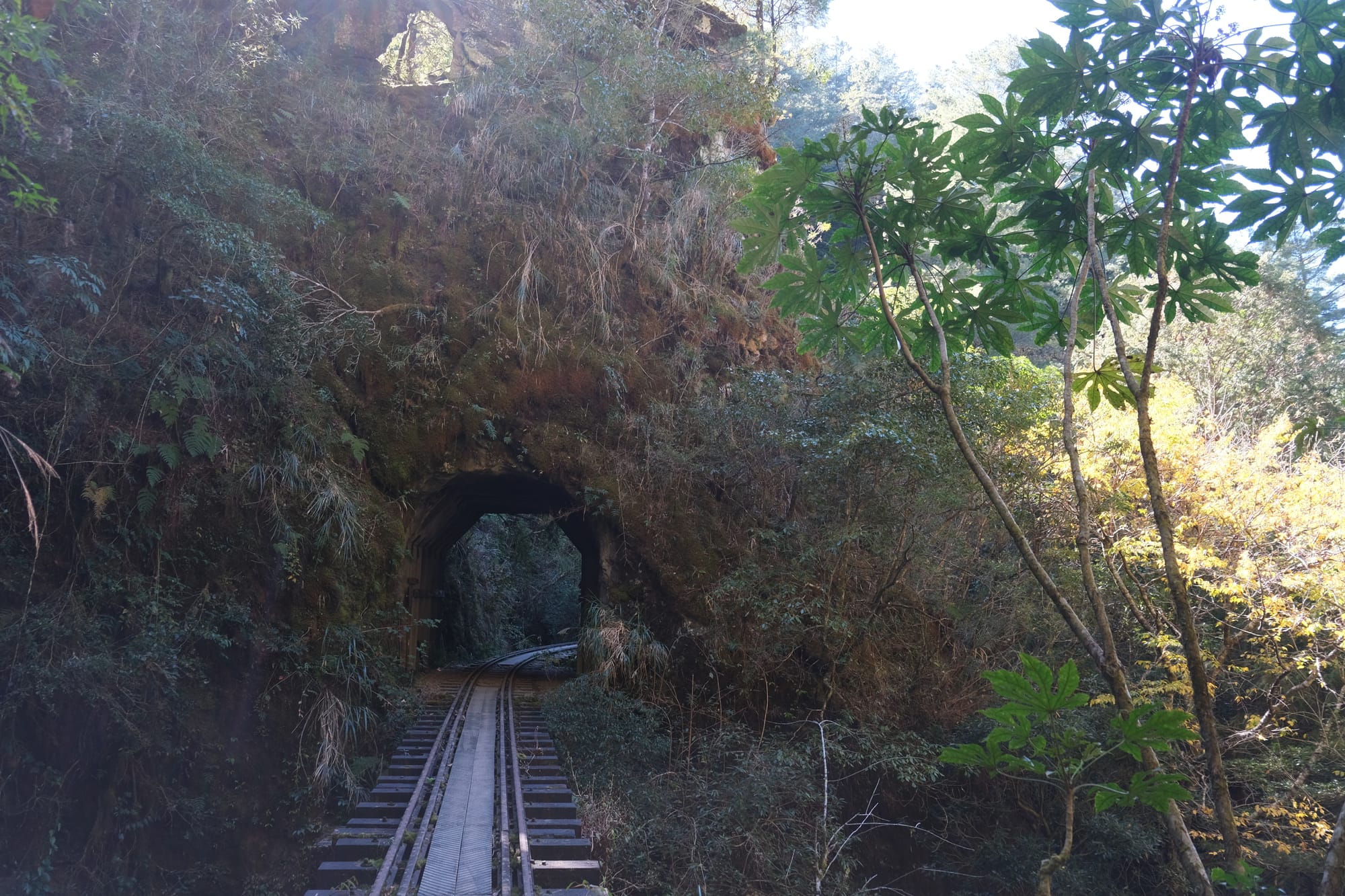
As we continued further the bridges and tunnels became more frequent, and the space between them shrunk. There was a section where we hiked from a bridge into a tunnel and then back onto a bridge, multiple times in a row. I found it fantastic how this line was built, that in such rugged terrain they were still able to create a gentle slope for a train by making repeating tunnels and bridges.
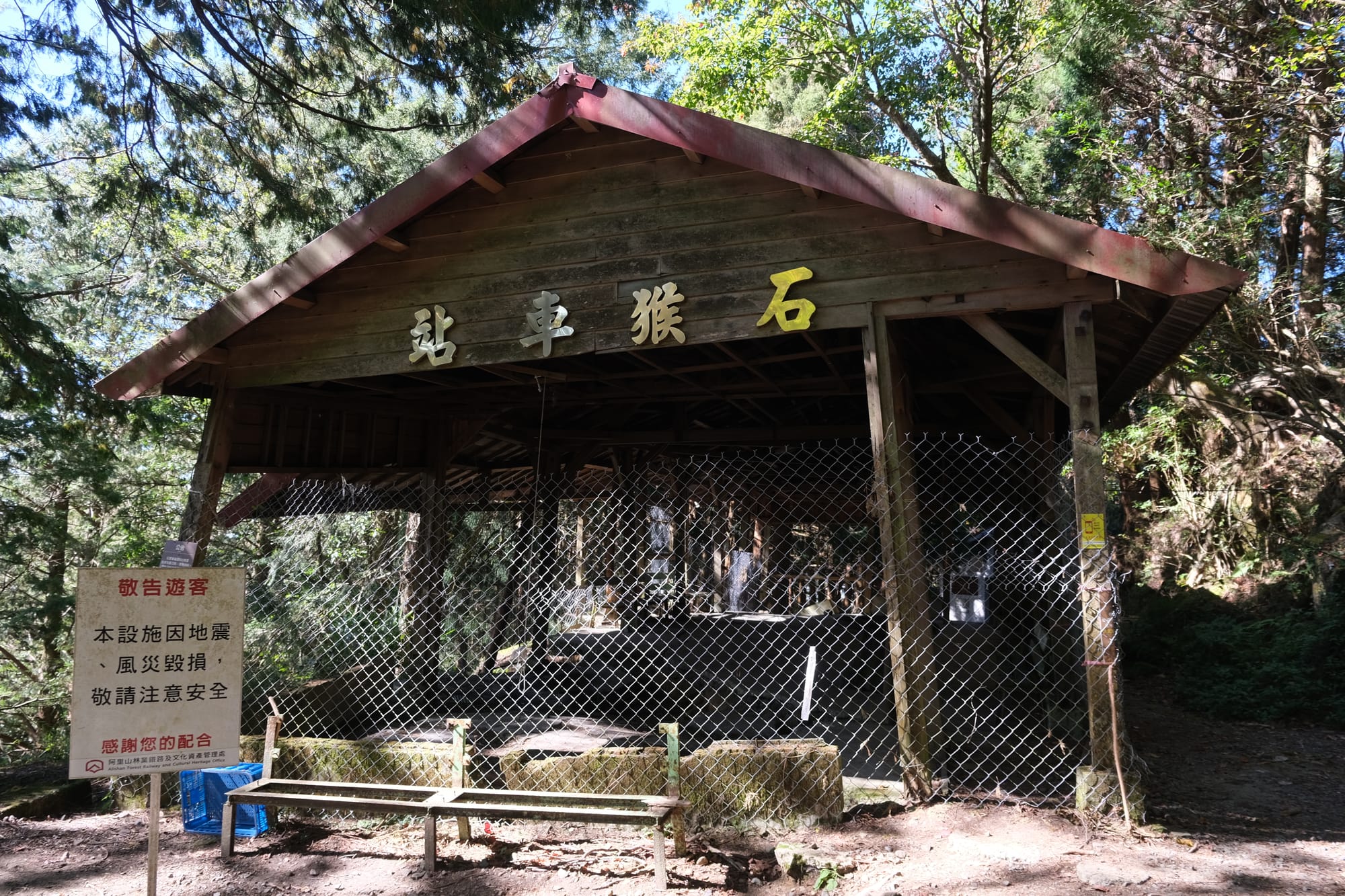
This was the end of the line, the Mianyue train station. I believe Mianyue means "stone monkey" and there is a large rock formation here that used to look like a monkey, hence the name. My guide showed me this rock but now the head of the monkey has fallen off, so it no longer looks like a monkey.
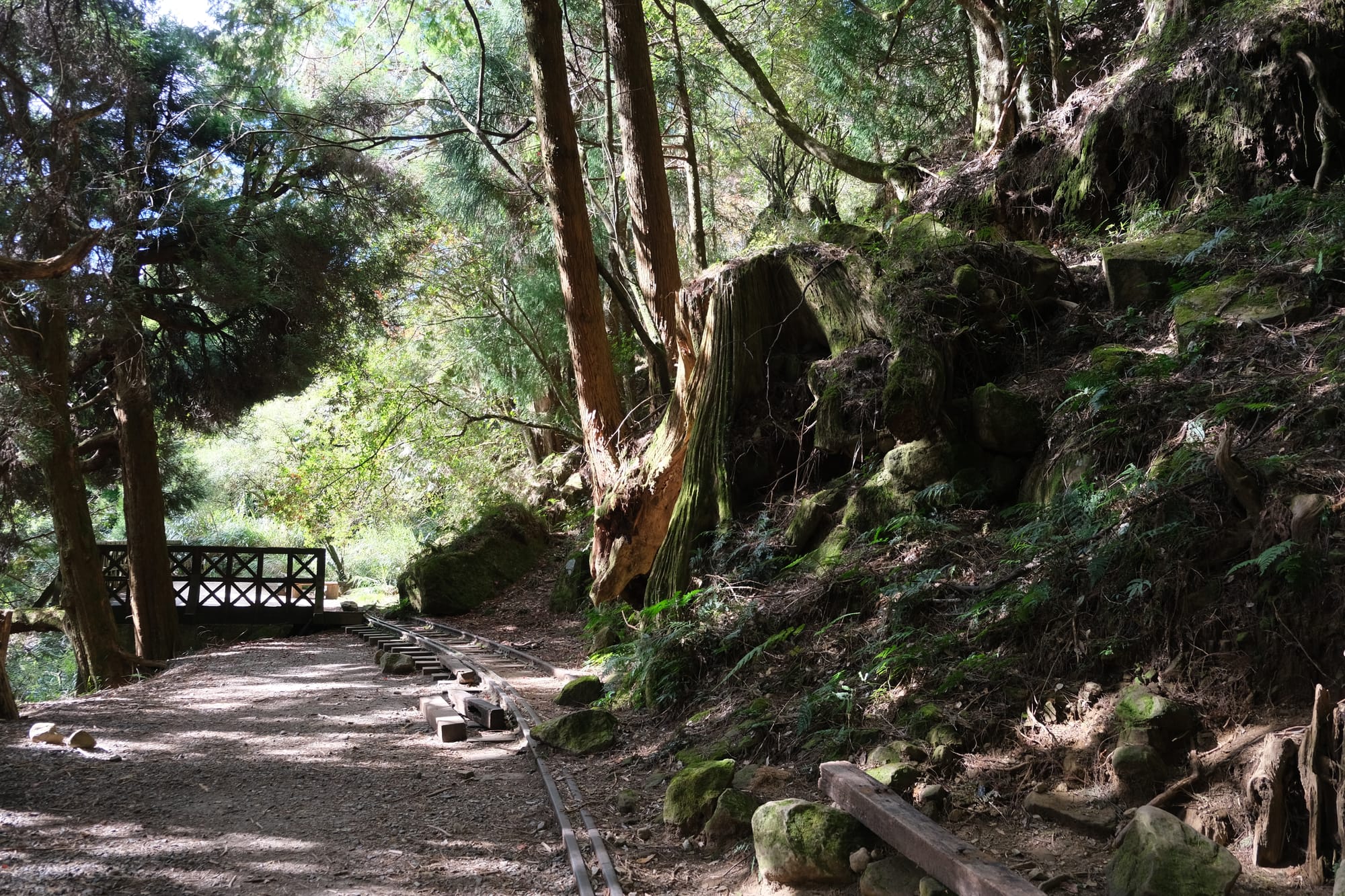
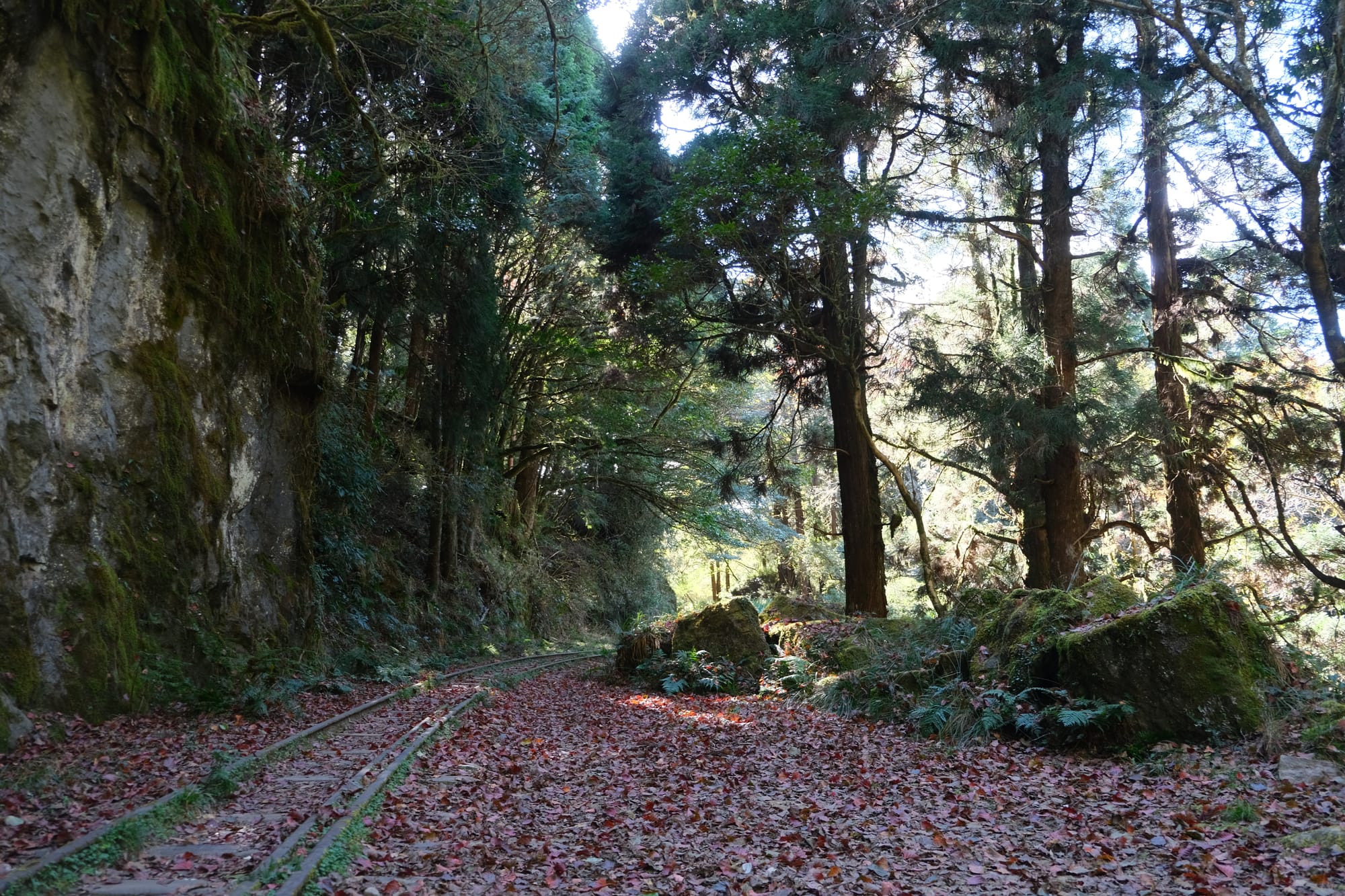
Some of the beautiful scenery on the railway line near the Mianyue train station.
After getting to the train station we stopped for lunch pretty much at the location shown in the first photo above. It was a very atmospheric area, the day was bright and sunny but in the forest the air was cool and refreshing.
The return journey was much quicker as I didn't spend as much time taking pictures. On the way back I asked the guide about Taiwan and he gave me a good overview of the history of the country, I learnt much from him about Taiwan and its people.
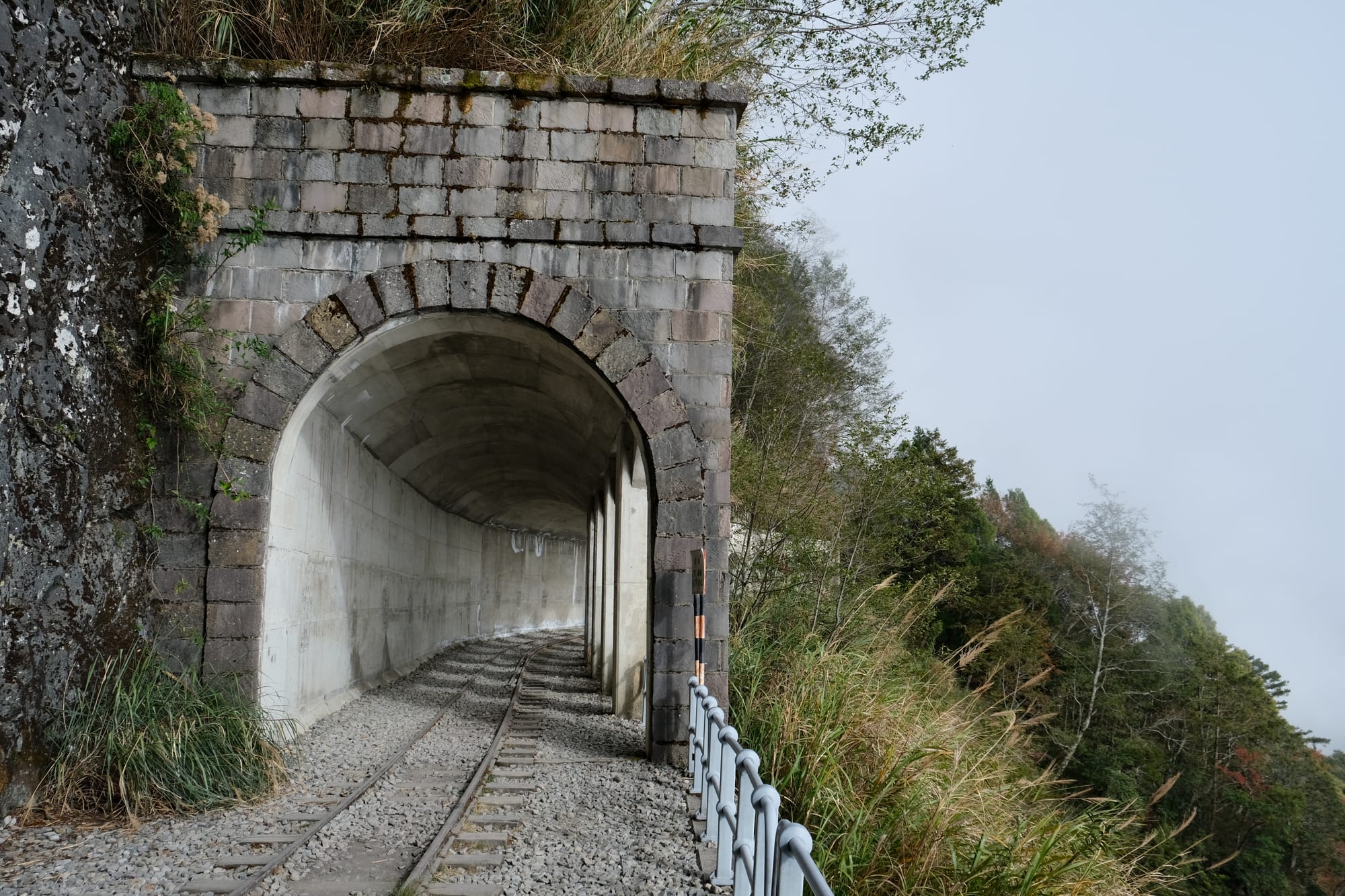
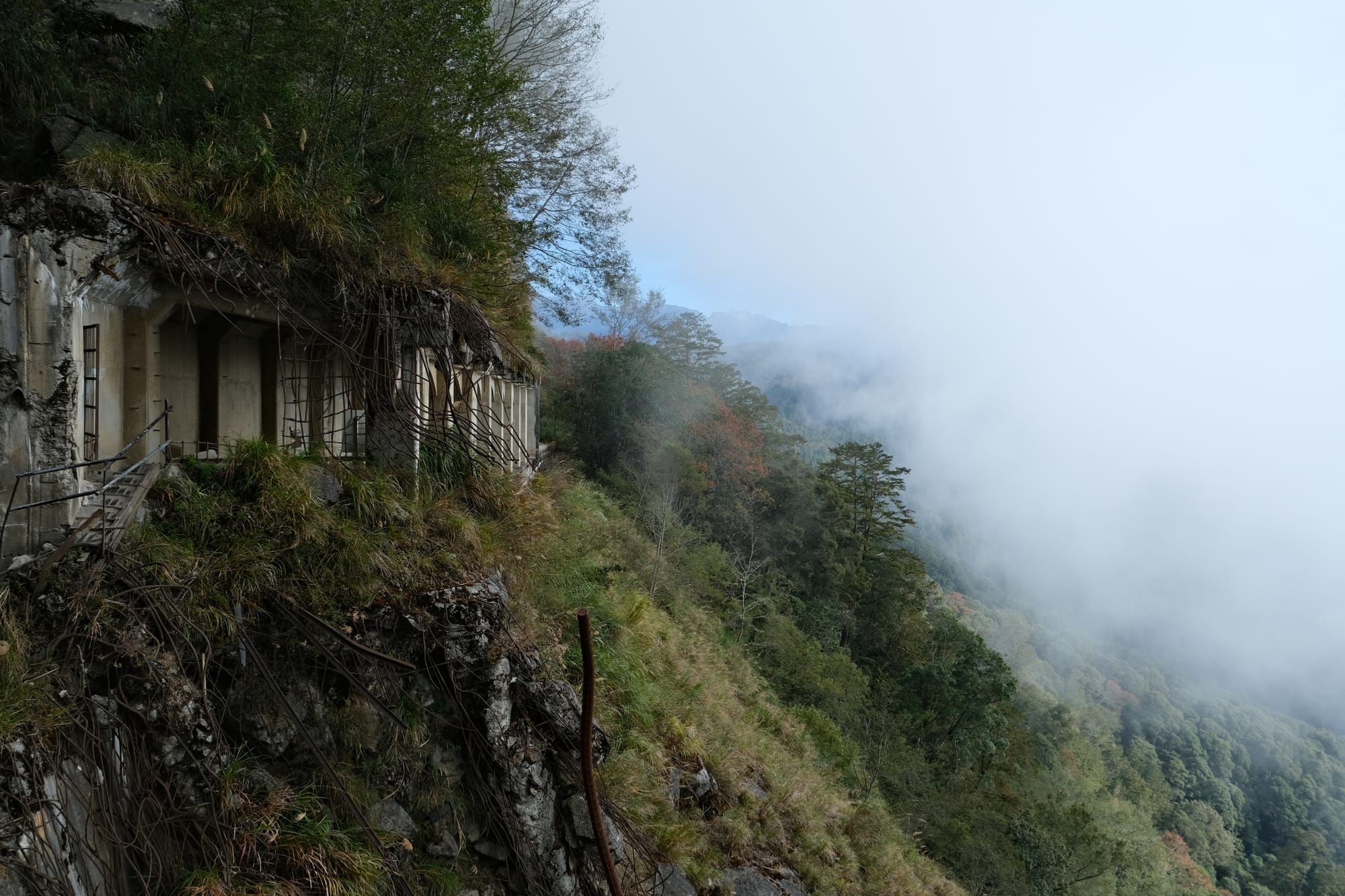
We came back to the open tunnel and, by this time in the afternoon, thick clouds had rolled into the valley obscuring the view of Alishan we had in the morning.
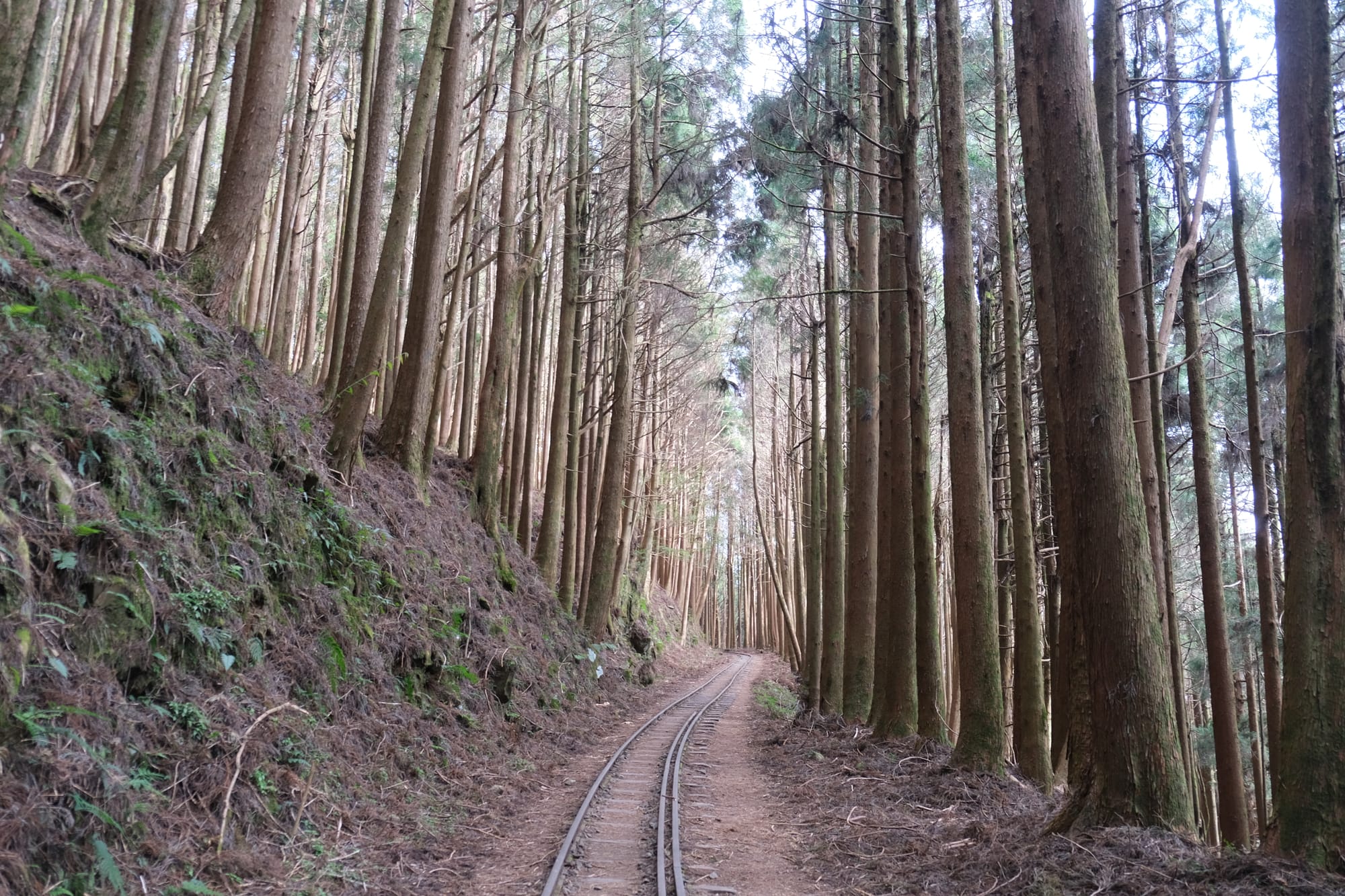
Giant Trees
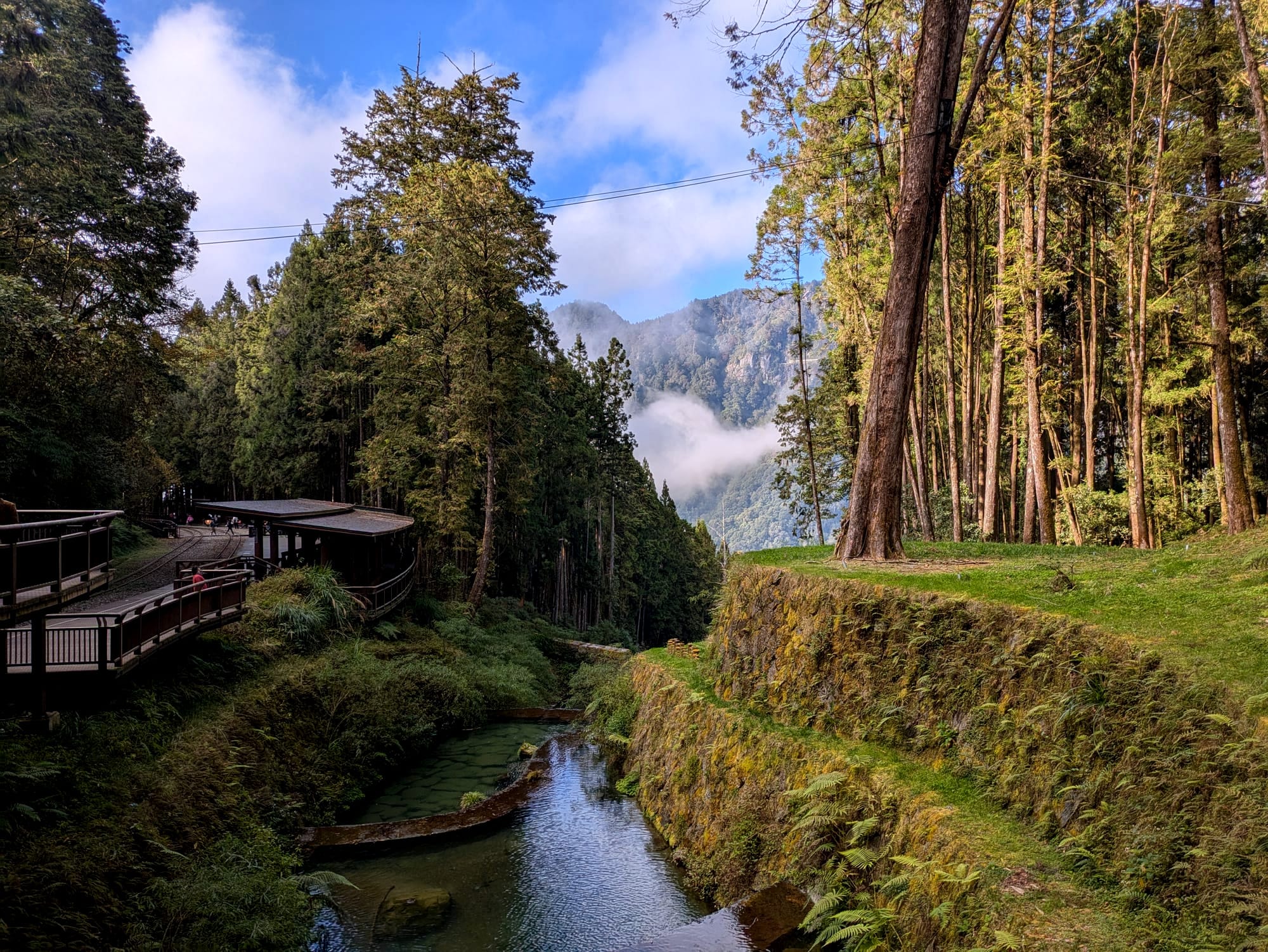
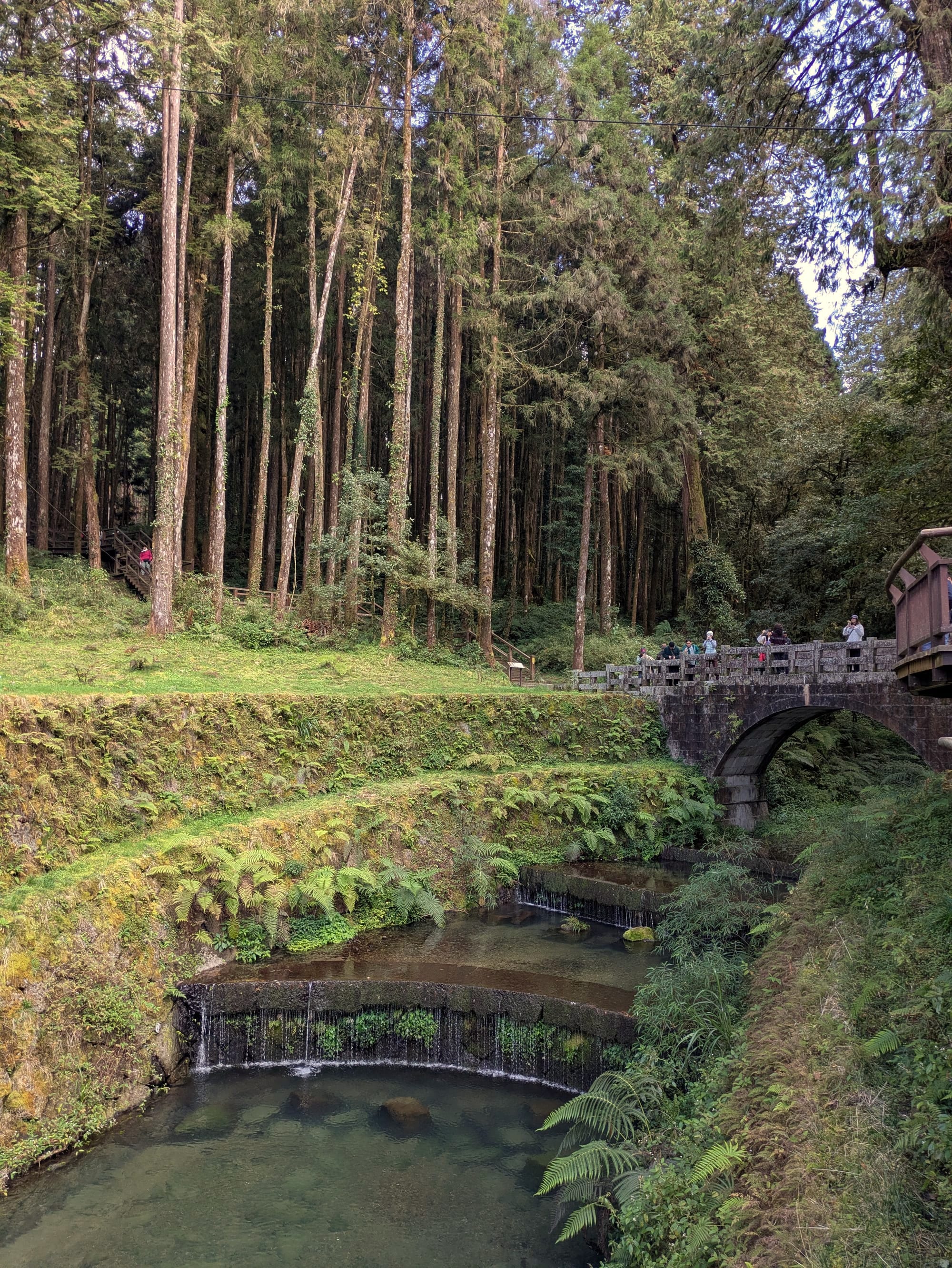
The Sacred Tree Train Station, it overlooked a beautiful river gorge with some waterfalls.
Centered around the sacred tree station there is a section of forest that is filled with over thirty ancient trees. These trees range from two hundred years old to over a thousand and they survived being cut down because they were slightly deformed. Healthy straight trees were first targeted for harvesting so some of the trees with lower quality wood remained. Now these trees are protected and preserved in Alishan forest.
Each tree has a number and, from the train station, there are two elevated board walks that wind through the forest showcasing each of them. The trail is lifted above the forest floor to preserve their root structure. Scientists were able to extract bore holes from the trees to determine their age by counting all the tree rings. All of the ancient trees that are shown here are of the Formosan Red Cypress species.
I found these trees fantastic and tried to photograph every single one. I won't upload all of them here but since it is my website you will have to suffer through a number of them 😃.
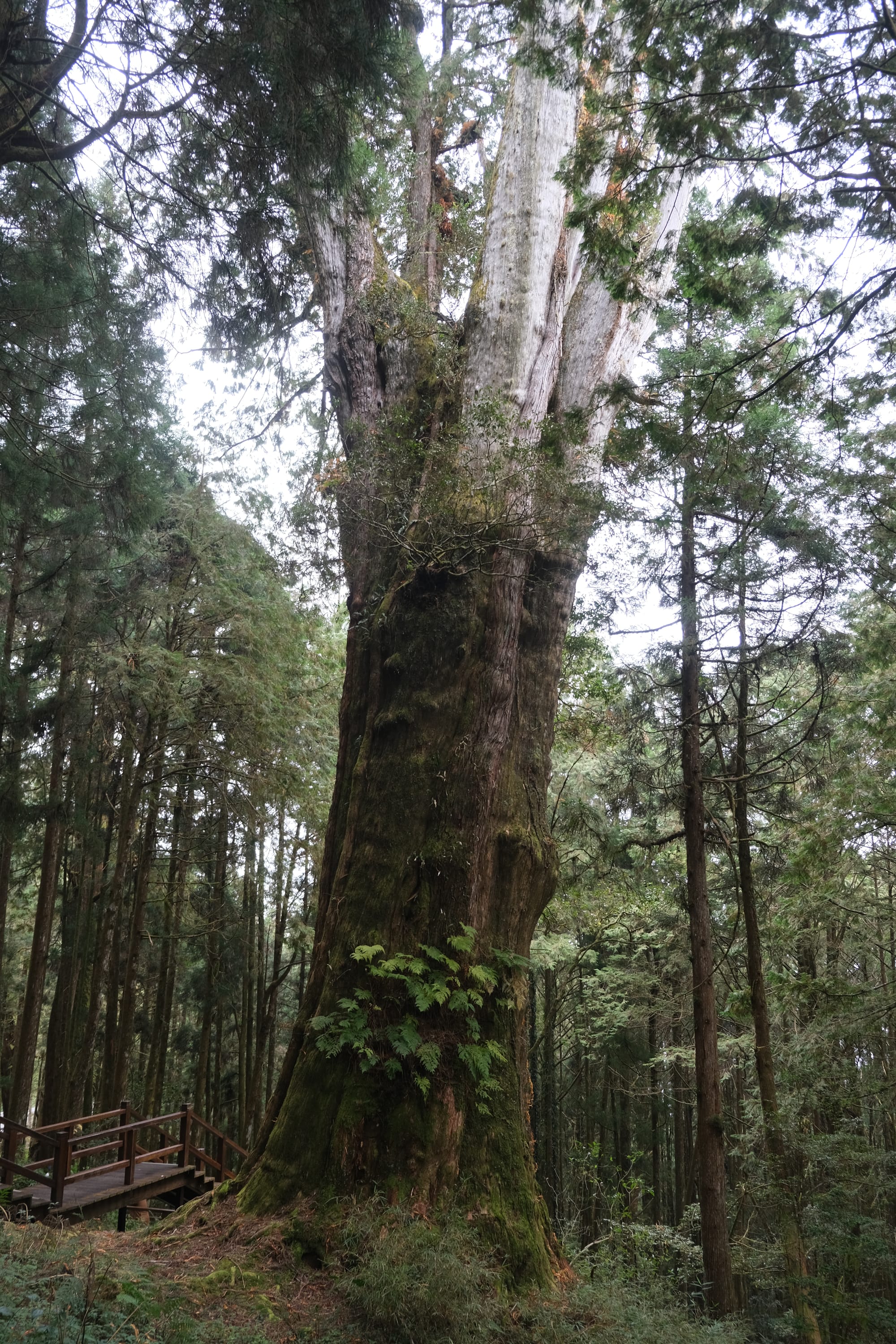
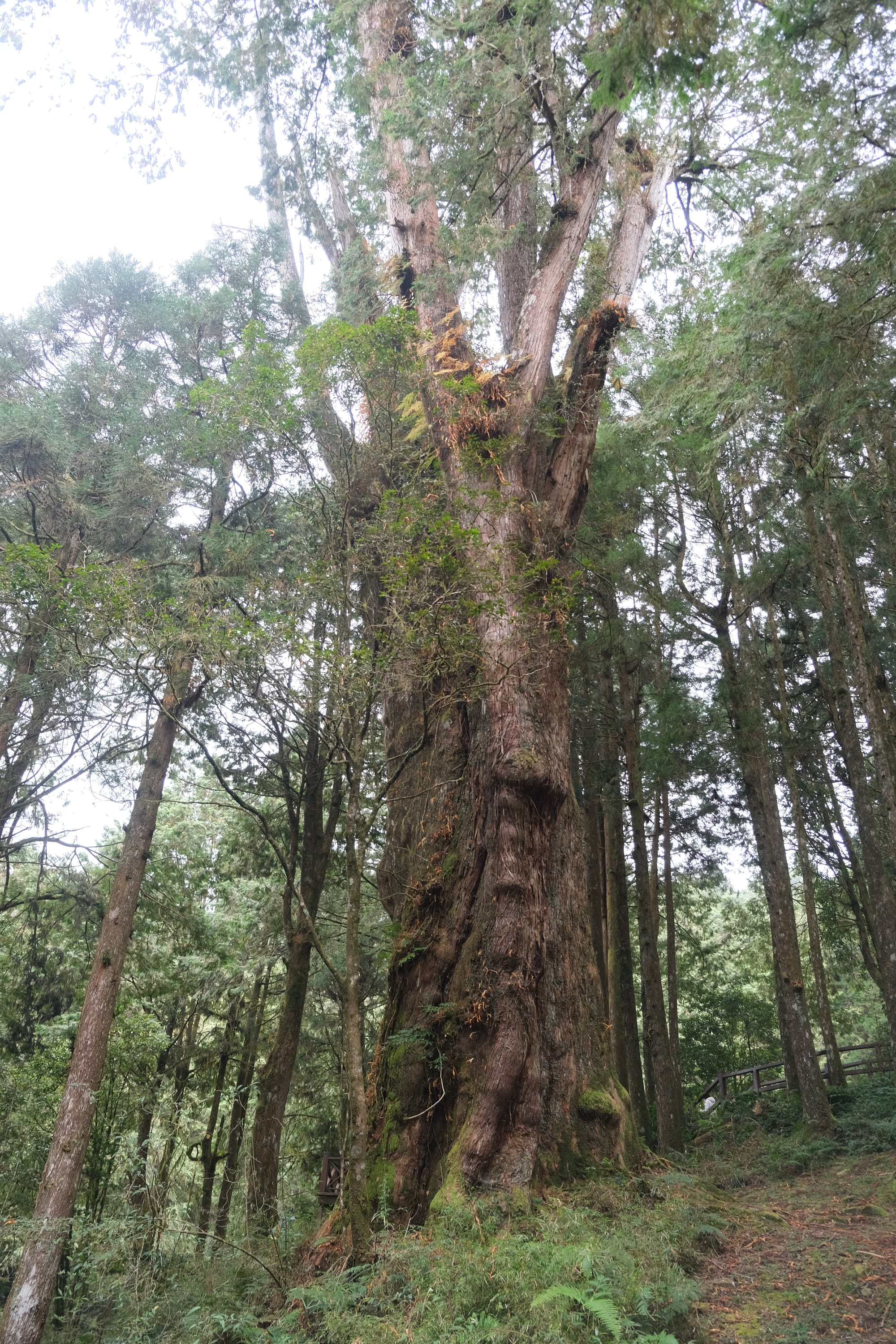
No 28 one of the largest and most famous of the giant trees, it is 1087-1103 years old.
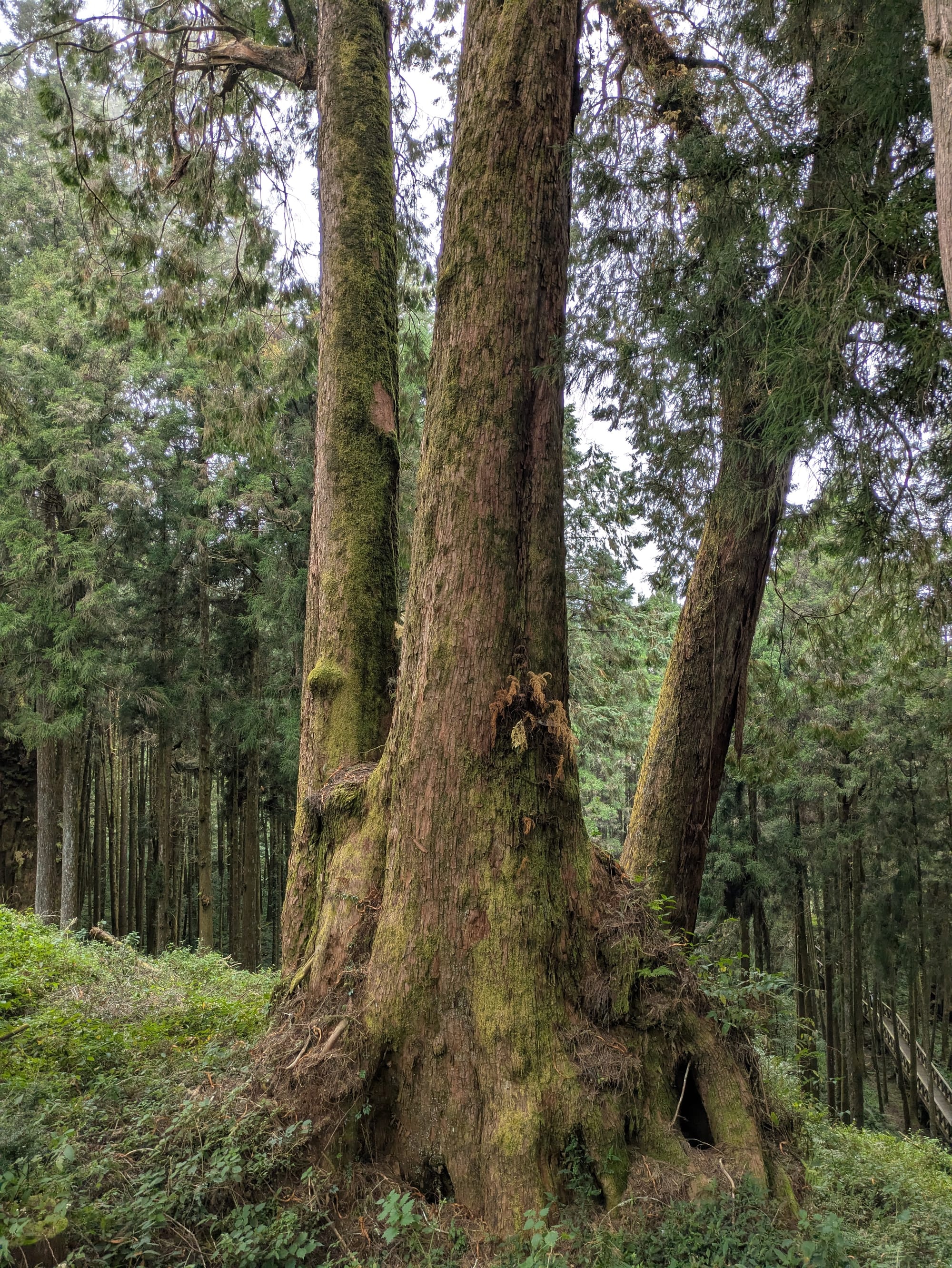
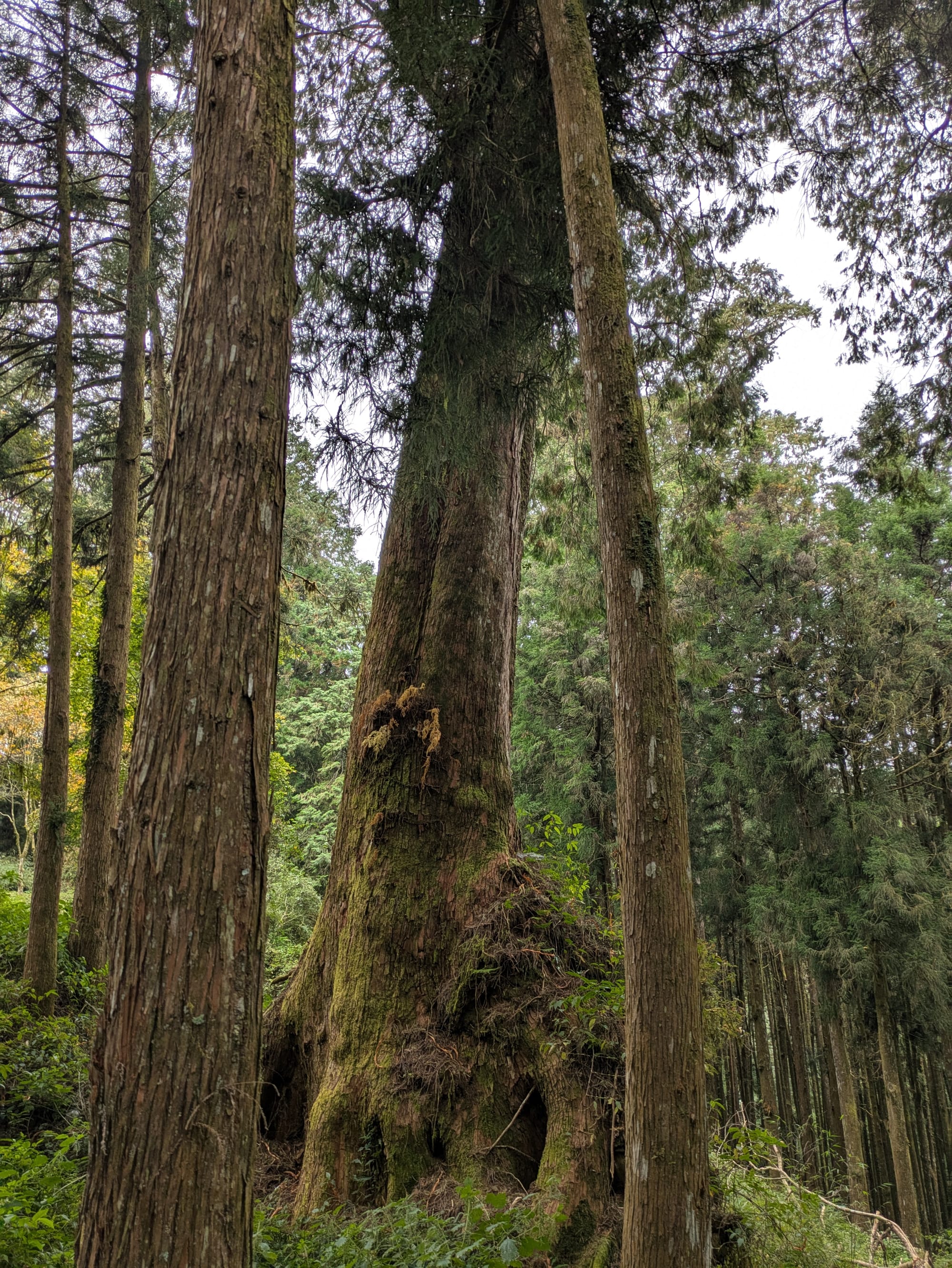
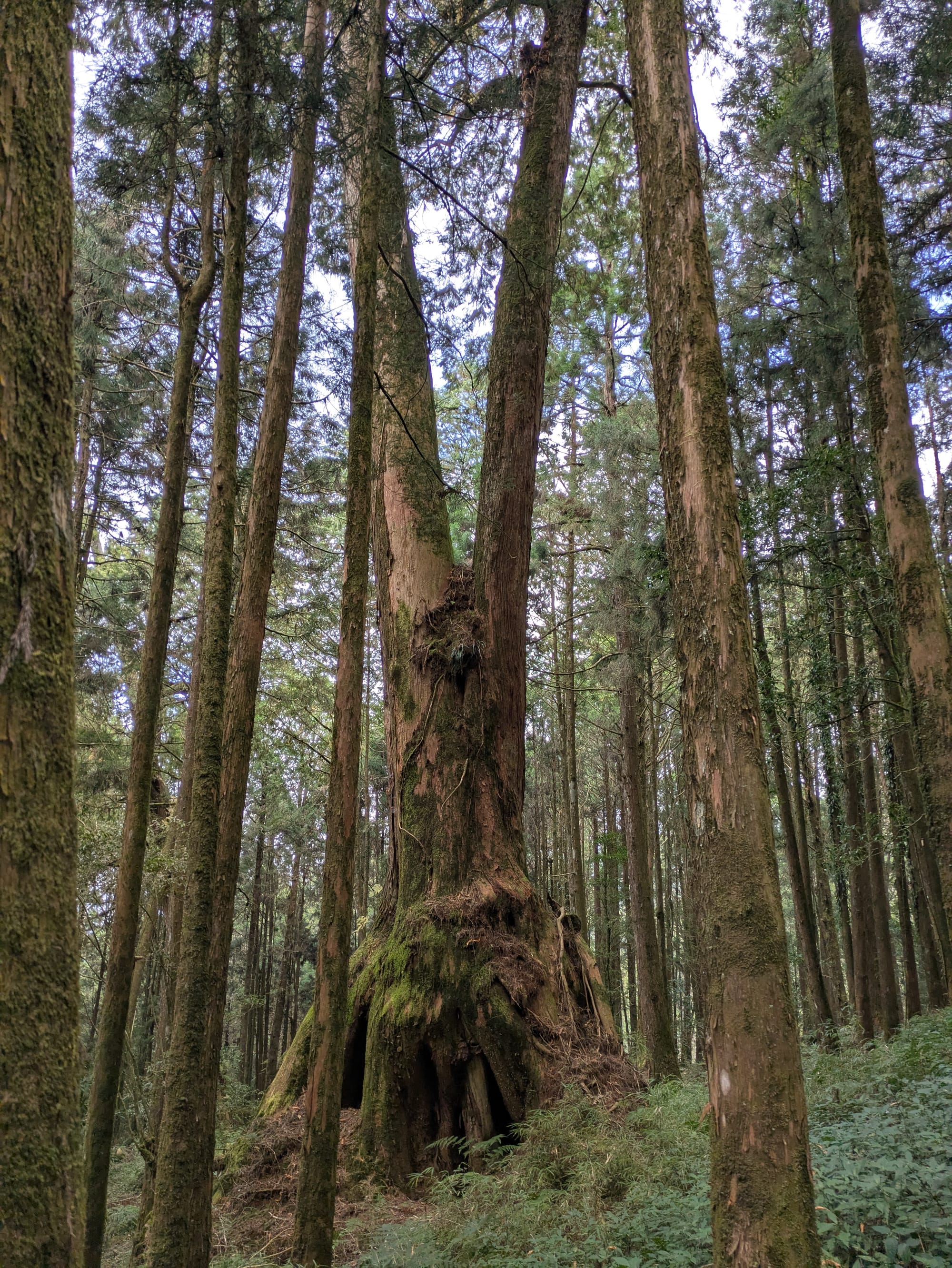
No 30: 1083-1115 years old, No 29: 913-929 years old, No 27: 338 years old.
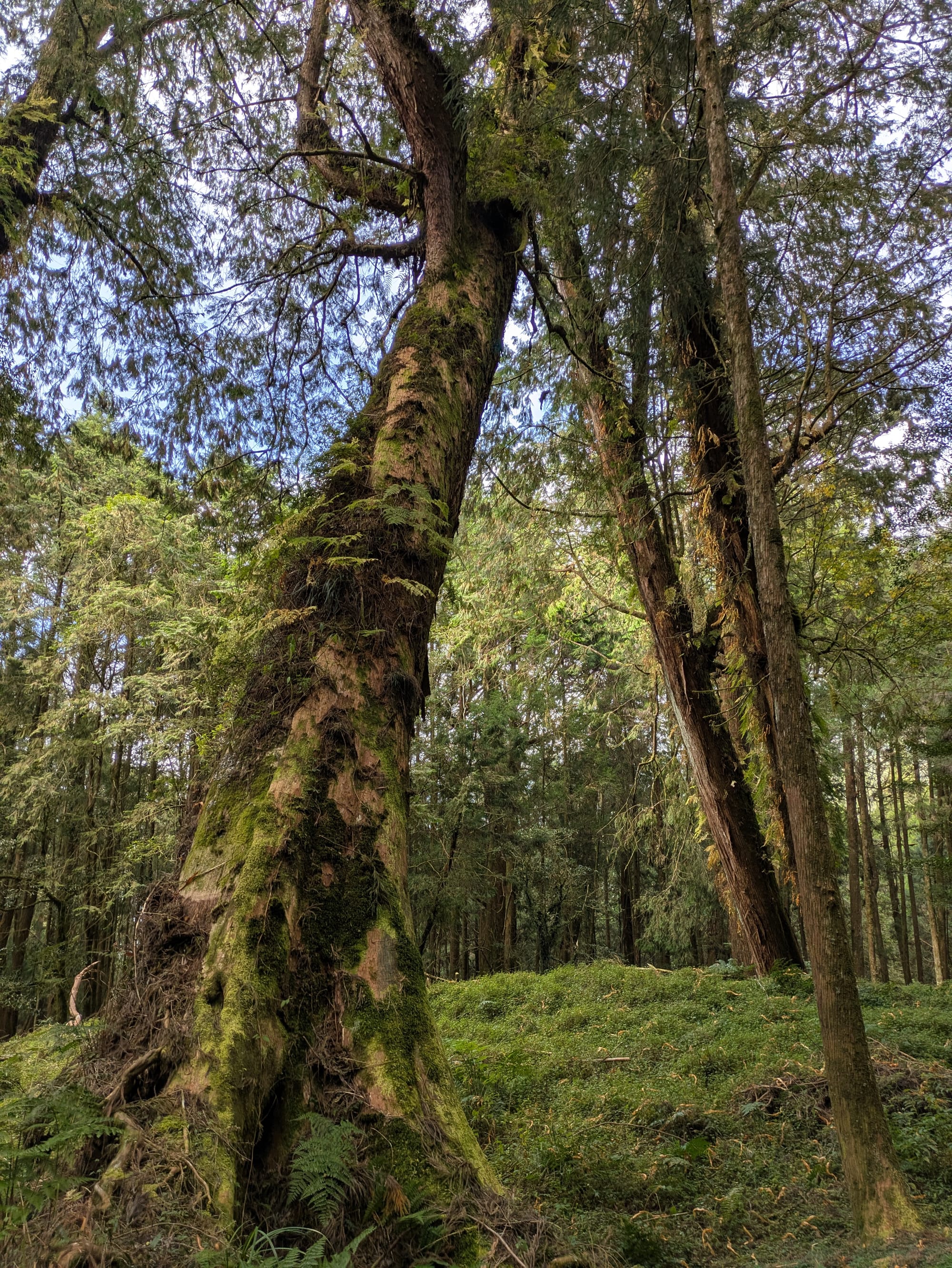
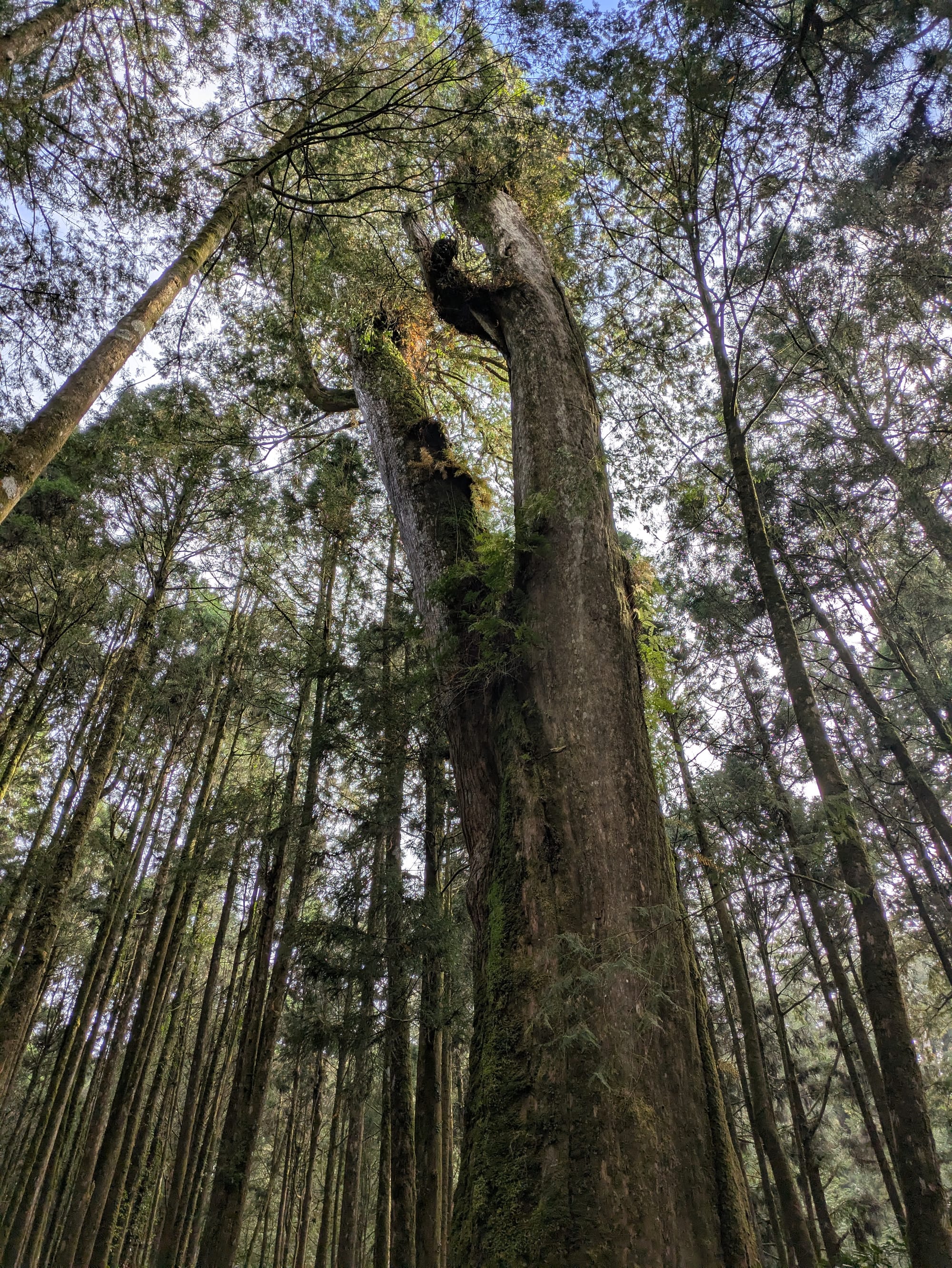
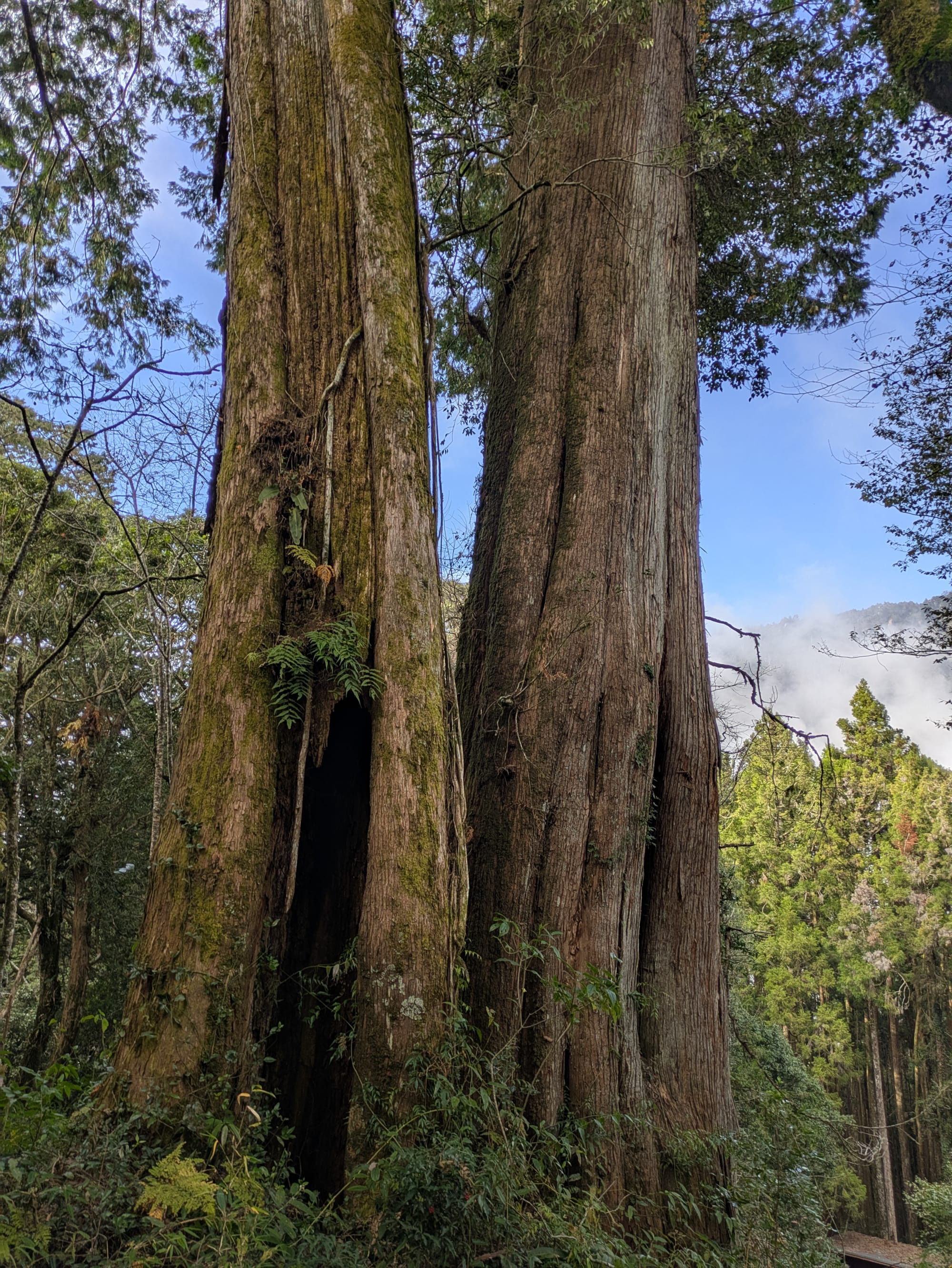
No 25: 226 years old, No 23: 1052-1058 years old, No 18 and No 20: 649-665 and 720-762 years old respectively.
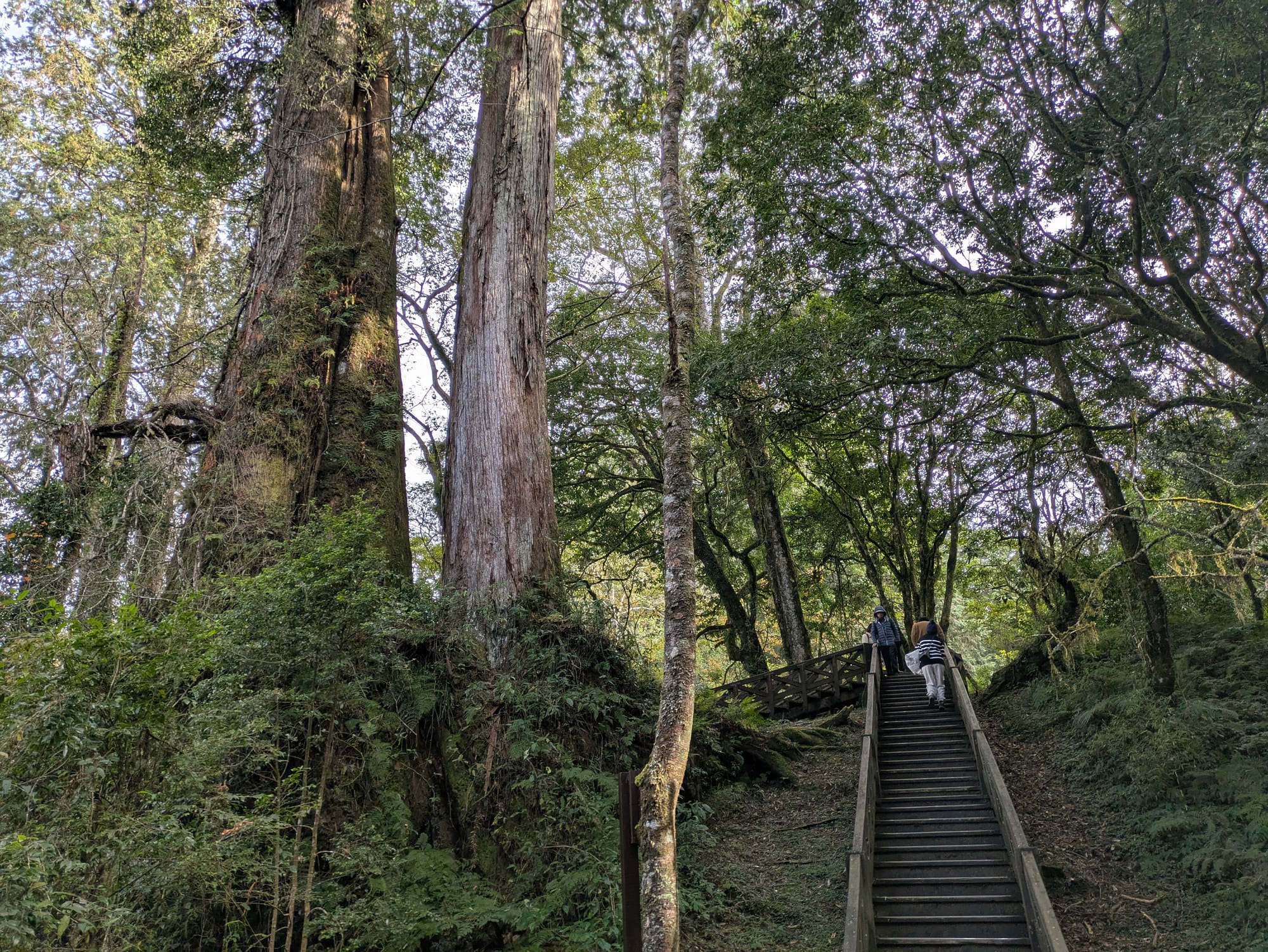
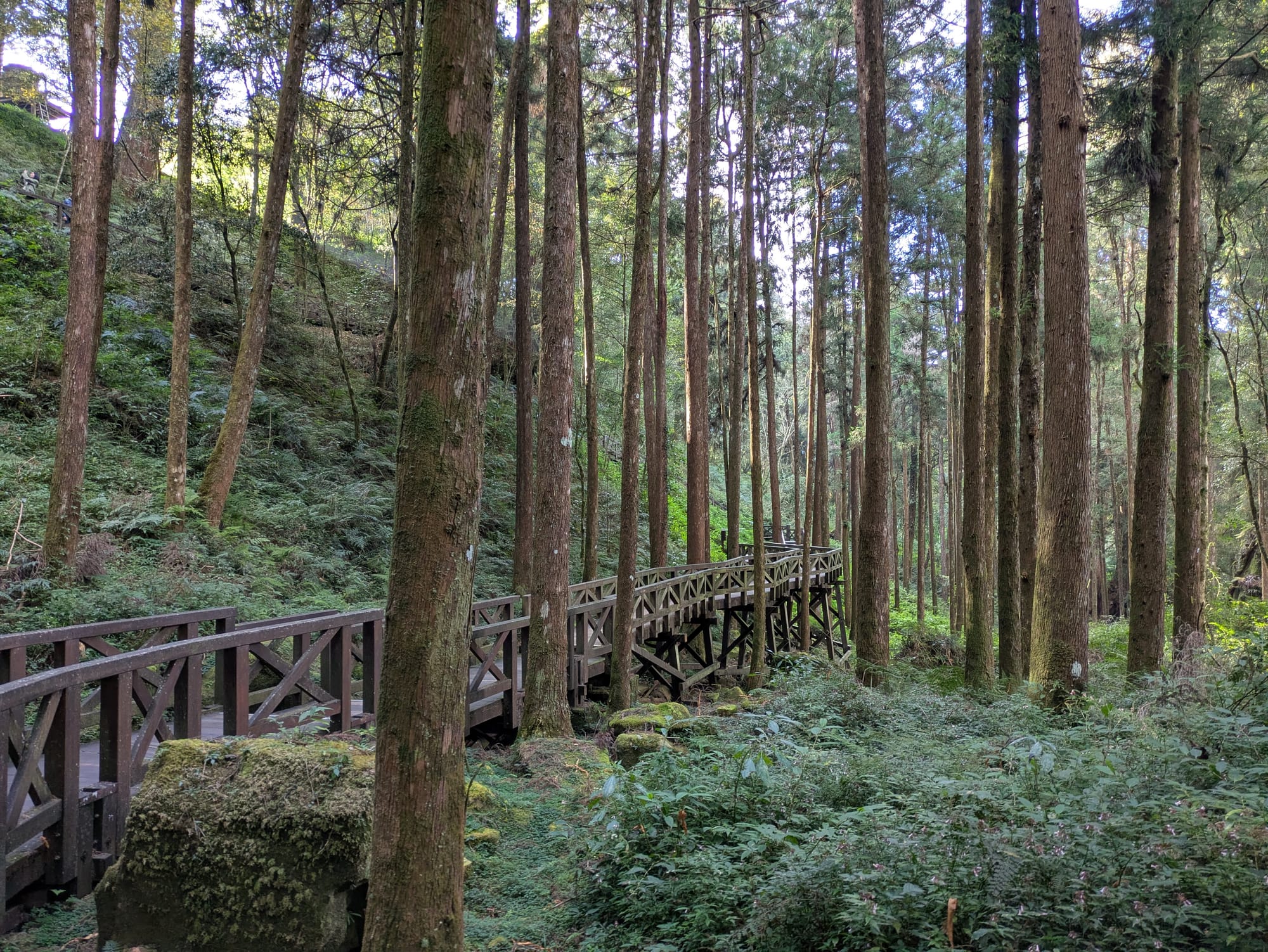
The elevated board walk through the forest with the giant trees.
Tashan Peak
On my final day in Alishan there was only one big hike left that I hadn't done yet. This is to Tashan Peak, the hike is about 3.7 km one way, and at 2600 meters above sea level this mountain is the tallest in the park. The brochure told me that from this peak I could get fantastic views of both Alishan and the Jade mountains (the tallest mountains in Taiwan rising above 3000 meters). Half of the trail to Tashan was along the same trail that goes to the Mianyue line hike, so I was able to revisit some of these scenes and take more pictures. Once I started climbing the mountain the track was really steep with many steps especially near the top, but the forest was beautiful all along the way and became increasingly diverse the higher up I went.
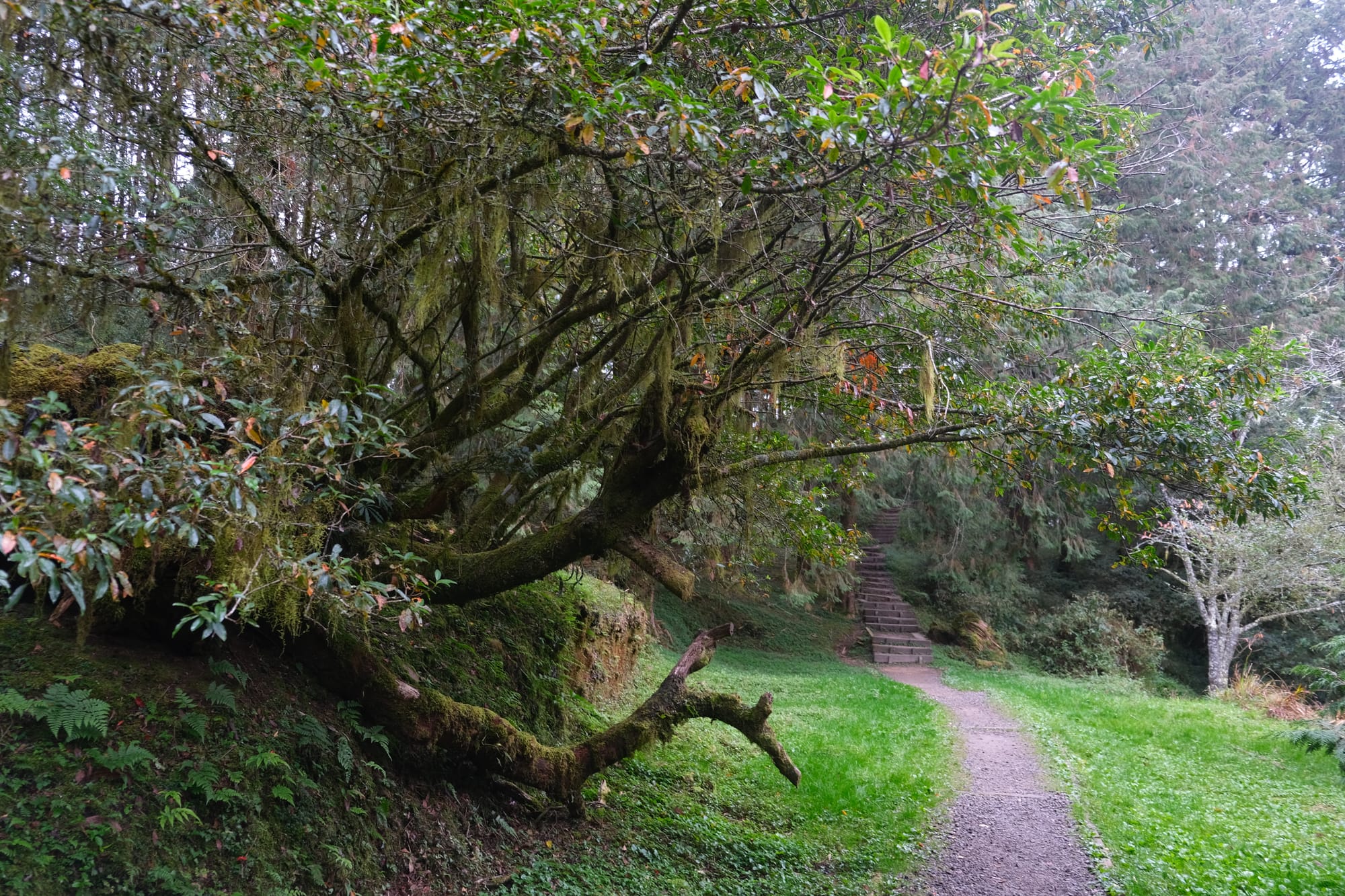
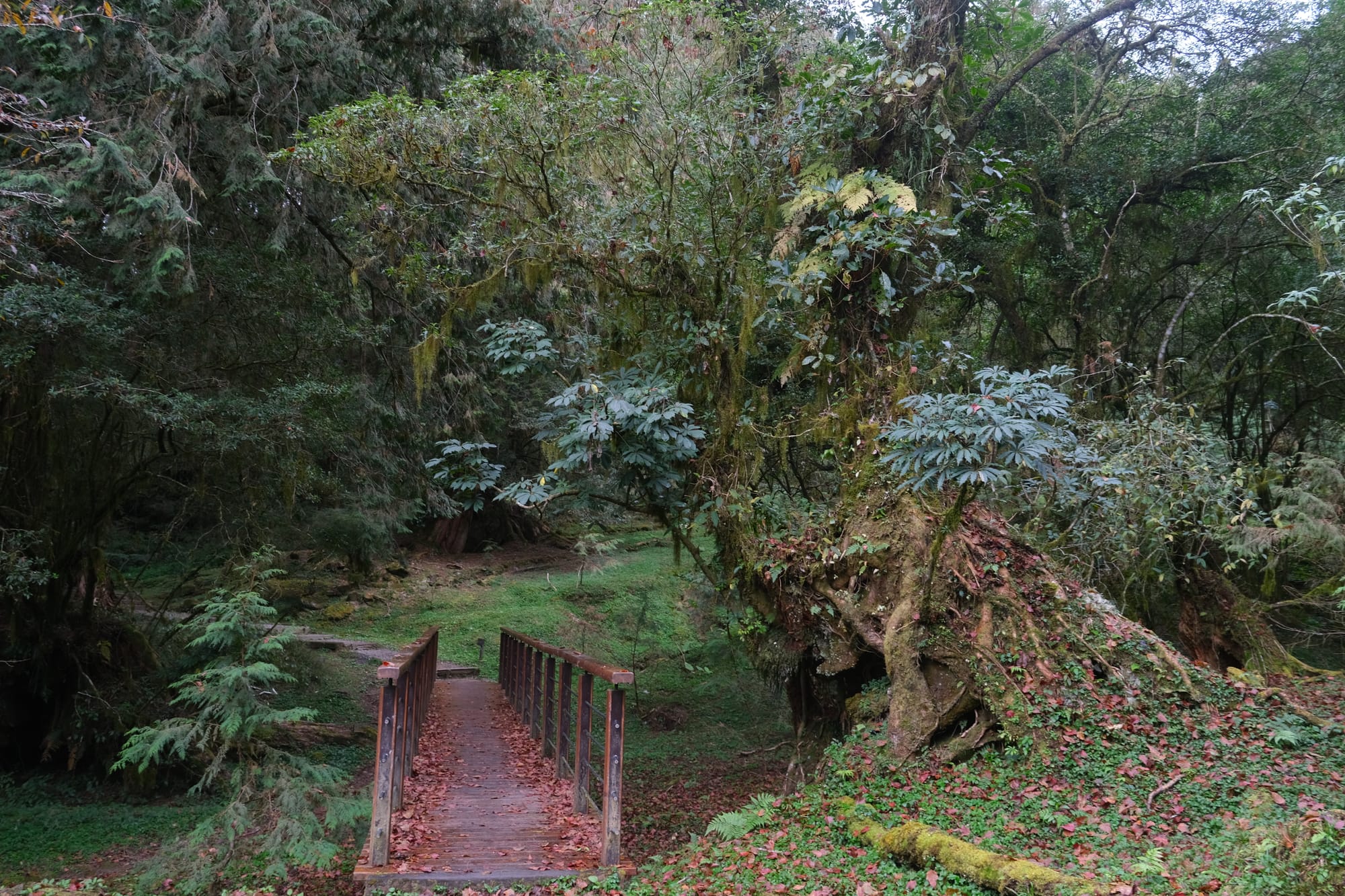
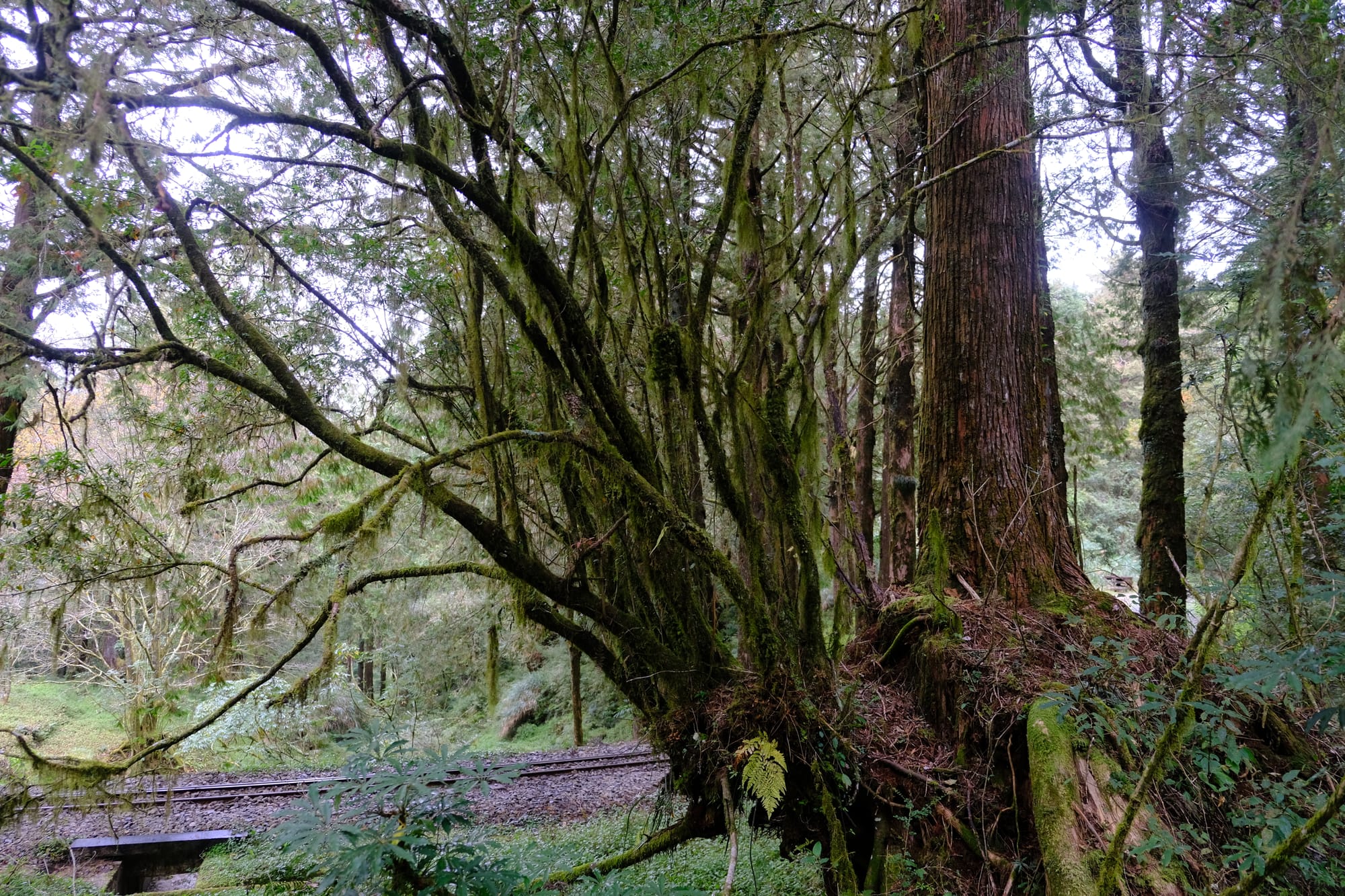
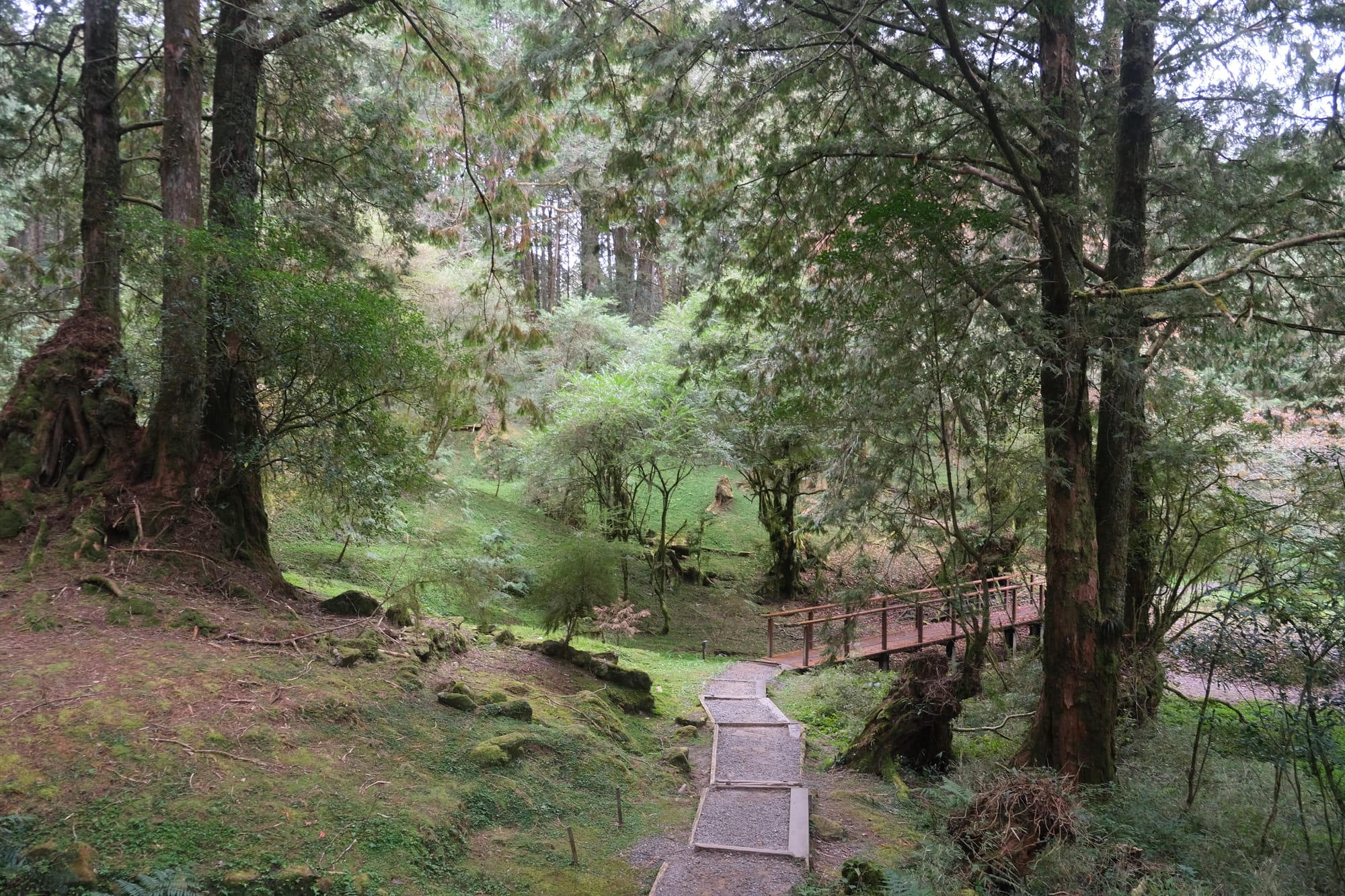
There was this beautiful glade early on in the walk. The entire area was so picturesque, with vibrant green grass, and green moss seemingly dripping from the tree branches.
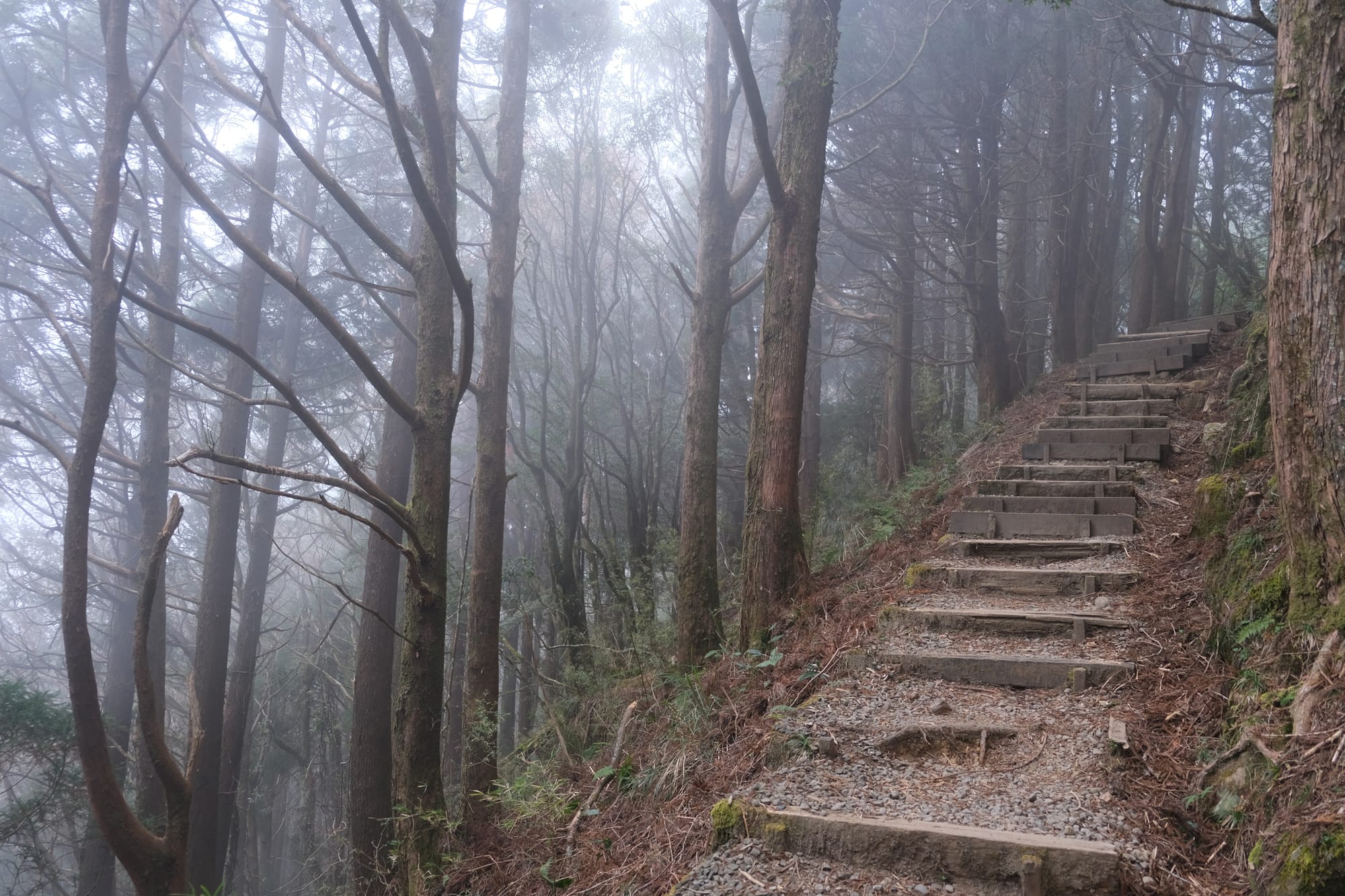
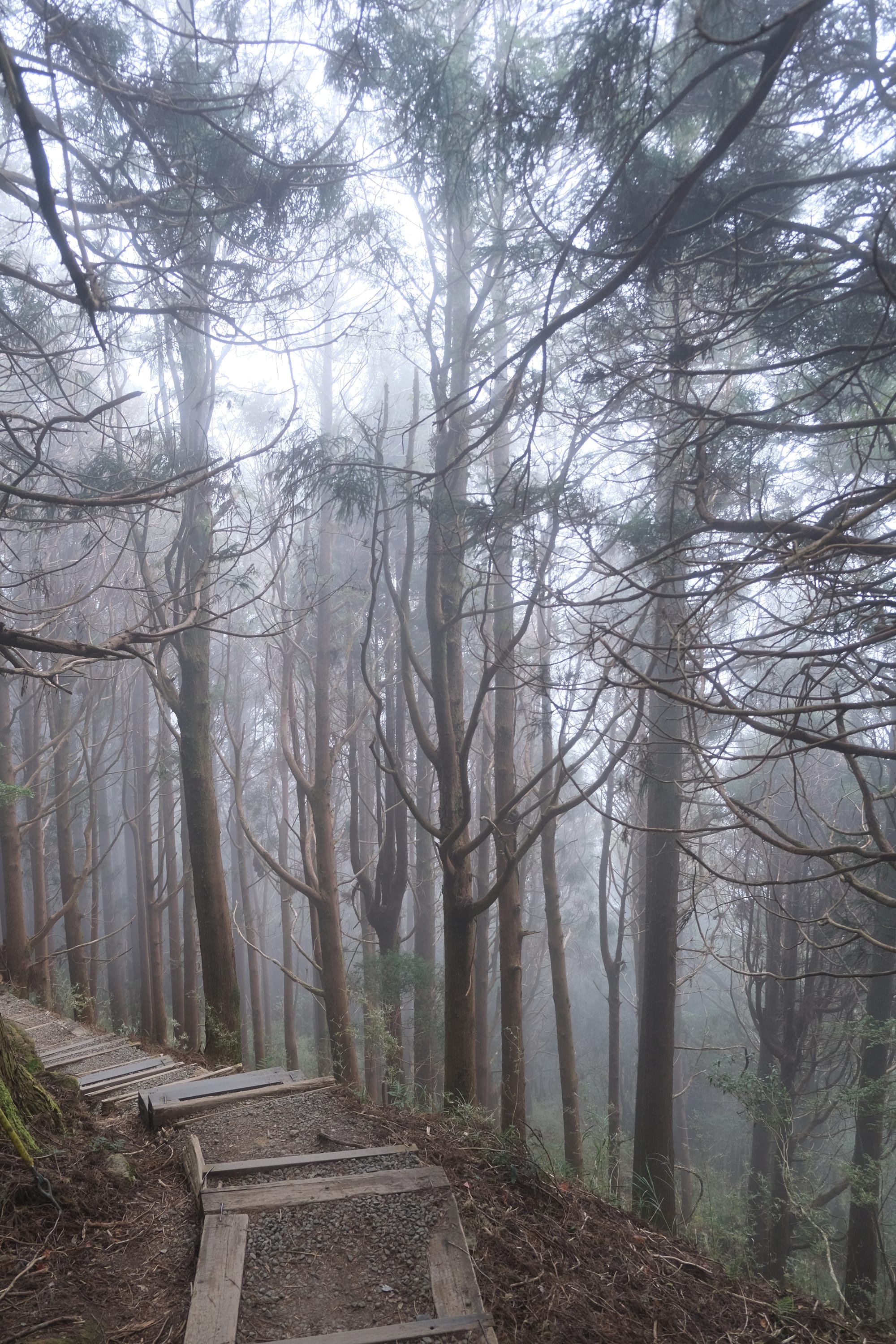
As I climbed higher I entered the clouds and the forest felt ethereal, like I was walking though a misty land.
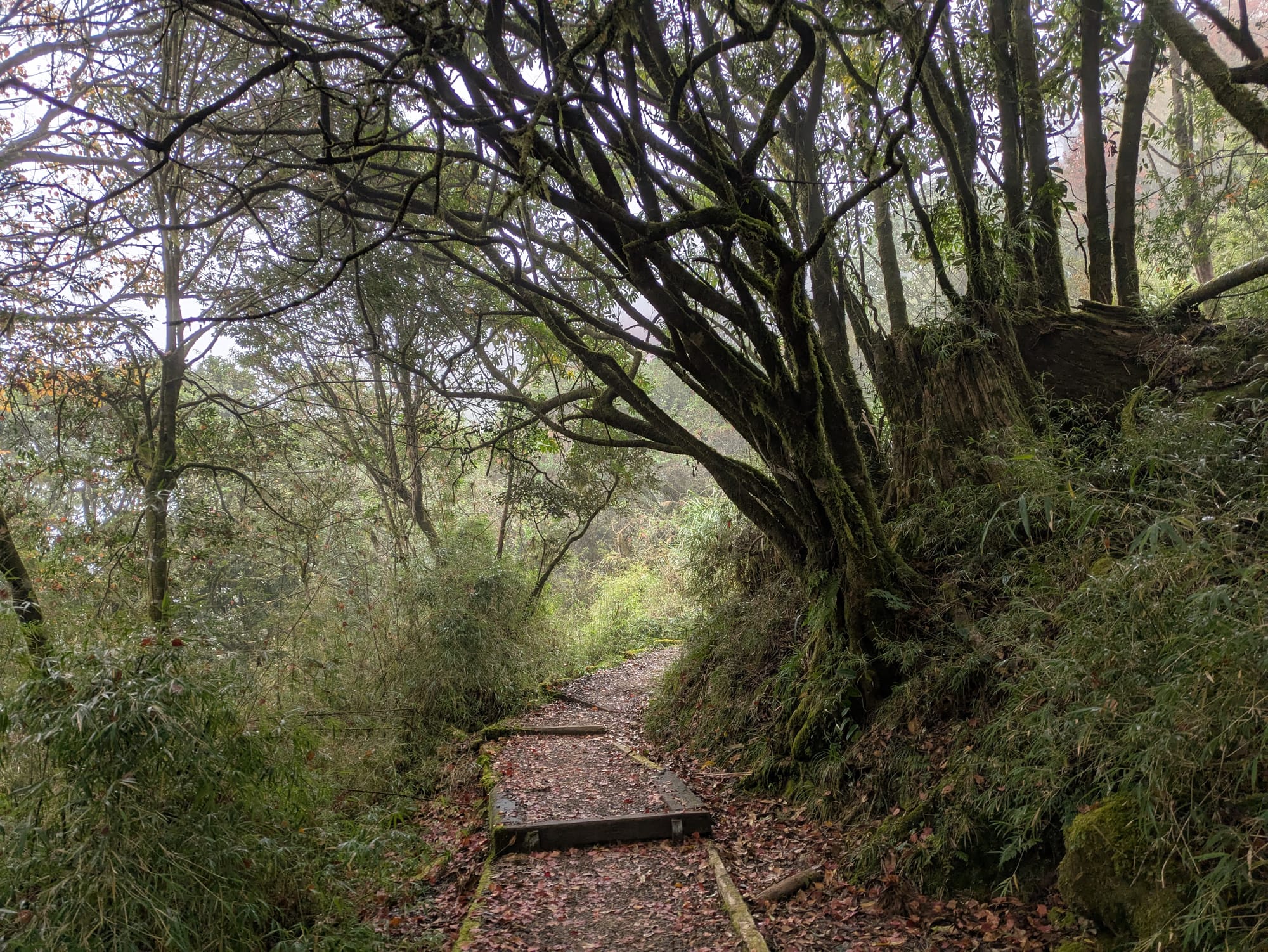
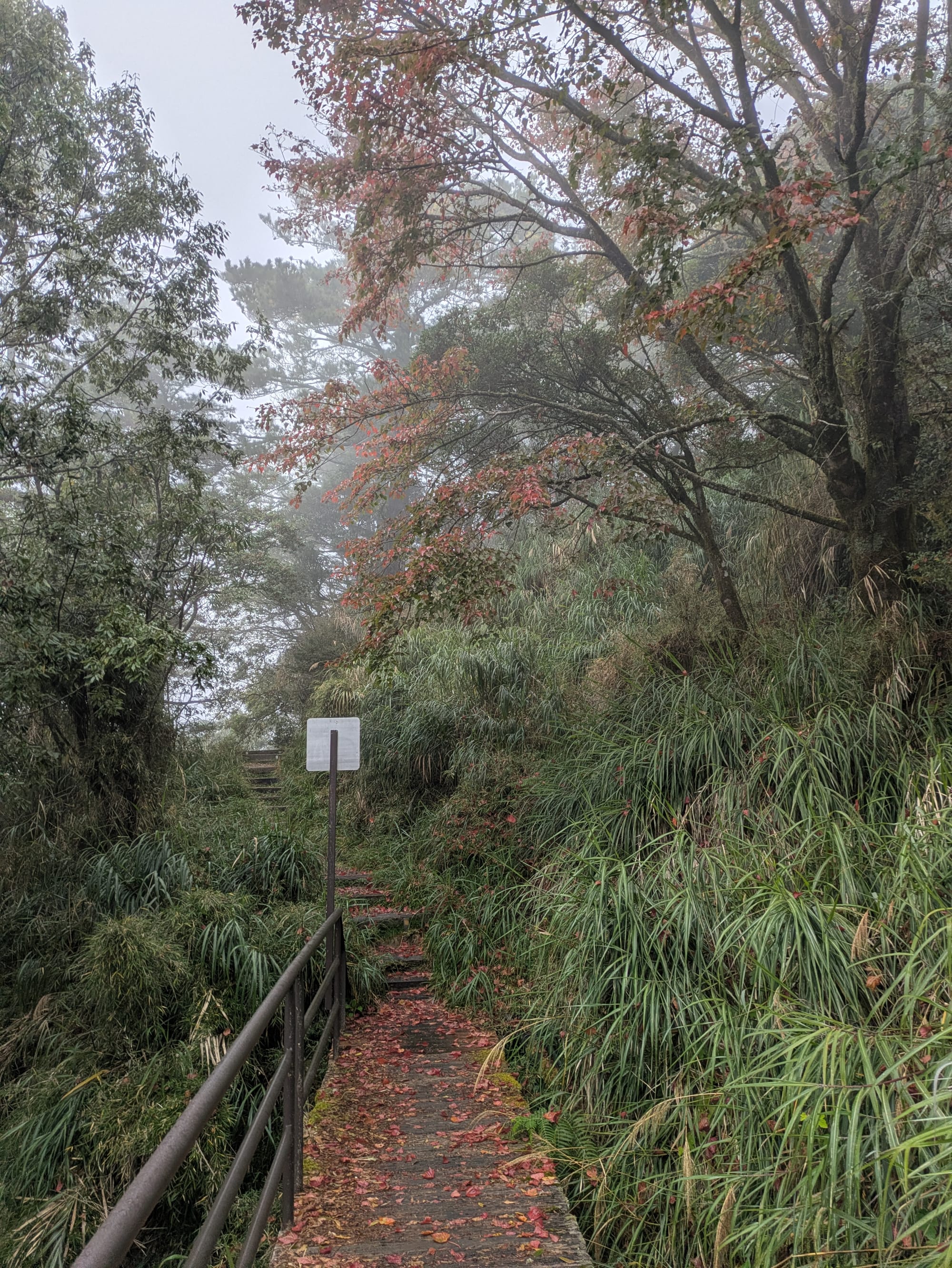
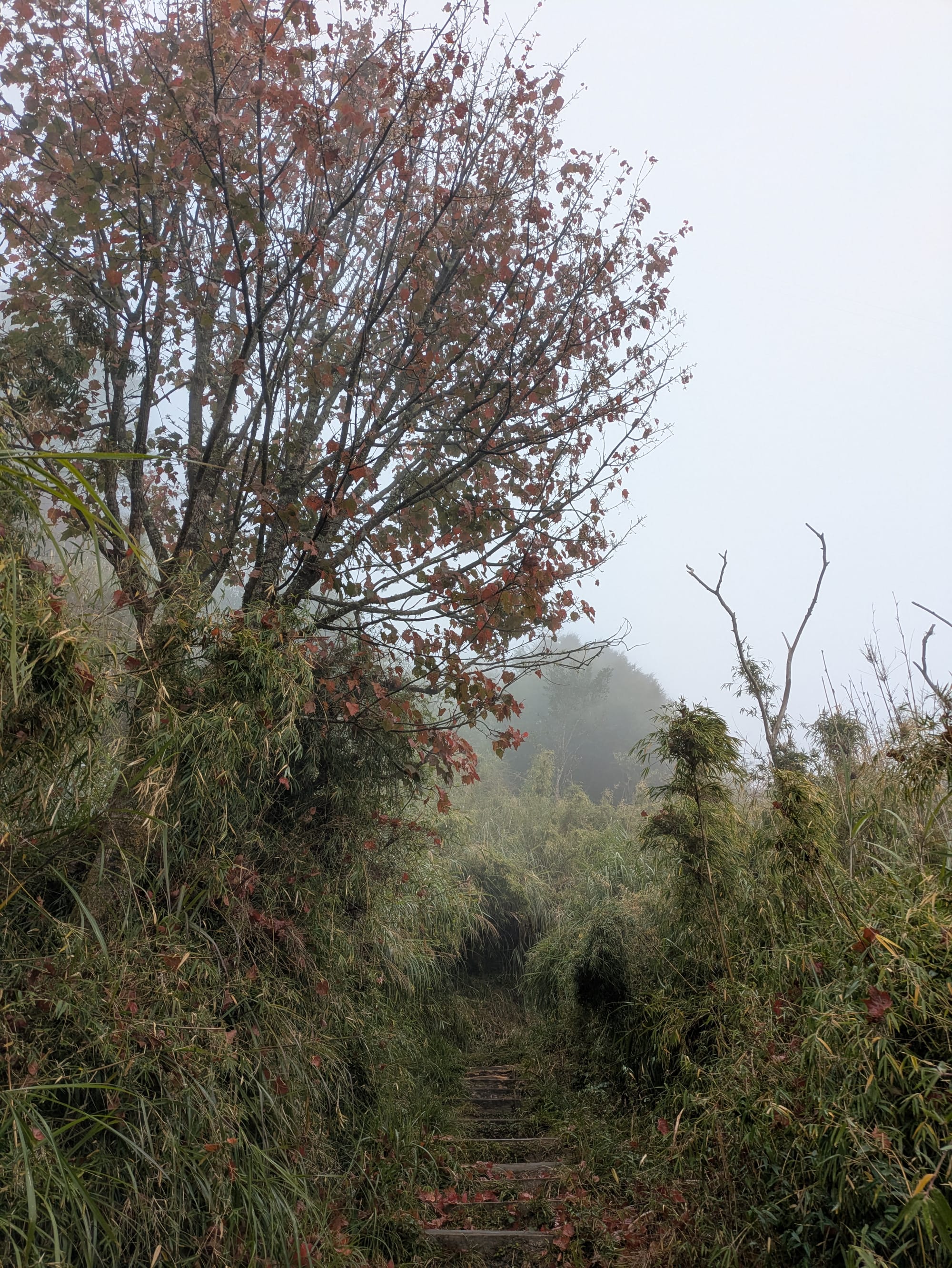
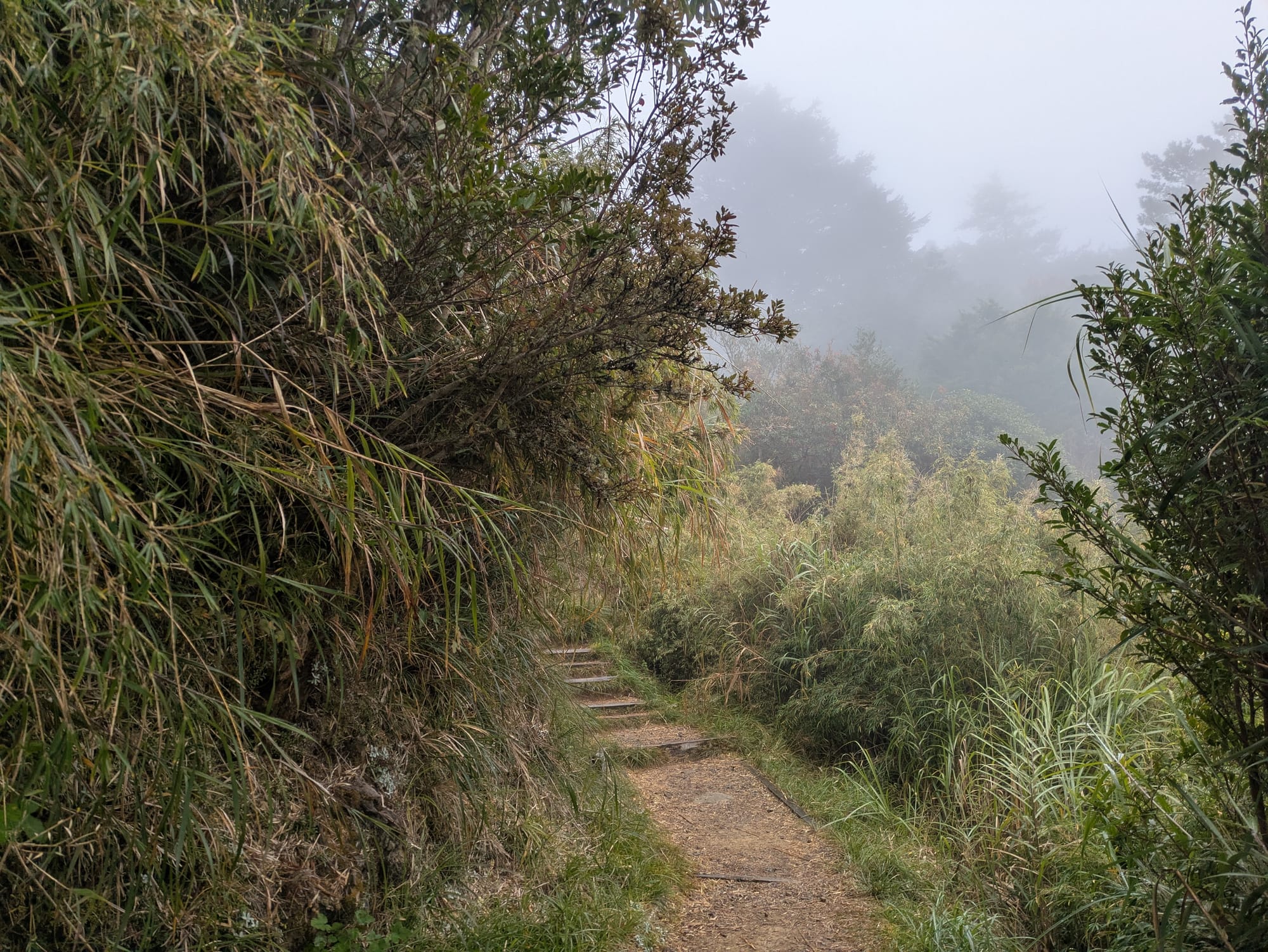
The floral biodiversity increased as I hiked further and higher. I was seeing all sorts of different plants and there were signs placed along the path to talk about them.
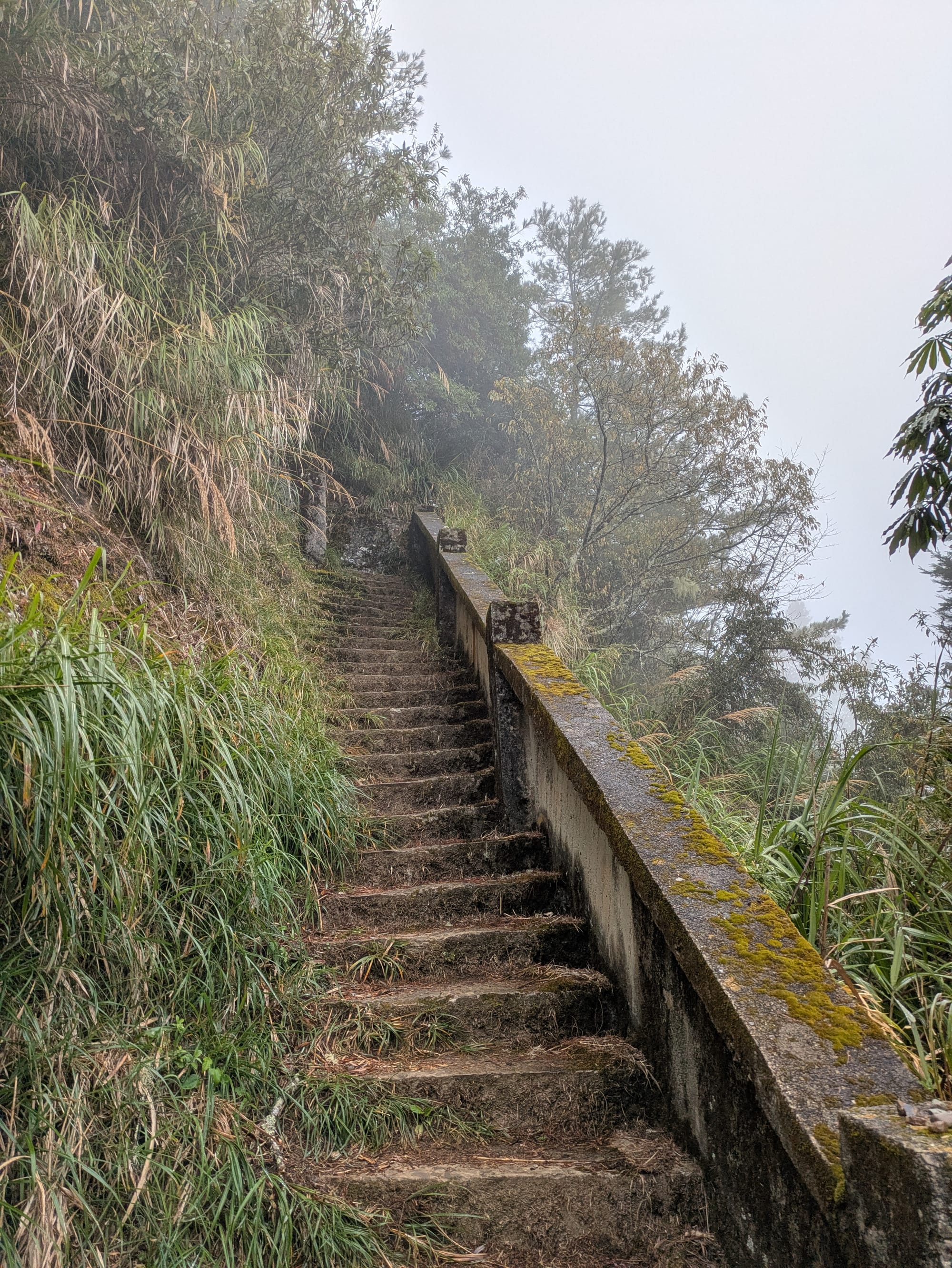
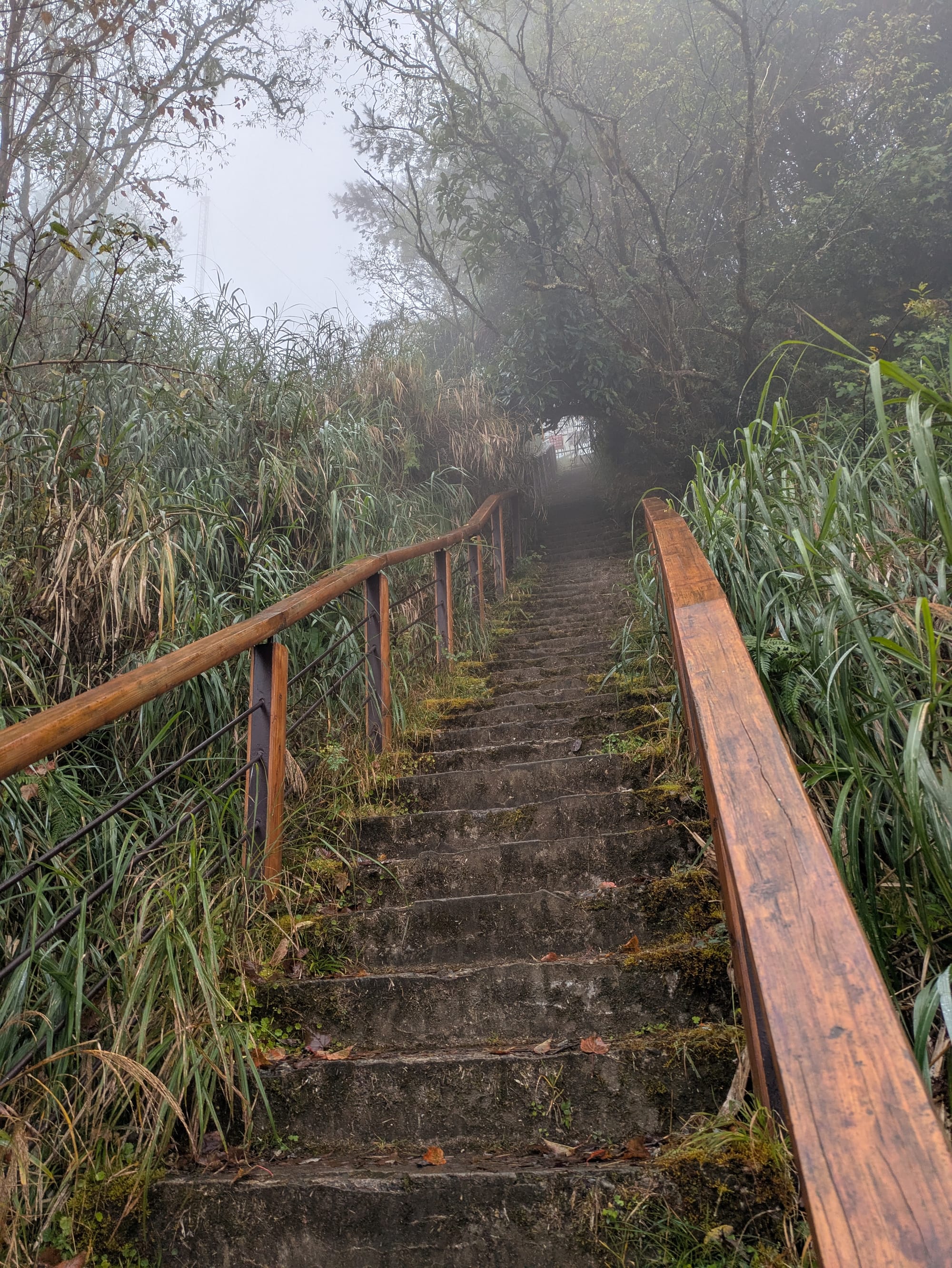
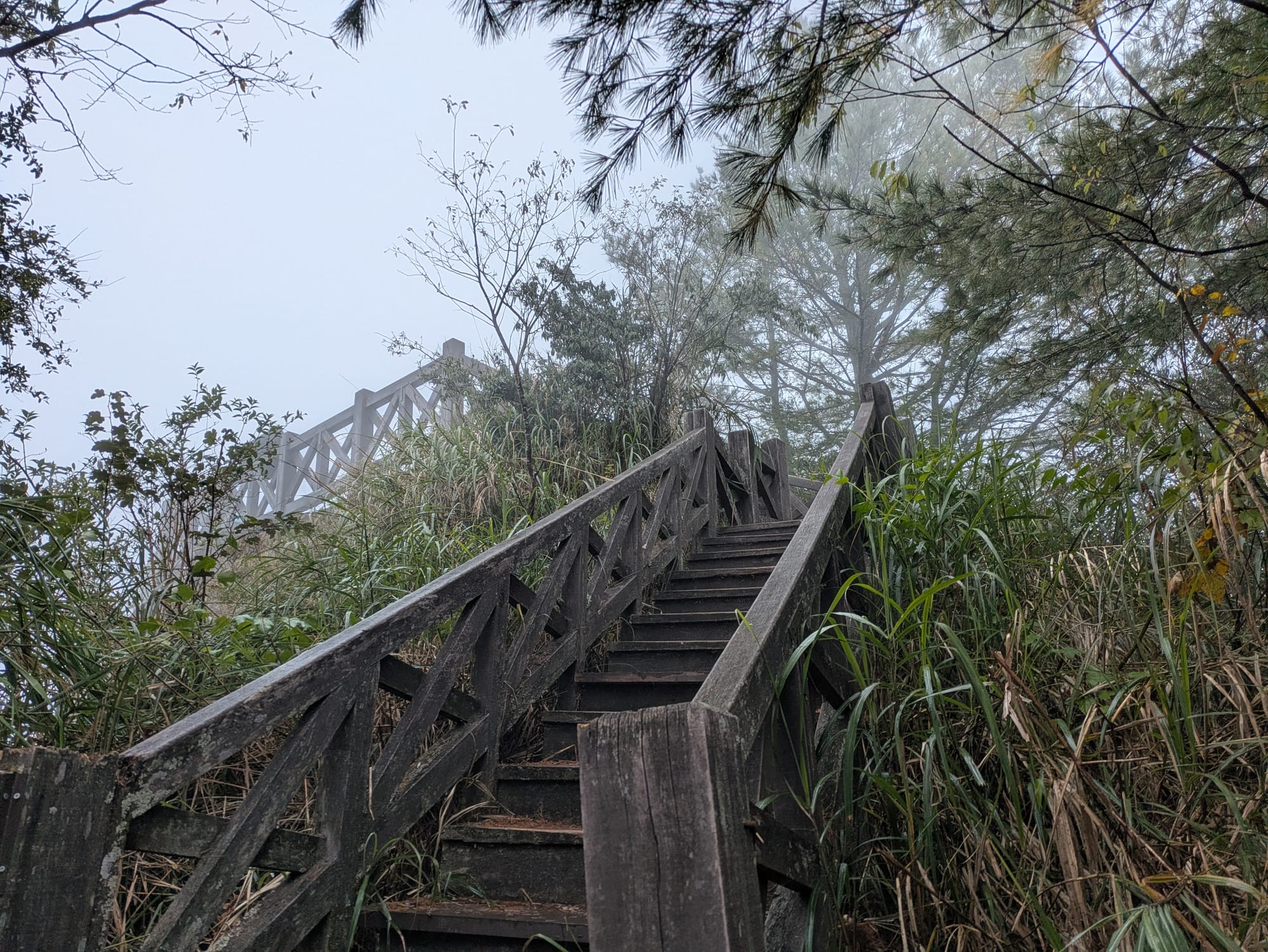
The final approach to the peak was an endless set of stairs until finally I saw the platform.
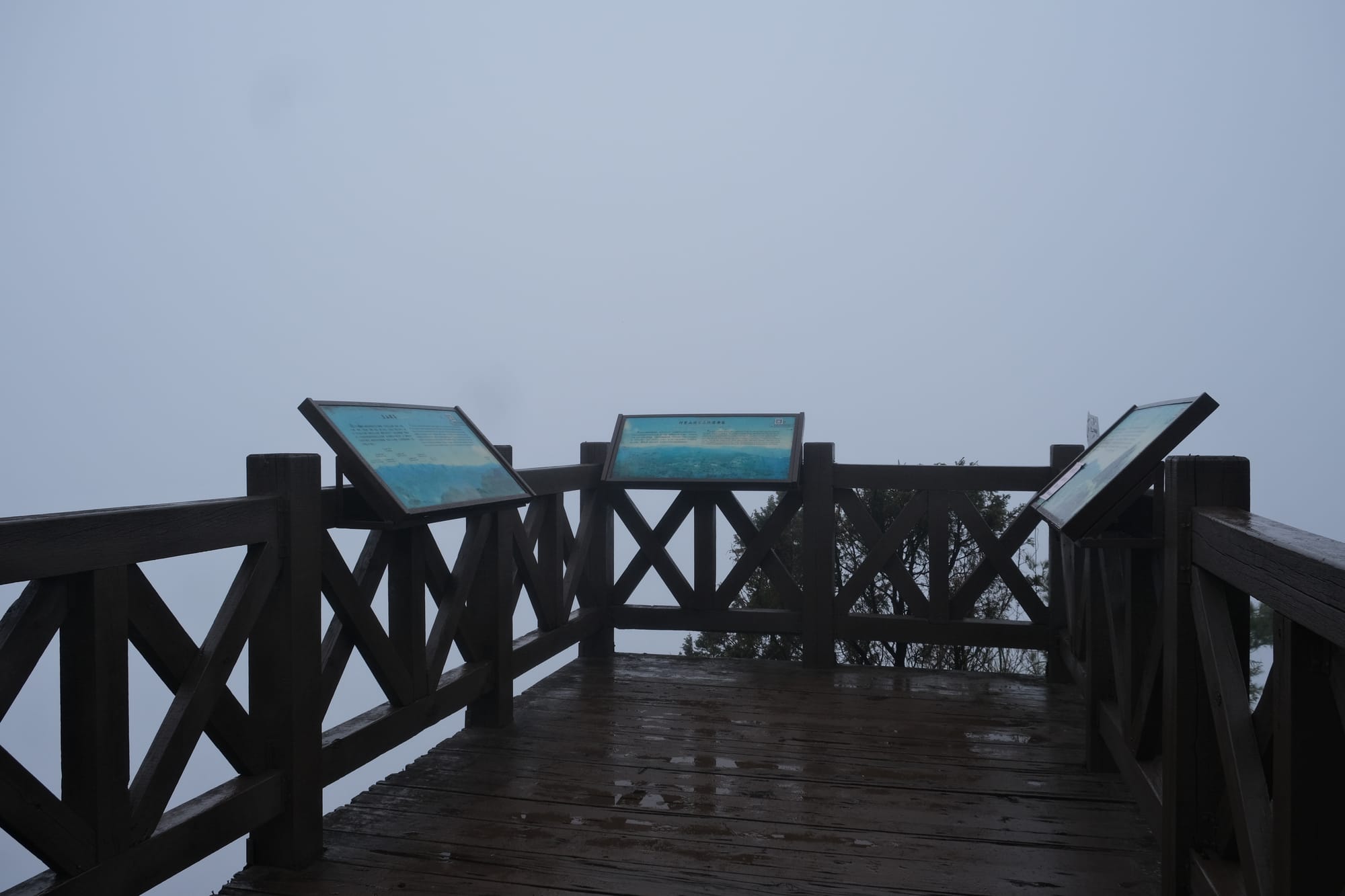
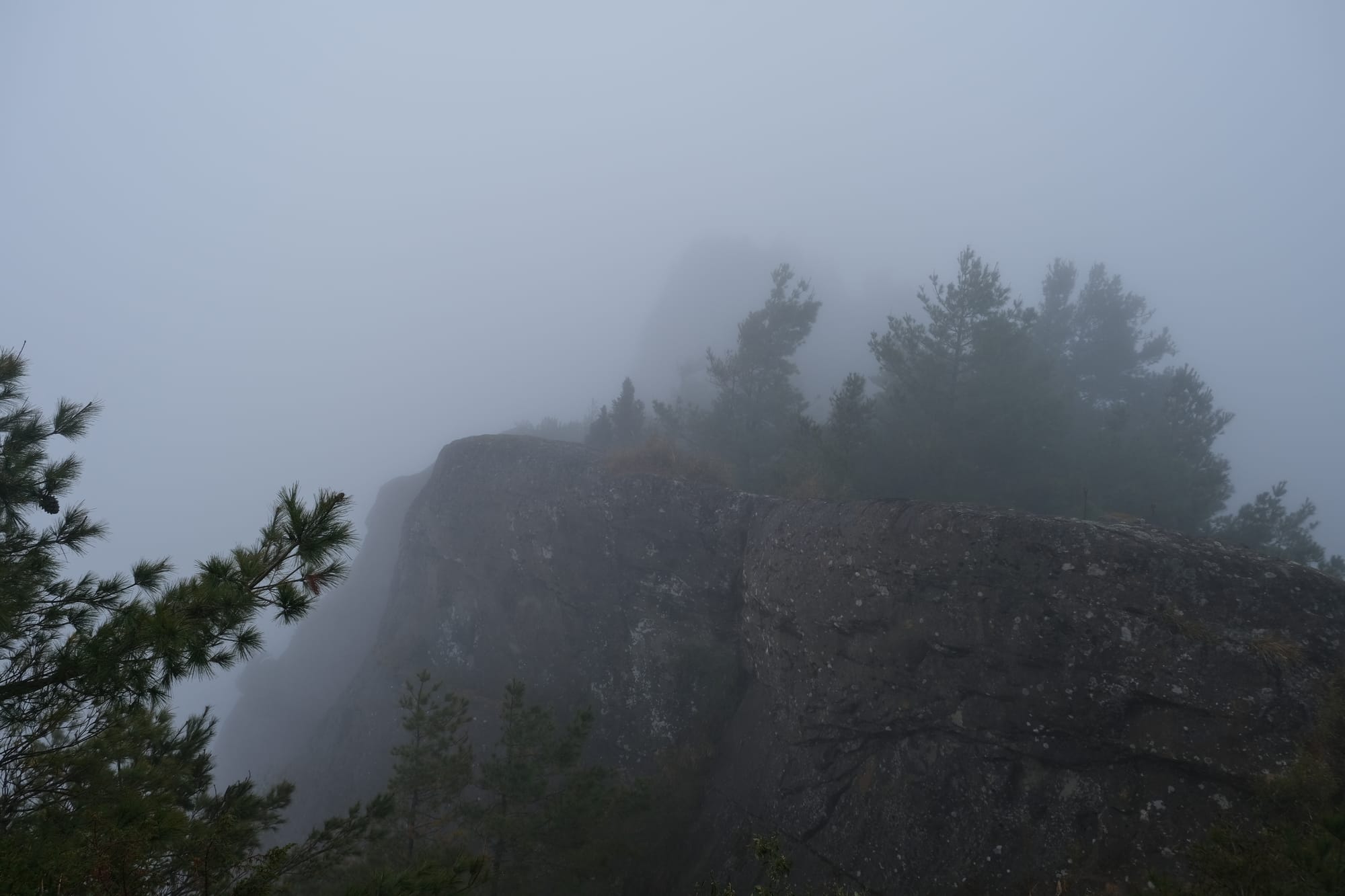
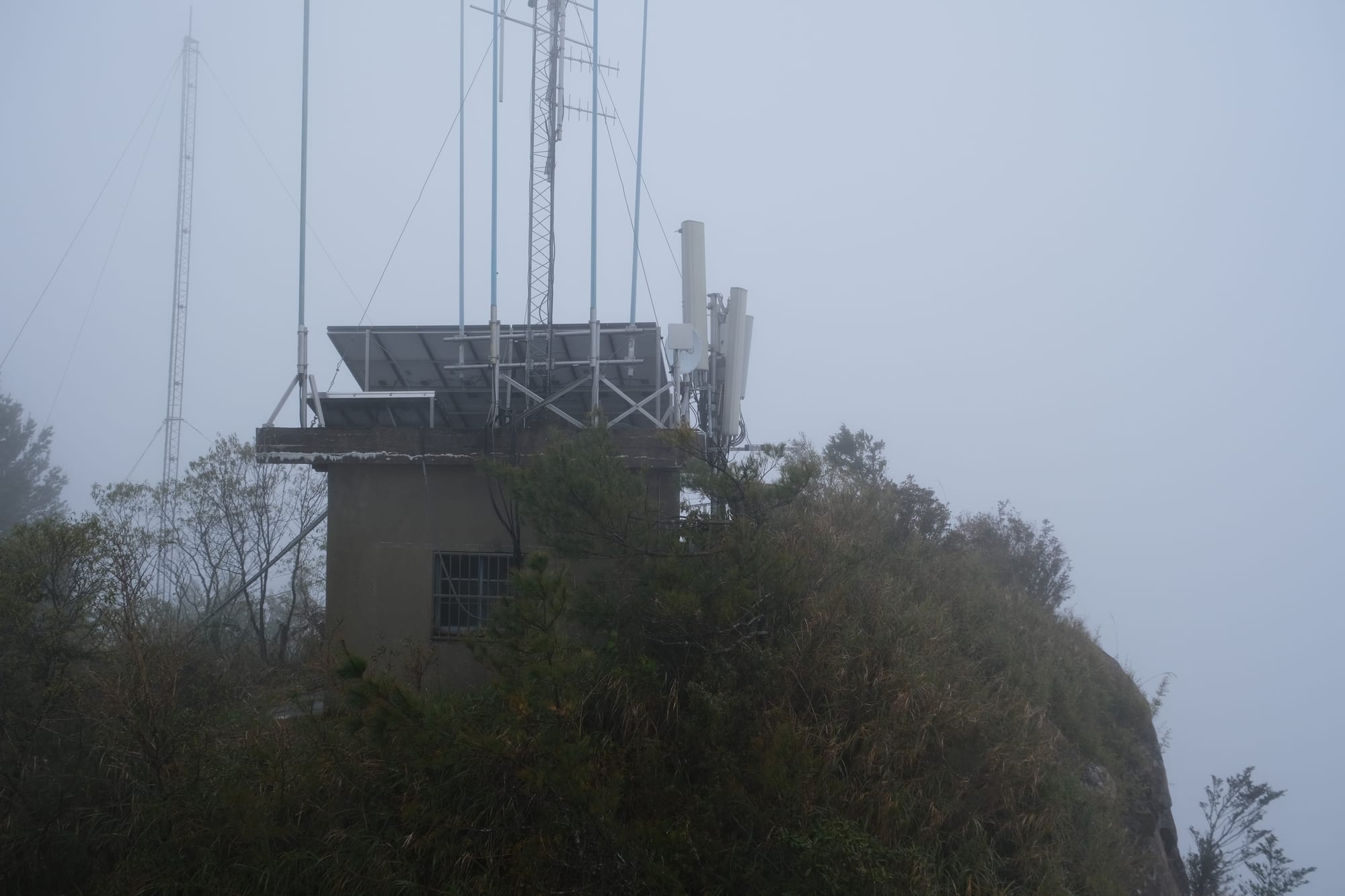
I am sure there would be spectacular views from this mountain peak but alas not today. Instead the endless cloud enveloped me.
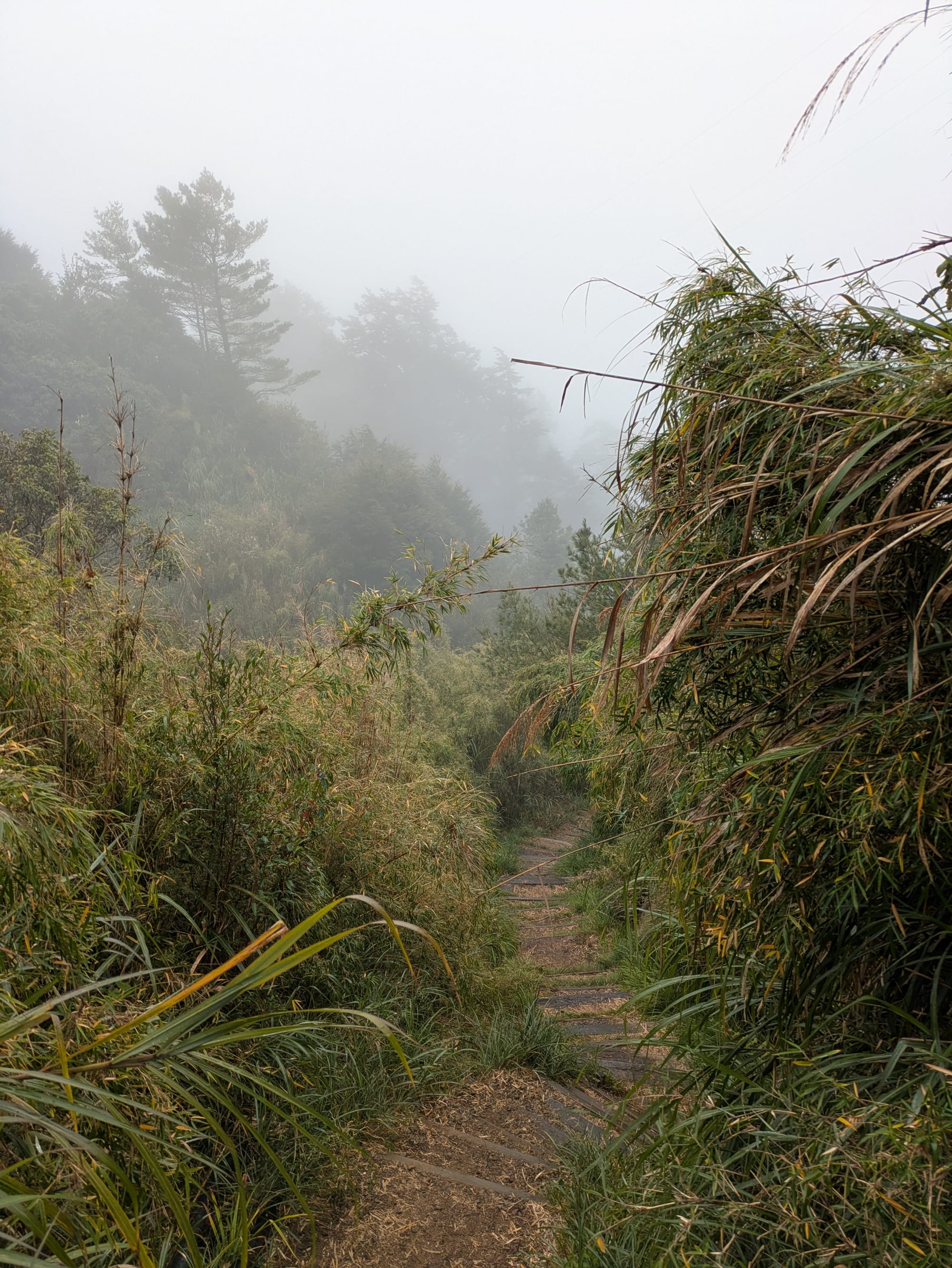
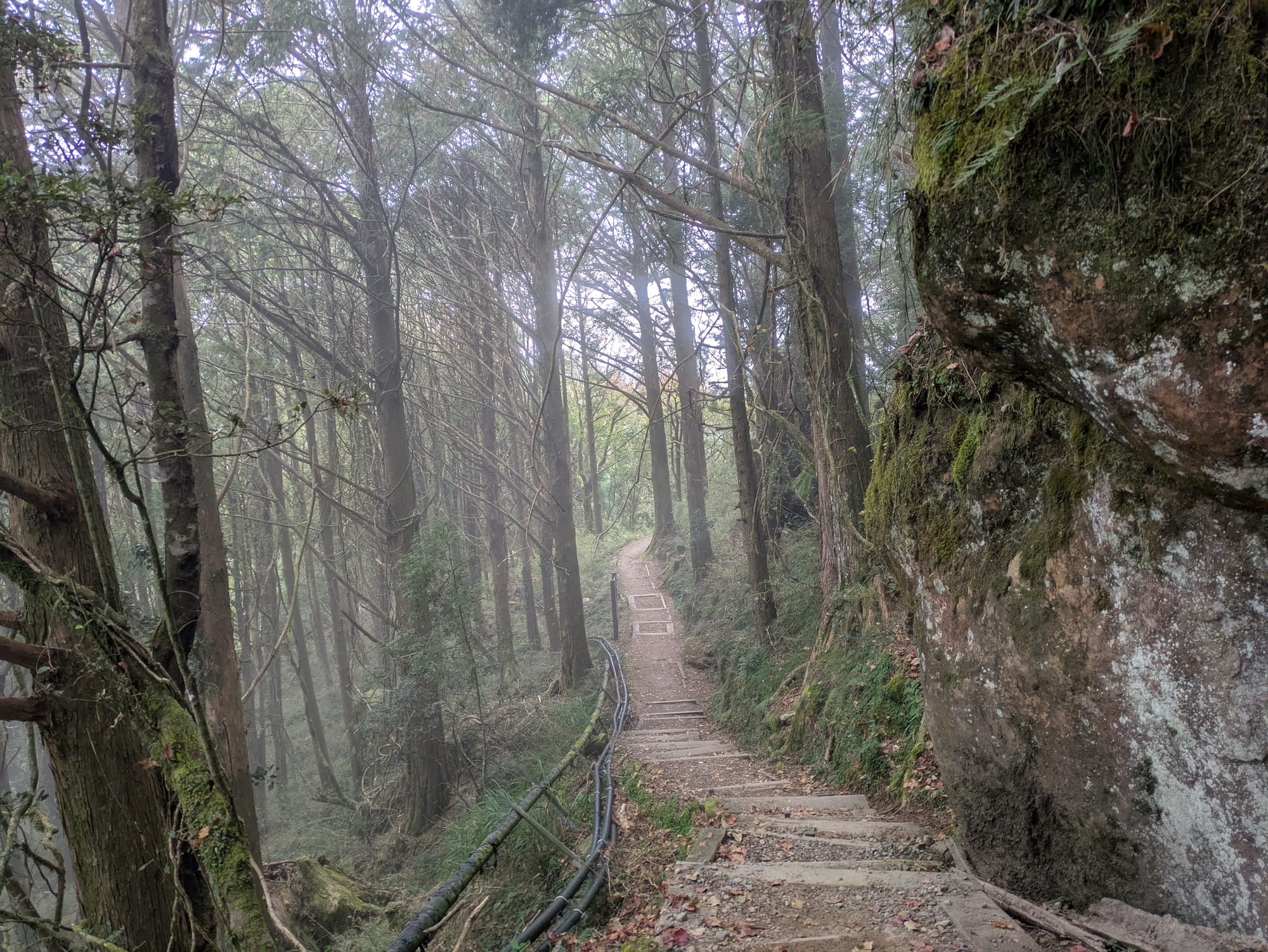
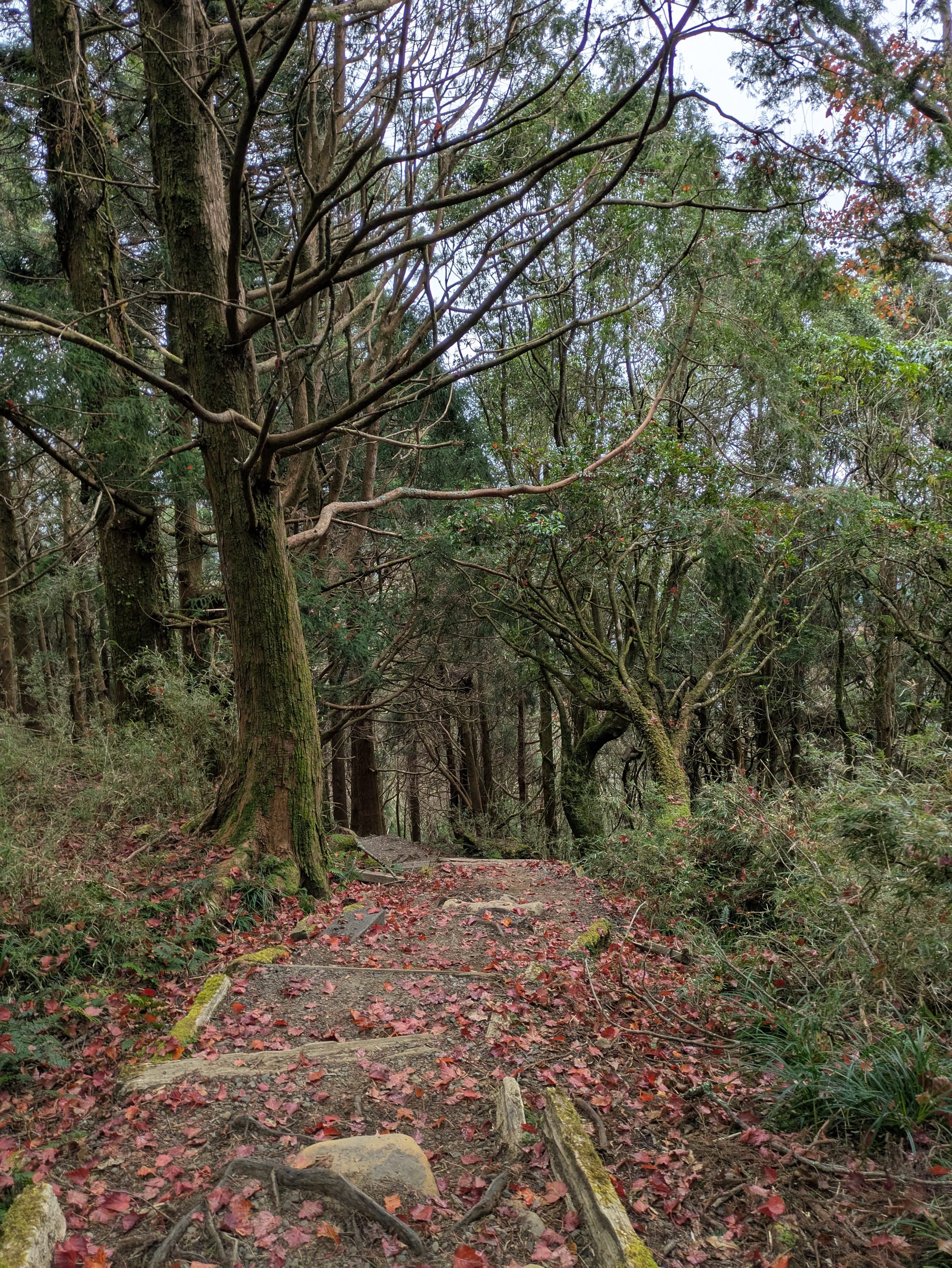
I descended down the mountain and out of the cloud.
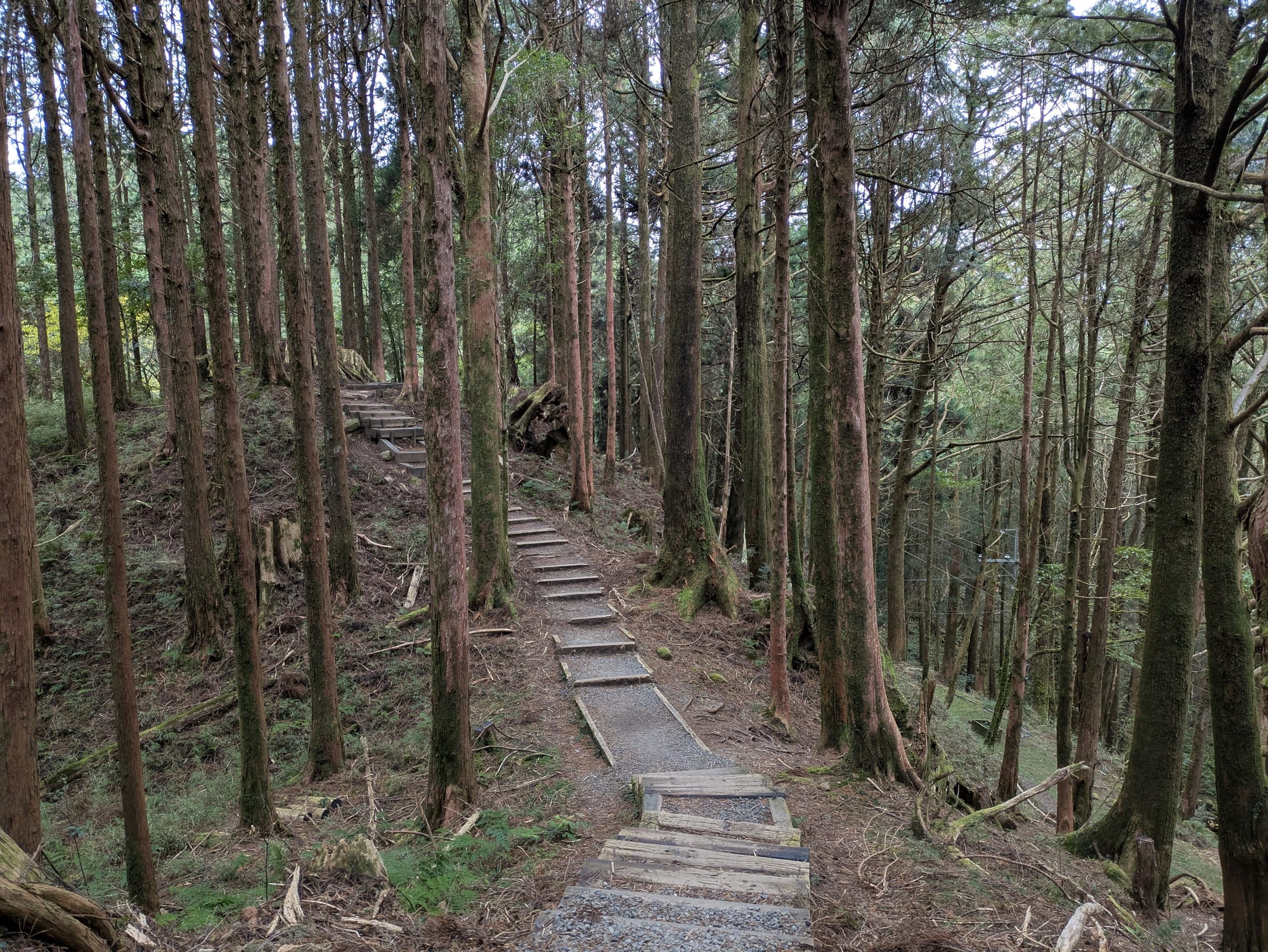
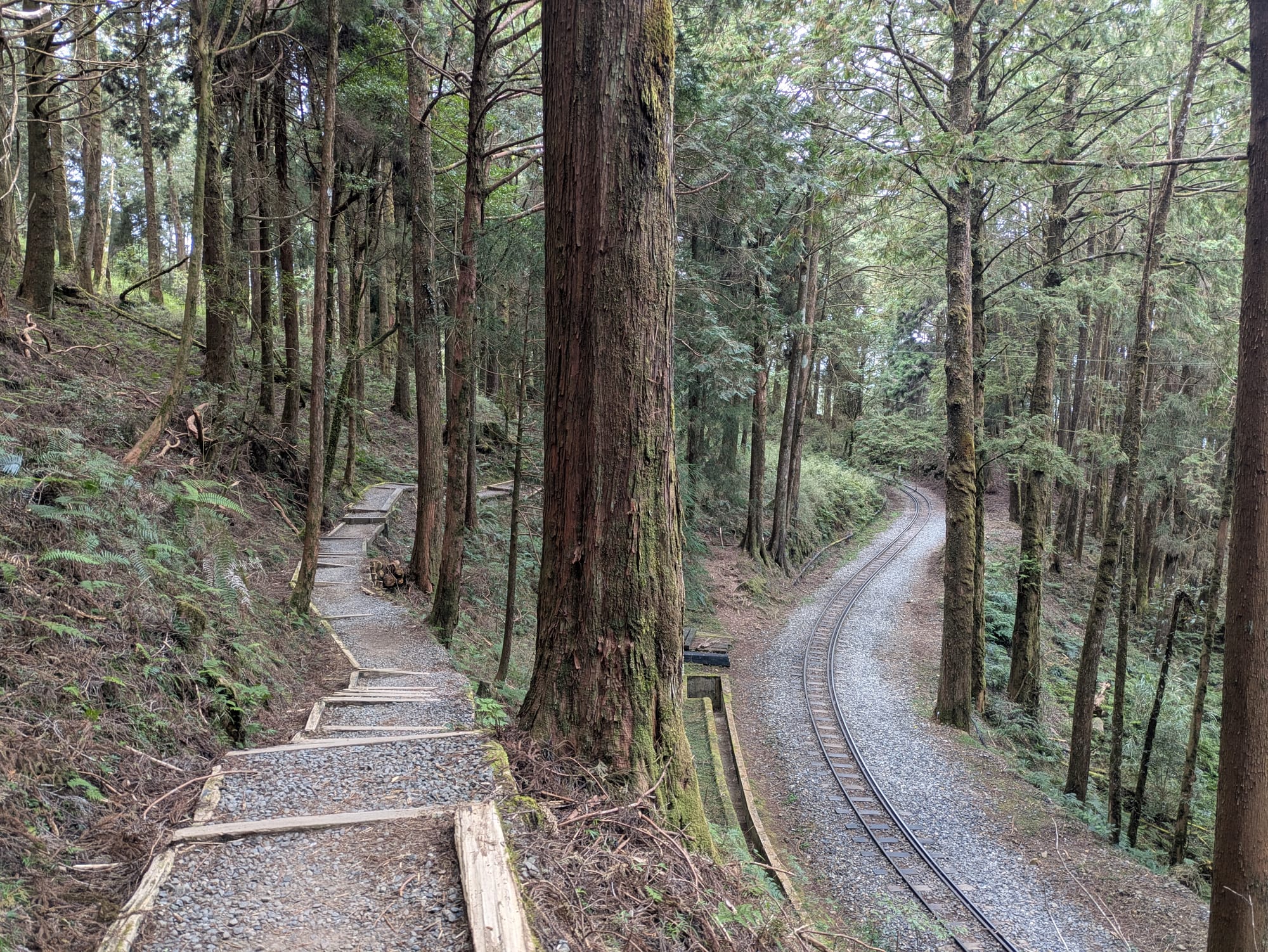
On the final stretch back to the main Alishan park, I walked through this open stretch of forest that looked so beautiful I just had to grab a couple of pictures. I loved how the trail and real line meandered through the hilly forest in this section.
Bird Spotting
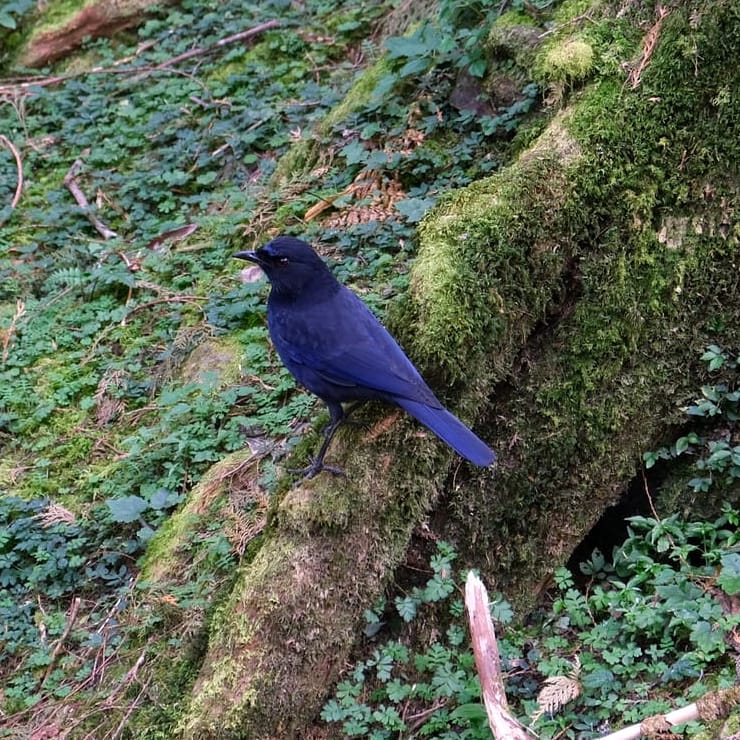
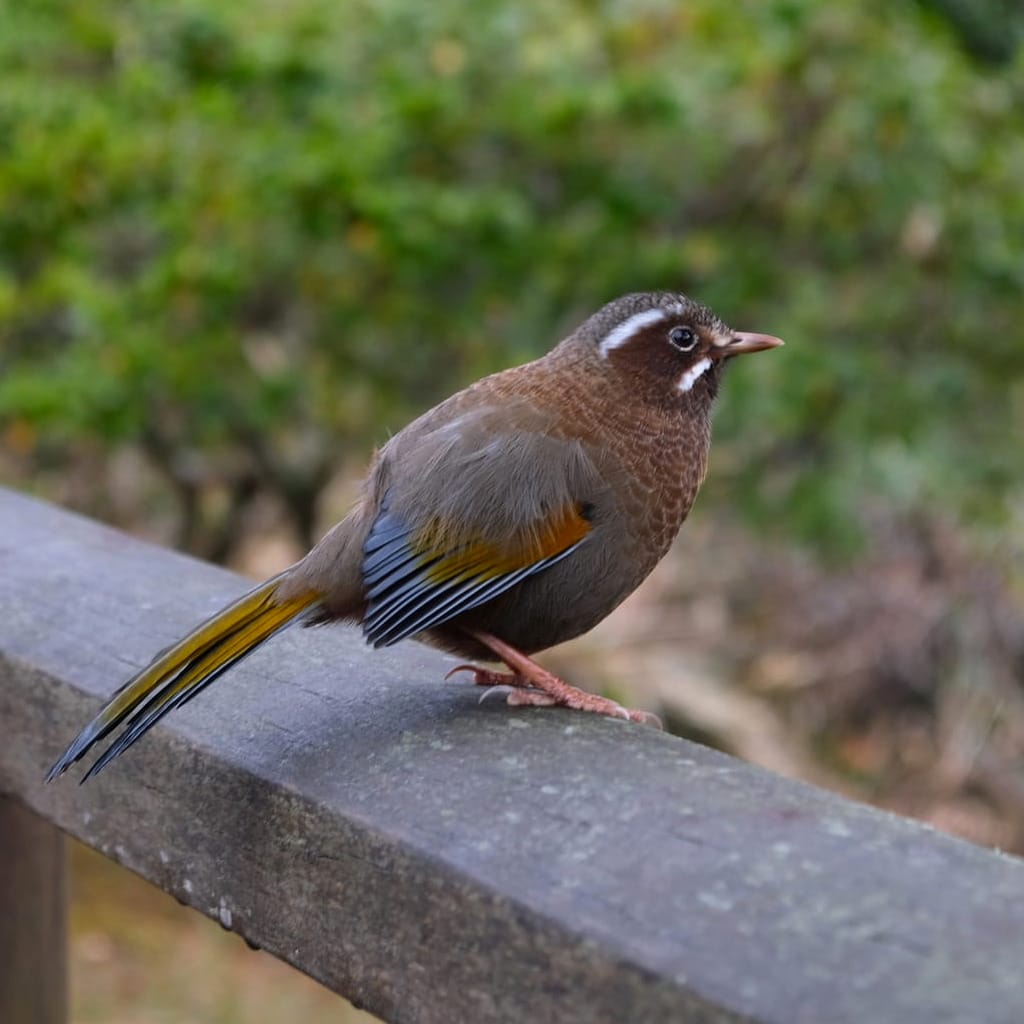
I saw a number of birds in Alishan, most where in the distance but I was able to capture a few of them with my camera.
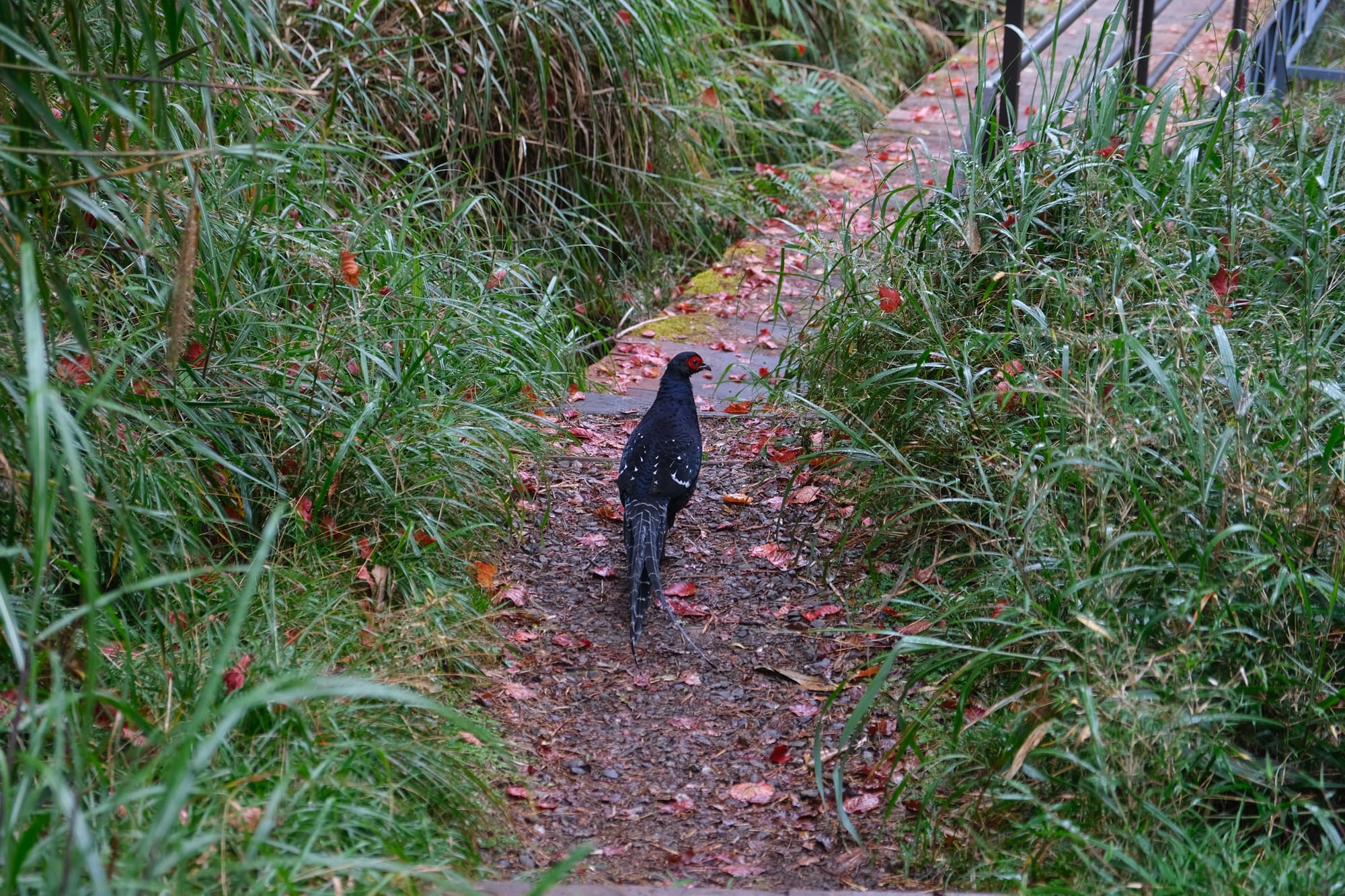
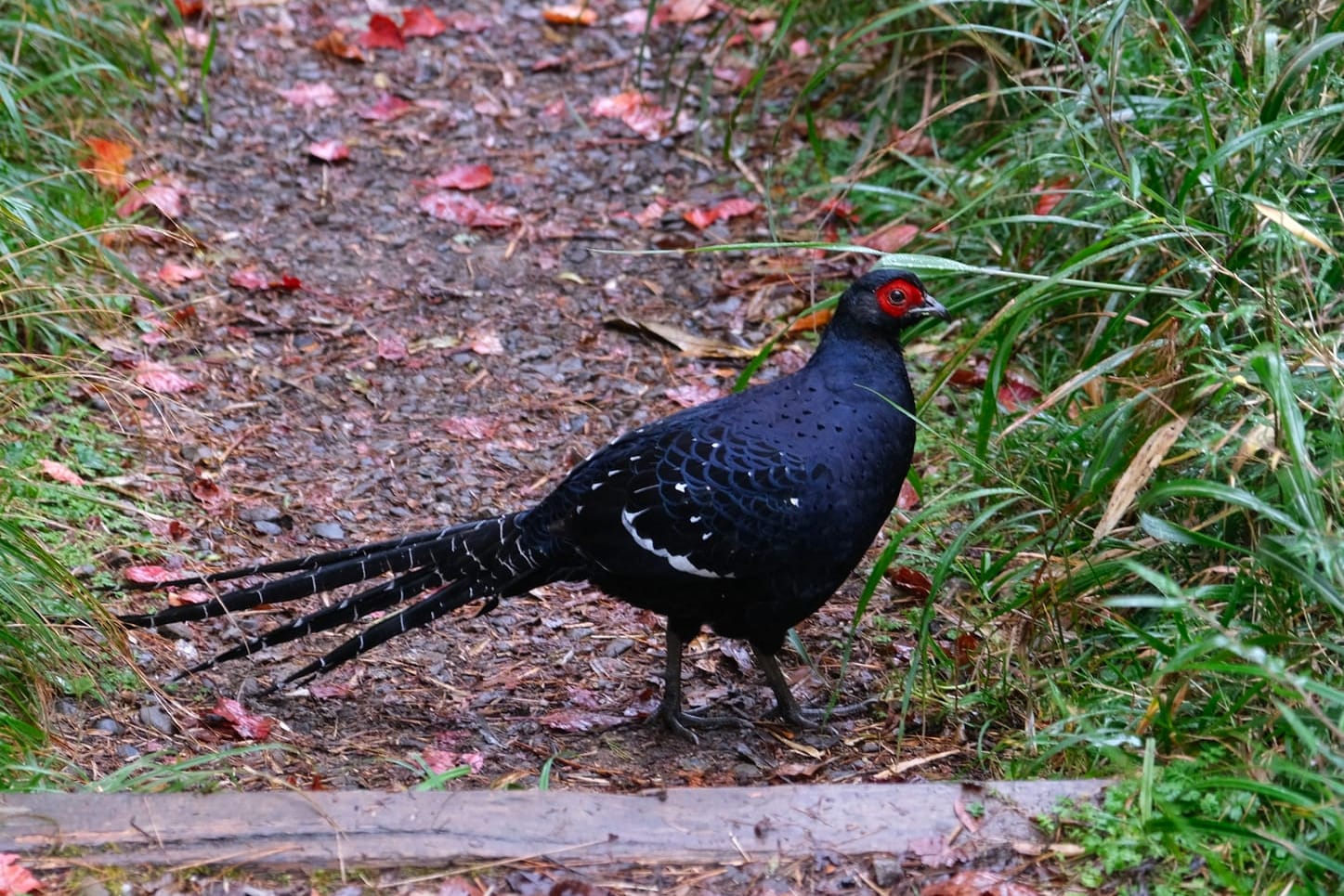
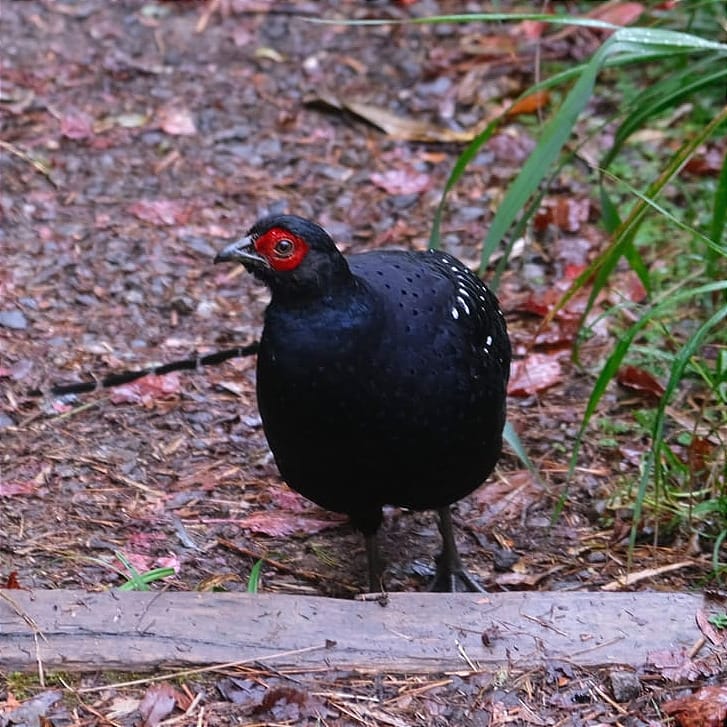
The Mikado Pheasant, the unofficial national bird of Taiwan, it is featured on the $1000 note.
This bird lives in the mountains and are a somewhat rare sight and everyone is always excited to see one. I had been on the lookout for this bird during my time in Alishan ever since my guide, from the train line hike, told me about them. I was so pleasantly surprised to see one on the way back down the Tashan trail. When I turned a corner I saw, in the middle of the path, one of these majestic blue birds. I had a little photo shoot with this bird (I took over 100 pictures) as it walked up and down the path, foraging for some food. Eventually it scurried of the trail into the undergrowth and out of sight. I continued my walk feeling absolutely blessed to see this beautiful creature.
I spent three nights at Alishan forest, having arrived just before sunset of the first night. I had two full days to explore the forest and the final day being a half day so I could catch a bus in the afternoon. Yet somehow on each of those days I walked over 20 kilometers. Sometimes I felt like I was rushing between places as I desperately wanted to see every part of the forest. My phone and camera were often running low on battery by the end of the day because I was taking so many pictures. I sometimes had to force myself to slow down a bit and just enjoy the atmosphere of the forest; to remind myself not to worry about seeing everything and to always be thankful for the blessing it is to visit this place. Alishan Forest was absolutely beautiful, a wonderful experience and a great opportunity to visit a real cloud forest.
Thanks for reading – Edward
Written 22nd of December 2024