Himeji Castle
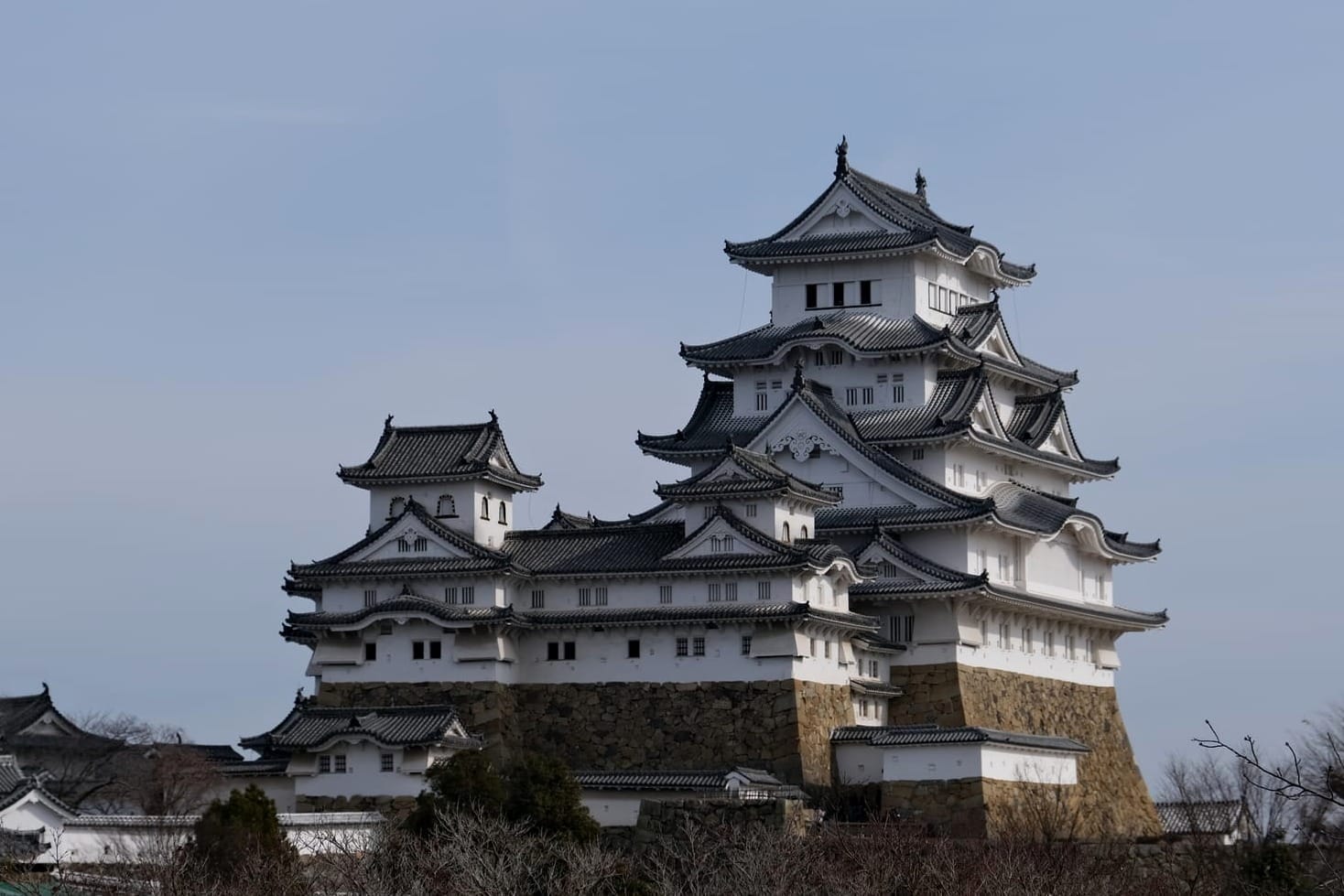
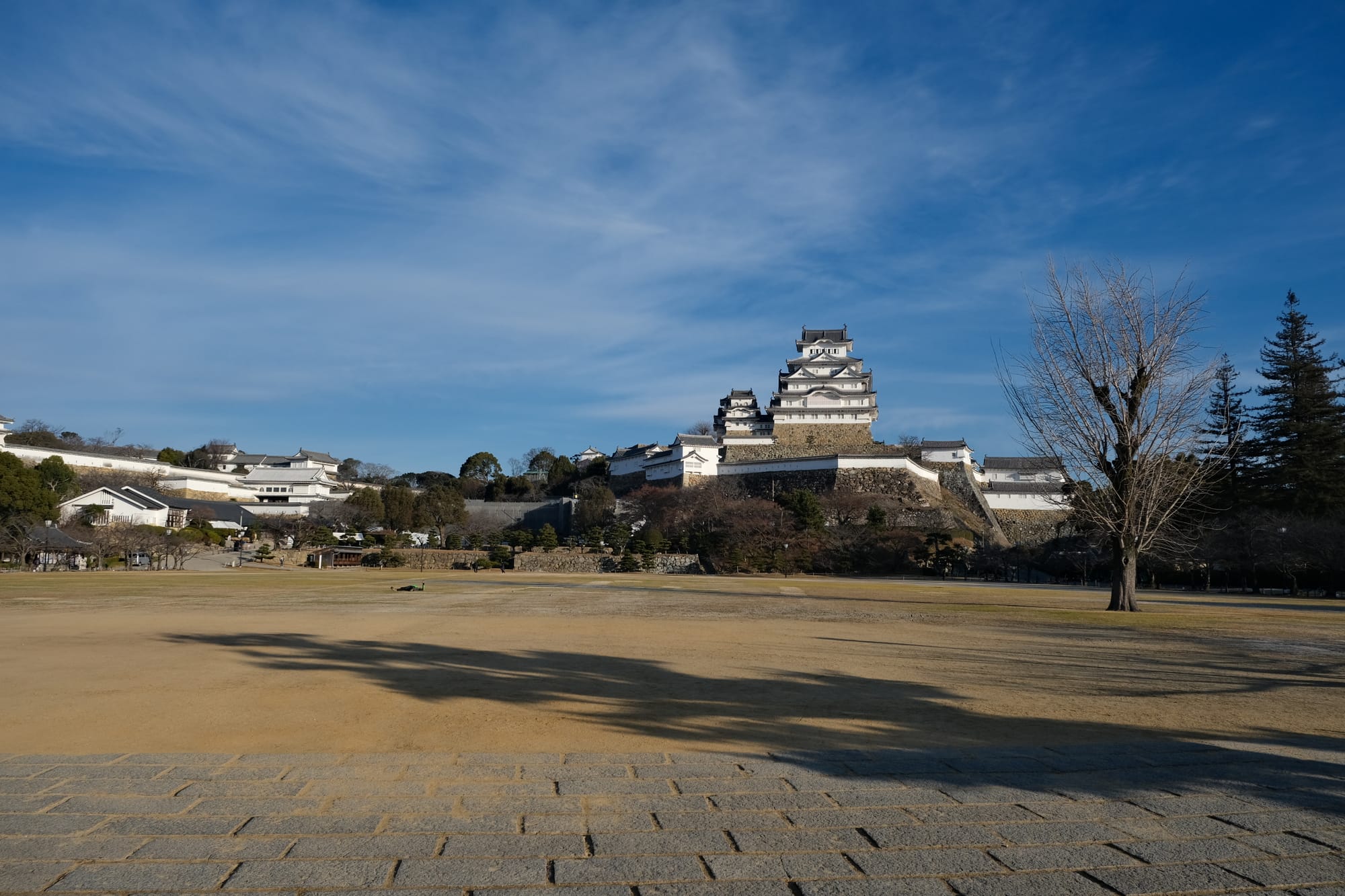
After Hiroshima we spent two nights in Himeji with the in-between day being our main sight-seeing day. The main attraction here is Himeji Castle, the largest castle in Japan and one of the most well preserved, dating back to Japan's feudal period. It's also known as the White Heron castle due to its brilliant white exterior and the roof looking like a bird taking flight; it is certainly a beautiful castle and its association with a graceful heron is very appropriate.
We spent most of the day exploring the castle and the surrounding castle grounds. I arrived first thing in the morning, about fifteen minutes before opening time, to buy tickets and book us in for the English speaking tour. Our tickets included access to the Koko-en gardens so we quickly visited them before the tour was scheduled to start. The interior access to the castle was set up as a loop, with a one directional tour route that goes up every floor to the top and then back down to the basement. We completed this loop twice, first with the tour, listening to the guide, and then on the second round taking it slower, both for pictures and to really appreciate the beautiful wooden interior. Each time we entered the castle or a historical building we needed to take of our shoes so as not to damage the wooden floors. We further explored the grounds, taking plenty of photos and, after dinner, walked all the way around the castle moat before sunset.
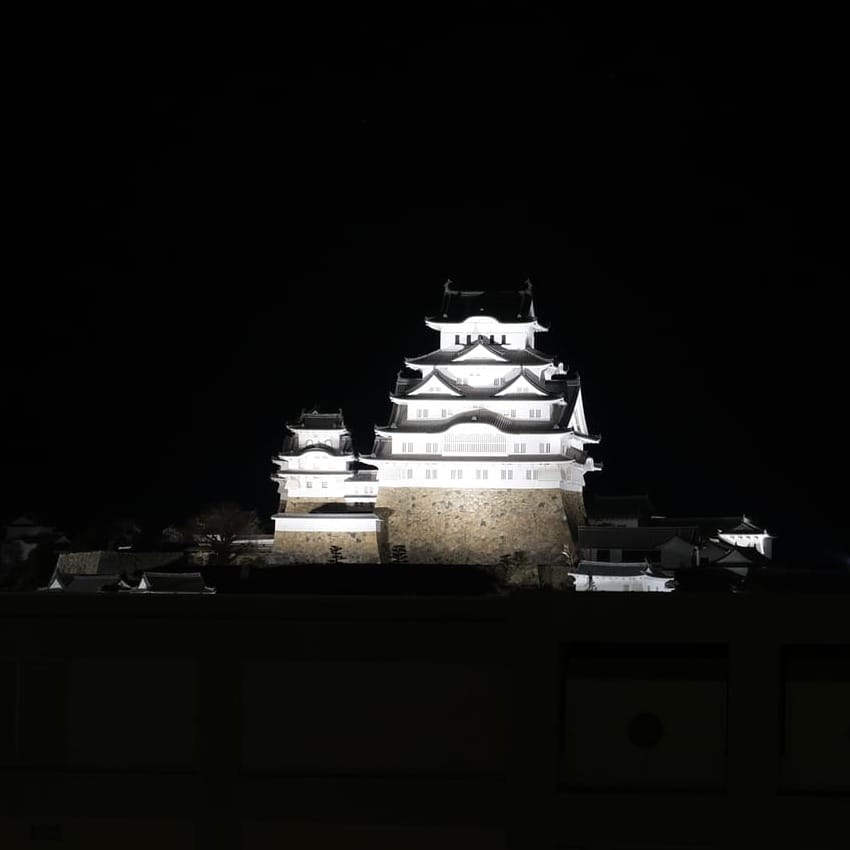
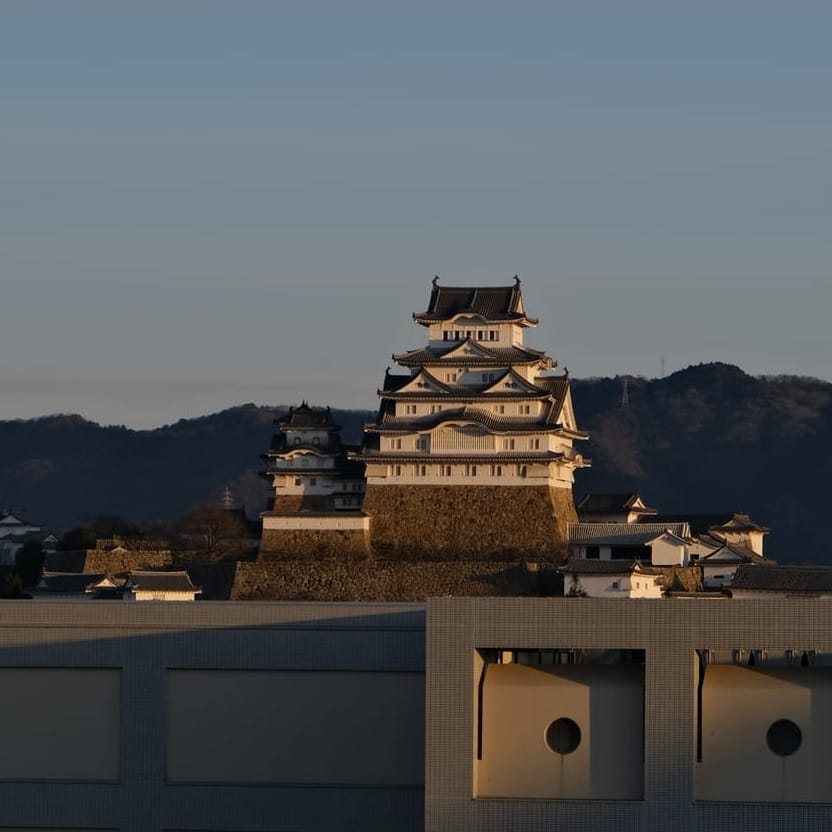
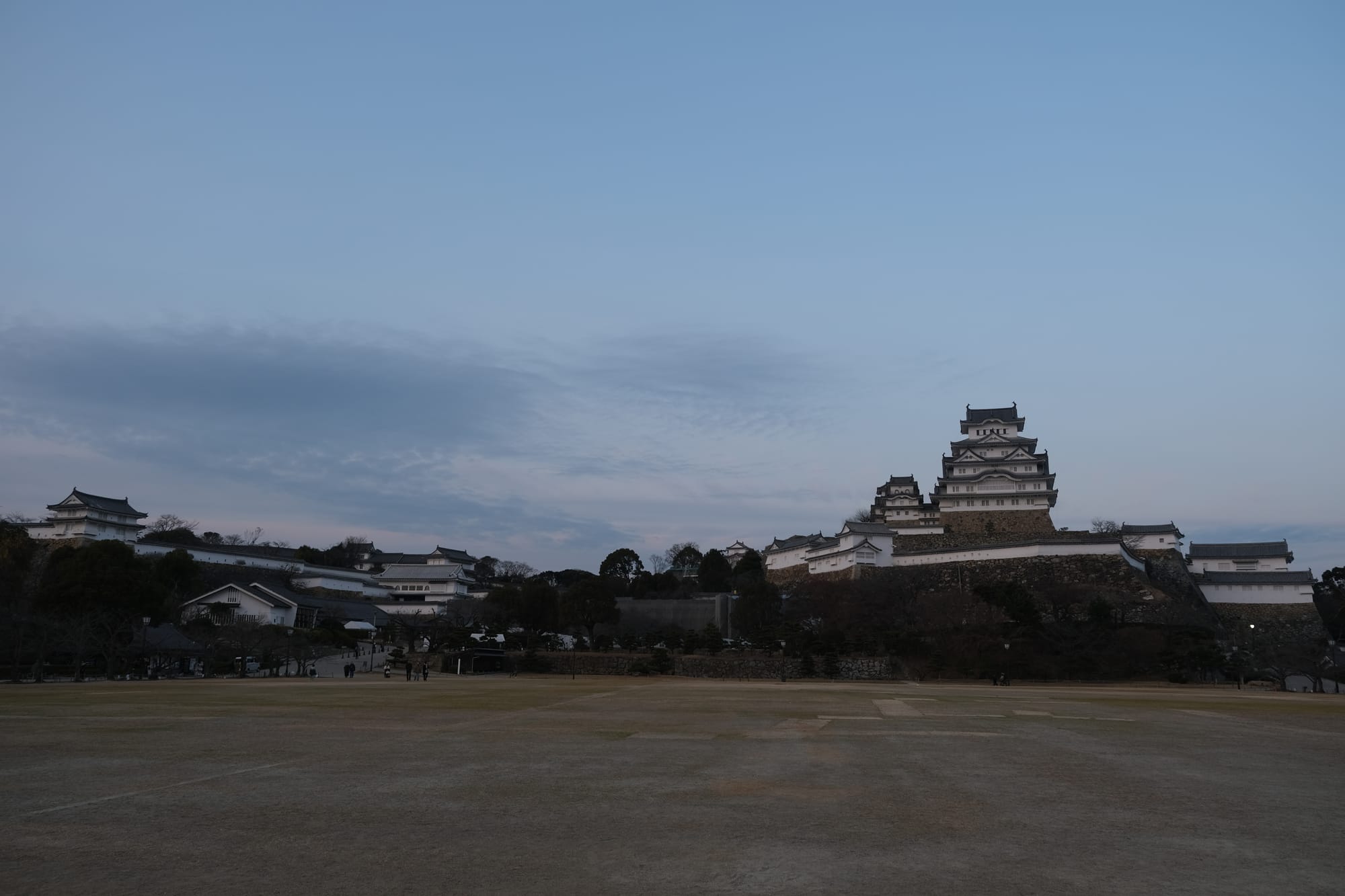
The castle was visible from the roof of our hotel building. We first saw it at night when it was lit up with flood lights, then I came back first thing in the morning to see it lit with the morning sunlight.
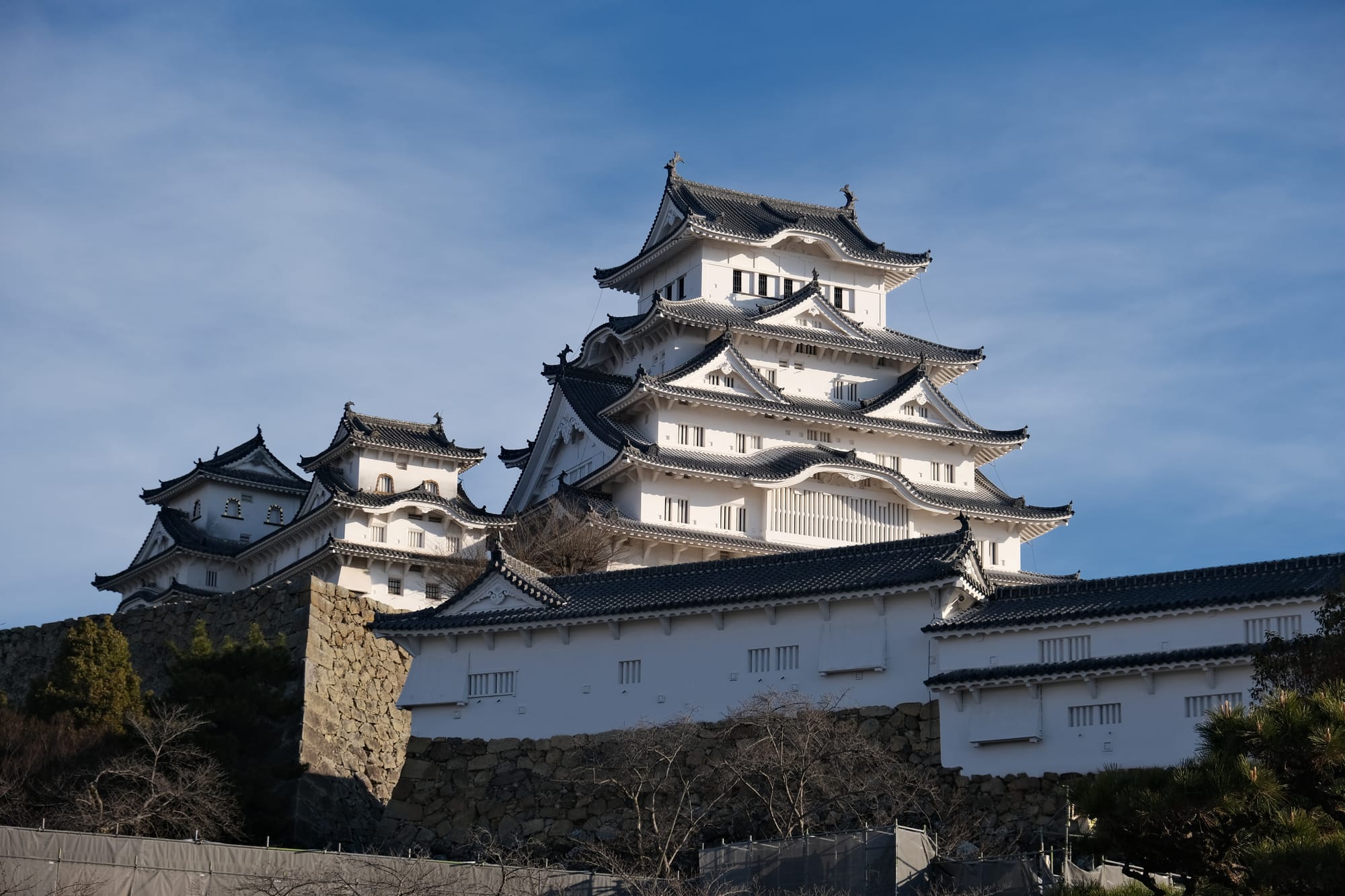
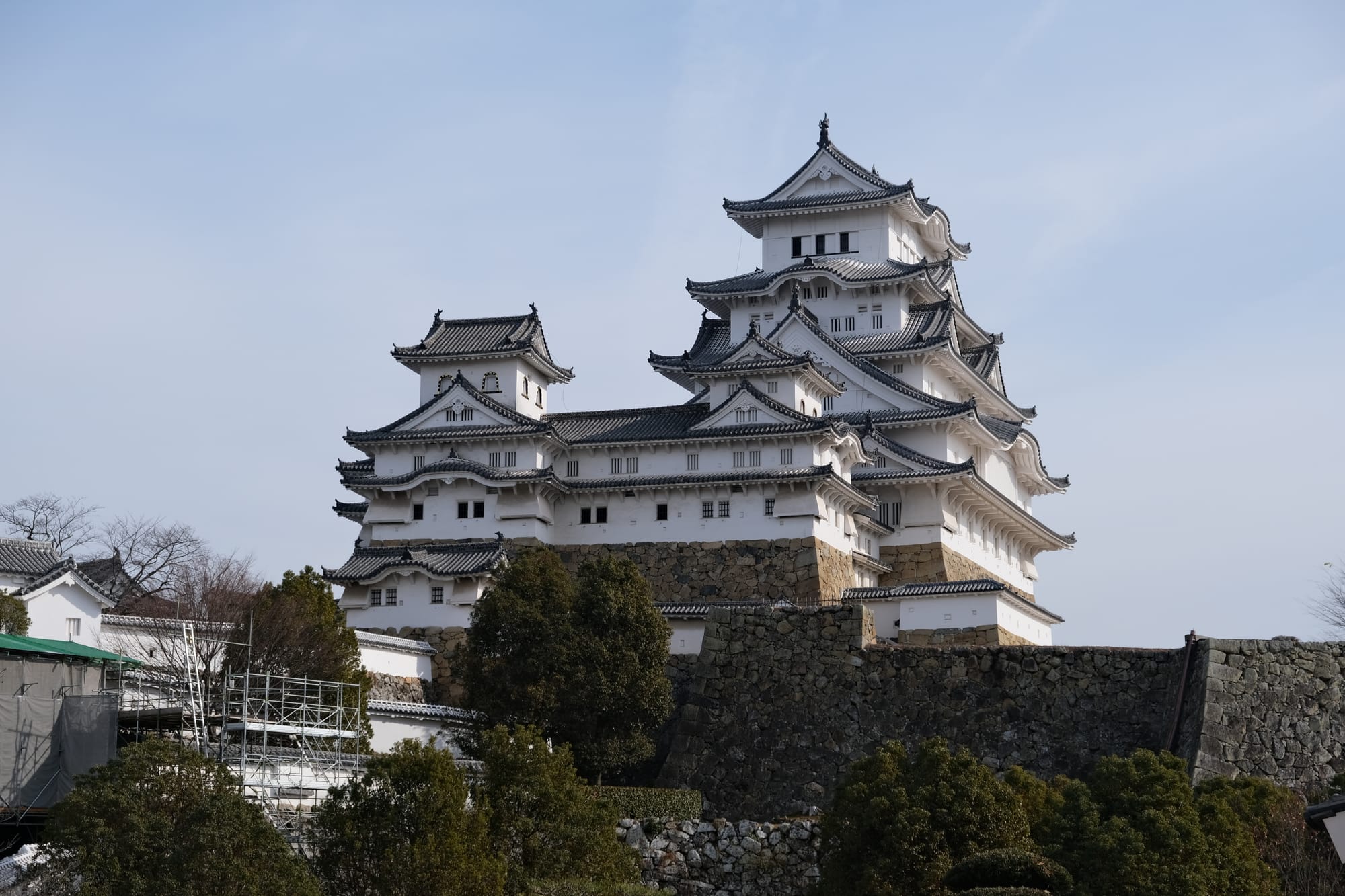
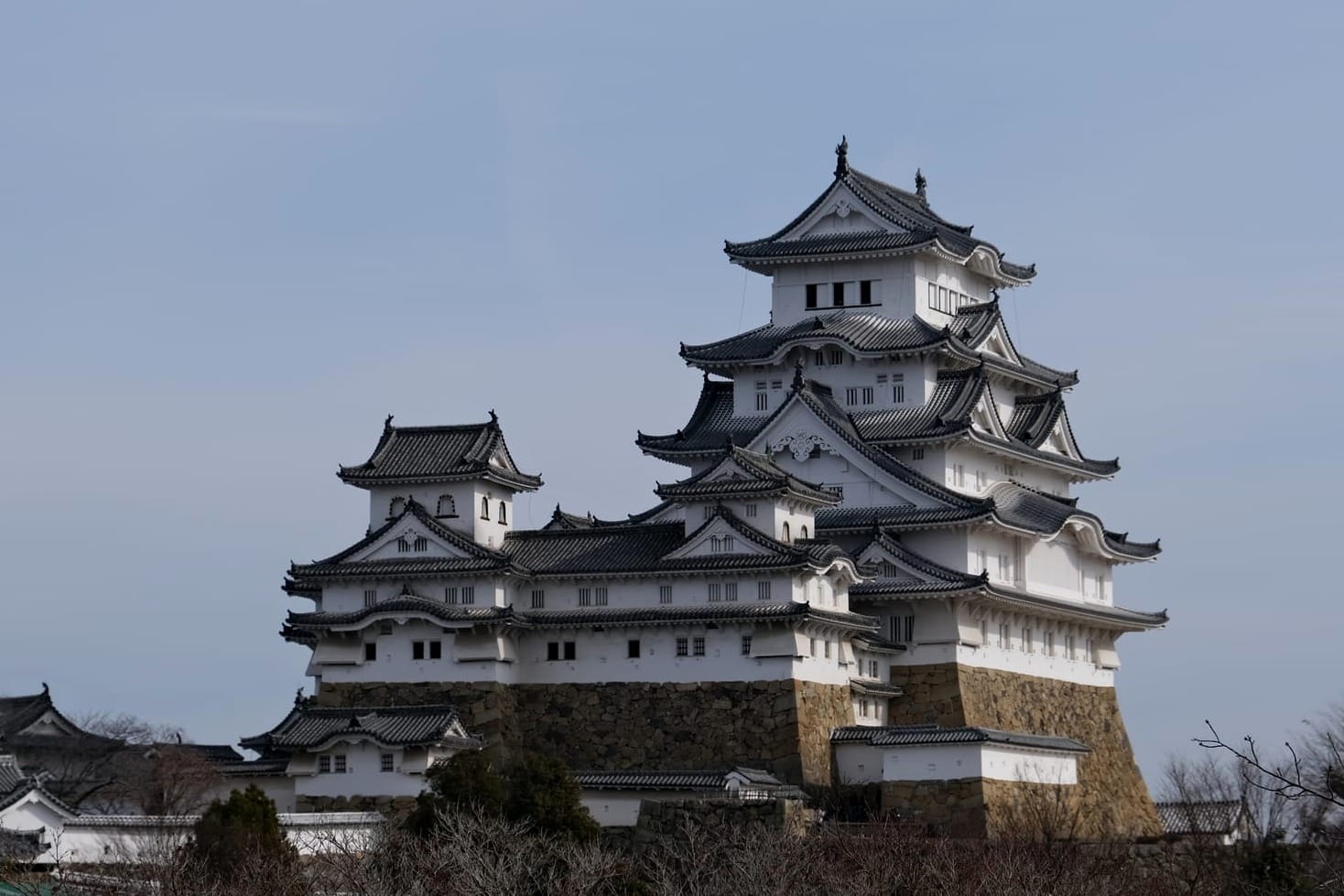
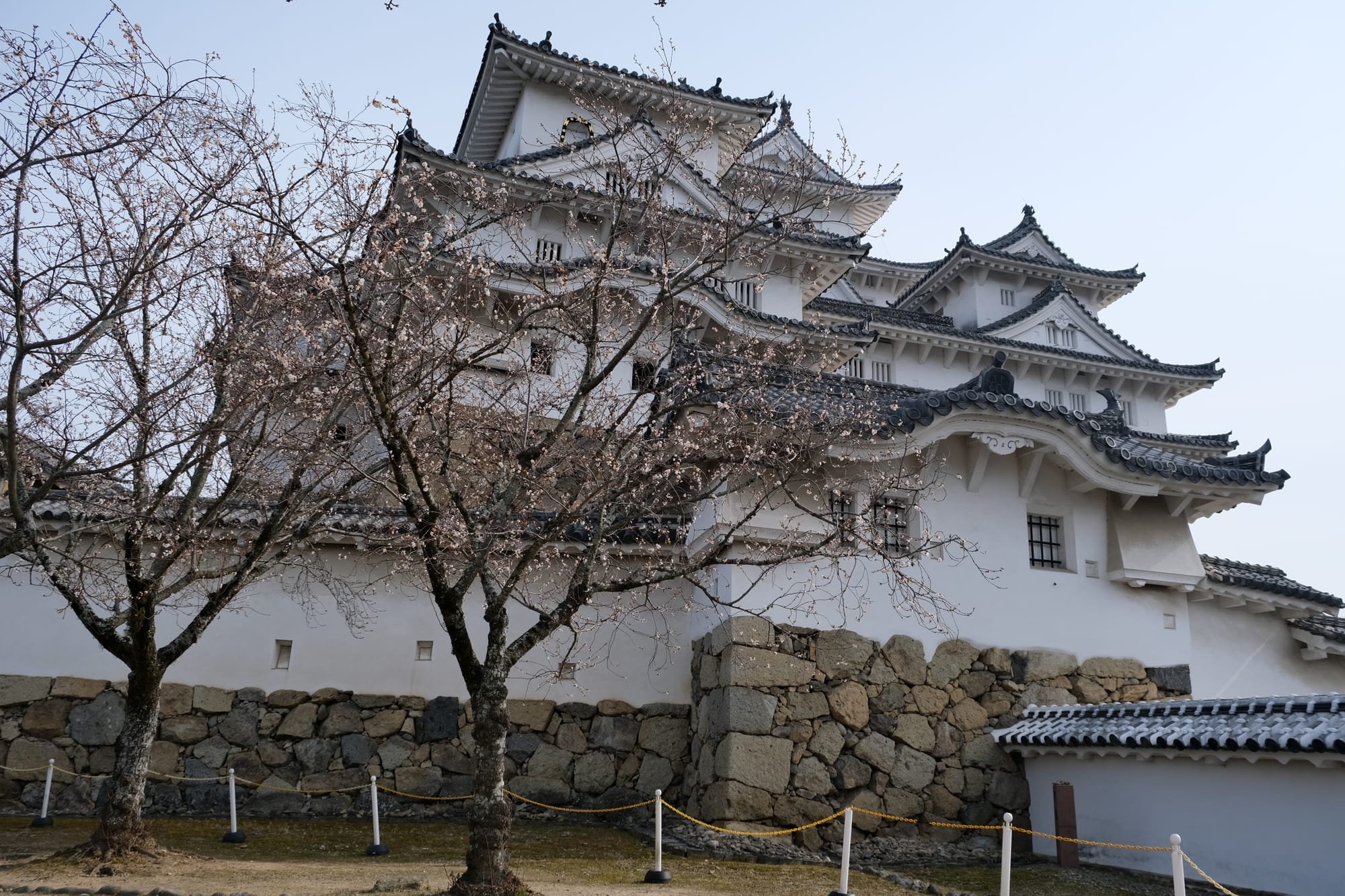
Three different close up photos of Himeji Castle Keep, taken from different angles. The last one was captured from the West Bailey (Nishinomaru) that is elevated enough that I was more level with the main keep, while in the previous pictures I was always looking up to the castle above me.
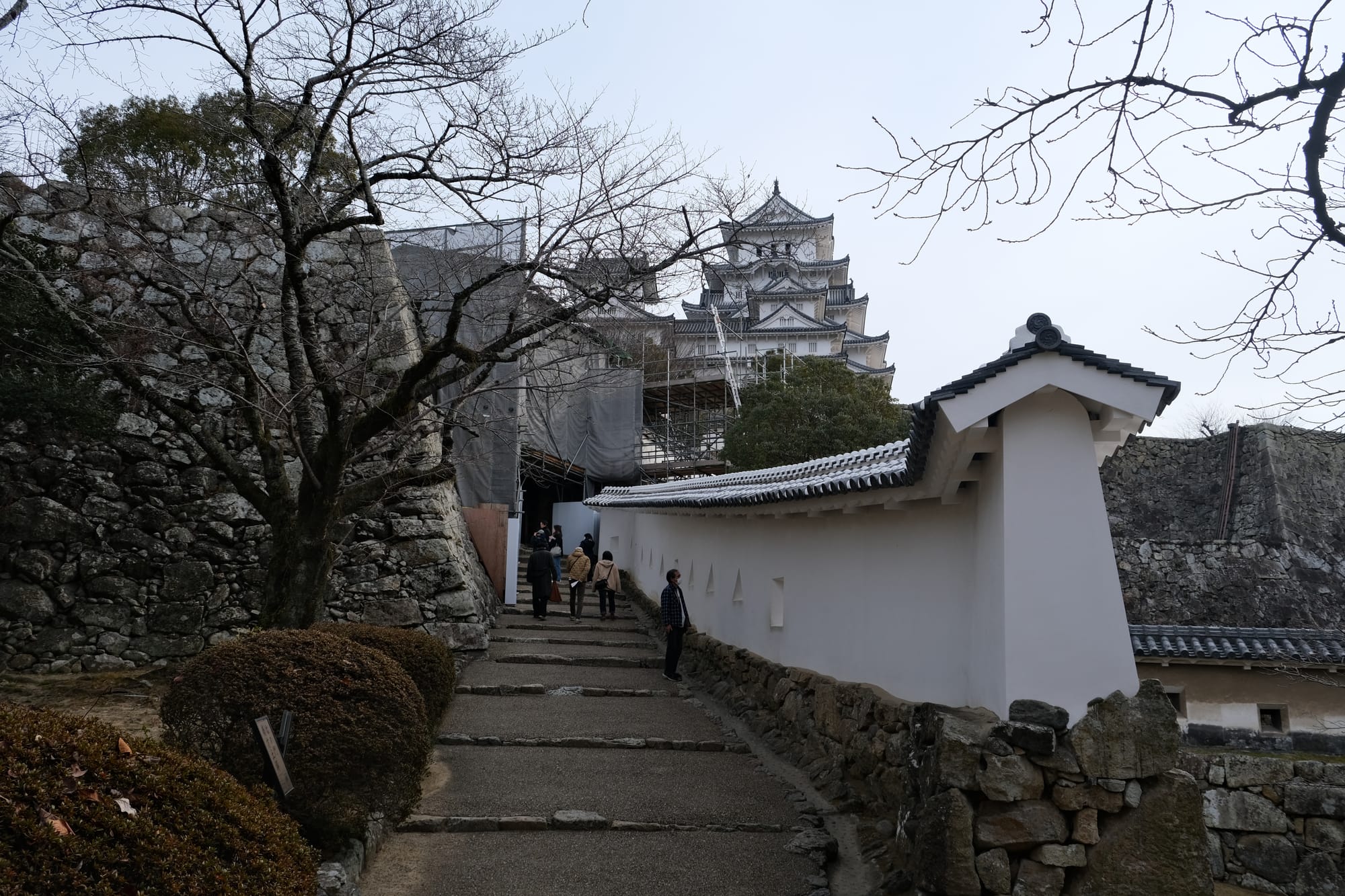
Every aspect of the castle was designed to hinder intruders. The castle complex was set up like a maze, with pathways intentionally switching back to miss-direct an attacker, and the obvious way to the keep would often go to a dead end.
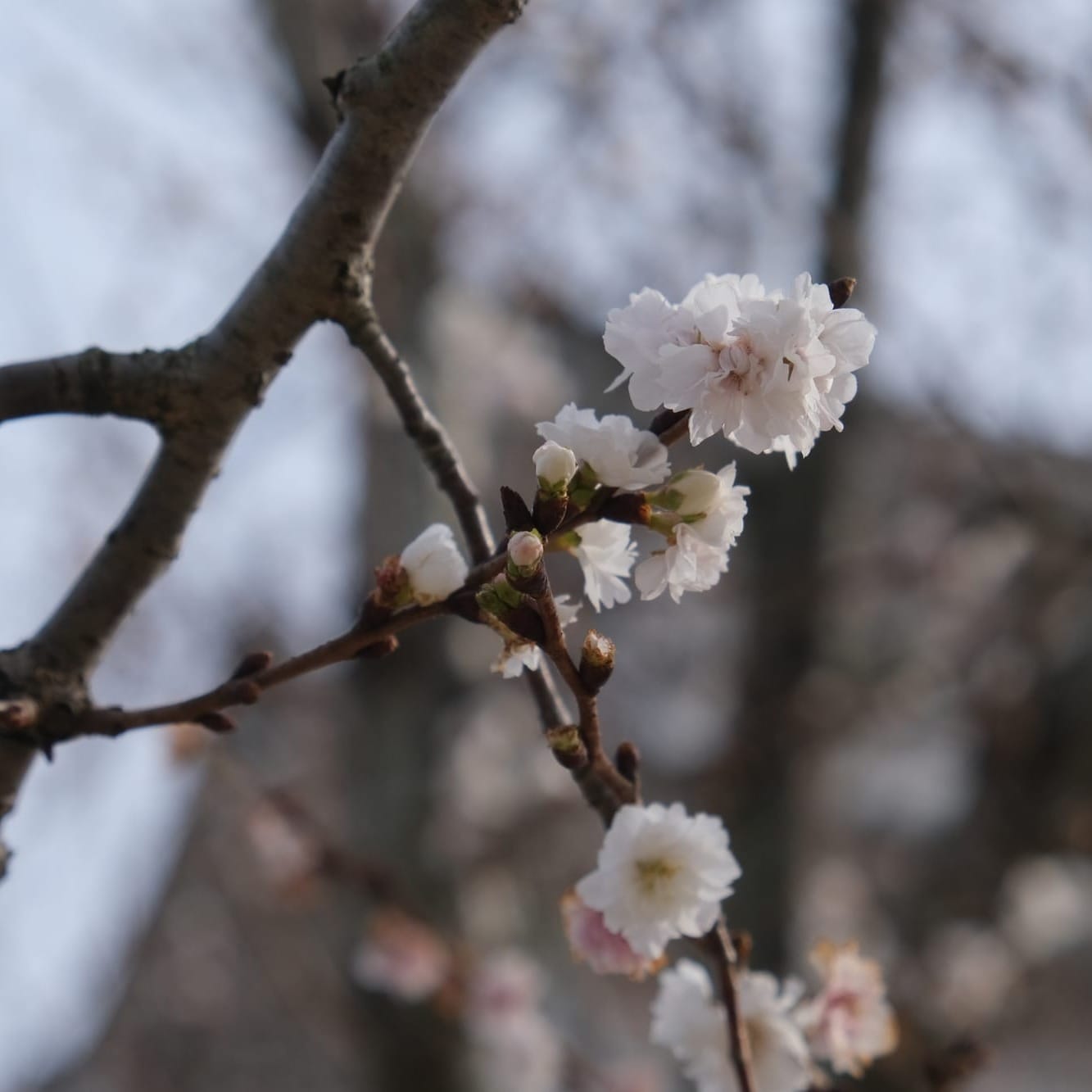
Just before entering the castle we passed a small grove of trees that had a few blossoms bravely budding in the winter cold.
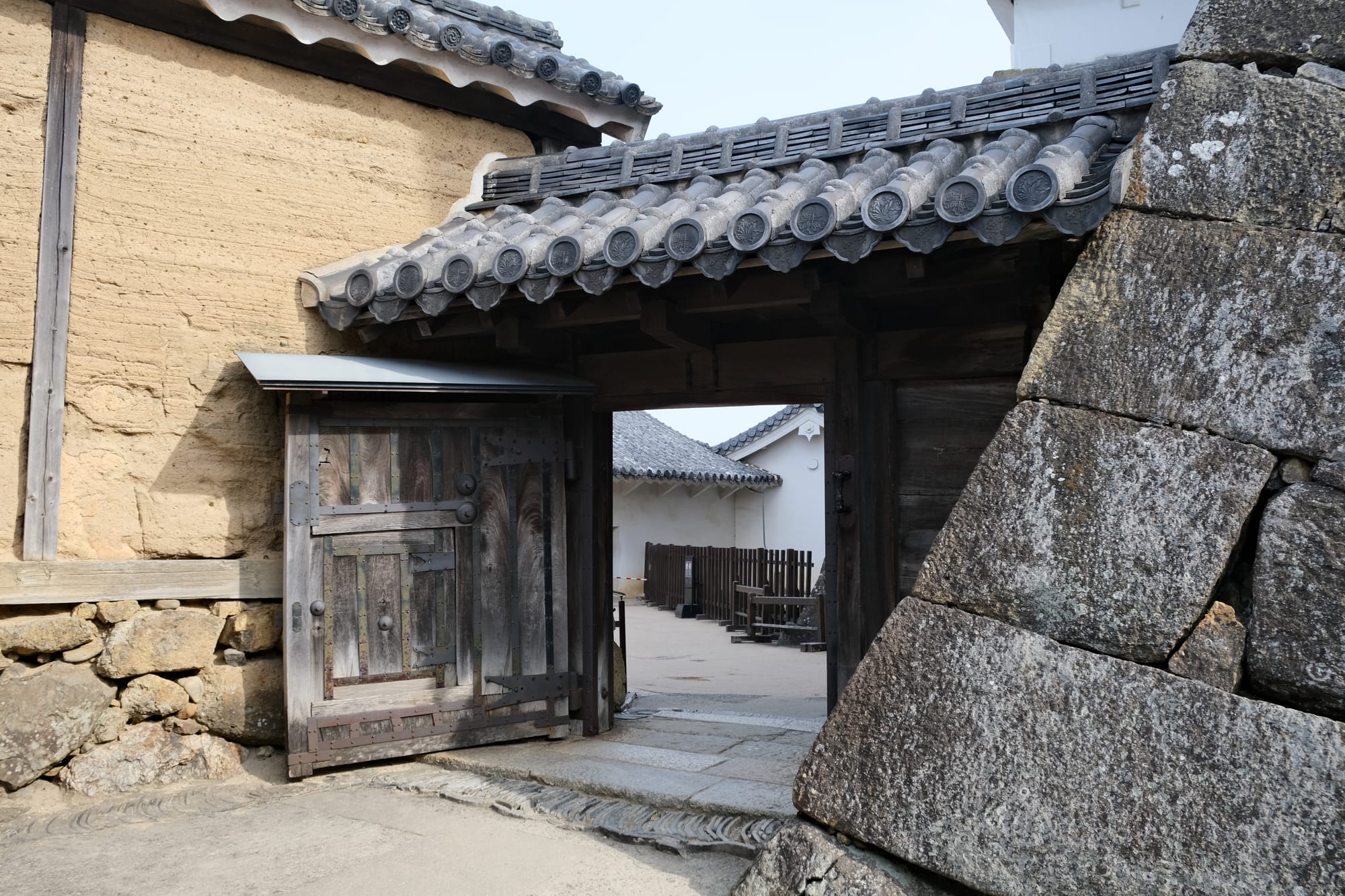
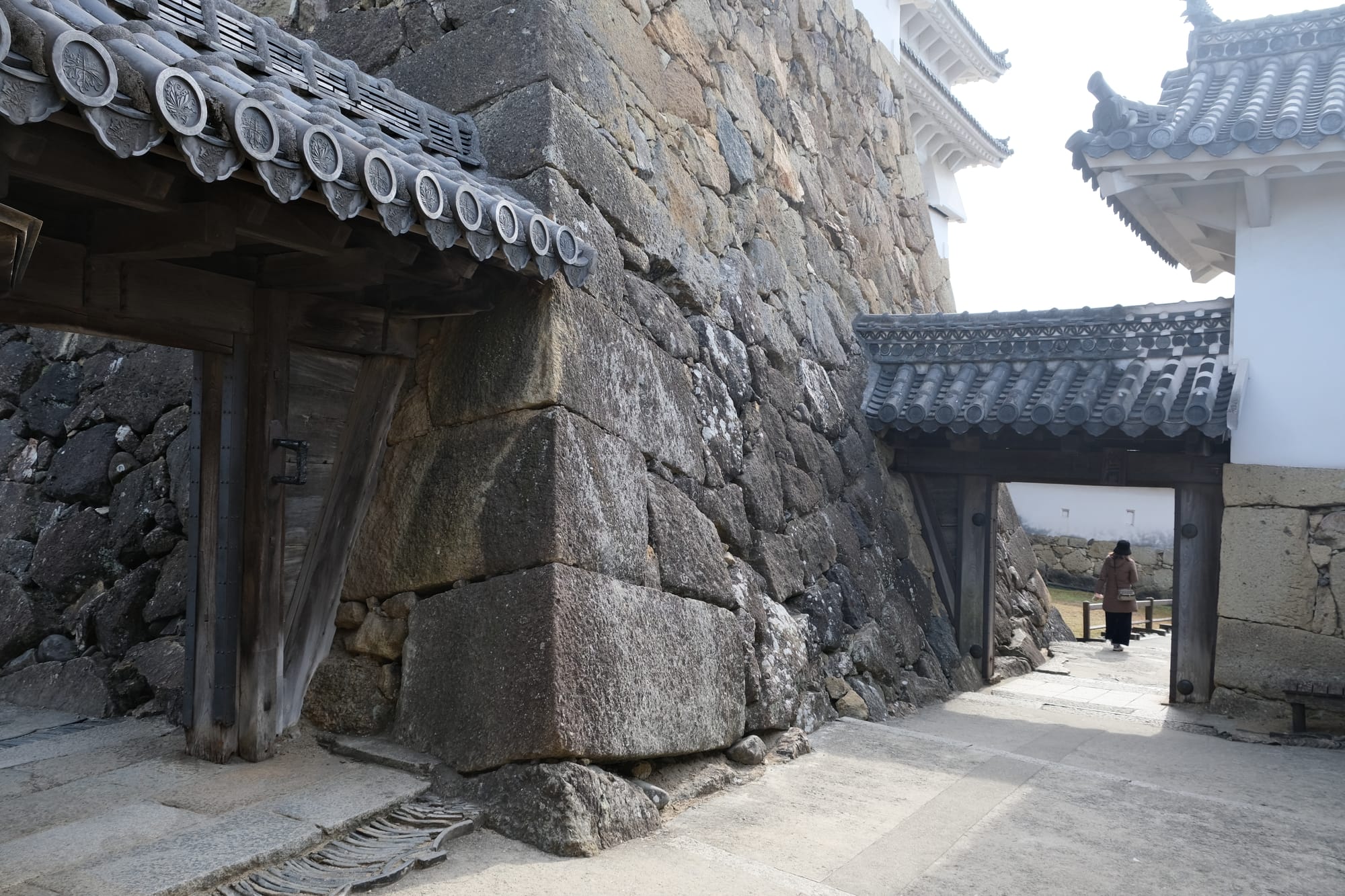
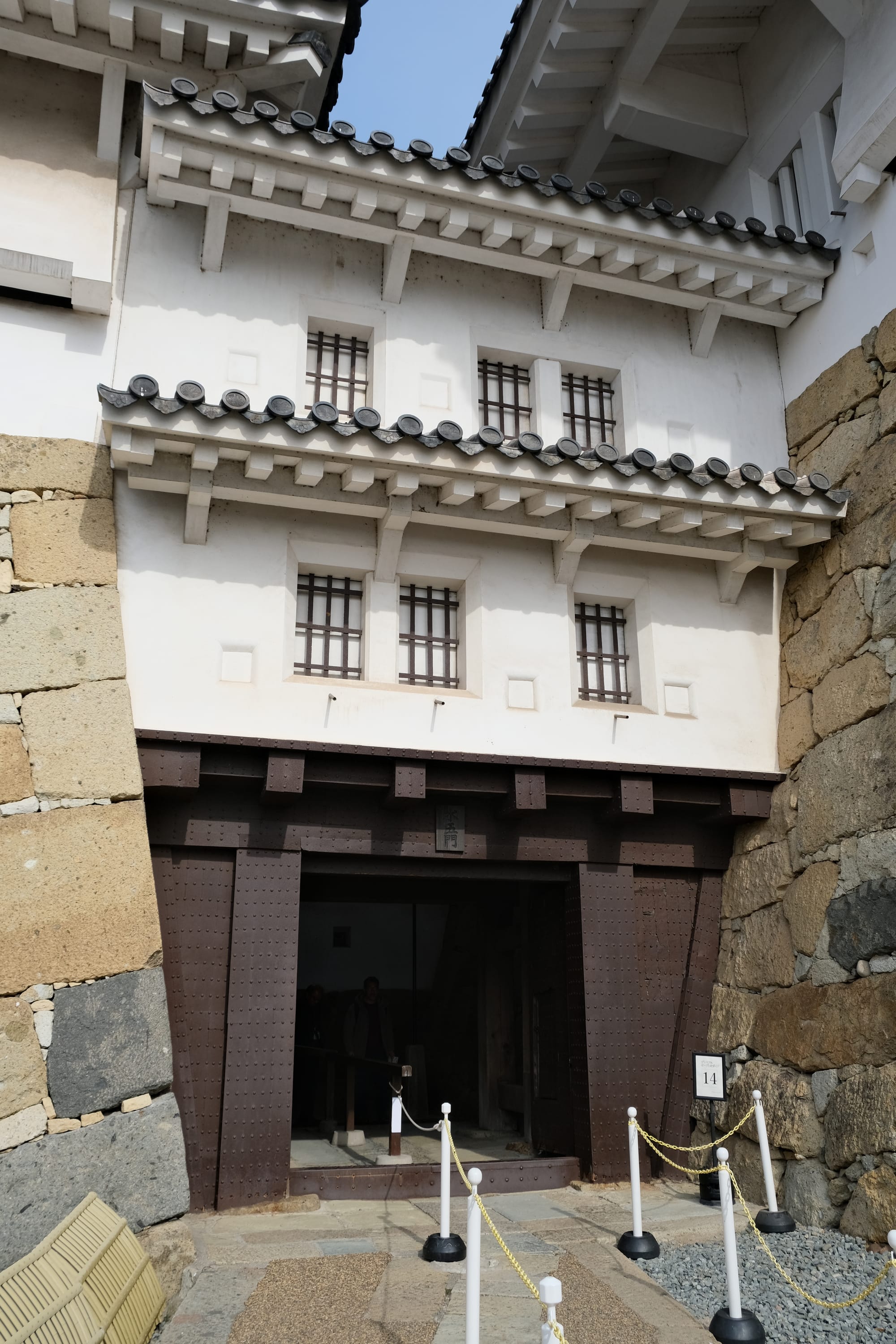
An example of a castle gate and the gate into the keep (third image). Every section of the castle grounds was separated by walls with gates like the one above providing access. There were always two gates together with a short distance between them to create a space where attackers would get stuck and defenders could fire on them as they attempted to break the second gate.
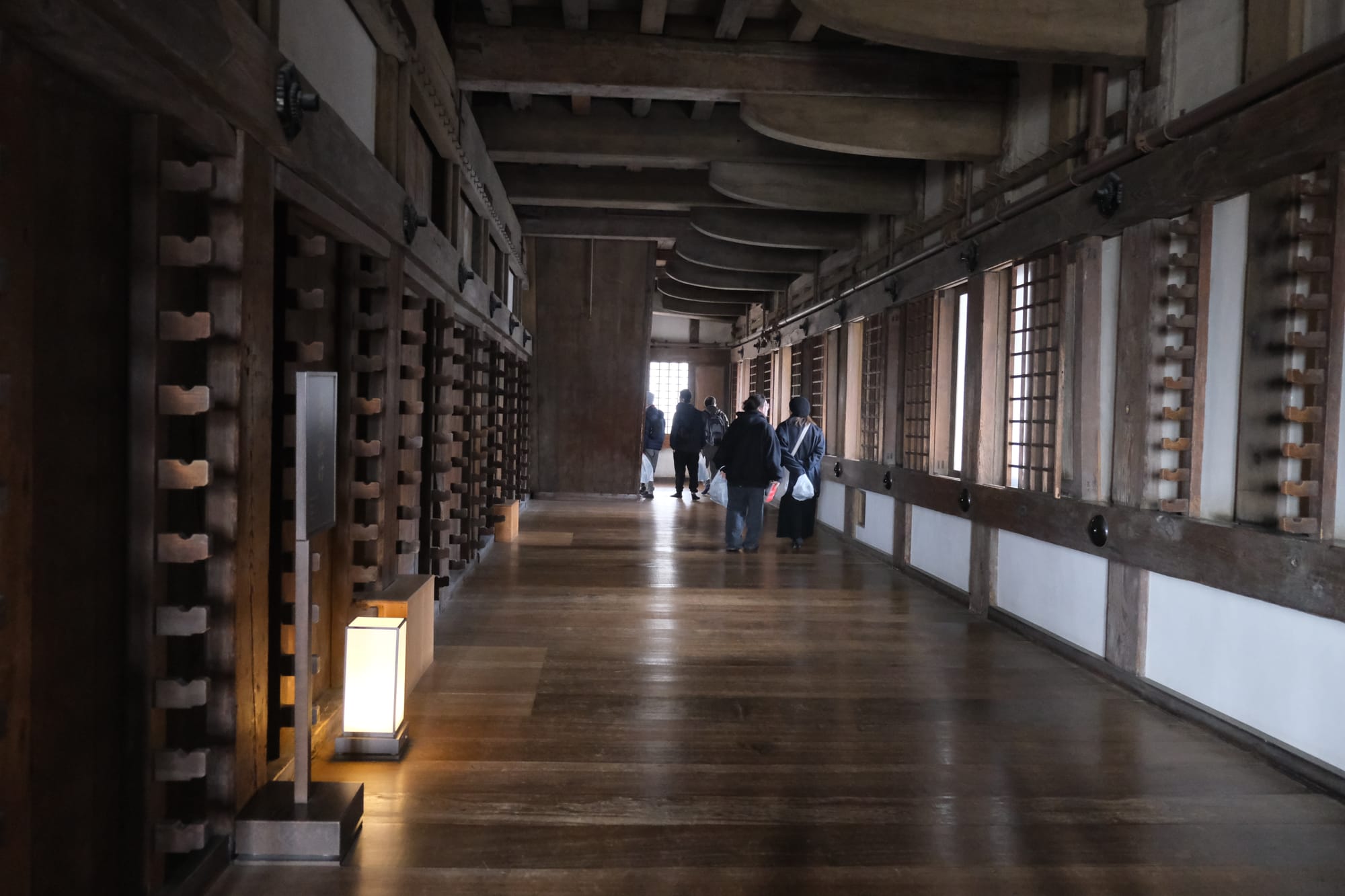
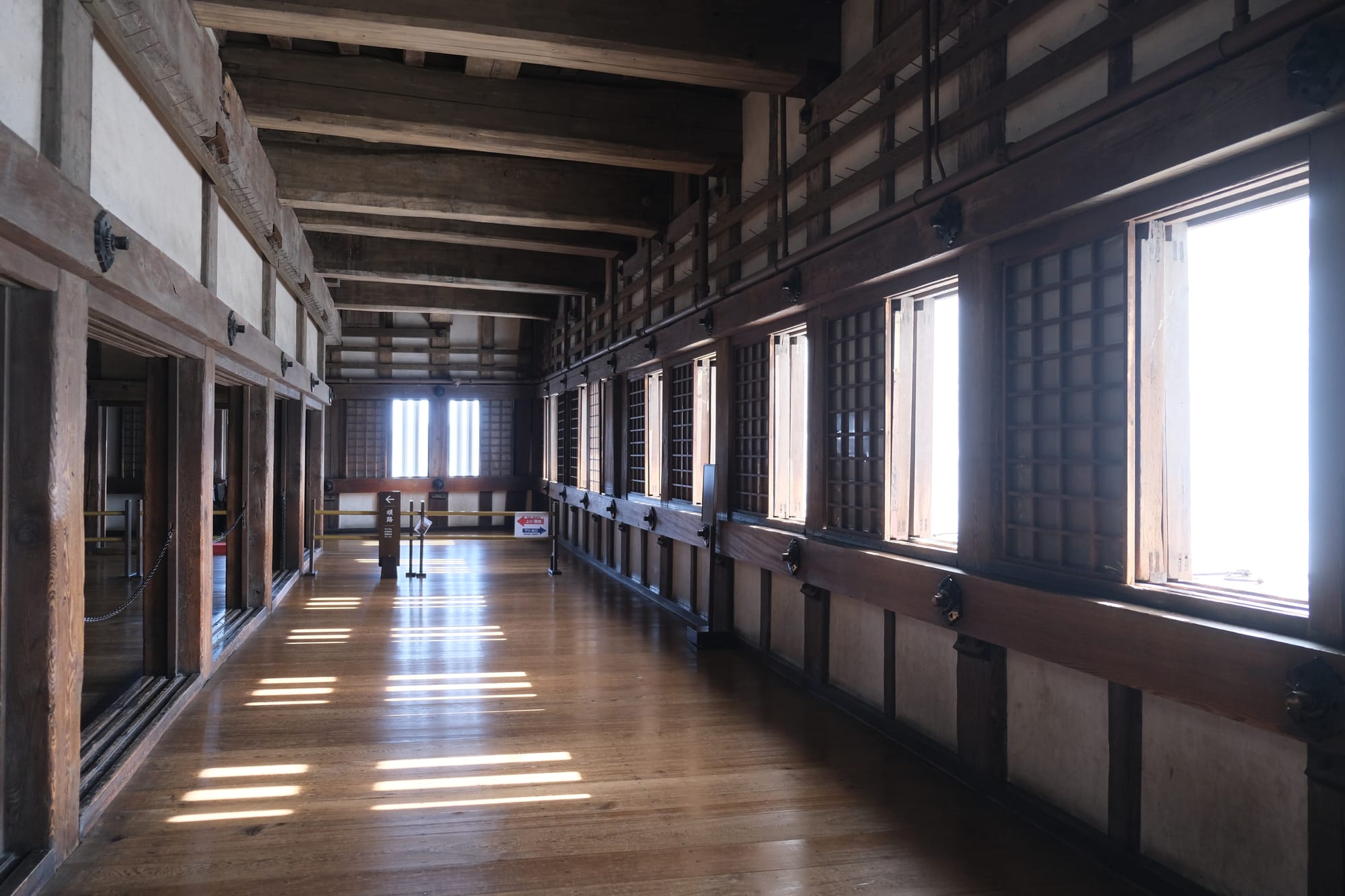
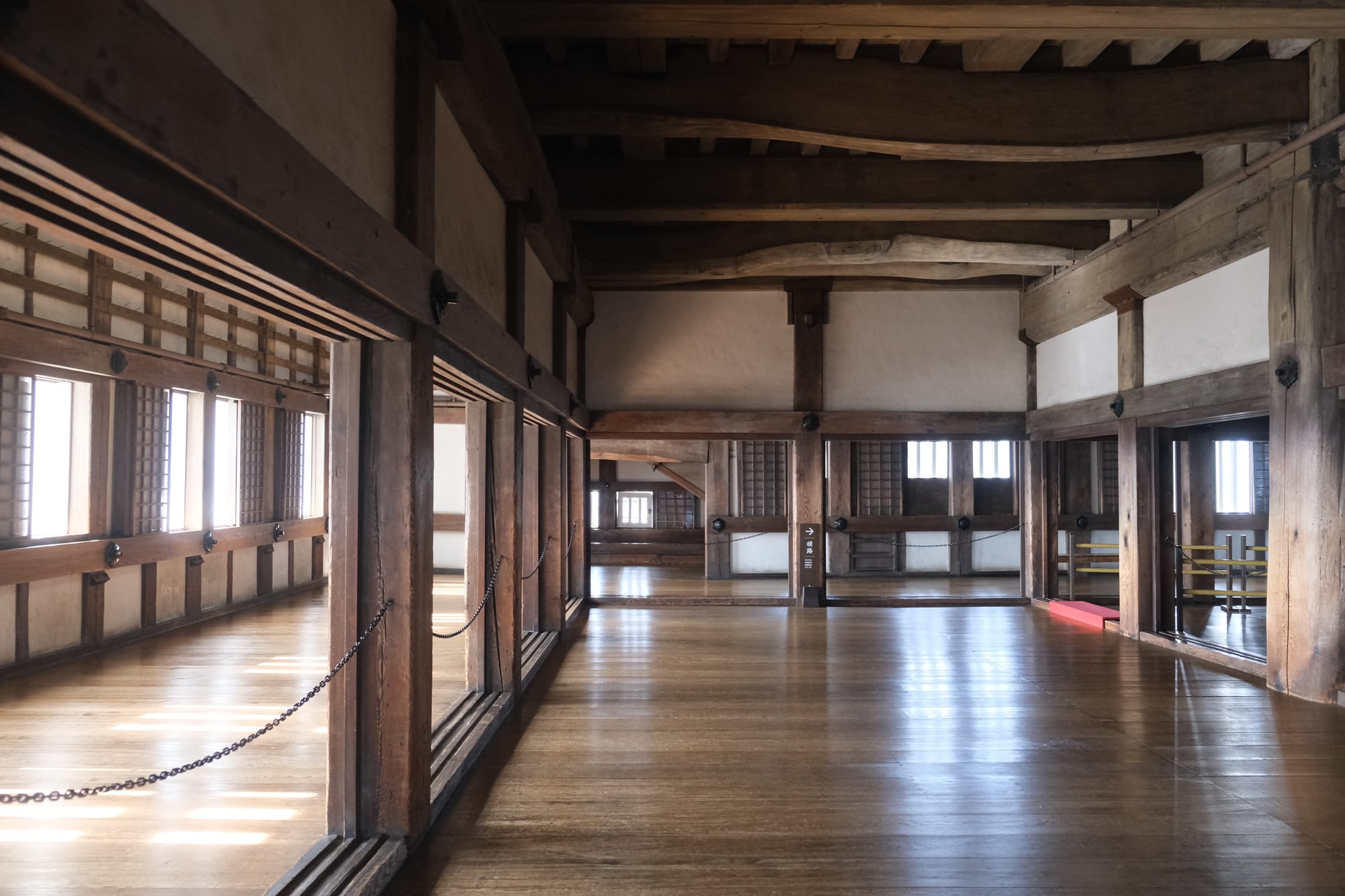
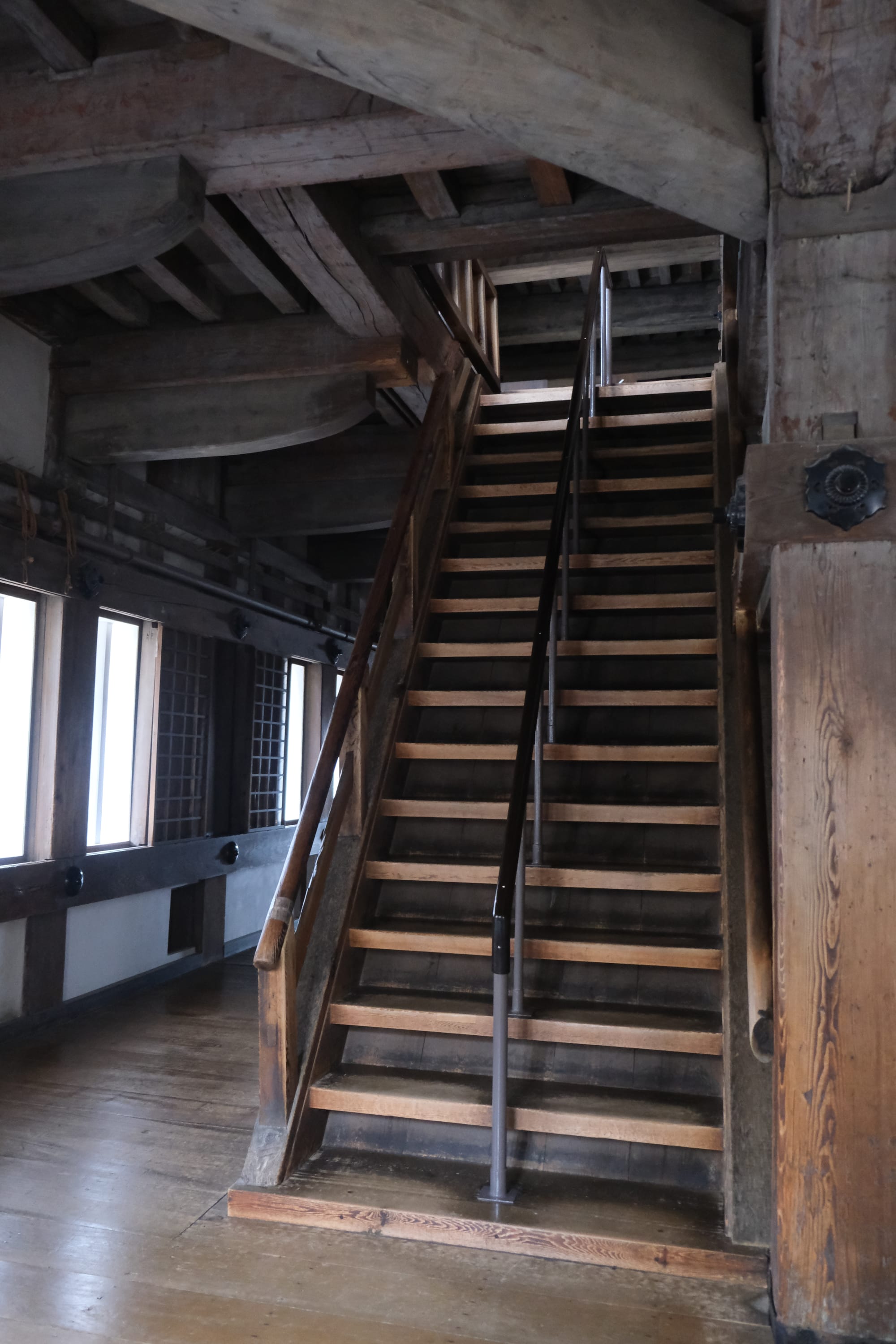
The interior of the castle was beautiful, entirely made from wood, its beauty came not from intricate decorations but rather from the simplicity of a well made structure that has stood the test of time, having been lovingly cared for over many generations.
There are seven floors in the castle keep, including the basement, but from the outside only five floors are visible. The basement floor is within the stone support and doesn't have any windows. Then there is a sixth, hidden floor, not easily visible from the outside. This design was intentional to confuse any attackers that would invade the keep and give an advantage to the defenders. The keep was a purely military building, people never lived there and it was designed to be the most defensible location, the last place of retreat. The first image in the gallery above shows a room with weapon racks on the walls, and the last photo shows just how steep the stairs are between each of the floors.
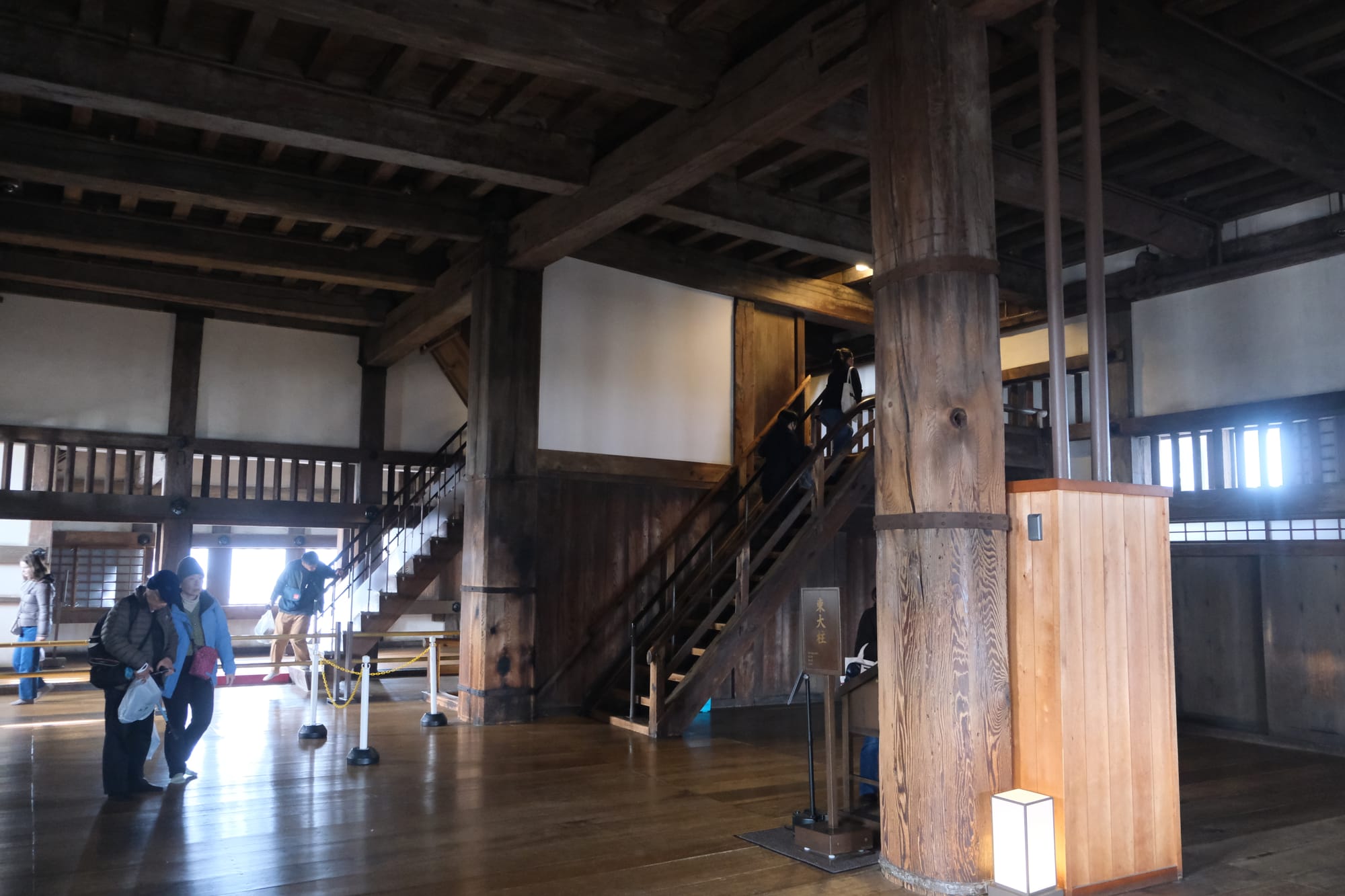
Both of these pillars were each made from their own single tree trunk. While one is original the other needed to be replaced and the engineers searched a long time for a suitable replacement, as the tree must be sufficiently tall, strong, and straight. A tree trunk was found but it broke during transportation, so they had to compromise and use two tree trunks bound together.
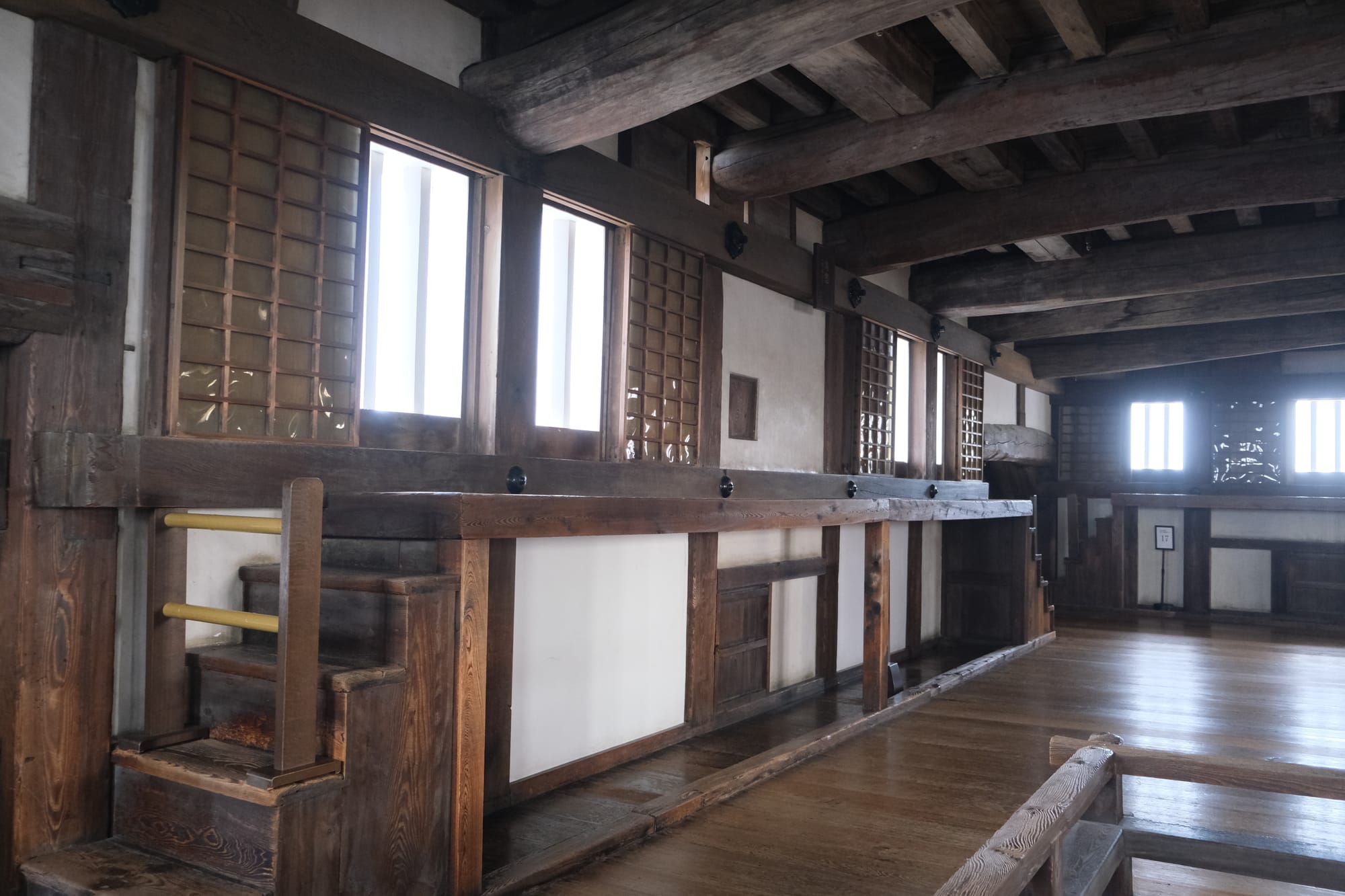
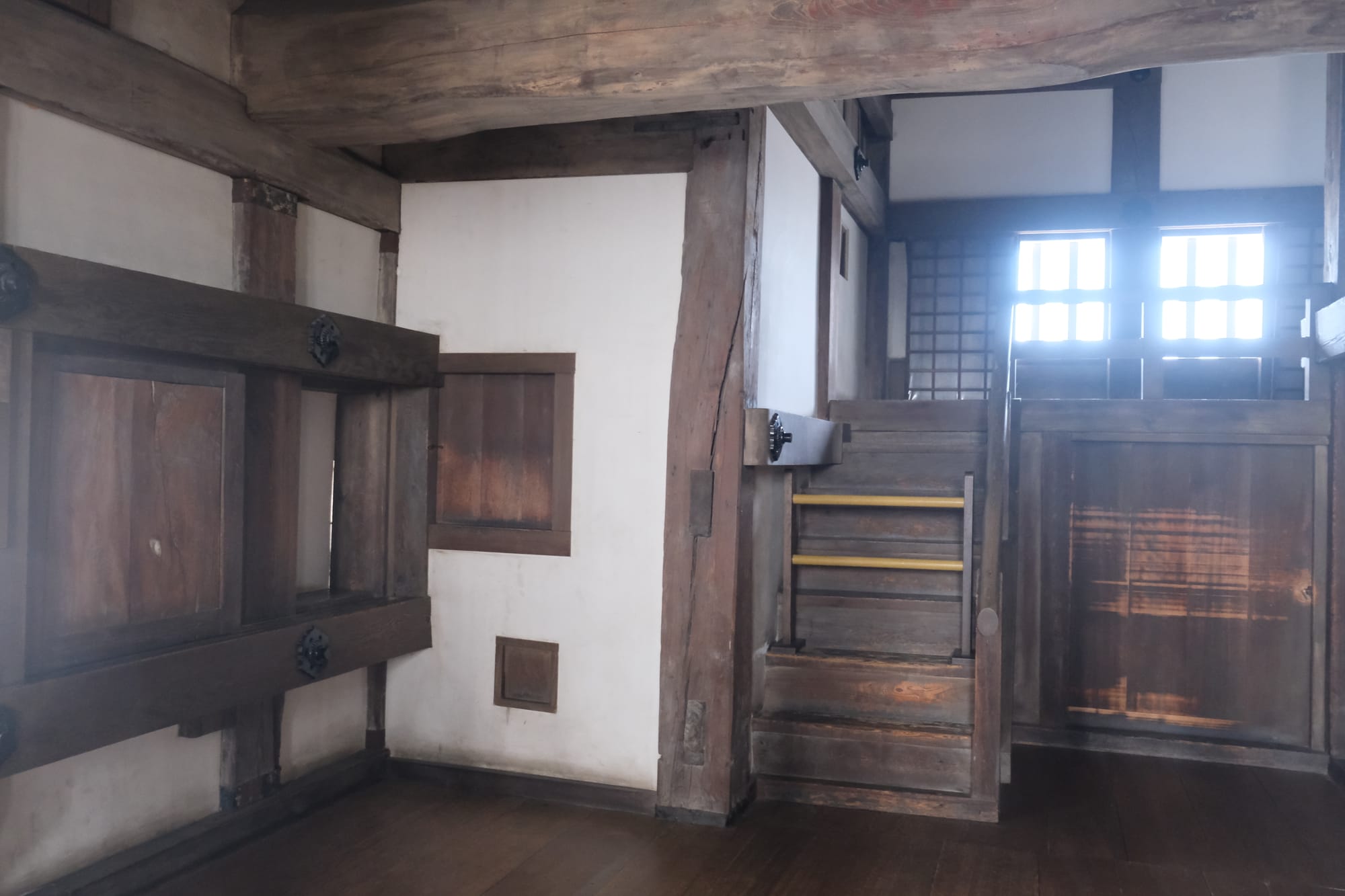
There were many defensive elements built into the castle keep. The first image shows an elevated platform where archers could stand on to fire both outside and at attackers invading the room. The second image shows a hidden room where defenders could hide to ambush attackers.
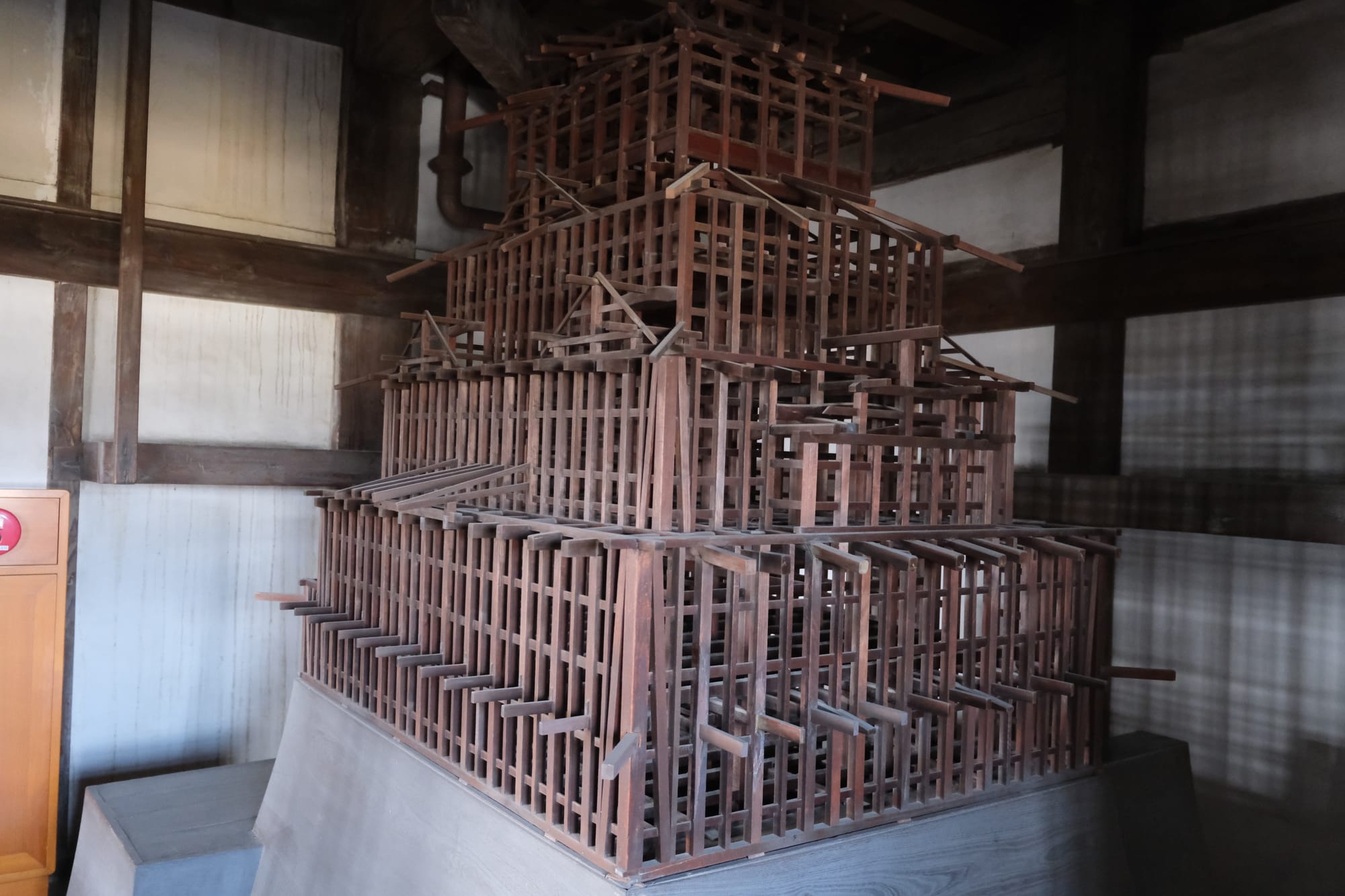
This model was used by engineers for the maintenance of the castle. When significant repairs are needed the entire castle can be disassembled, repaired, and then put back together again. usually most of the original structural elements are re-used but significantly deteriorated elements, such as support beams or broken tiles, are replaced.
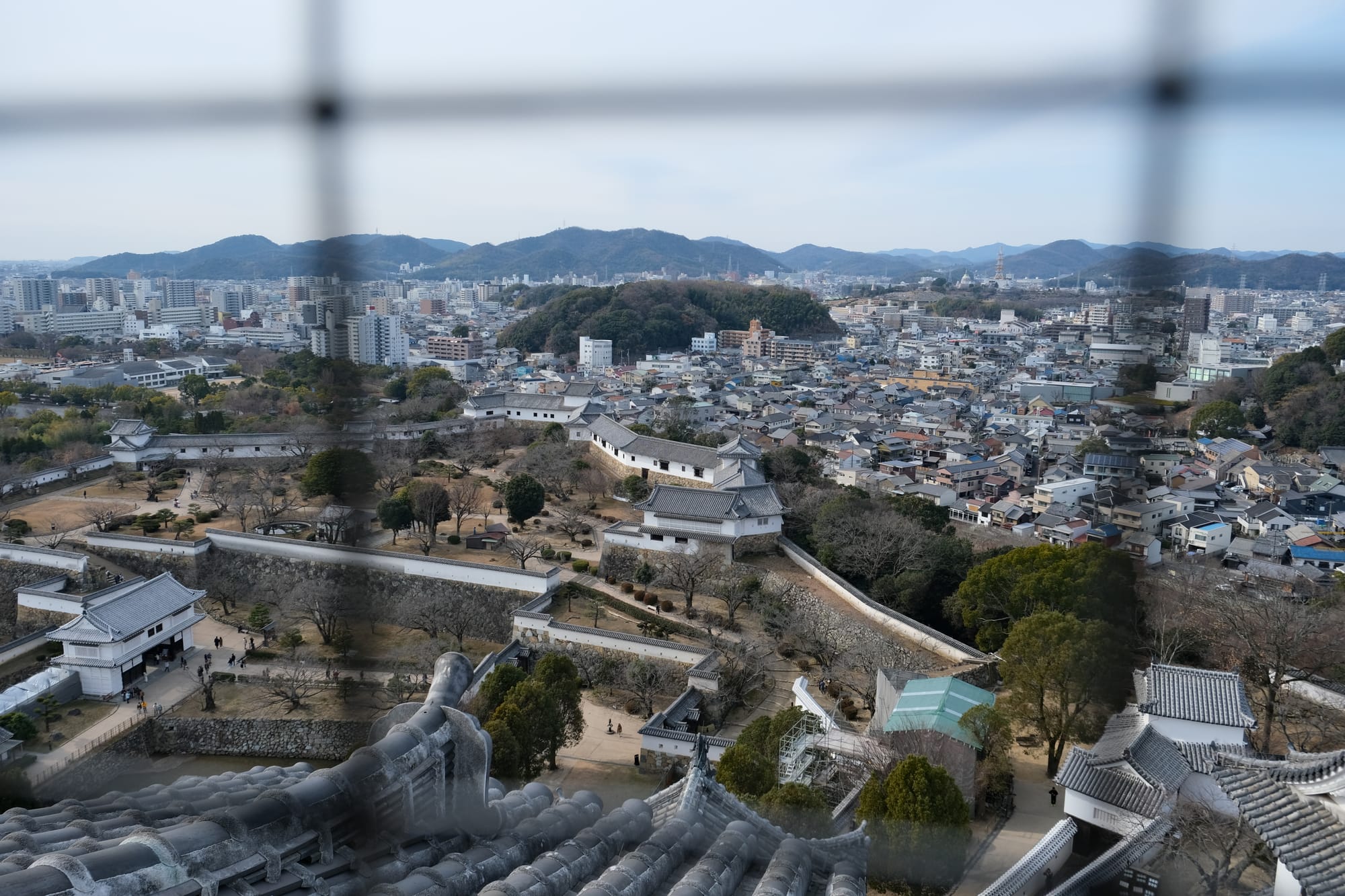
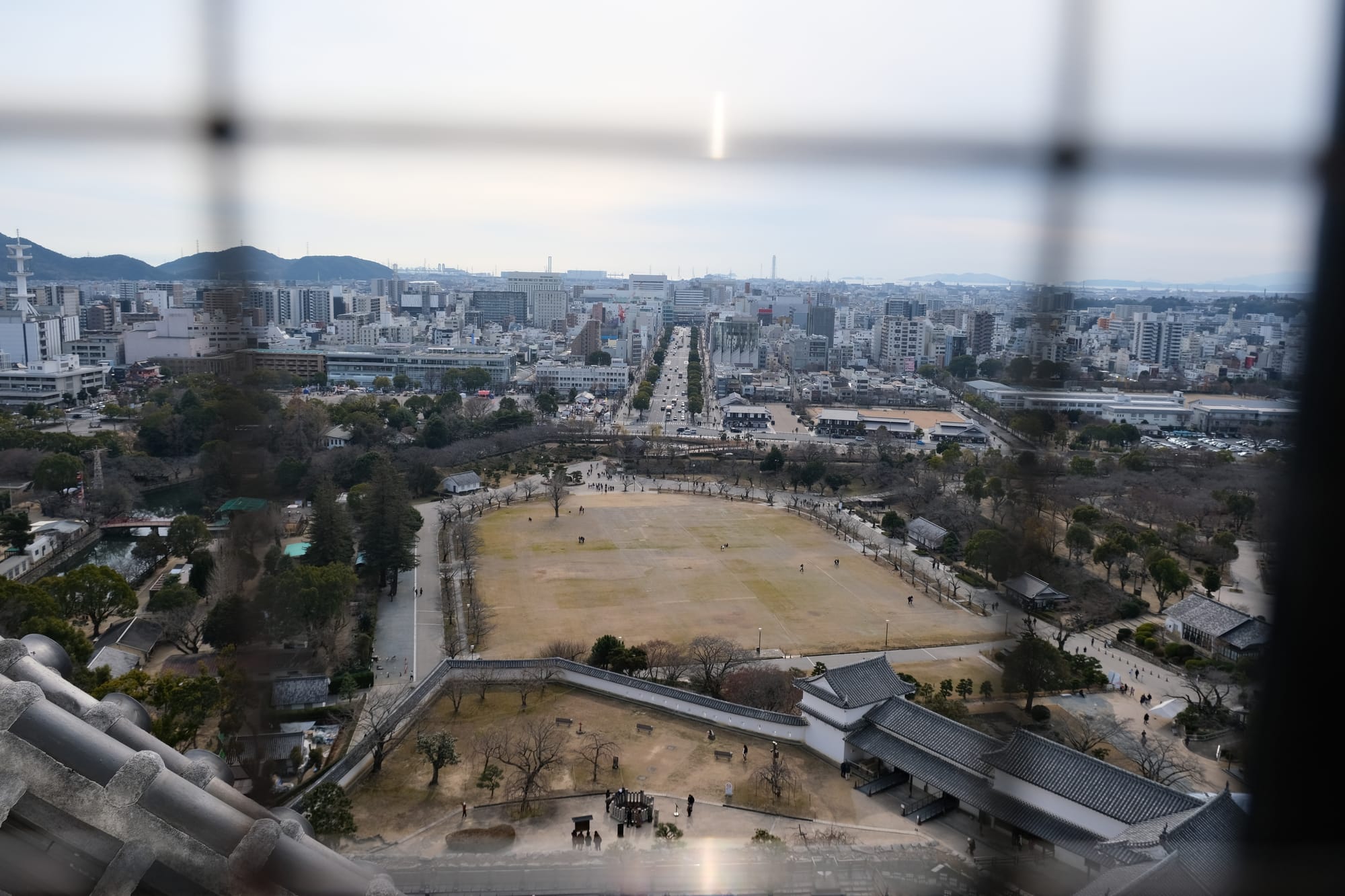
The view of Himeji as seen from the highest floor of the castle keep.
The castle keep is built on a hill that is 46 meters tall and the wooden structure itself is another 46 meters on top of that, making the entire structure as tall as the Statue of Liberty. From the highest floor we could see the castle grounds and the city all around us. Taking photos though was difficult as the protective mesh impeded the shot.
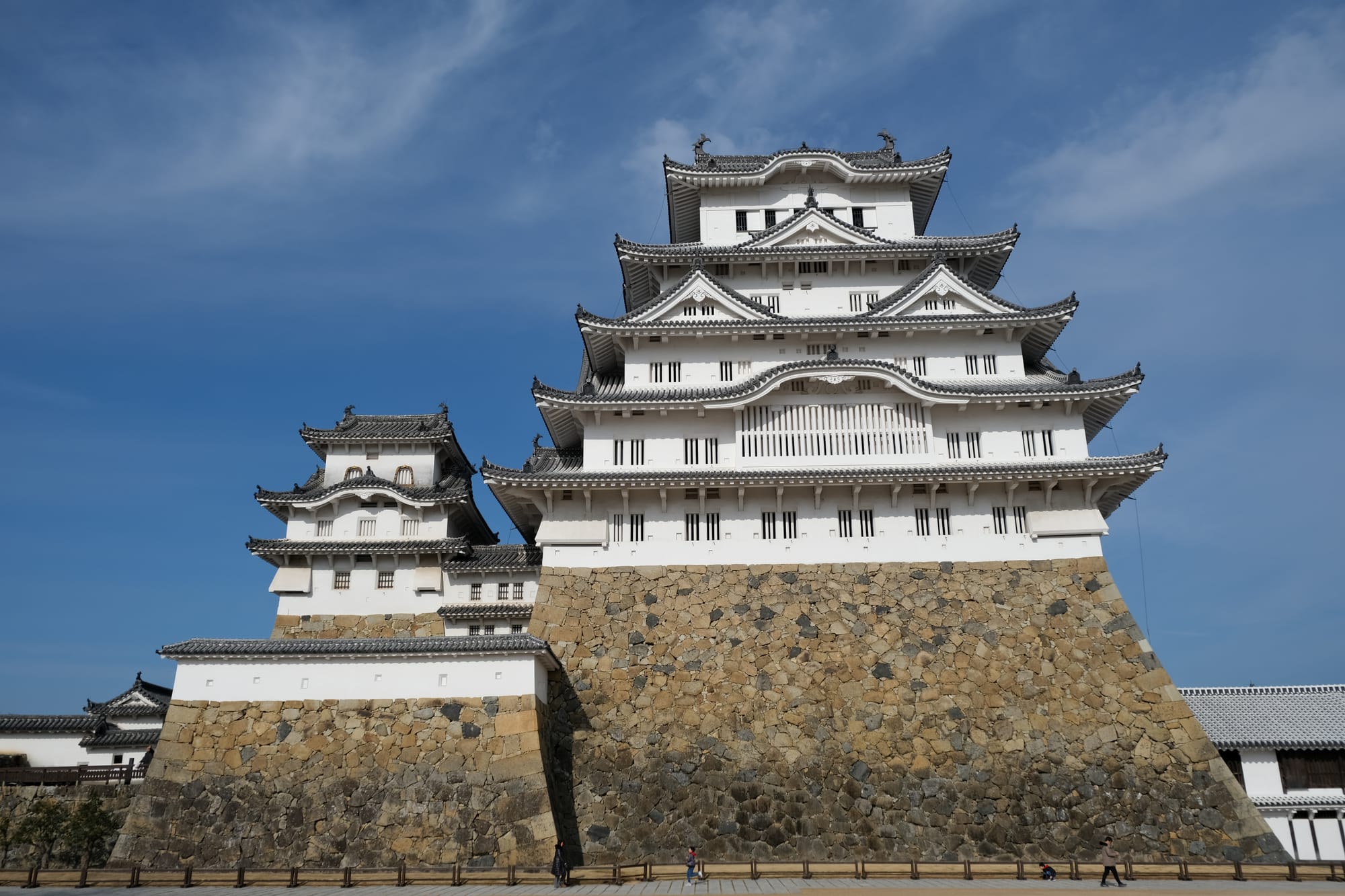
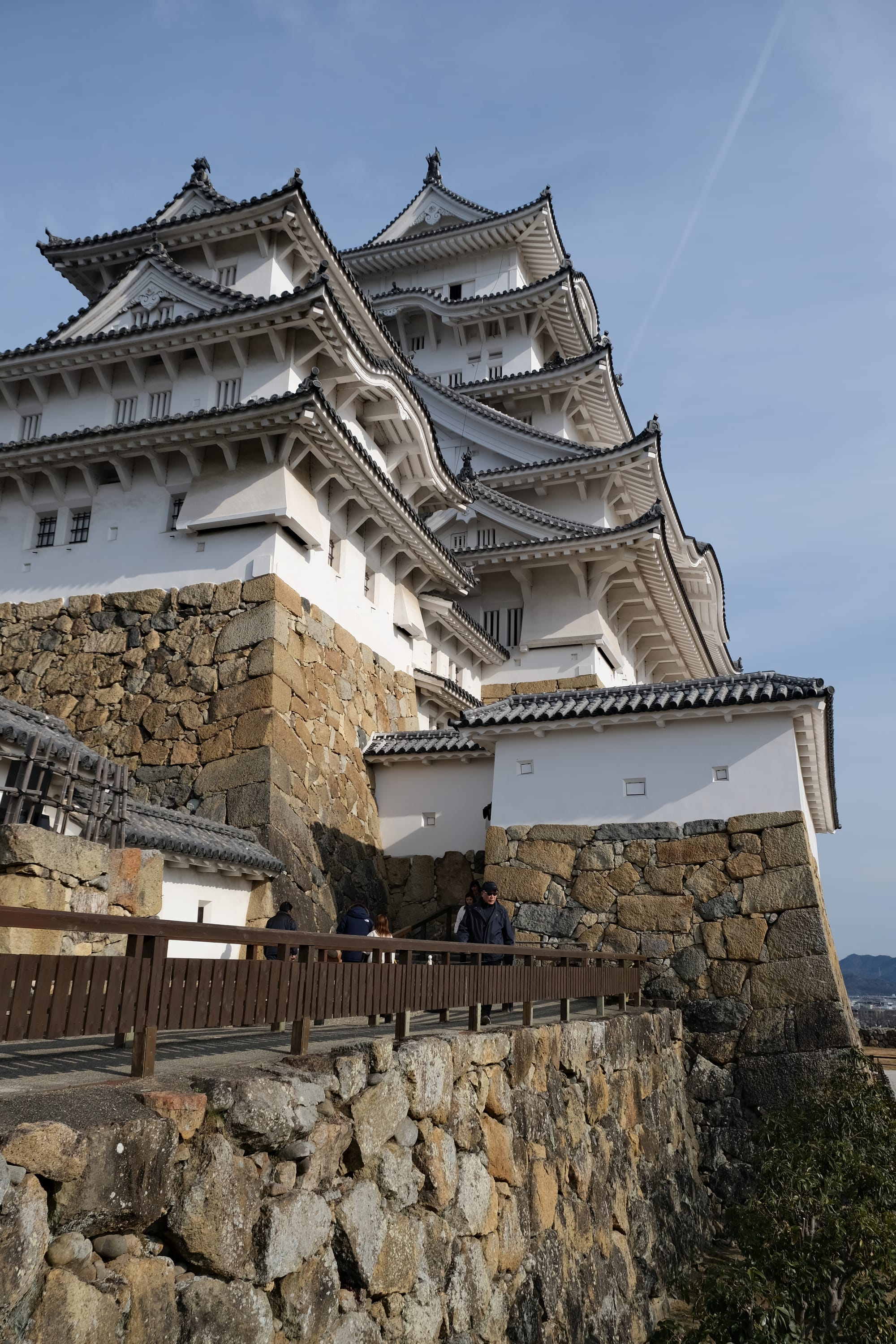
A close up view of the castle that was accessible after the tour through the keep.
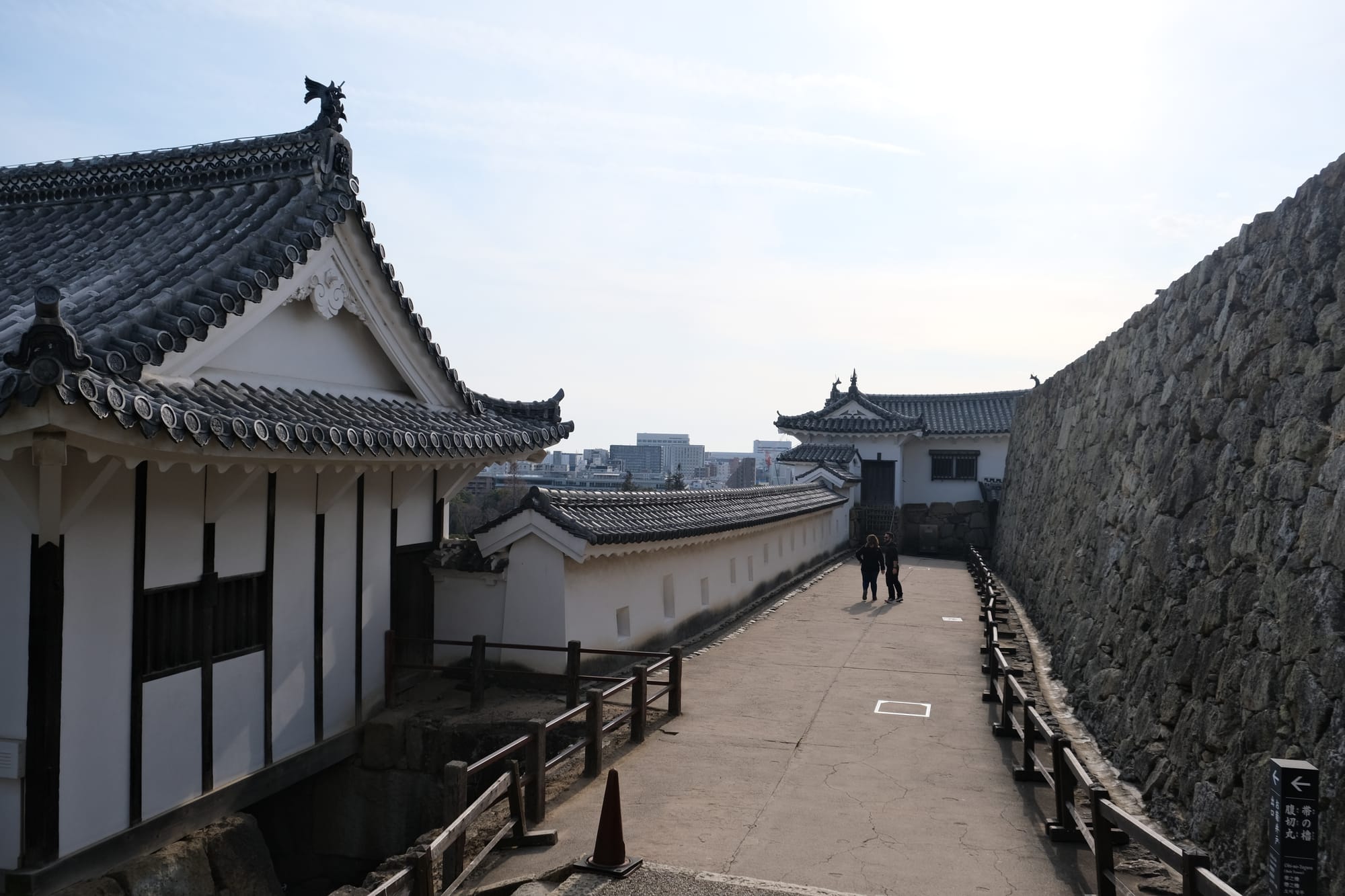
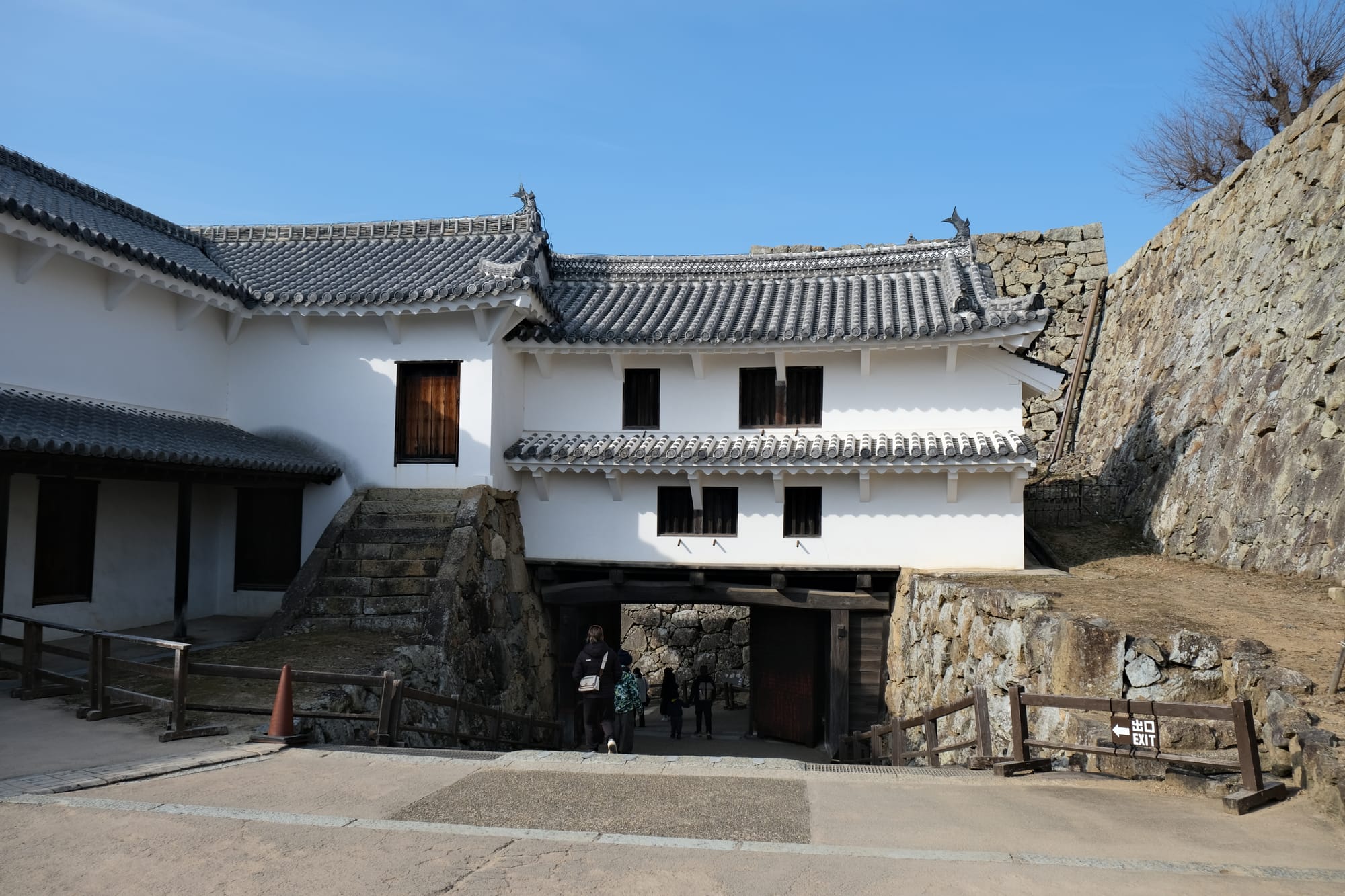
A couple more pictures on the route leading out of the castle complex. This shows more of the castle defenses, how the paths wind between walls and buildings.
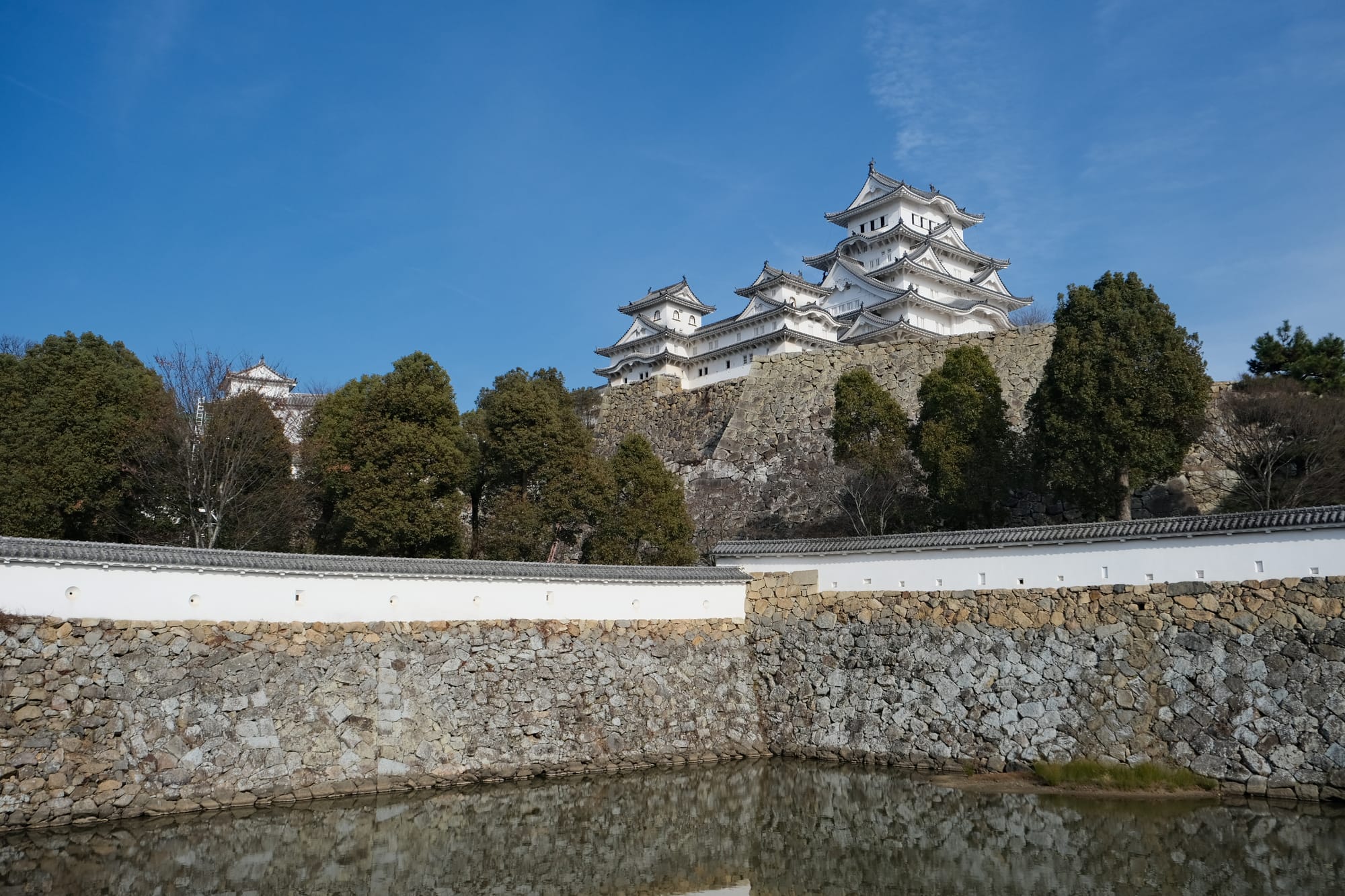
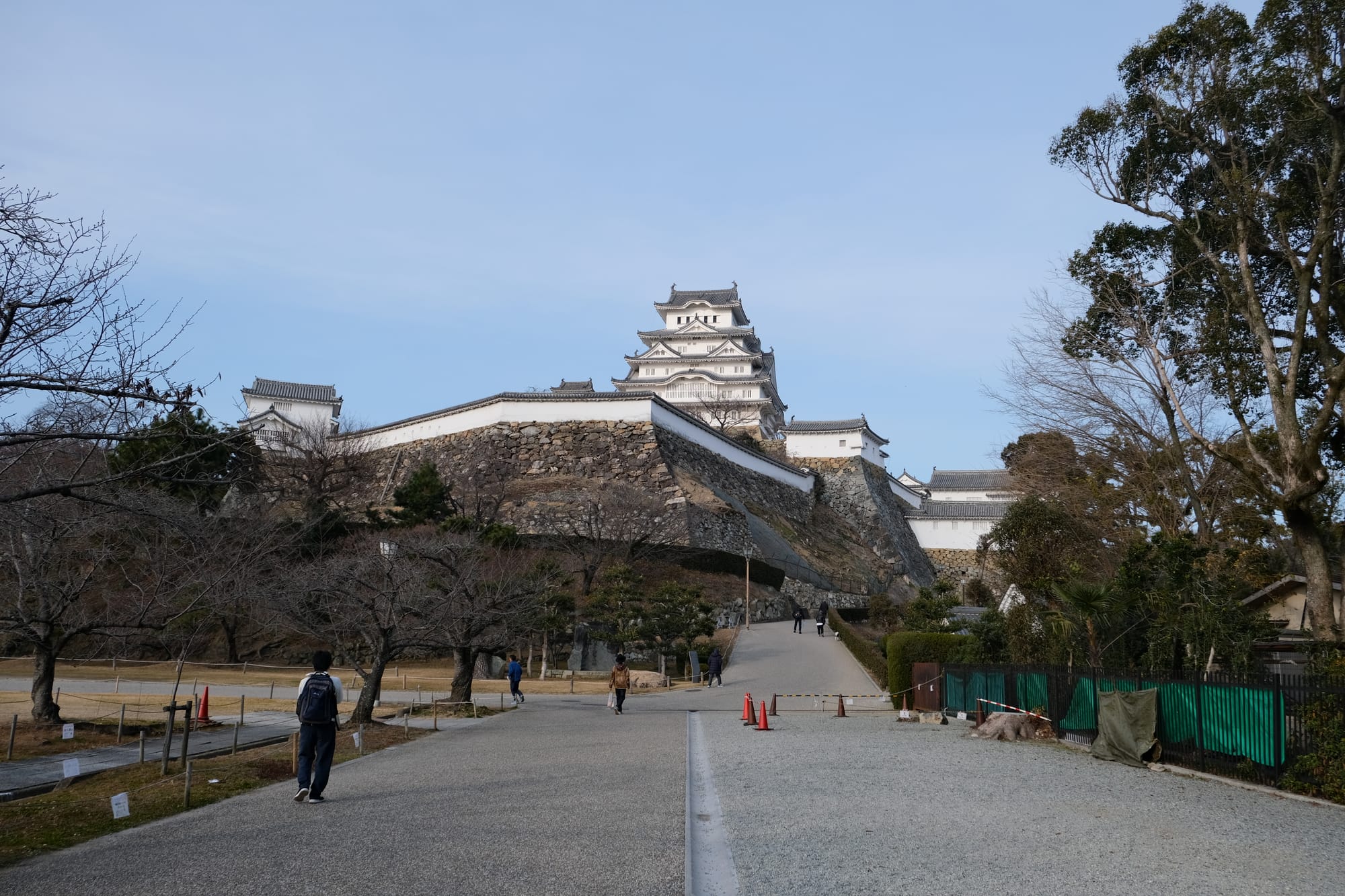
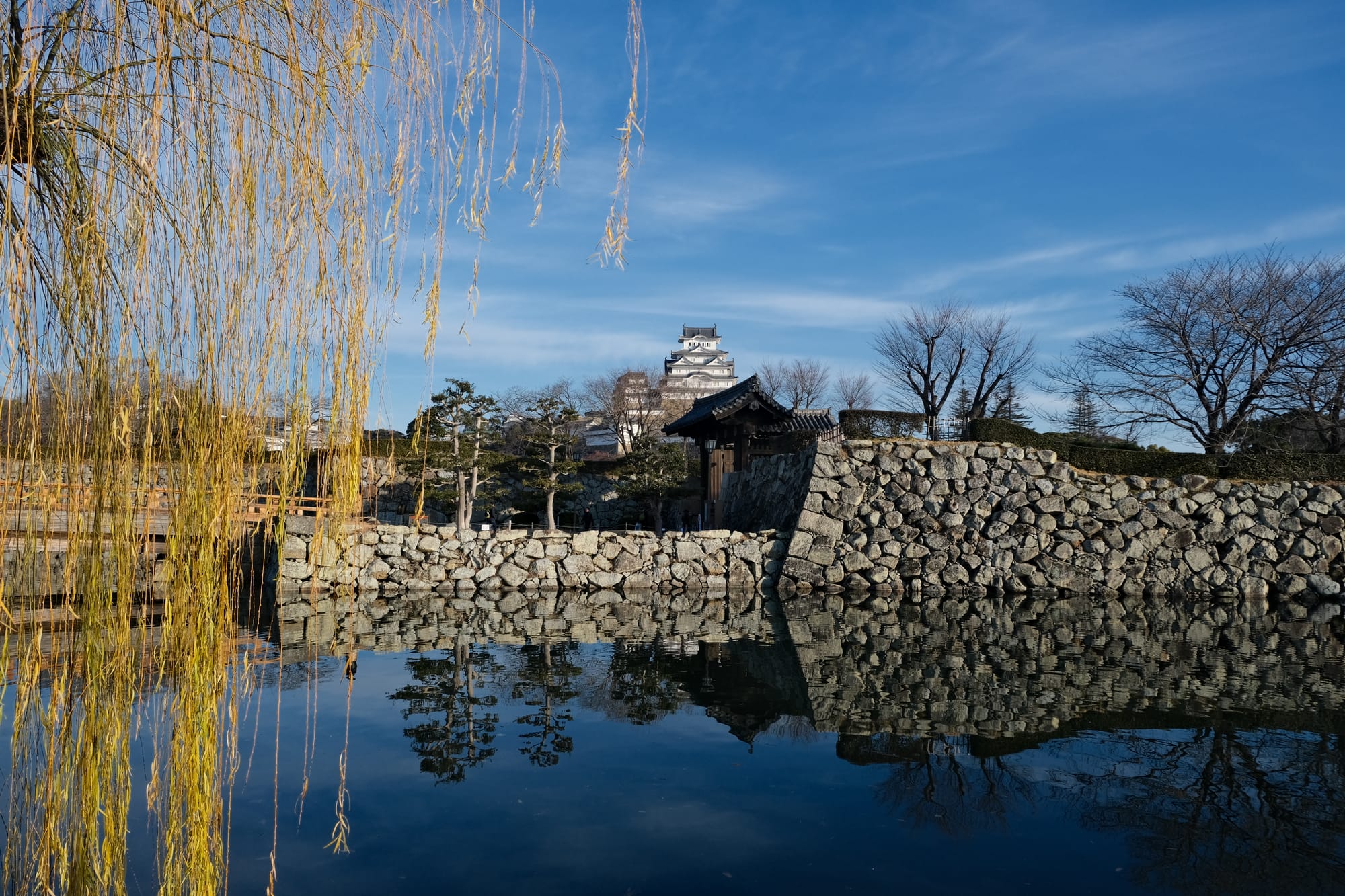
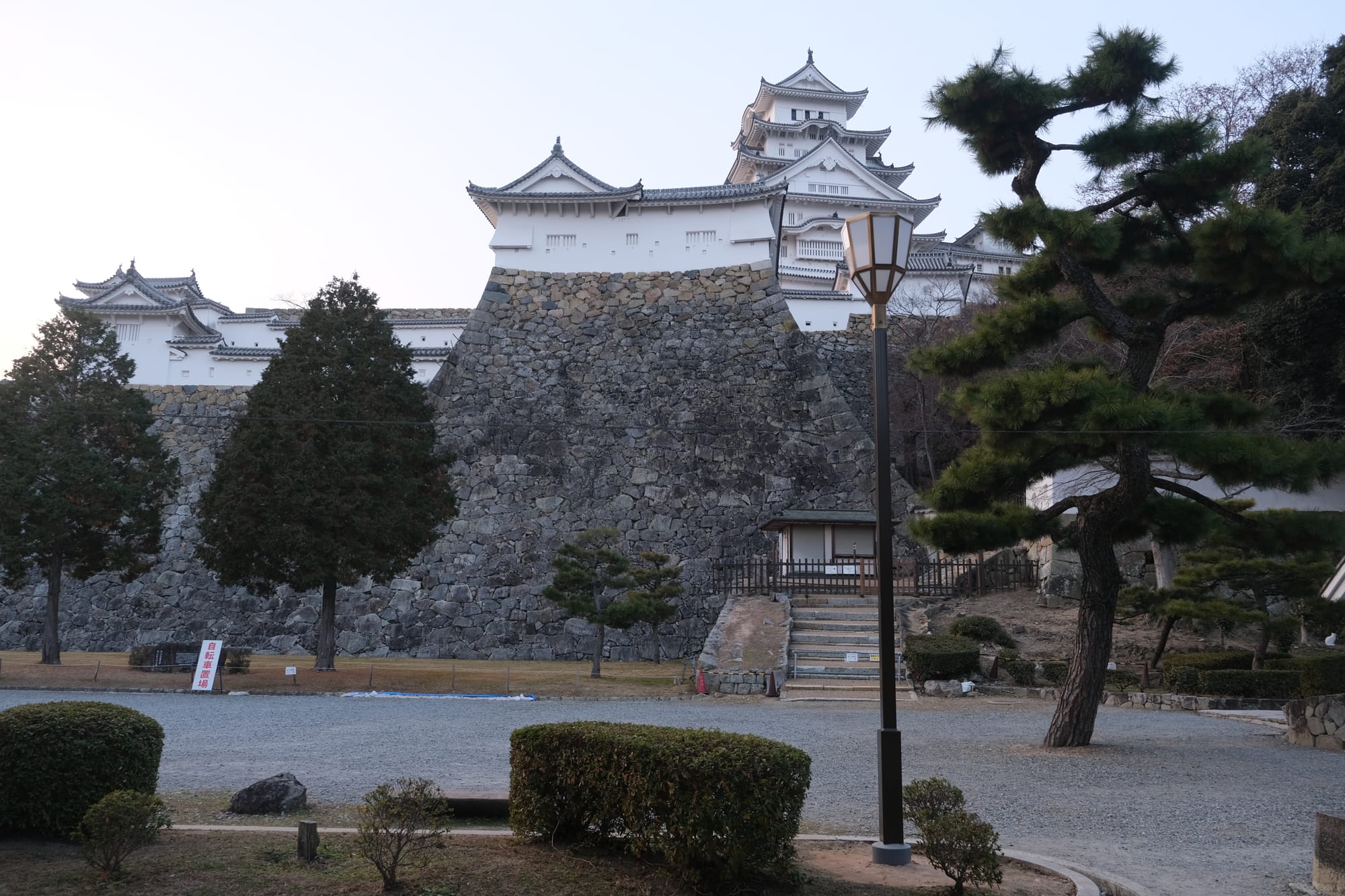
A couple more views of the castle. The first image was taken looking over an old moat (now just a square lake), just past the castle gate inside the paid section. The second image was taken in the public section of the park, to the east of the Sannomaru Square.
Koko-en Garden
We visited Koko-en gardens while waiting for our tour of Himeji castle to start. The gardens were located just outside Himeji Castle, a short walk out the main gate and back over the moat. We were one of the first people to visit that day so we had the place to ourselves. The gardens were serene in the early morning light, with plants, trees, and lakes all set up in a beautiful design that complemented one another. The tracks wound through the gardens in harmony with the scenery and truly allowed us to rest in the peace of natural things.
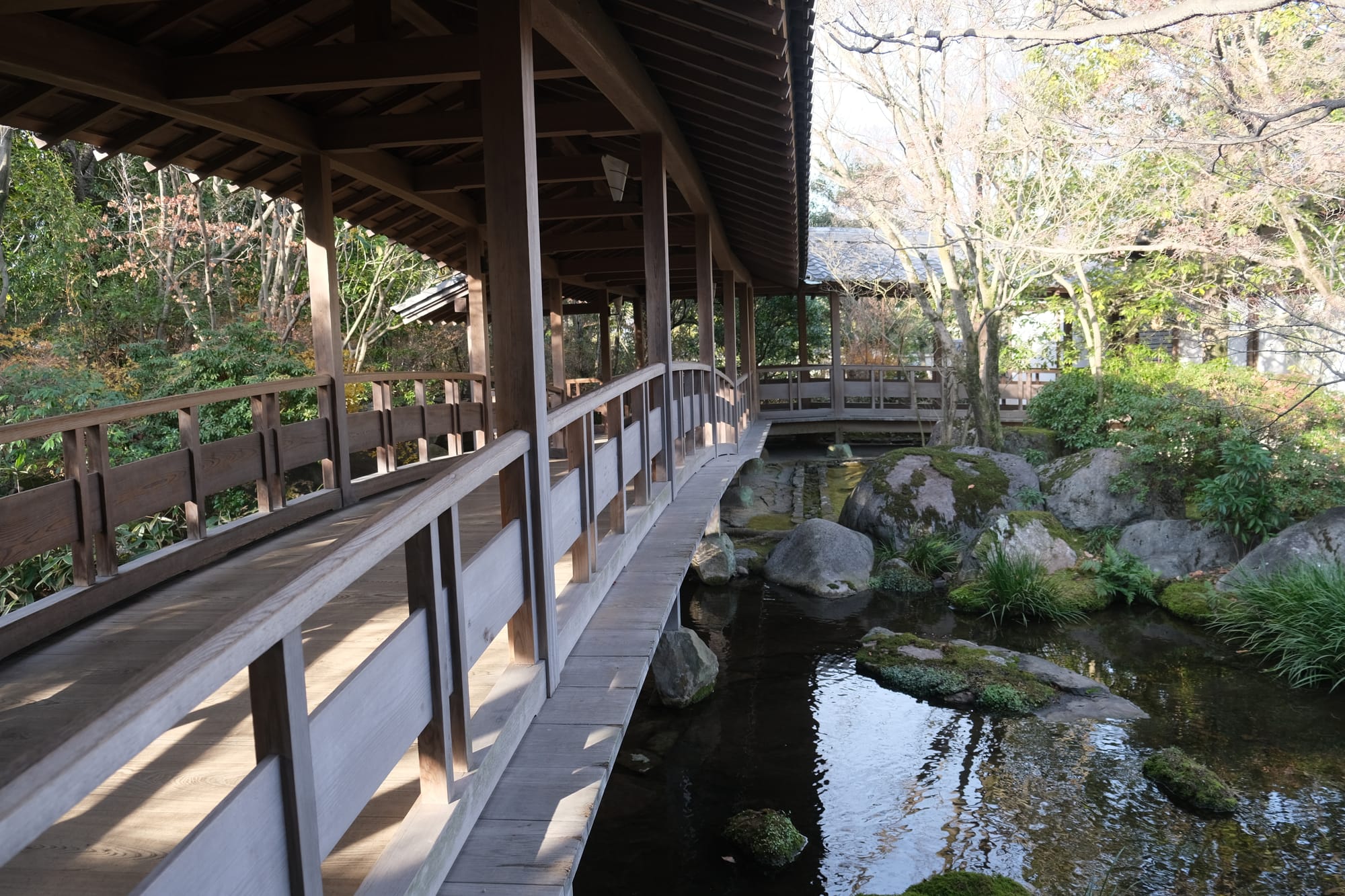
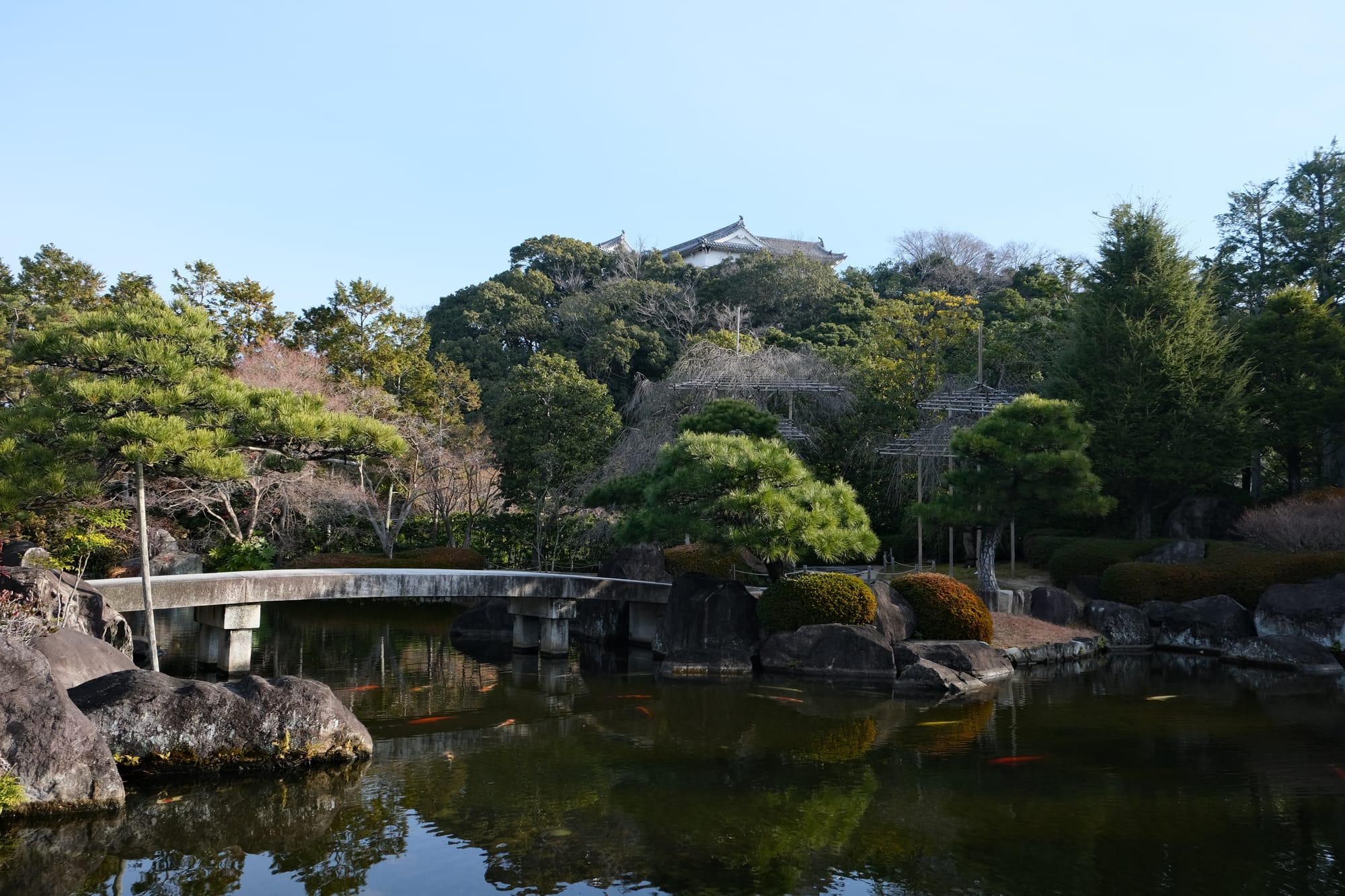
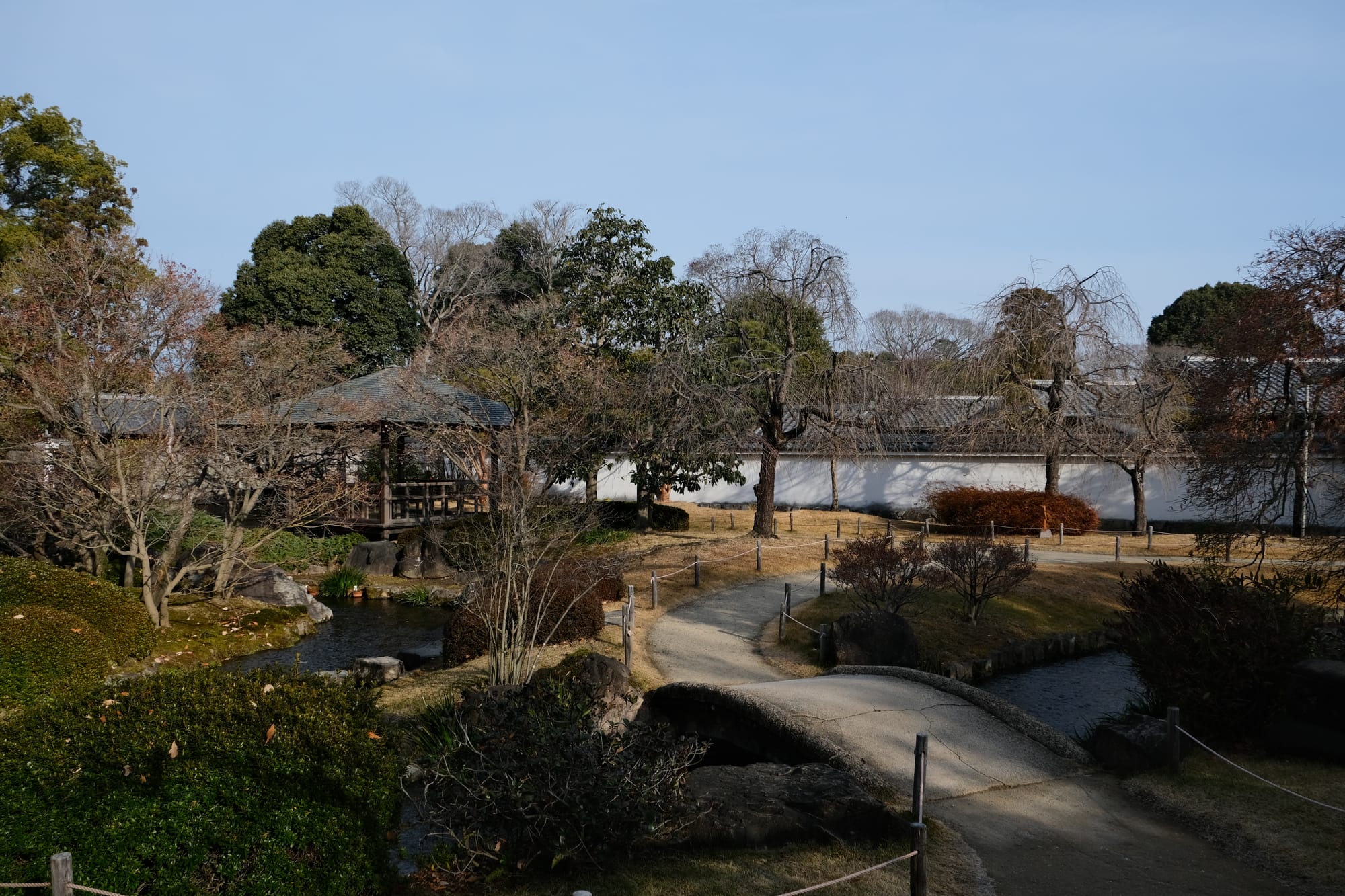
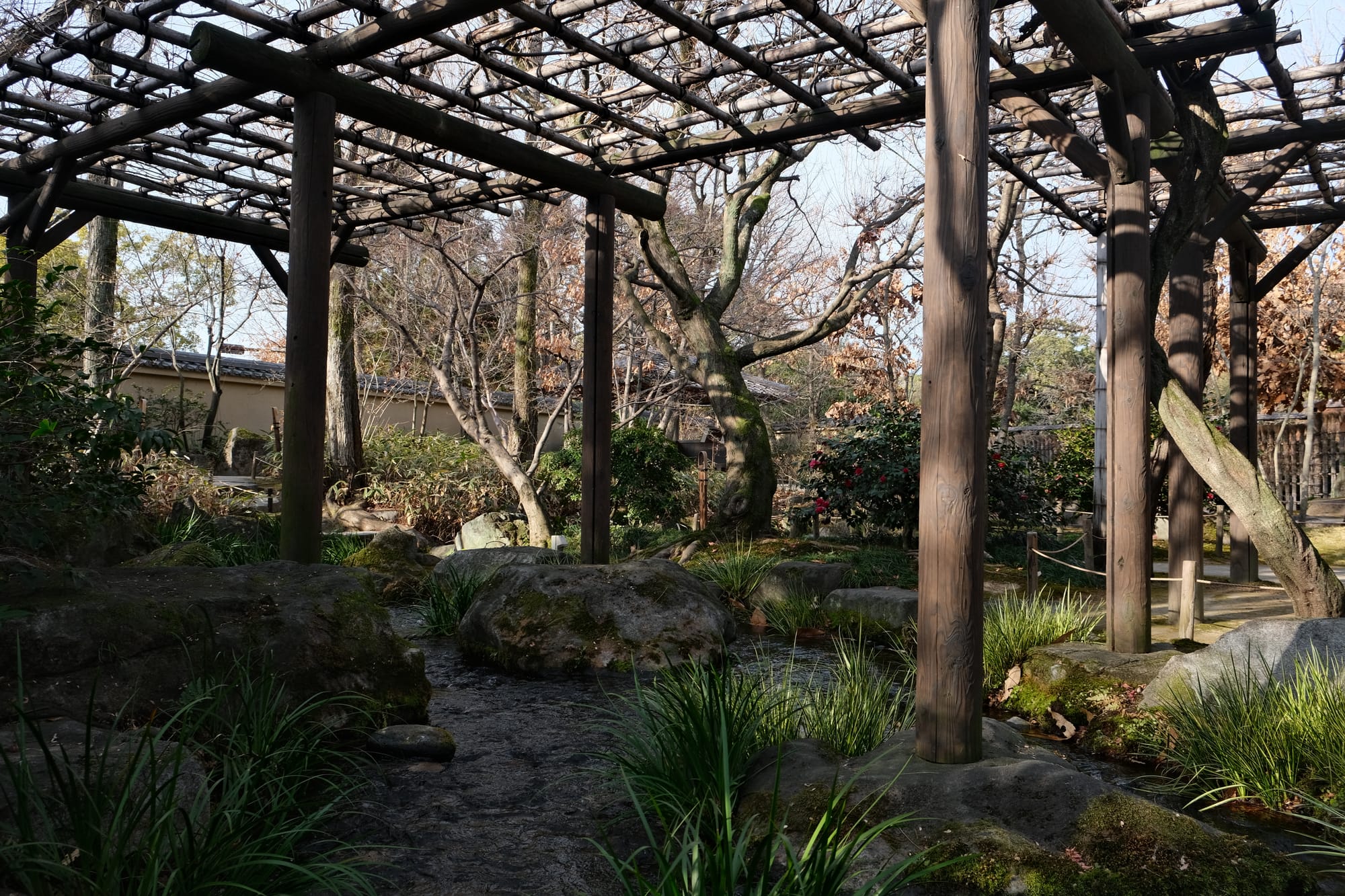
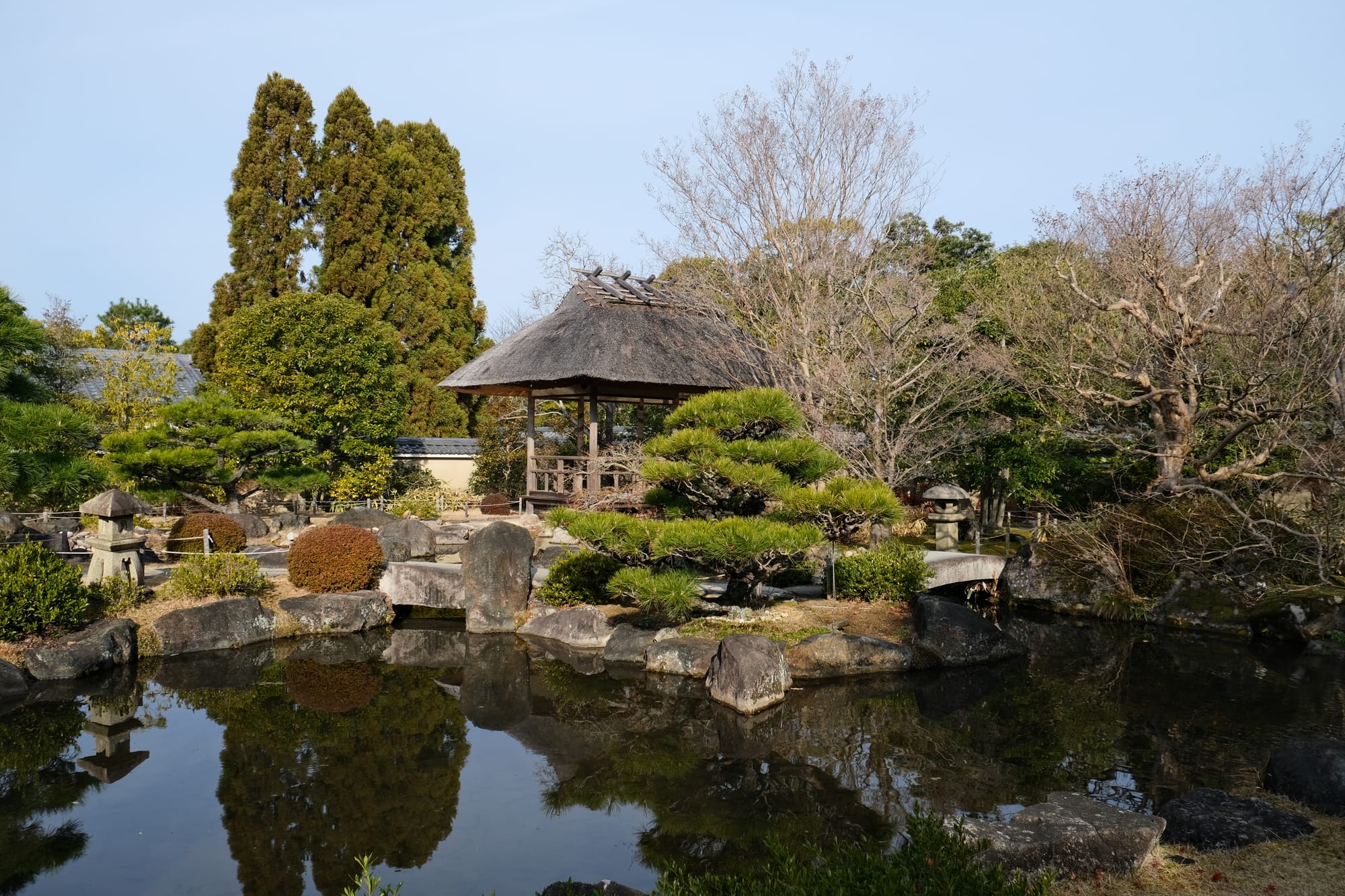
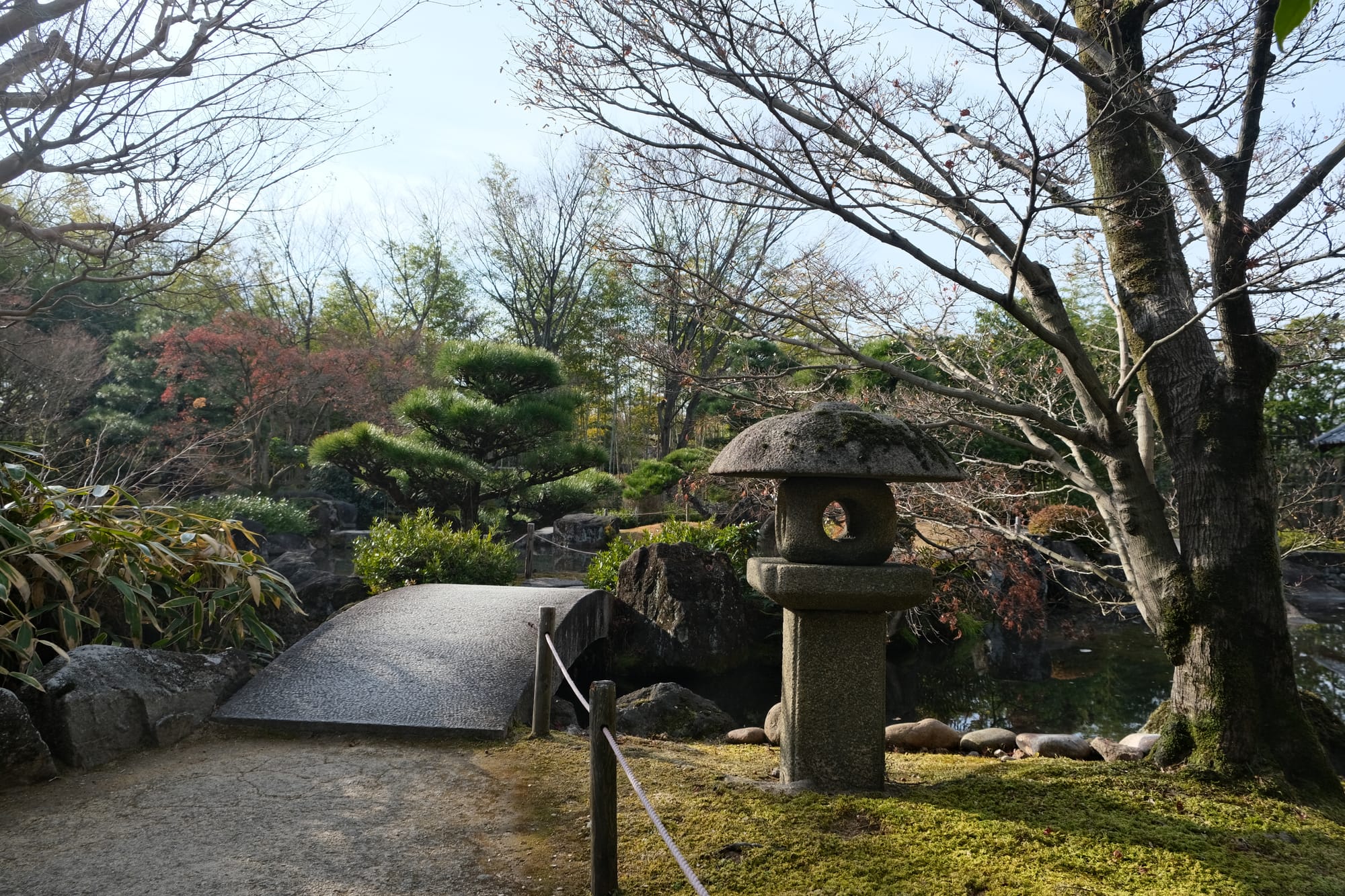
A selection of photos from the beautiful Koko-en gardens.
What stood out to me the most from Himeji Castle was just how focused the builders were on the castle's defense. Almost every element of the castle, its keep, the grounds, the walls, were designed with defensive elements in mind and yet the castle is also incredibly beautiful. The layout of the grounds and the castle interior was designed to confuse attackers and give every possible advantage to the defenders. I was impressed by how much this castle was dedicated to the purpose of defense and I knew there was a lesson here: to be truly good at something every element of that thing needs to be done with its purpose in mind. But Himeji Castle also taught me that being dedicated to the purpose of defense doesn't mean that it needs to compromise with beauty. The castle could be both a strong fortification and one of the most beautiful buildings I have seen. This is why I was so surprised to learn about all the defensive elements, I had thought of it as a beautiful building first and a castle second, when in reality the opposite was true.
Himeji Castle was never attacked and this is in part why the castle has been so well preserved to this day. It is almost 700 years old and while it was lucky with various disasters the real reason it has stood the test of time is because it was well looked after with major restorative works taking place throughout its history. The entire building is constructed of wood and I was fascinated to learn that, when extensive restoration work was needed in the 20th century the entire building was disassembled, allowing the individual pieces to be repaired, before being put back together, almost like a giant Lego set. This does mean that the Himeji Castle we see today may not be the exact one built 700 years ago as various elements would have been replaced over time and cleaned of the centuries of dirt. But I personally think this is a better preservation style as things do naturally decay. A castle built centuries ago without maintenance would be little more than a ruin today, and I loved being able to see Himeji Castle in all its glory.
Thanks for reading – Edward
Written 4th of April 2025