Nara

The city of Nara is located about one hour by train to the south of Kyoto. It was the first permanent capital of Japan before Kyoto, and it is a sister city to Canberra. Now days, Nara is known for wild deer that roam its parks, they are known to bow to visitors to beg for food. For these reasons I wanted to explore Nara, so I left early in the morning from Kyoto to spend a day here before returning back to my accommodation in Kyoto.

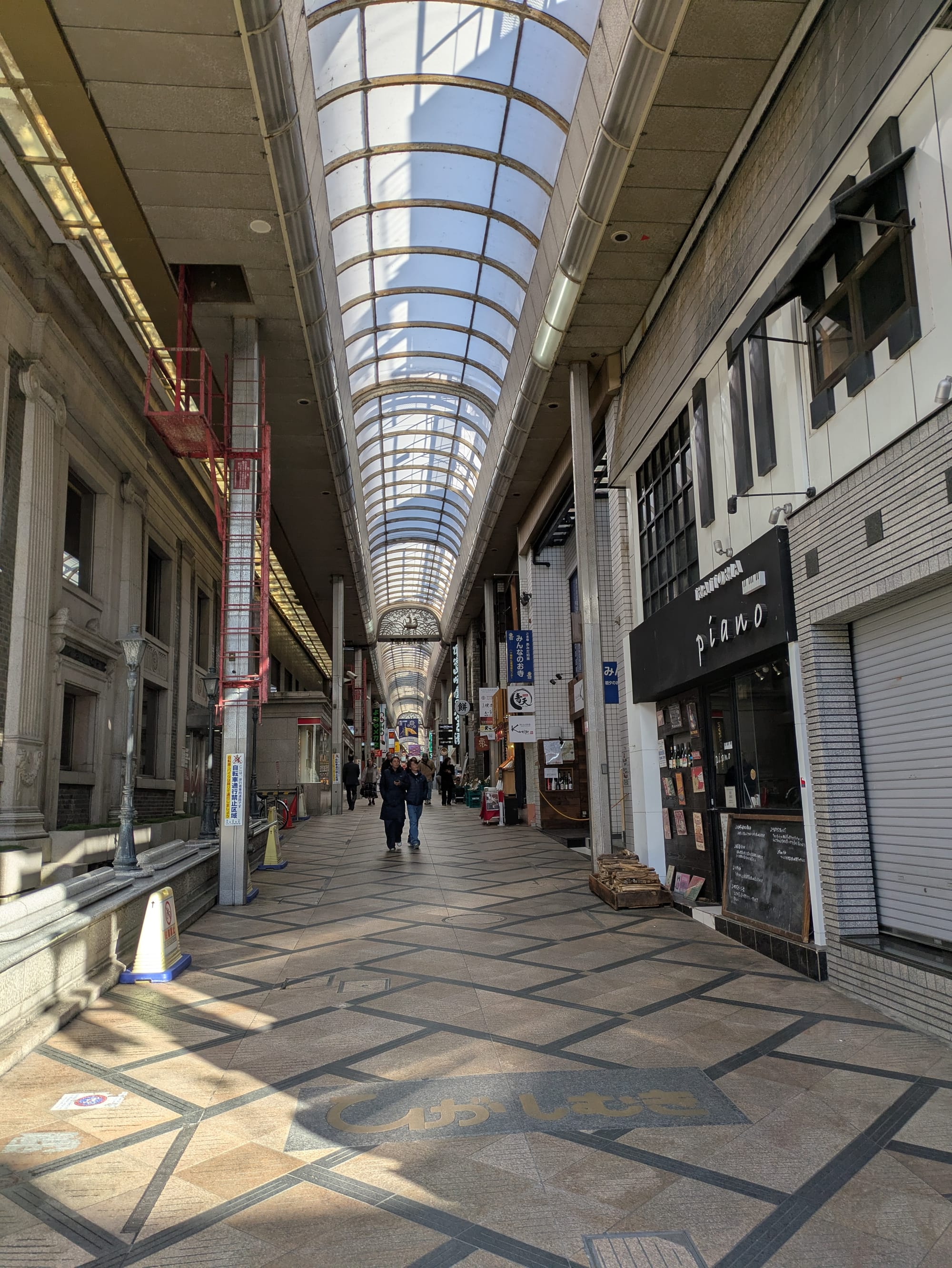
The commercial centre of Nara. I walked along these streets on my way to the deer park. The second image shows a covered shopping street in a standard style that I saw all over Japan.
Nara Deer Park
The deer park is one of the main attractions of Nara, and this was my first destination to visit. The park was about one kilometer away from the train station, an easy walk. It wasn't just one park, but multiple, all connected together making a large green area on Google maps, dotted with temples. In all this area is where I had heard the deer would be.
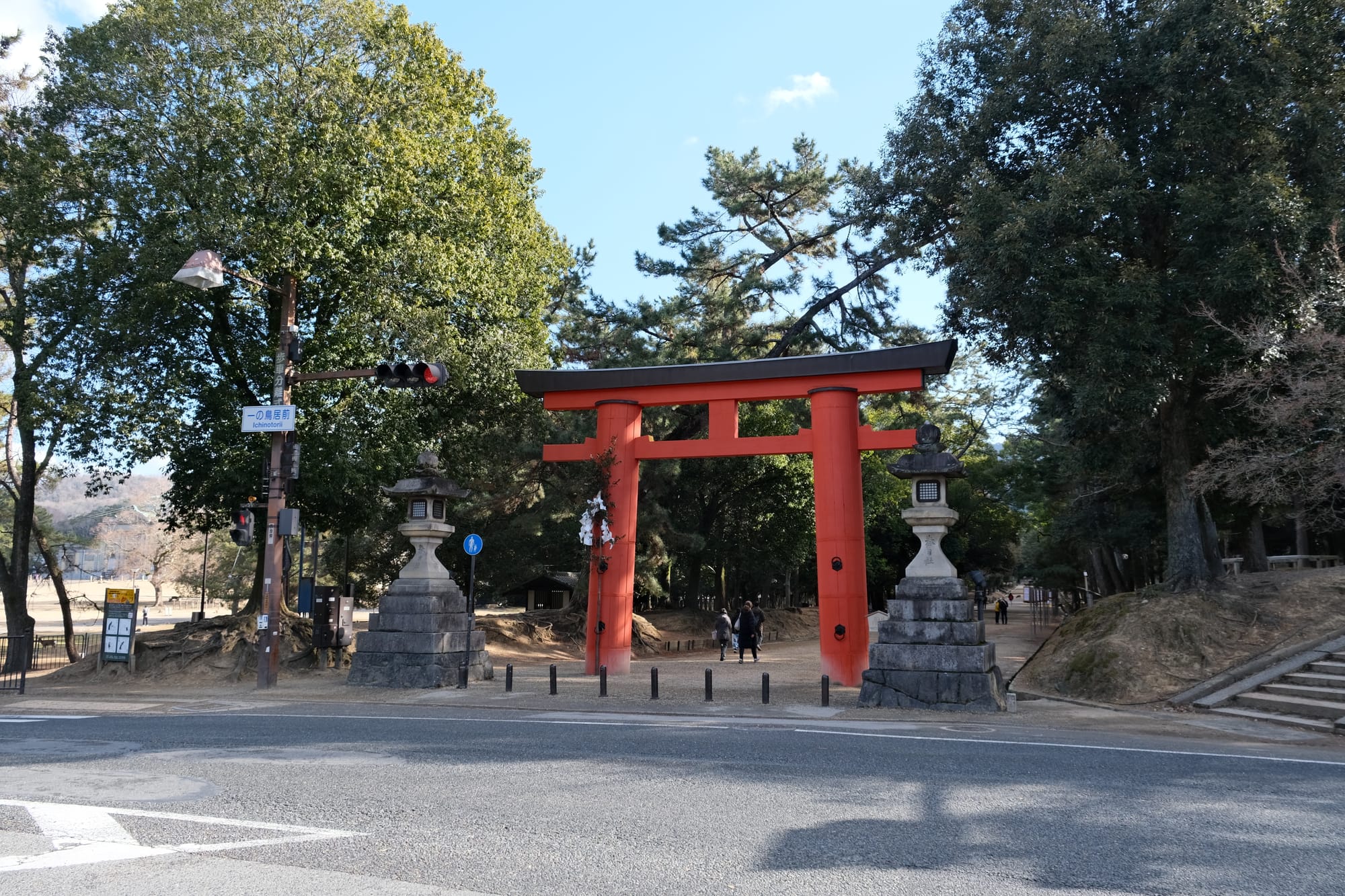

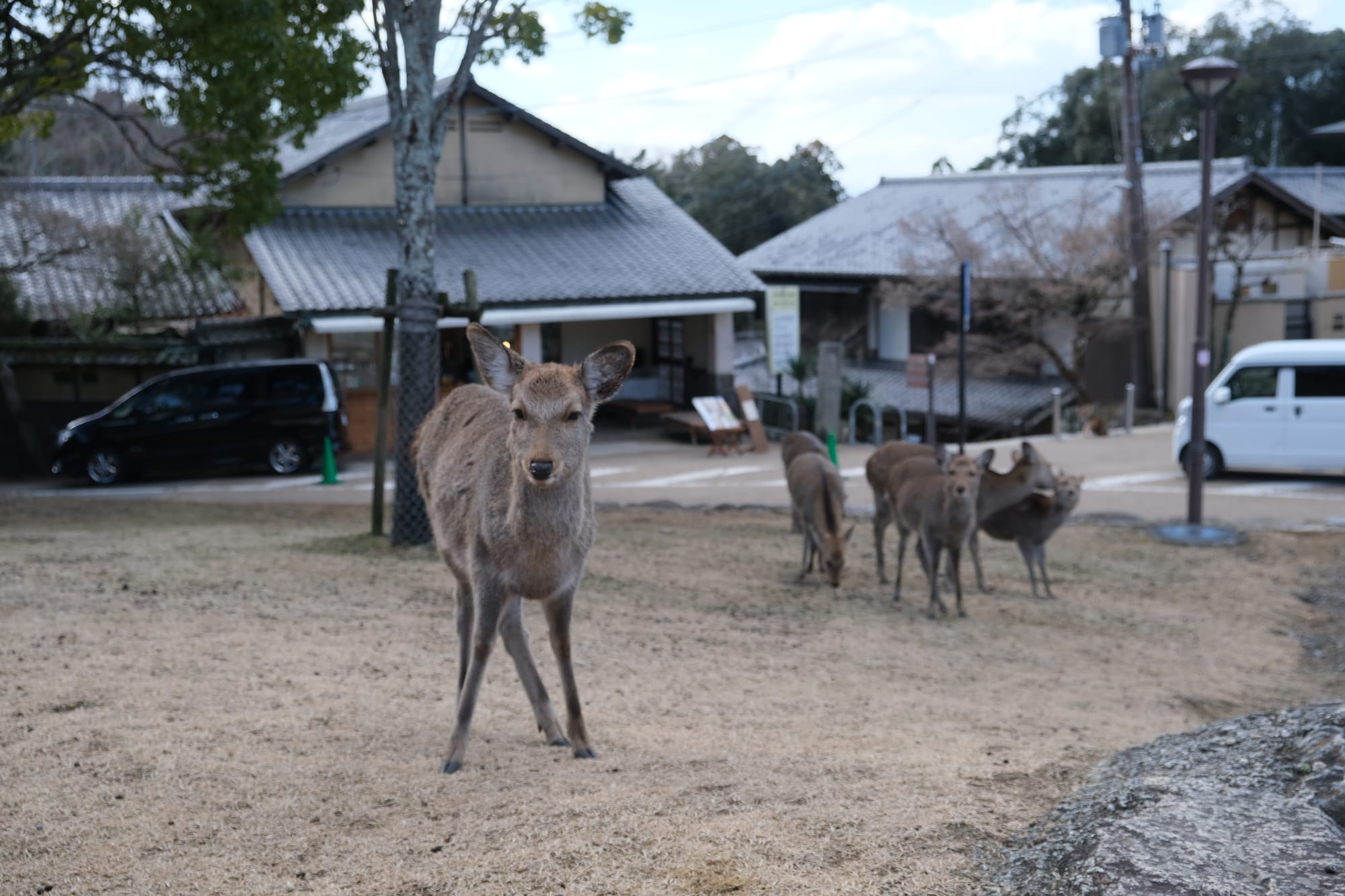
A couple of small groups of deer in different areas of the Nara parks.
As soon as I entered the park I saw a cluster of deer walking across the road. I initially thought to follow them, to try and get some good pictures, but I quickly learned that the deer were everywhere. I had no need to try and chase them down, in fact, there was rarely a stretch of trail in any of the parks where I couldn't see at least one deer.
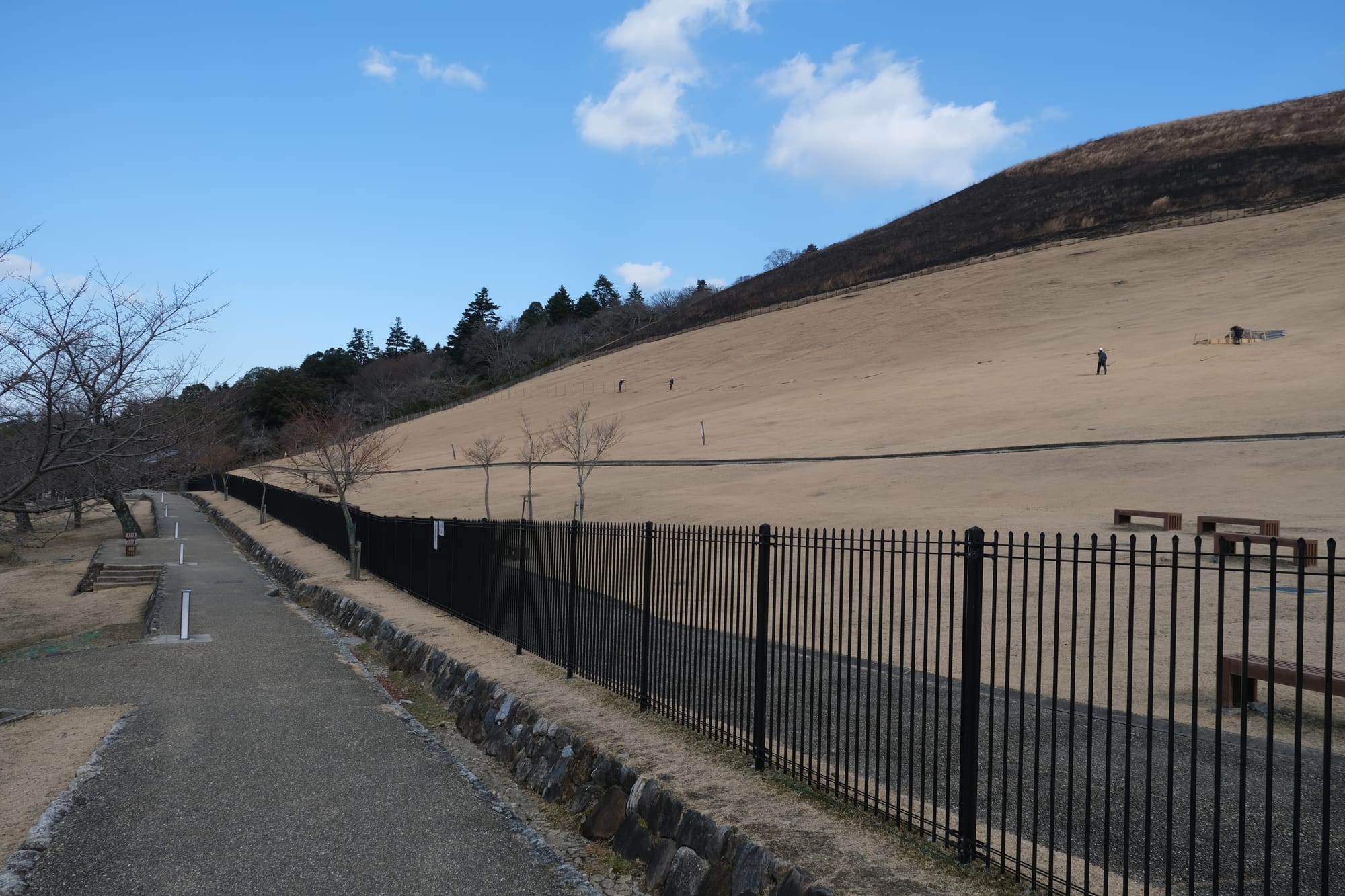
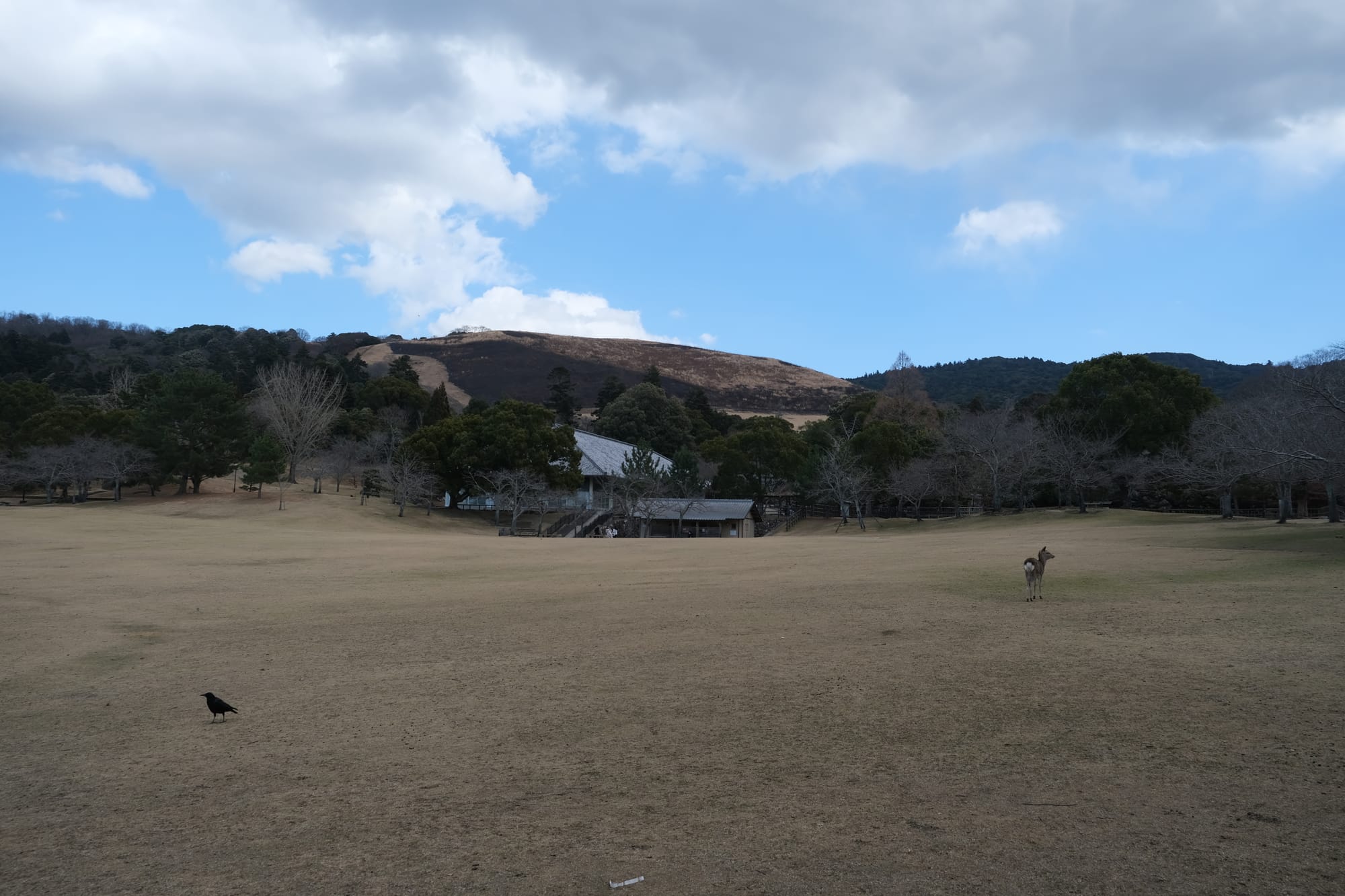
I walked through the many connected parks of Nara, making a big loop, and all the while observing the deer. I walked past a hill that is burnt during January as part of a big festival, and I walked past a few temples. There were many areas of the park that were quiet, especially earlier in the morning, and I enjoyed my time walking through the beautiful natural scenery. Eventually, I walked back towards the city and at the edge of the park, near the Nara National Museum, I found a number of souvenir shops. Here was the popular tourist area with big crowds of people, and some of the shops sold deer crackers, I bought some to feed to the deer. They absolutely loved the crackers and I always felt bad when the packet ran out but the deer still nudged me for more.
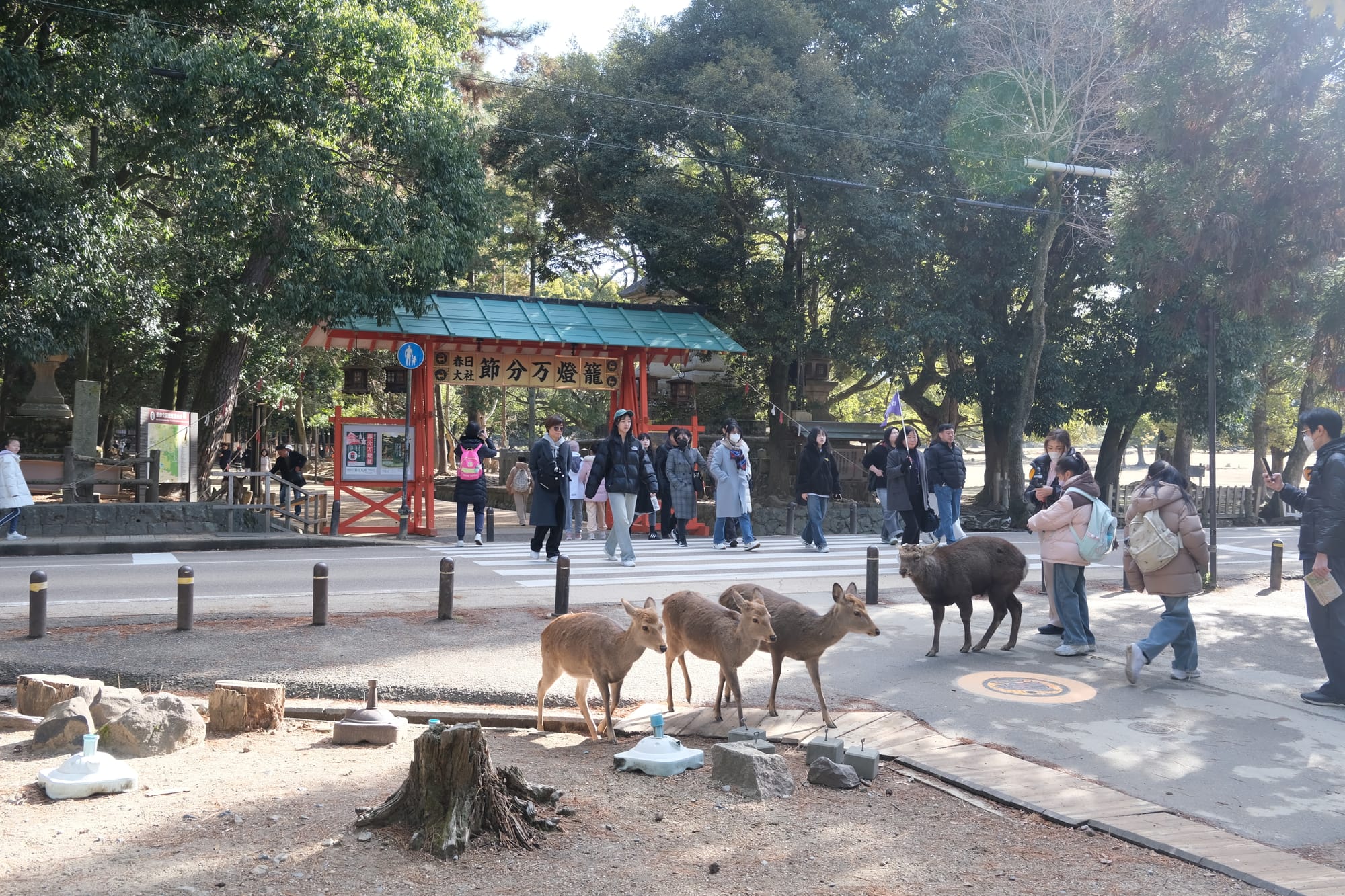
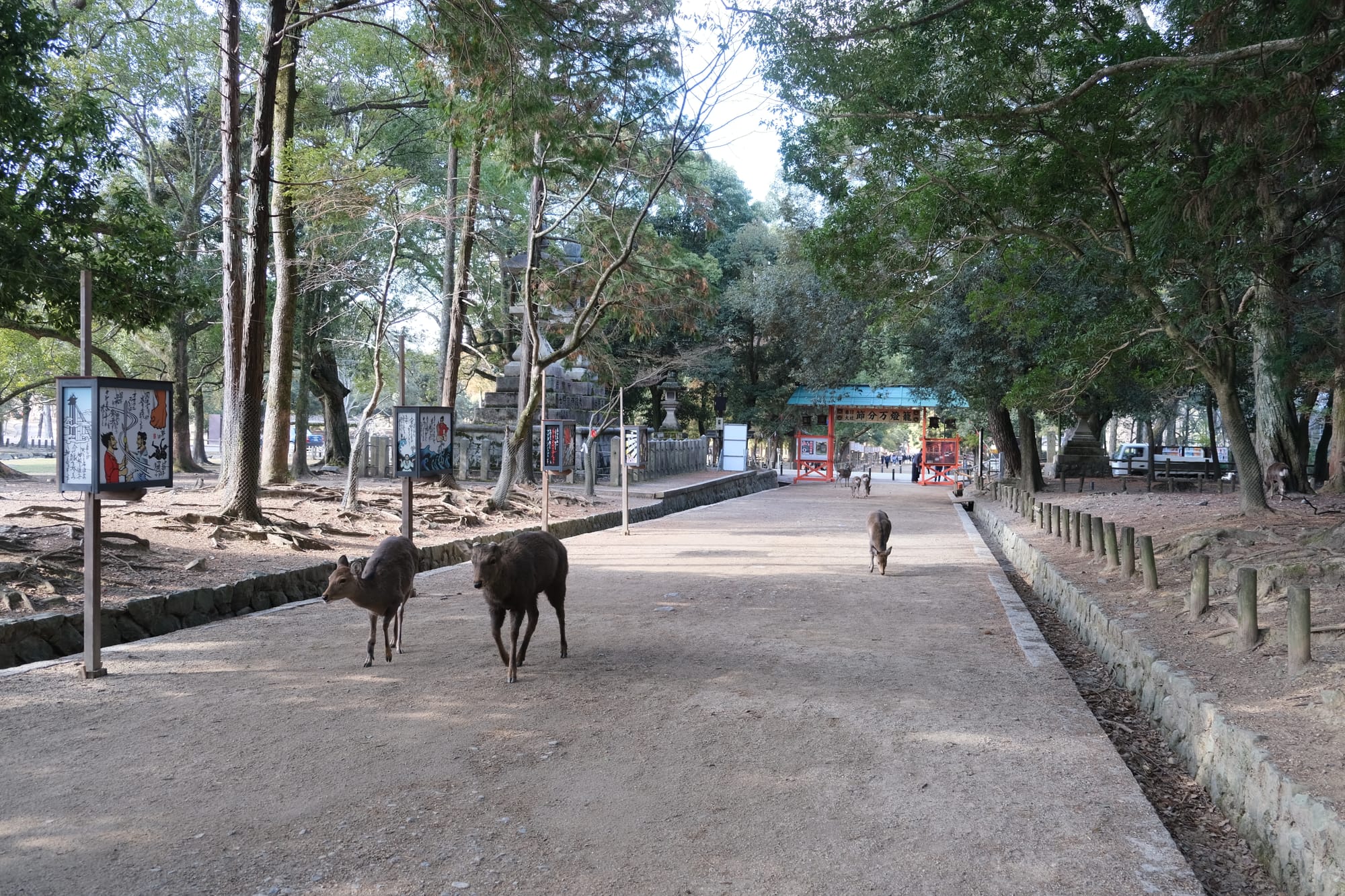
I often saw deer walking amongst people and on the same roads as for humans.
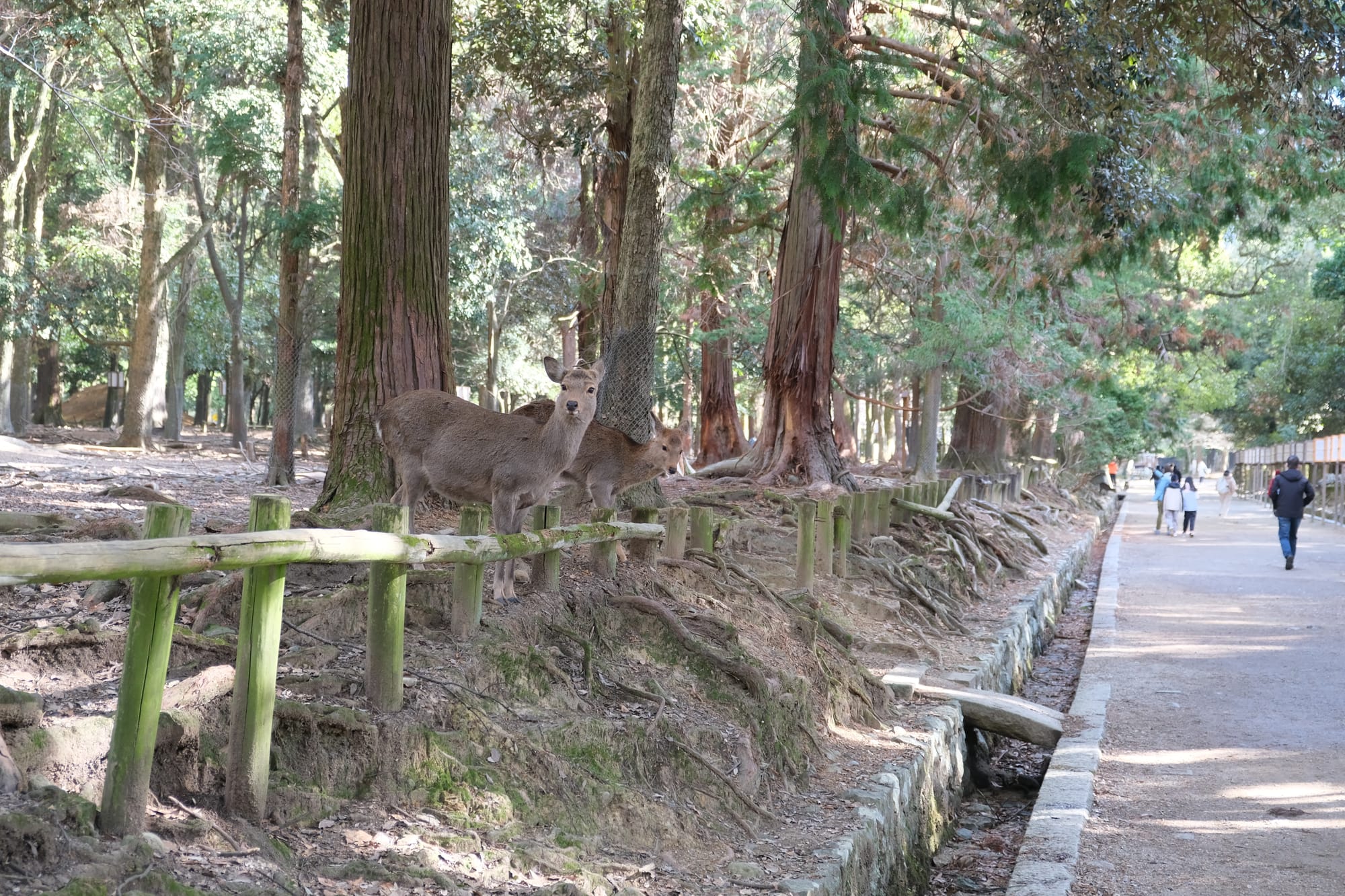

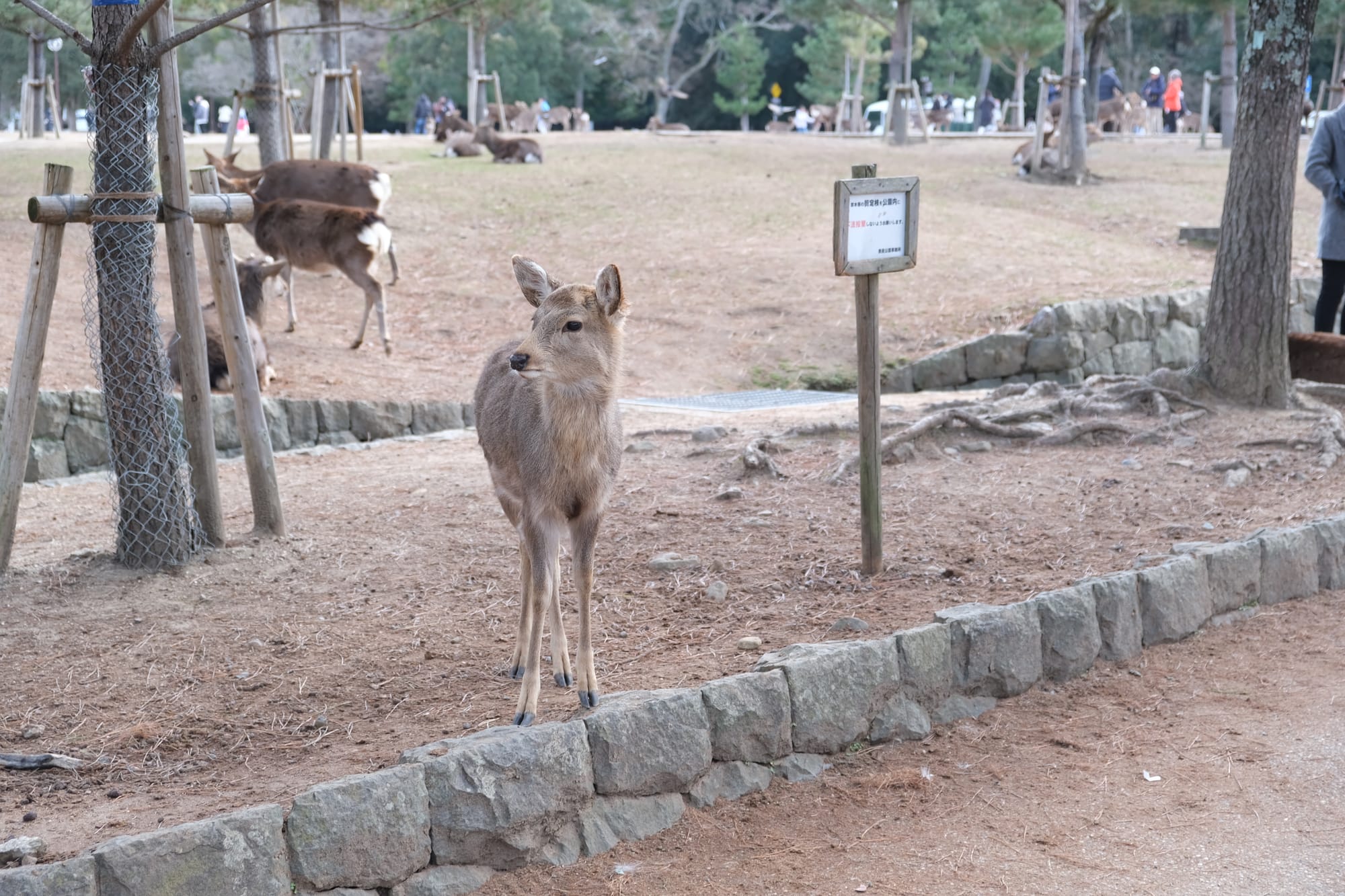
Many times the deer were standing by the side of the road looking at the pedestrians passing by, perhaps wondering if anyone had food for them.
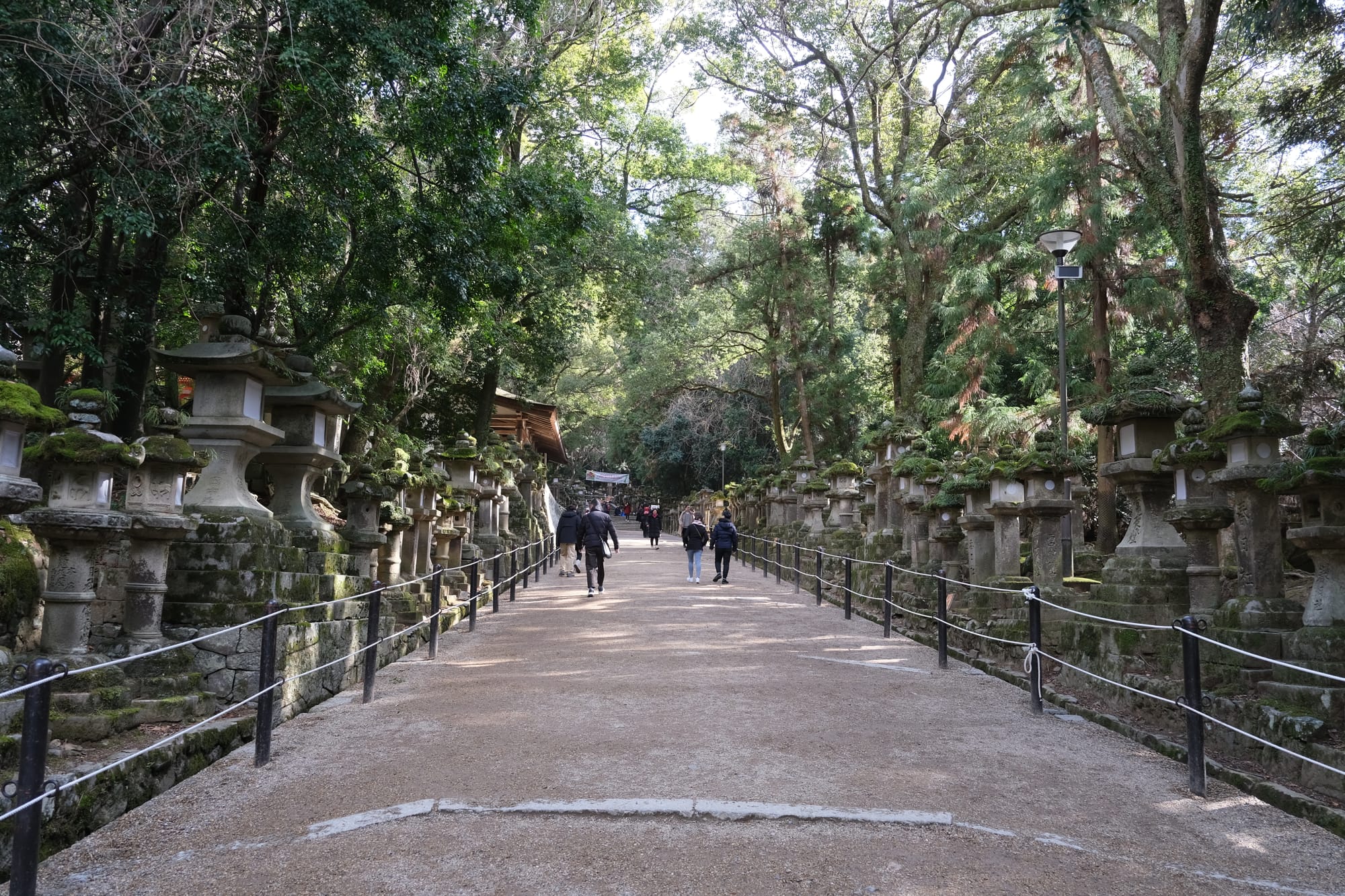
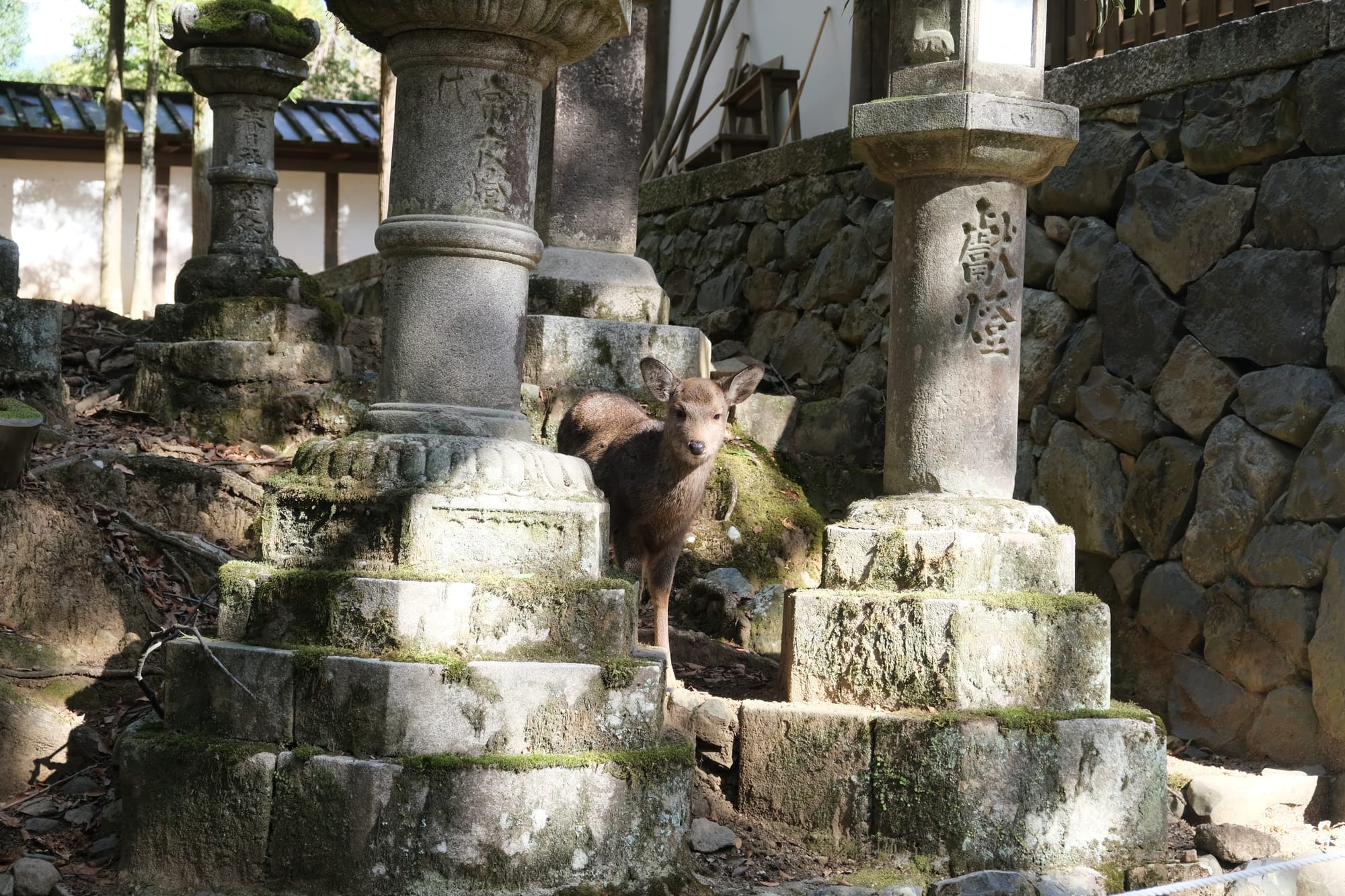
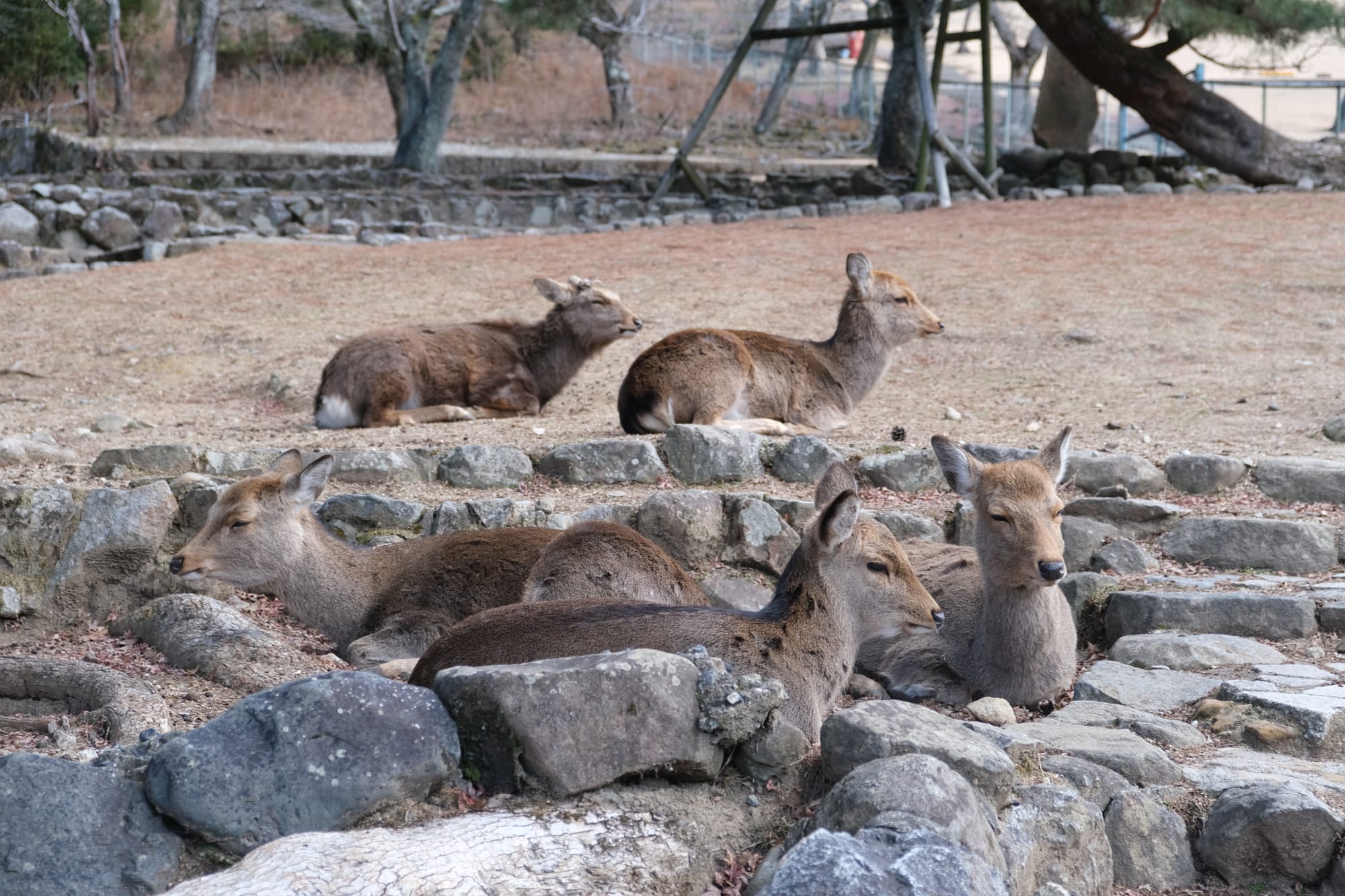

As the day progressed I saw many dear resting on the ground.
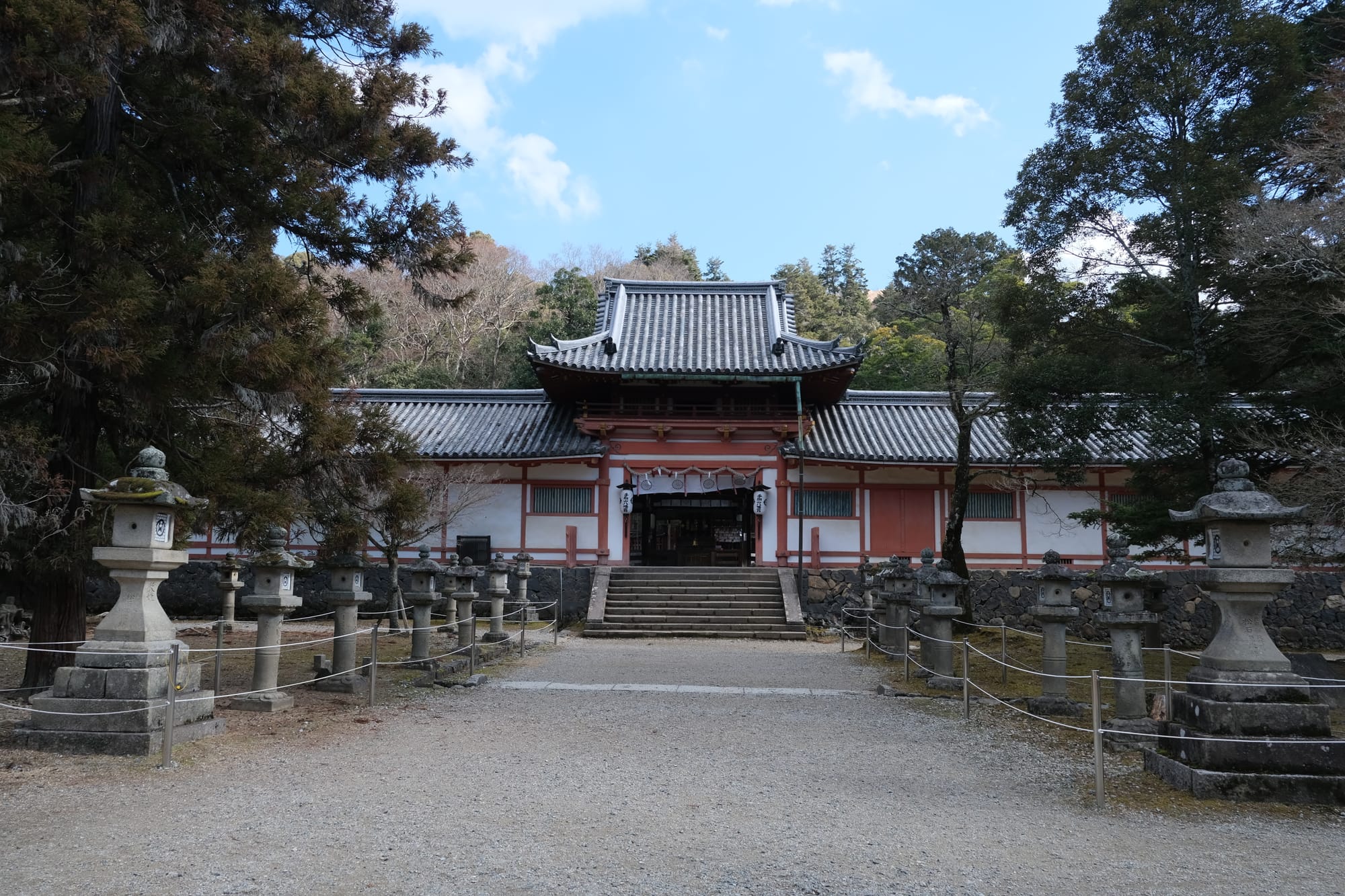
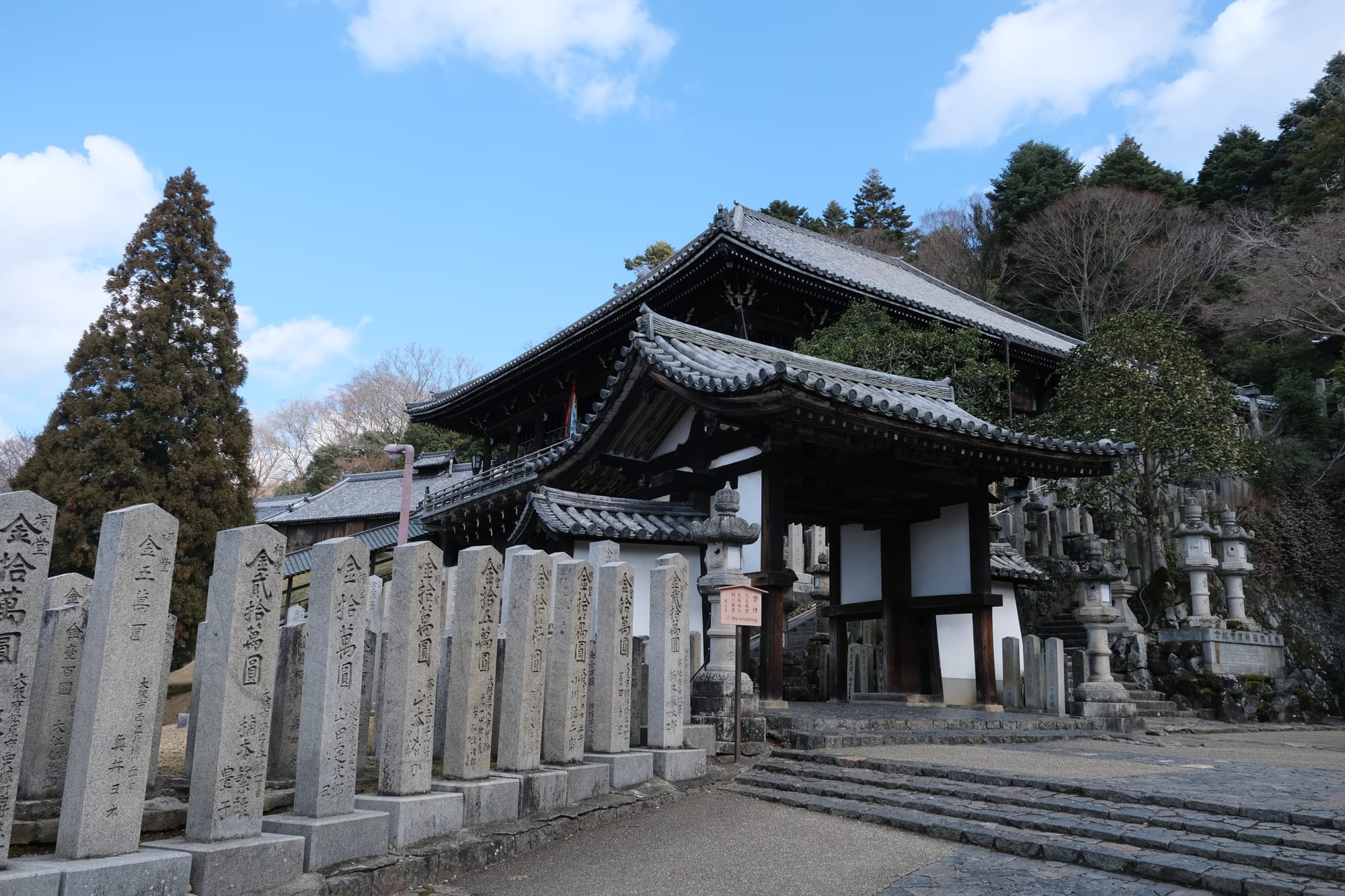
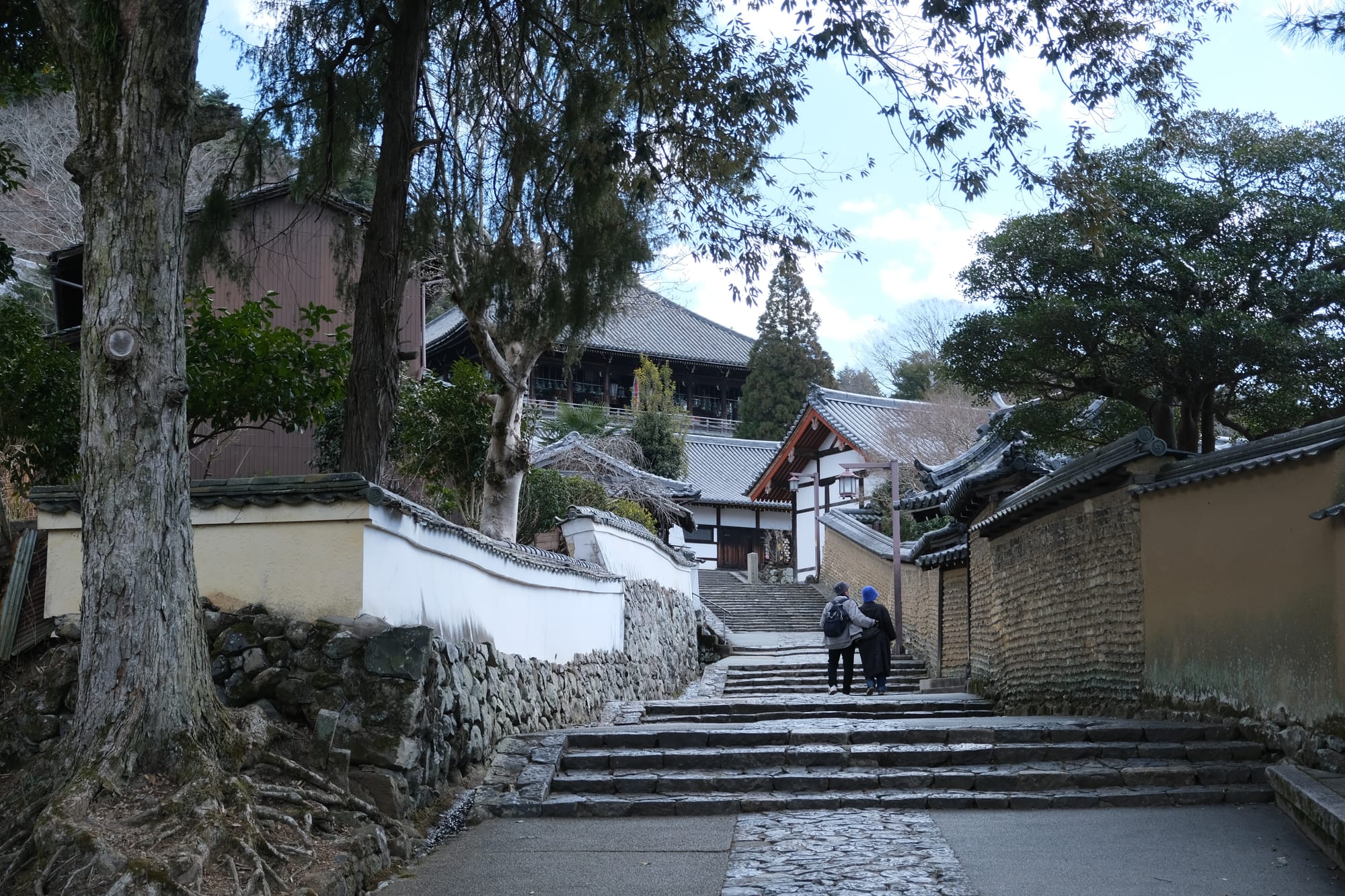
The second temple I saw (I think its Todai-ji). There were many temple buildings here and walled off courtyards so sometimes both sides of the path were lined with brick walls.
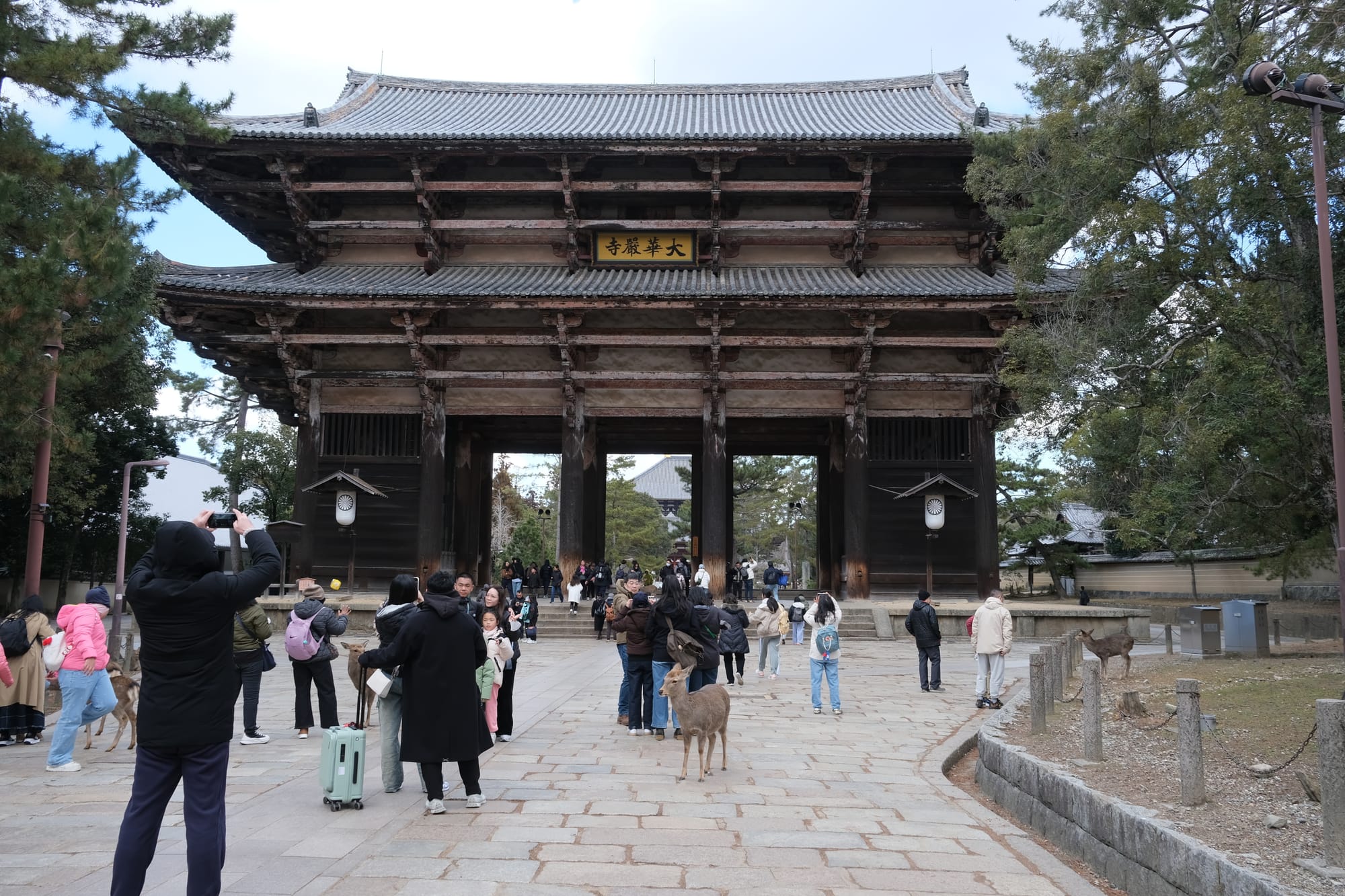
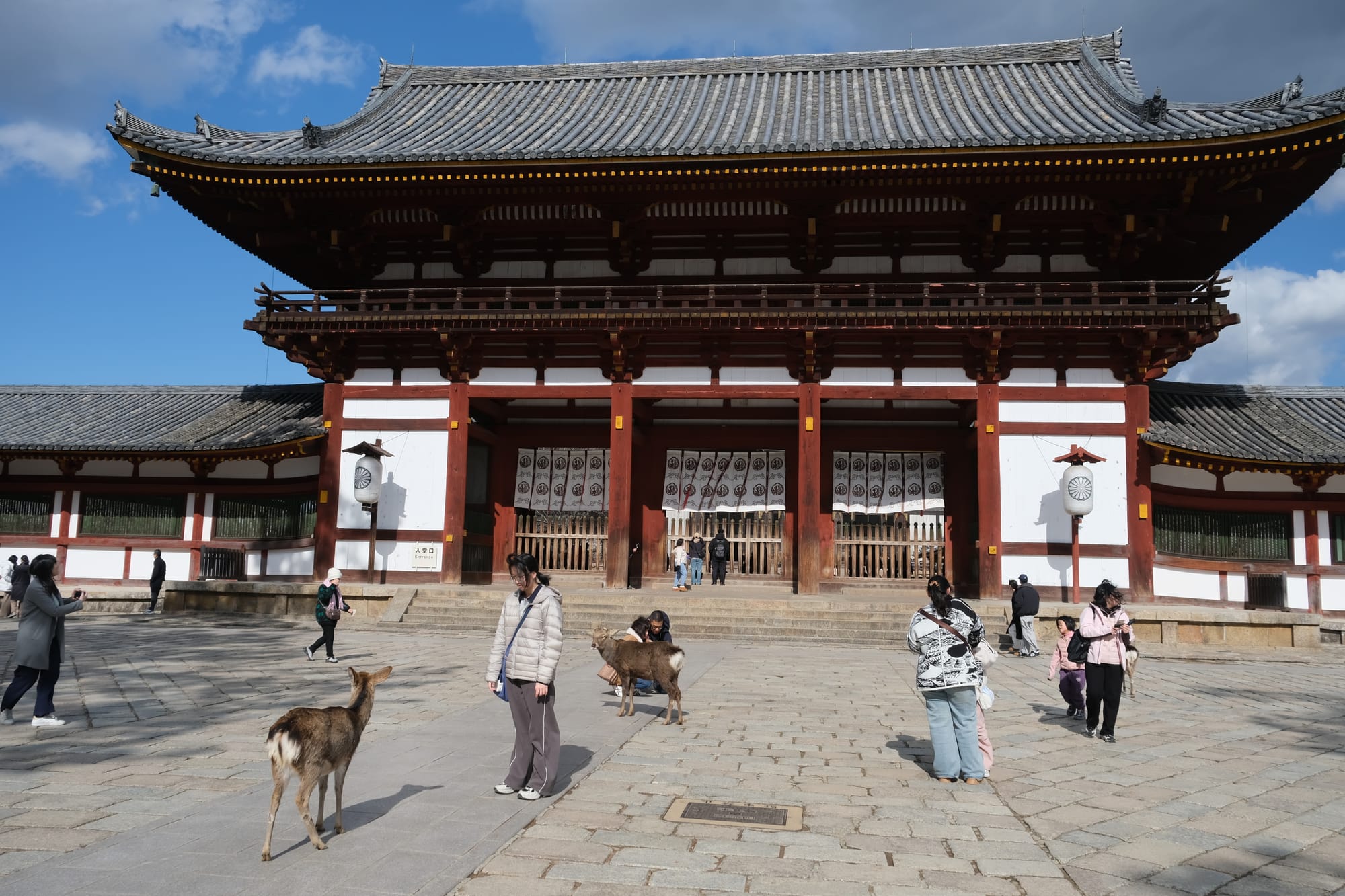
This is the central gate and building for the Todai-ji temple. (I saw this temple in reverse seeing the smaller buildings at the back first before coming to the large main buildings) This main temple area was much busier, with lots of people and deer interacting with each other and people taking pictures.
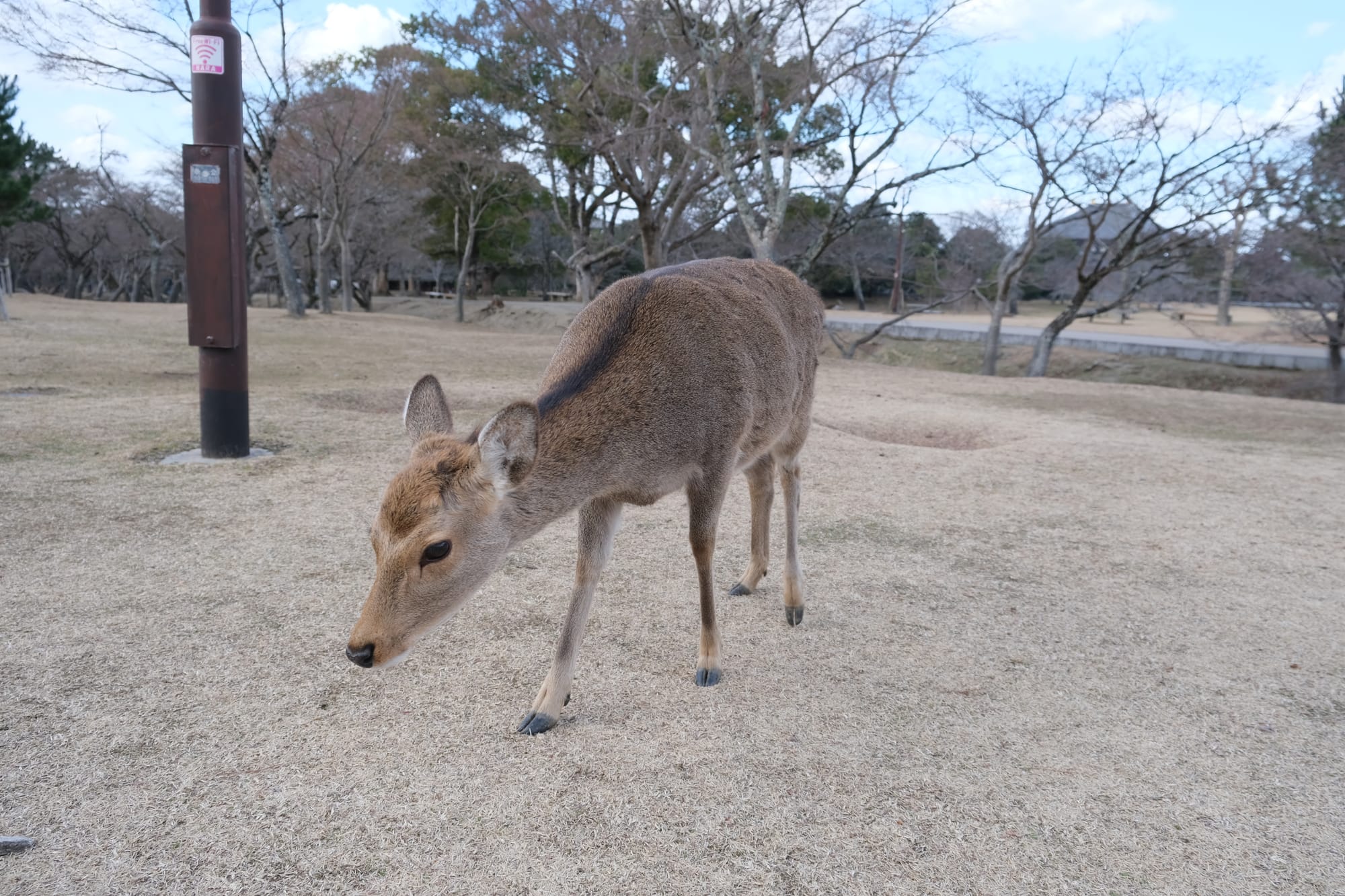
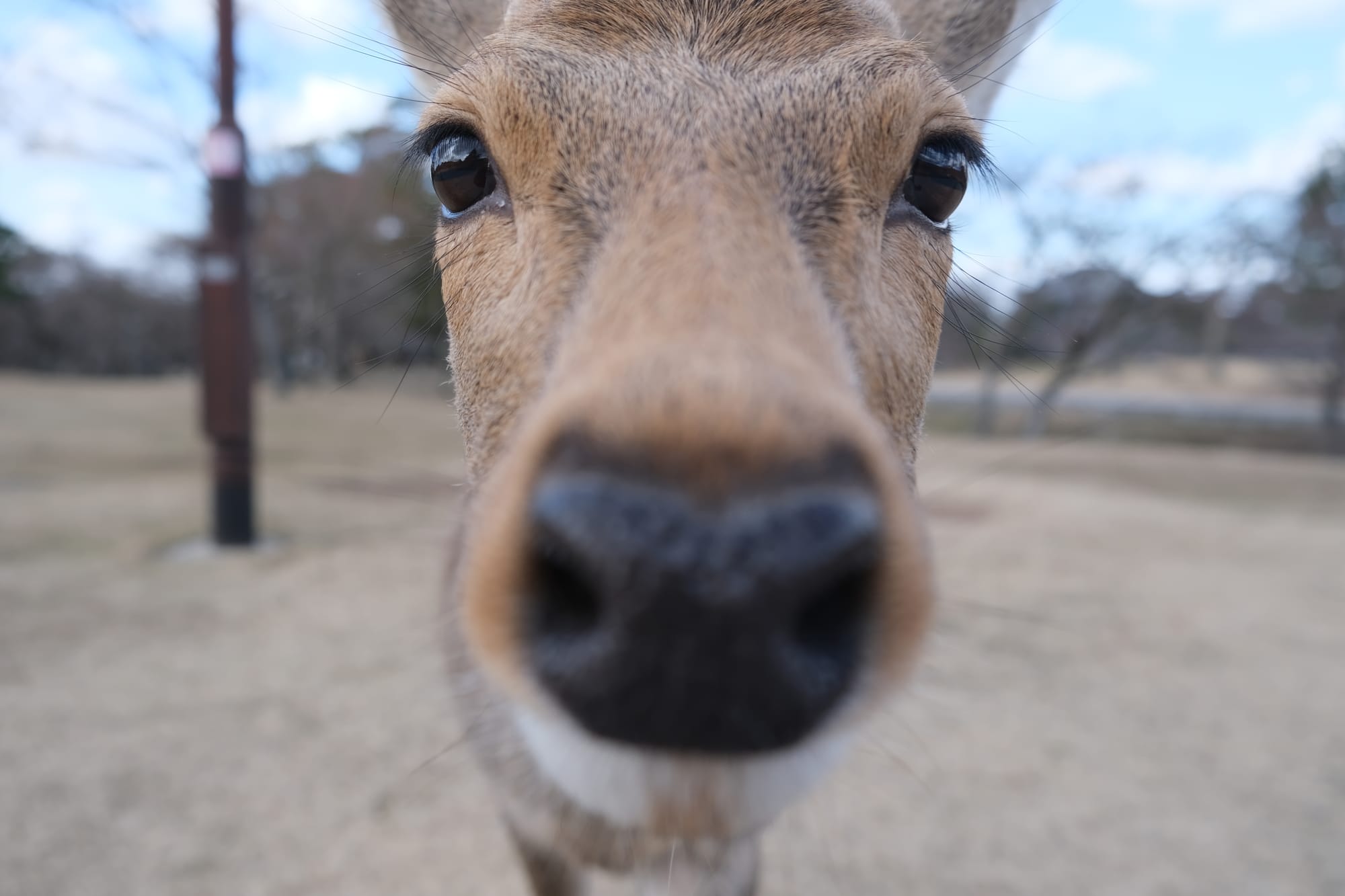
This cute deer was bowing at me and nudging me to ask for deer crackers and of course I obliged.
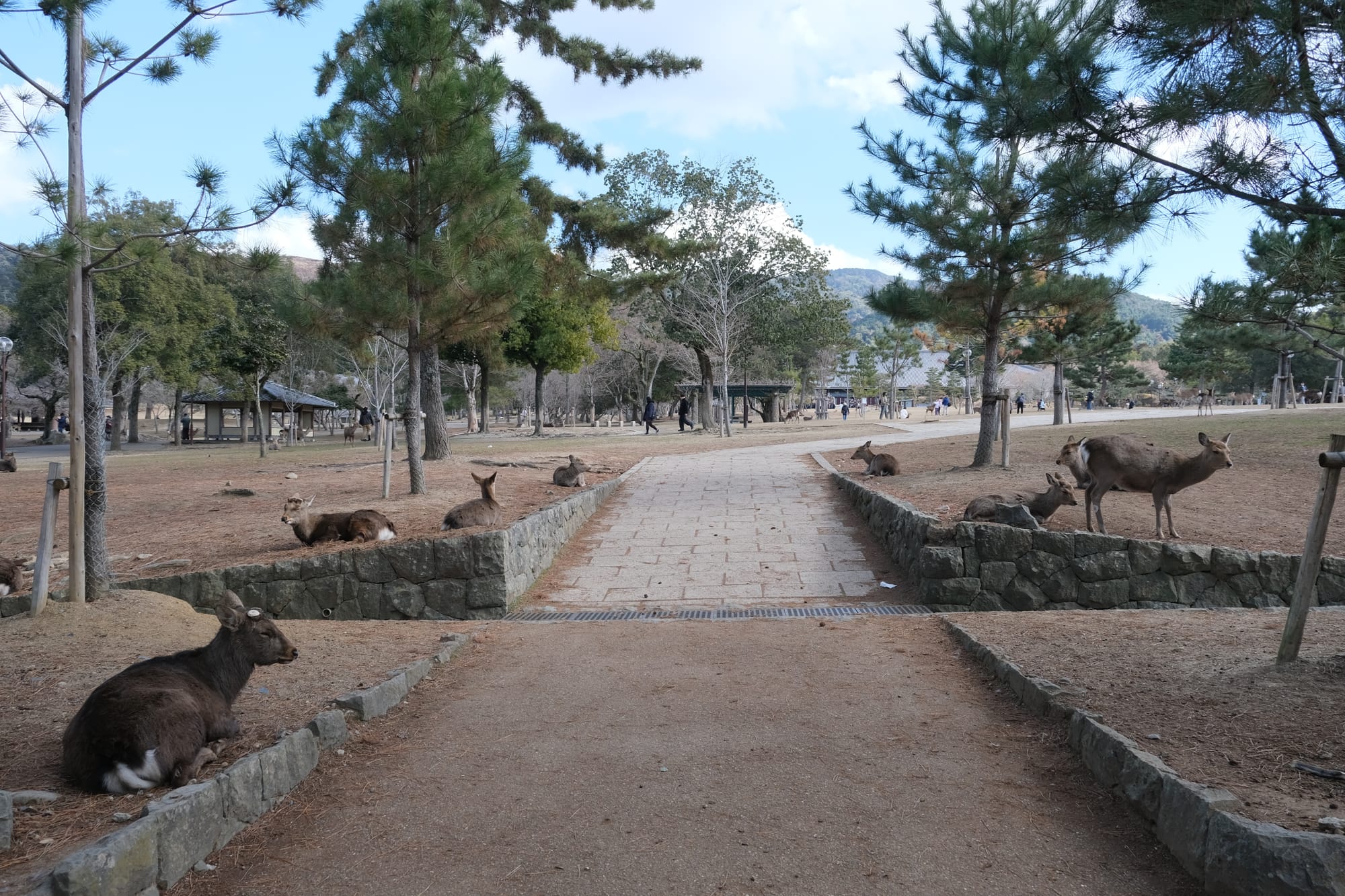
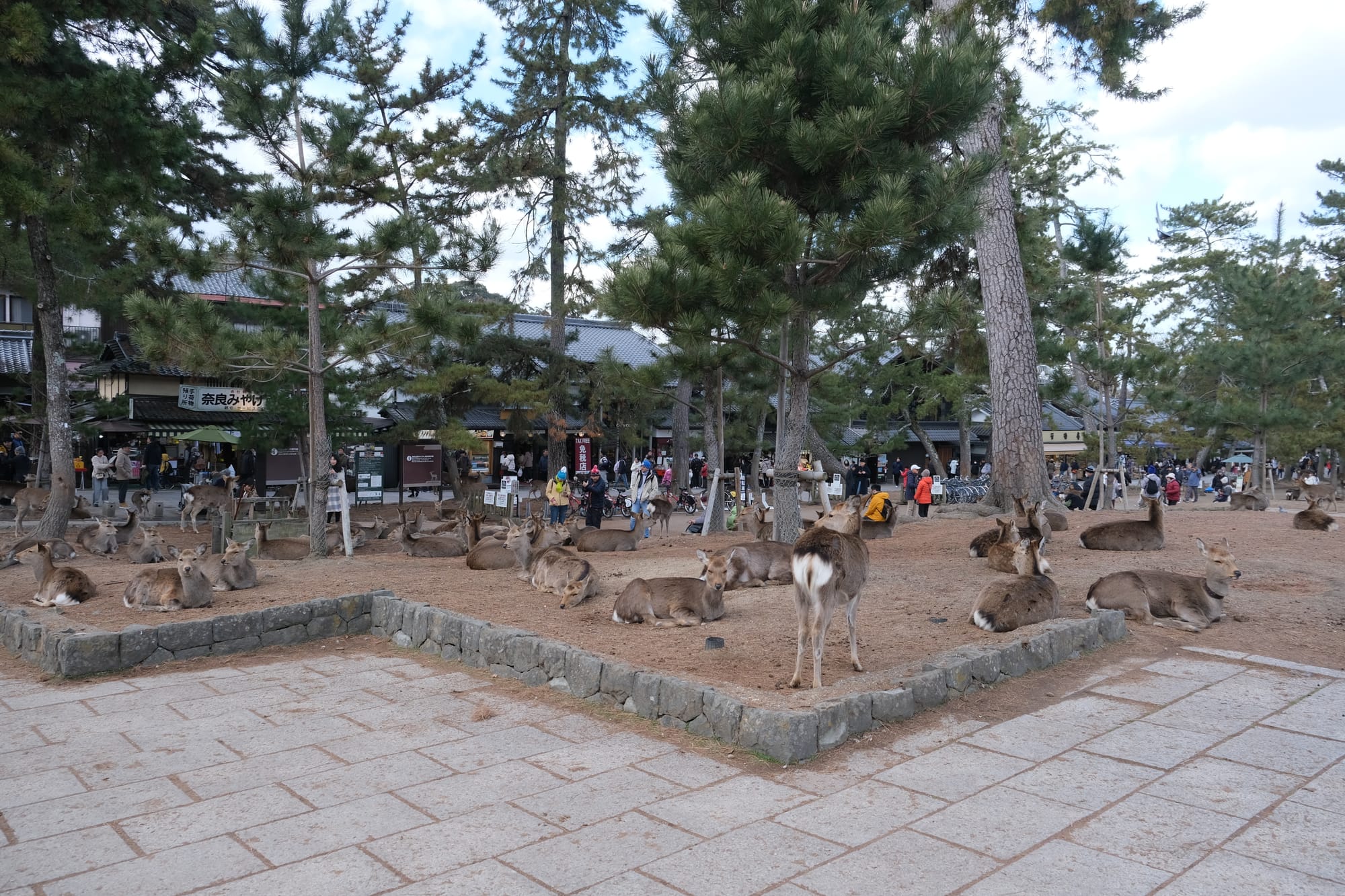
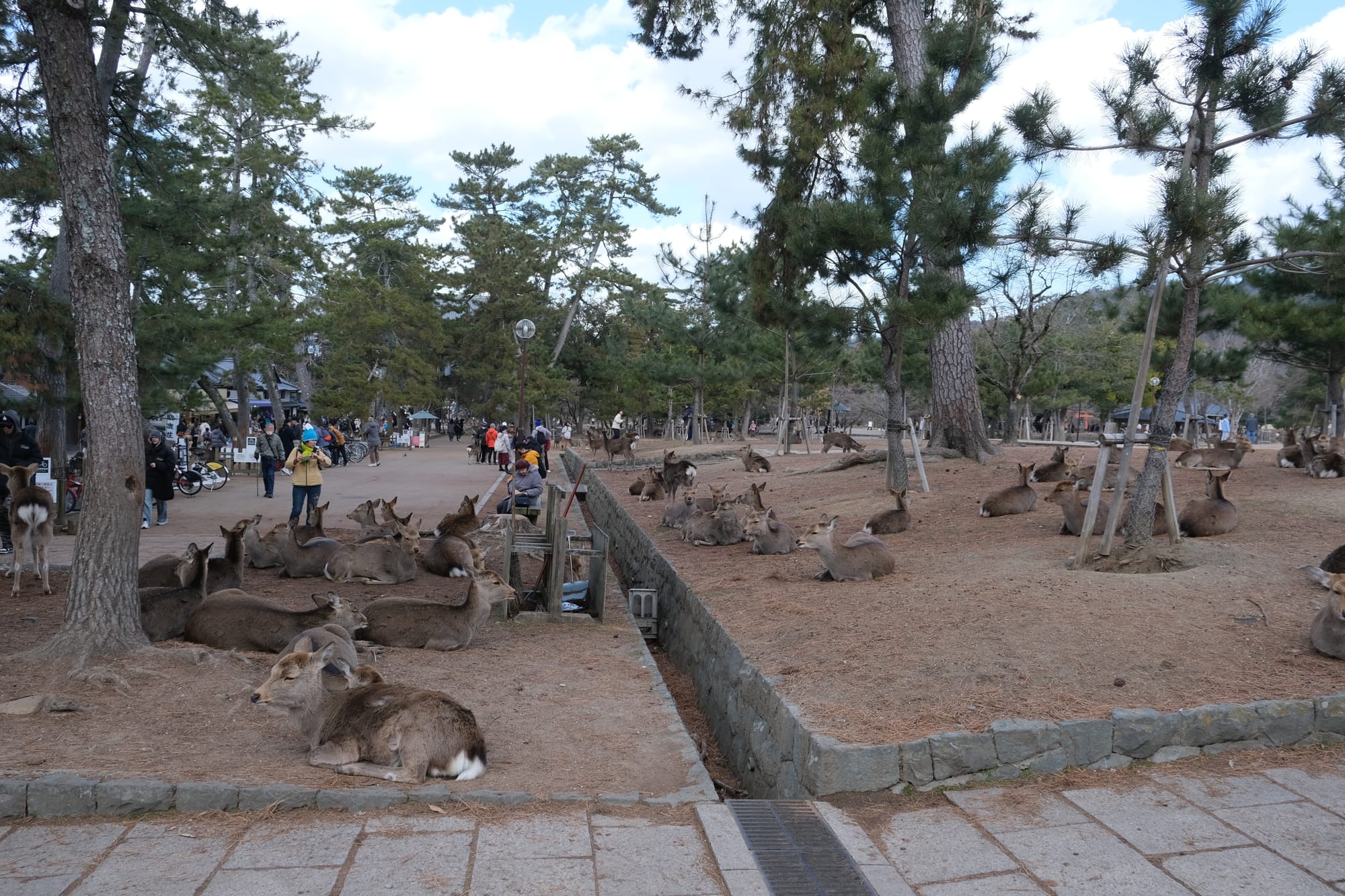
The park area closest to the souvenir shops was the most crowded by both people and deer. I think the deer knew that this is where people buy the deer crackers so many waited here for food.
Palace Historical Park
In the afternoon I went to the Heijo Palace Site Historical Park. This park is located on the west side of Nara (the deer park was on the east) so to get there I took a bus across the city. This historical park is located where the imperial palace used to be, back when Nara was the capital, over 1,300 years ago. None of the original buildings have survived and the palace grounds became rice fields after the capital moved to Kyoto. This, however, meant that the palace foundations were preserved, having since been excavated and studied by modern archaeologists. With these archaeological studies, the modern city of Nara has reconstructed some of the palace buildings using traditional and historically accurate techniques. Now the site is an upcoming tourist attraction.
I say upcoming as, while there were so many people visiting the deer park, the historical palace park was virtually empty. I saw only a handful of other tourists stretched over a huge park over one kilometer wide. There were only a few buildings reconstructed, and the rest of the park was still open flat fields so it took forever to walk from one interesting site to the next. Although, they do seem to be reconstructing more of the palace so maybe in the future there will be more to do here.
I walked through the reconstructed palace gate all the way to the Former Imperial Audience Hall. I could enter this building, and inside they had detailed exhibits about how the palace was constructed to be as historically accurate as possible. Nearby there was a couple of museum buildings with exhibitions showcasing various artifacts, as well as some rooms showing the unearthed foundations of the original palace.
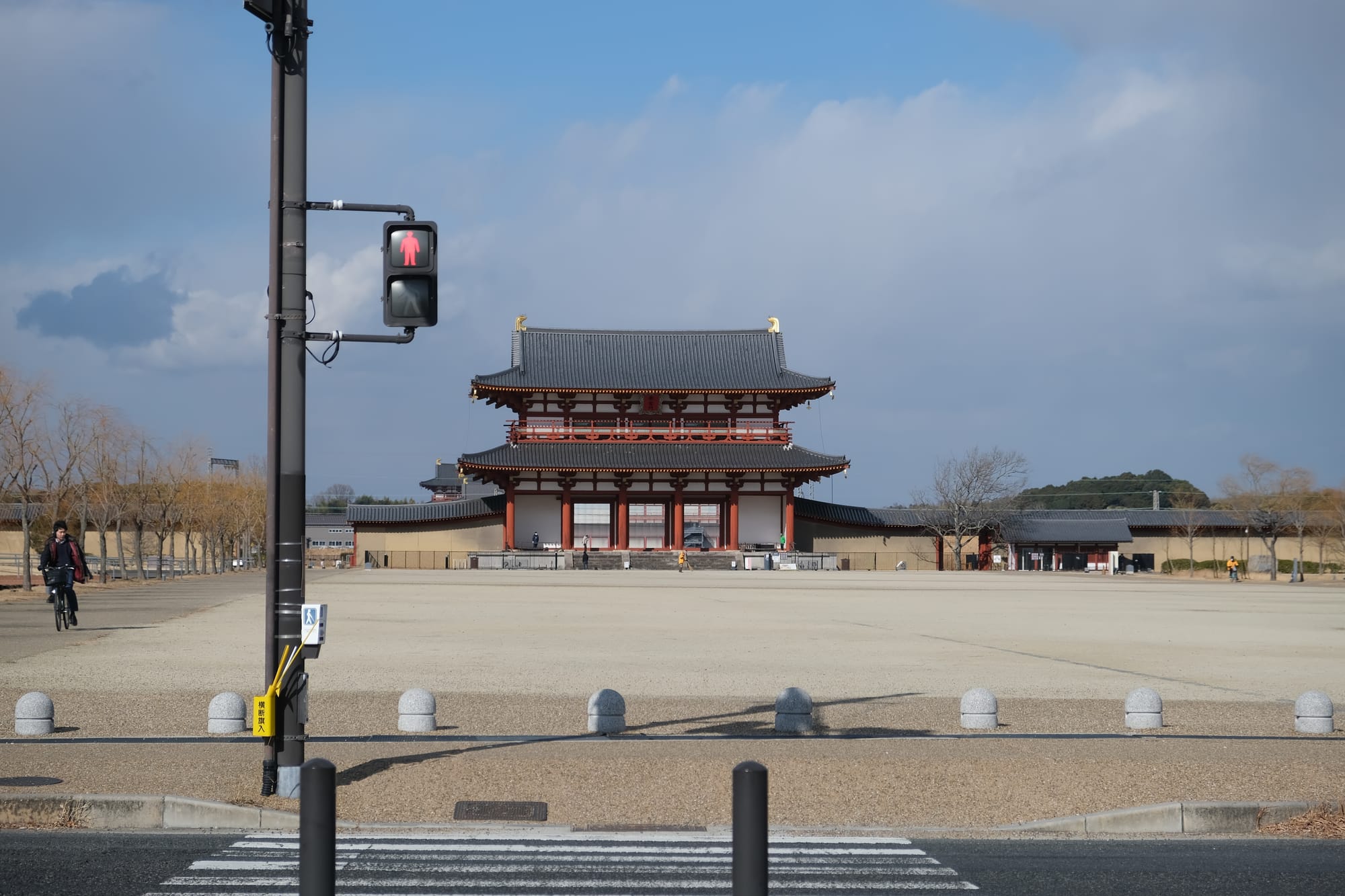

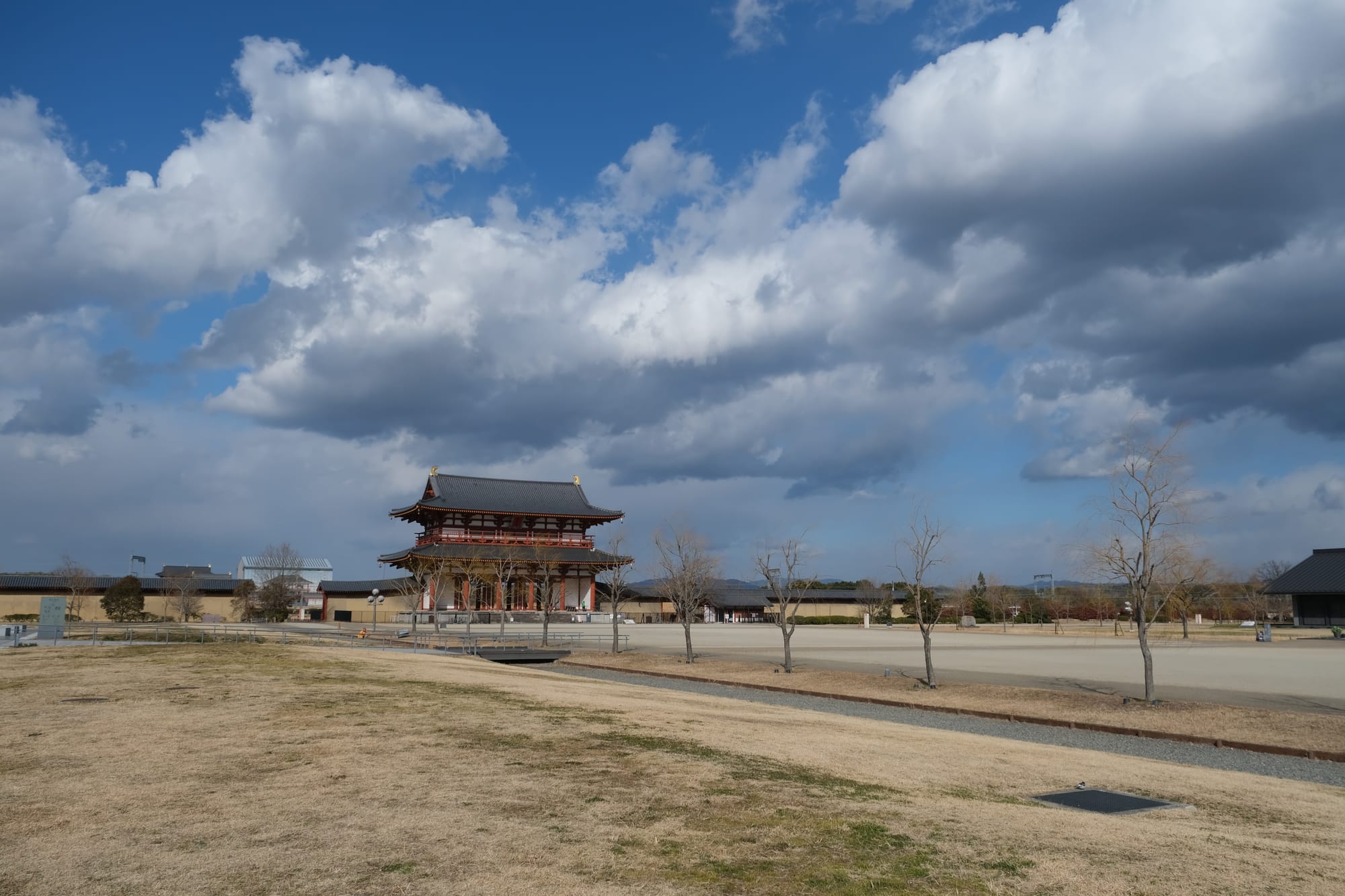
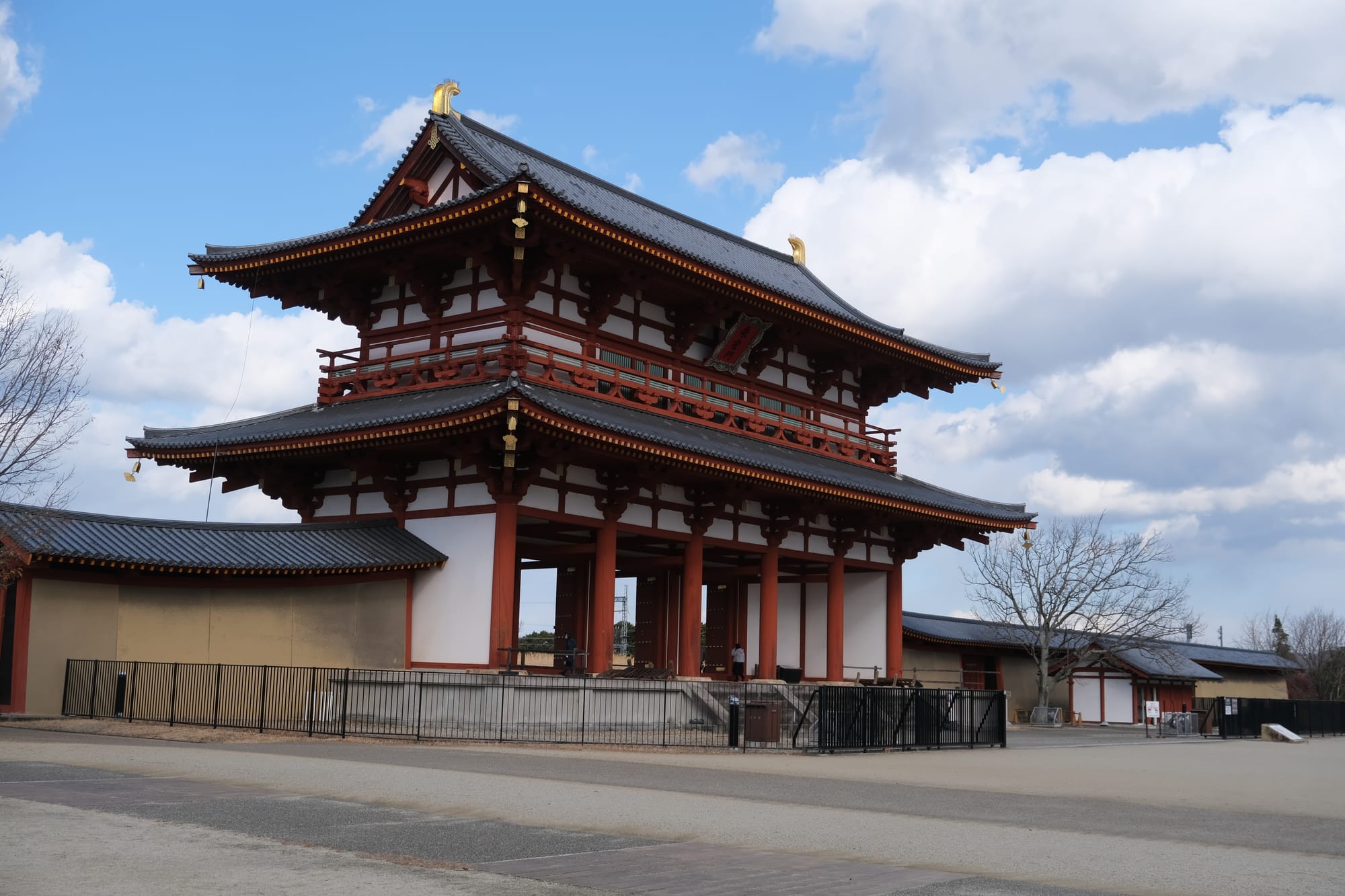

I walked to the Suzakumon Gate and entered into the historical palace grounds. Through the gate door I could see the Imperial Audience Hall some 800 meters away.
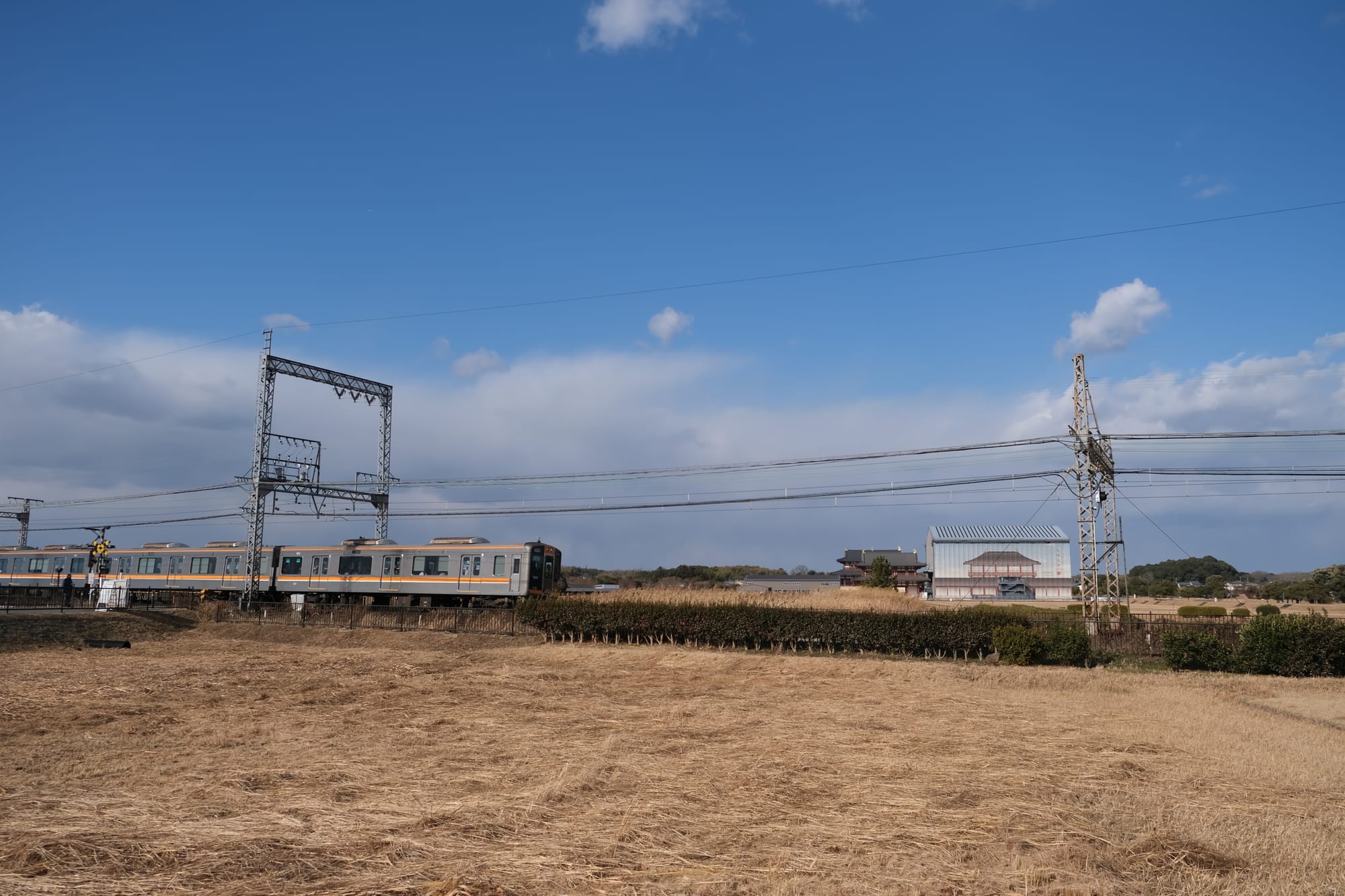
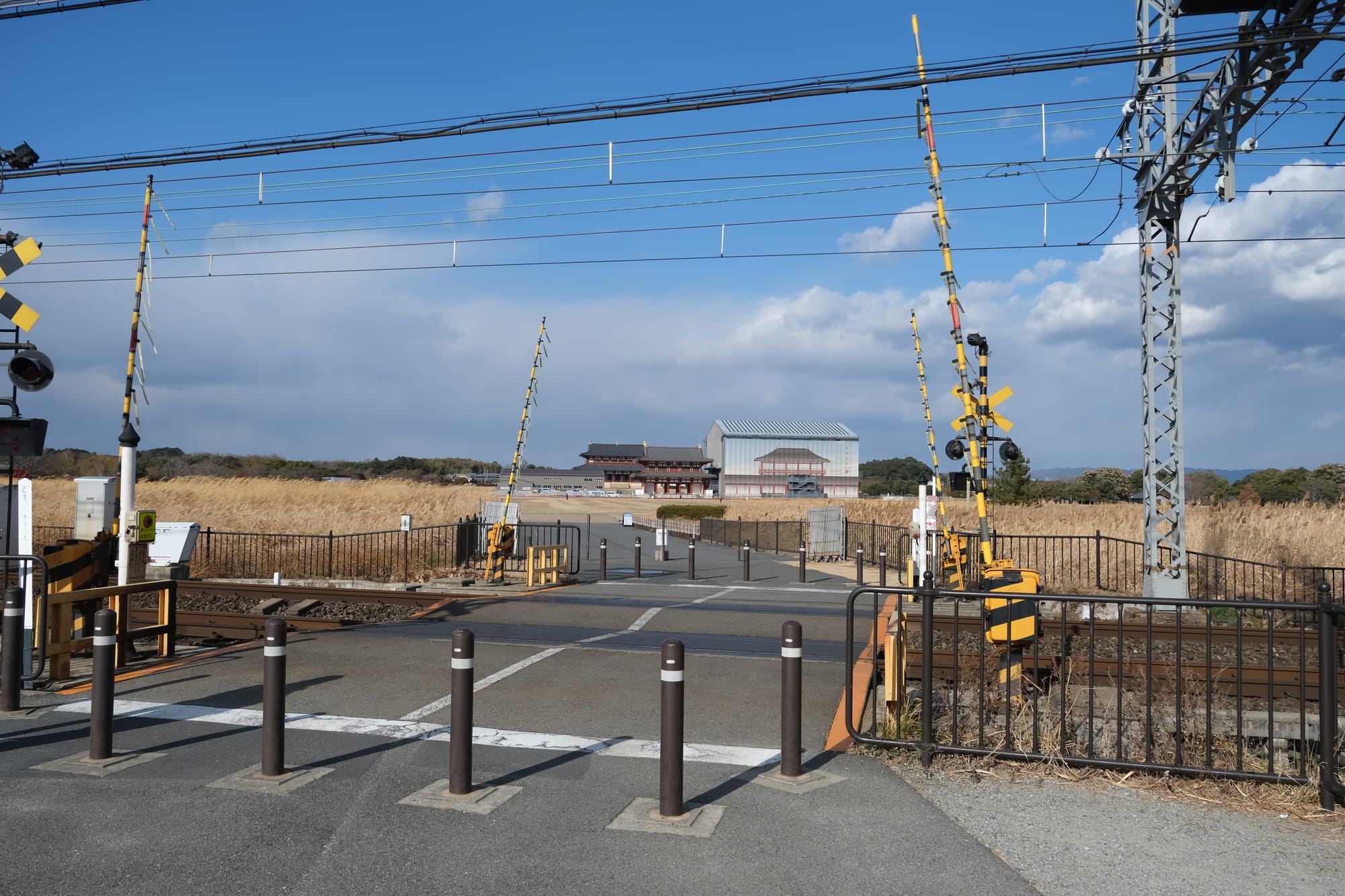
A train line went through the park and I needed to wait for a train before crossing the tracks.
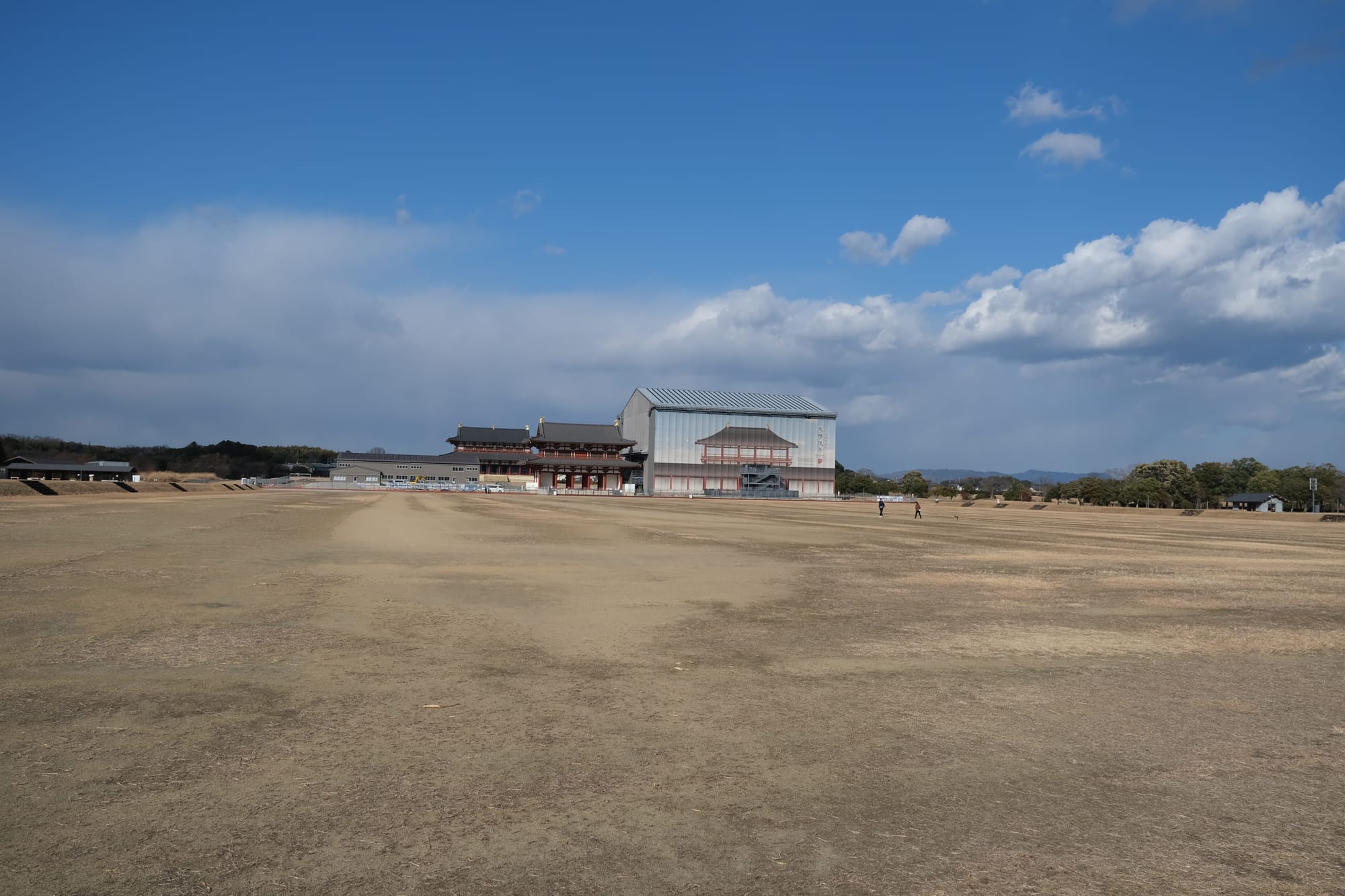
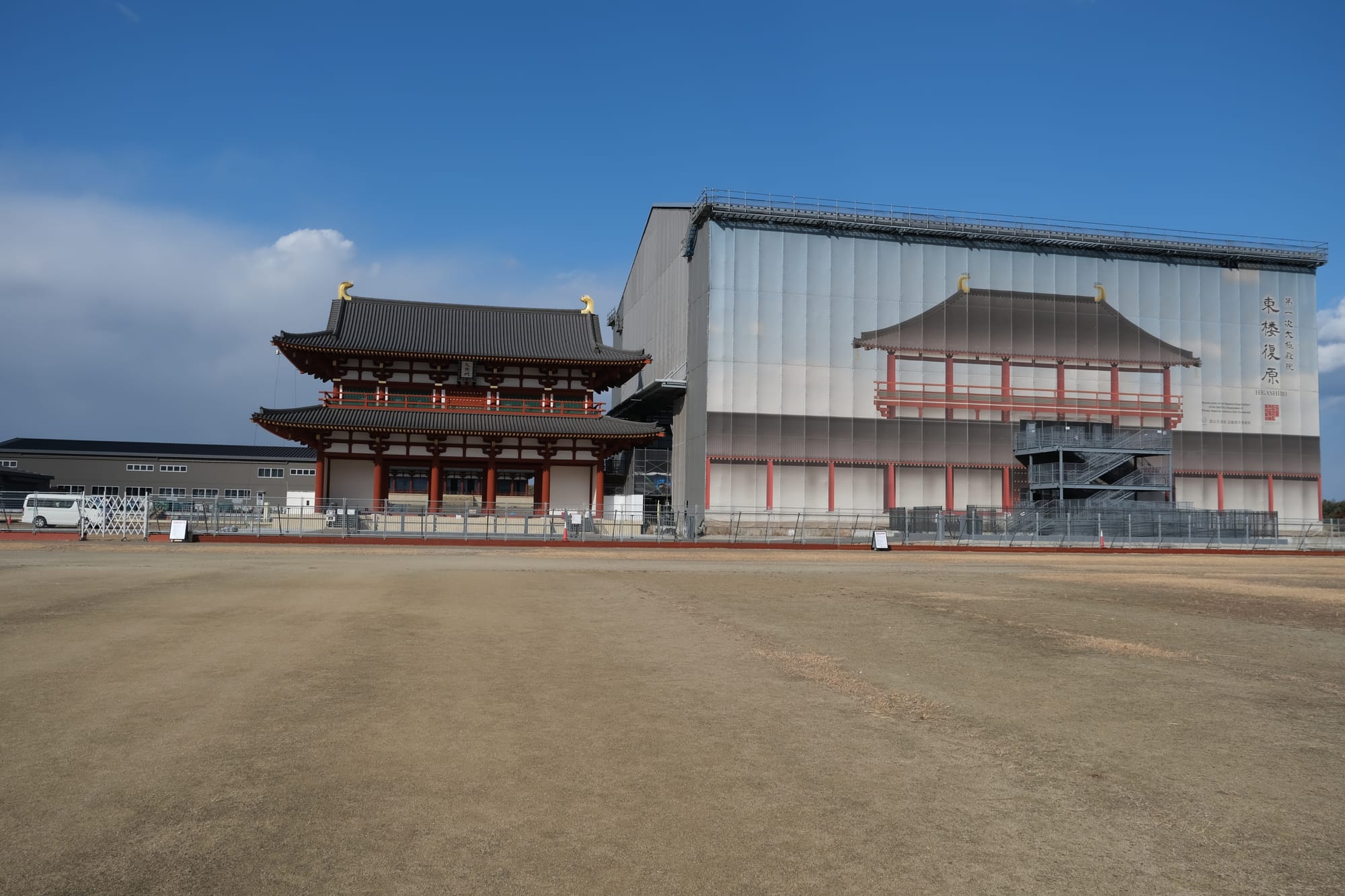
The Former Imperial Audience Hall is visible in the distance, in-front of it is the reconstructed south gate, and what I'm guessing is the construction site for a new palace building.
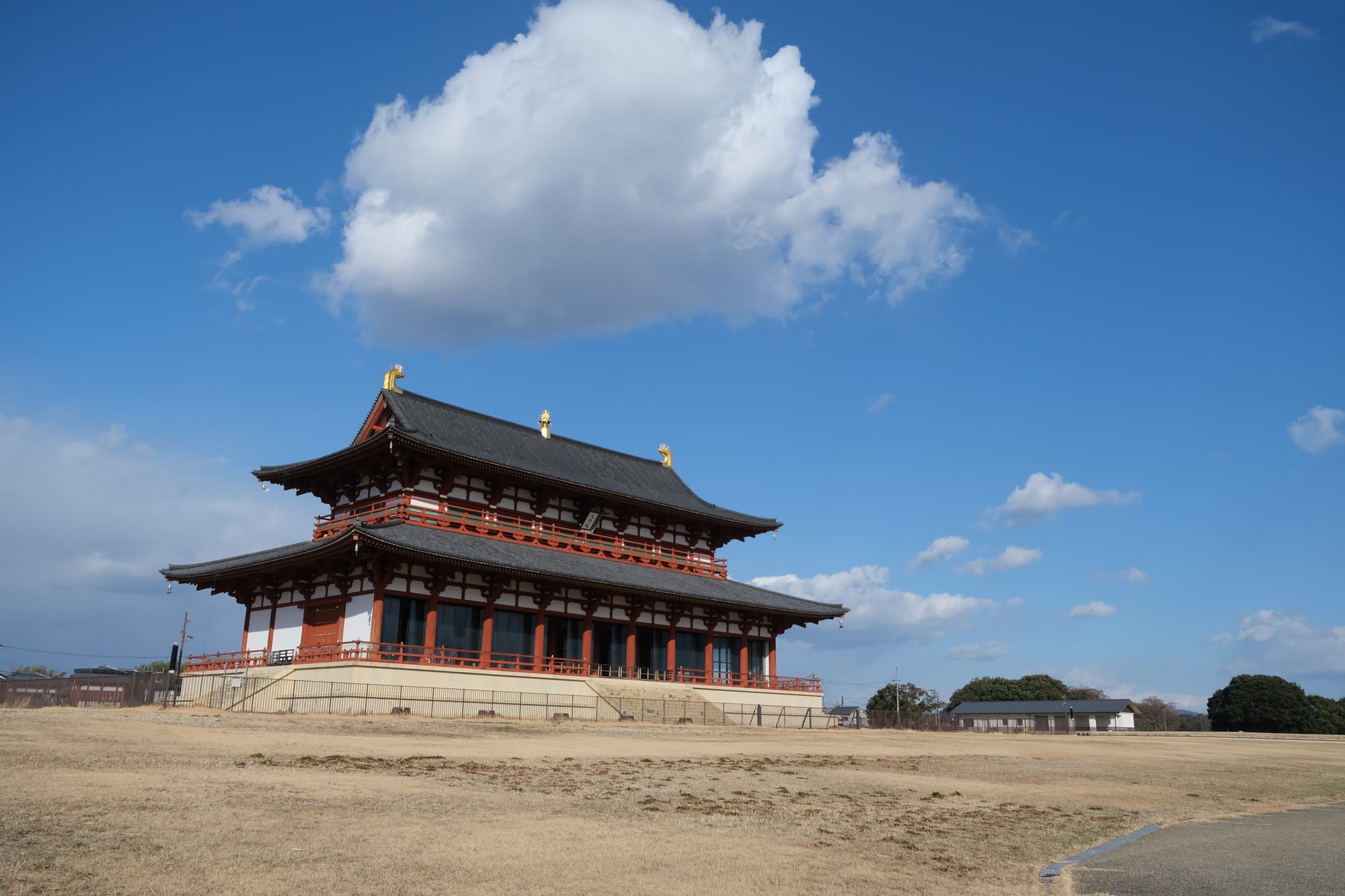

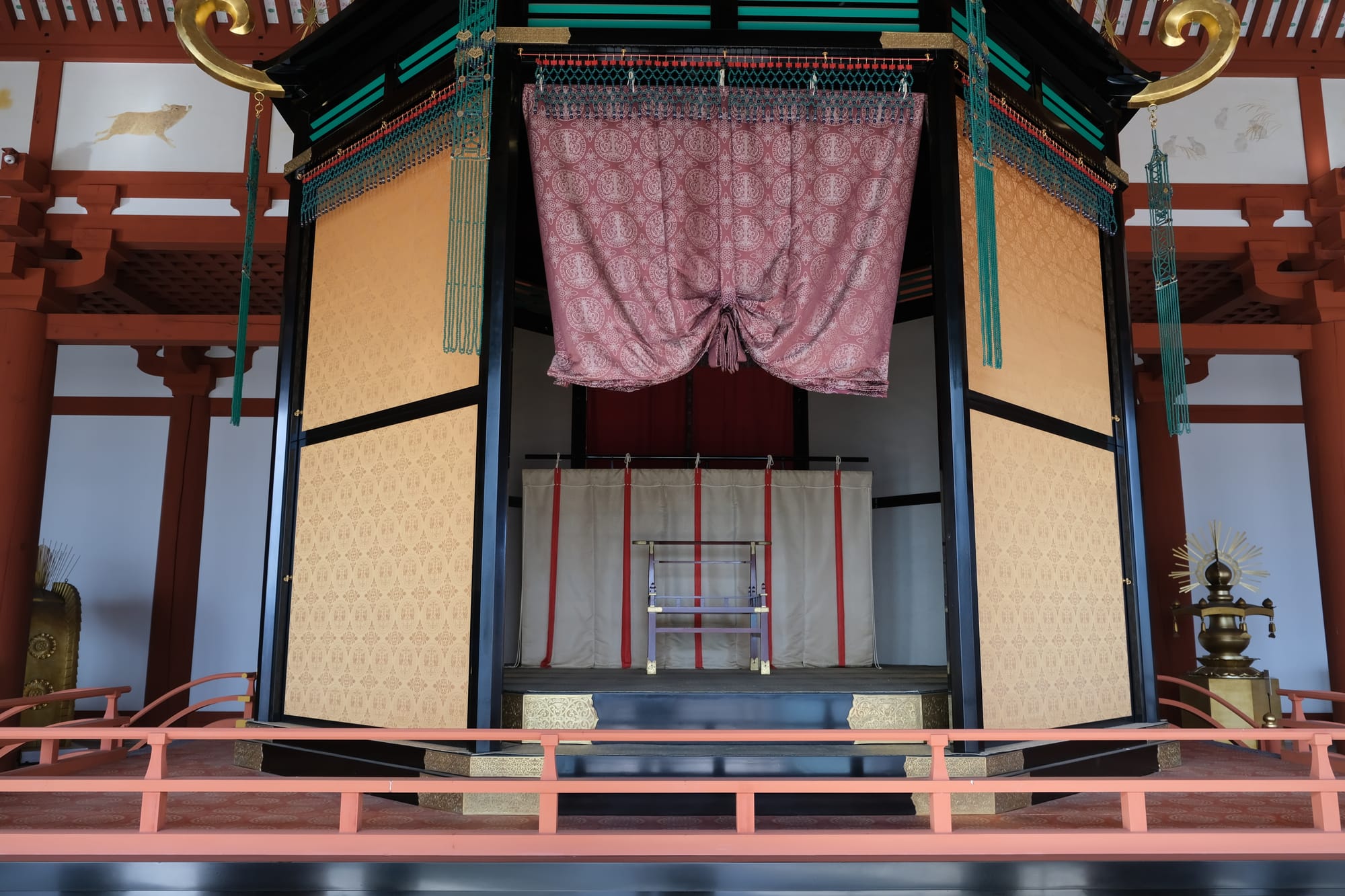
The interior of the Former Imperial Audience Hall with the imperial throne.
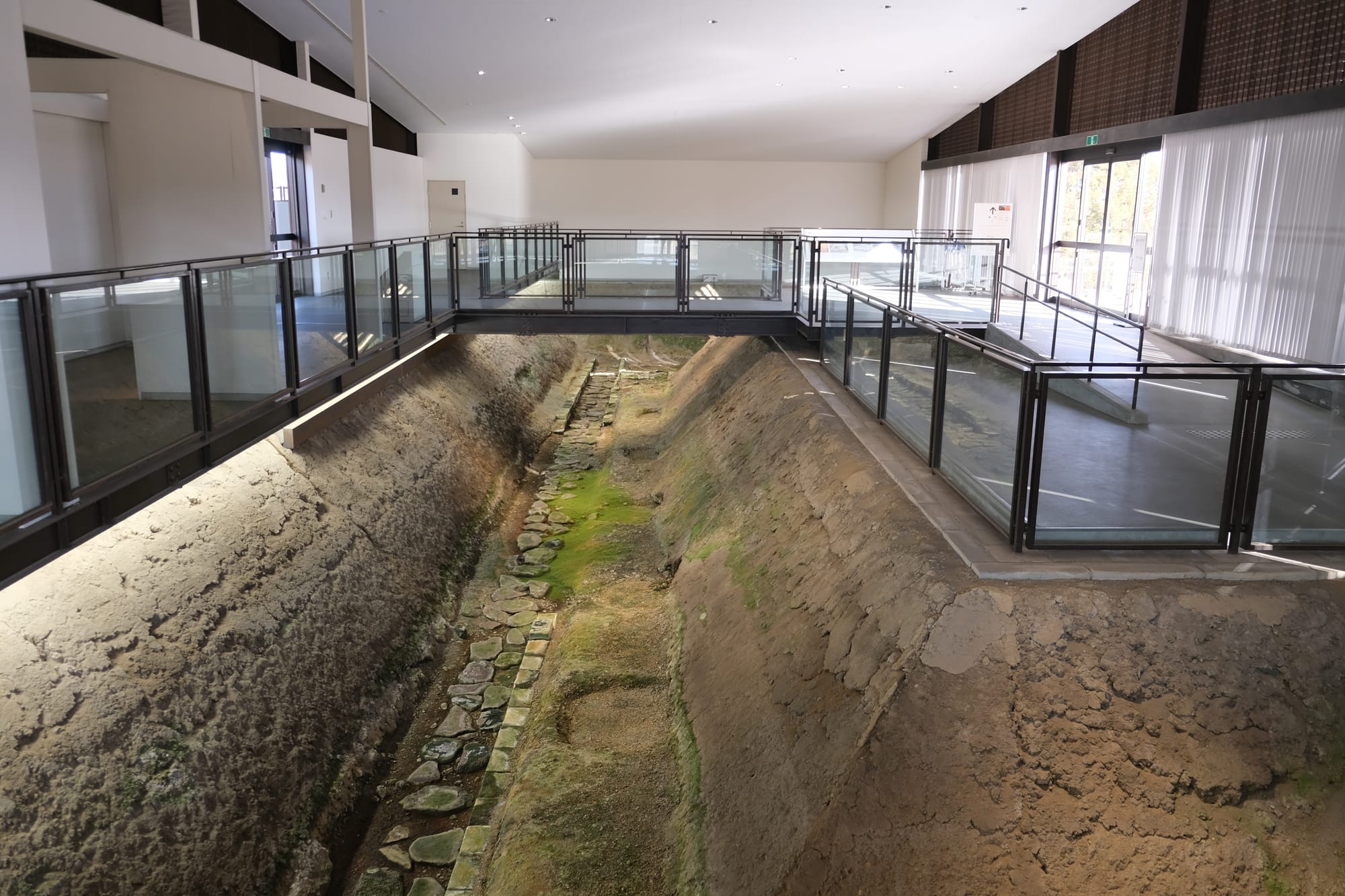

This museum building showcased some of the excavated foundations of the original palace. These holes, unearthed in the bedrock, are where the foundational posts were secured to build the palace buildings. The buildings were often rebuilt and so the holes sometimes overlapped. Archaeologists can use this information to understand how the palace evolved over time.
By the late afternoon I was quite tired after having spent most of the day walking, first through the deer park and then through the historical palace park. So I decided to head back to the train station. I walked back along the historical park, then through a residential area of Nara before passing through the business district again. At the train station I had some dinner and rested a bit before catching a train back to Kyoto.
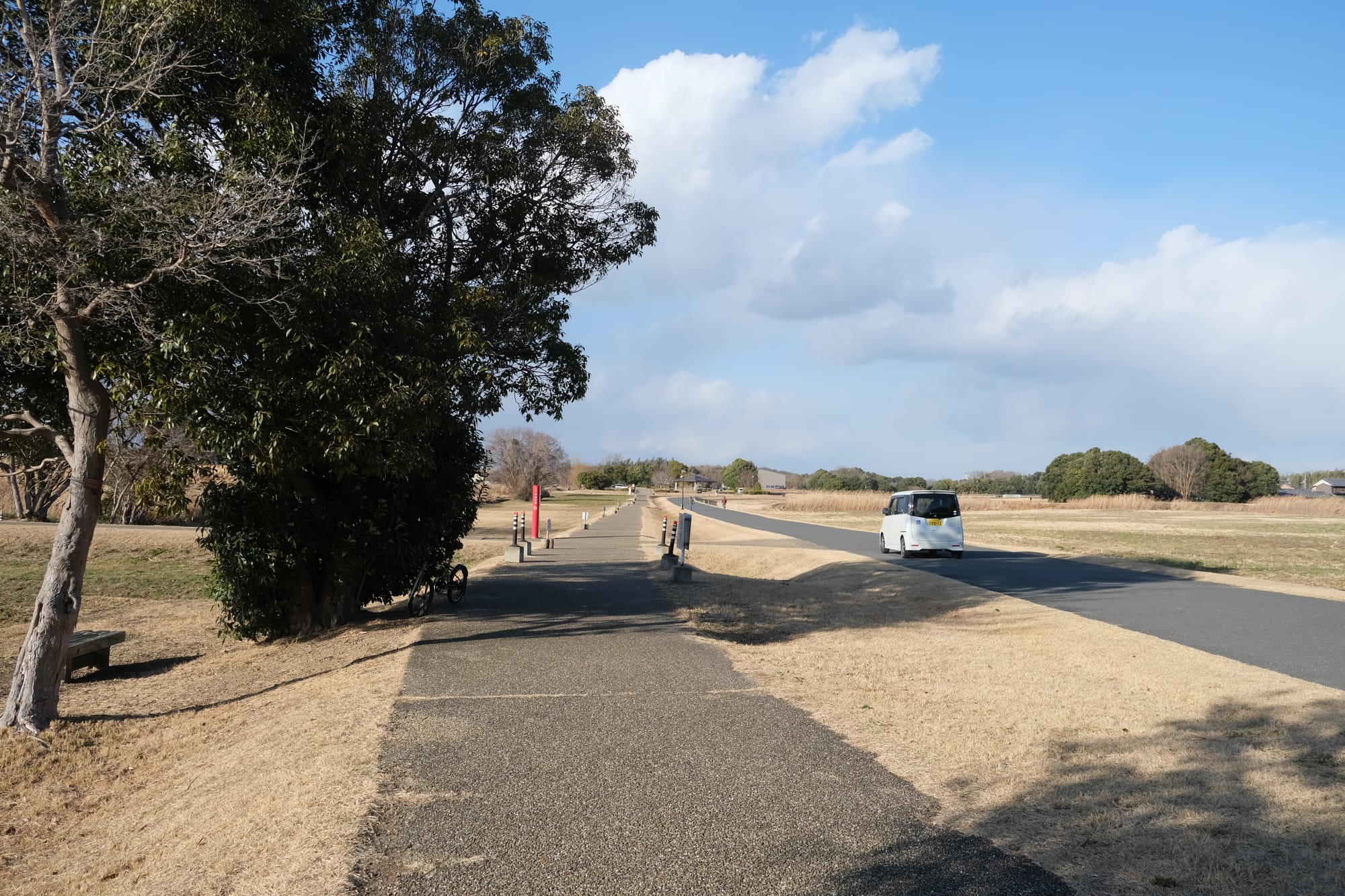

The first picture I took as I was leaving the historical park, the second photo was taken while walking through a residential area of Nara where there seemed to be a community garden.

Nara was really lovely and, in one day, I felt like I saw the best parts of it. The highlight really was seeing the deer and interacting with them, it was the main reason I wanted to visit this city. I loved spending the morning in this park with so many animals all around. It reminded me of Tidbinbilla in Canberra except with deer instead of Kangaroos.
Thanks for reading – Edward
Written 9th of June 2025