Noboribetsu Jigokudani Valley
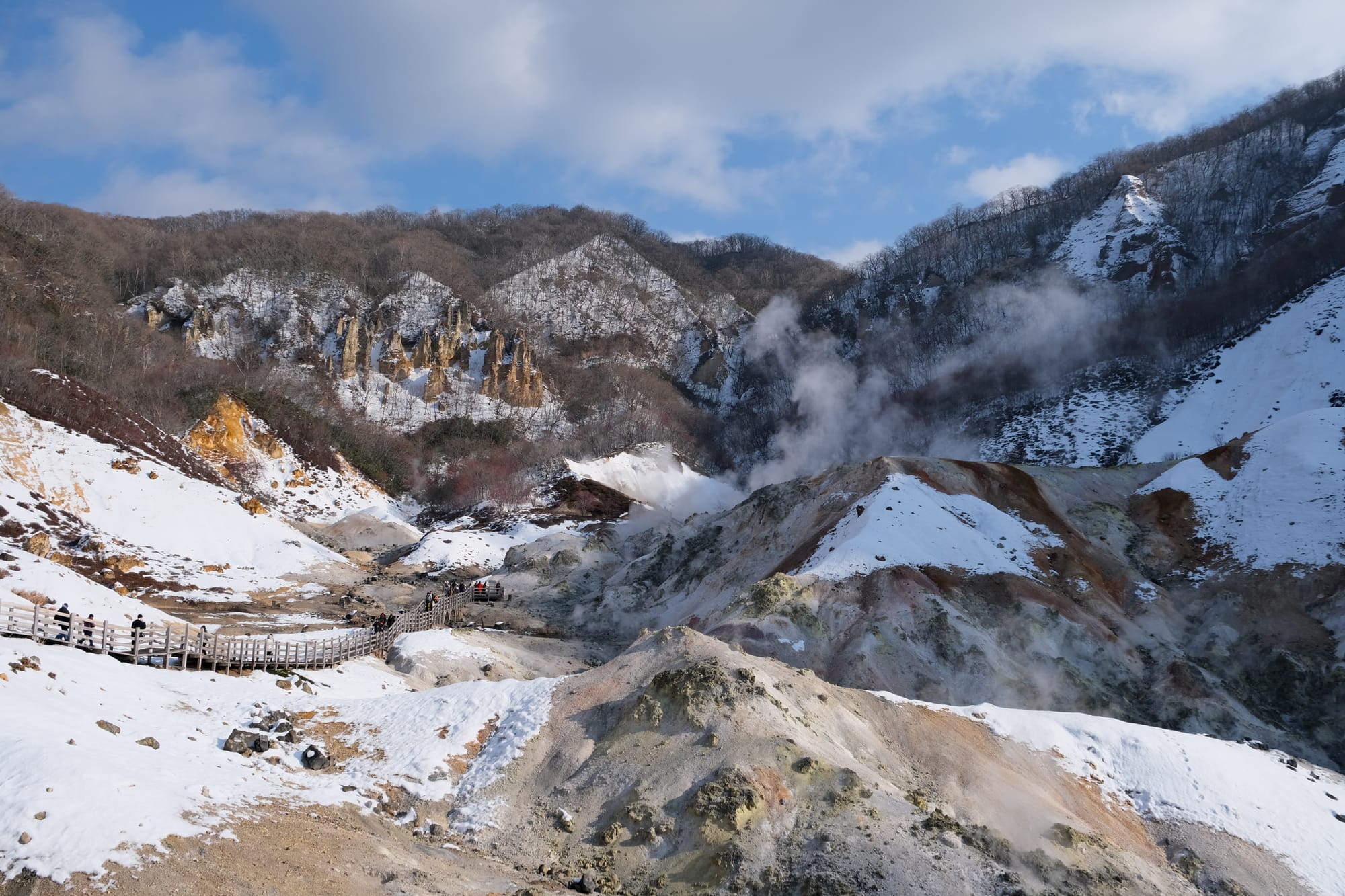
Jigokudani means "hell's valley" and it is commonly used in Japan to refer to an area where volcanic steam vents emit from the Earth's surface. At Noboribetsu city there is perhaps one of the most famous of these valleys along with many hot spring resorts.
Noboribetsu is located on the coast of Hokkaido, about an hour by train from Sapporo and on the way to Hakodate, where the shinkansen station is with the tunnel back to Honshu. I decided to stop here on my way back to the main island to give myself an opportunity to explore a little more of Hokkaido.
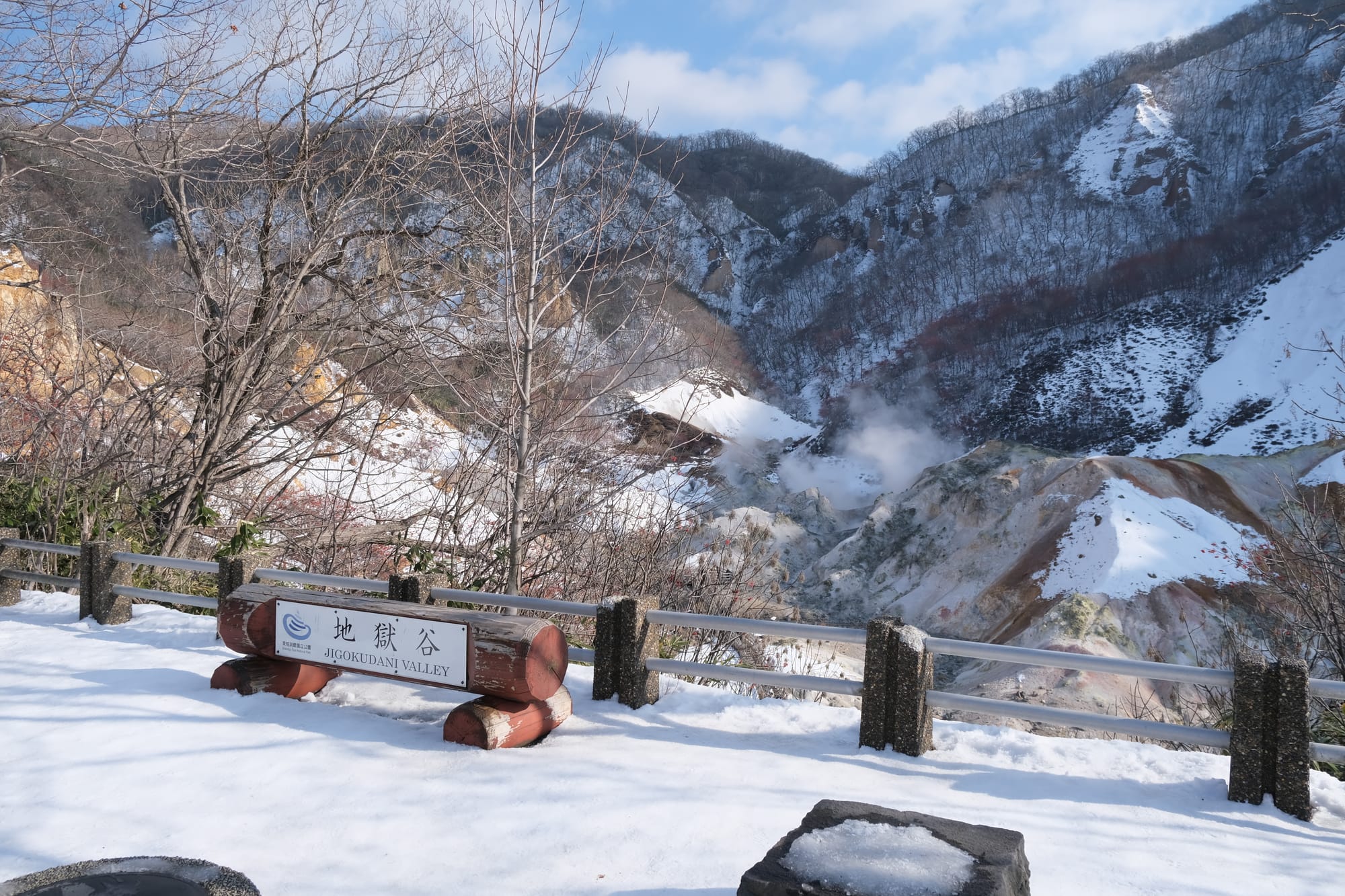
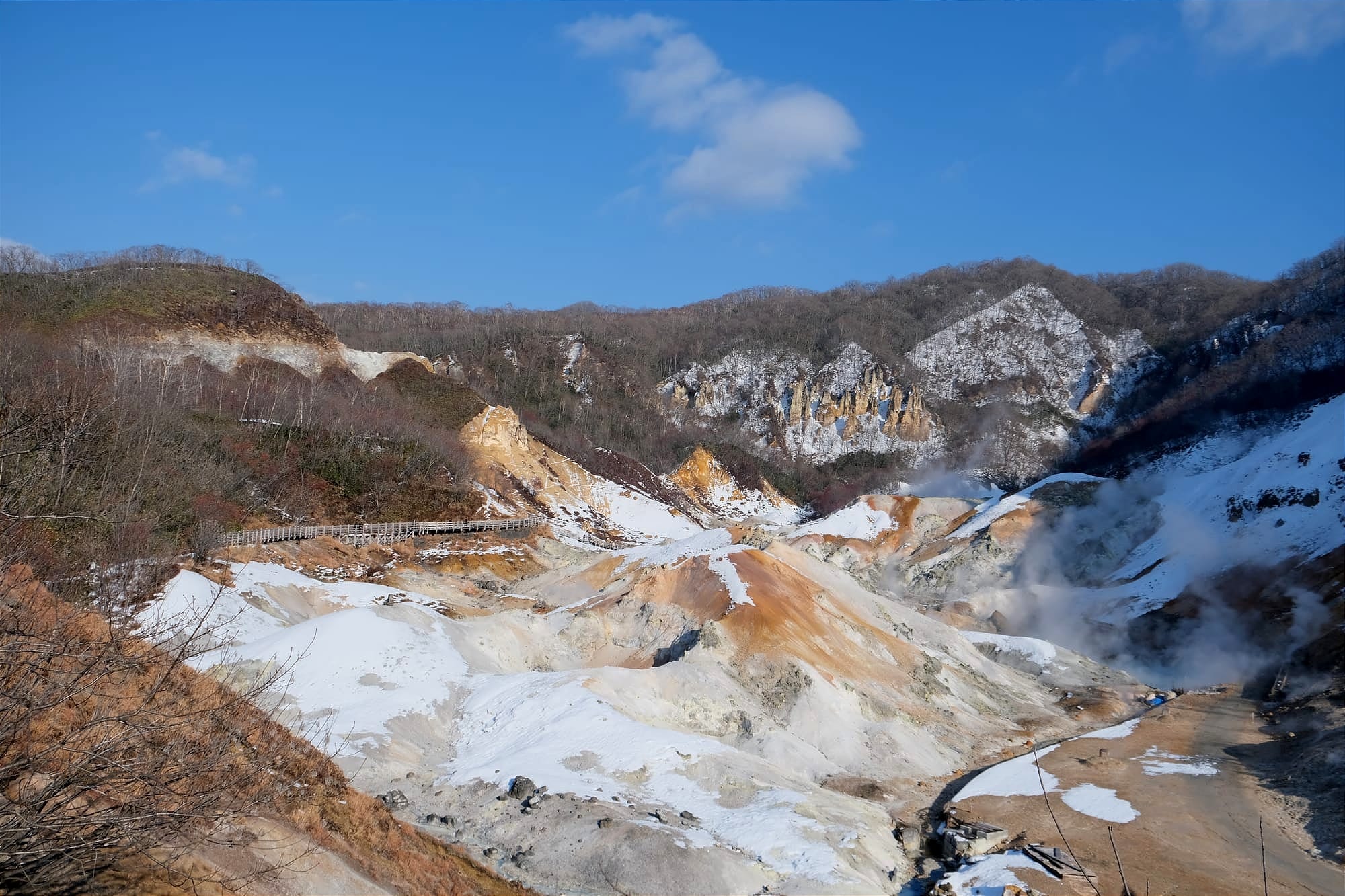
I had one night booked in a hostel in Noboribetsu. I arrived to the town early in the morning and, leaving my bag at the train station, took a bus to the Onsen resort area. There were many hotels with hot spring baths here but I was interested in none of them. Instead, my focus was on the Jigokudani valley where volcanic steam rose from the ground as if from the gates of Hell. The main valley, with the steam vents, was visible from a number of view points and there was a wooden board walk going through the valley. I visited this valley four times during the day, doing other activities in-between. The valley was the focus of my photography. I especially loved seeing this place in the winter time as the snow added a beautiful layer to what otherwise would have been a rocky valley.
The first thing I did when I arrived was walk from the bus stop to the lookout.
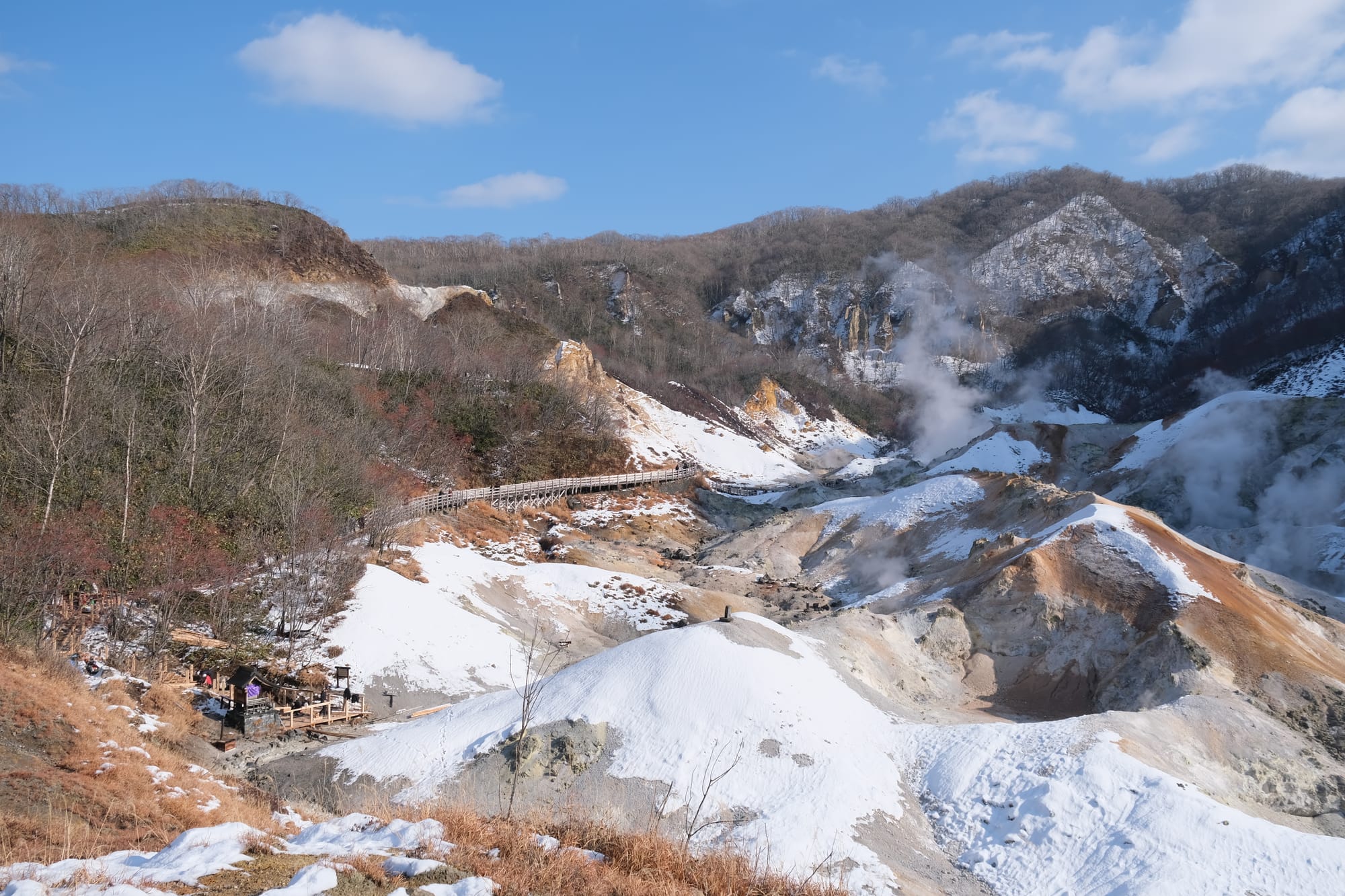
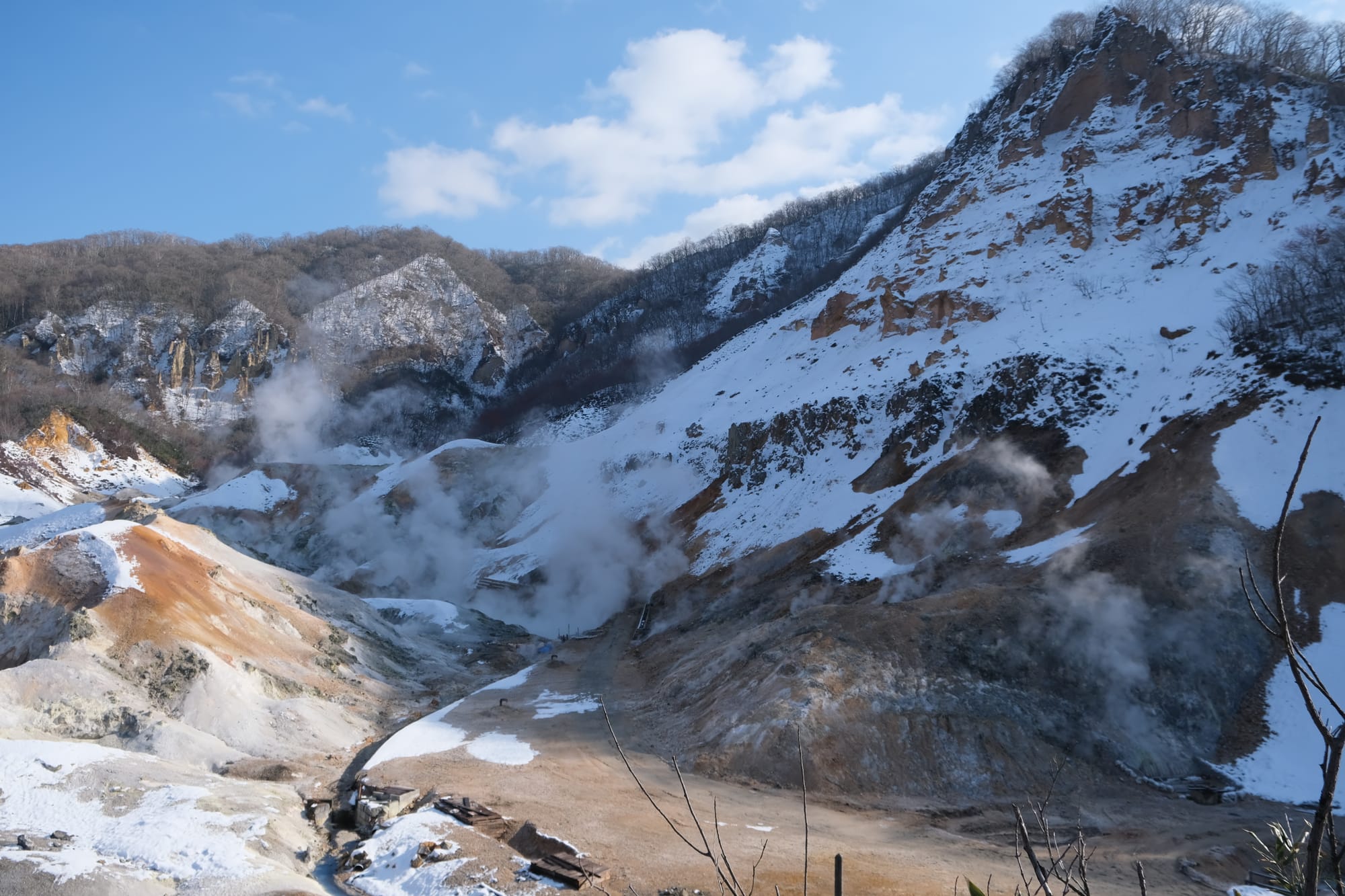
The first view I had of Jigokudani, Hell valley.
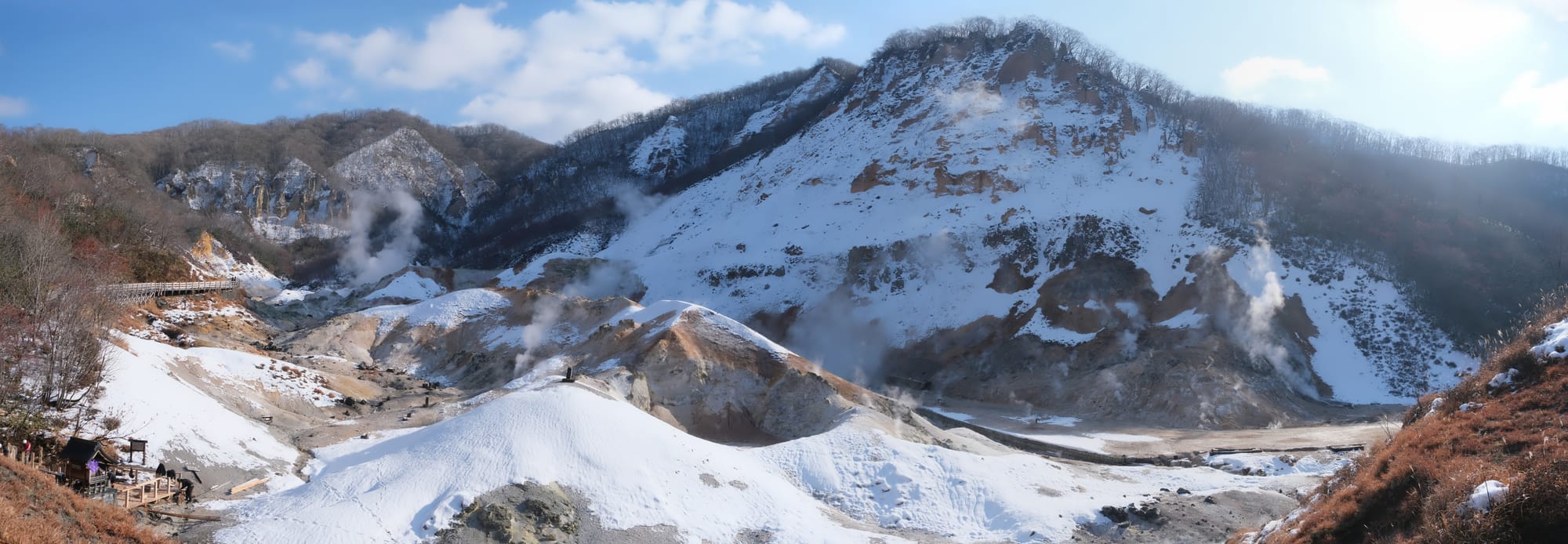
I only went to the main lookout on my first visit and then returned to the resort area where I found a place to have some breakfast.
When I returned, I spent a good hour fully exploring all the open trails. Mostly this was just the board walk and a short path to a snow covered park. There were other trails but these were covered in snow and seemingly closed for the winter. I didn't mind too much as I spent my time taking many photos of the valley.
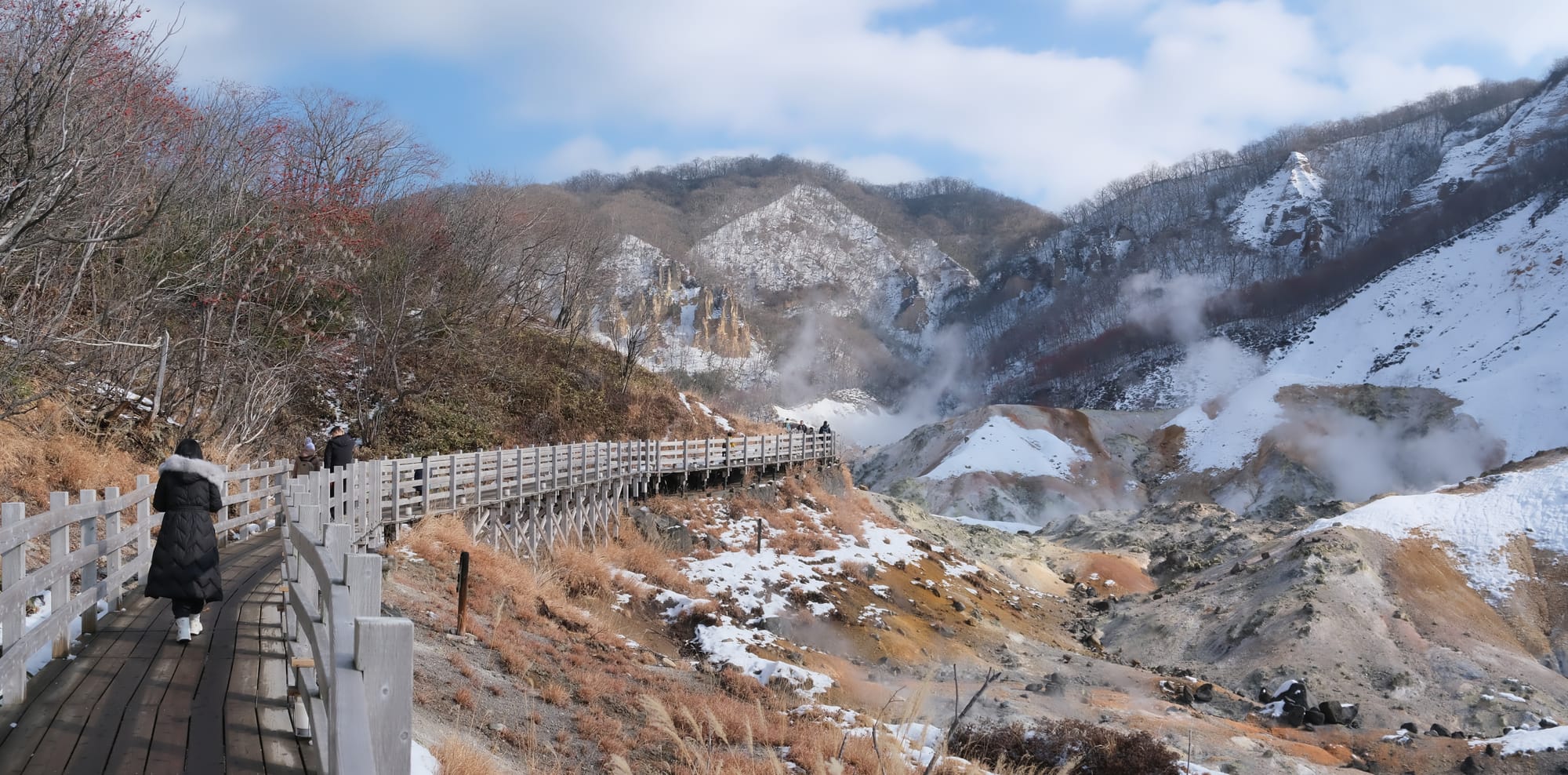
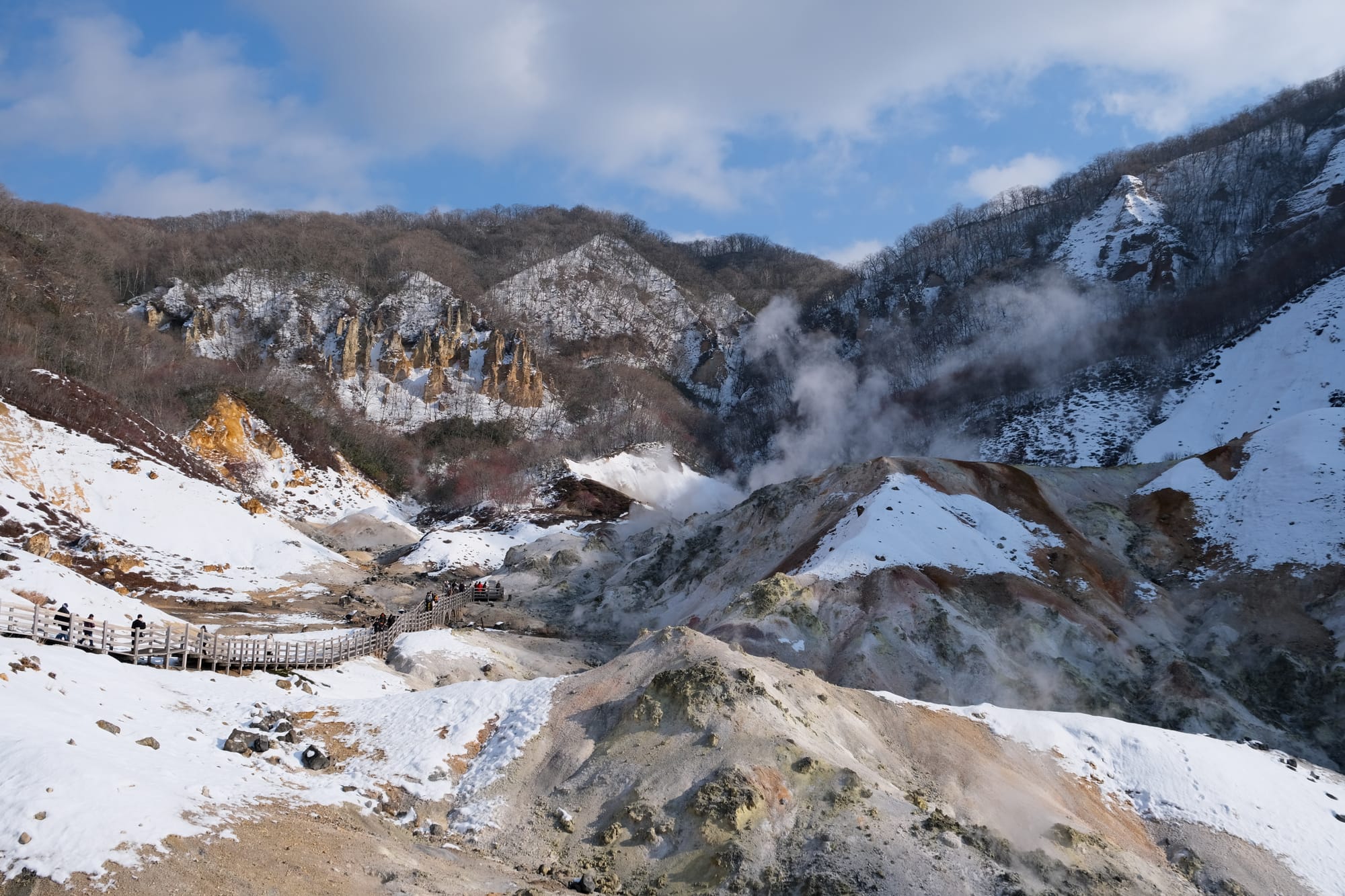
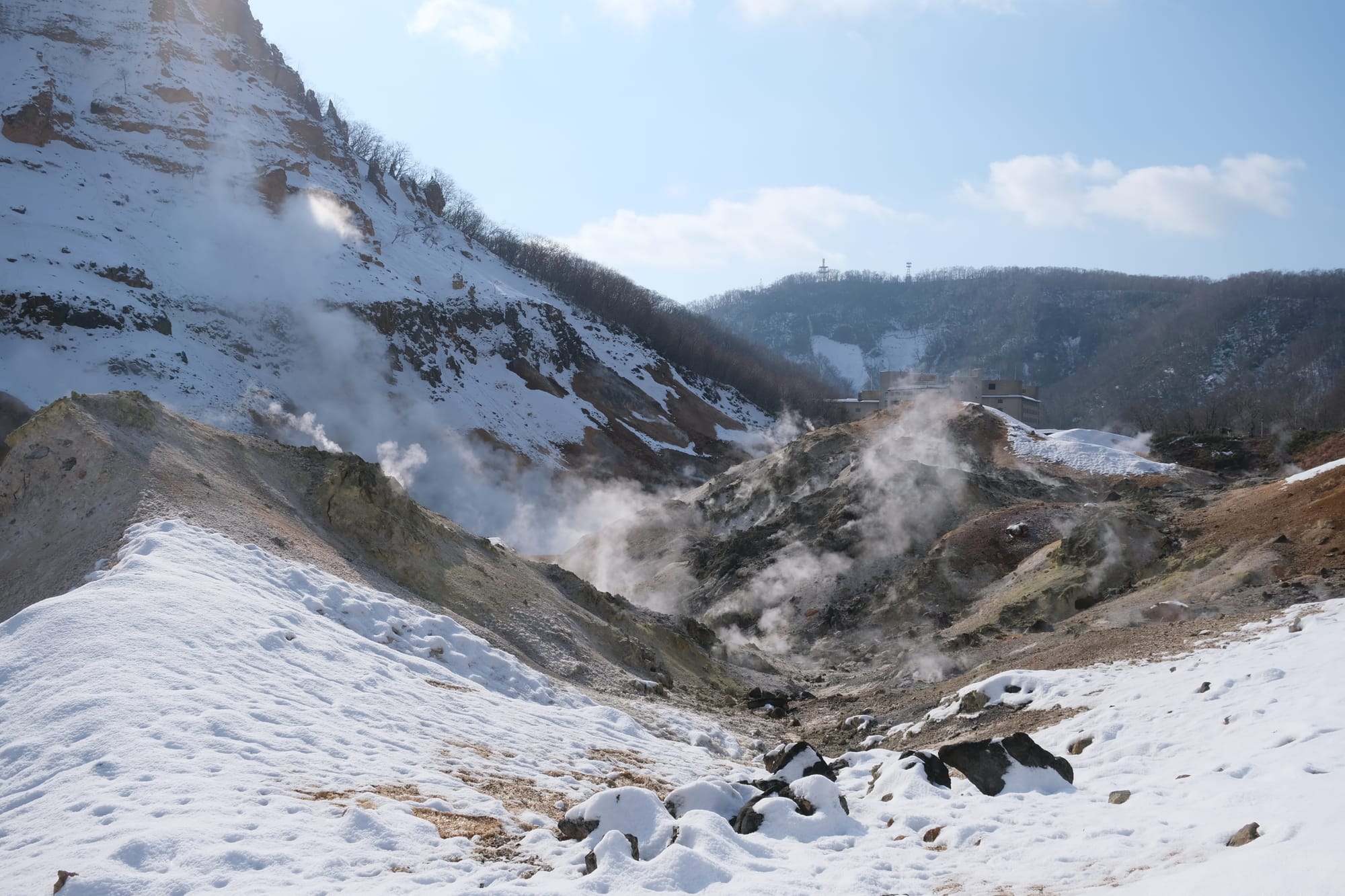
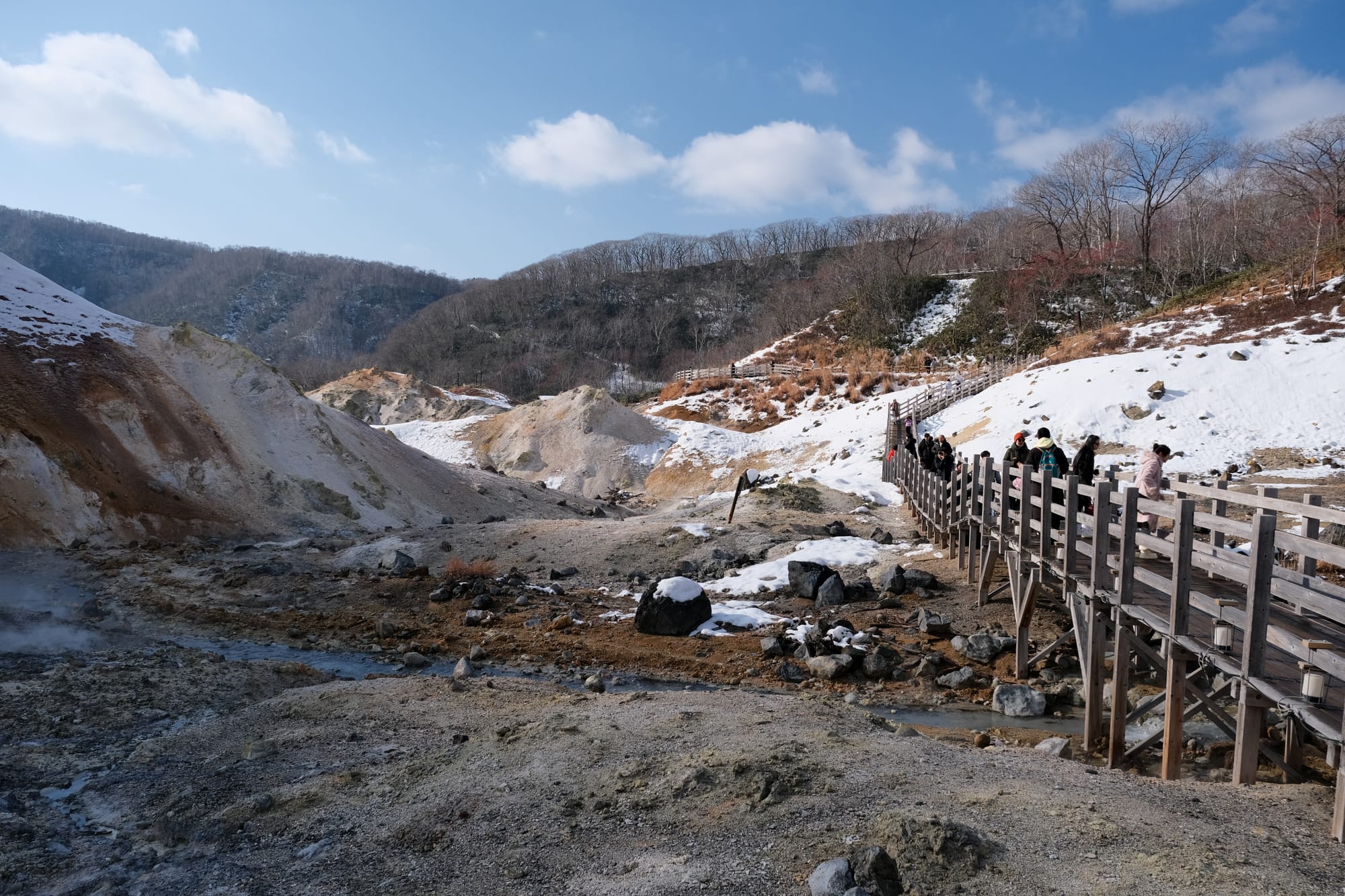
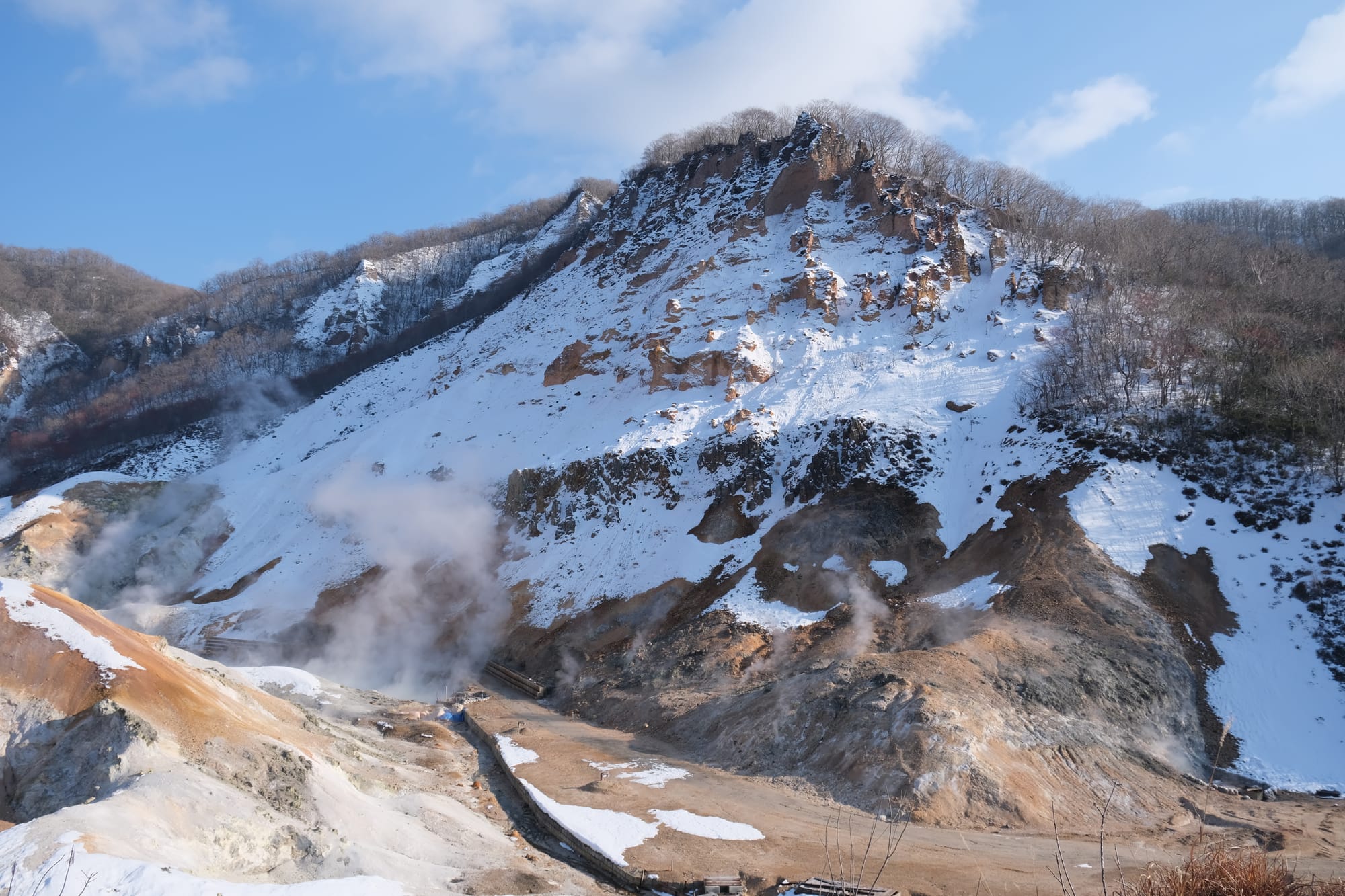
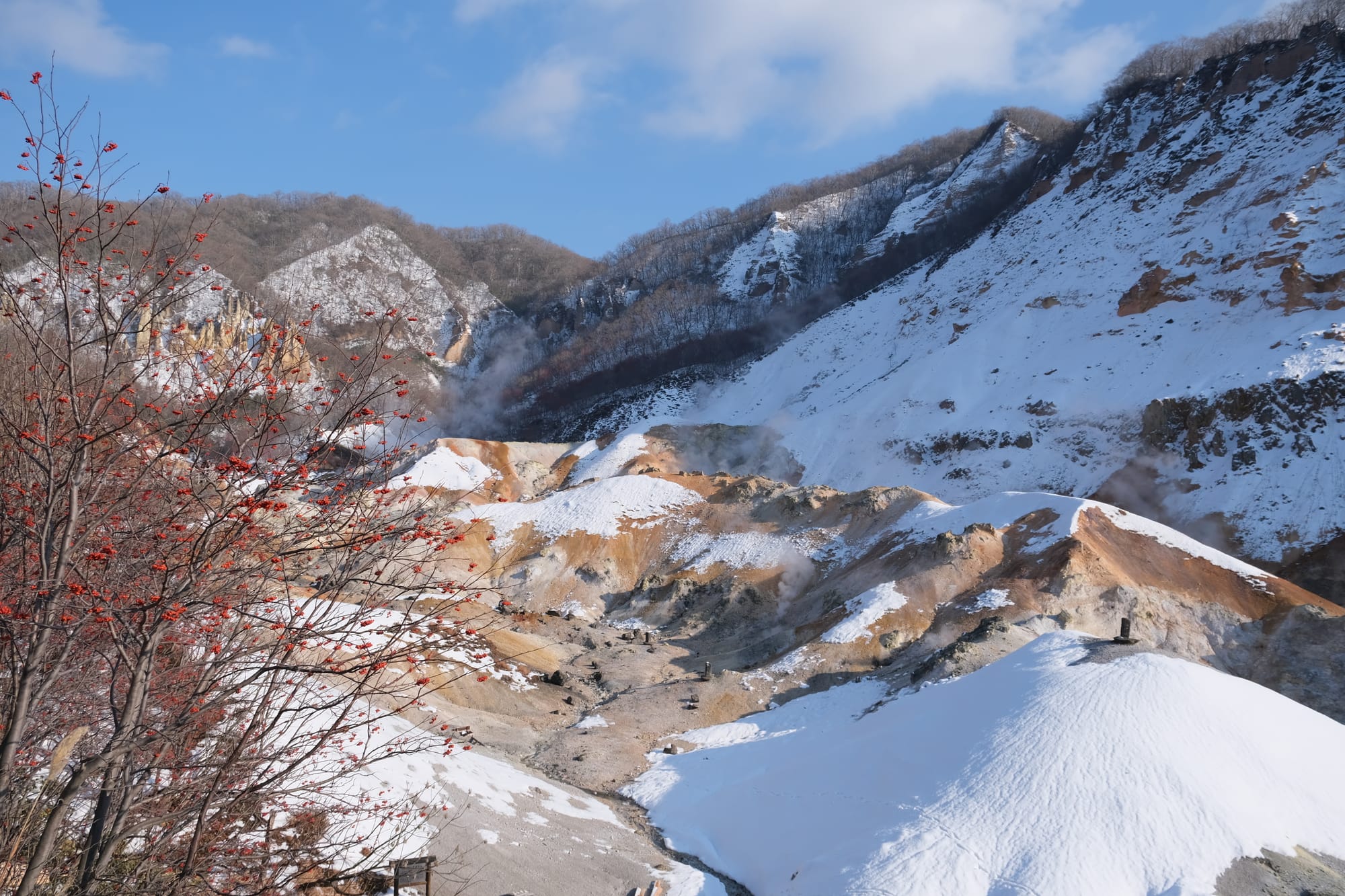
Walking along the board walk, I had a closer look at the steam vents. I loved seeing this valley in the winter, with the snow giving way to bare rock heated by the rising steam.
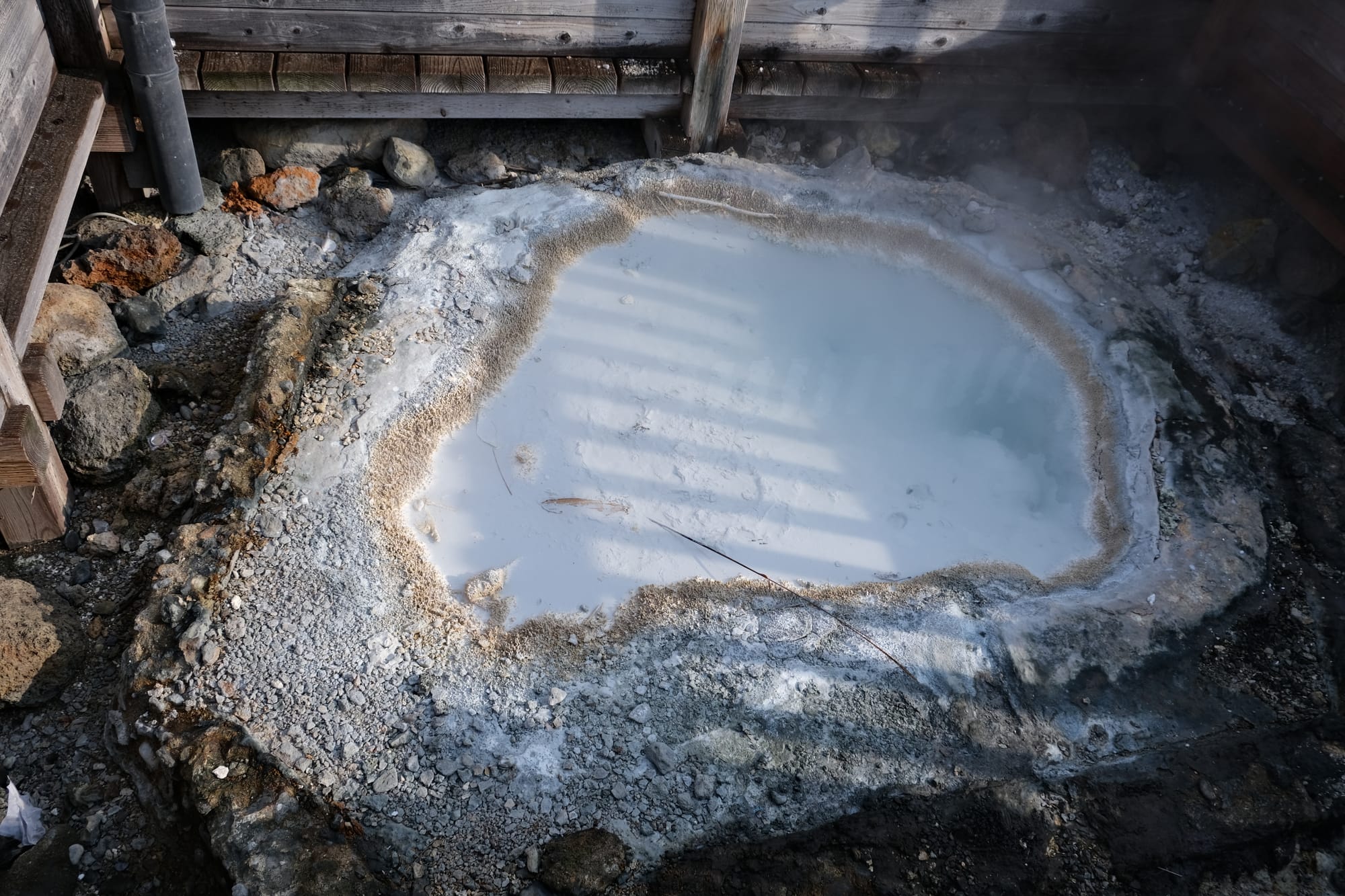
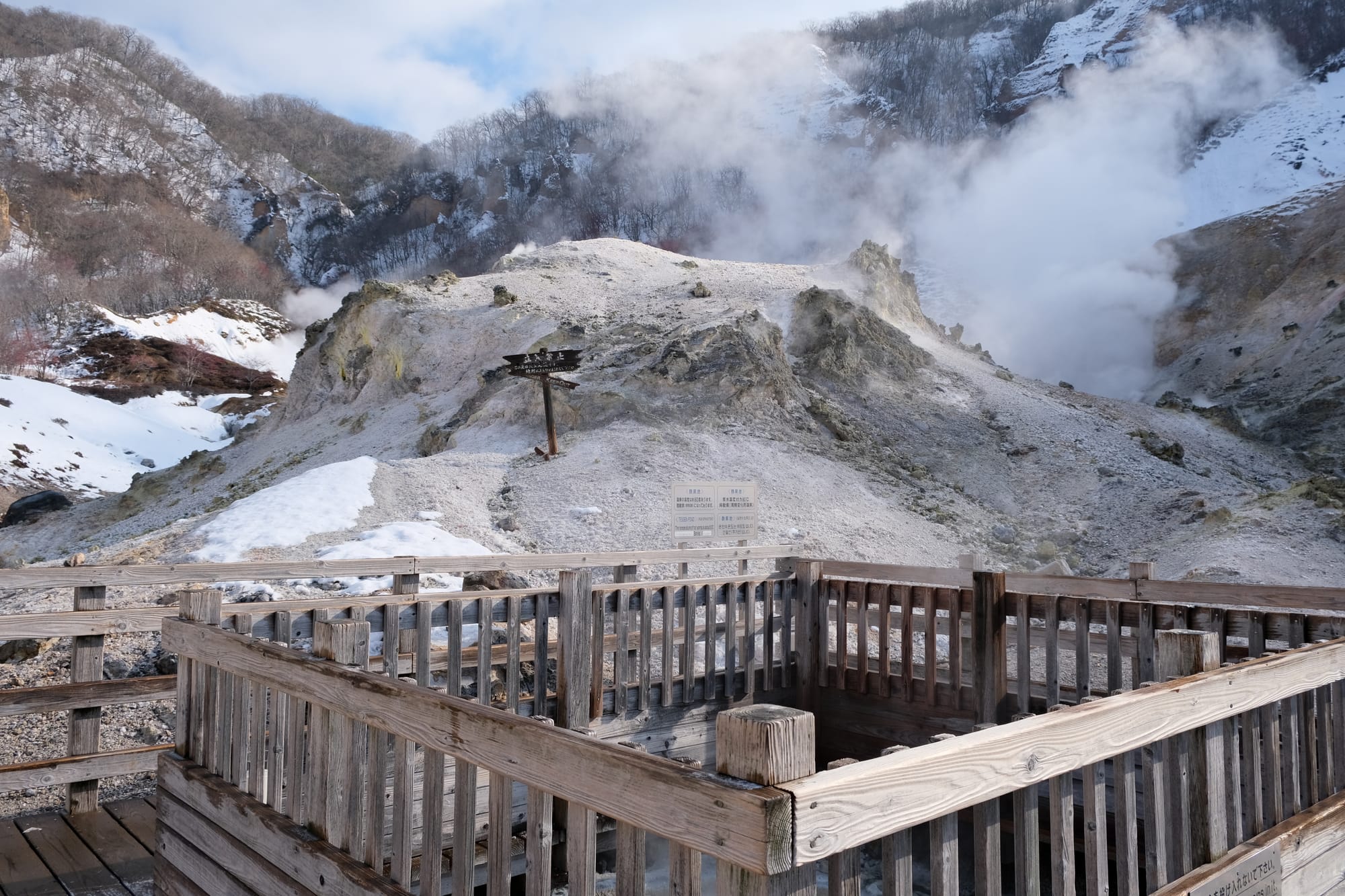
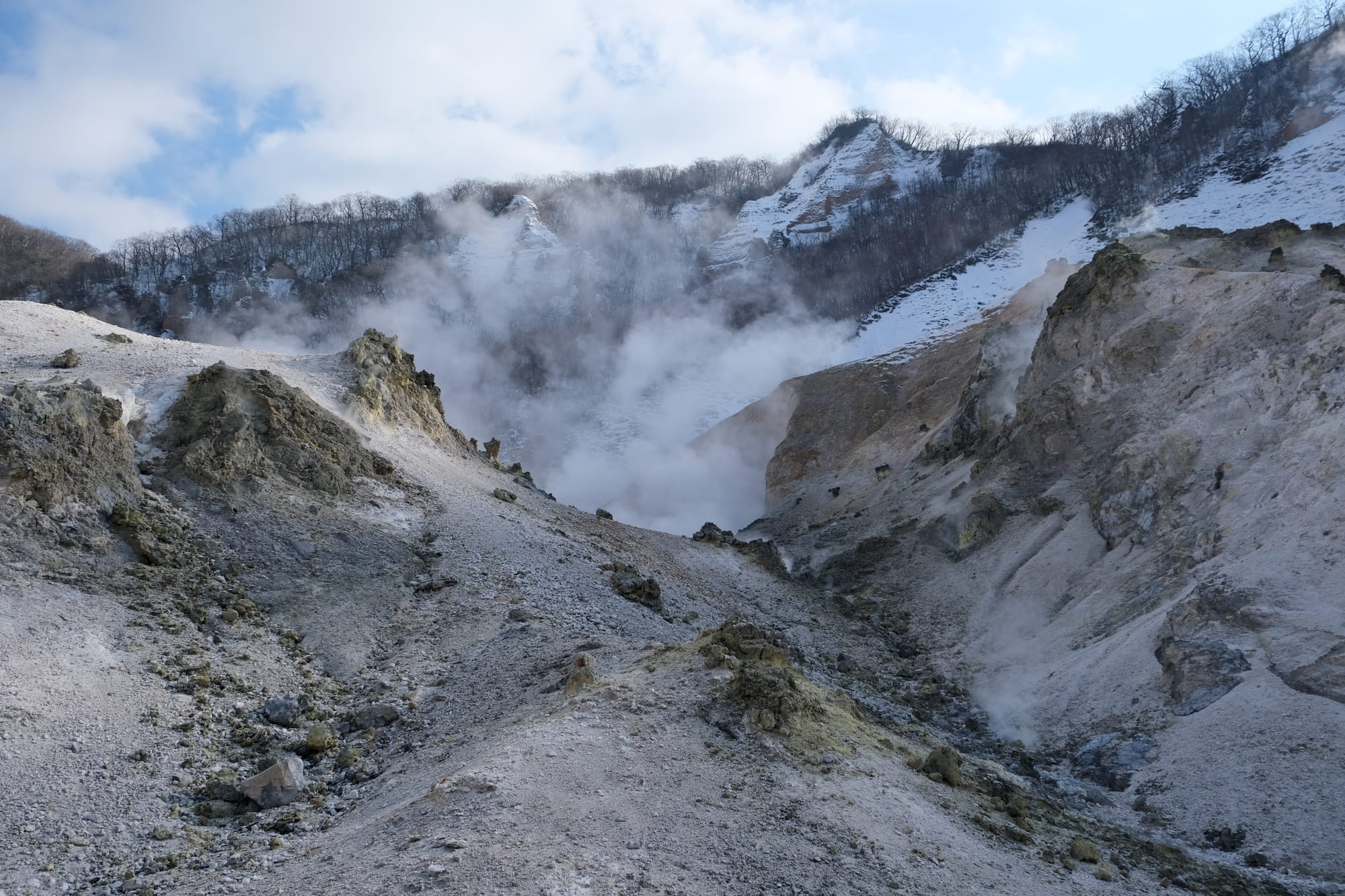
The Iron Spring Pond, this part of the board walk was the closest I could get to the centre of the valley and some of the biggest steam vents.
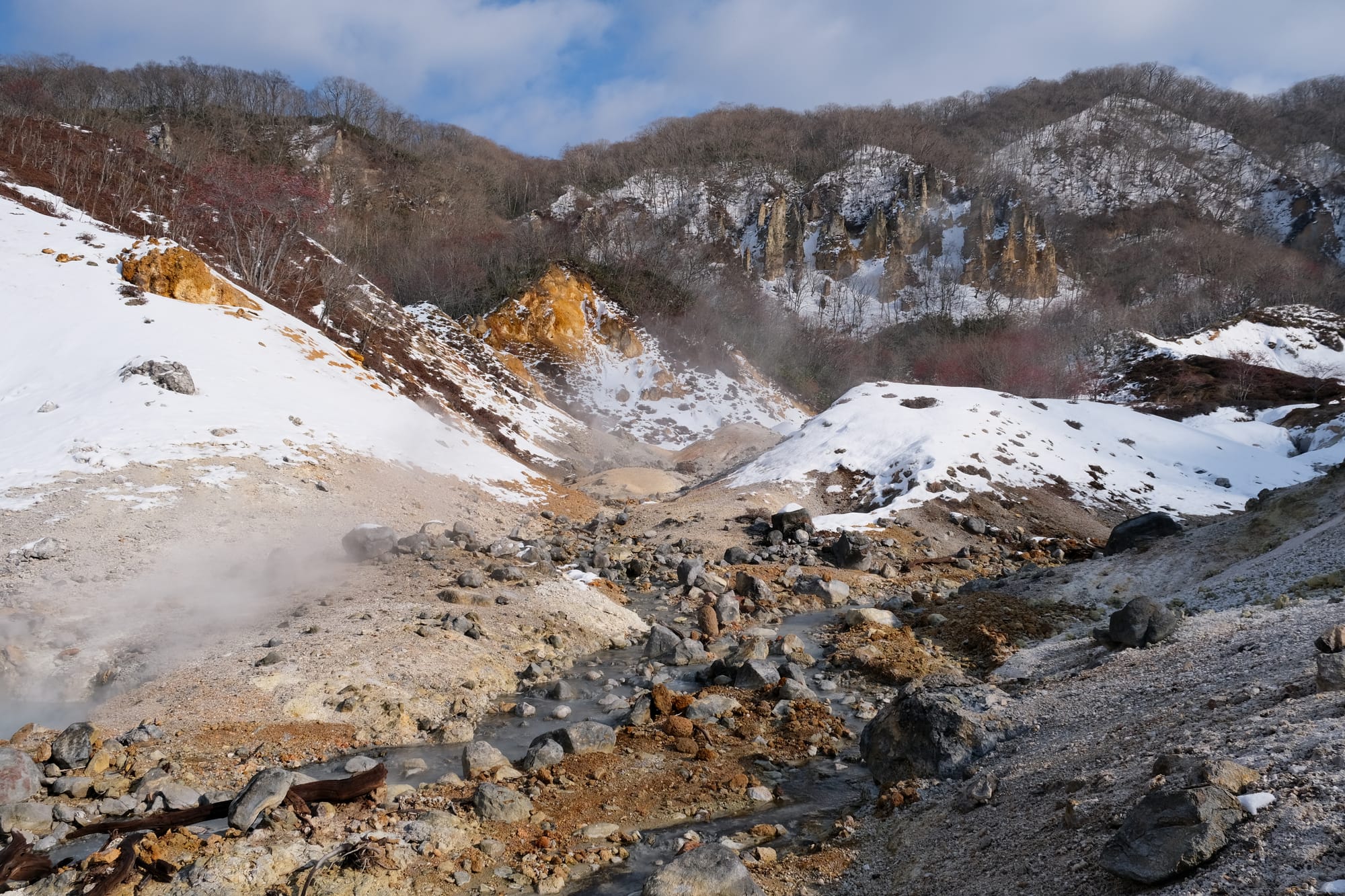
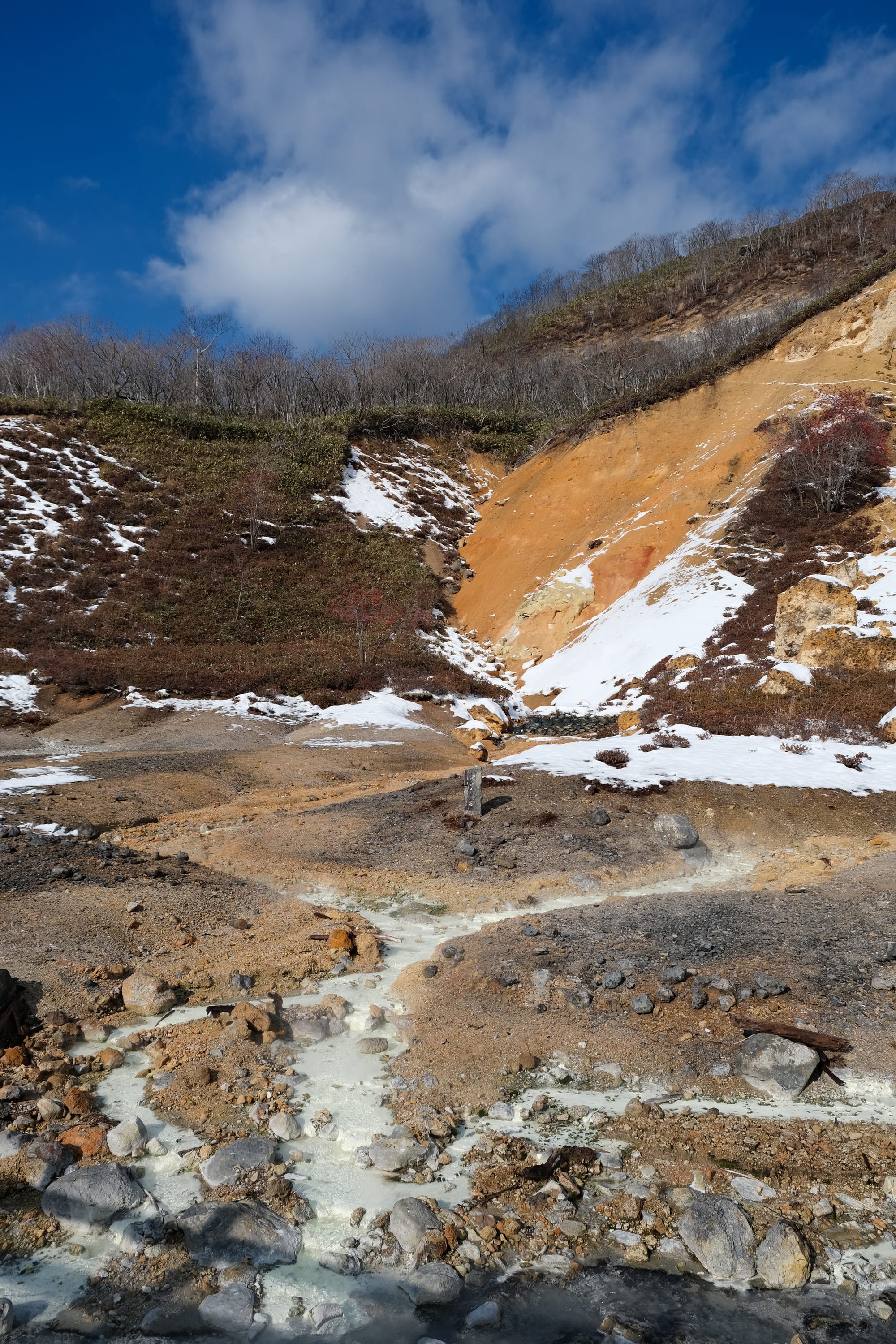
The hot mineral rich water flowed from the springs through the valley.
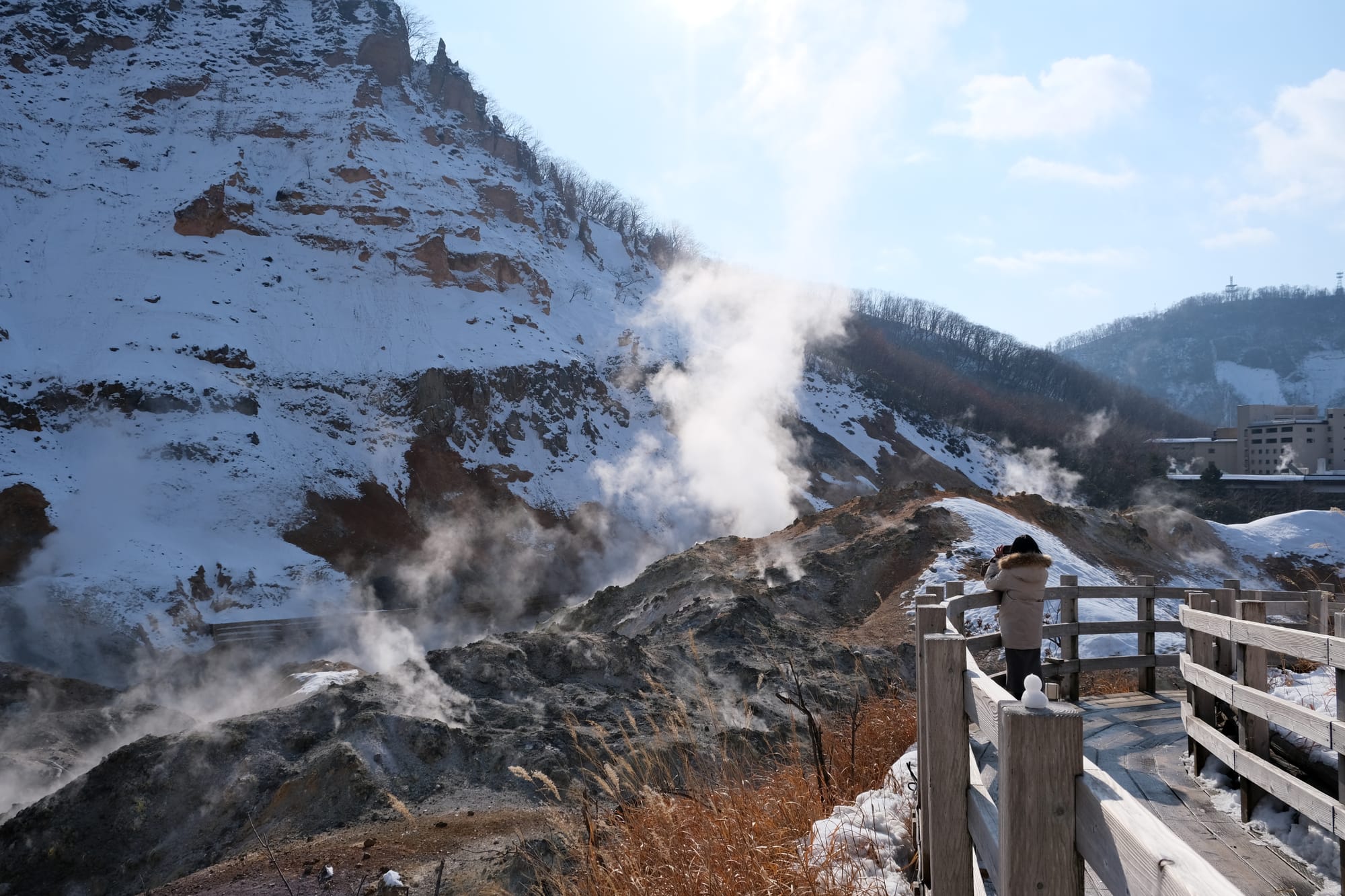
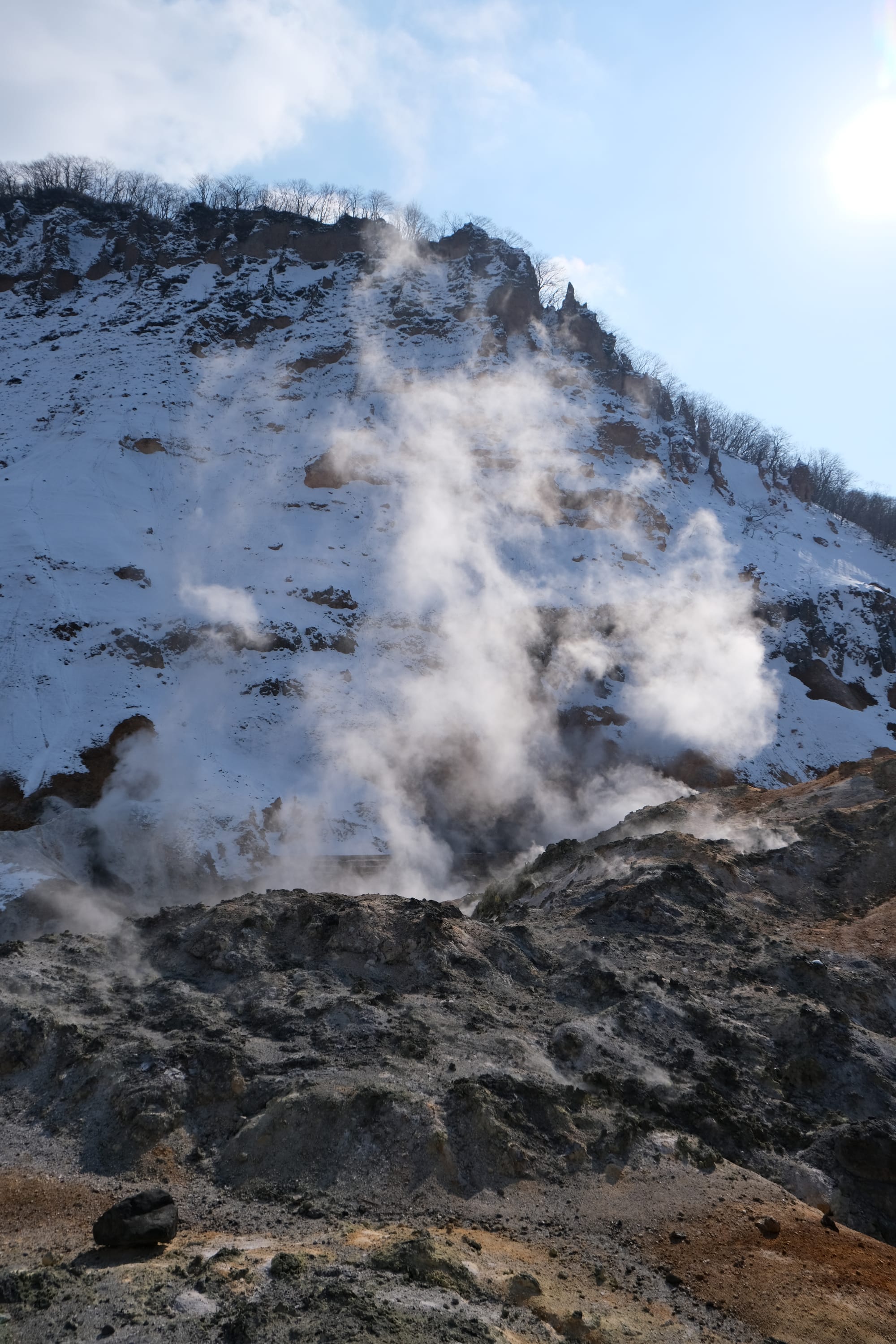
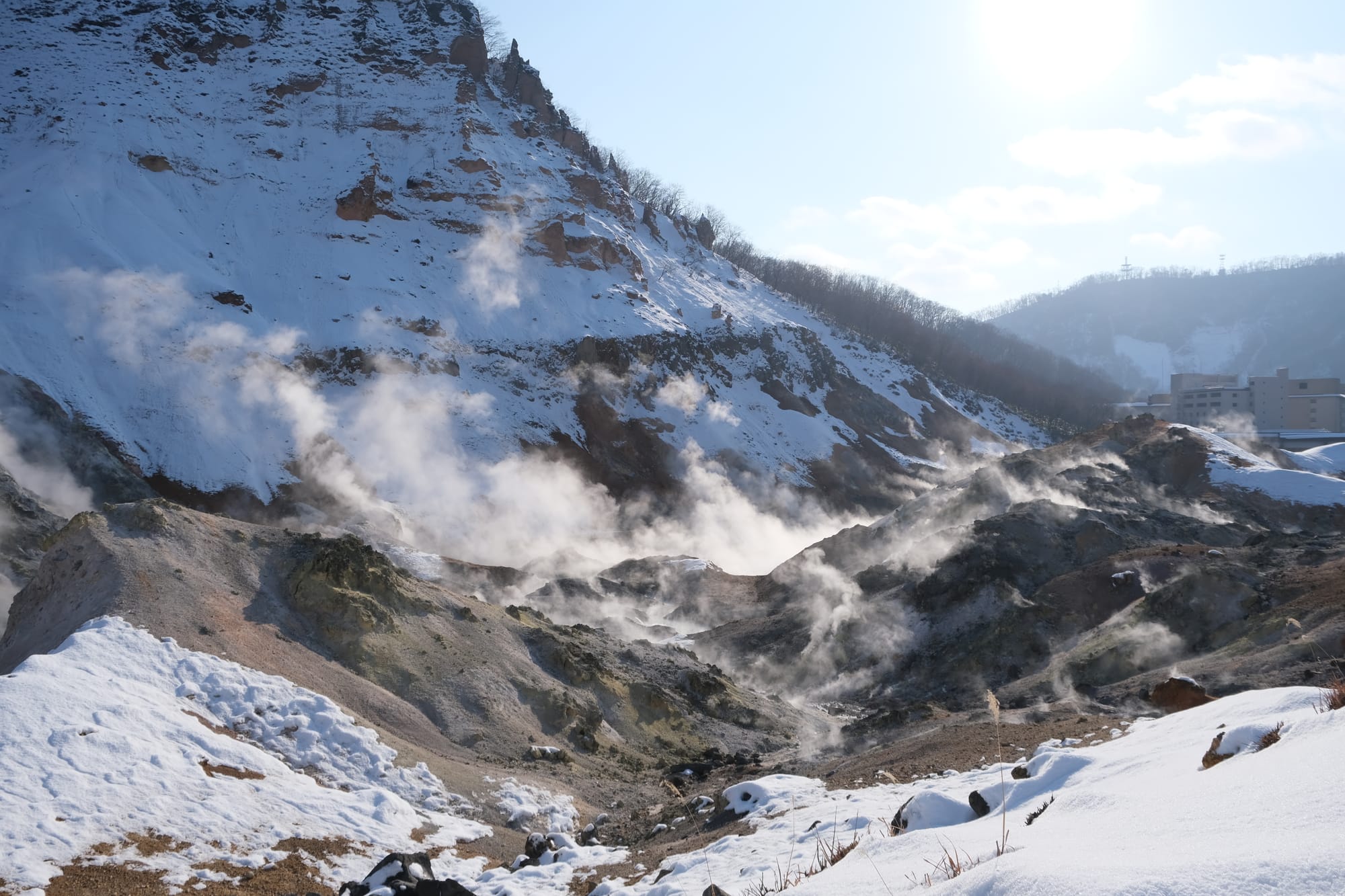
The steam rising in this area of the valley was lit up by the sun.
Not far from Jigokudani valley is a natural footbath in the river Oyunuma. Normally there is a trail that goes through the forest to this footbath but that trail was closed. The only way to get there was to make a big loop on the main road walking past all the hotels. I dipped my feet in the river for ten minutes or so. The water temperature varies throughout the year and when I visited it wasn't hot but also neither was it freezing as might be expected for winter time.
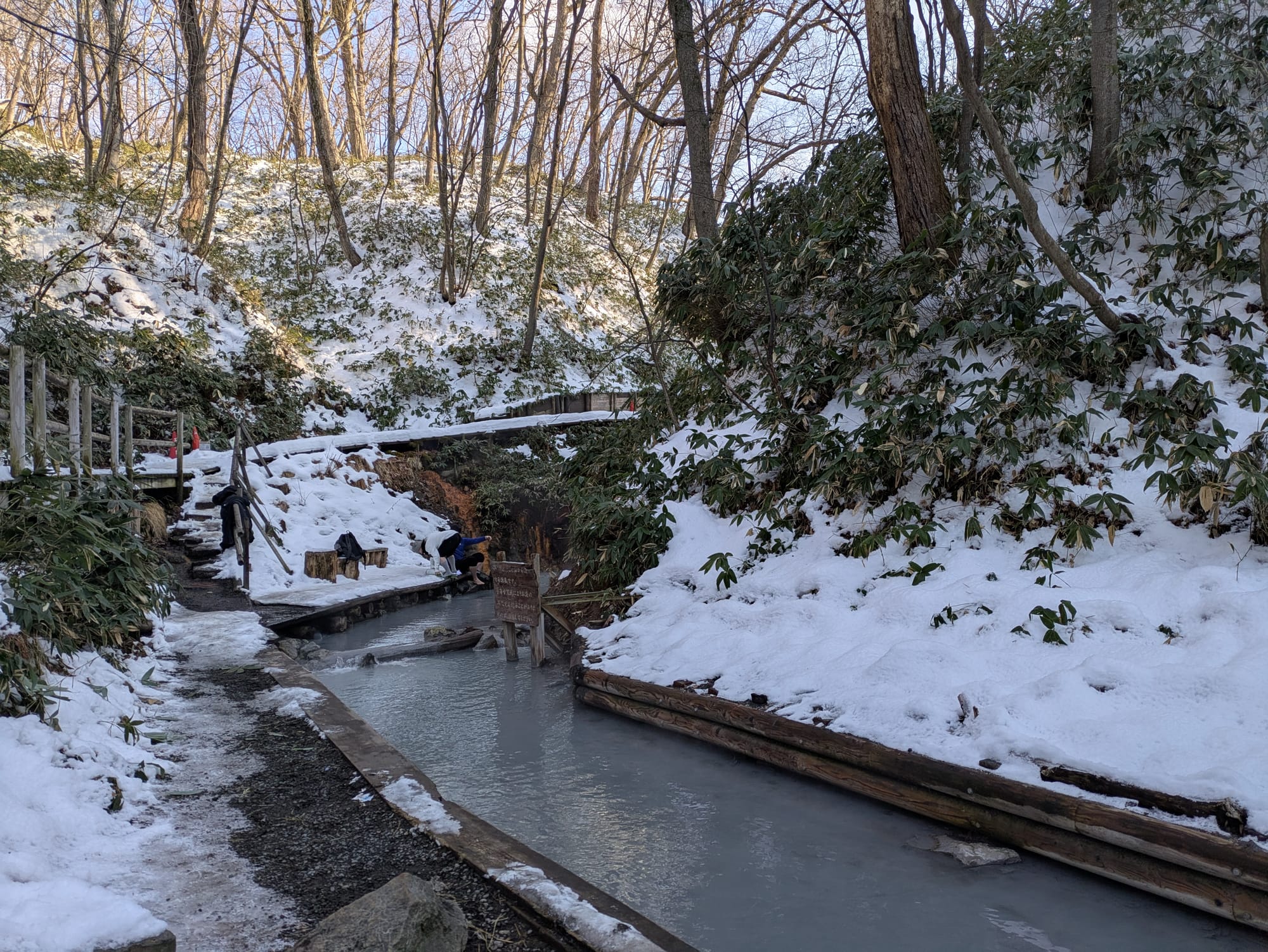
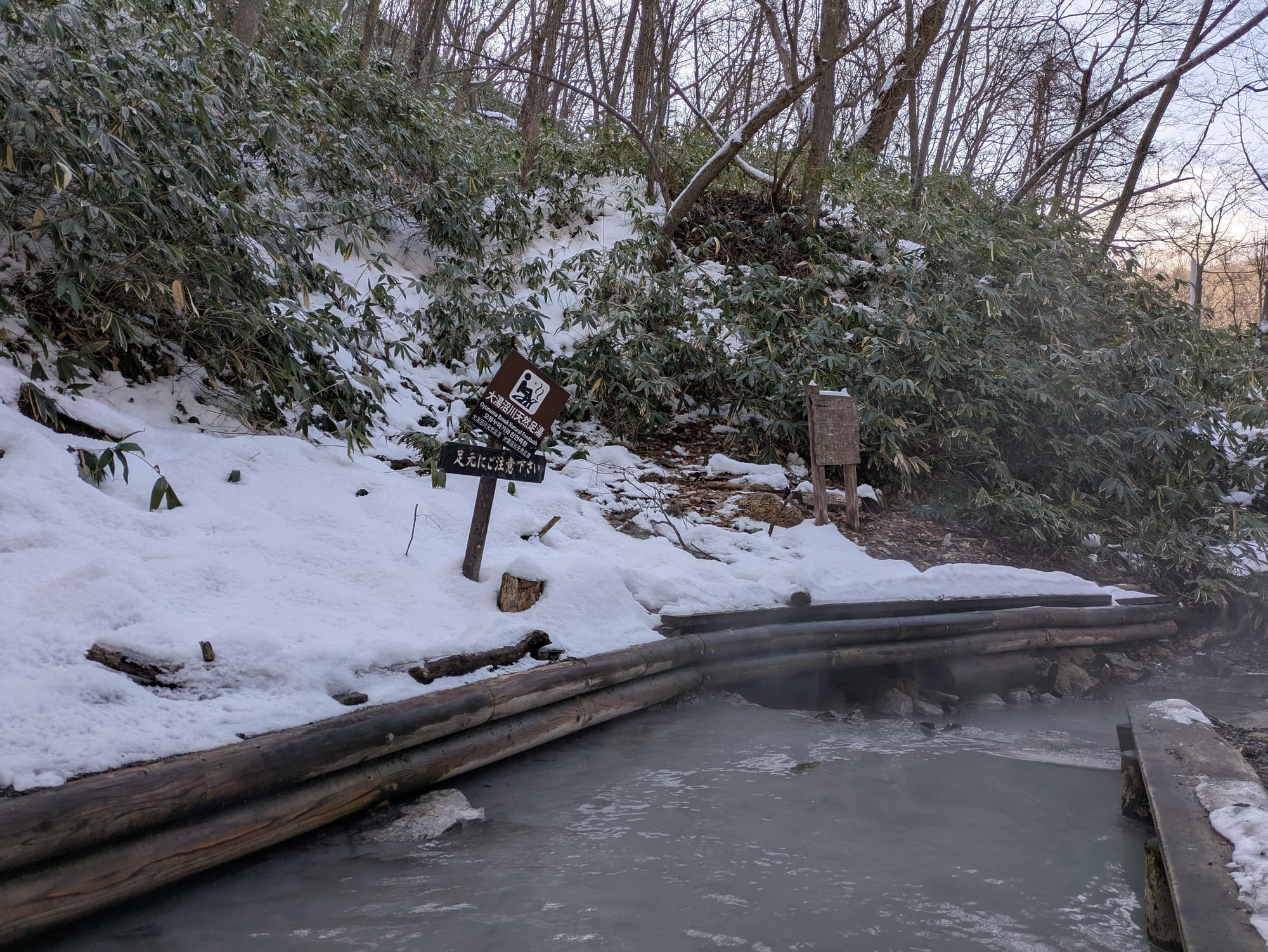
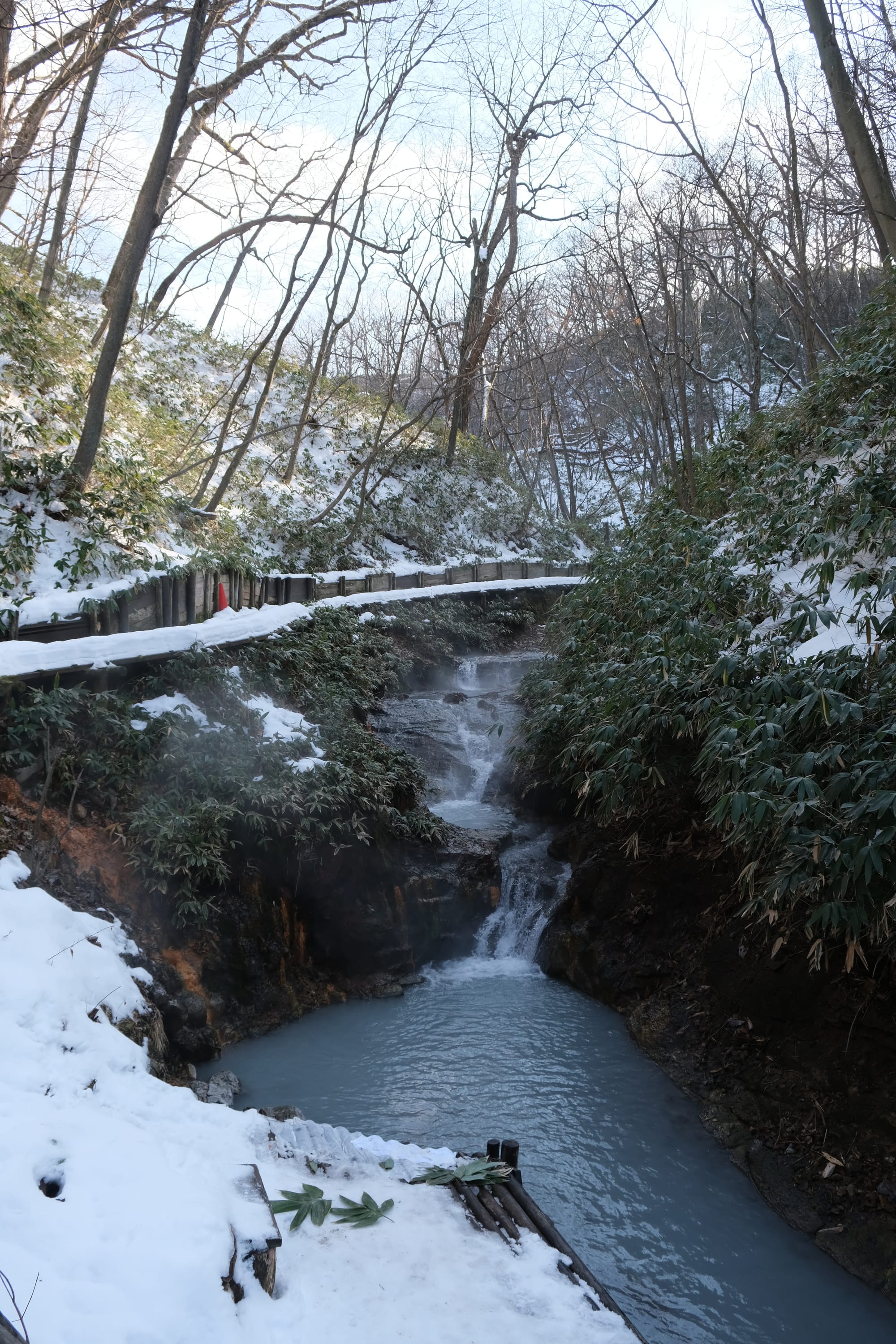
The natural footbath made from a stream was cloudy with minerals. There was a bench next to the water to sit on and bathe your feet; the water wasn't hot but neither was it freezing cold.
I returned again briefly to the Jigokudani valley in the afternoon when the sun was at its highest relative to all my other visits.
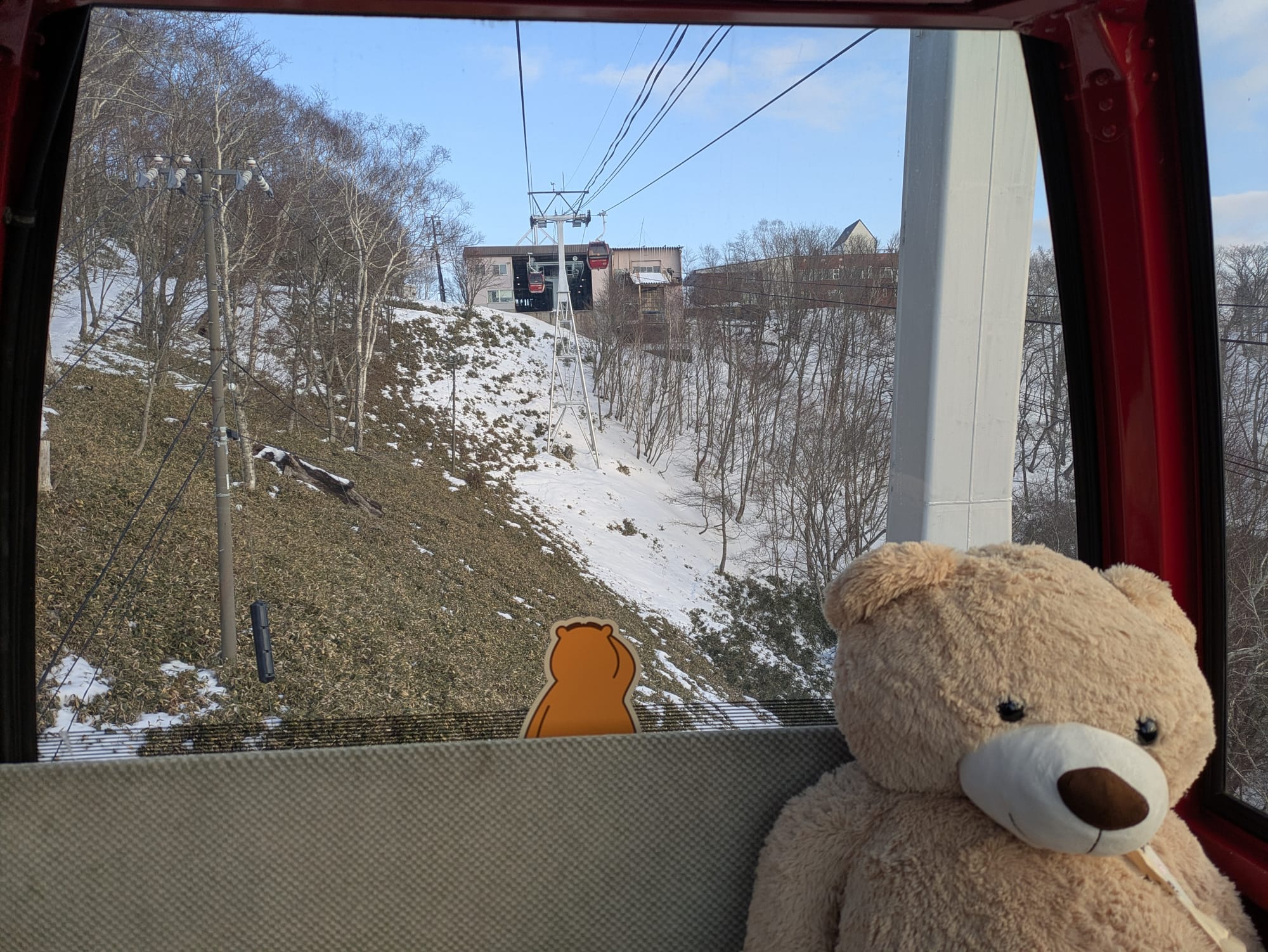
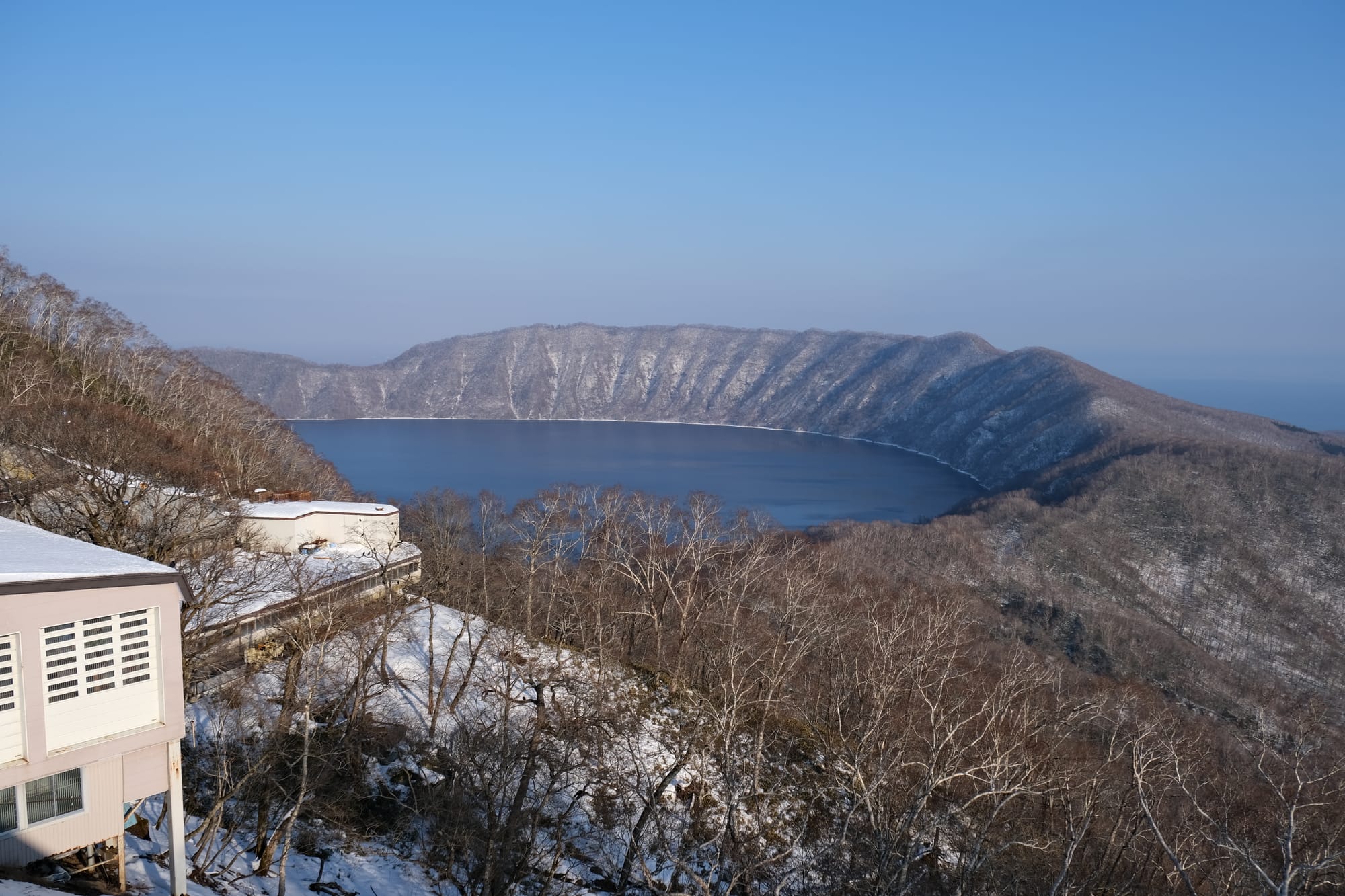
From the resort area there is a ropeway (cable car) that ferries passengers up the mountain to the Noboribetsu Bear Park. I visited the bear park in the late afternoon, it is located on the ridge of a mountain. It included not just the bear enclosures but a museum about bears in Hokkaido, an observation deck at the top of the museum building, and a reconstruction of a traditional Ainu village.
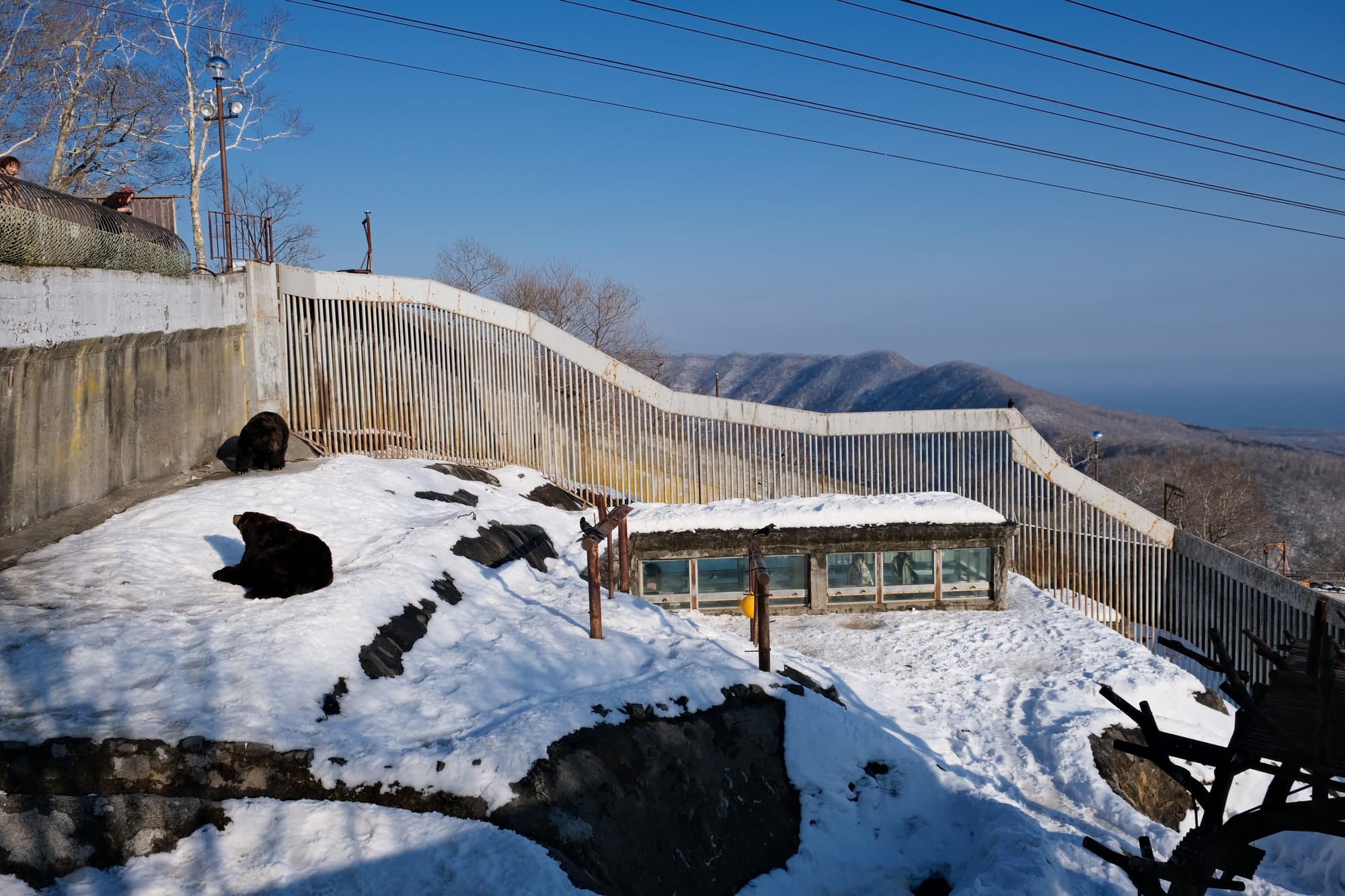
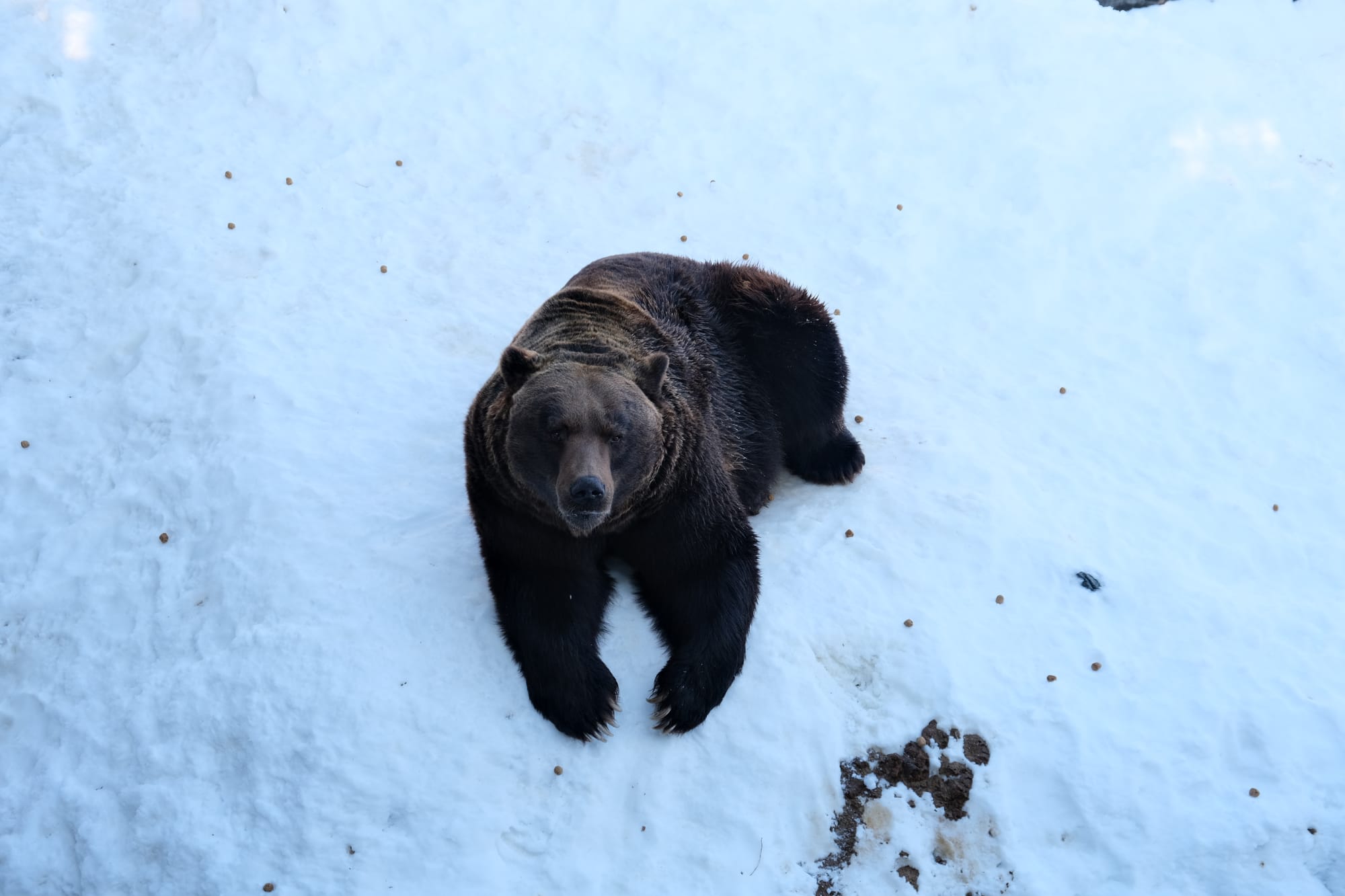
The bears at the bear park.
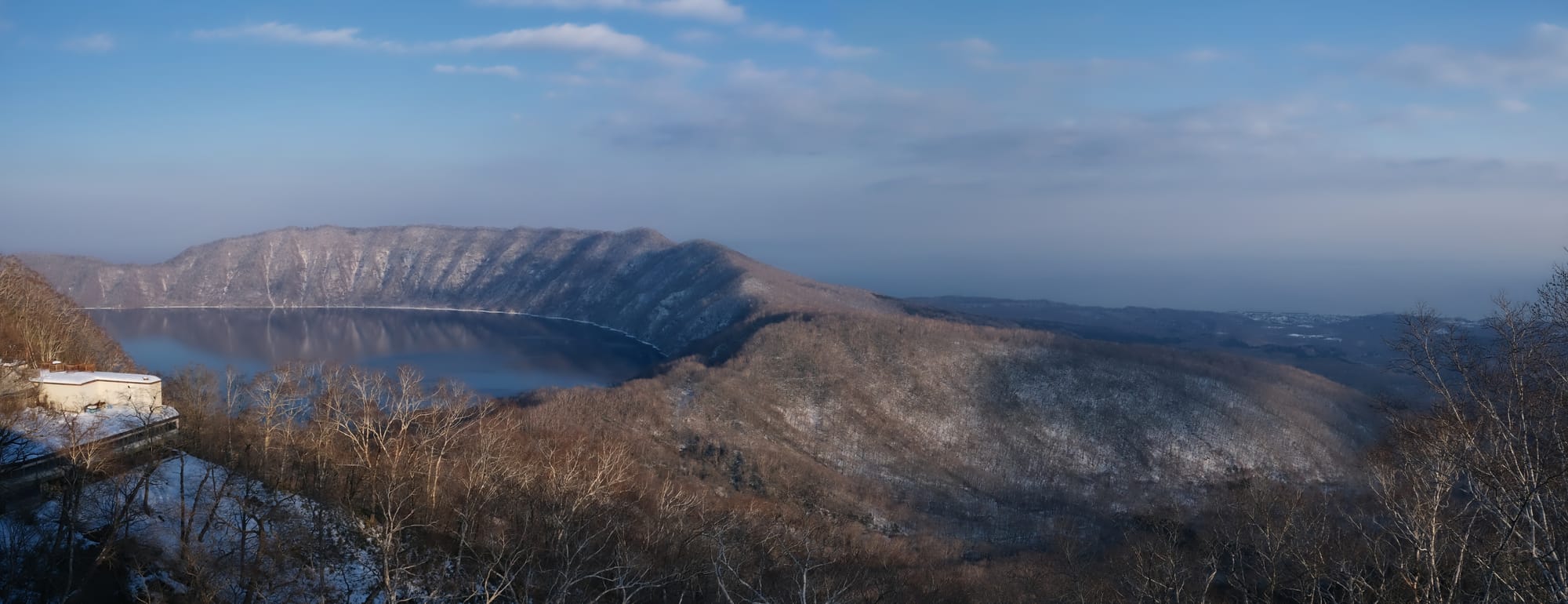
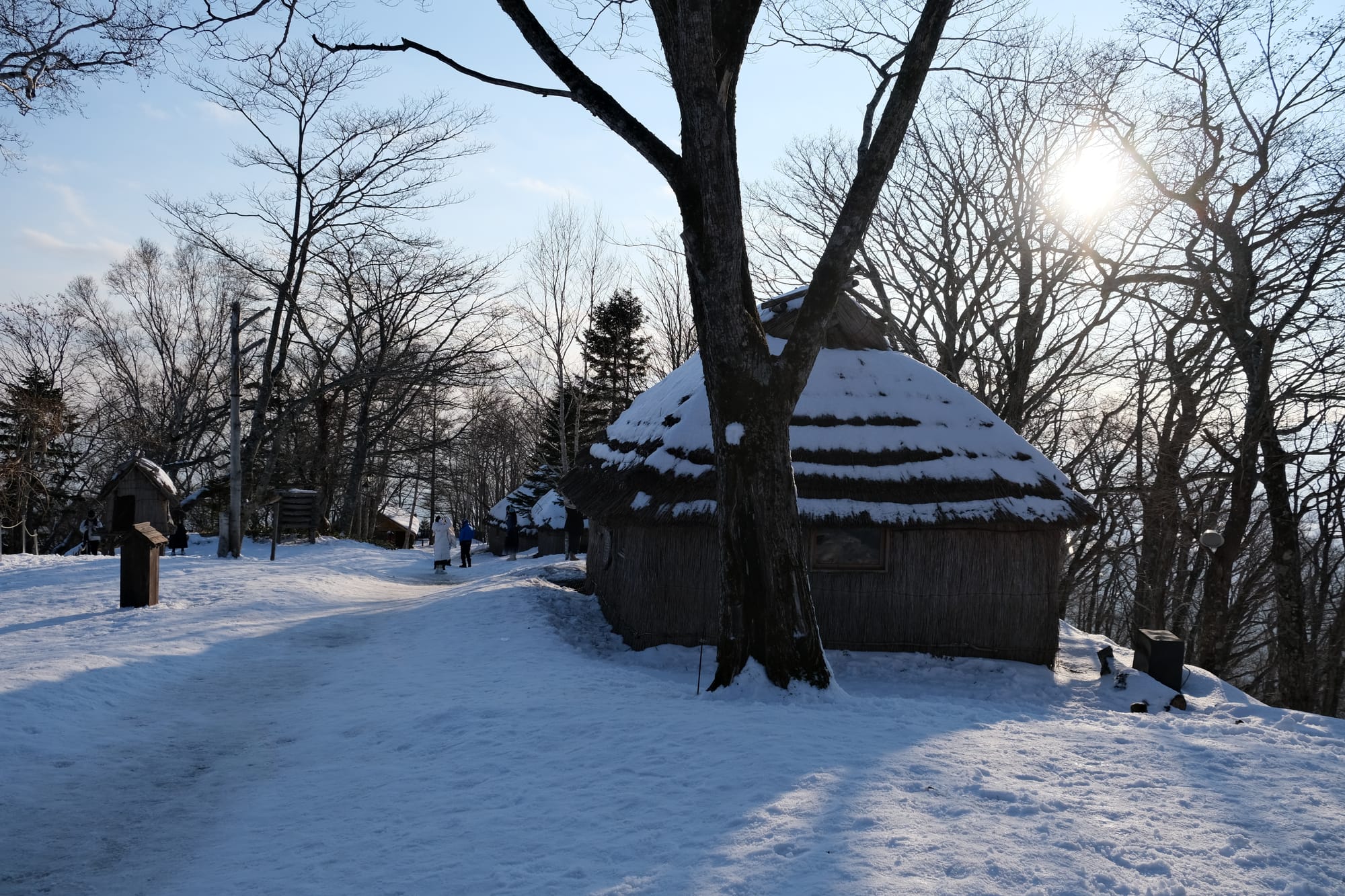
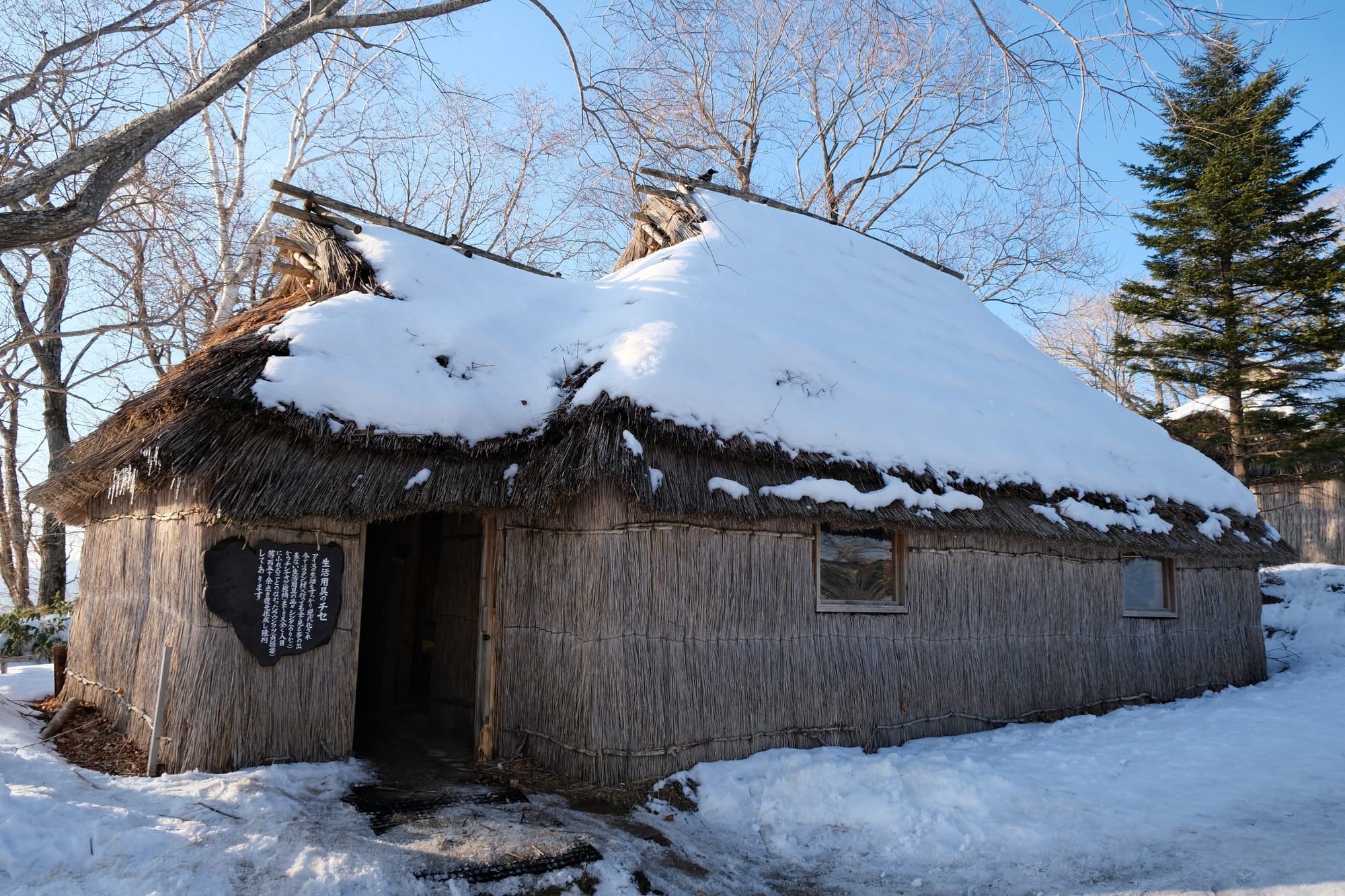
There was an exhibition of a traditional Ainu village, the native people to Hokkaido.
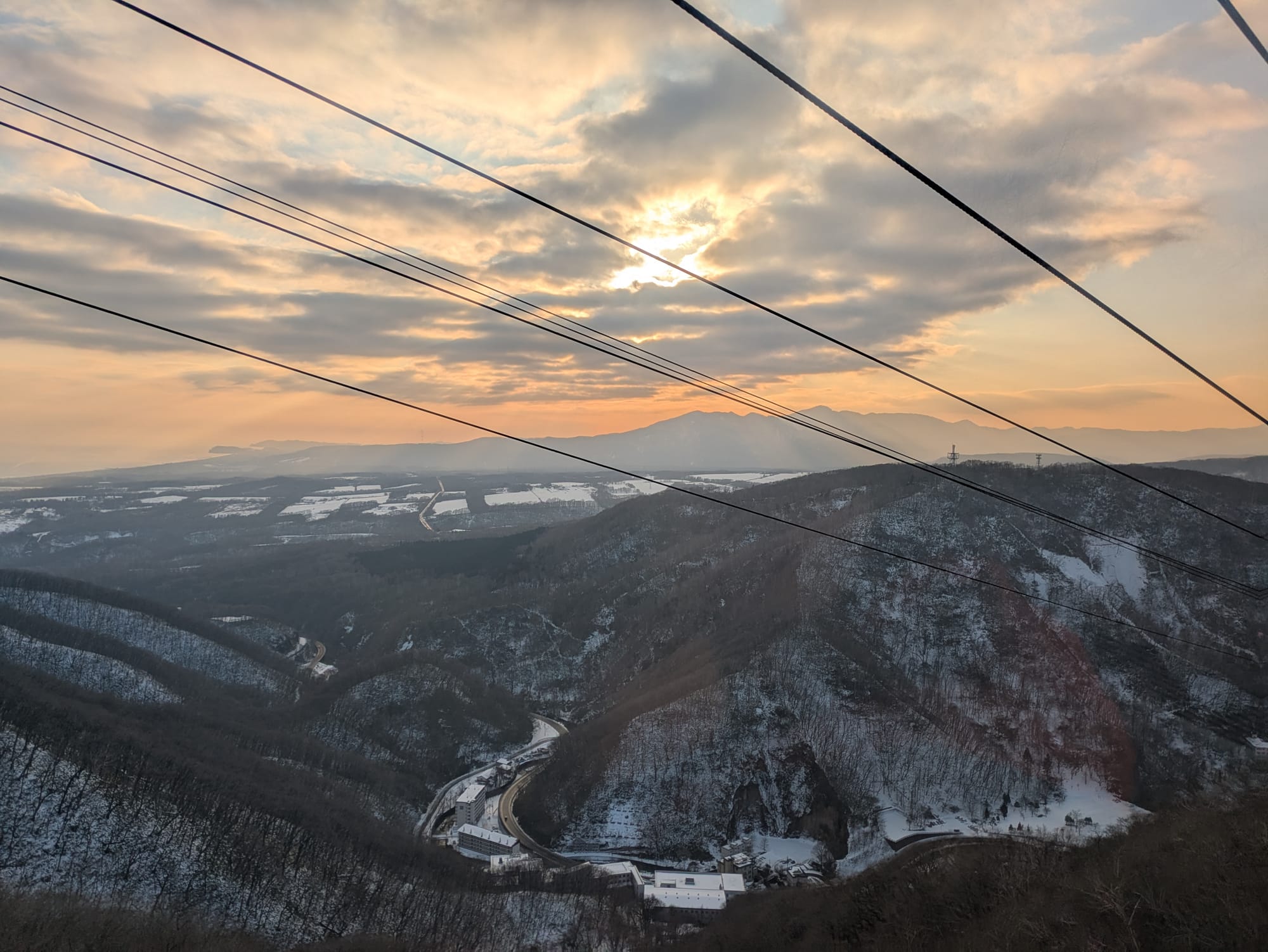
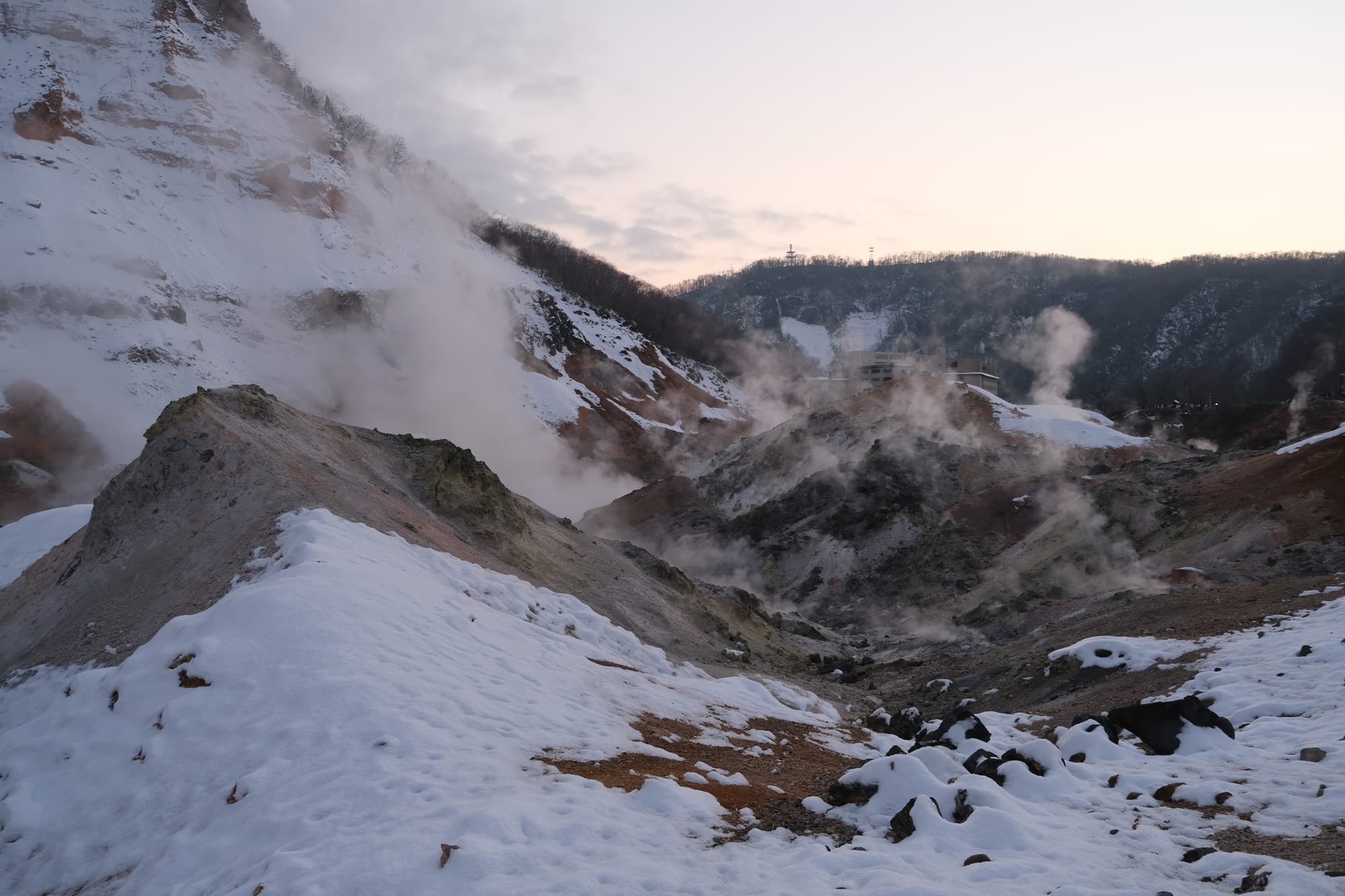
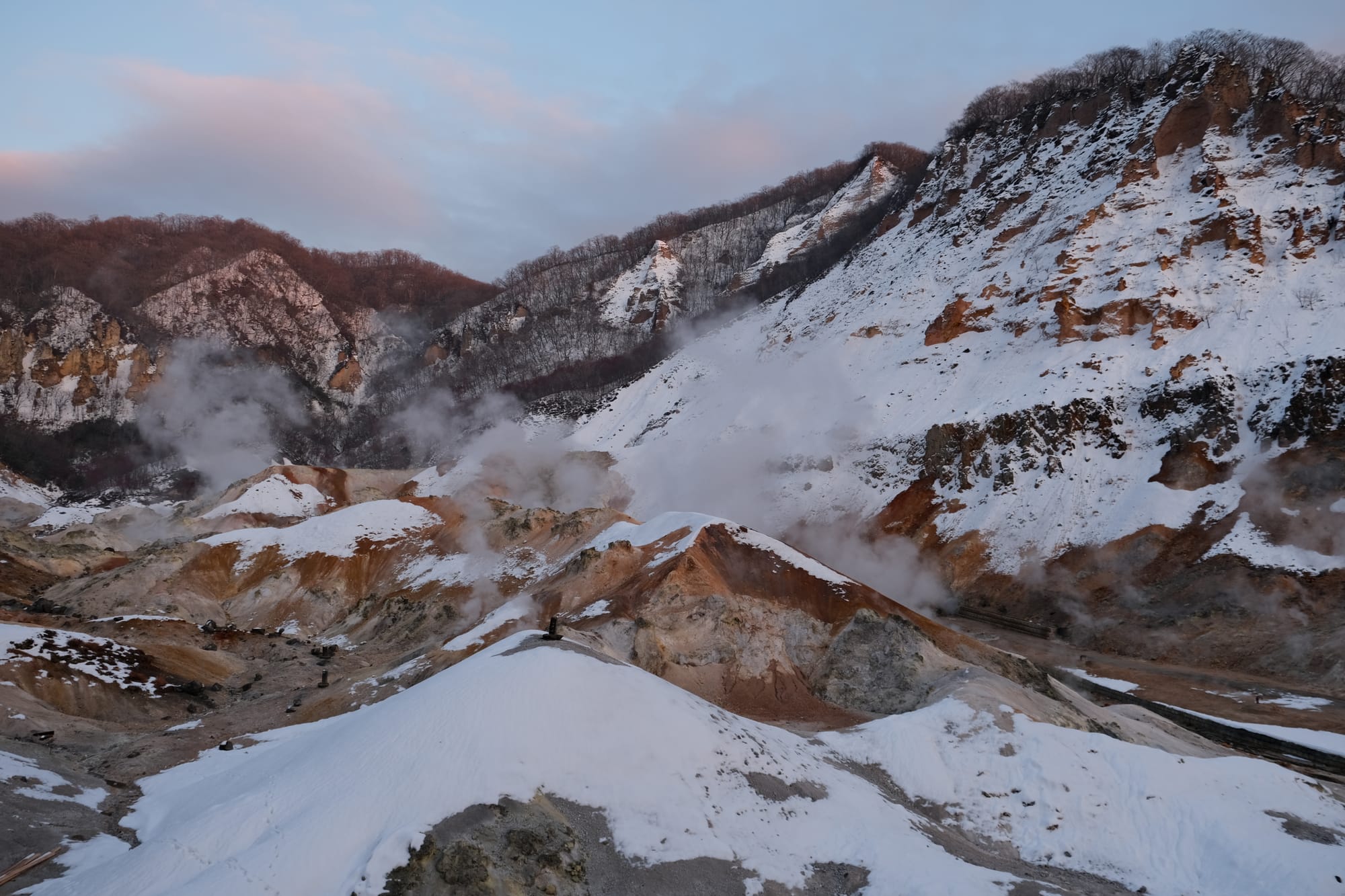
I returned a final time to Jigokudani valley, because of course I did, I could not resist seeing it one last time. The sun had just about set when I arrived and the lighting was completely different without it, much softer with no harsh shadows. There was also much more steam rising in the evening, though I did not know why. I quickly walked again through the valley taking more pictures.
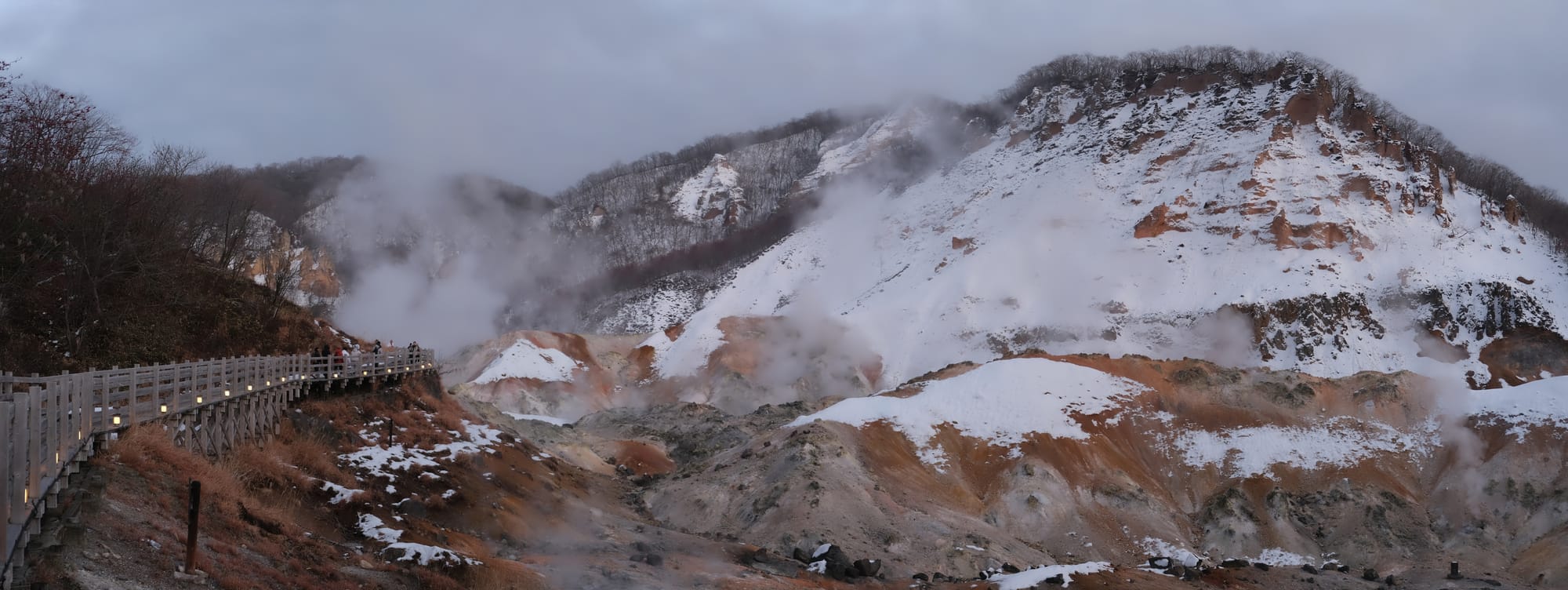
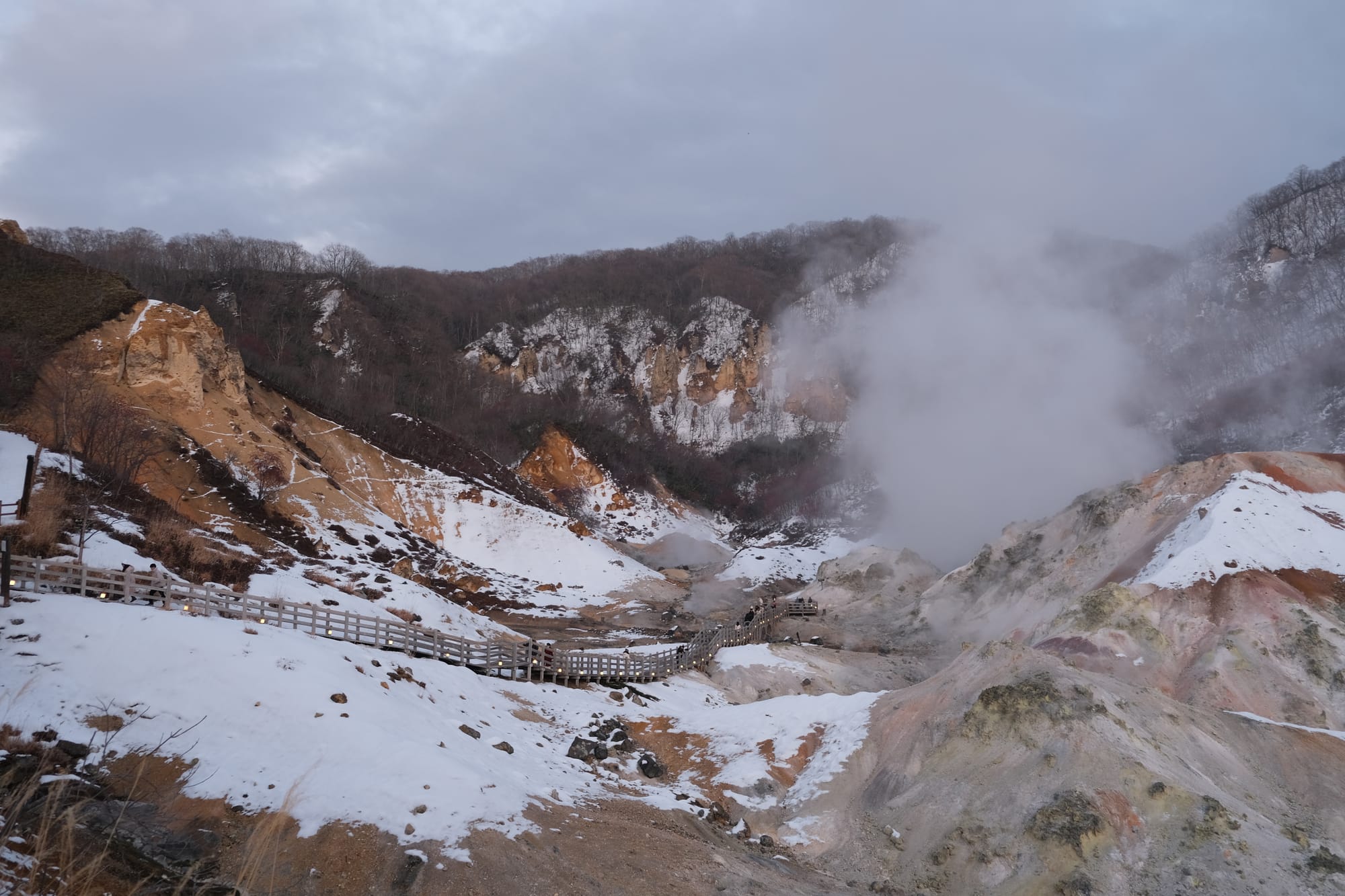
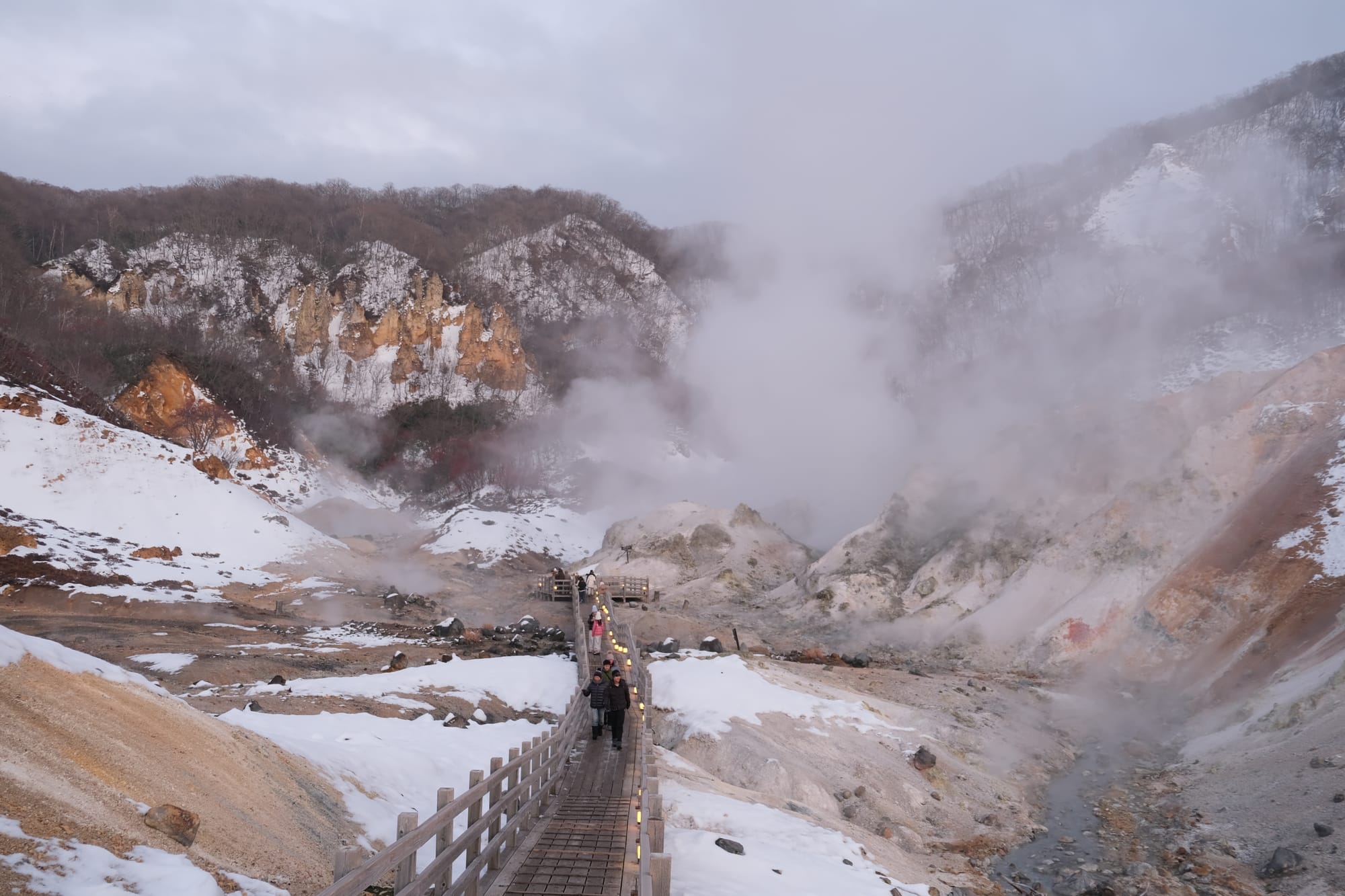
There definitely seemed to be more steam rising from the valley in the evening time.
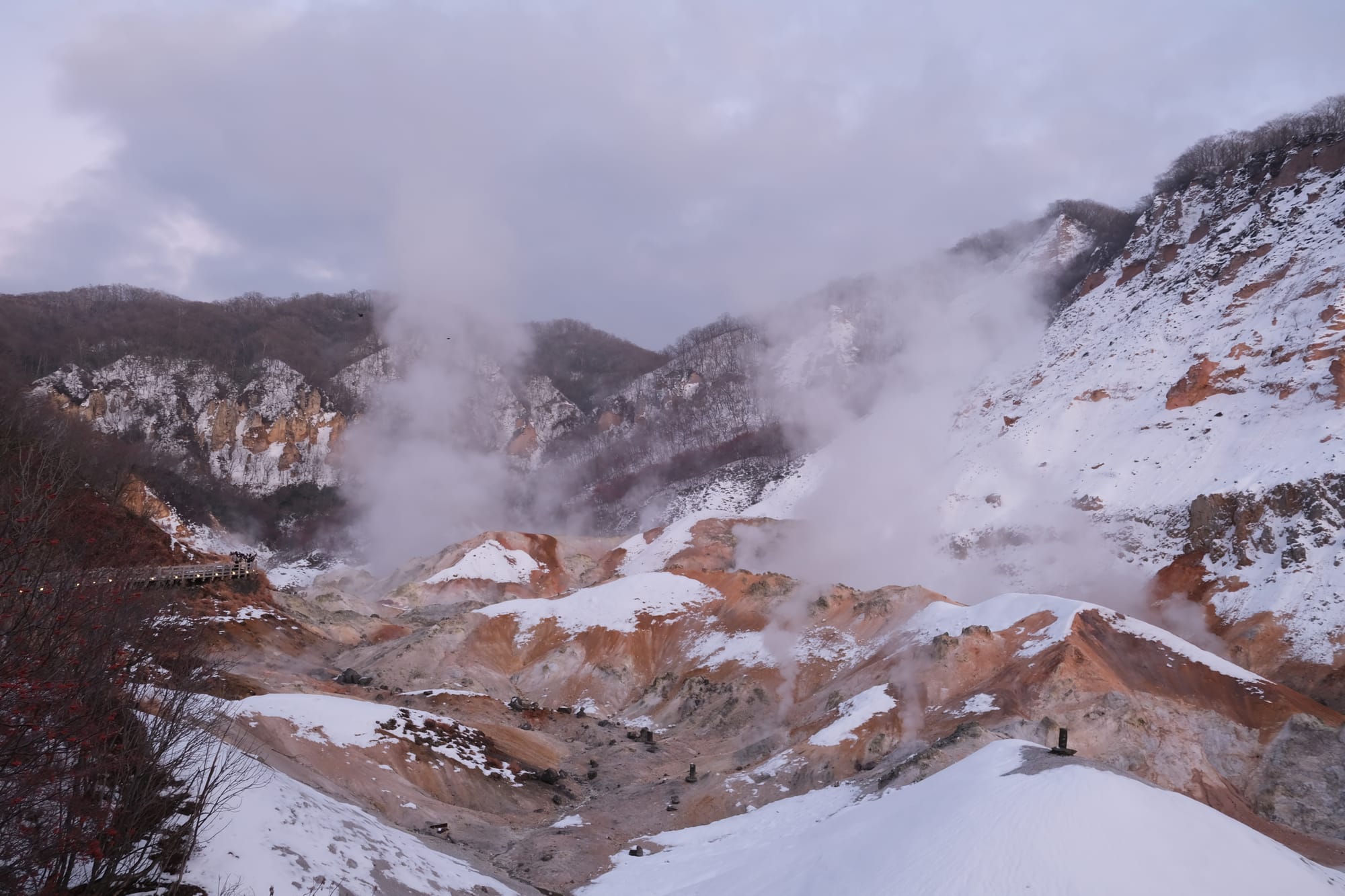
I had visited Jigokudani valley multiple times in the same day, and I took so many photos, I found that I re-took some of the same photos but at different times of the day. This provided a fascinating comparison to see the same view but under different lighting conditions. I identified some of these photos and have put them here together so you can directly compare them. I found that they provide a very interesting analysis of how the lighting changed throughout the day and especially at dusk.
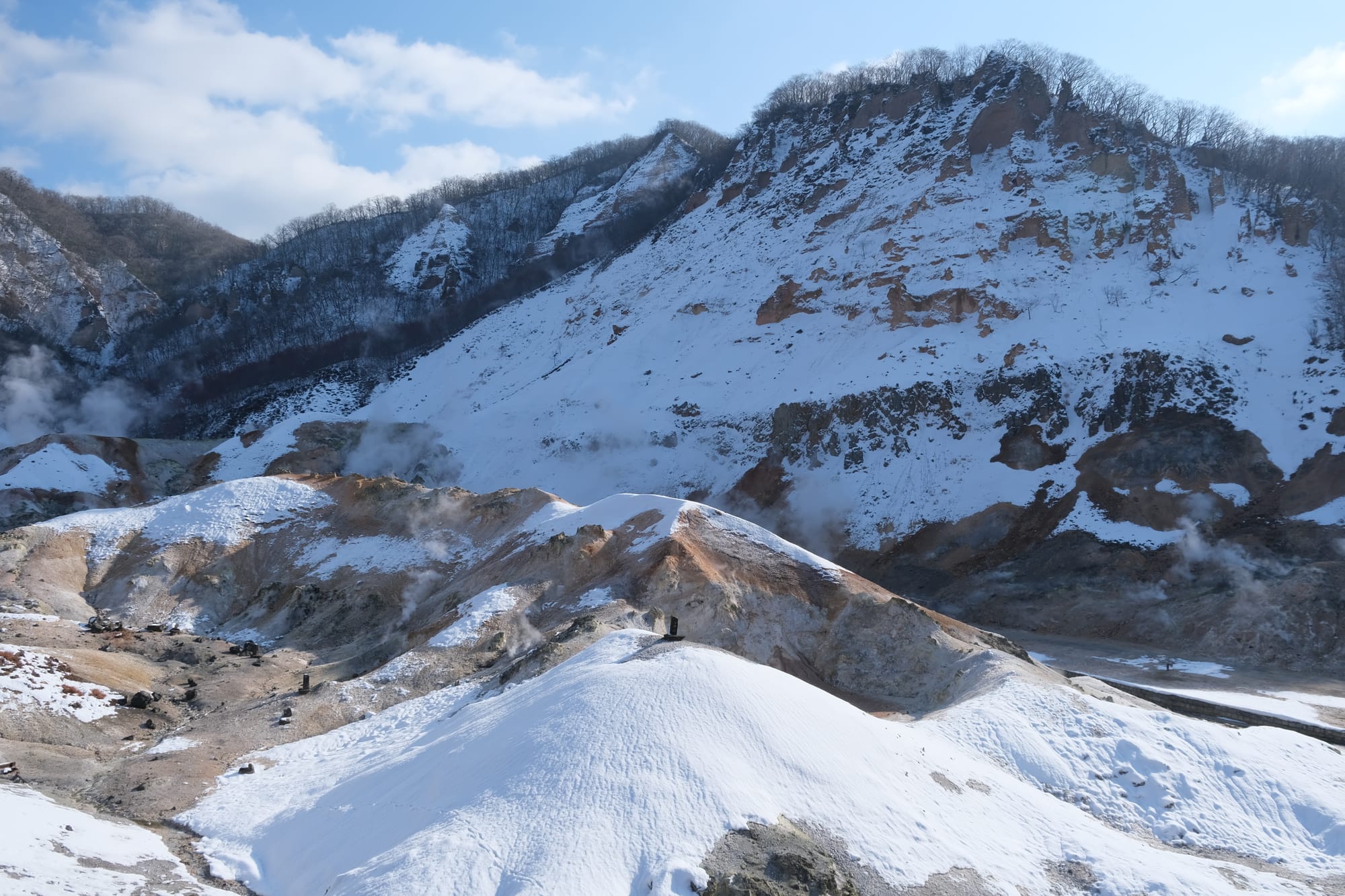
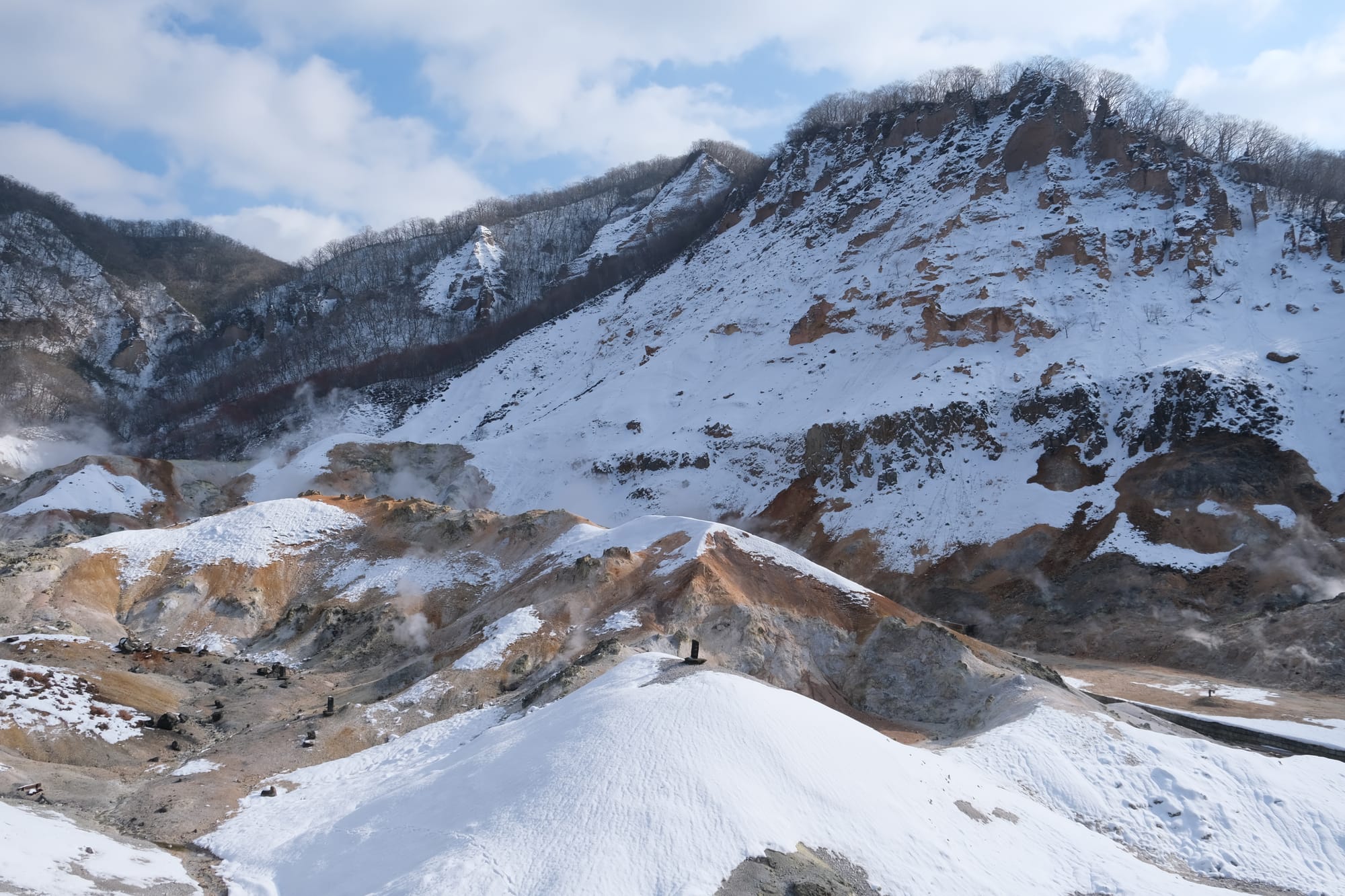
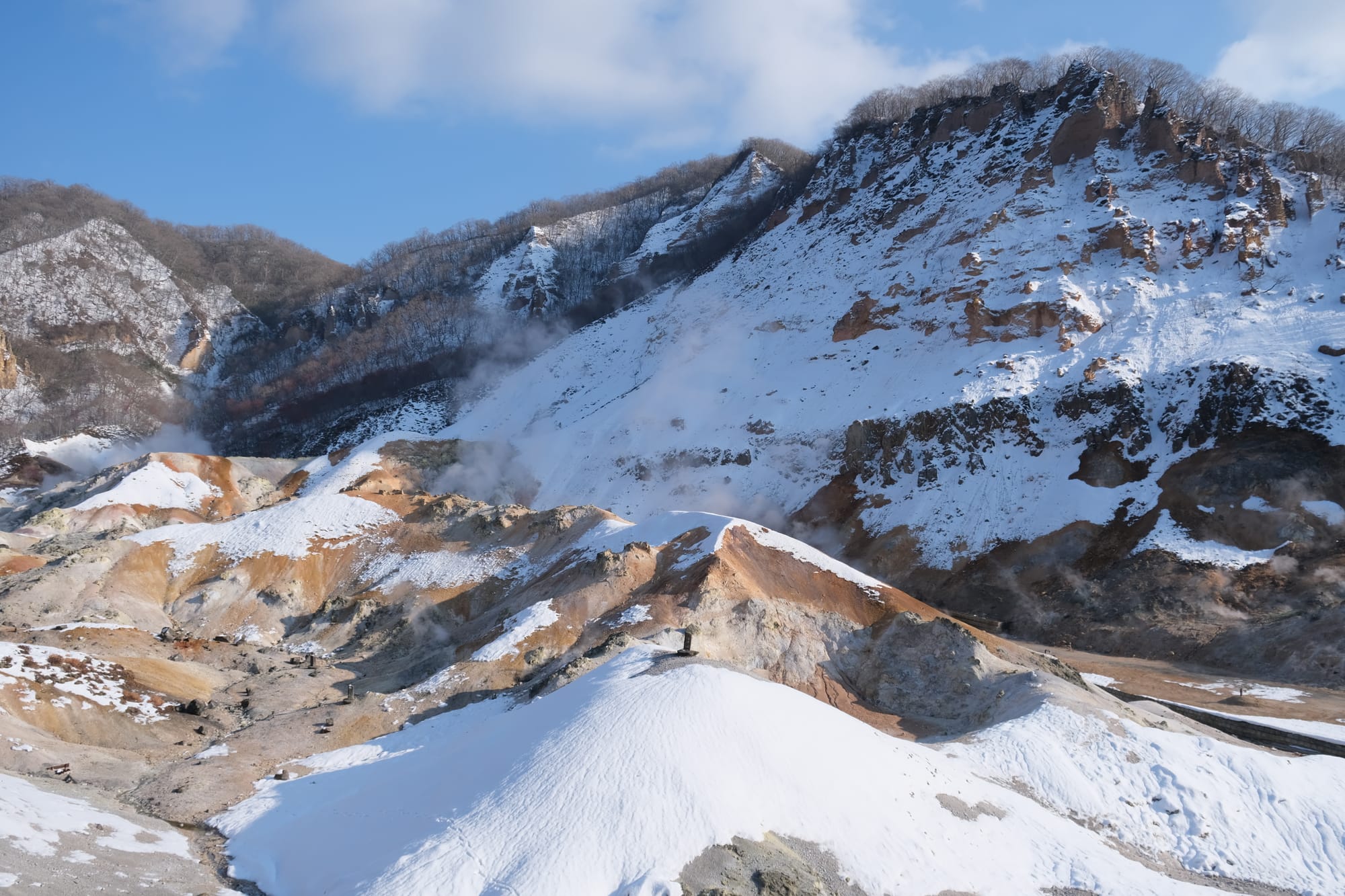
Comparison of the same scene taken at three different times throughout the day.
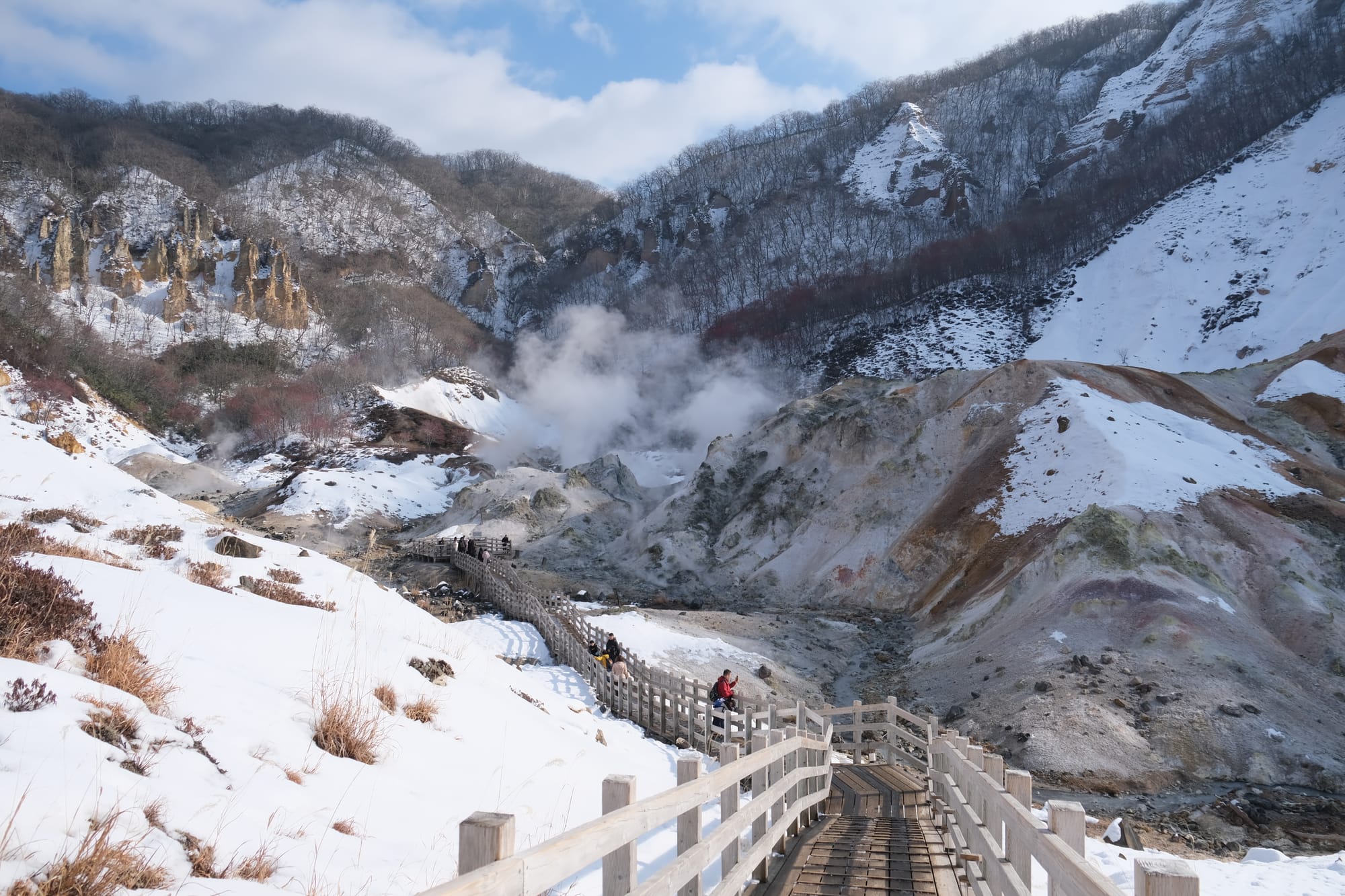
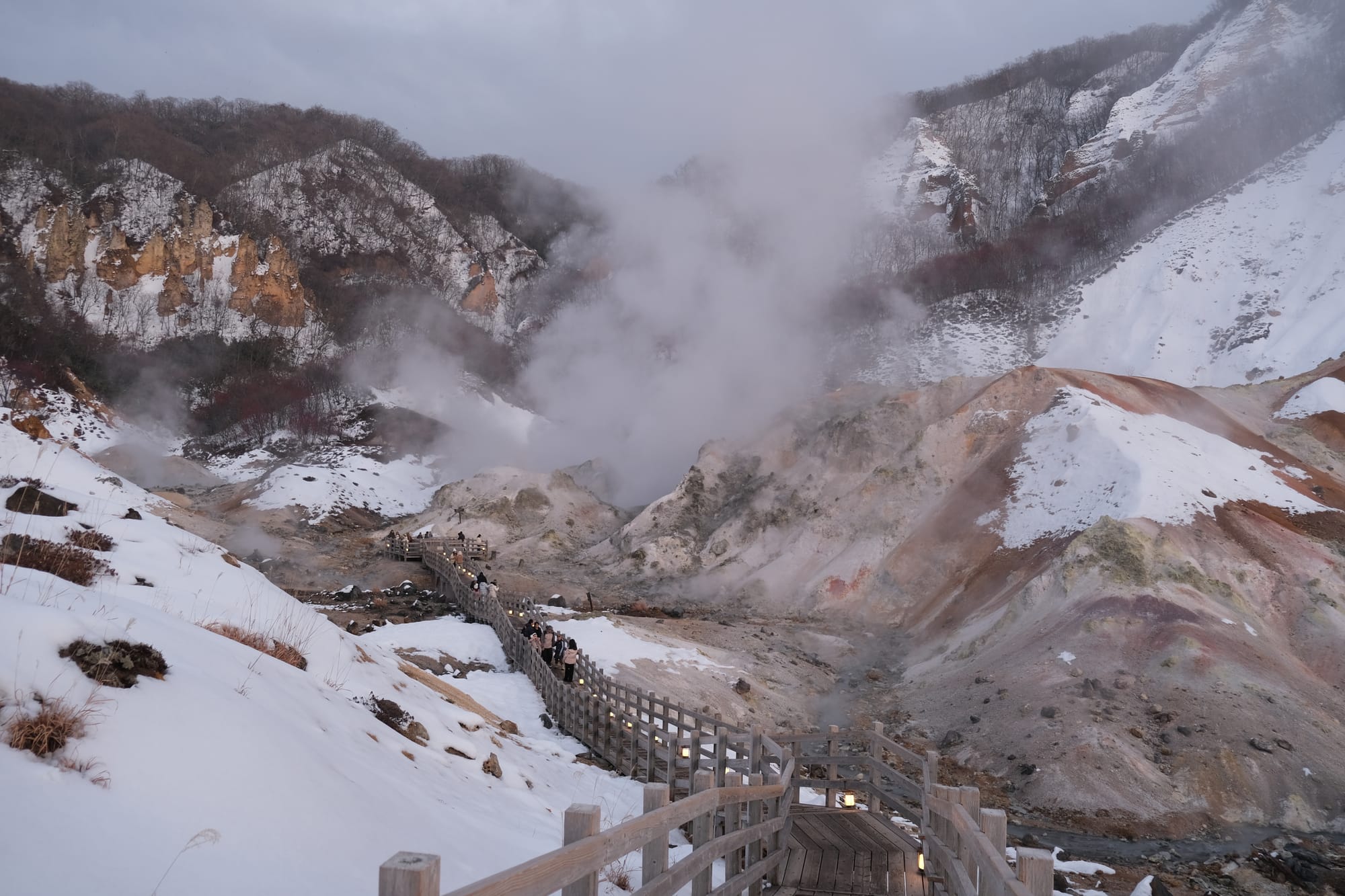
The board walk to the spring, taken at roughly the same spot one during the day the other at dusk.
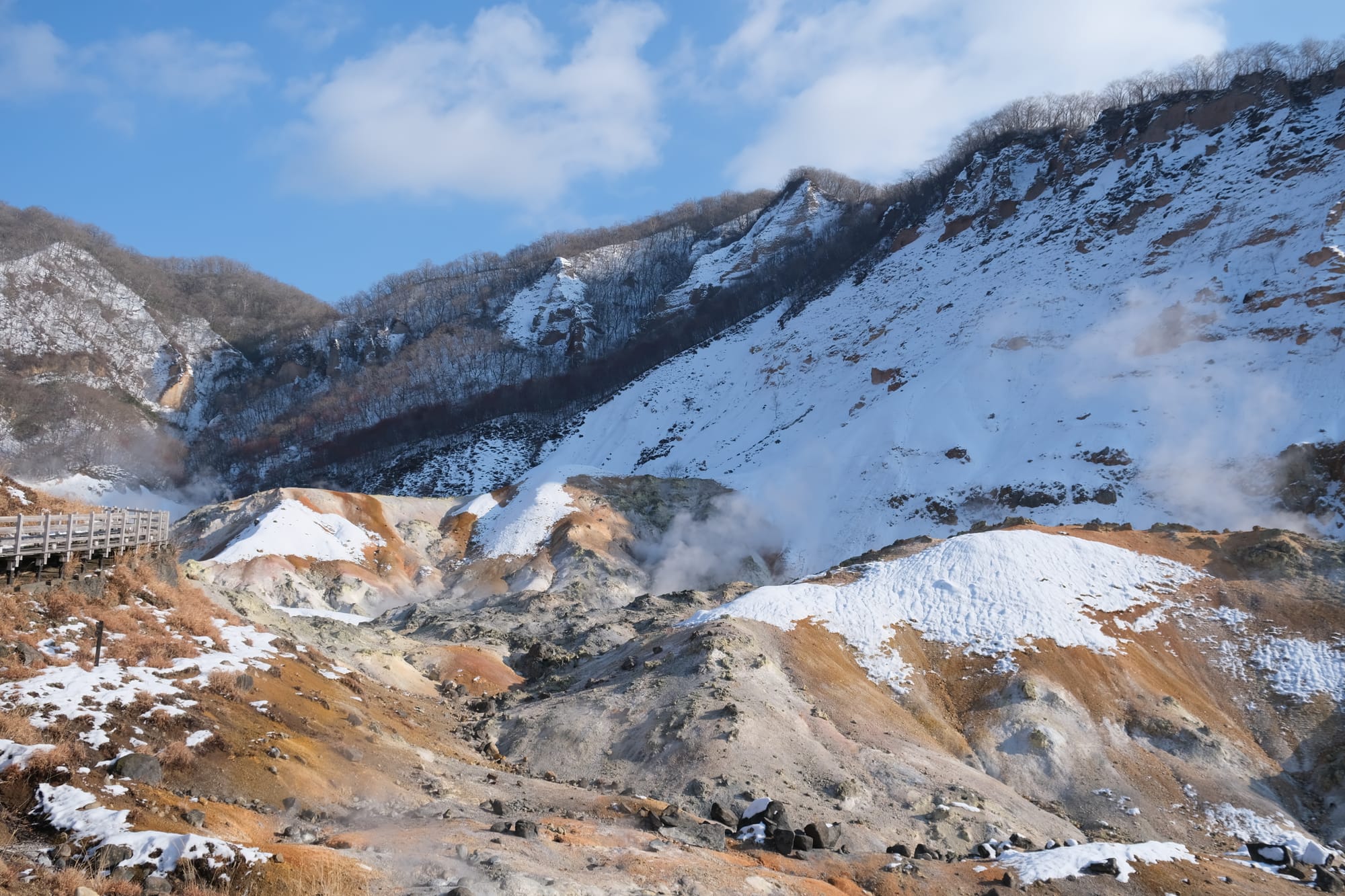
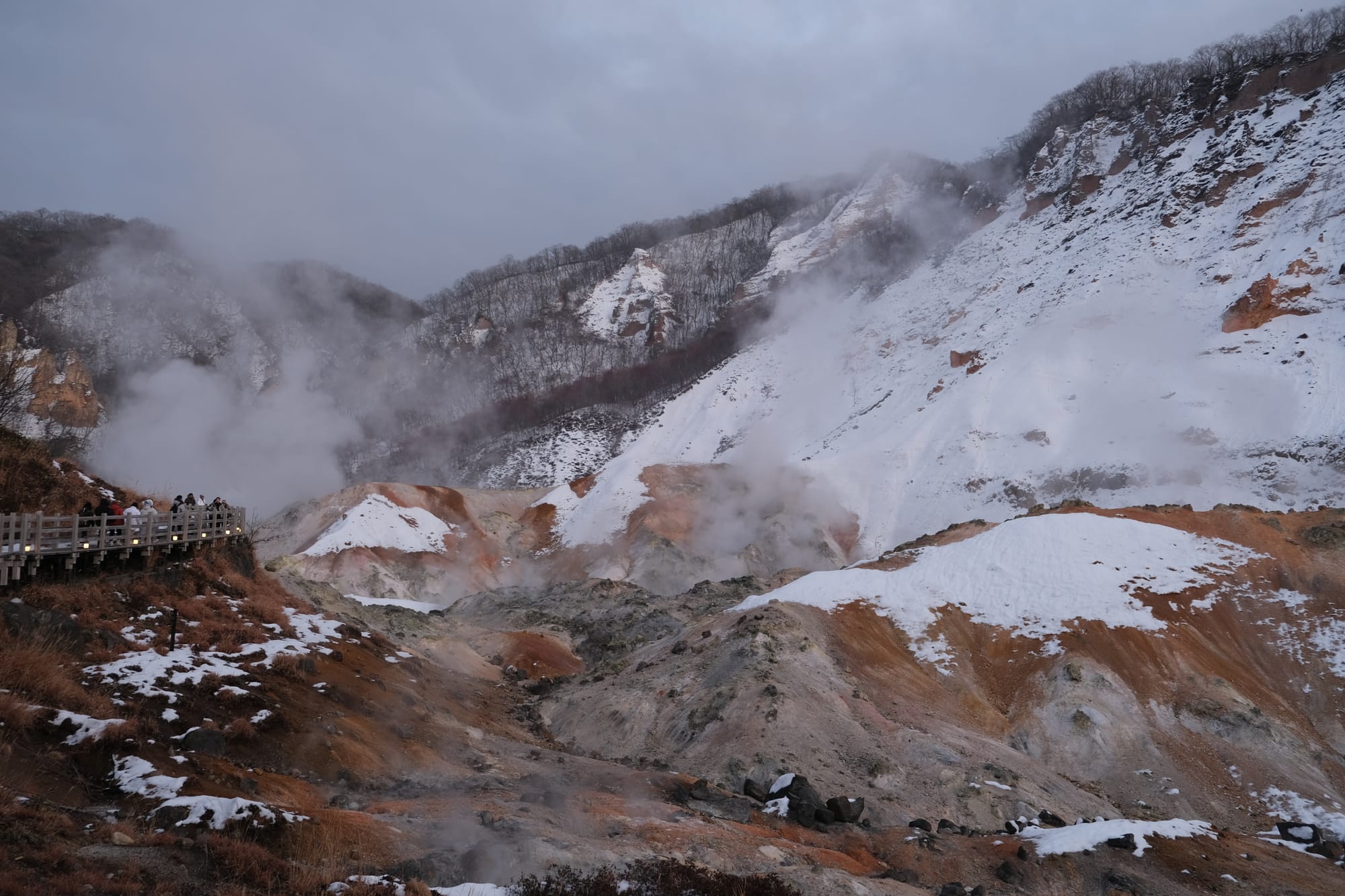
The central valley area with all the steam rising, both photos taken at roughly the same spot but one during the day the other at dusk.
Near the Jigokudani valley is a built up area with many hotels and some shops. This was where the bus dropped me in the morning and where I caught it back to my accommodation in Noboribetsu.
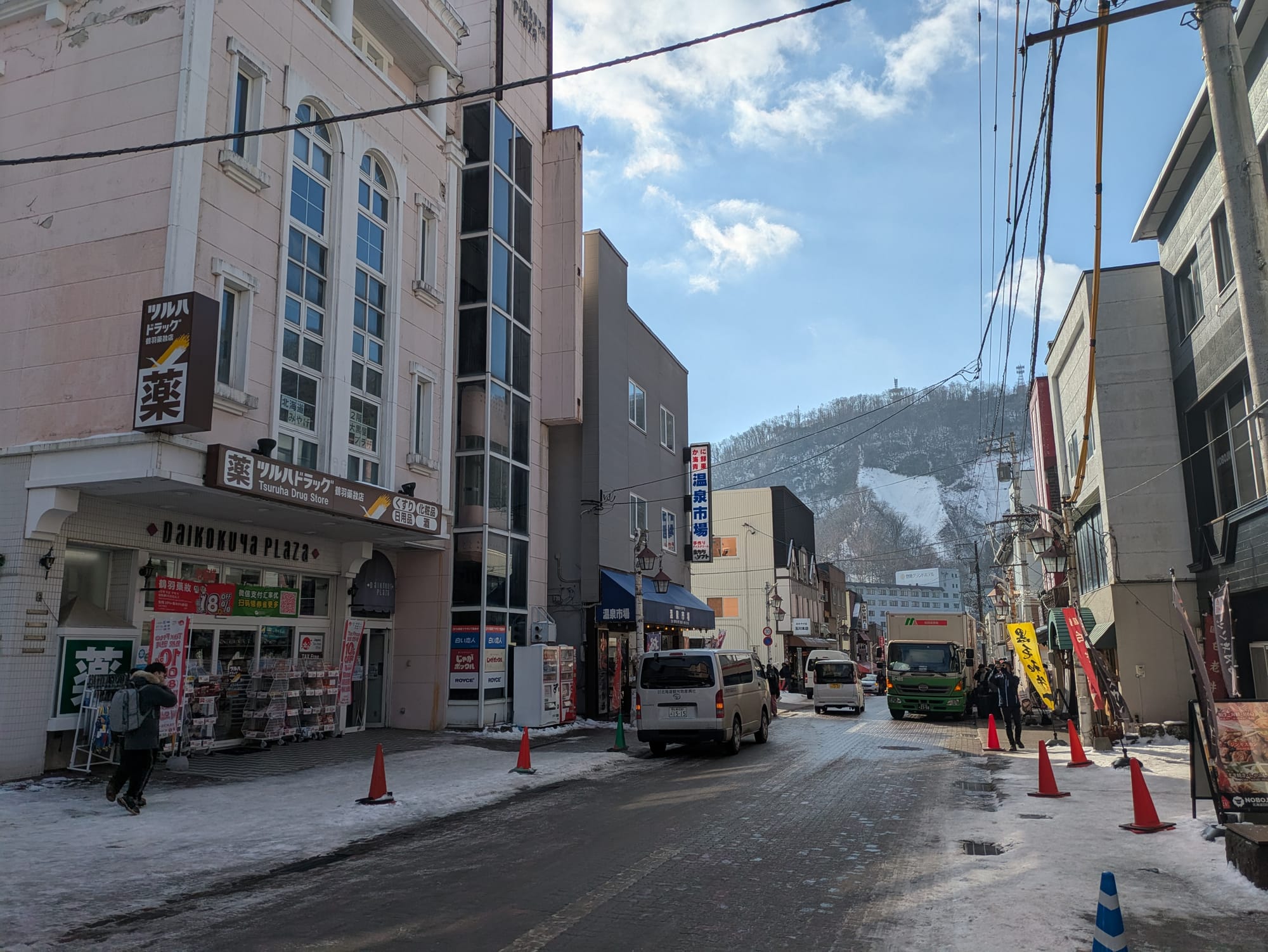
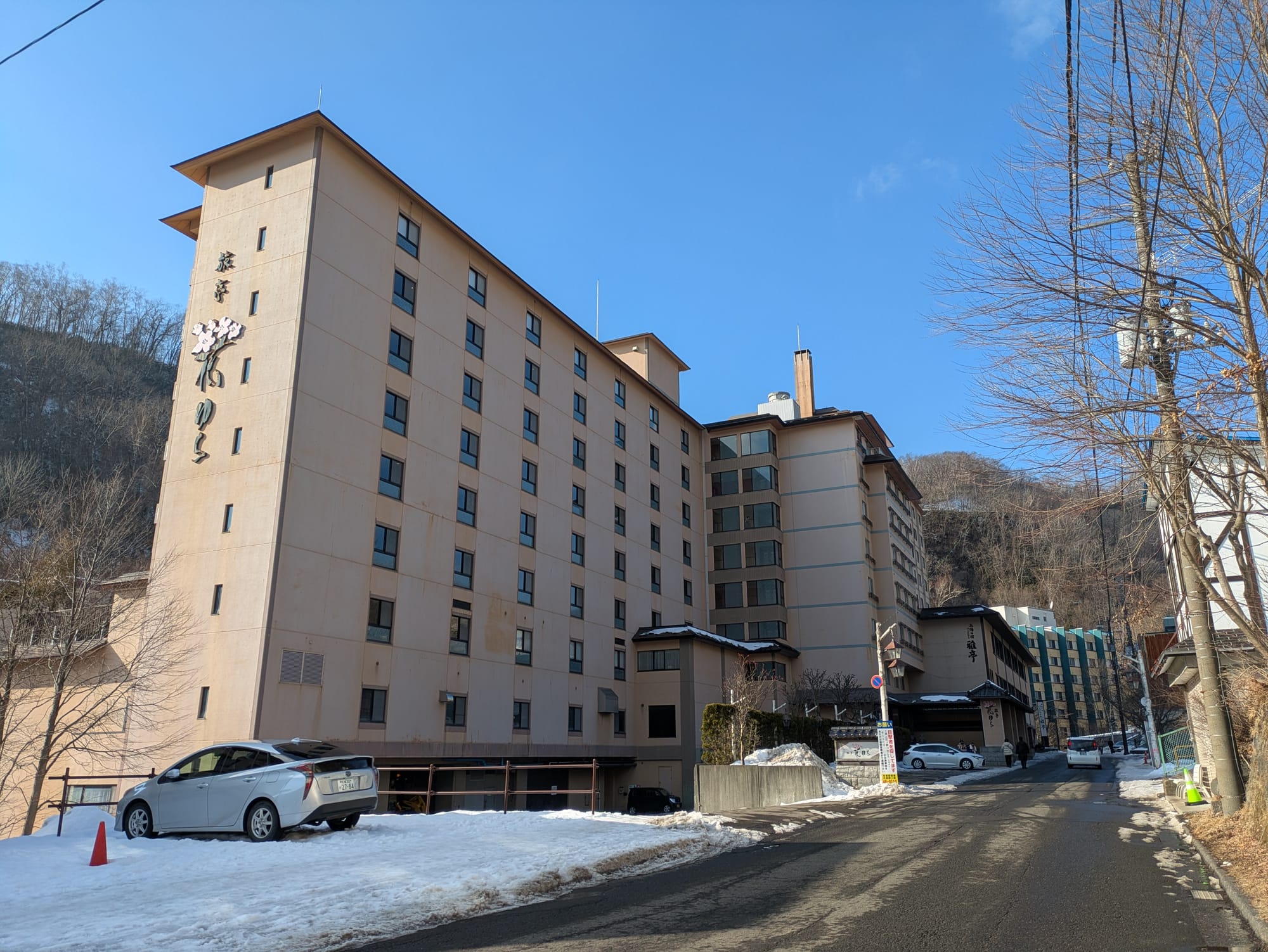
The main street and one of the big hotel buildings I walked past during the day.
I saw many tourists during my visit and there were so many hotels. Of course the main attraction here is the onsen and most people would come to relax in the hot springs. I was lacking in time (and too nervous) to try this out and I was far more interested in the natural geology of the site. I felt especially blessed to see this place in winter. Even though many of the trails through the nature reserve were closed I felt it was worth it because I loved seeing the contrast of snow and volcanic activity together. It was unique compared to other volcanic sites I have seen elsewhere (New Zealand), but I do hope to visit again in a different season and explore more of the nature trails I missed this time.
My accommodation was just a short walk from the bus stop. Once I checked in I bought a convenience store dinner and rested after perhaps my first fully packed day in Hokkaido.
Thanks for reading – Edward
Written 13th of May 2025