The Palaces of Seoul
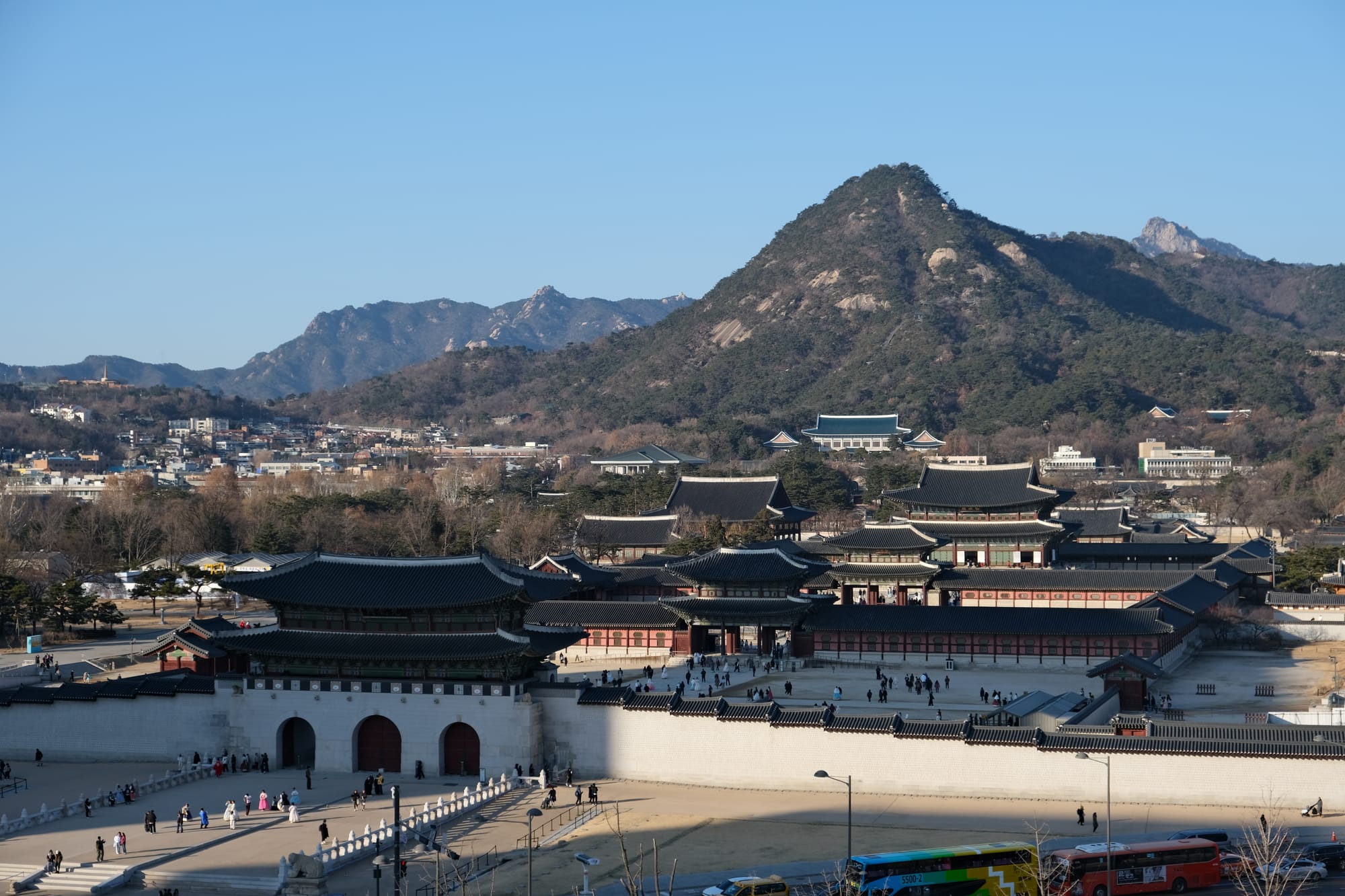
On the first two days of 2025 I visited three of the five royal palaces in Seoul. We (my brother and I) spent the afternoon of new years day at the Gyeongbokgung palace, having slept in for the morning because we stayed up late on new years eve. The next day we went to Changdeokgung palace first thing in the morning, and then I visited the adjacent Changgyeonggung palace by myself before I met up again with my brother at a museum.
Gyeongbokgung Palace
This palace is the oldest and largest of the royal palaces. It was the first palace of the Joseon dynasty (the last and one of the longest raining dynasties in Korea) and acted as their primary palace before it was destroyed by the Japanese at the end of the 16th century. It remained in ruins for nearly 300 years before being restored by the last Joseon king. The palace was again destroyed during the Japanese colonial period but now it has been restored in the last few decades to its pre-colonial state.
Of all the palaces I visited it was certainly the largest and most grand. There were many people visiting that day, and many of them were wearing the traditional hanbok attire; those who wore a hanbok had free admission into the palace. There were three large courtyards set up in sequence to get to the throne room, with hugely impressive gates situated between them. In the first courtyard, we happened to arrive just in time to see the changing of the guard ceremony. Behind the throne room building are buildings for the king's offices and the residences for both the king and queen. Further behind, and surrounding the courtyards, are the gardens where there are situated a couple of ponds. We were able to explore most of the palace grounds both on our own and with an English tour group.
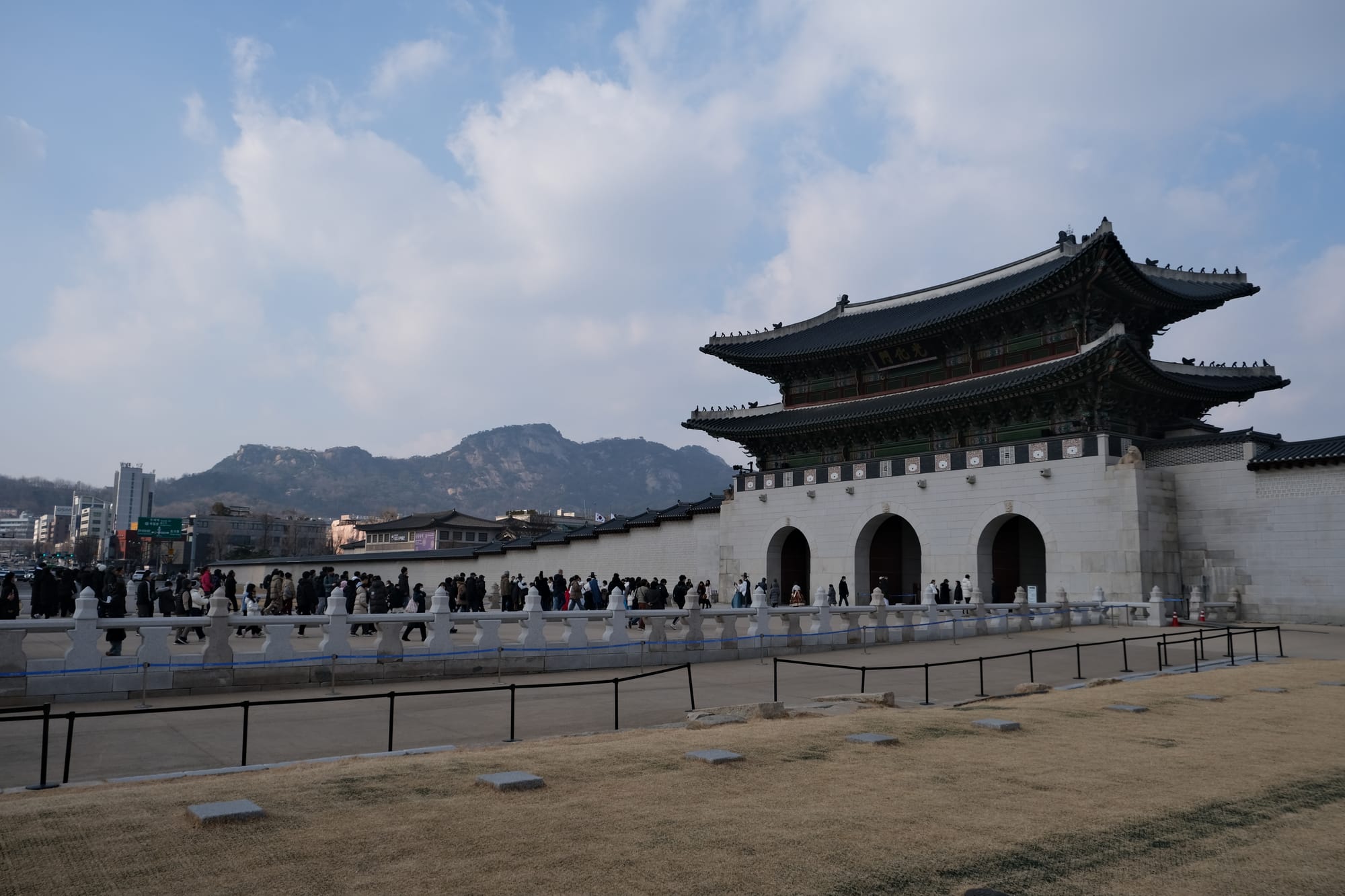
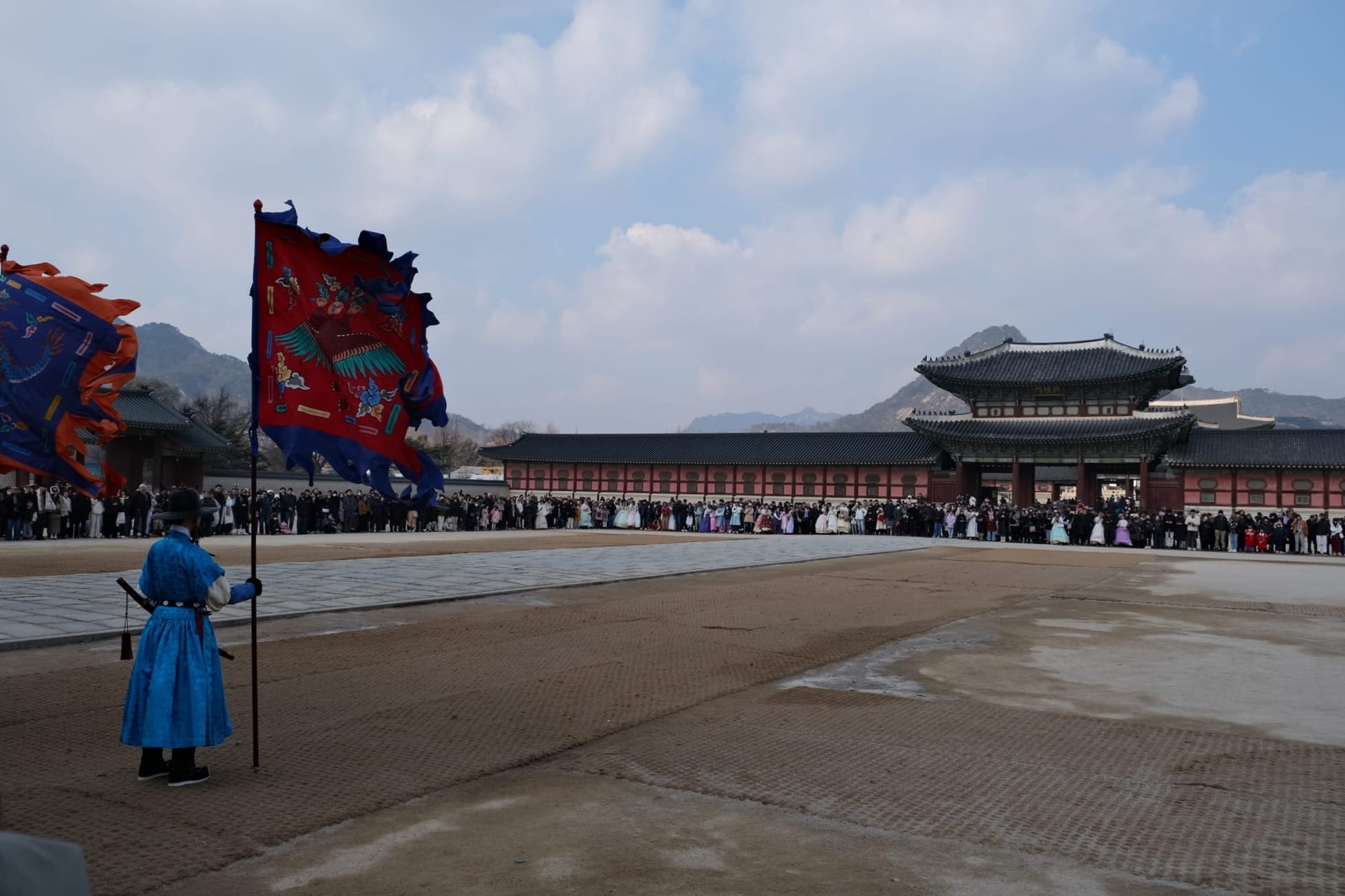
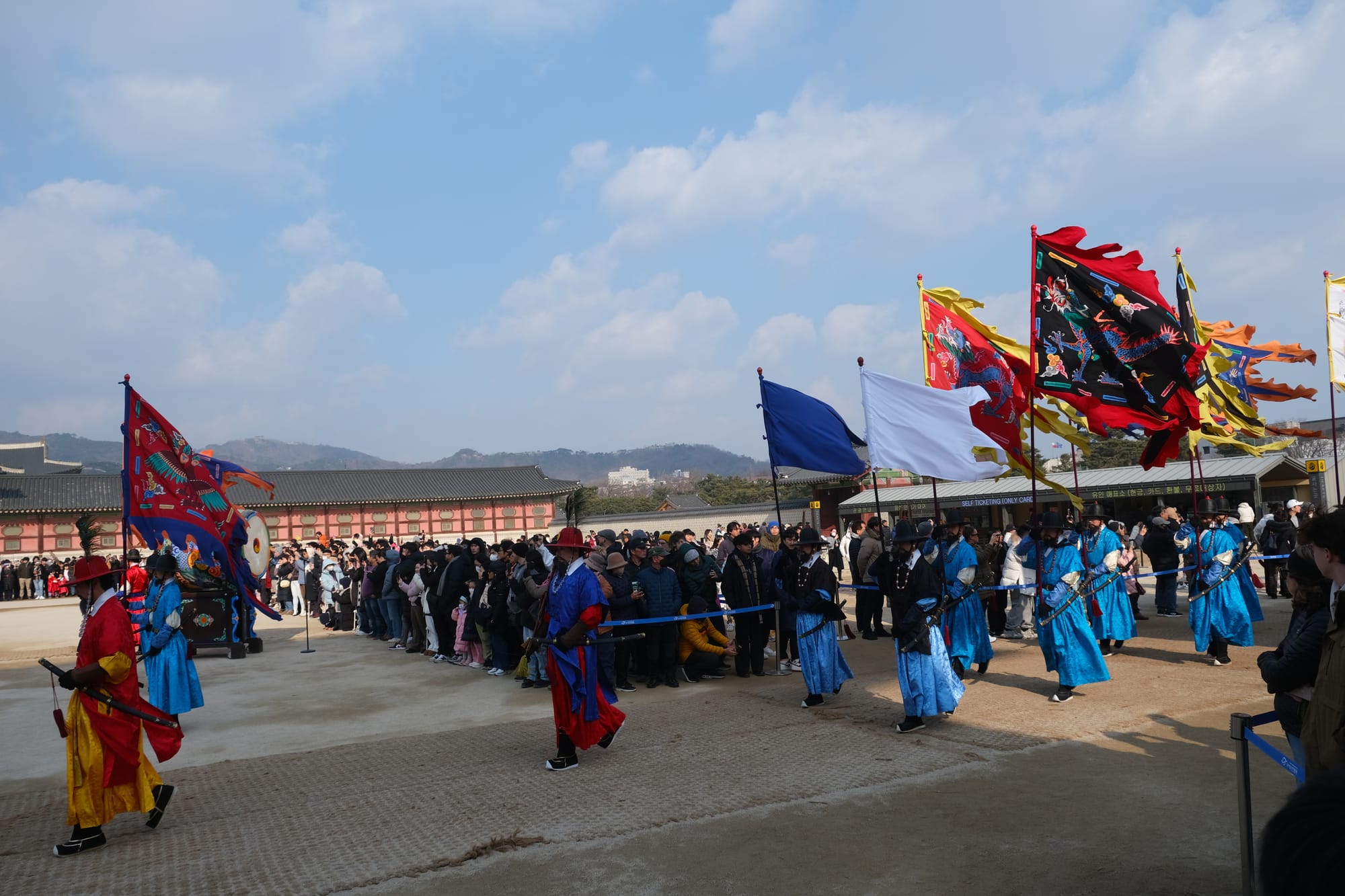
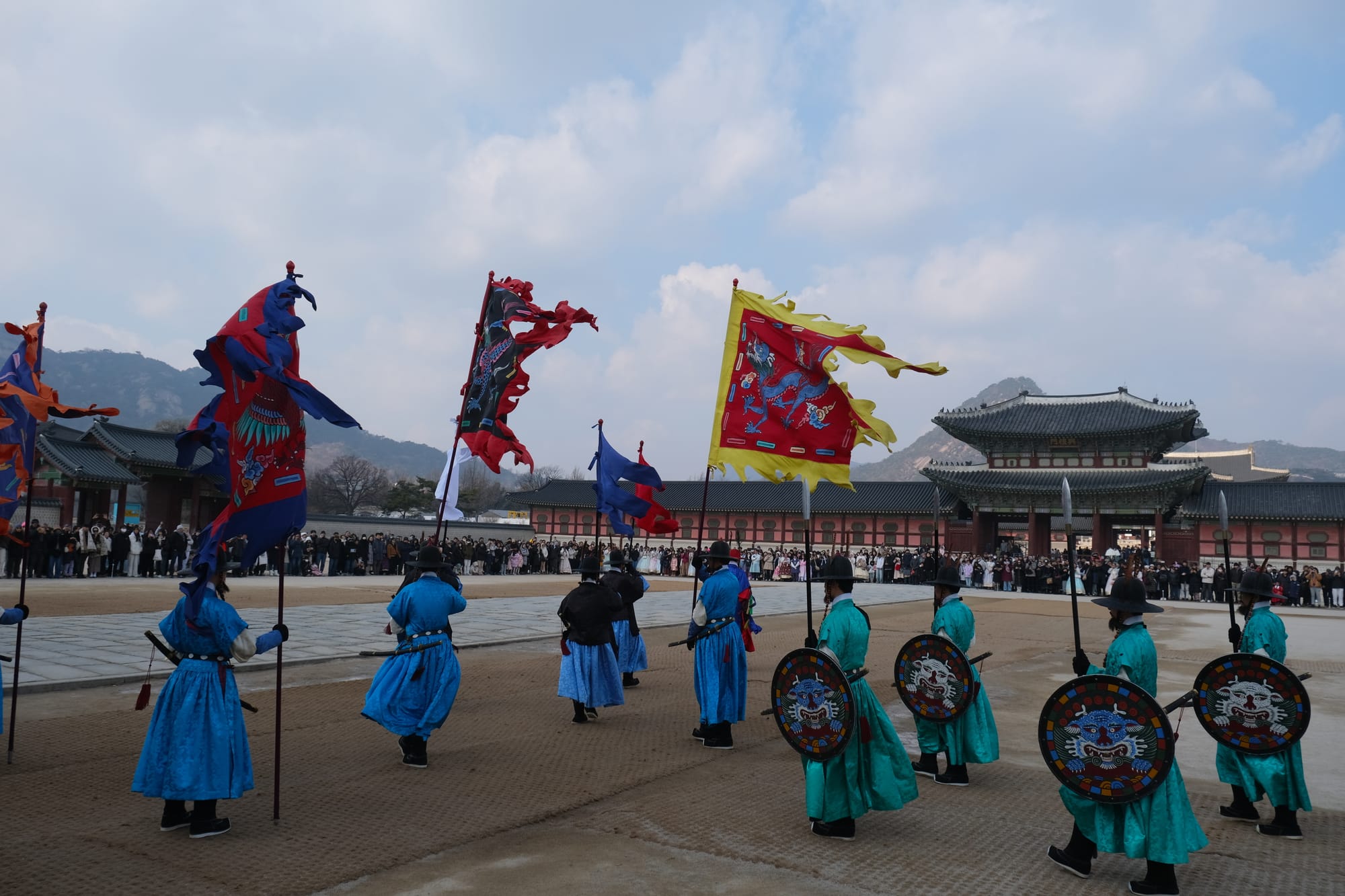
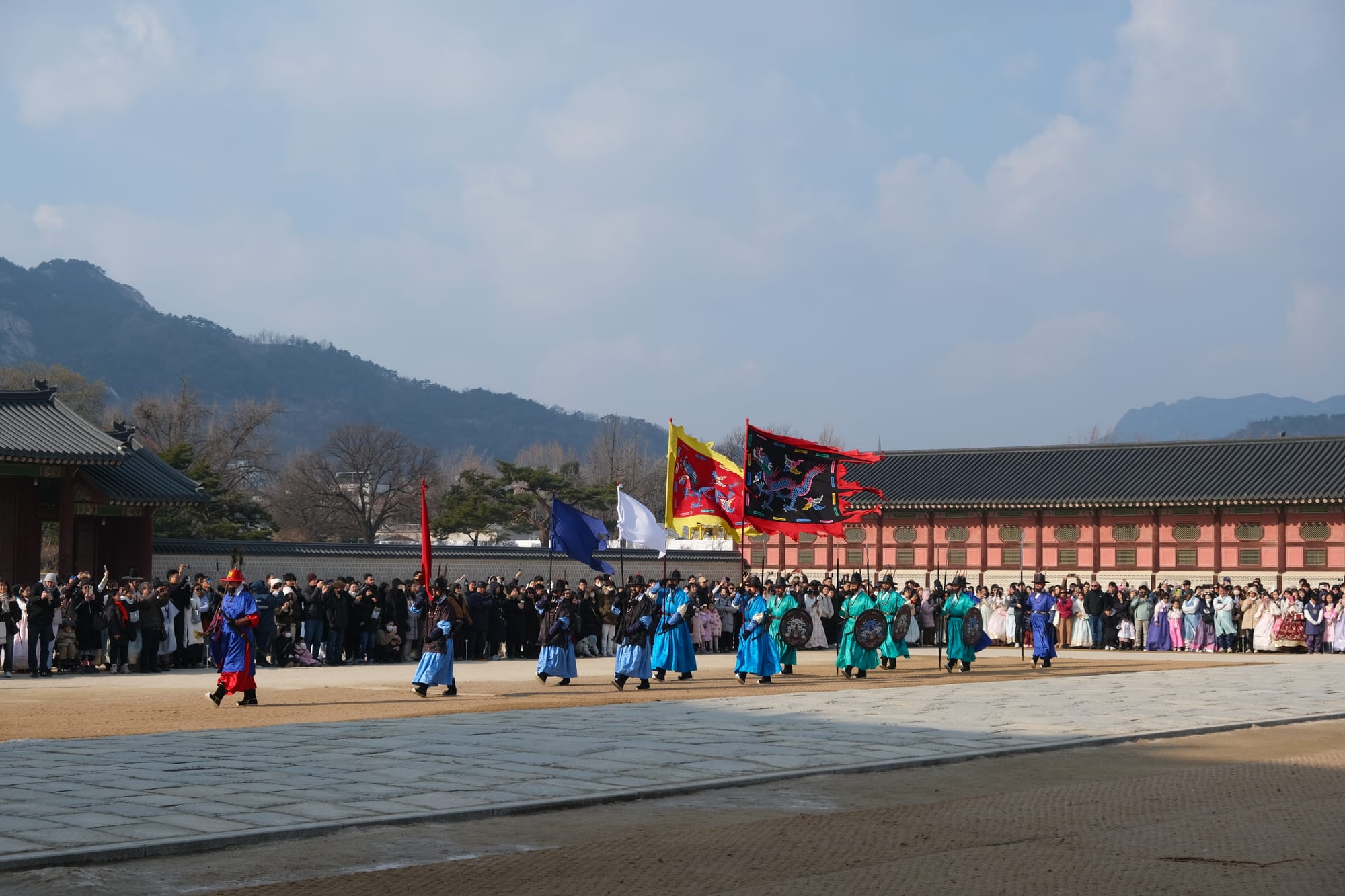
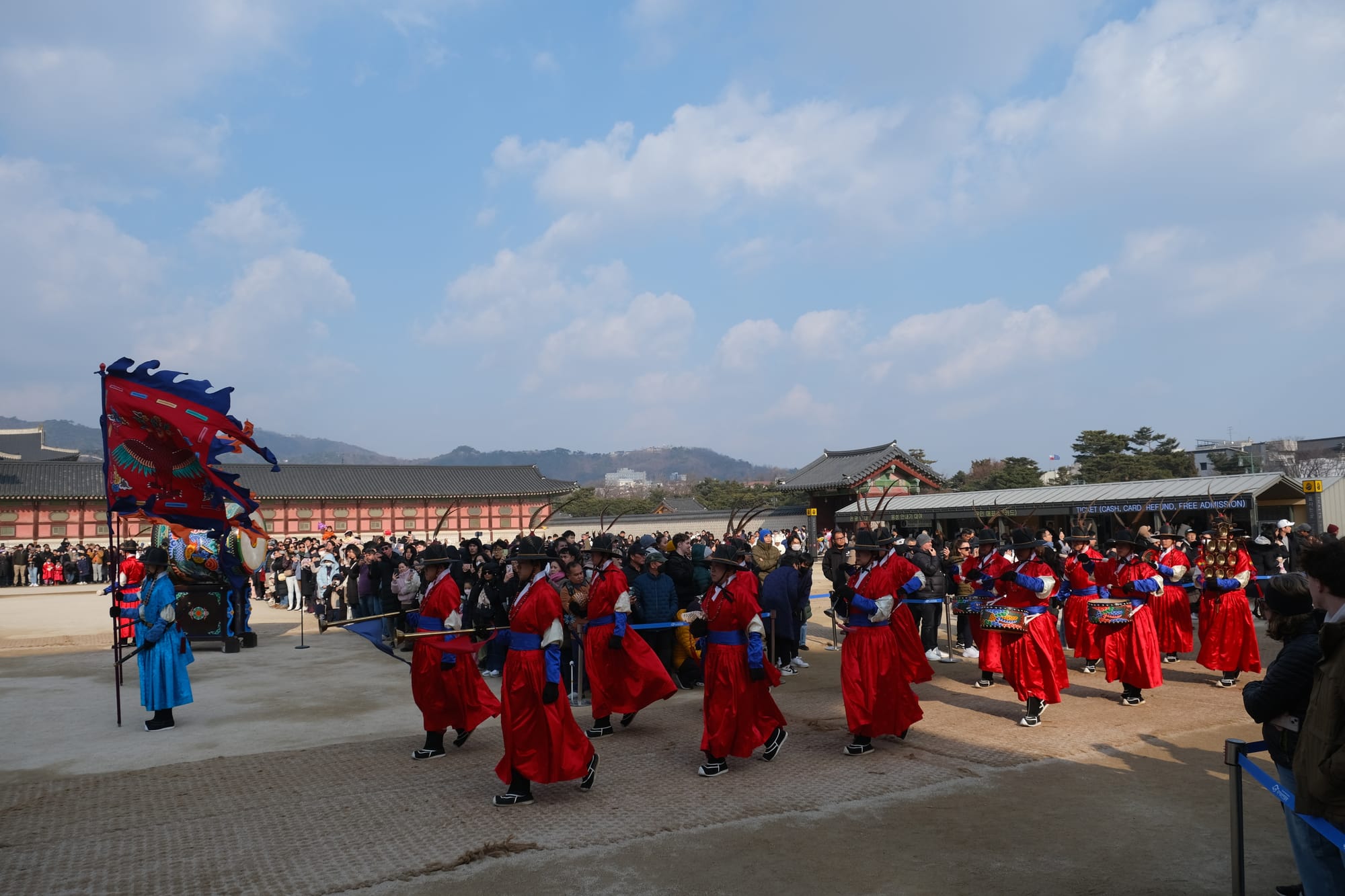
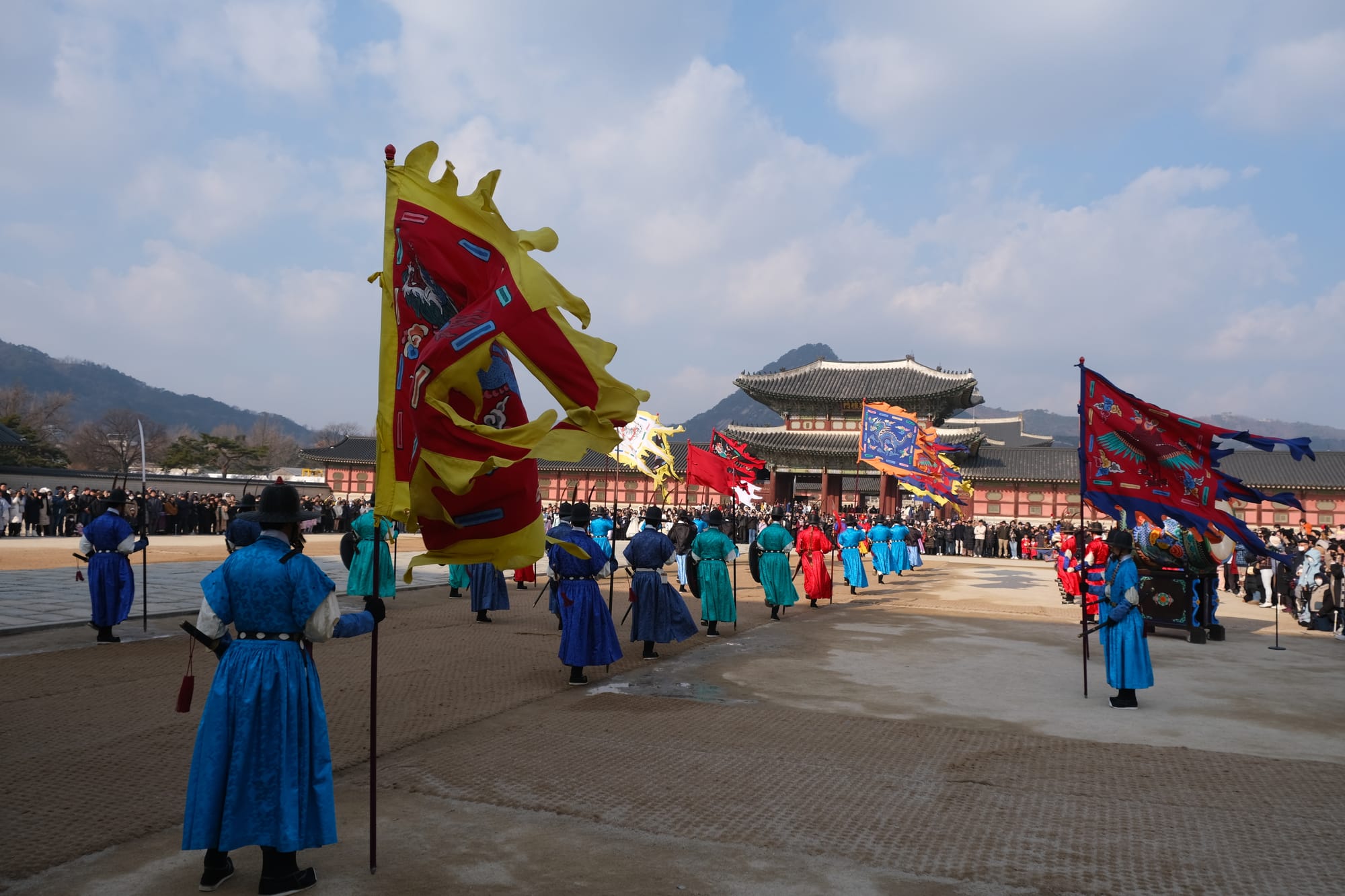
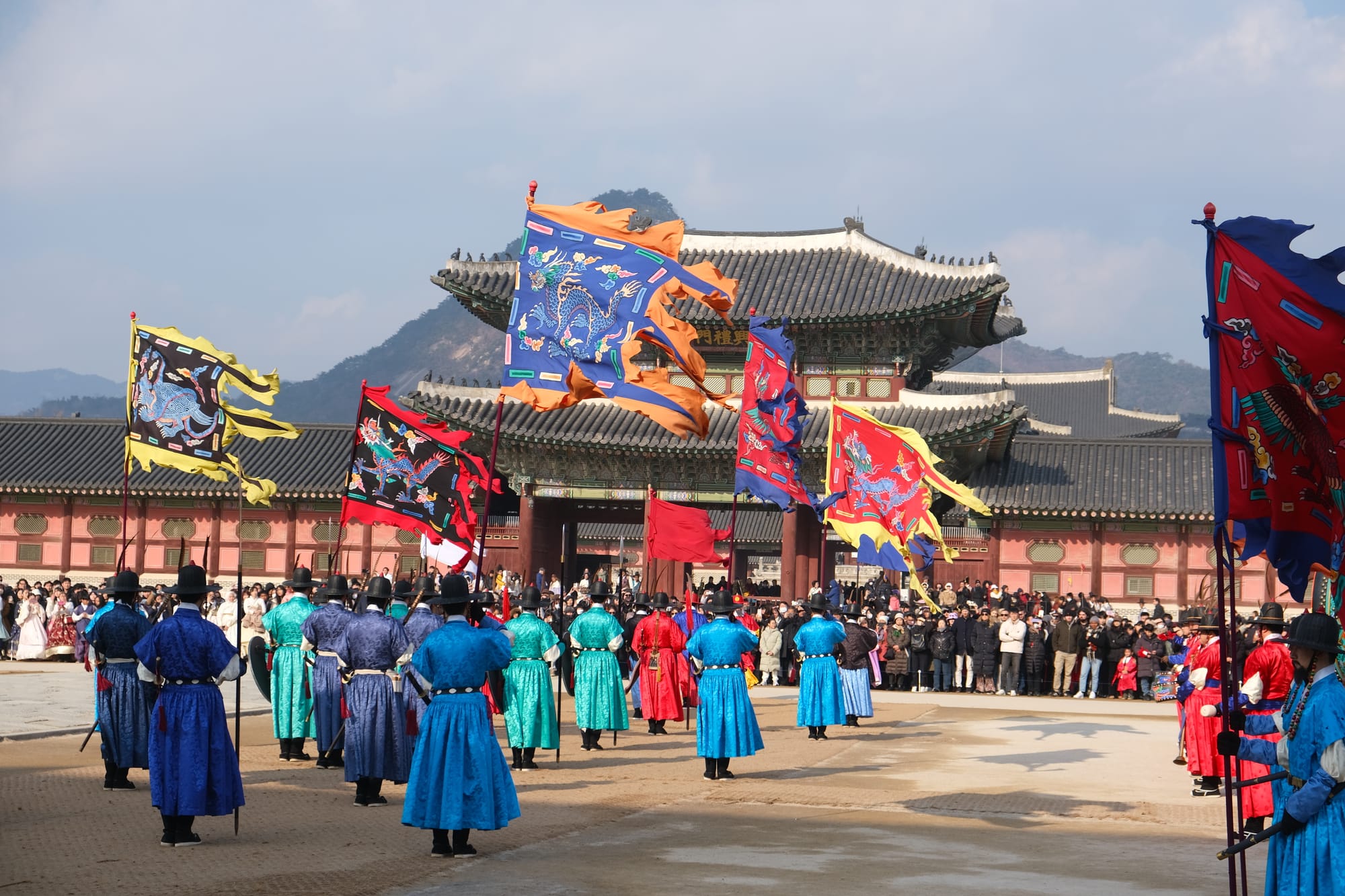
Multiple squads, in different coloured uniforms, arrived into the courtyard bearing large elaborately decorated banners.
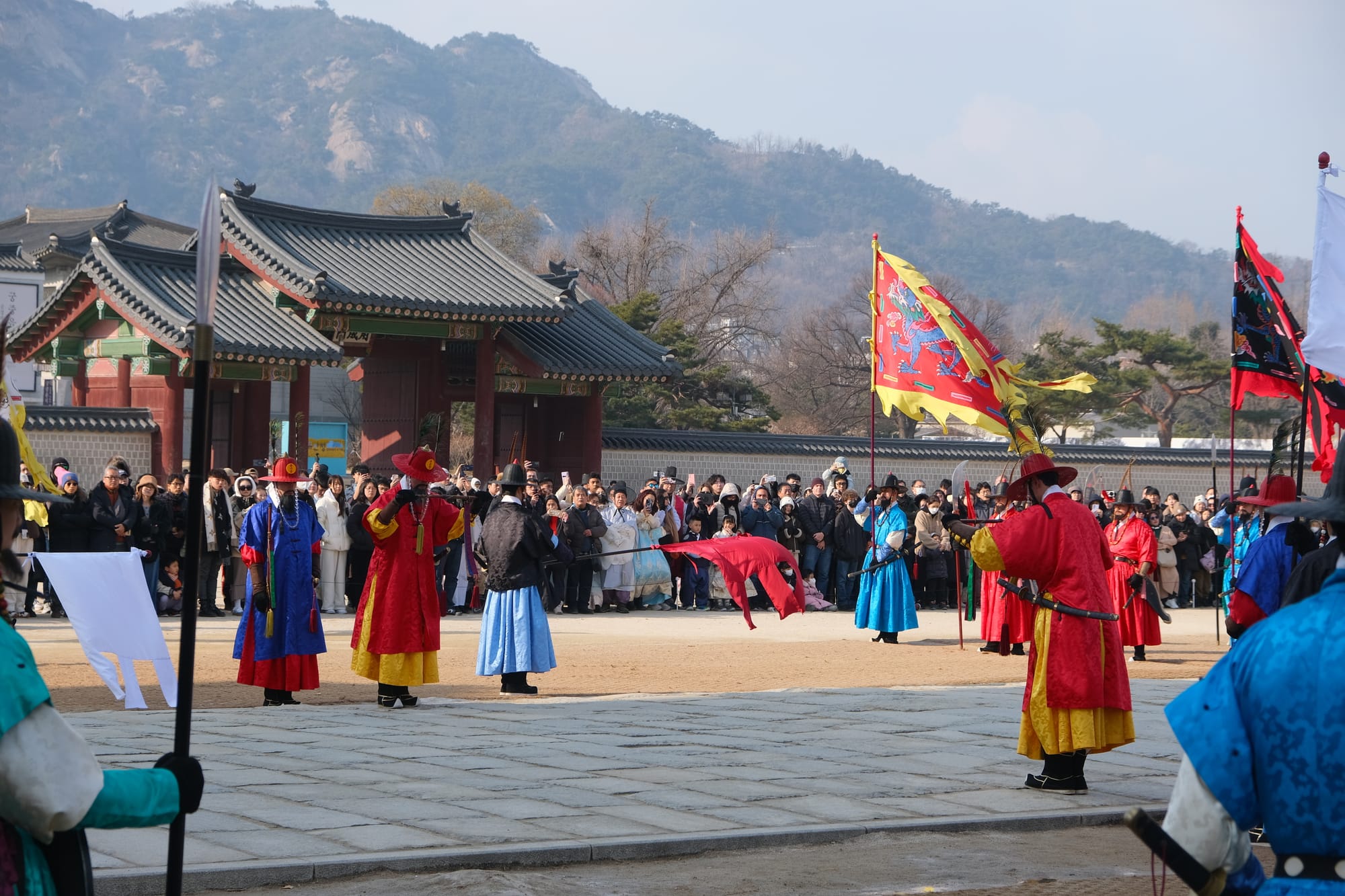
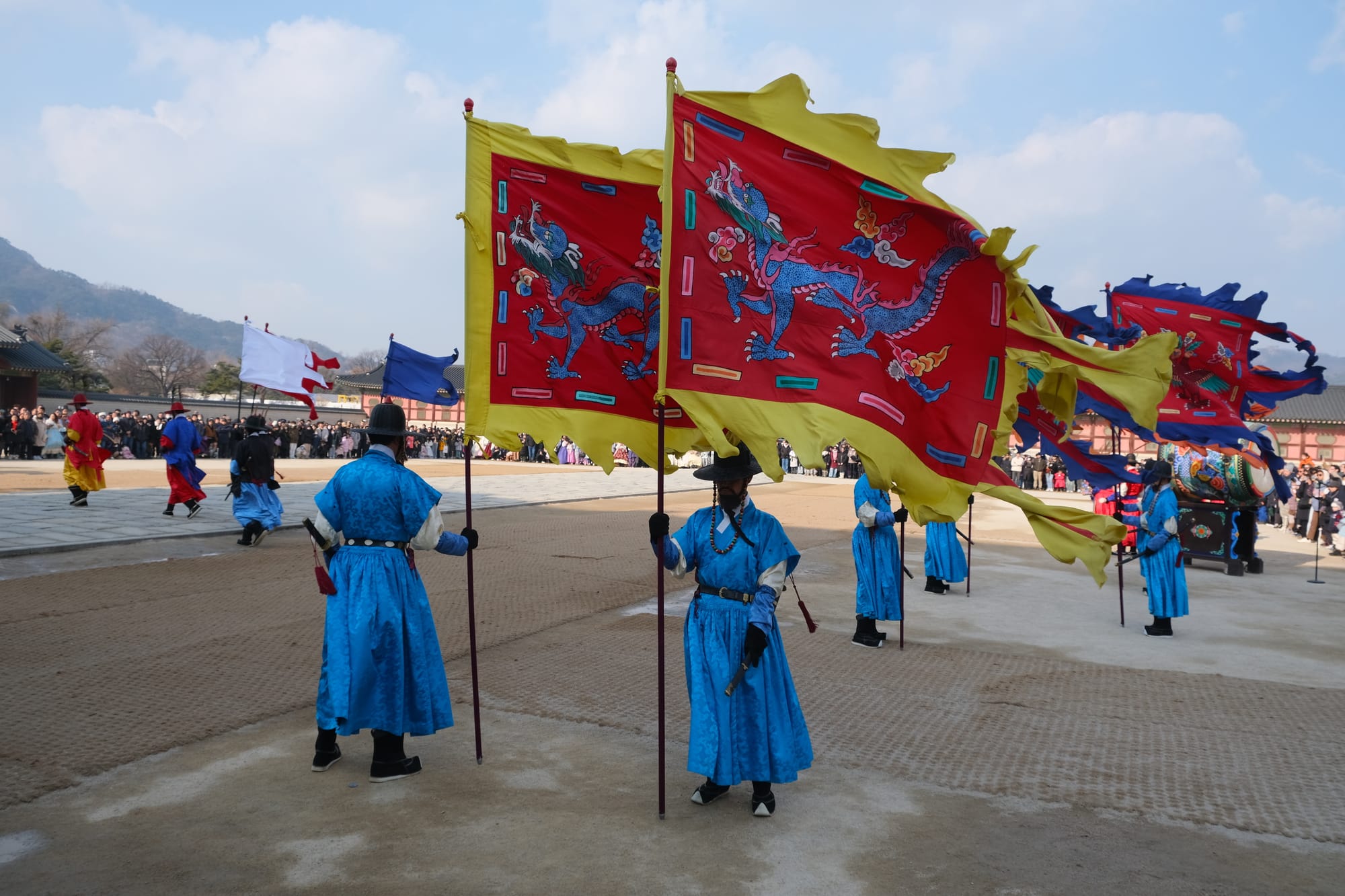
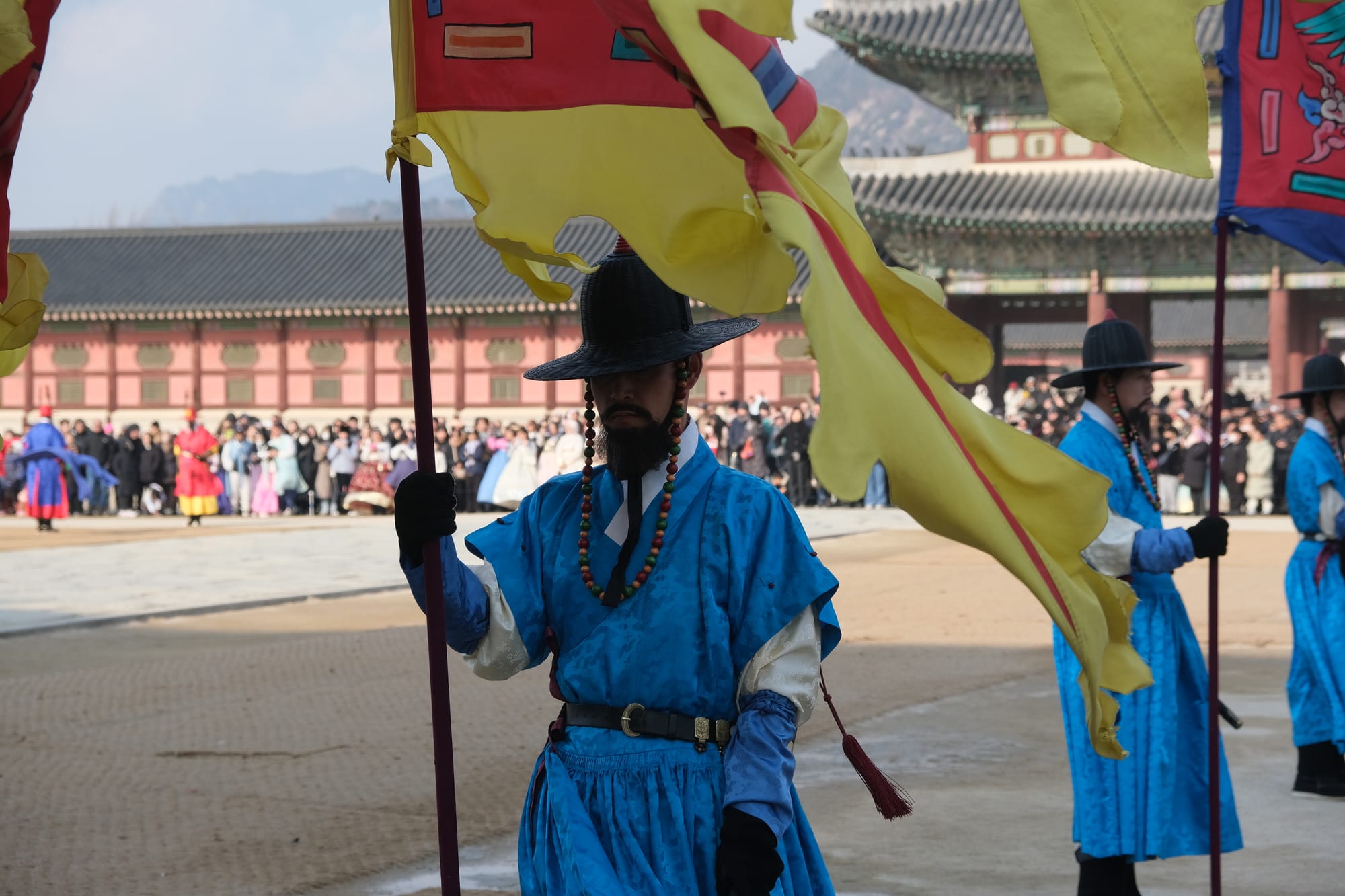
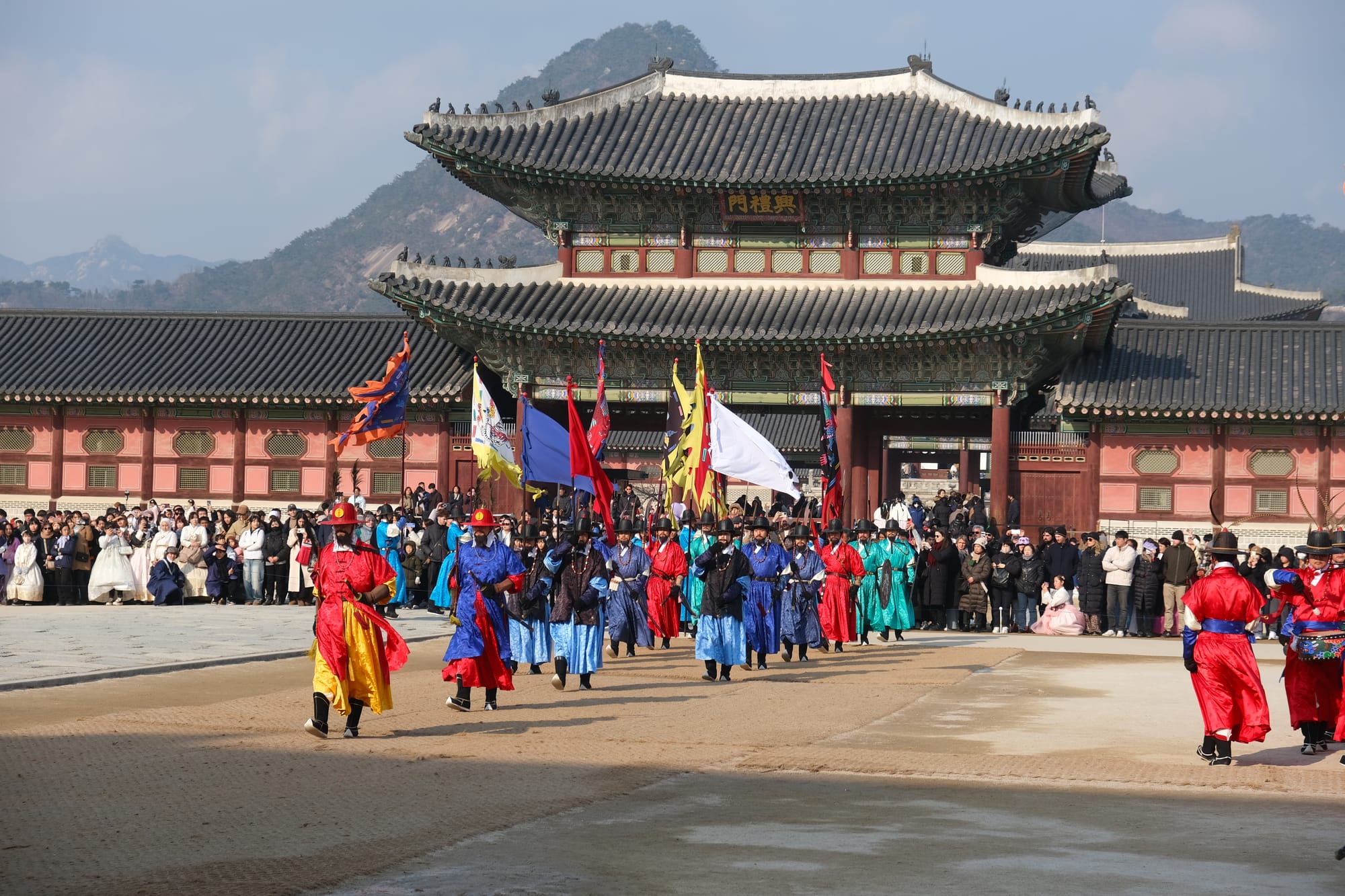
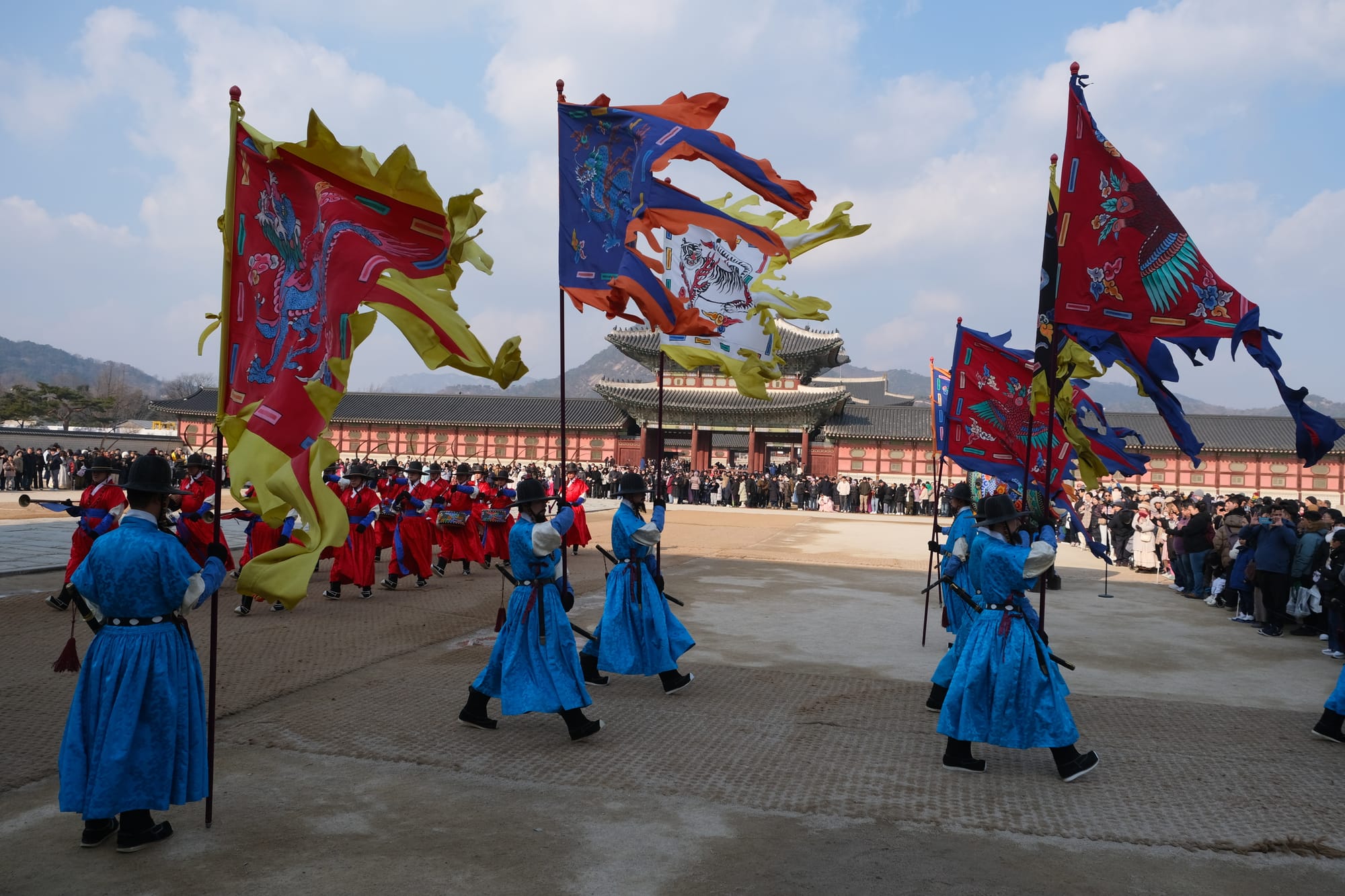
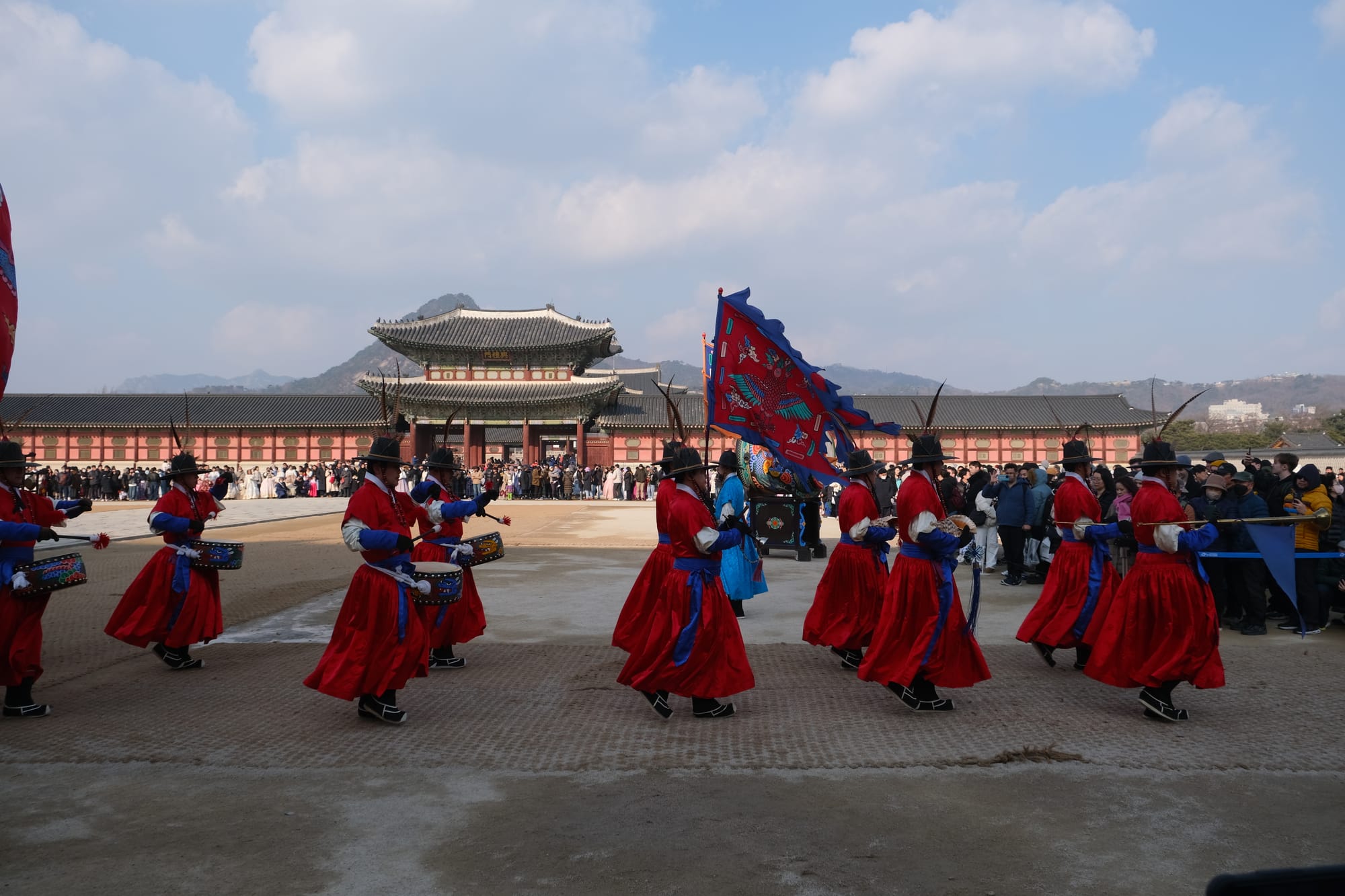
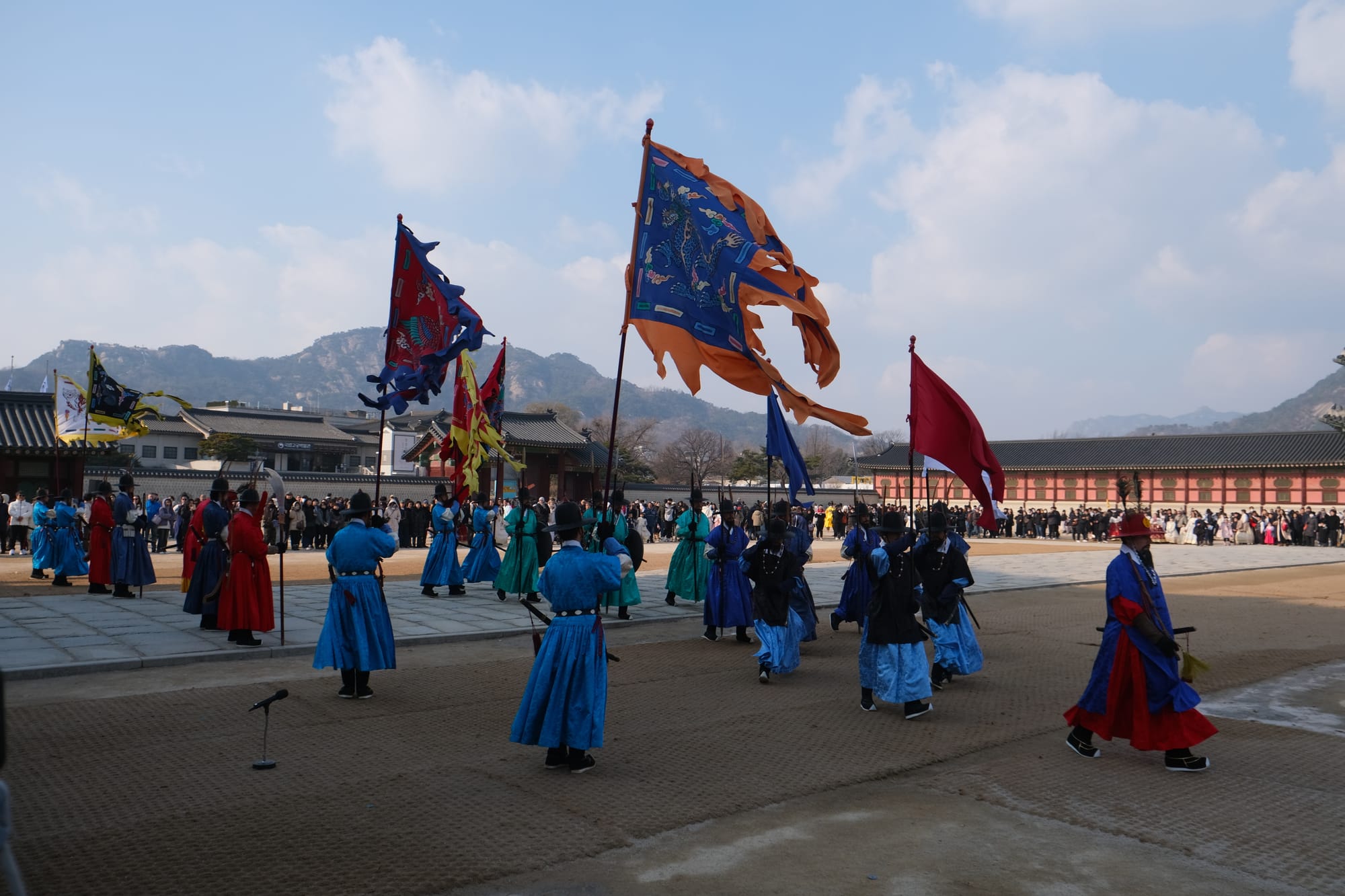
The on duty guards and flag bearers swapped with their replacement, then the old guard and the supporting squads marched out of the courtyard.
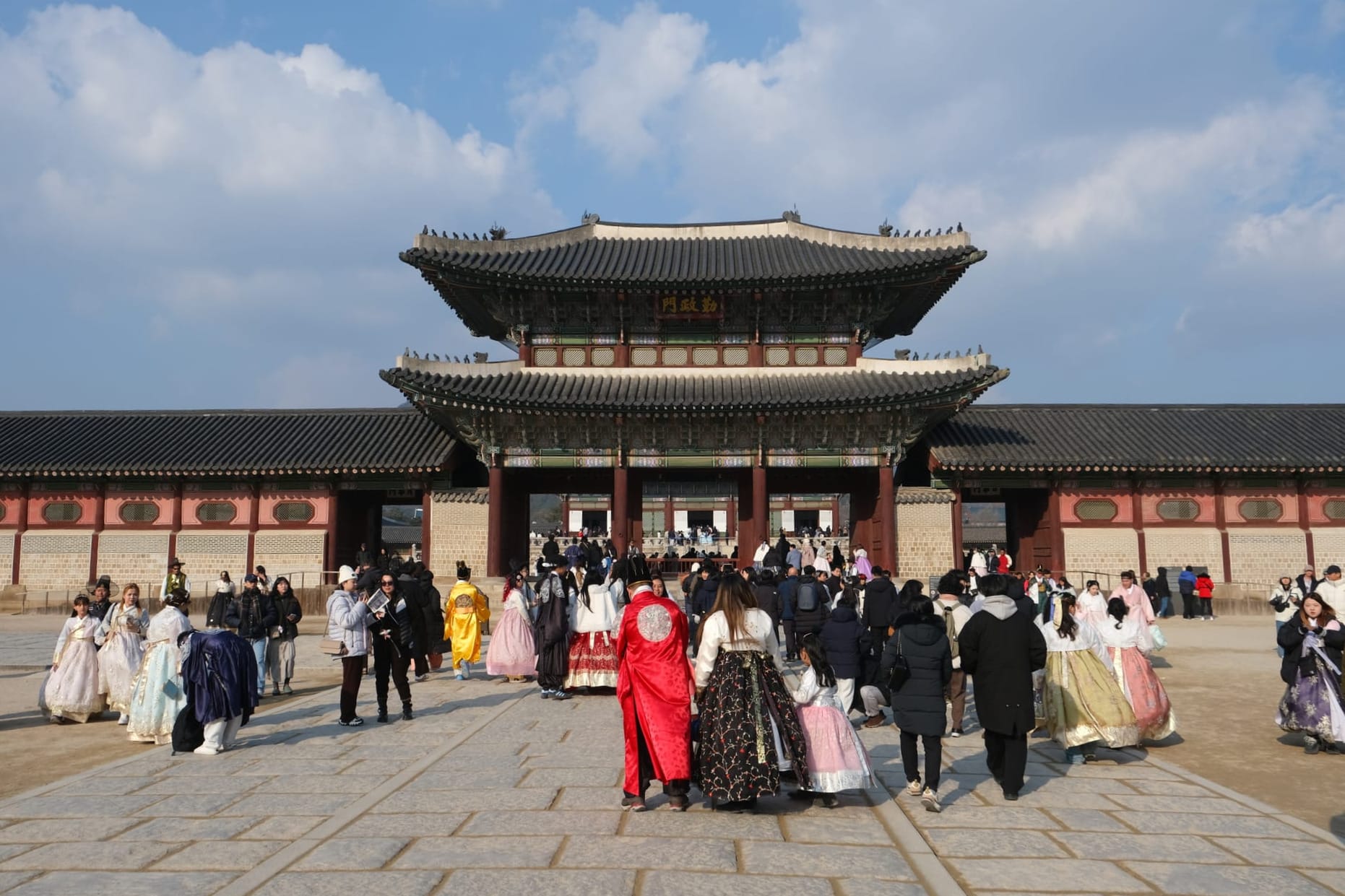
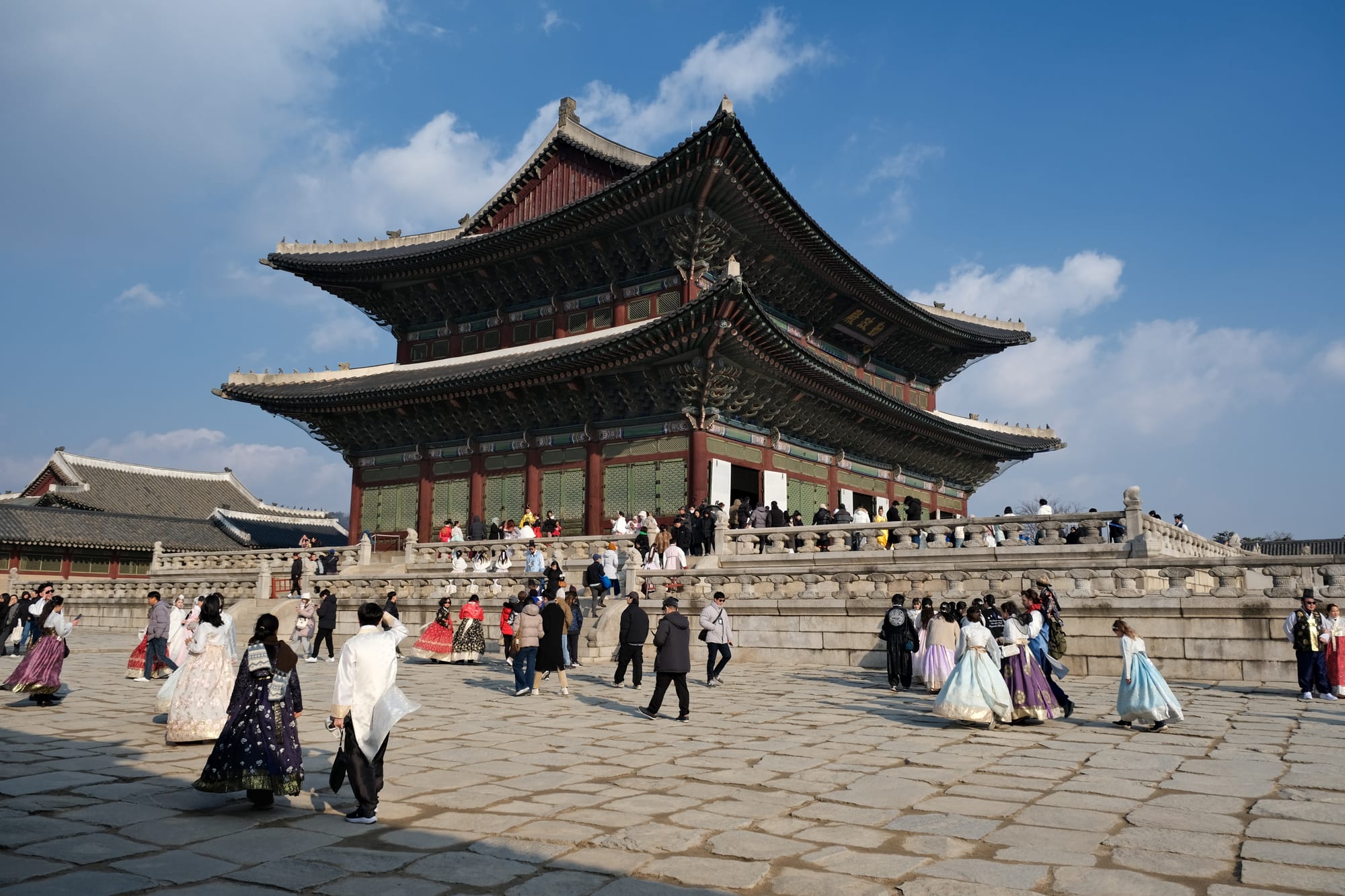
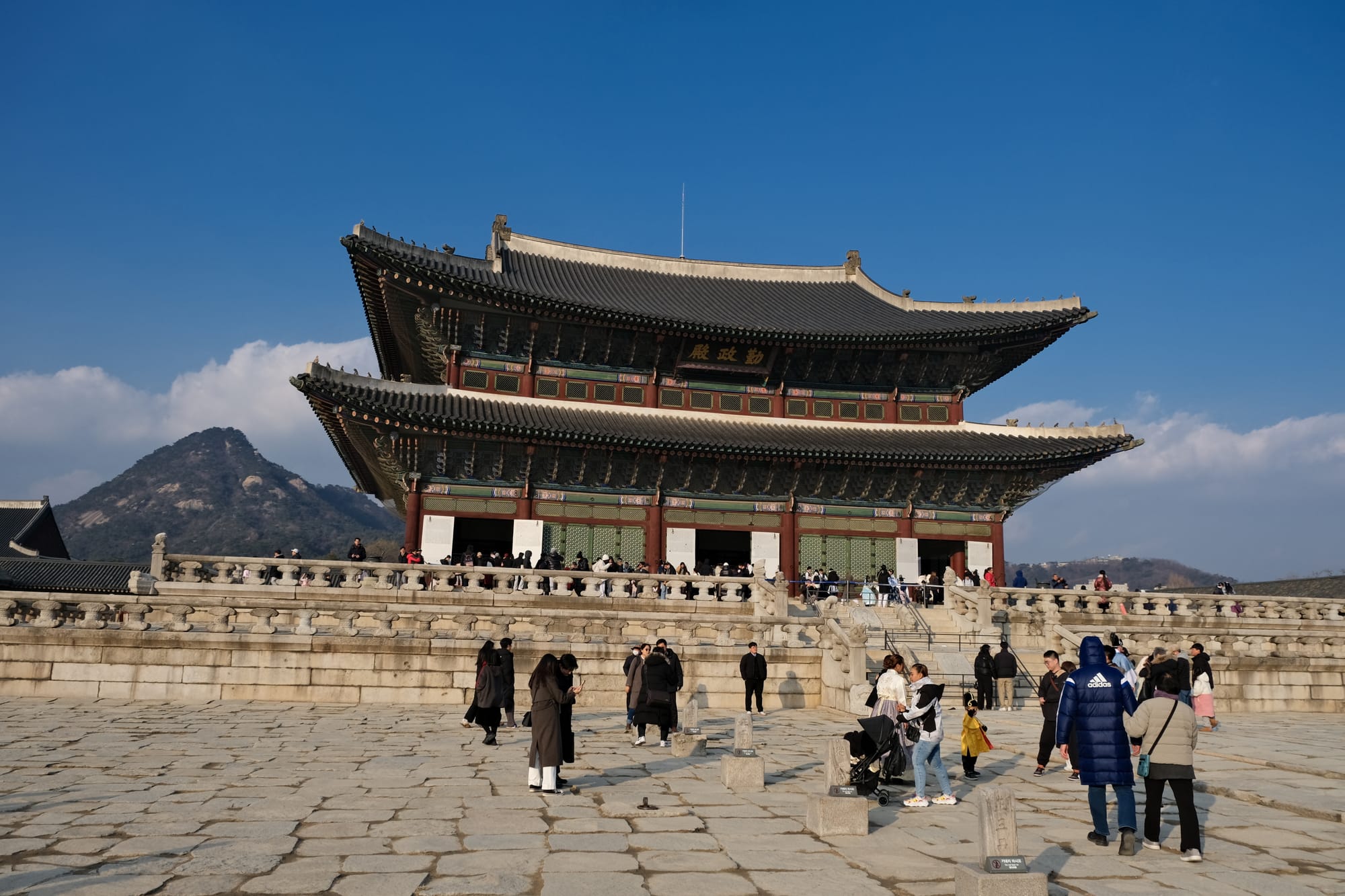
The main throne hall of the palace and the biggest throne room I saw in Korea.
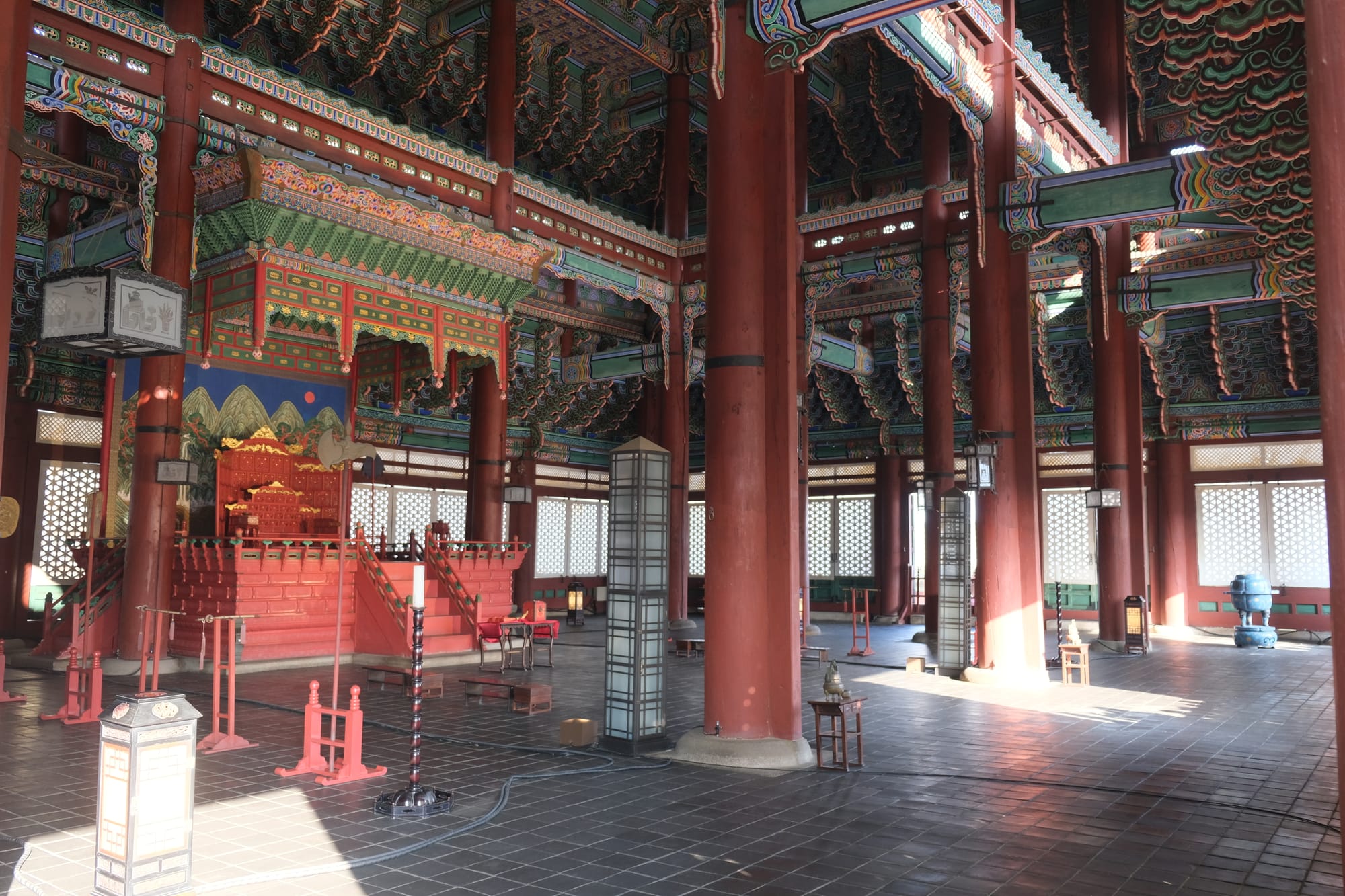
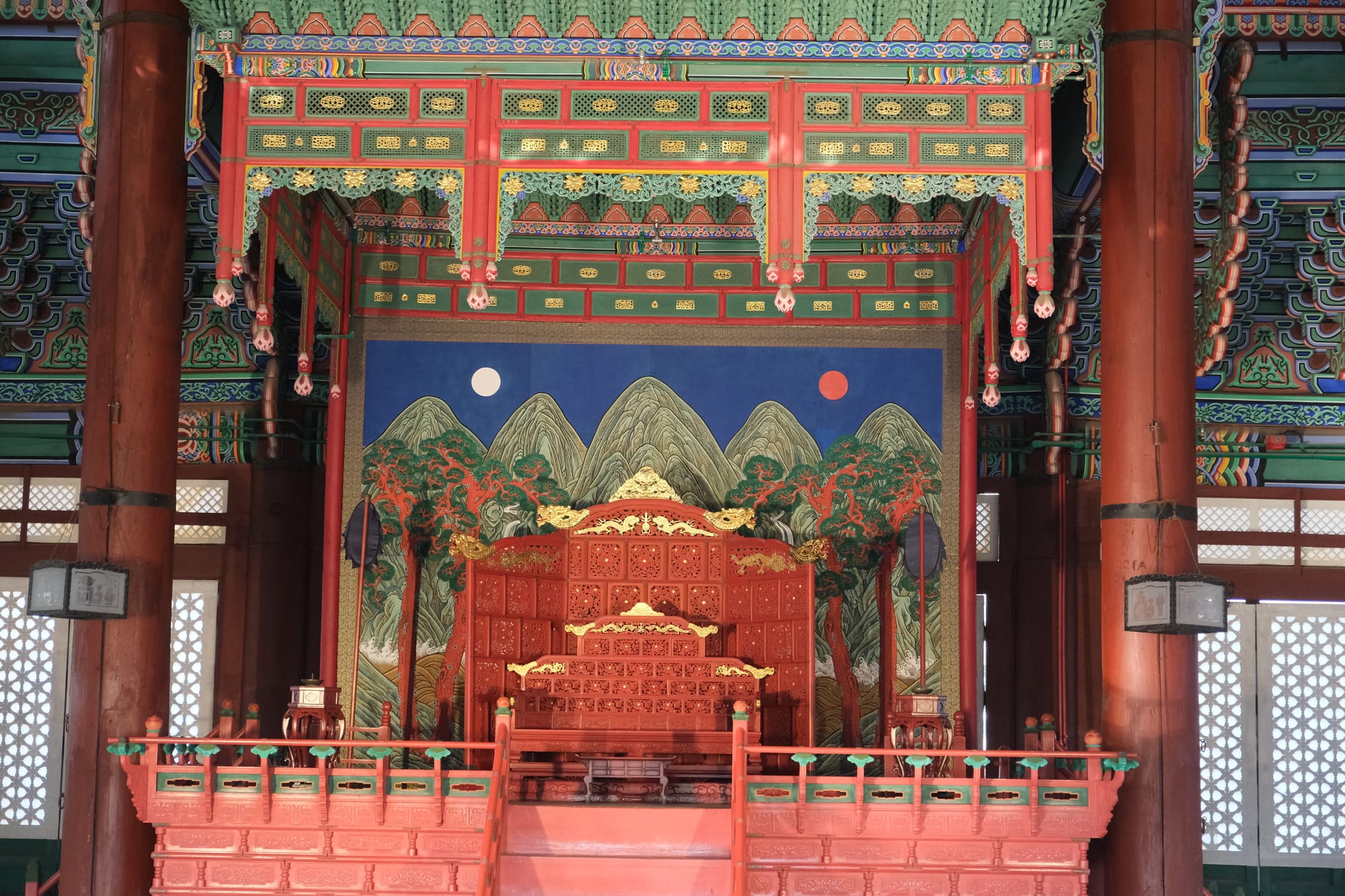
The interior of the palace. The painting of the 5 mountains with the sun and moon was set behind the throne and served as a symbol of royal authority.
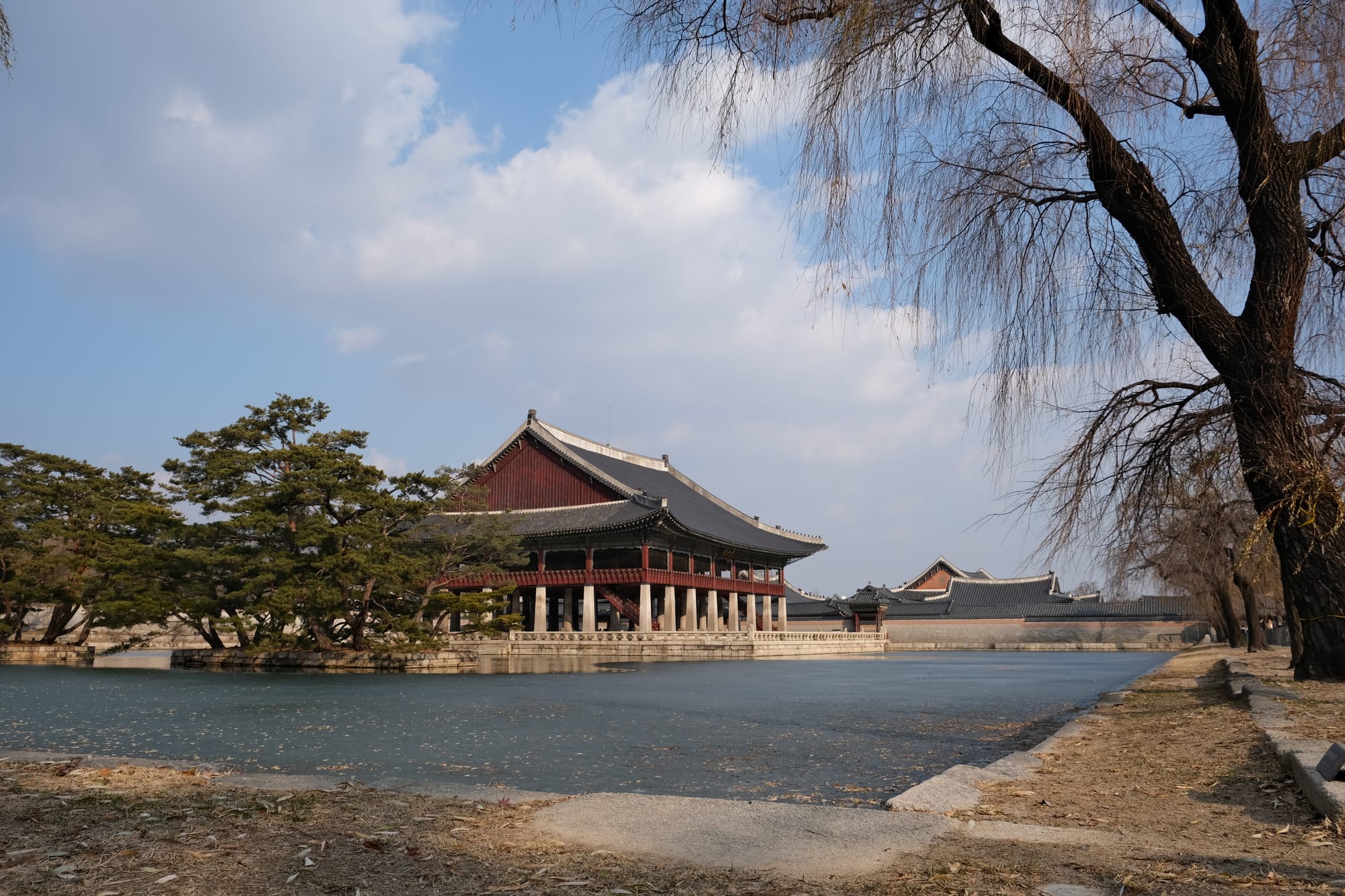
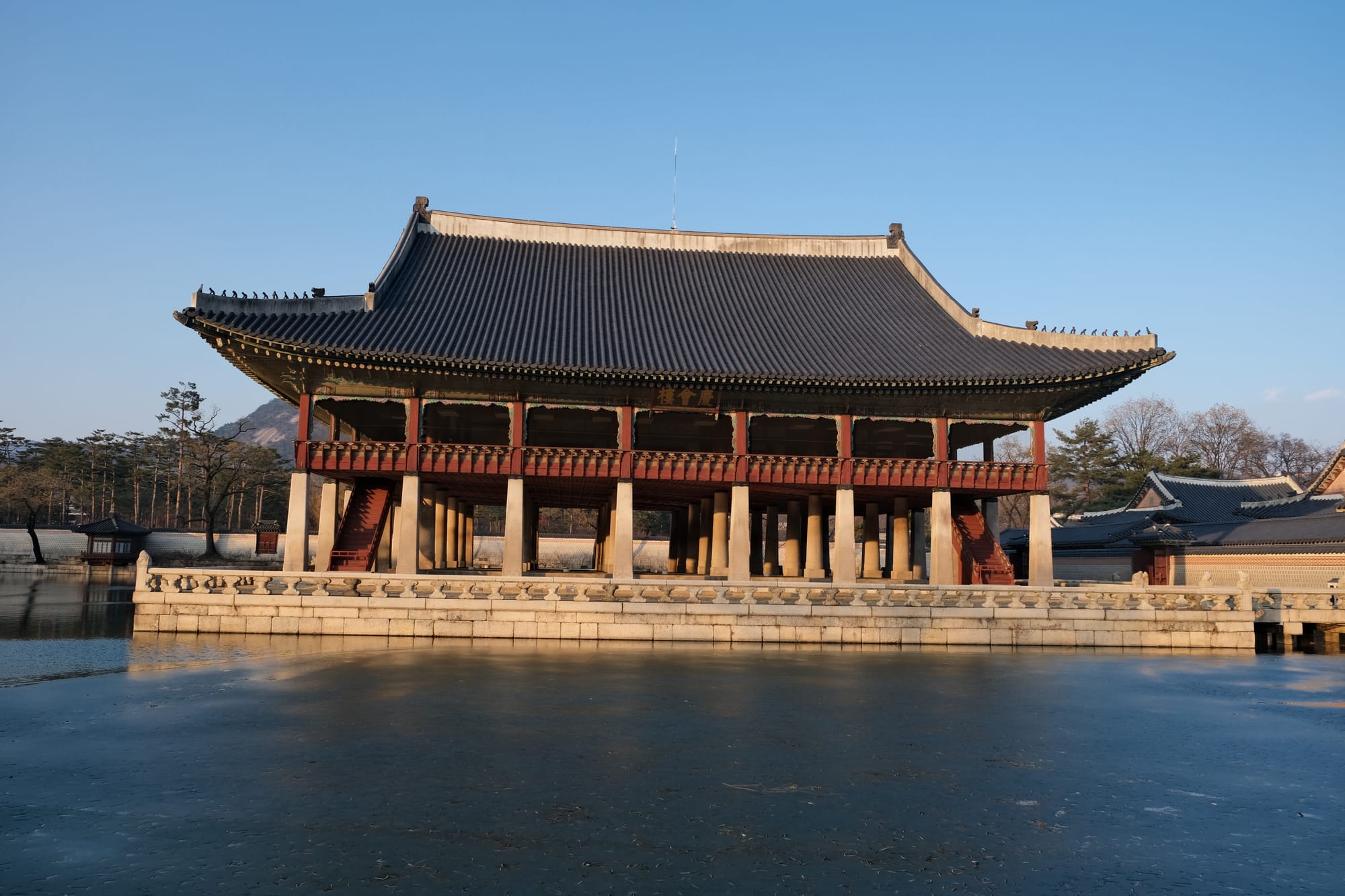
This was the King's banquet hall, a huge building situated on an island in the middle of a rectangular pond.
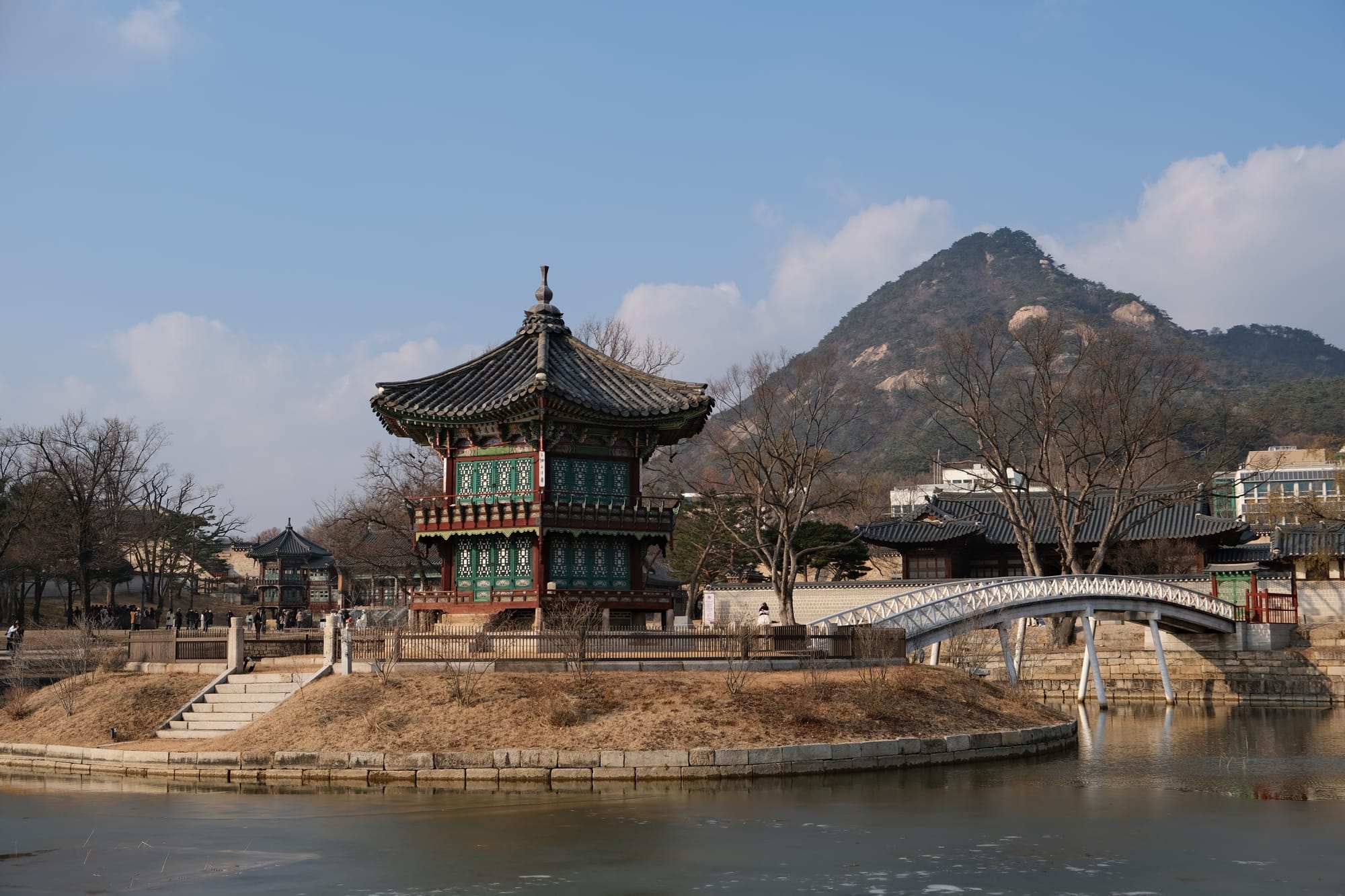
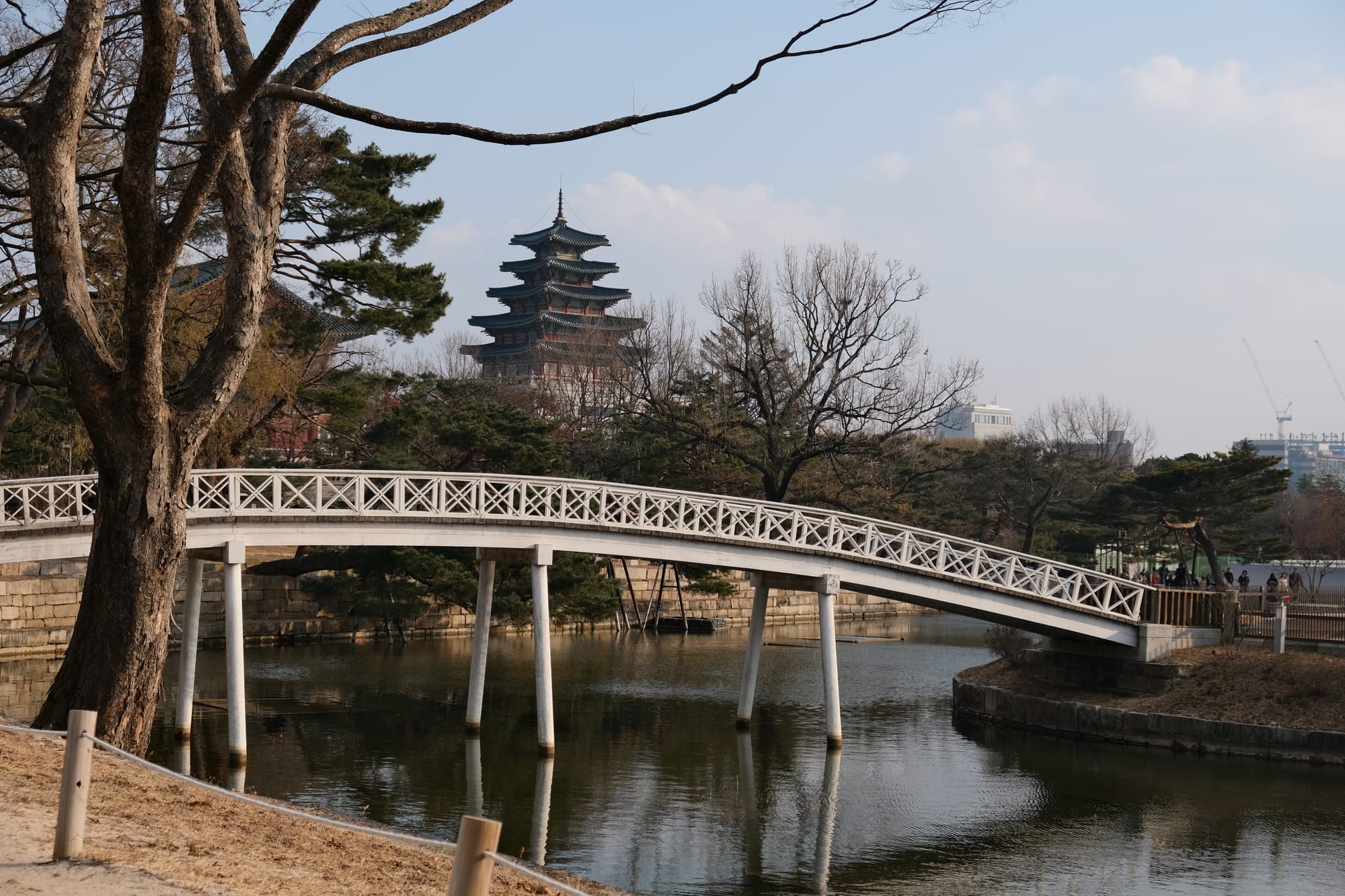
The first (left) image shows the Hyangwonjeong Pavilion, the lake it is situated on is located in a garden behind the main palace complex.
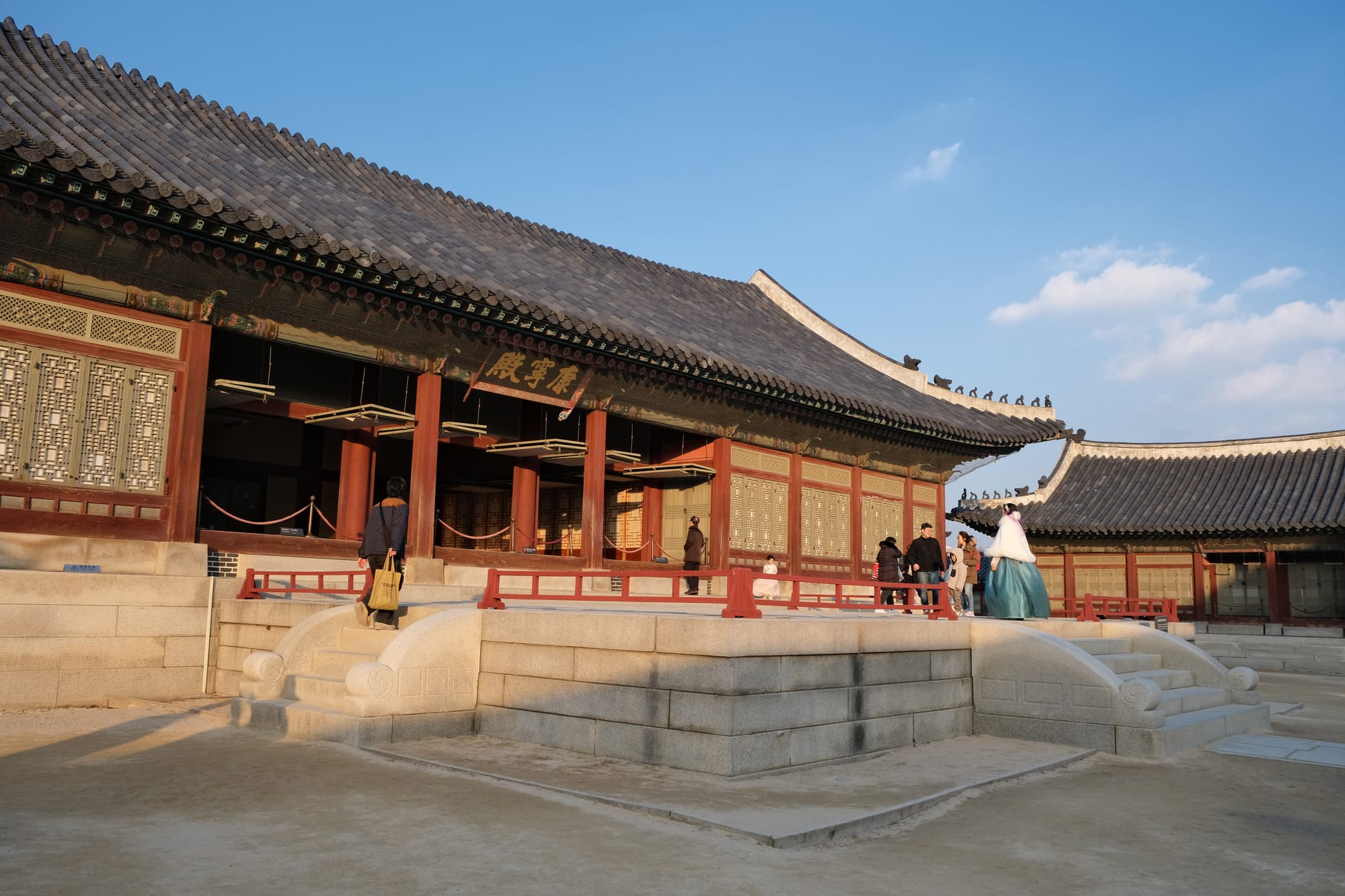
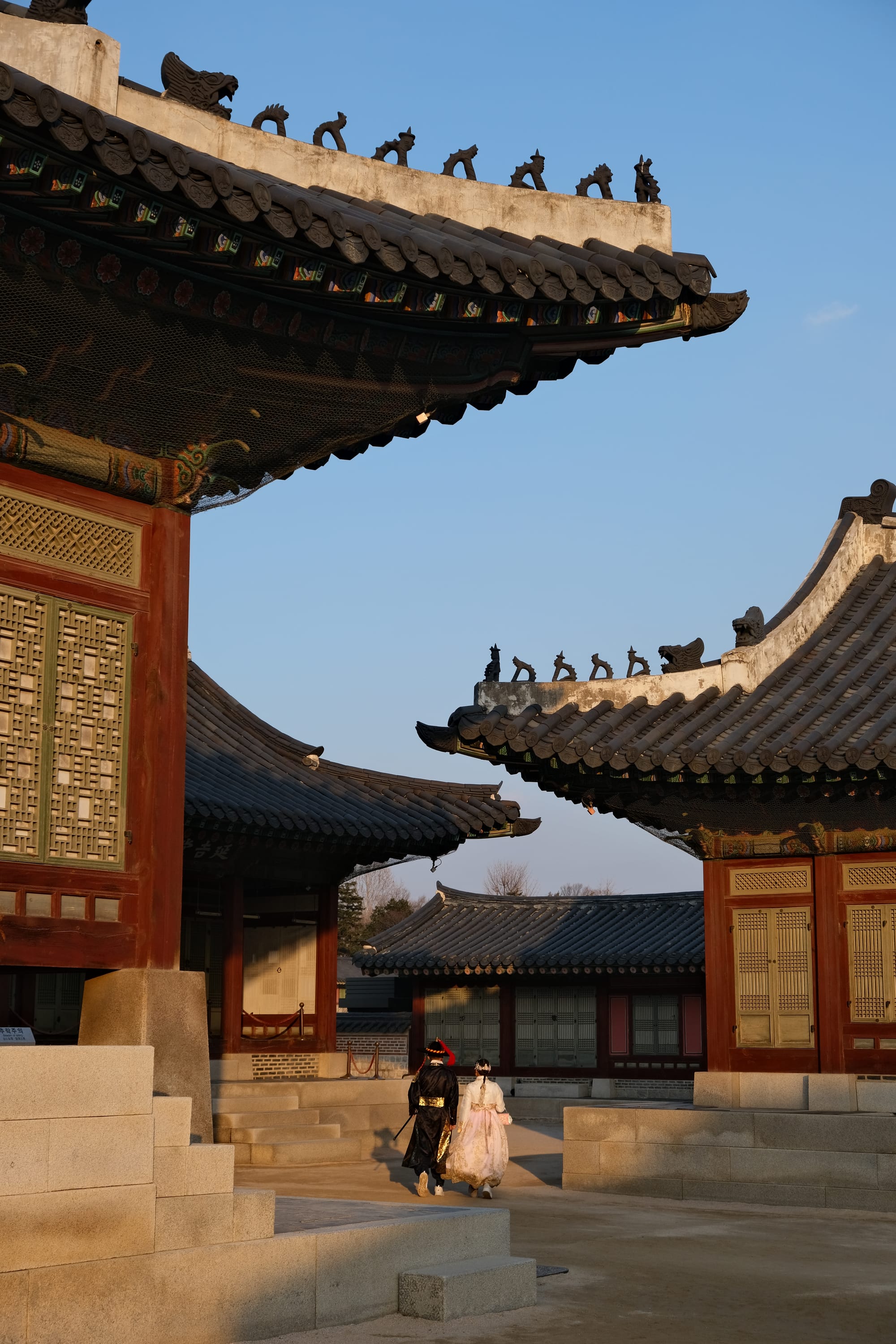
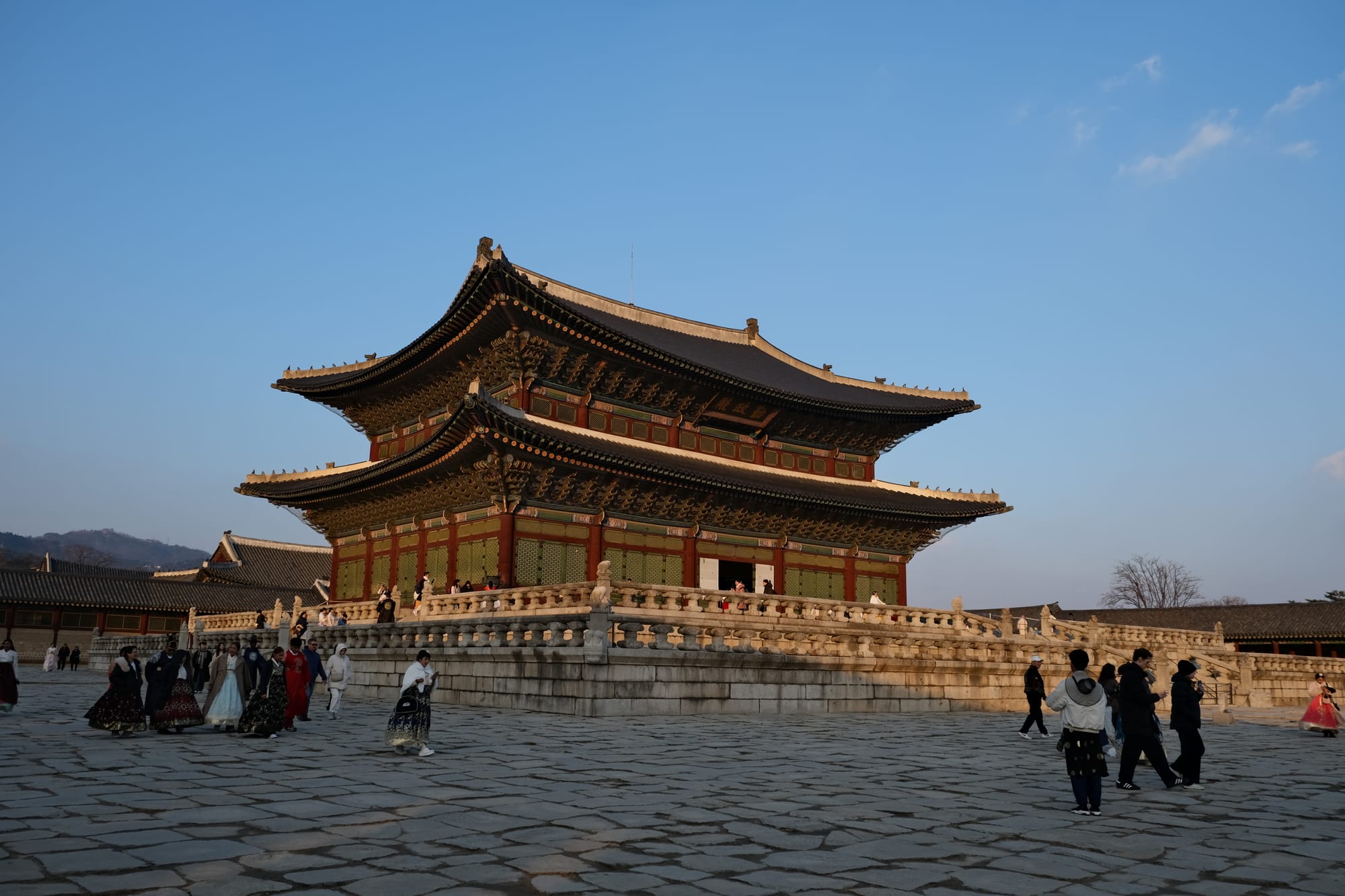
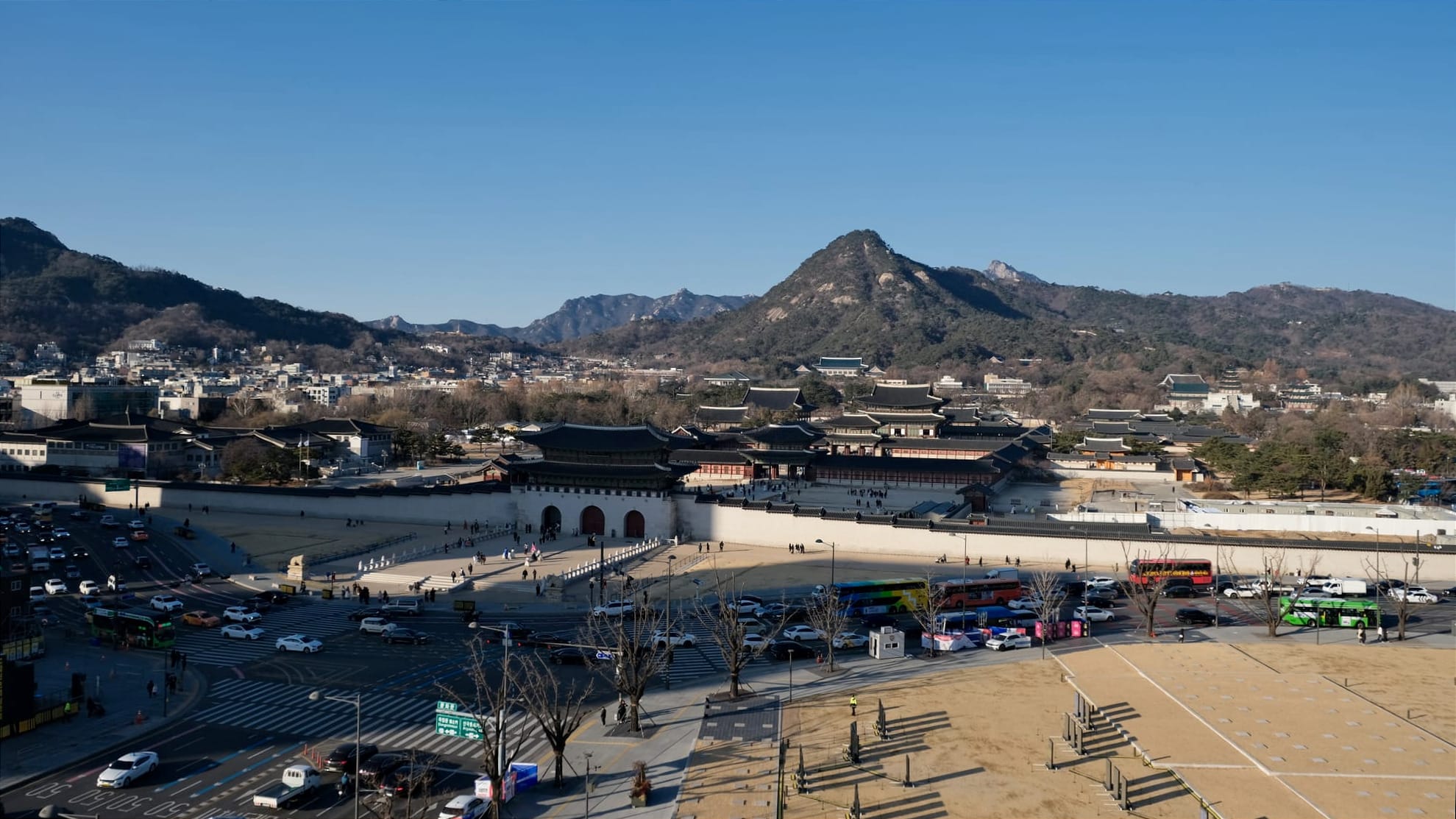
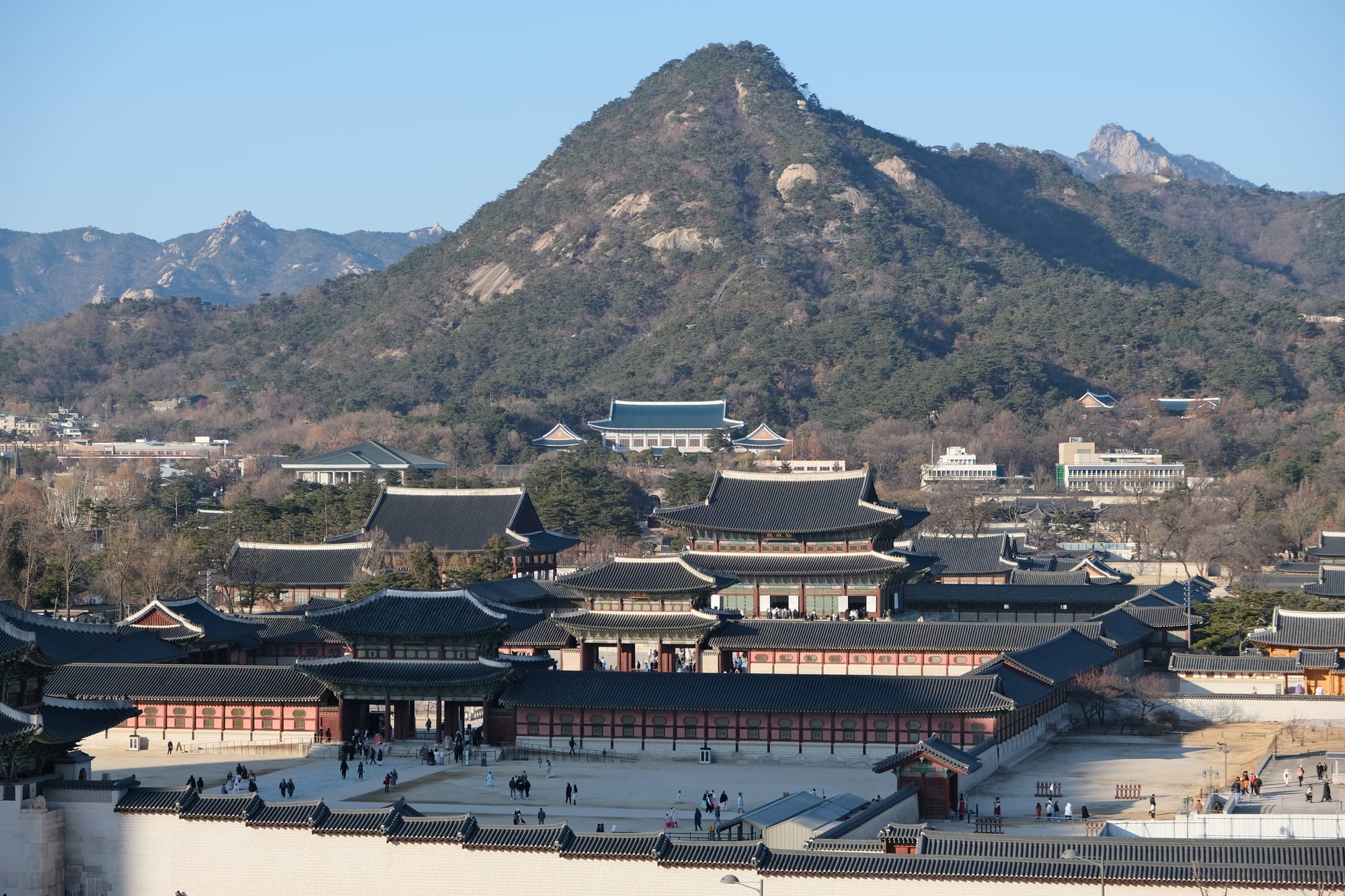
An elevated view of Gyeongbokgung palace captured from the roof of the the Museum of Korean Contemporary History.
Changdeokgung Palace
Located a little to the east of Gyeongbokgung, this palace is regarded as the most beautiful of the five royal palaces. It was used by many of the Joseon kings as their primary residence, especially while Gyeongbokgung was in ruins. This palace was built closer to hilly terrain and many of the buildings align with the natural contours of the land. Situated behind the palace is the beautiful Secret Garden that was loved by the Joseon kings and one of the reasons why many of them chose to reign from here.
We arrived at this palace at opening time so we could guarantee a ticket for the Secret Garden. We were some of the first visitors that day and we spent an hour or so exploring the palace grounds before going to the gardens. The garden needs to be accessed with an additional ticket and includes an optional tour. We were with an English guide who told us all about the various Joseon kings who loved the gardens and built various ponds, pavilions and buildings throughout it. After the tour I returned to the main palace area where I explored it some more, getting lost in the maze created by the complex arrangement of buildings, walls, and gates.
This palace certainly had the most beautiful buildings, but it was also the most varied. Some buildings were beautifully ornate with the wooden beams painted in bright colours and decorated with intricate designs. Other buildings, including those in the gardens, were much simpler, with fewer decorations, often left without paint so one could see the natural colours of the wood, and yet there was still a beauty in this simplicity as well.
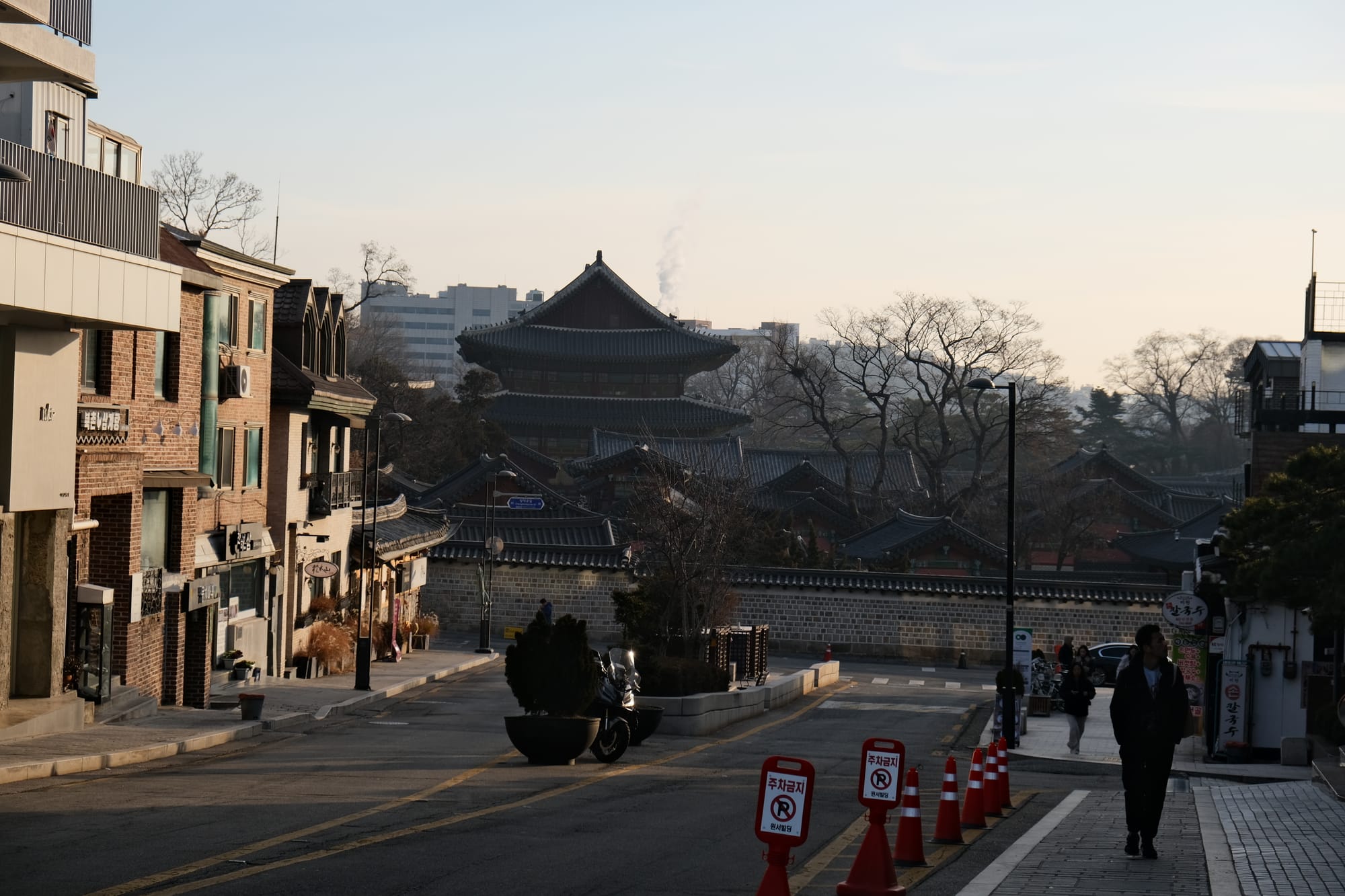
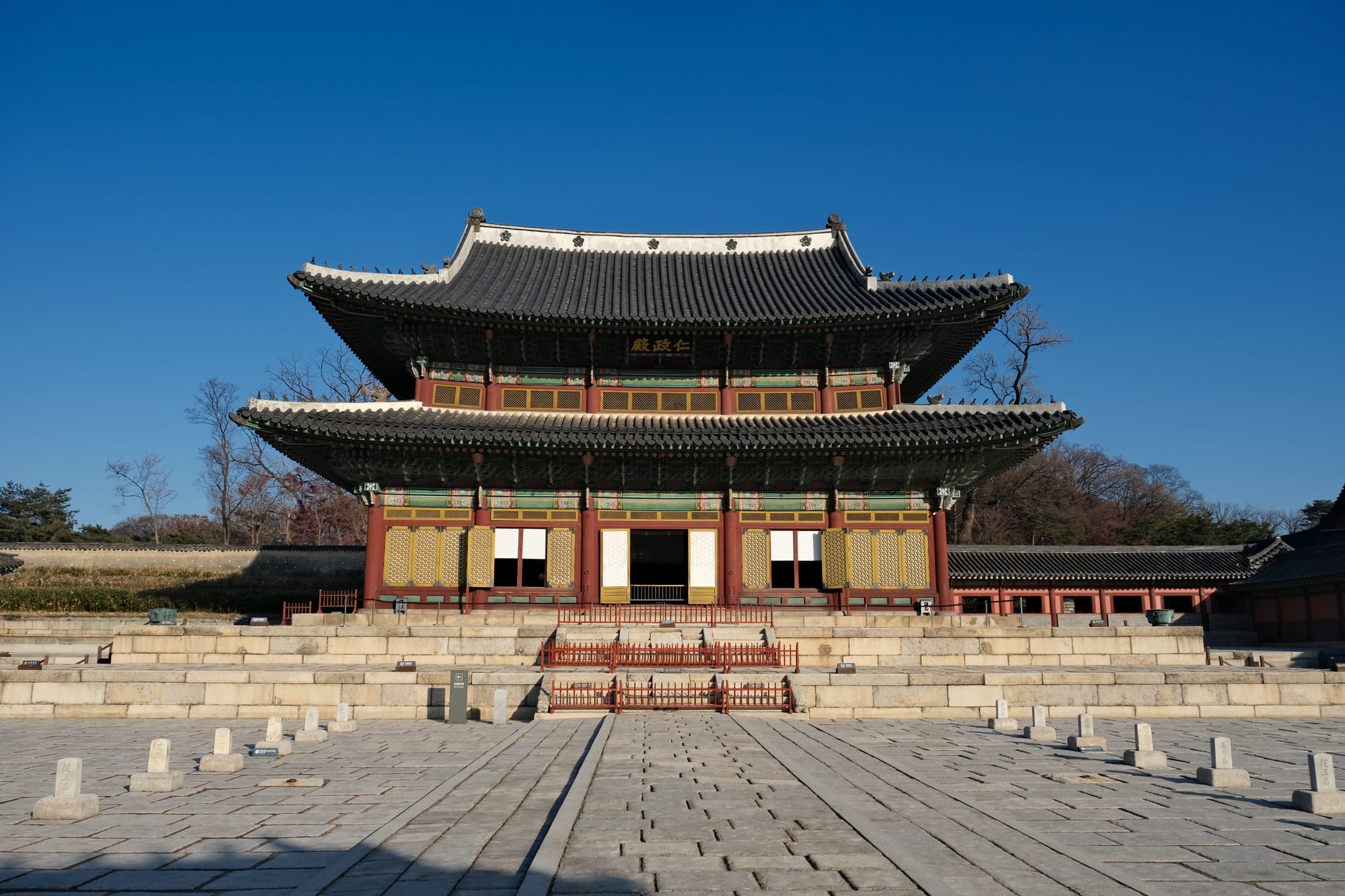
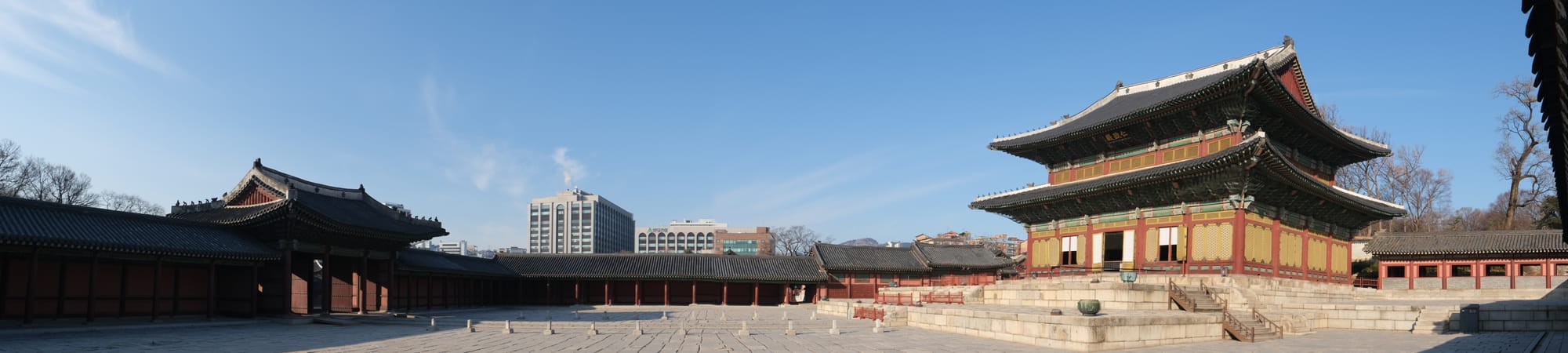
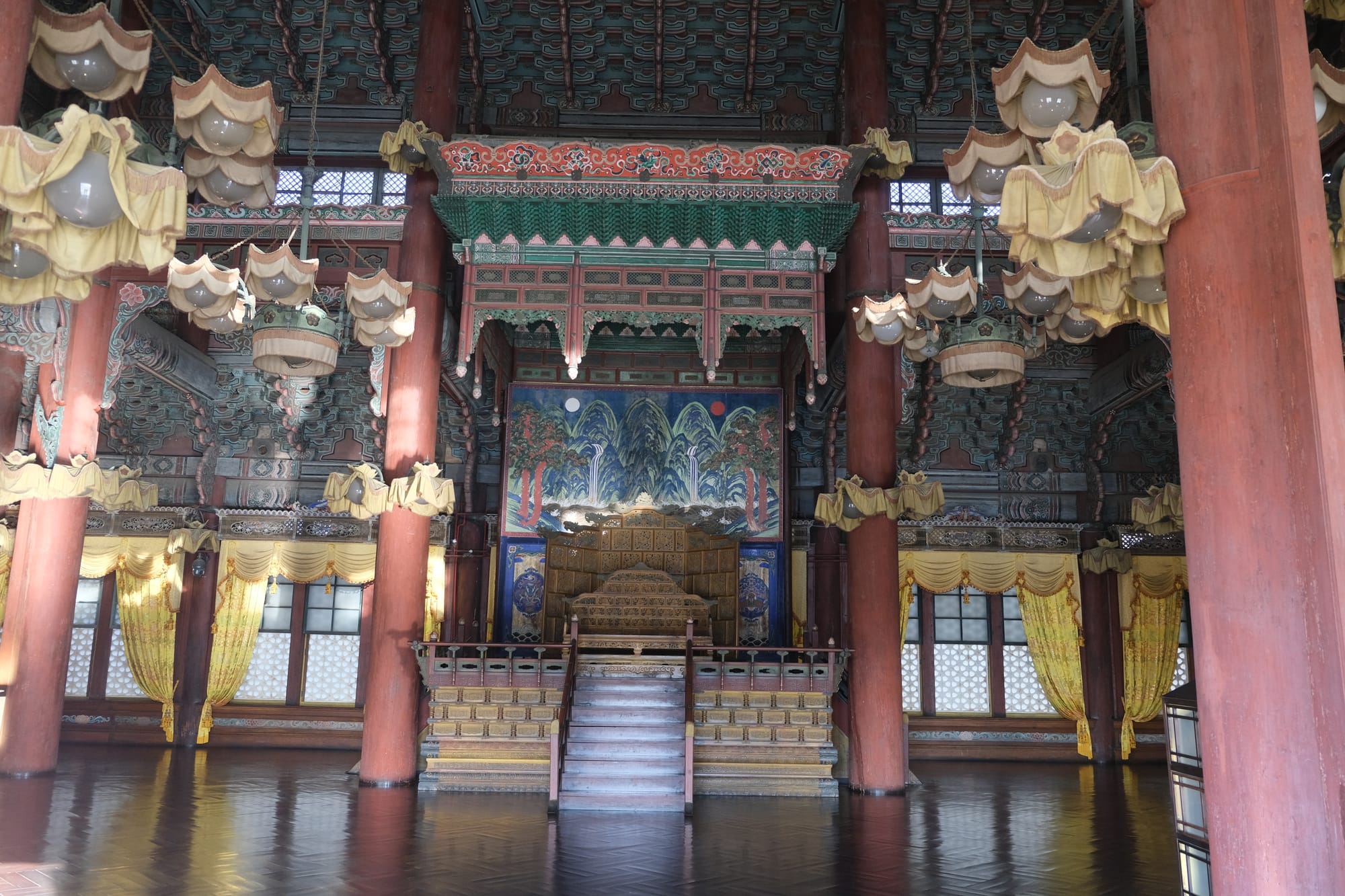
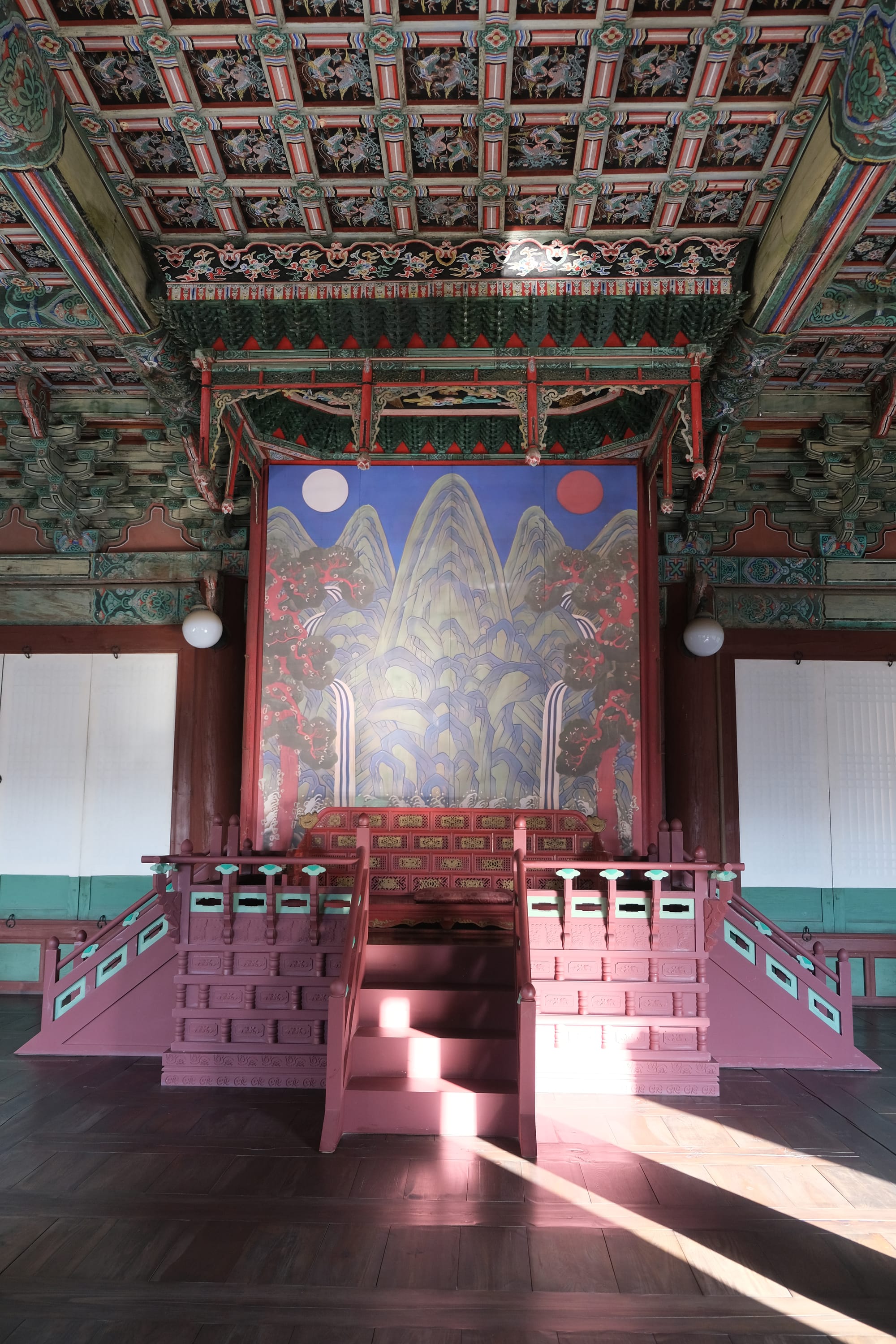
Pictured here are two of the halls that hosted a throne. The first image is the main throne.
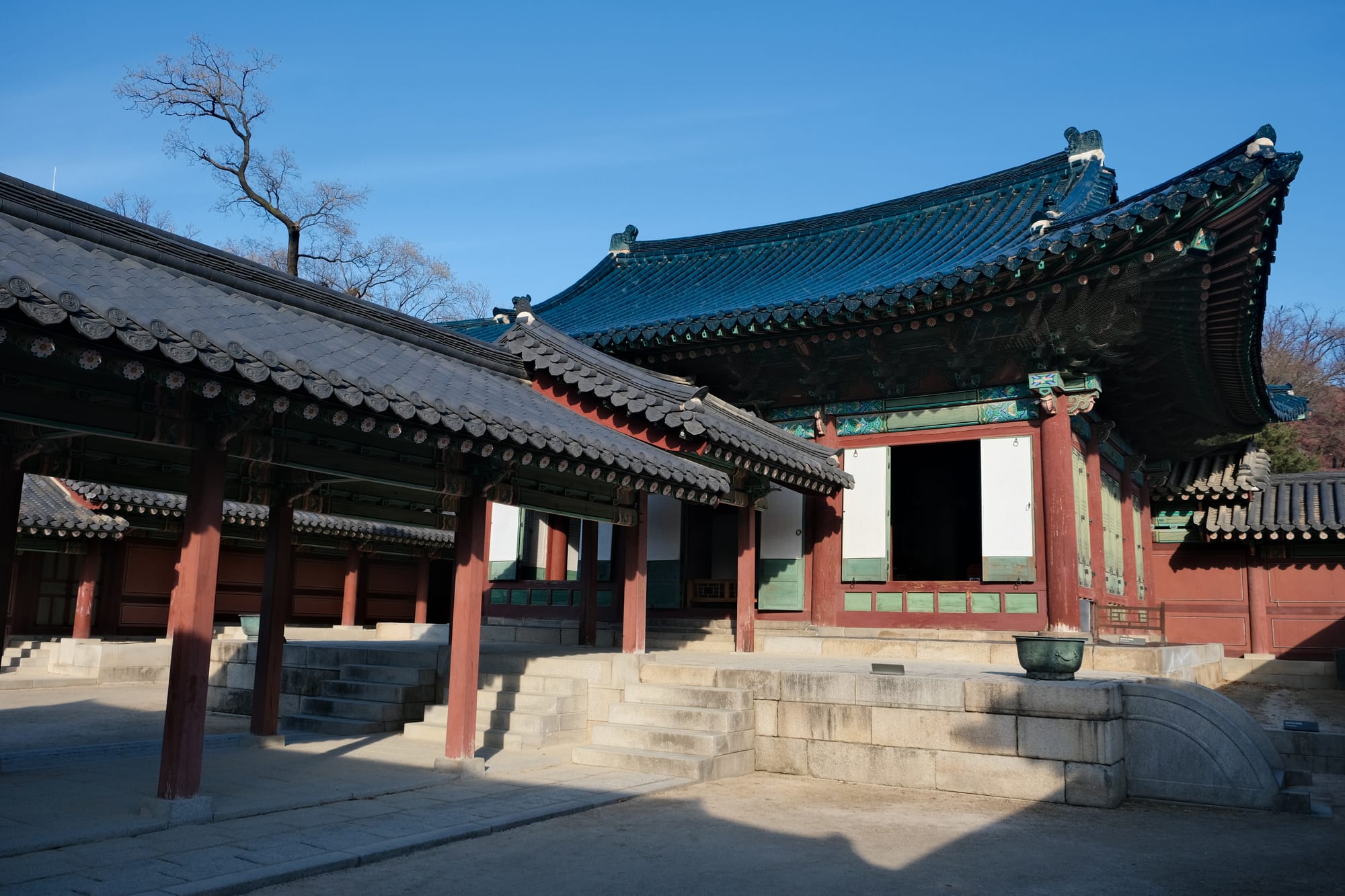
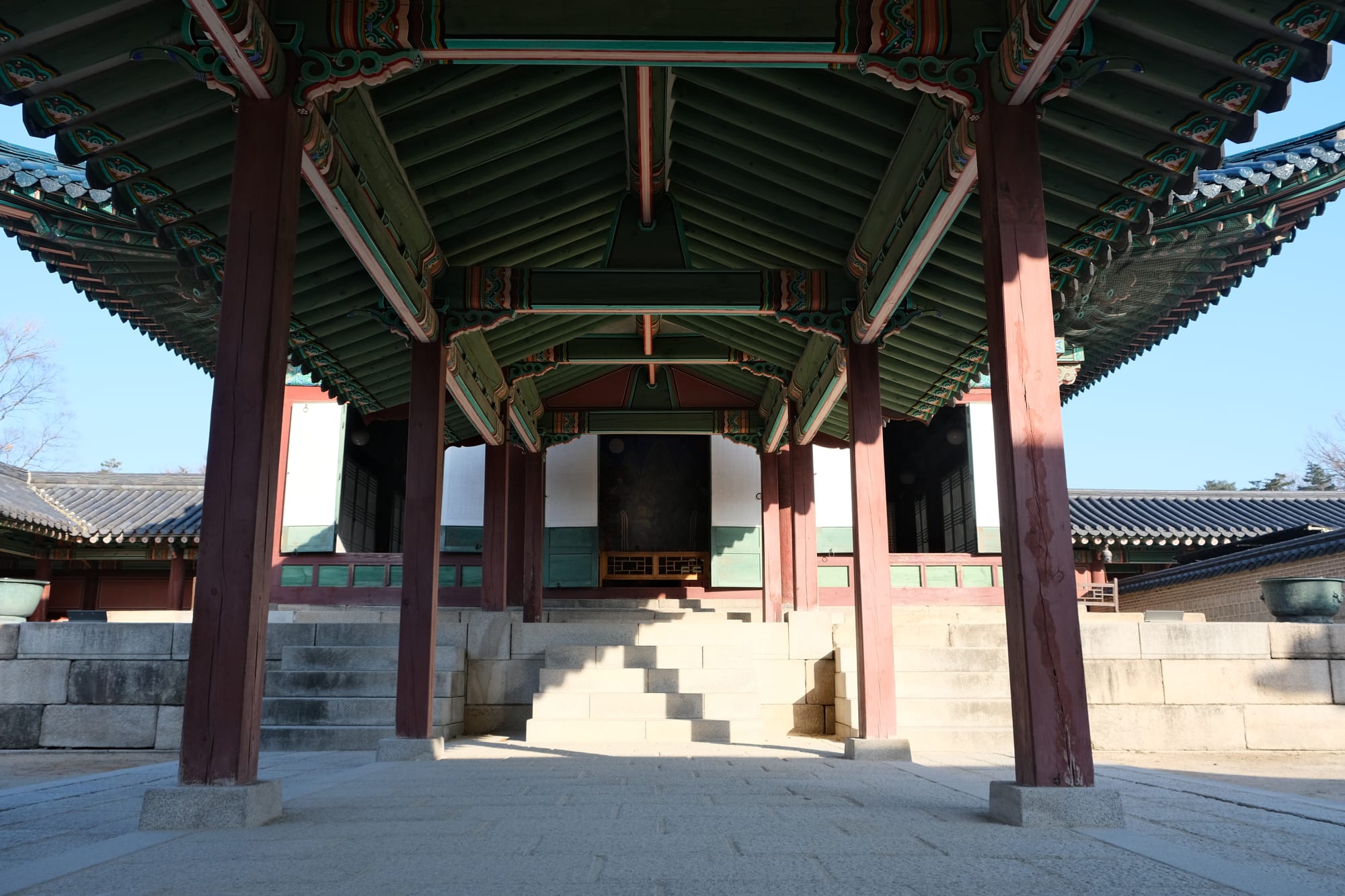
A smaller reception hall in the palace complex that has beautiful blue tiles on the roof.
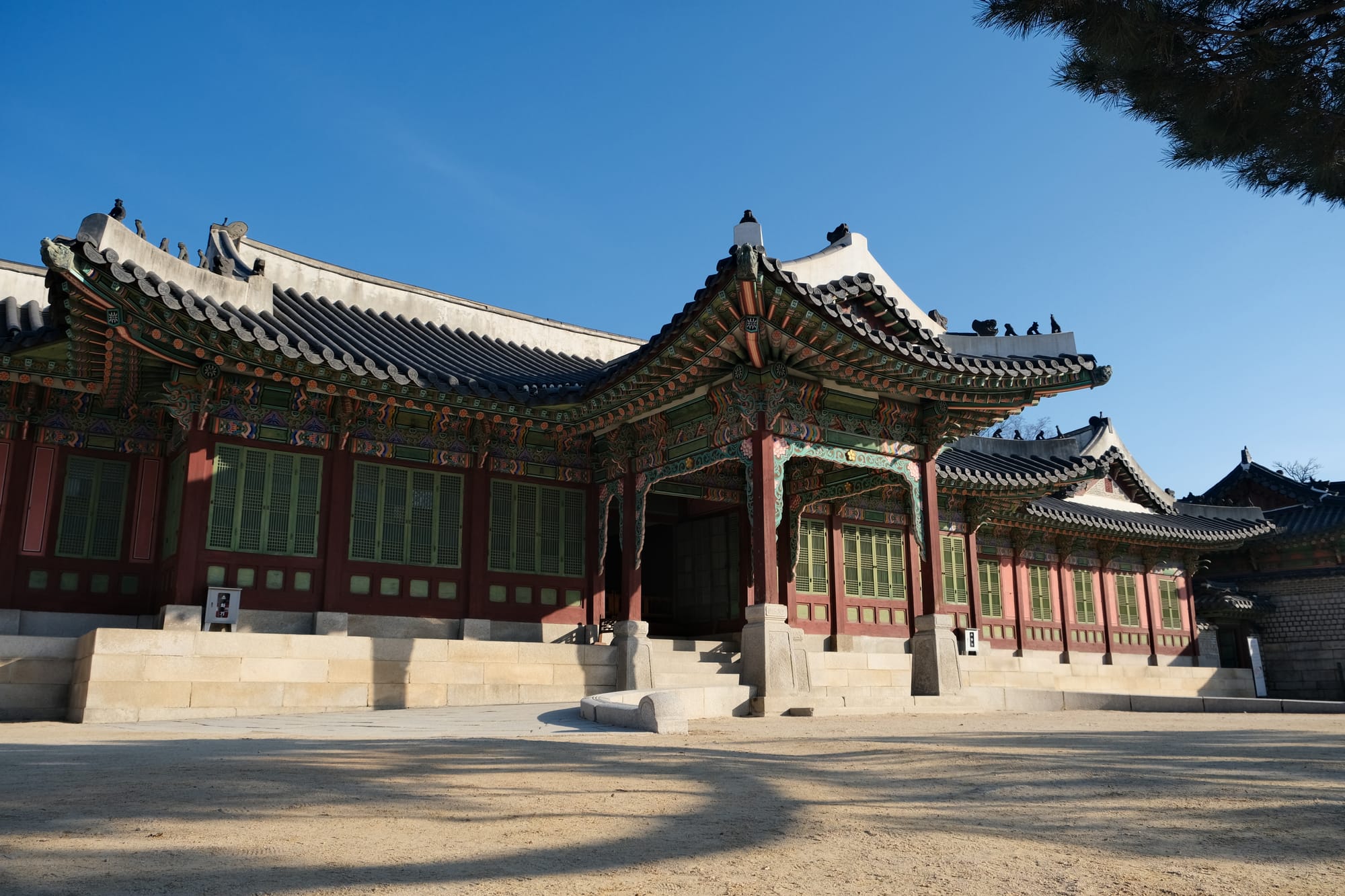
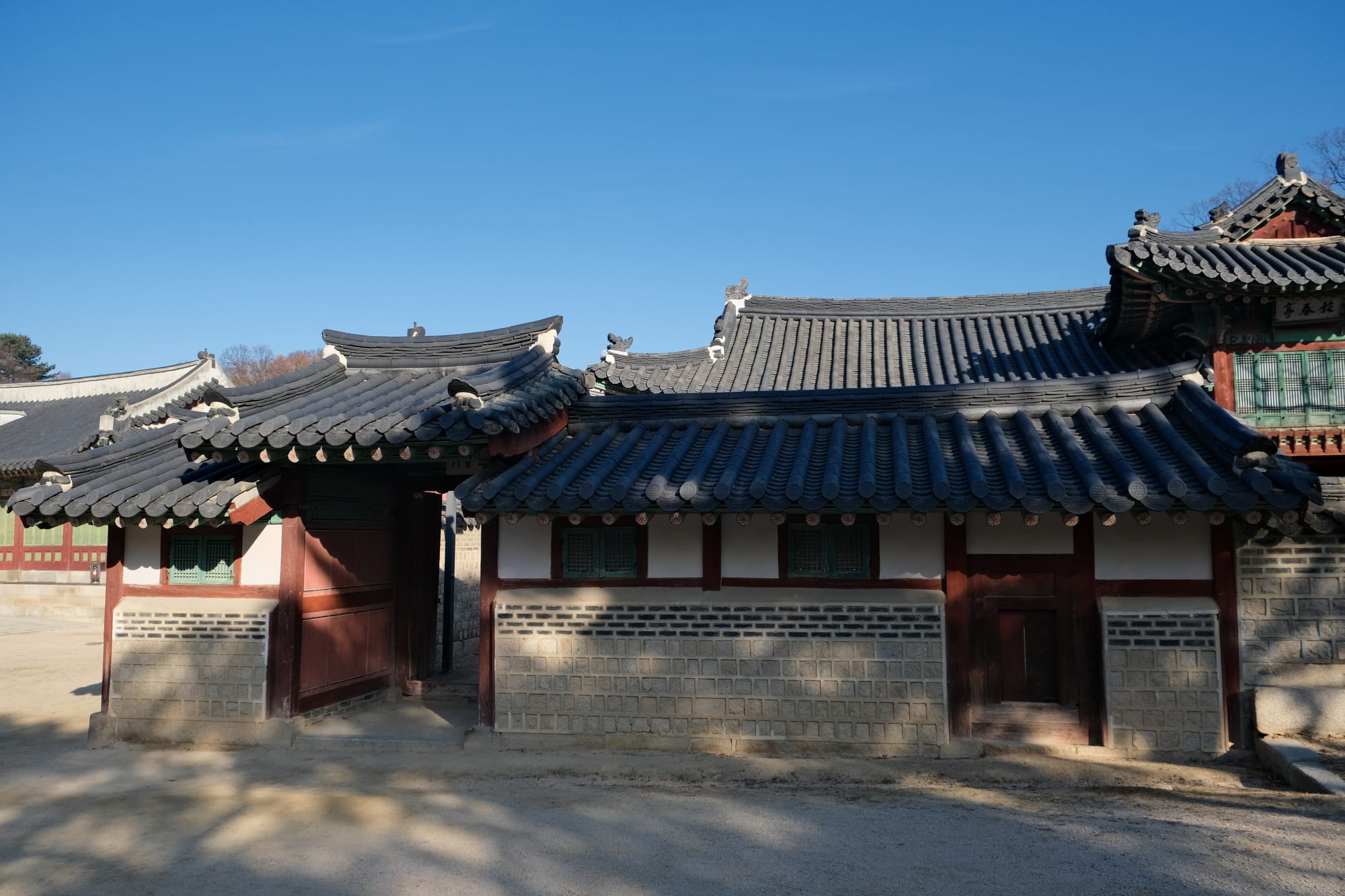
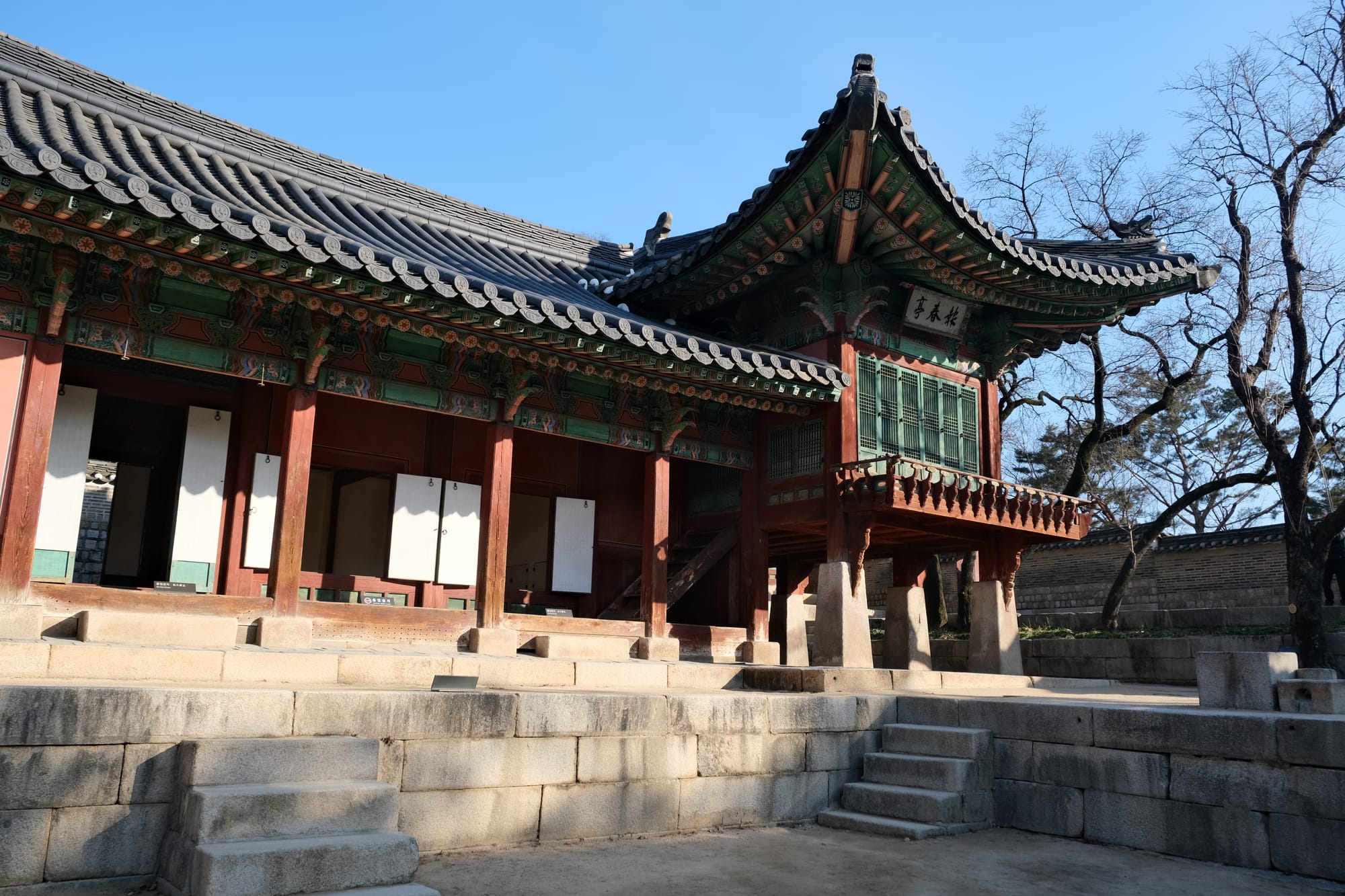
Some more of the beautiful buildings in the palace complex. The building in the first image was renovated recently (within the last 100 years) and so has a driveway for cars to drop off important people at the door and the interior is decorated with western style furniture.
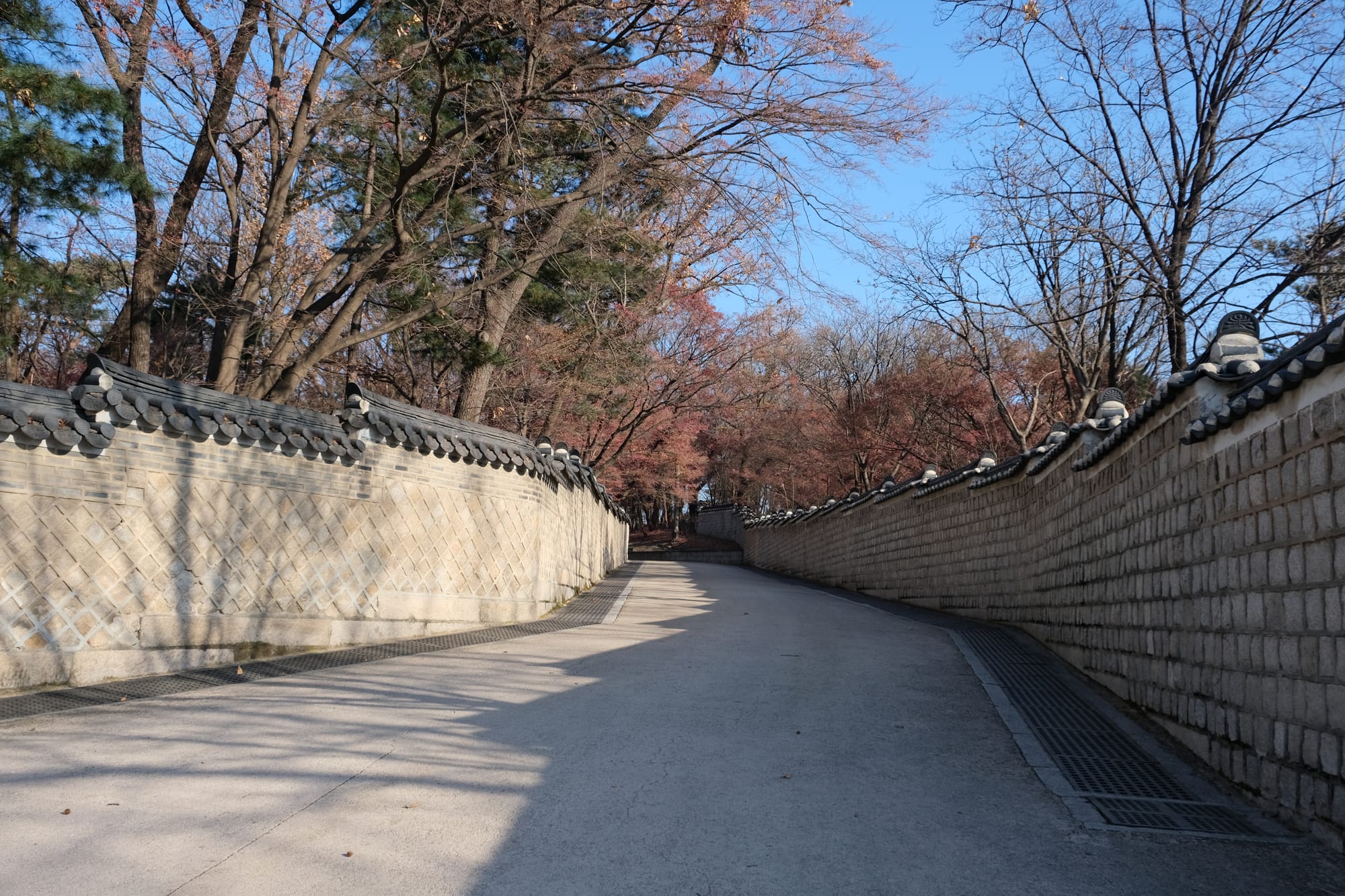
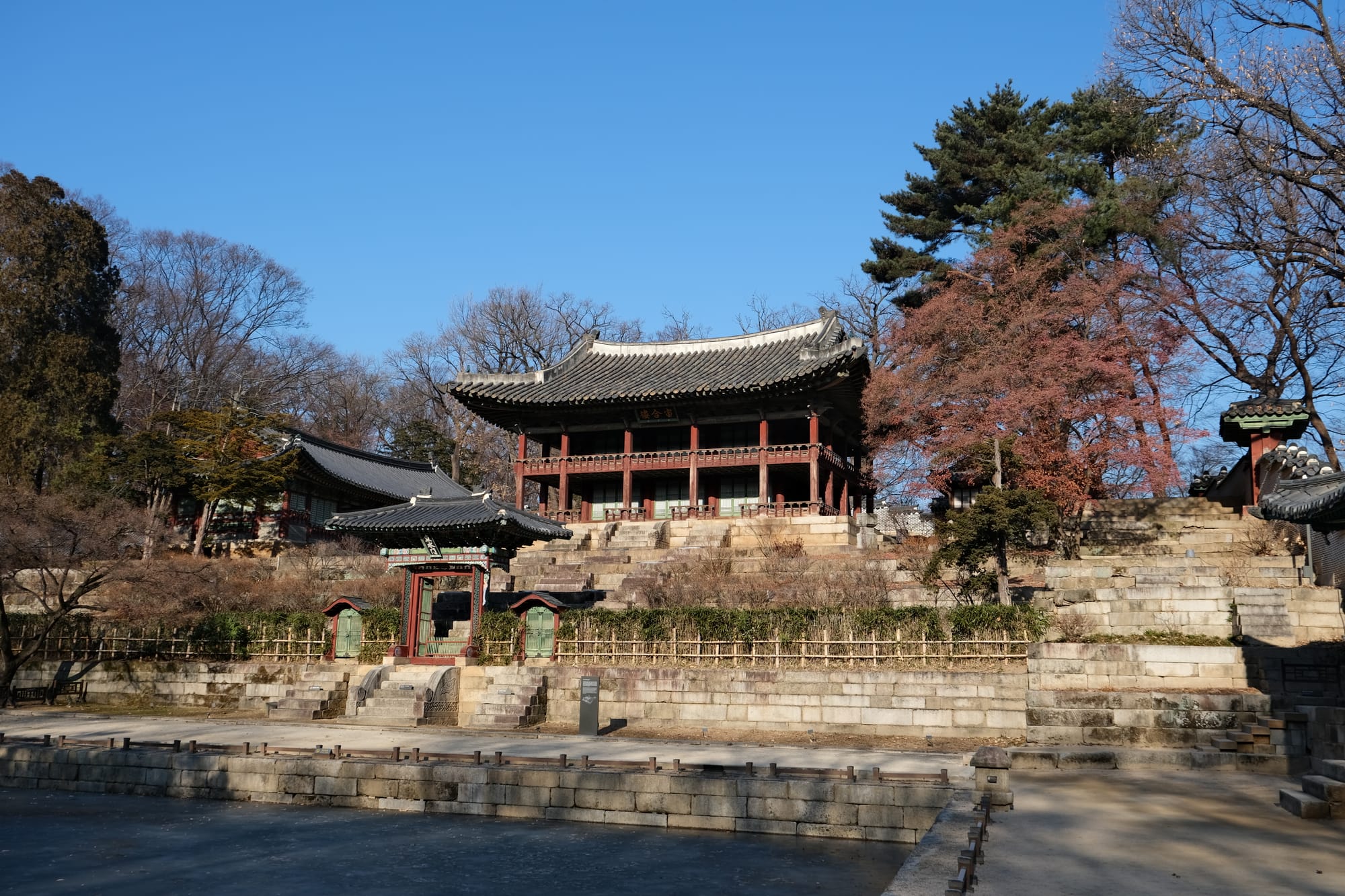
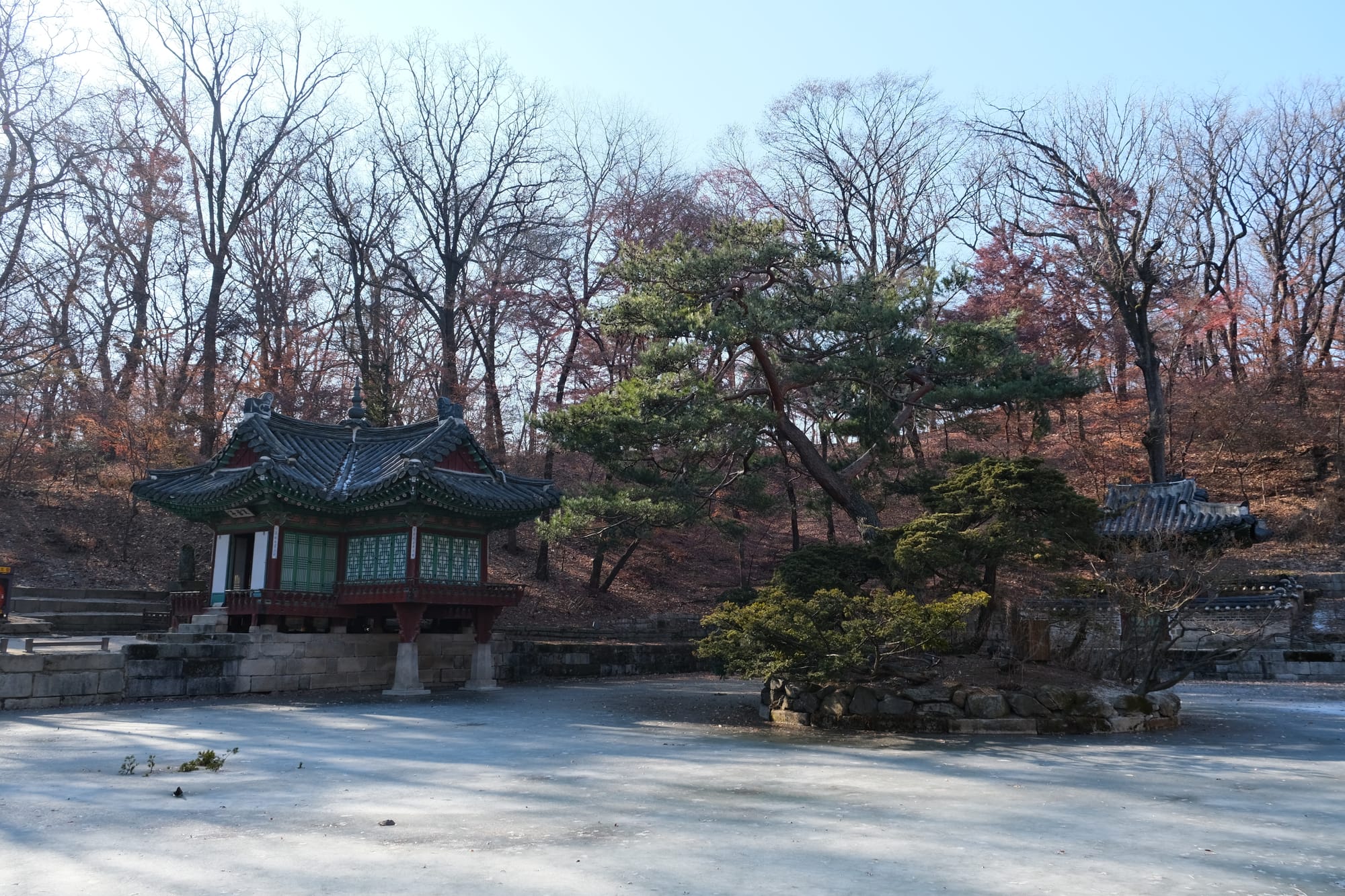
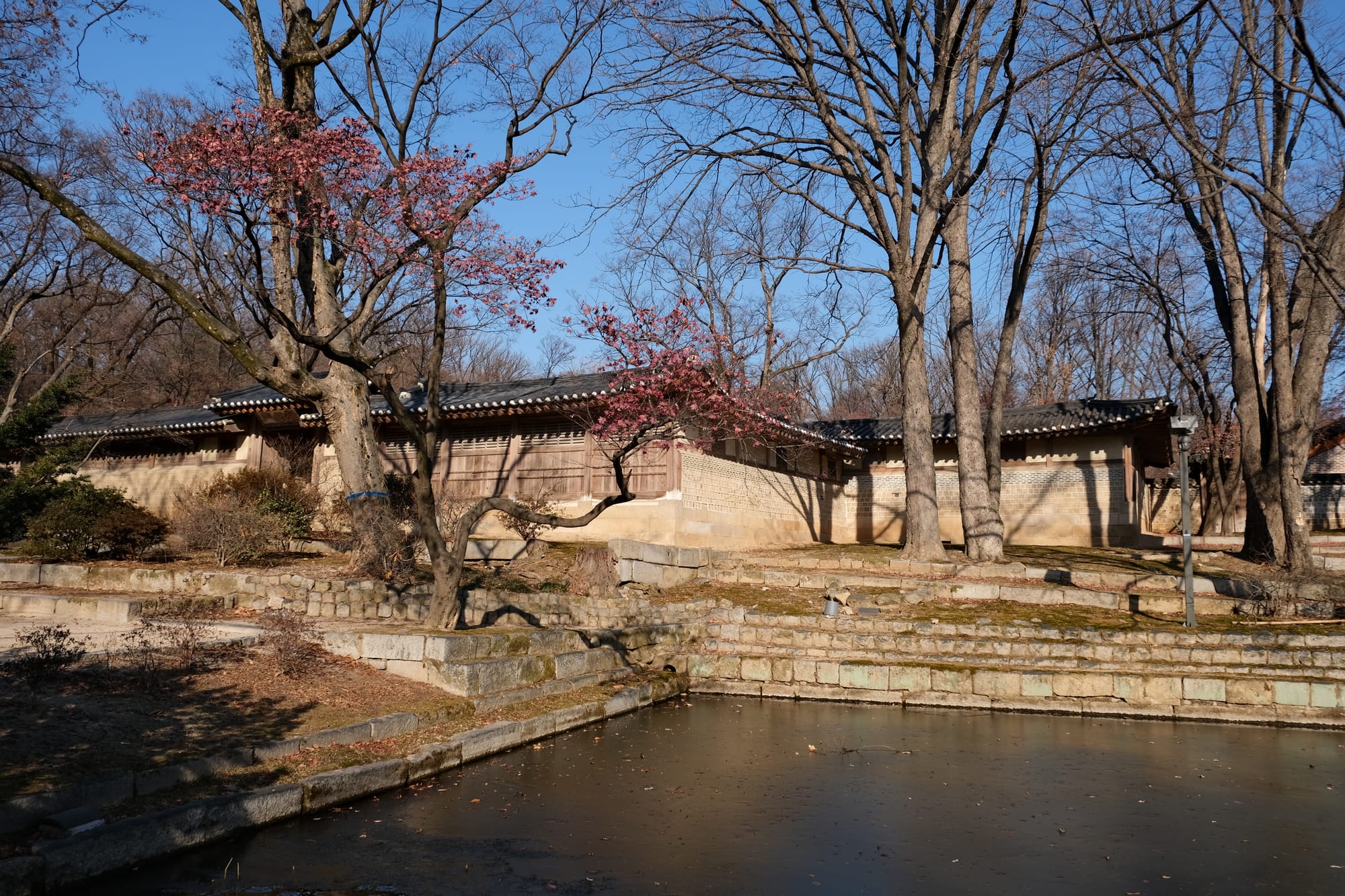
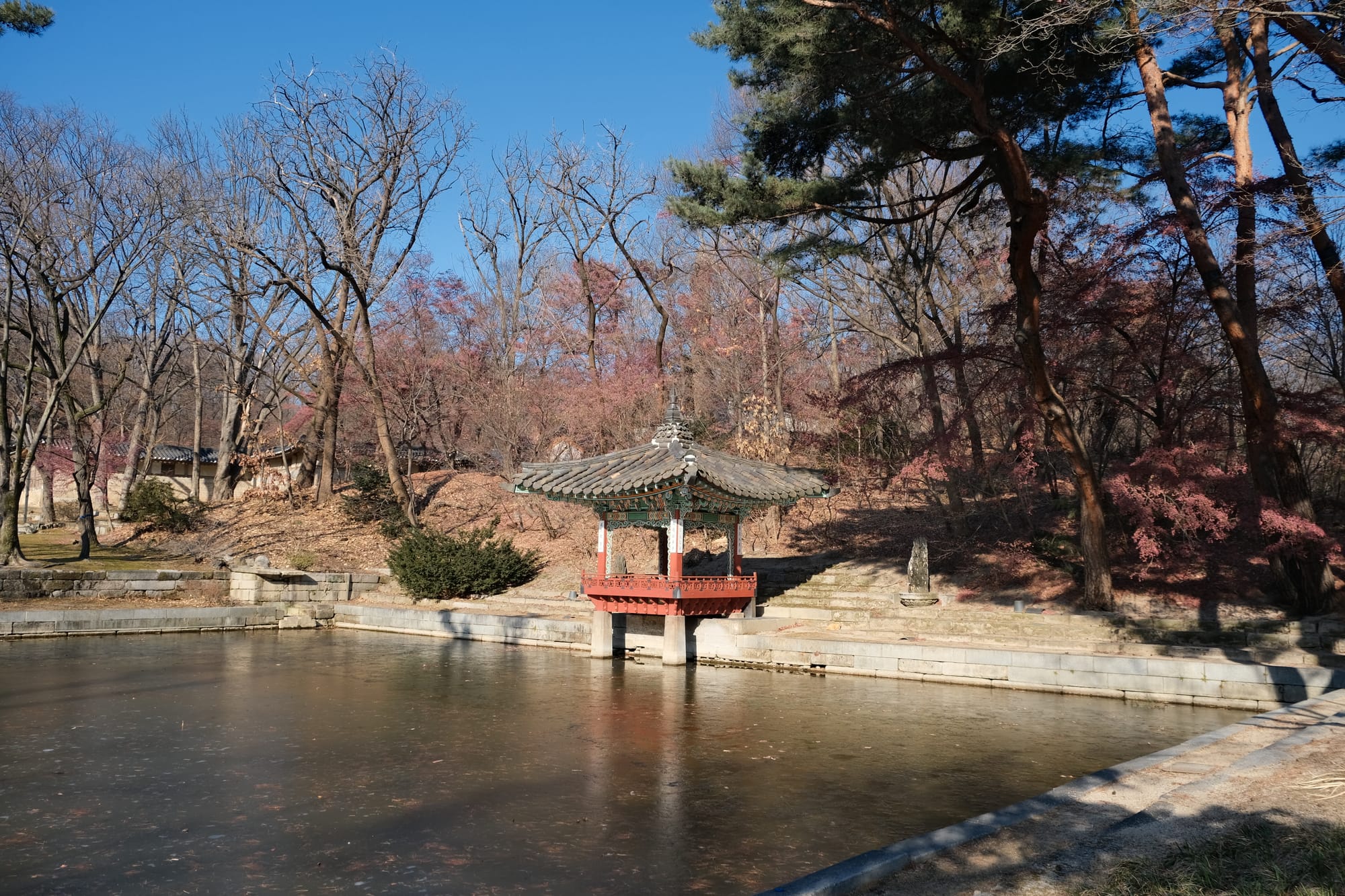
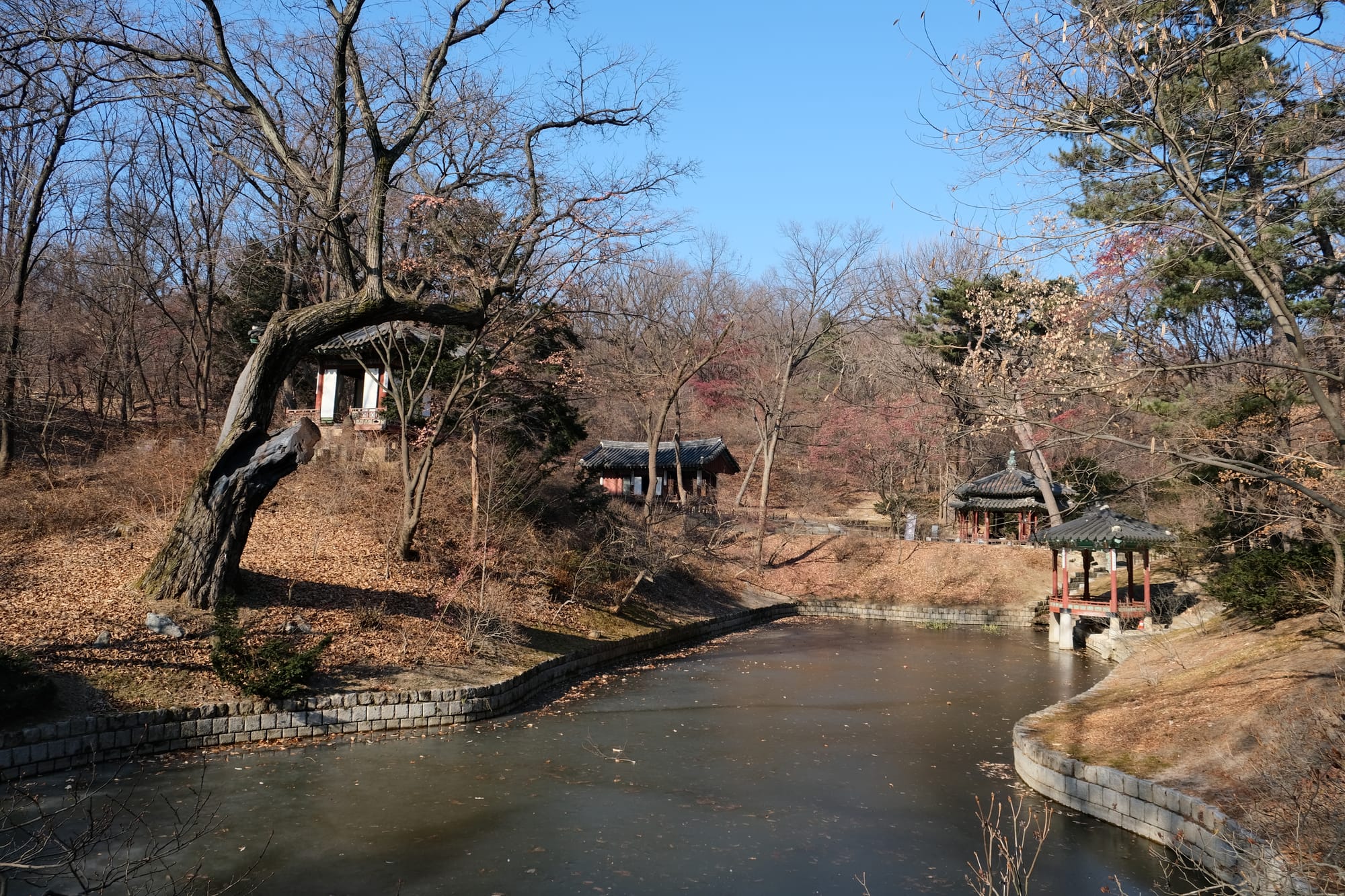
The garden was full of lakes and ponds; almost all of them were frozen in the cold winter season.
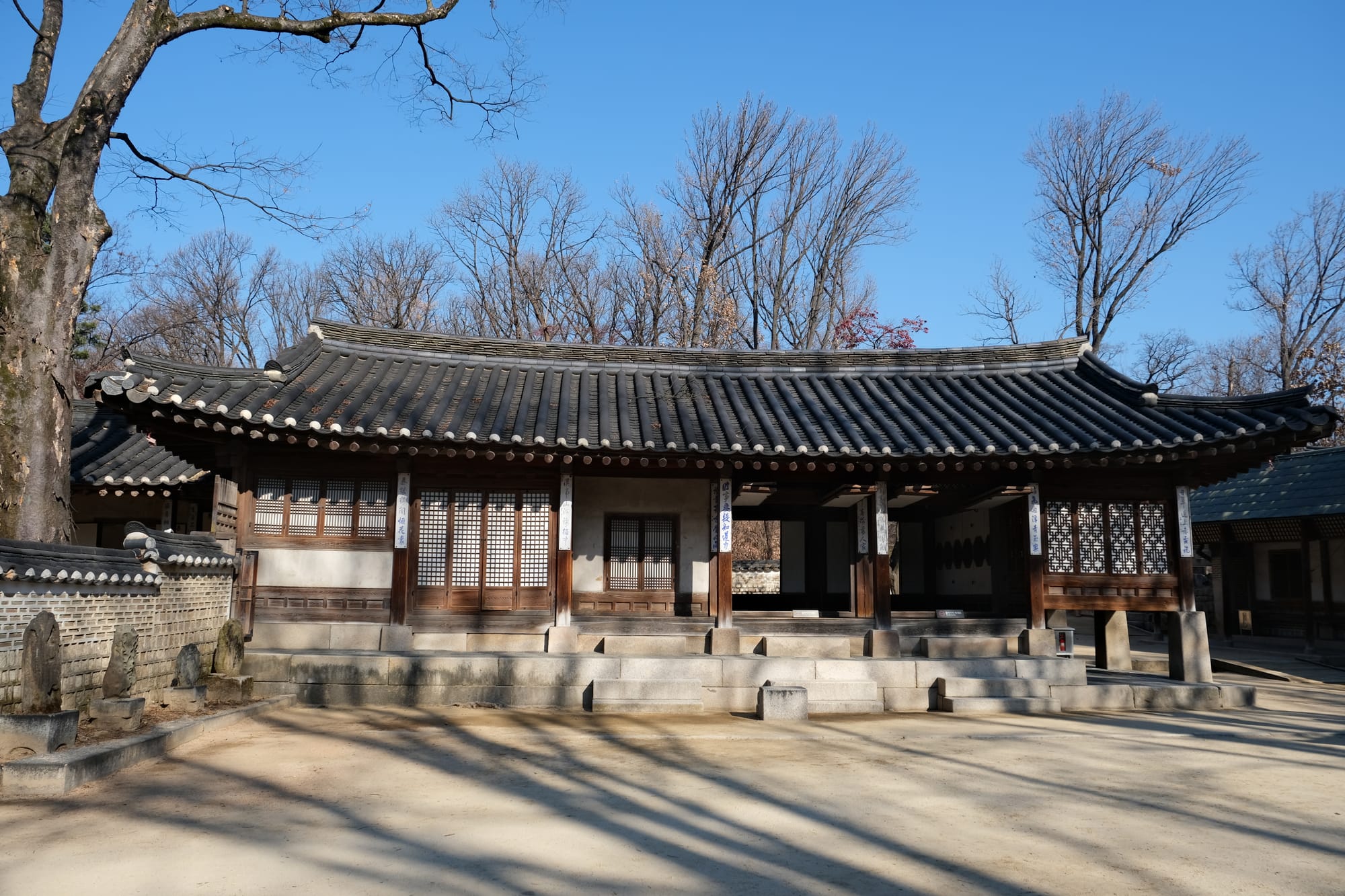
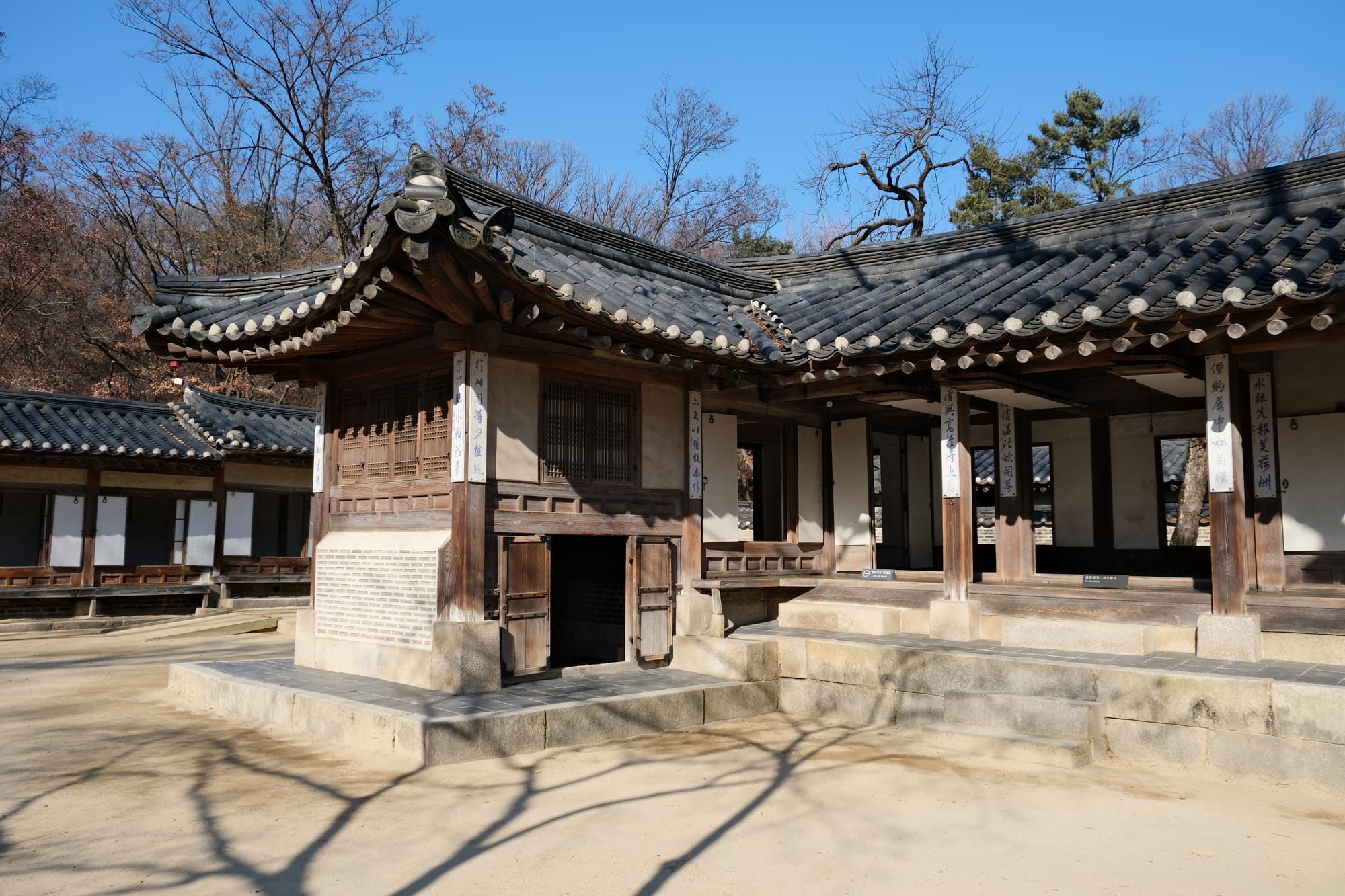
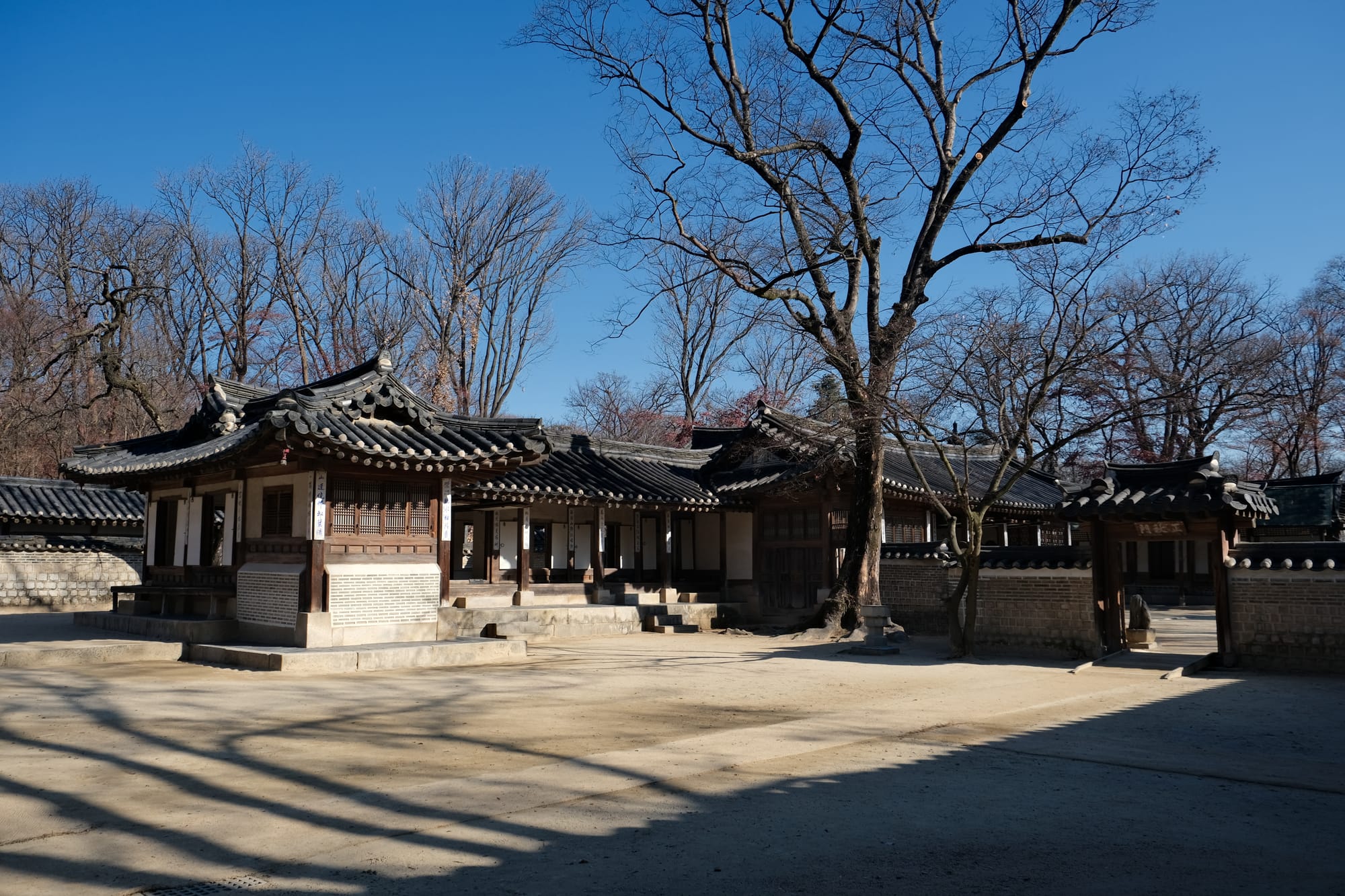
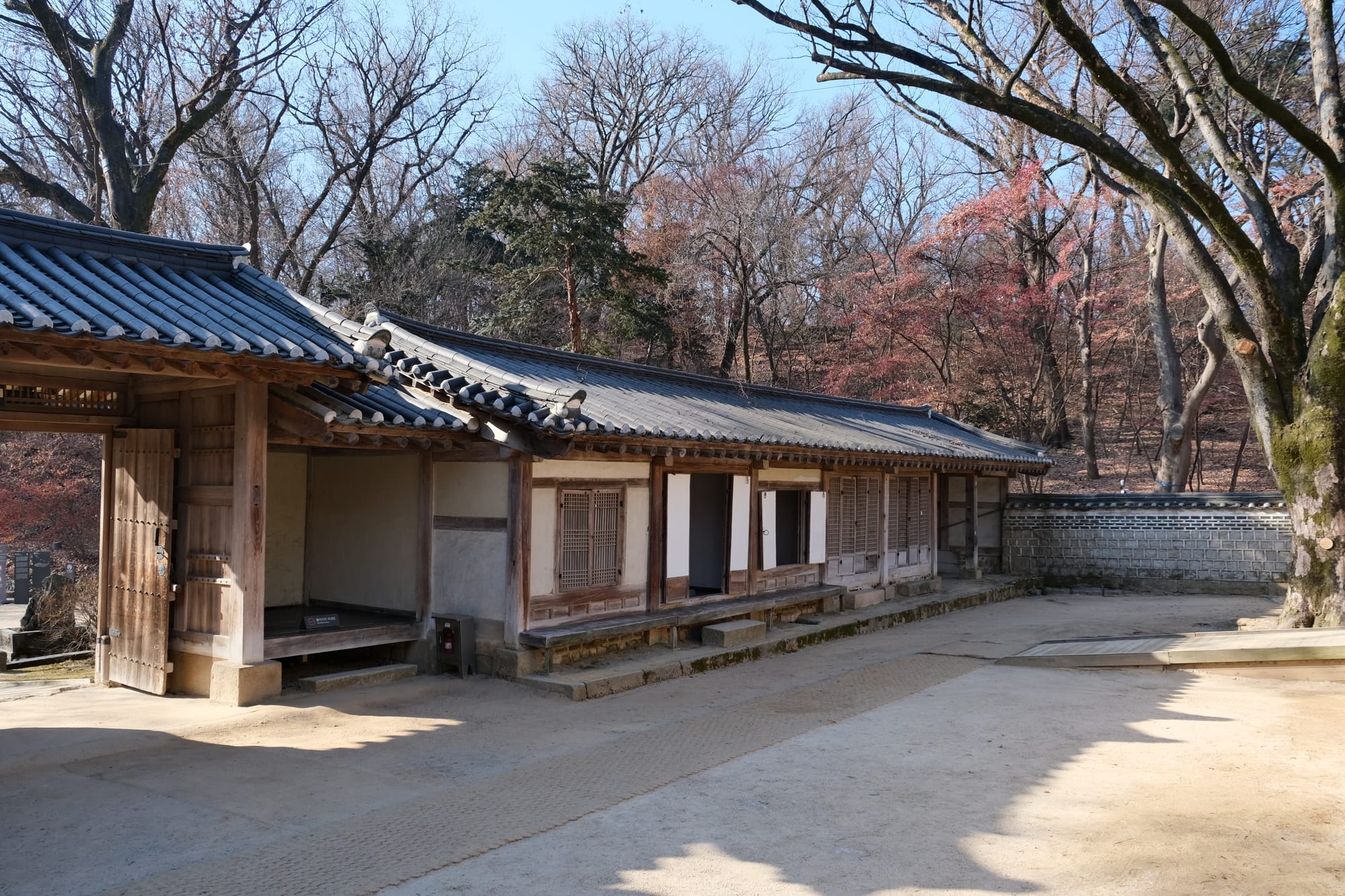
This was a residential building complex situated within the secret gardens. The nobles would live in the central buildings while the servants lived in the rooms at the edge of the courtyard. There was a wall dividing the courtyard that I think was used to separate the woman's quarters from the men's.
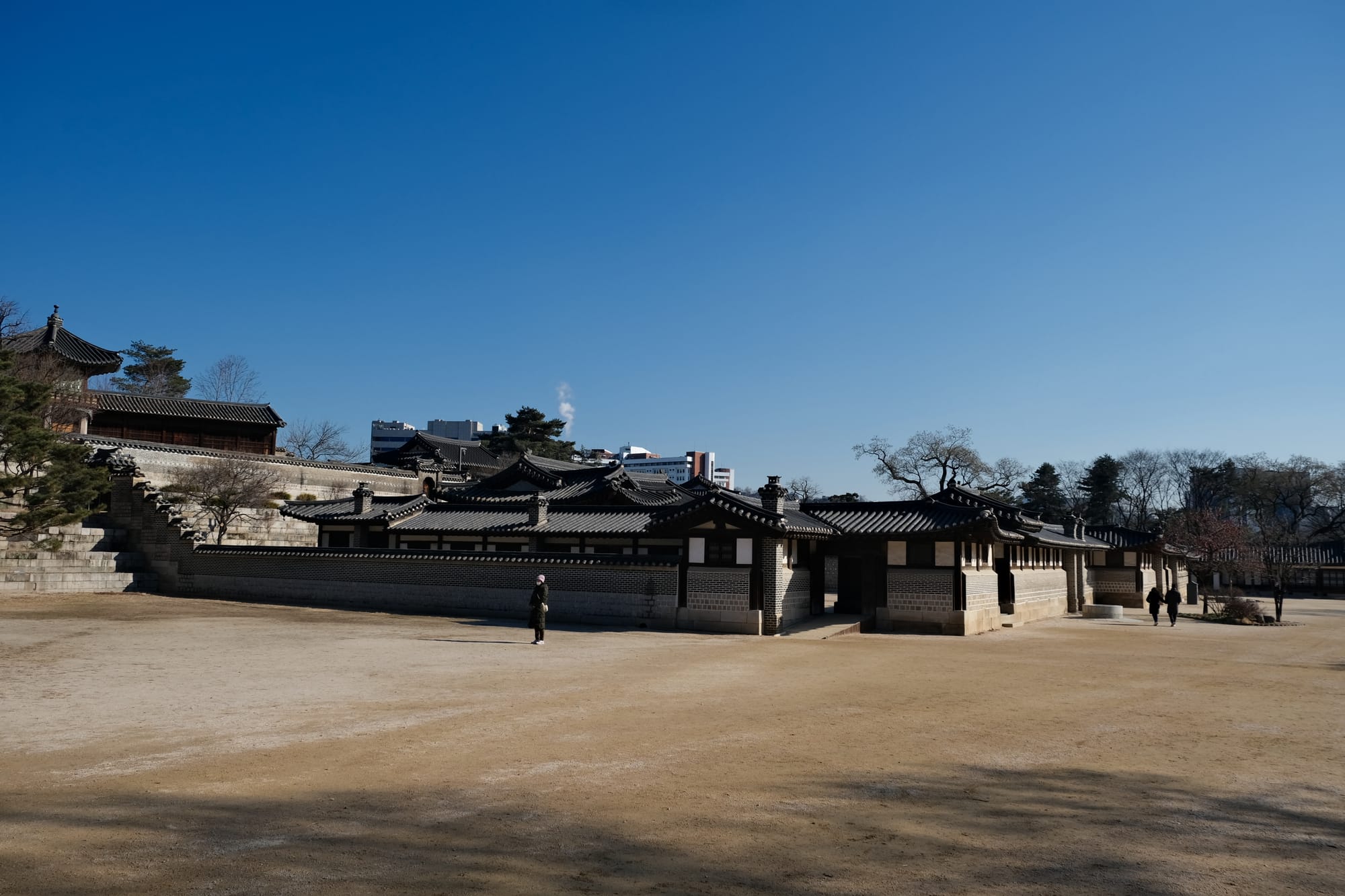
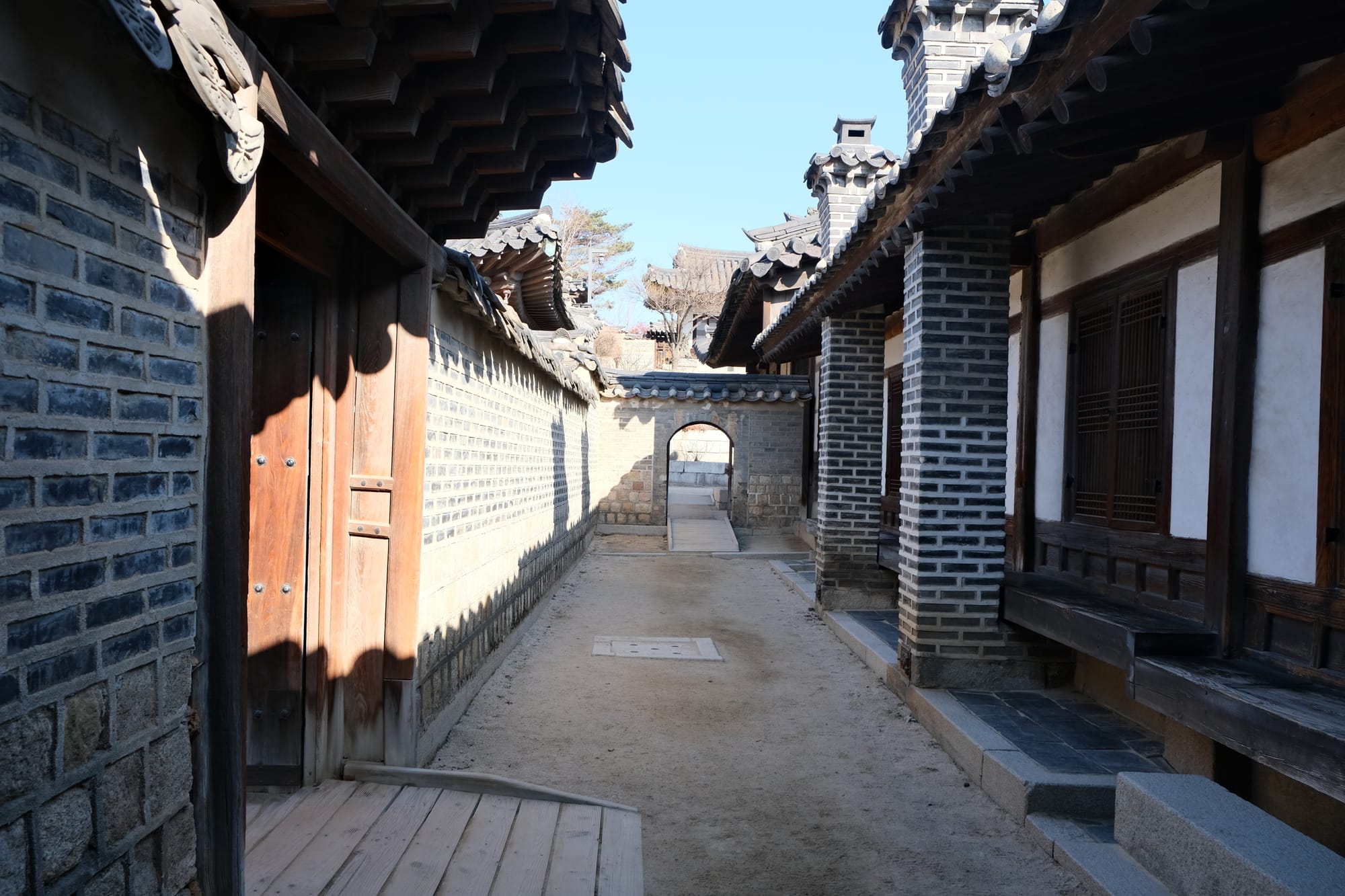
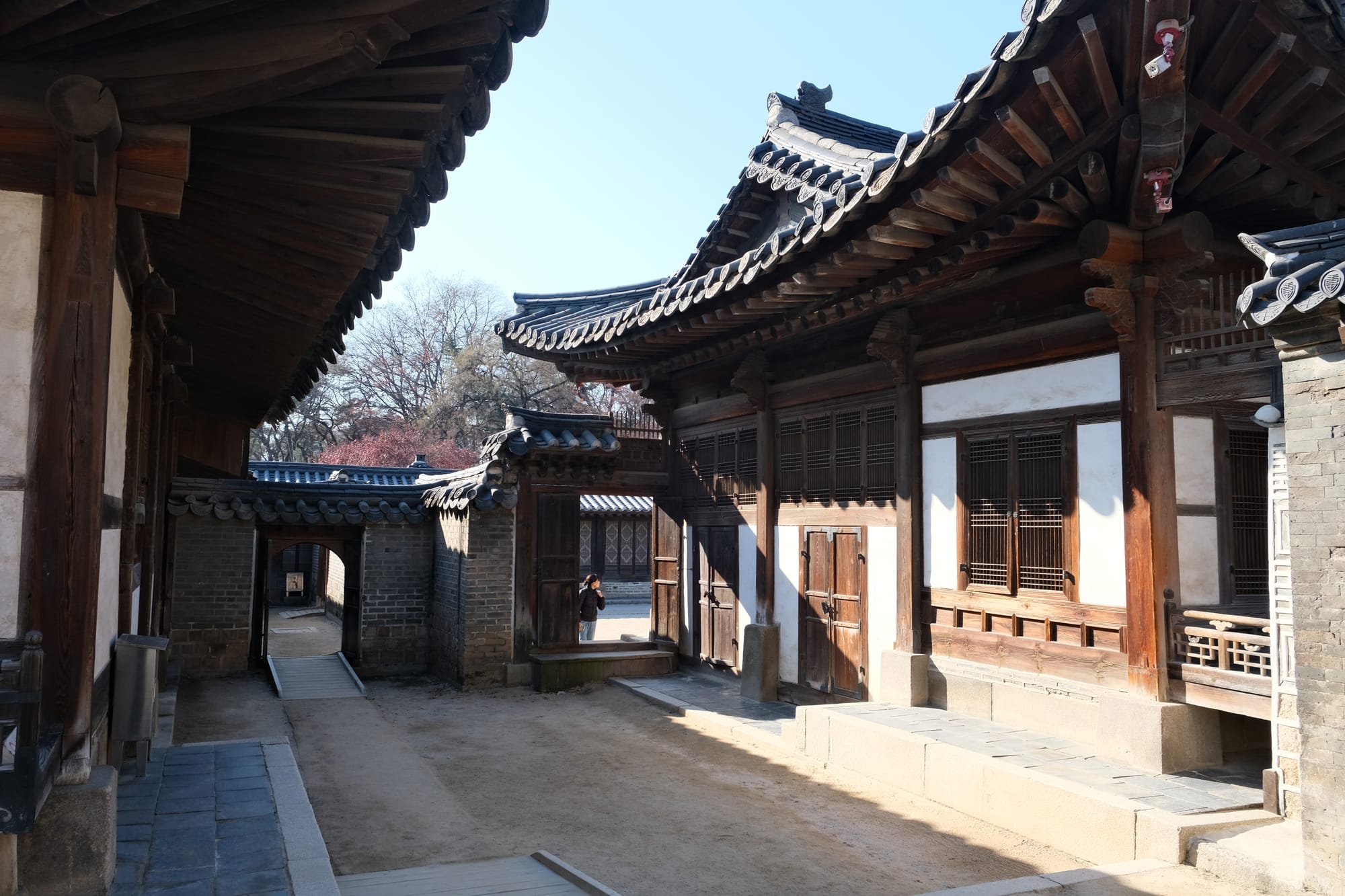
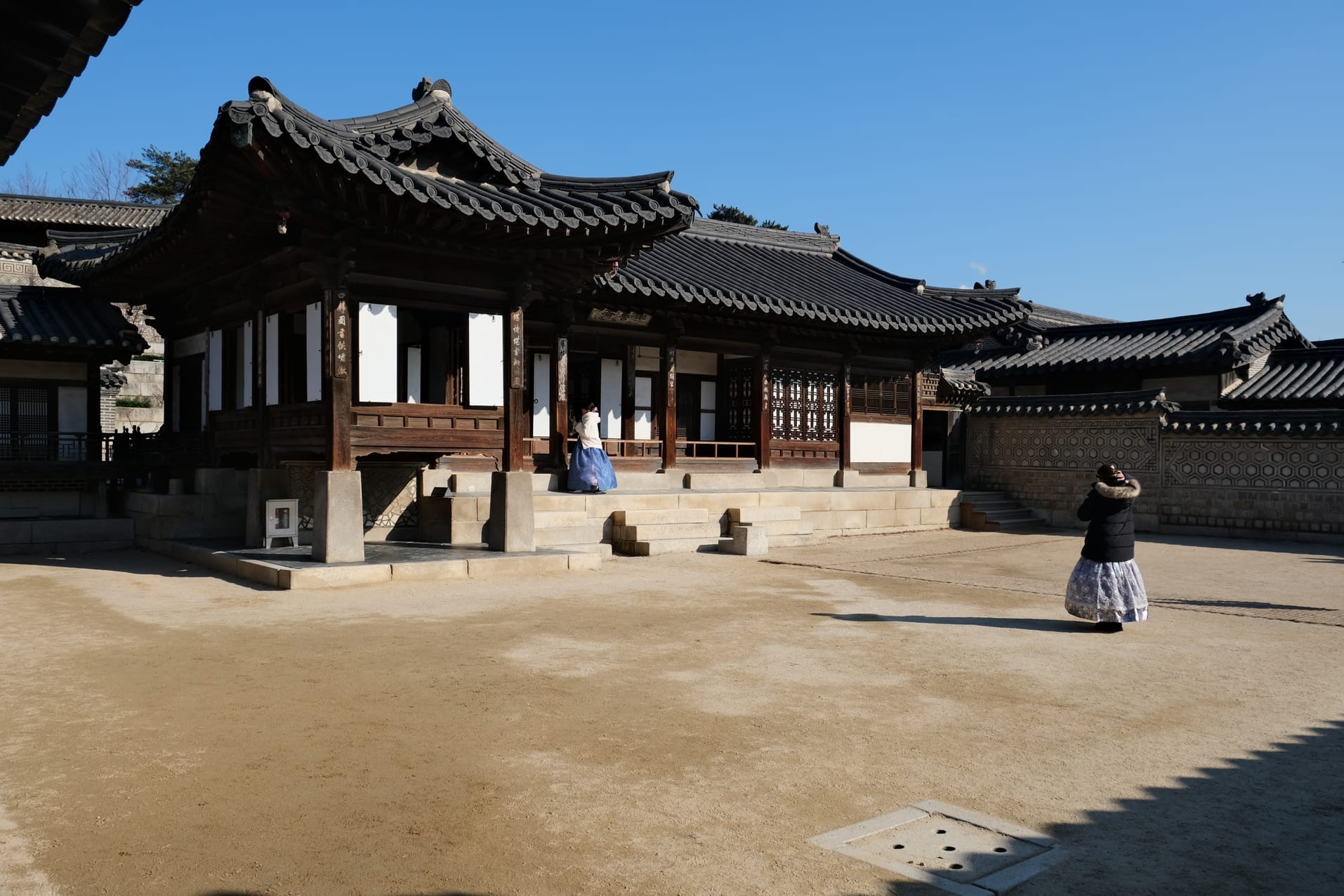
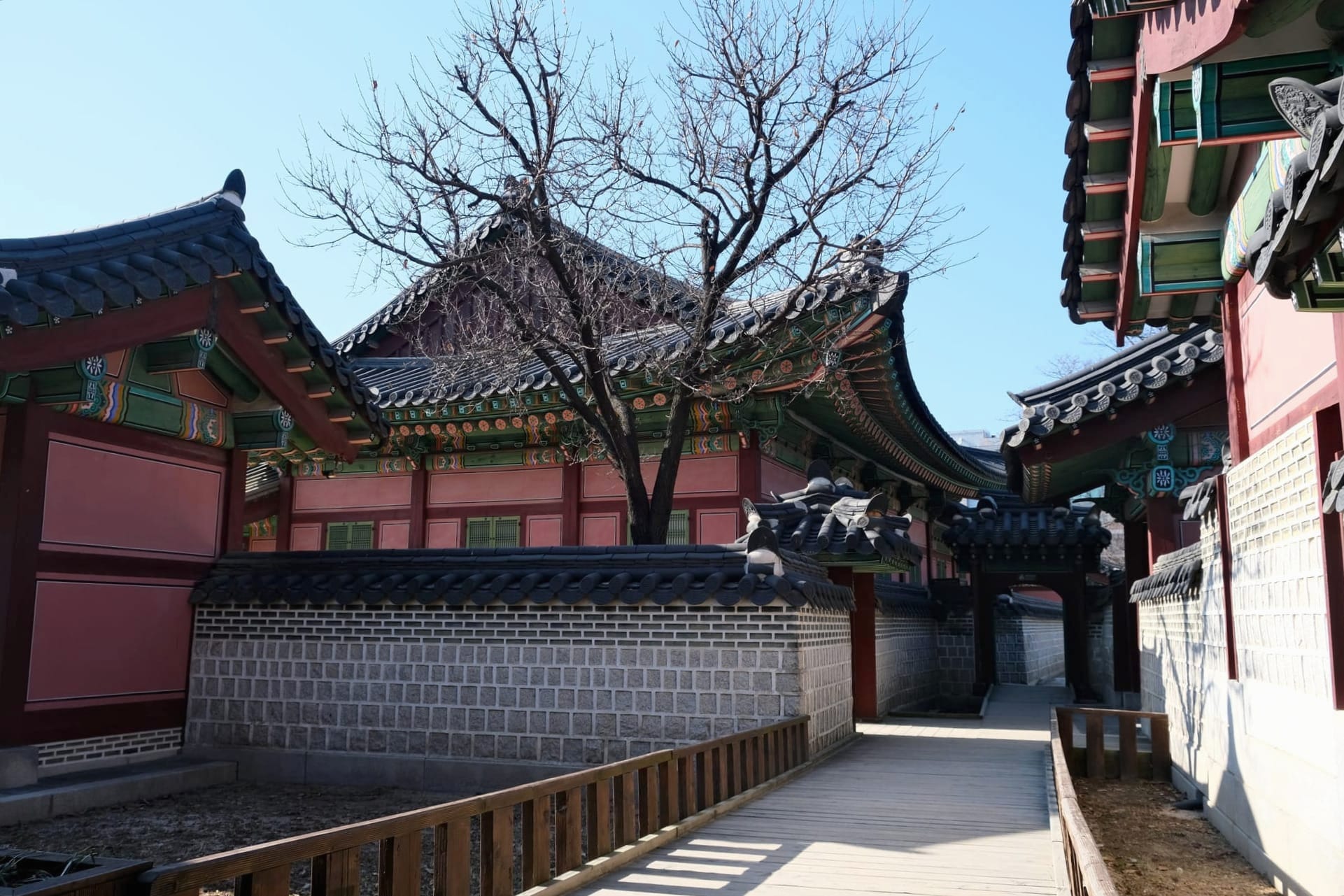
I explored this complex of buildings that might have once been used as administrative offices. There were a few paths that I could explore, situated between walls and buildings, they weaved through narrow gates throughout the complex.
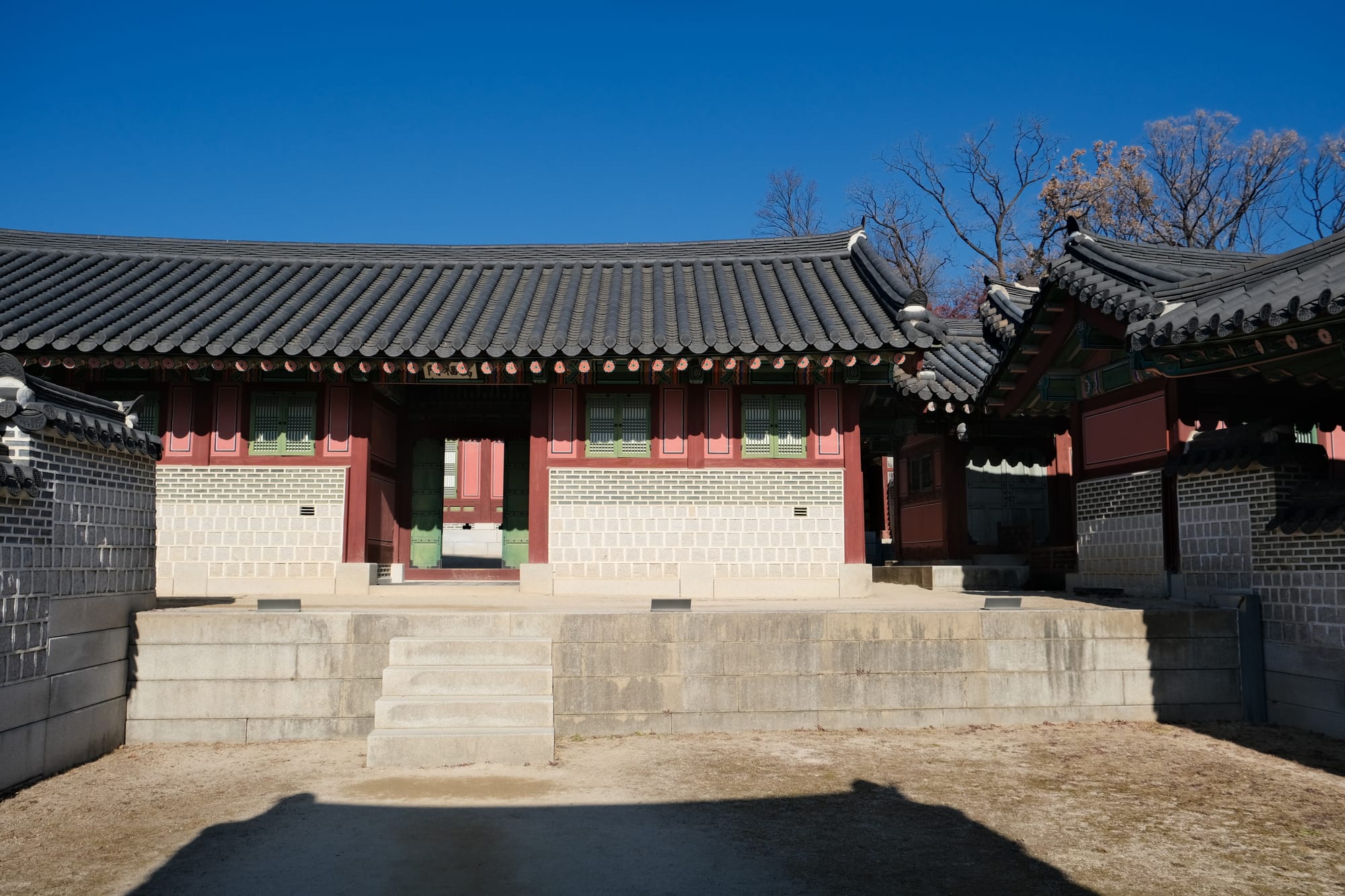
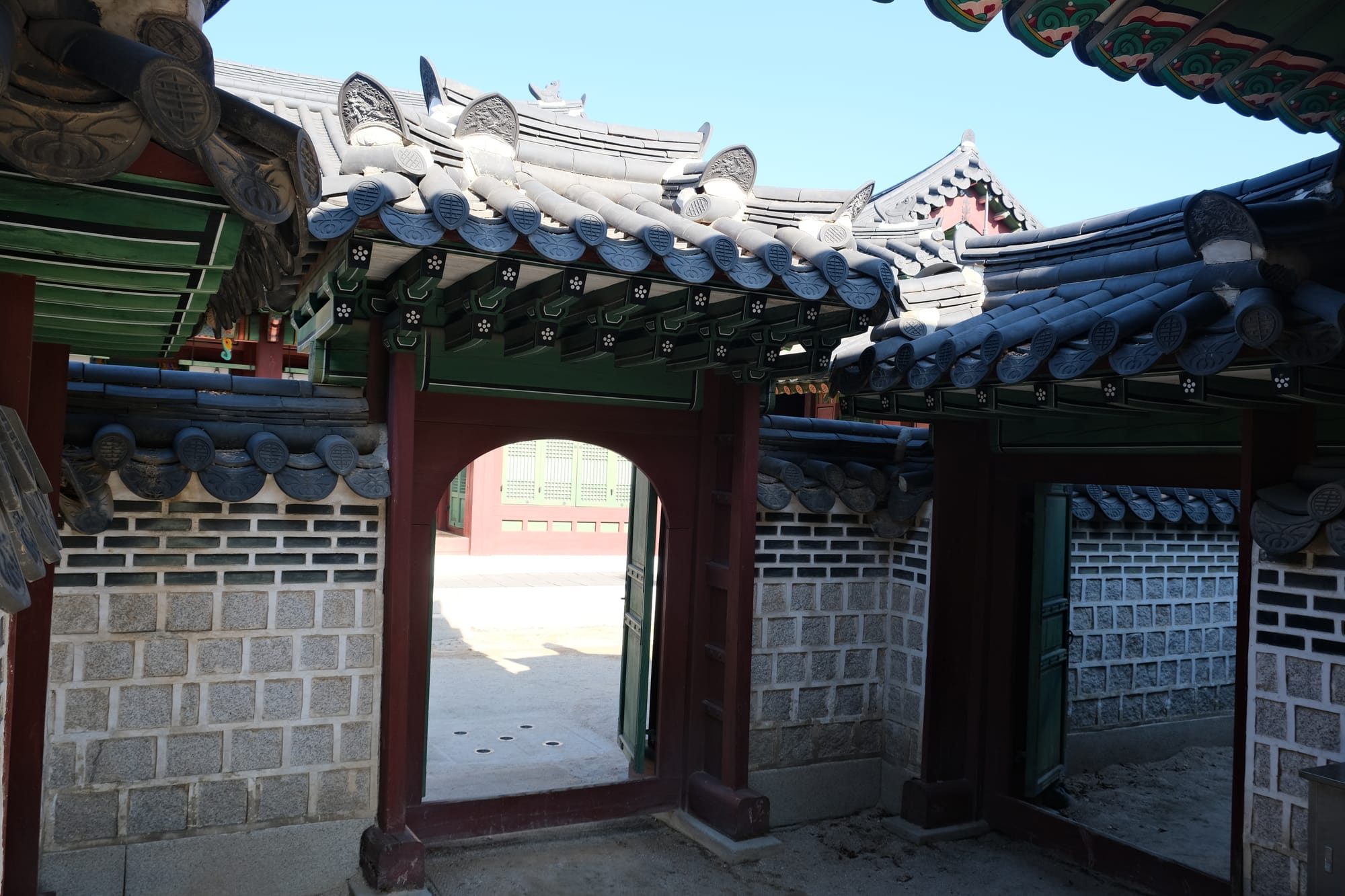
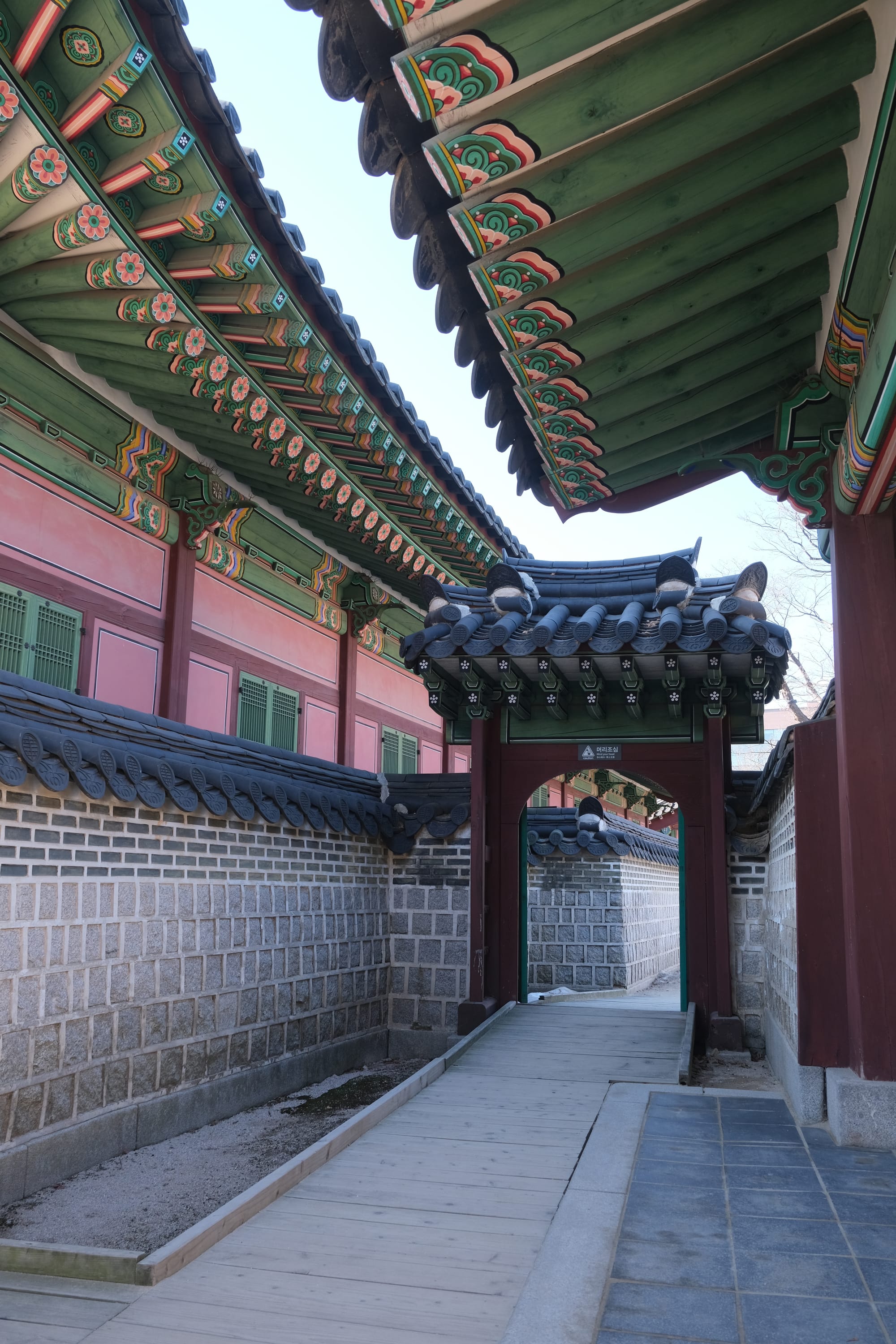
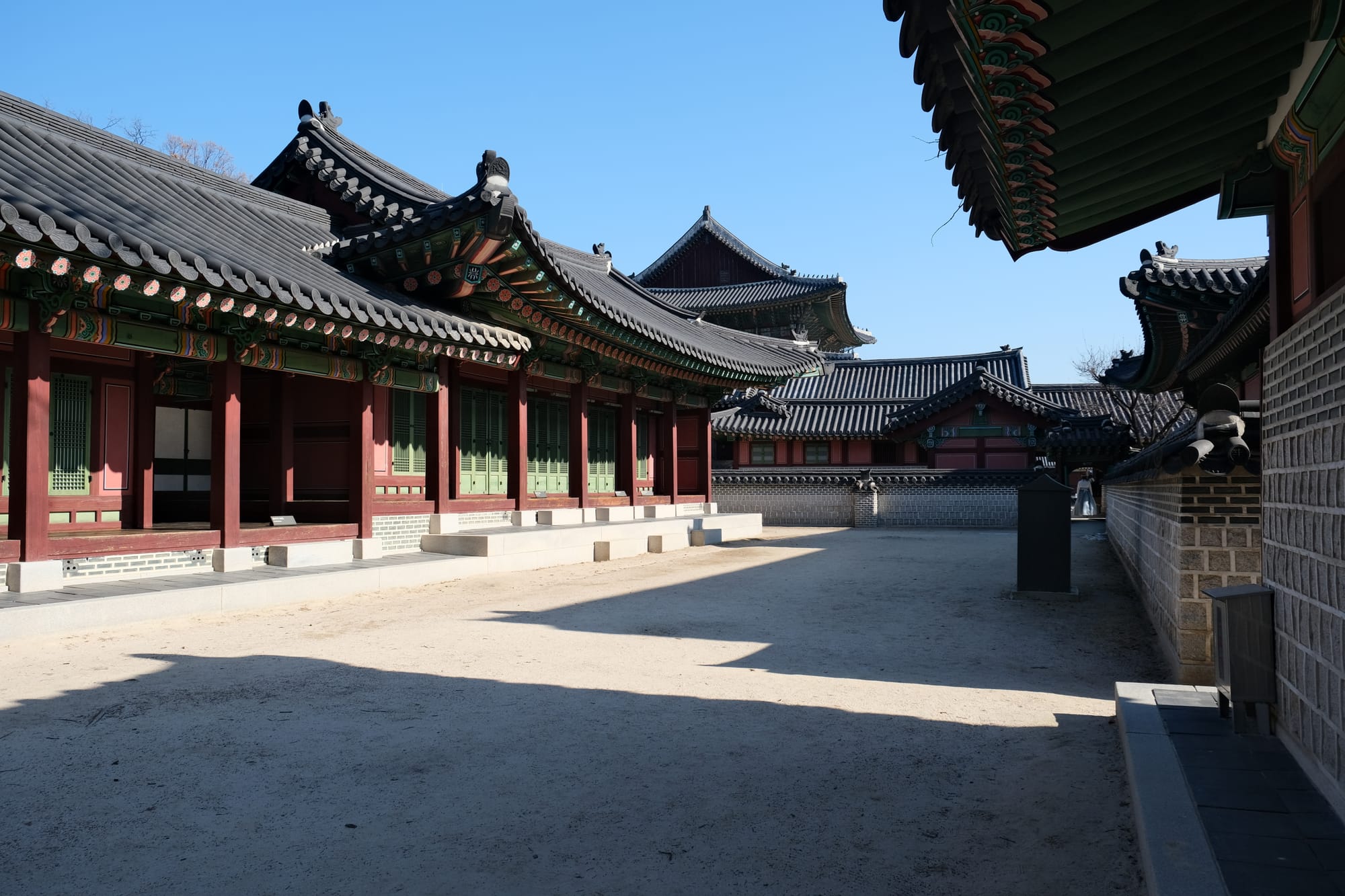
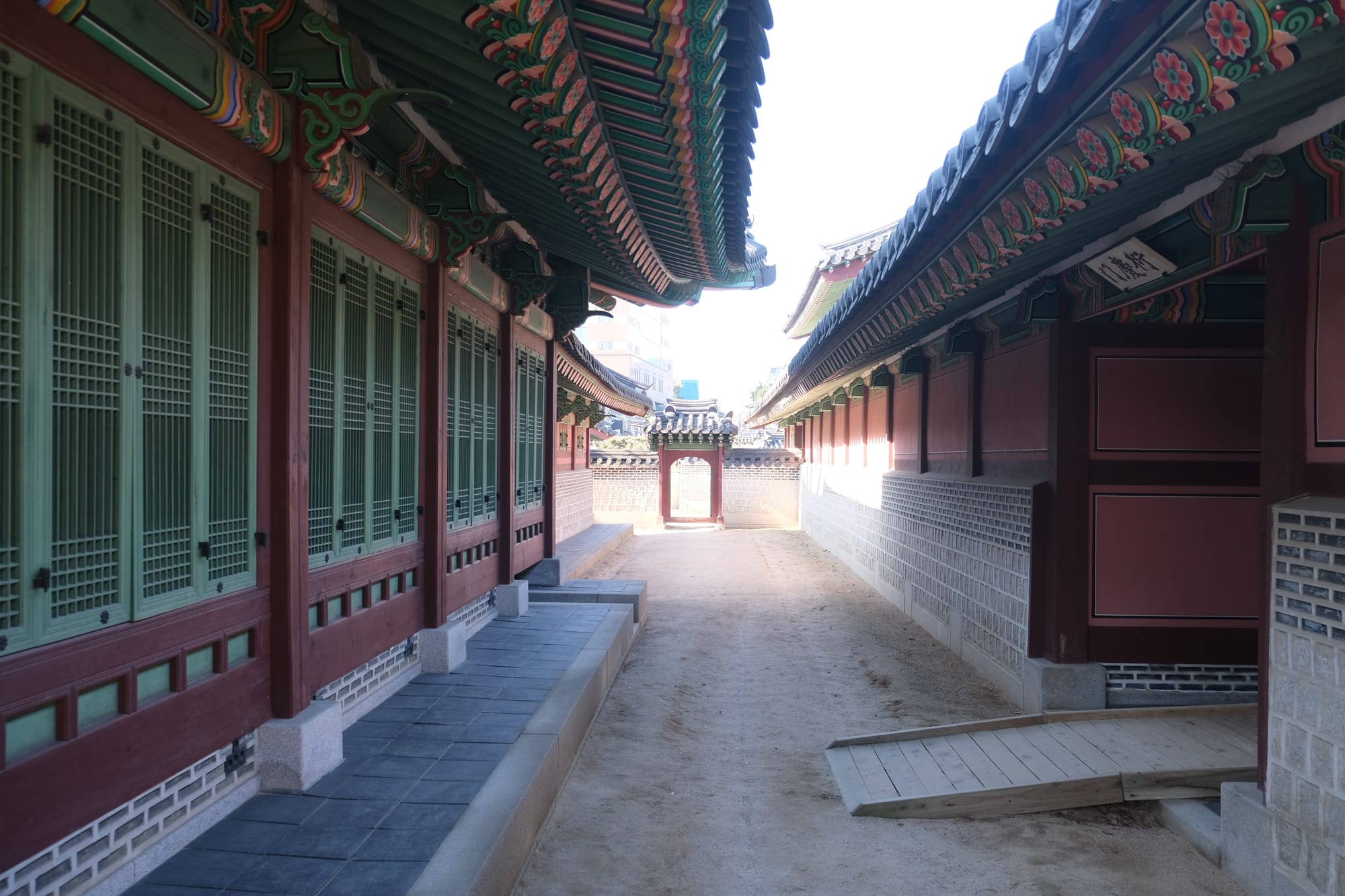
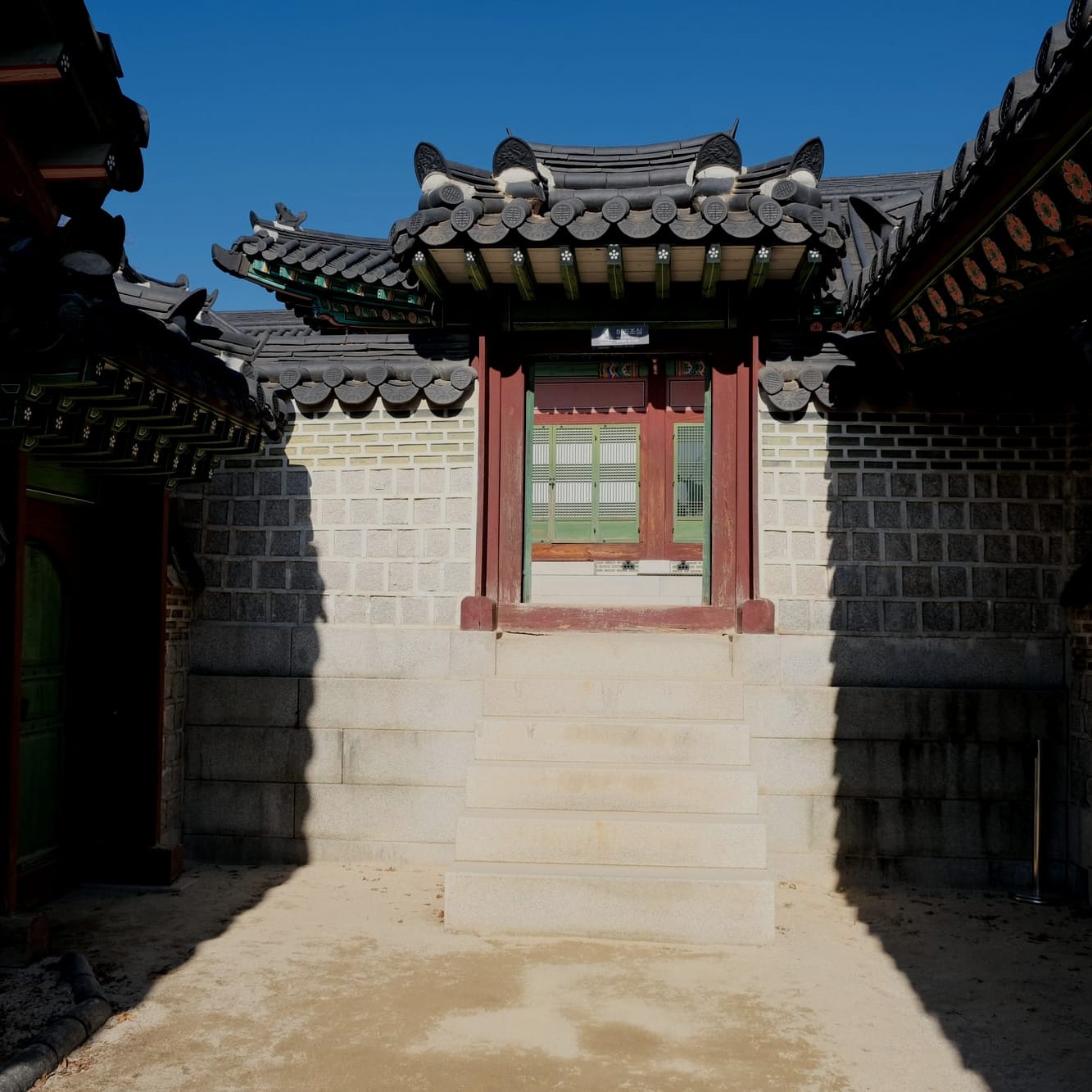
I found another set of buildings, located near the main throne room, they felt like a maze when I was exploring them. There were so many passageways through narrow gates going from one courtyard to another, or weaving between tightly packed buildings. I let myself get a bit lost here, as I wandered through the area, taking the time to absorb the beautiful architecture. I believe a lot of these buildings would have once been for offices of the state.
Changgyeonggung Palace
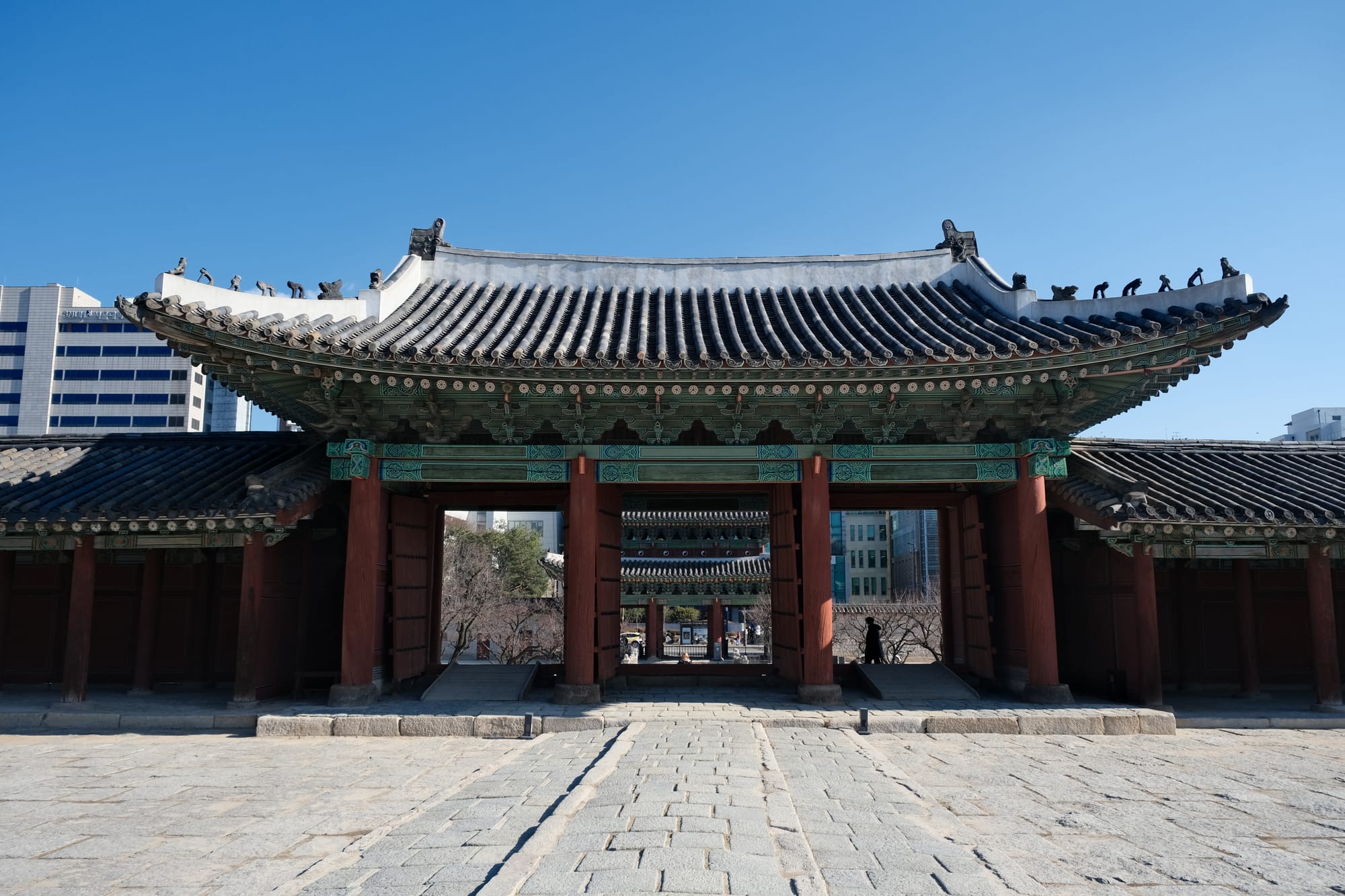
This palace sits adjacent to Changdeokgung and it had originally been built for the ladies of the court when Changdeokgung became too crowded. Later it became a palace in its own right. It also had a throne room and gates, but these far less impressive than the two palaces I had already seen. The grounds also felt more open than the previous palaces and I believe this is because many of the original buildings did not survive and have not yet been restored. Many of the buildings had been torn down during the Japanese colonial period. Similar to the previous palace, large areas of the grounds are used for a forested garden and it includes a greenhouse that I believe was built by the Japanese.
I could access Changgyeonggung through a gate in the dividing wall with Changdeokgung palace, but I needed to pay for a separate ticket. Thankfully there was a ticket office next to the gate. Both palaces are backed against a hill and the gate I used to cross from one to the other was slightly elevated. So as I entered the new palace grounds I had a bit of a view of the historic buildings. This was effectively the back door into the palace, meaning I visited this palace in reverse: starting with the residential buildings and ending with the throne room, then exiting by the main gate.
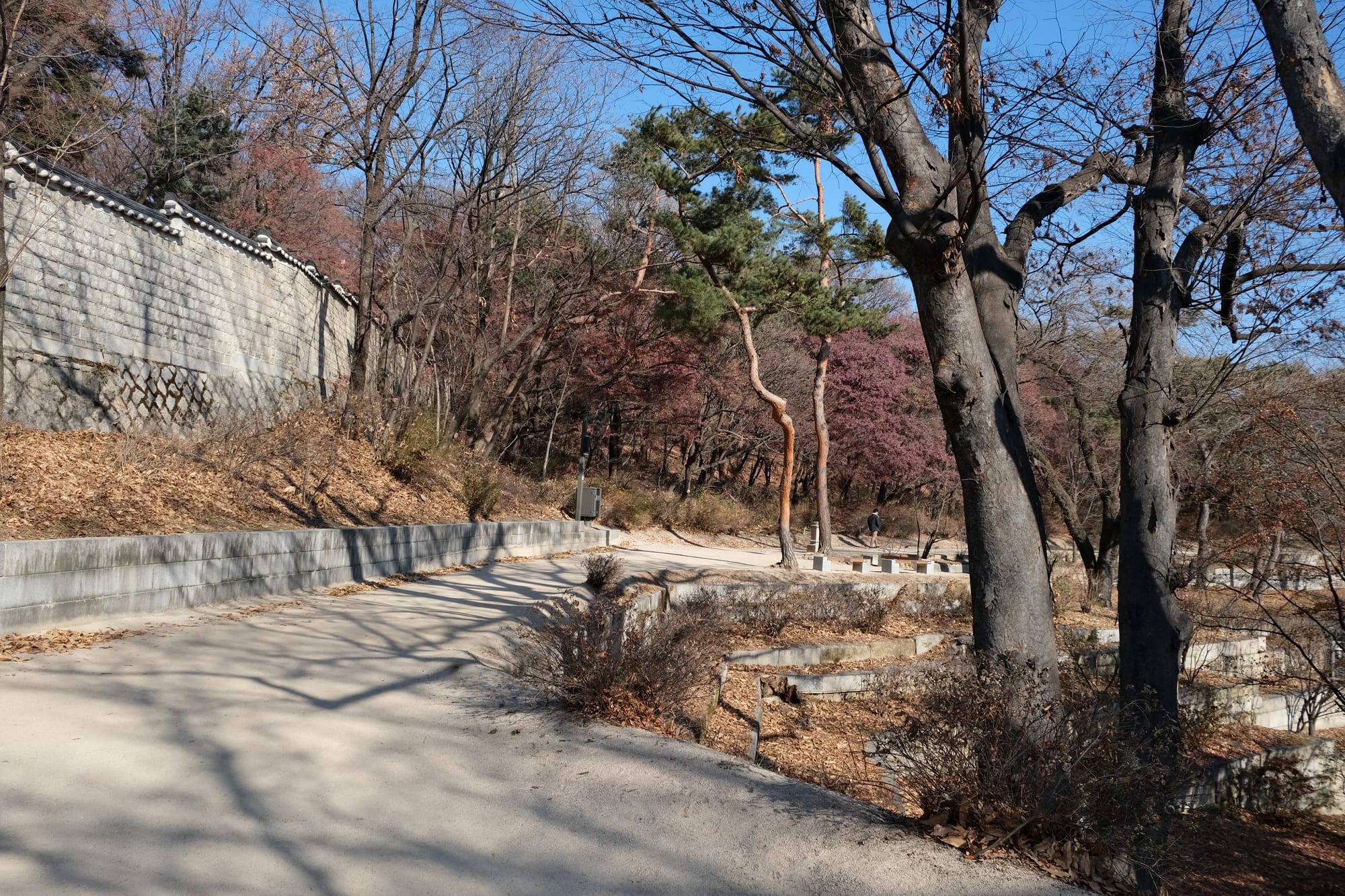
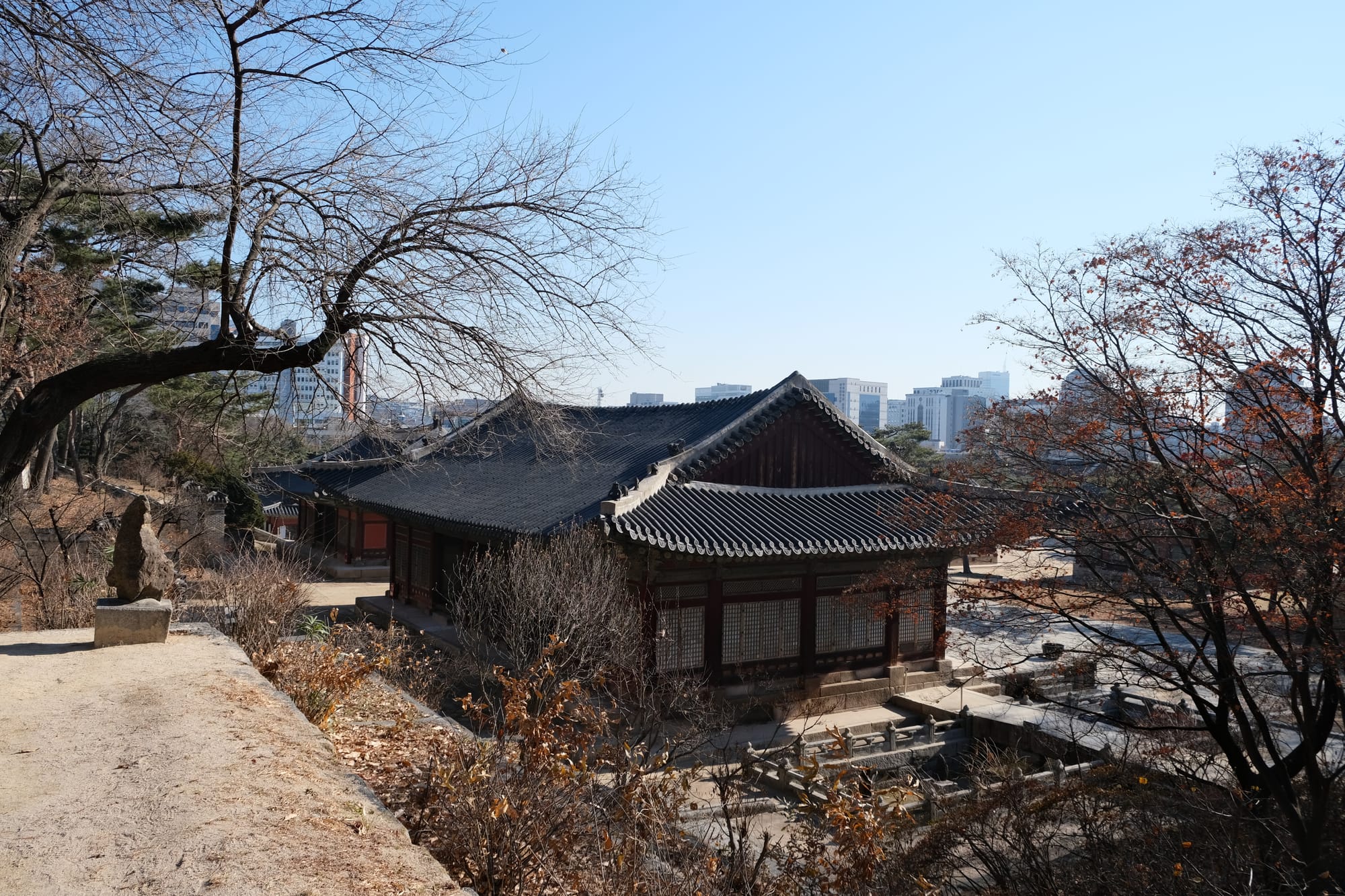
The path I took from the entry gate, to my right I had a view of the buildings in Changgyeonggung Palace.
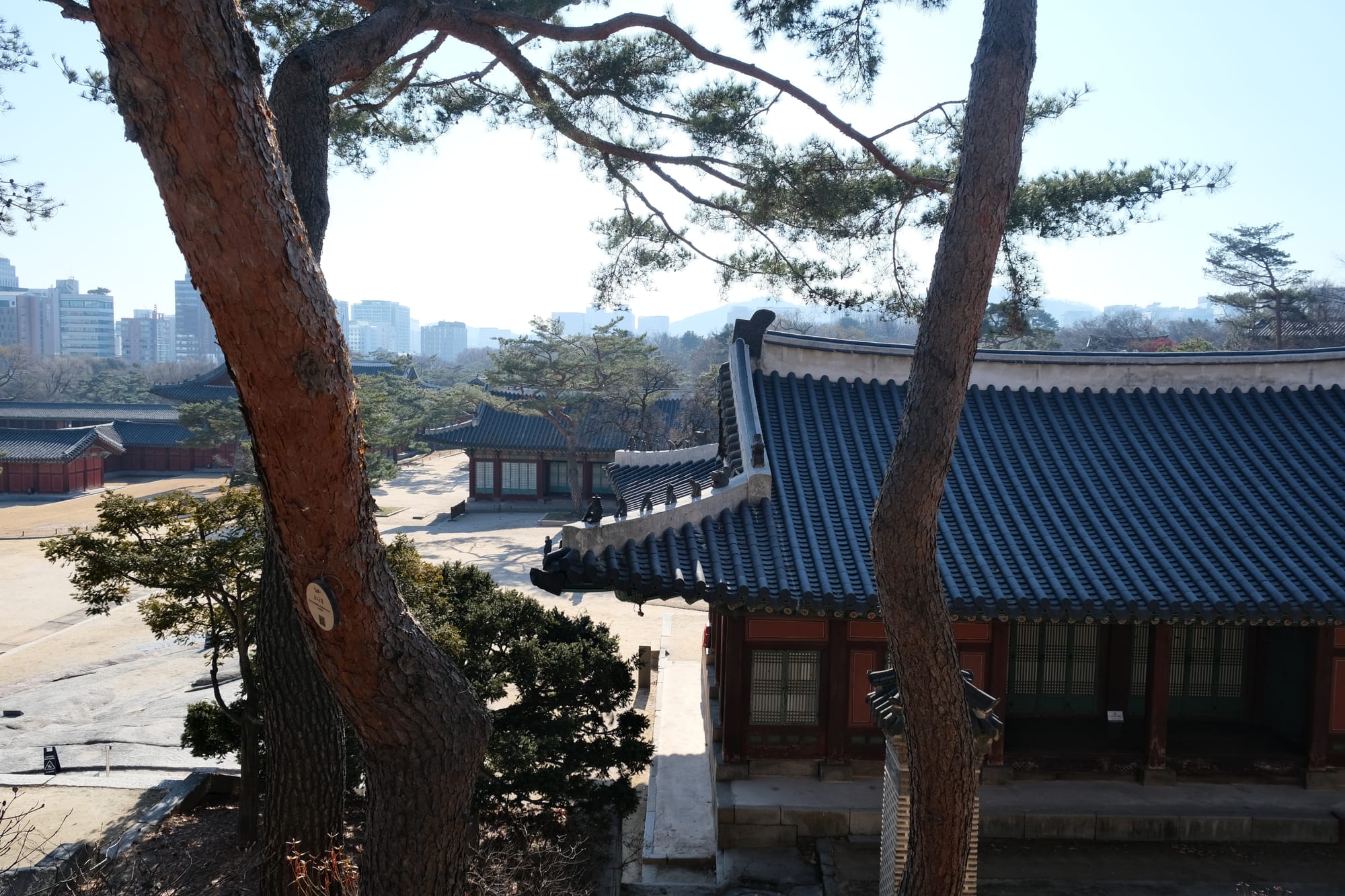
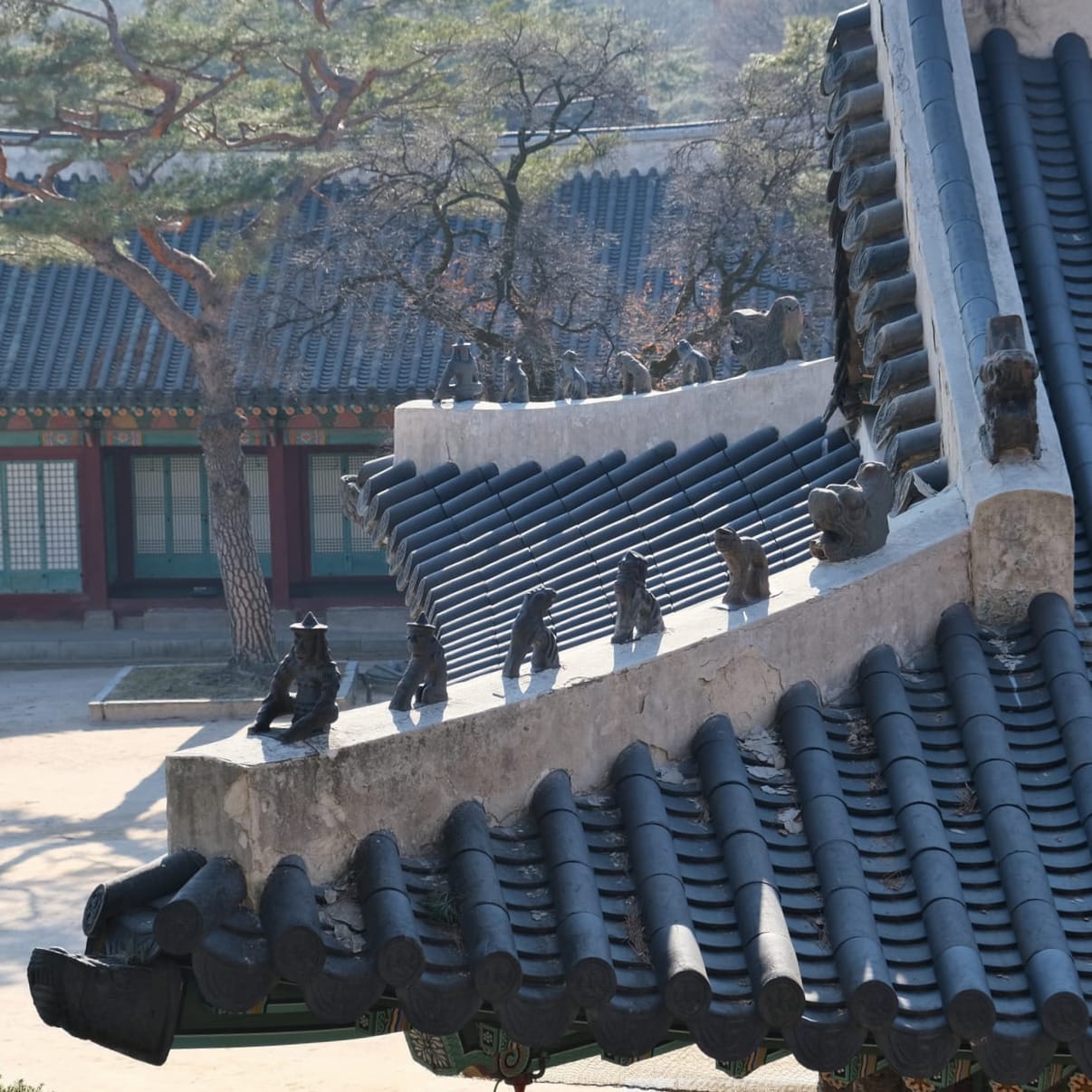
Every building, in all the palaces I visited, had these figurines decorating the roofs. From my elevated path I had a good view of them here.
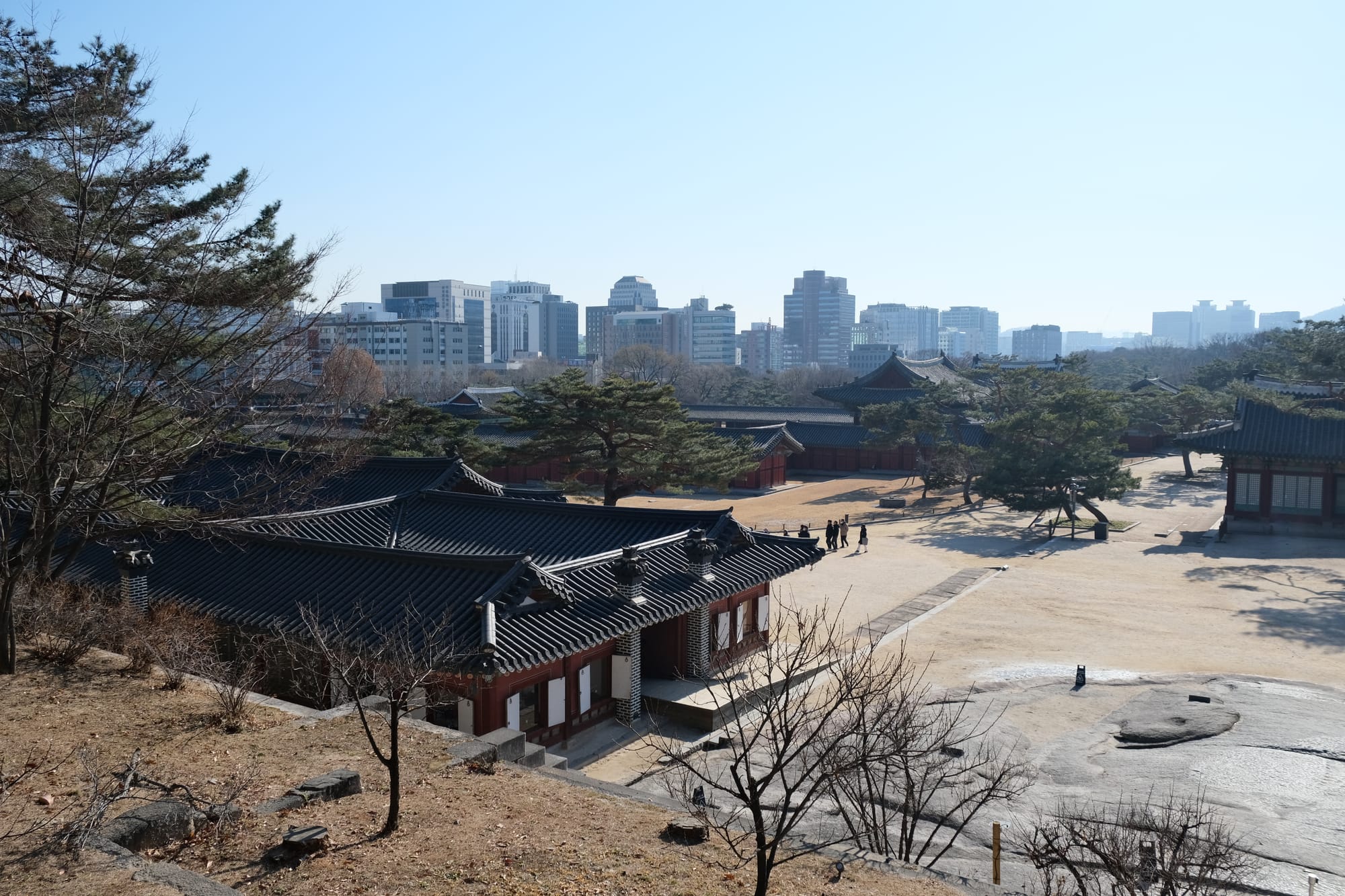
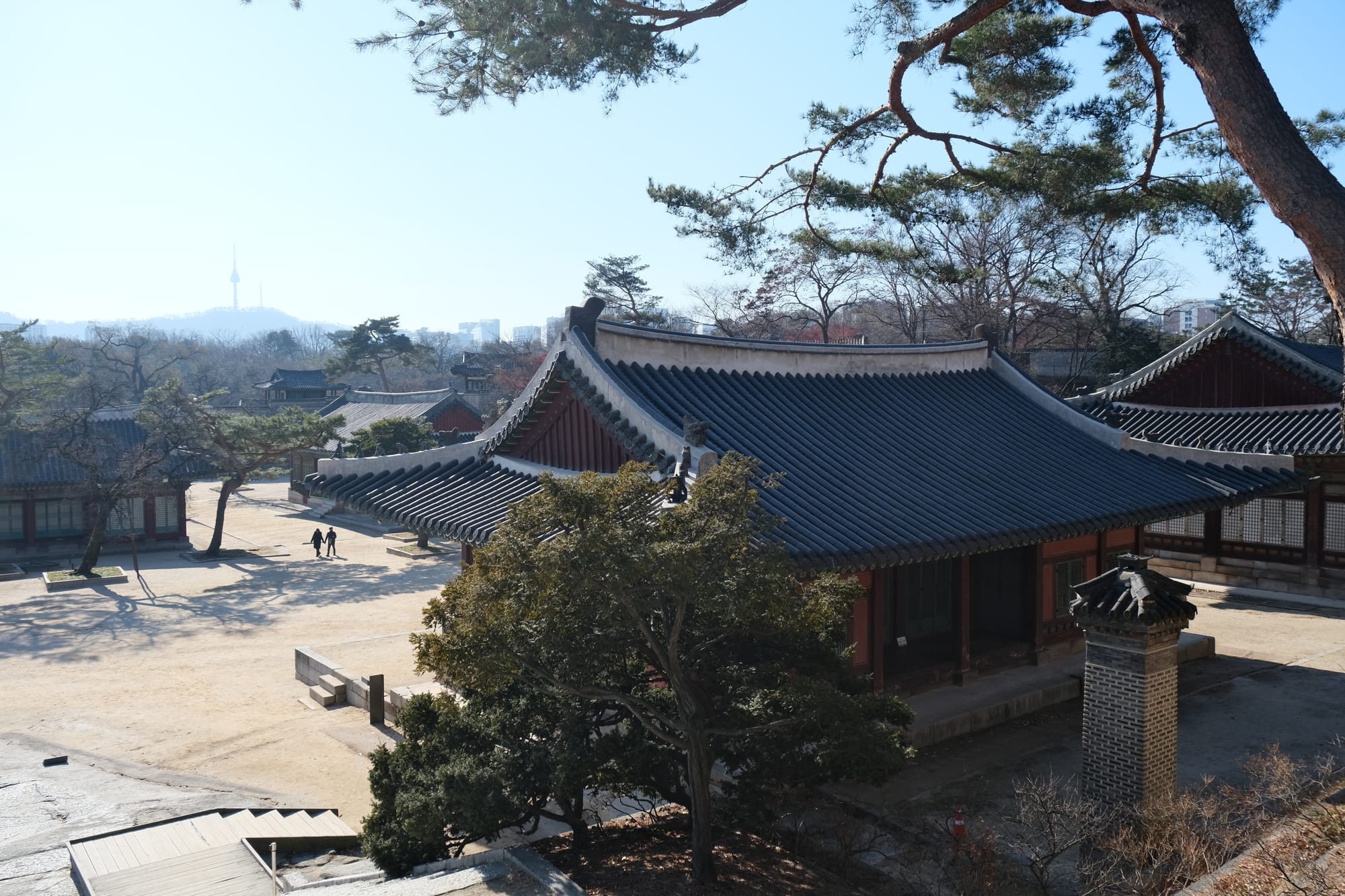
`The view from the hill before I descended some steps into the palace grounds proper. Fewer of the original buildings were preserved in this palace so the grounds were much more open and the buildings spaced further apart.
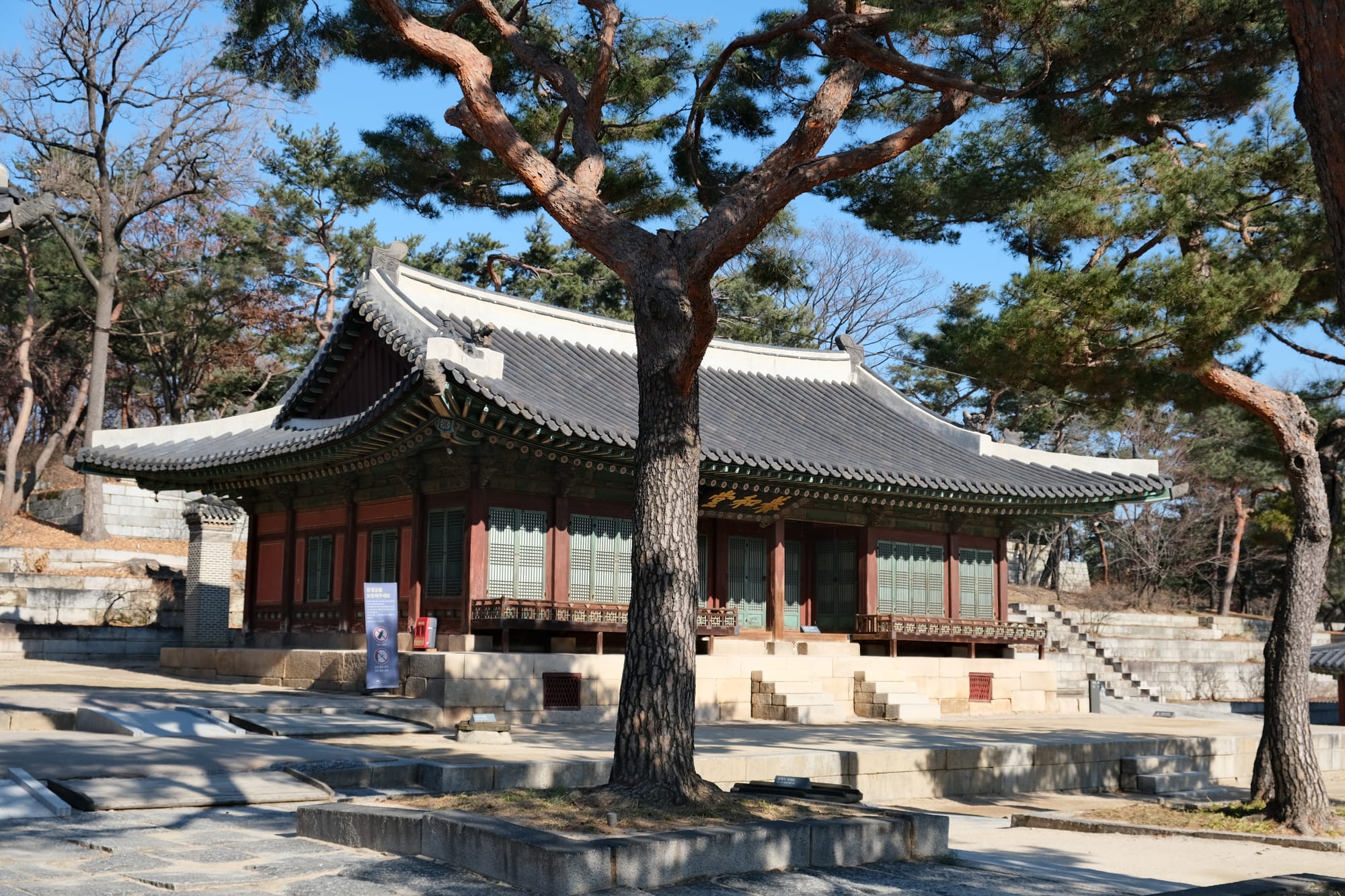
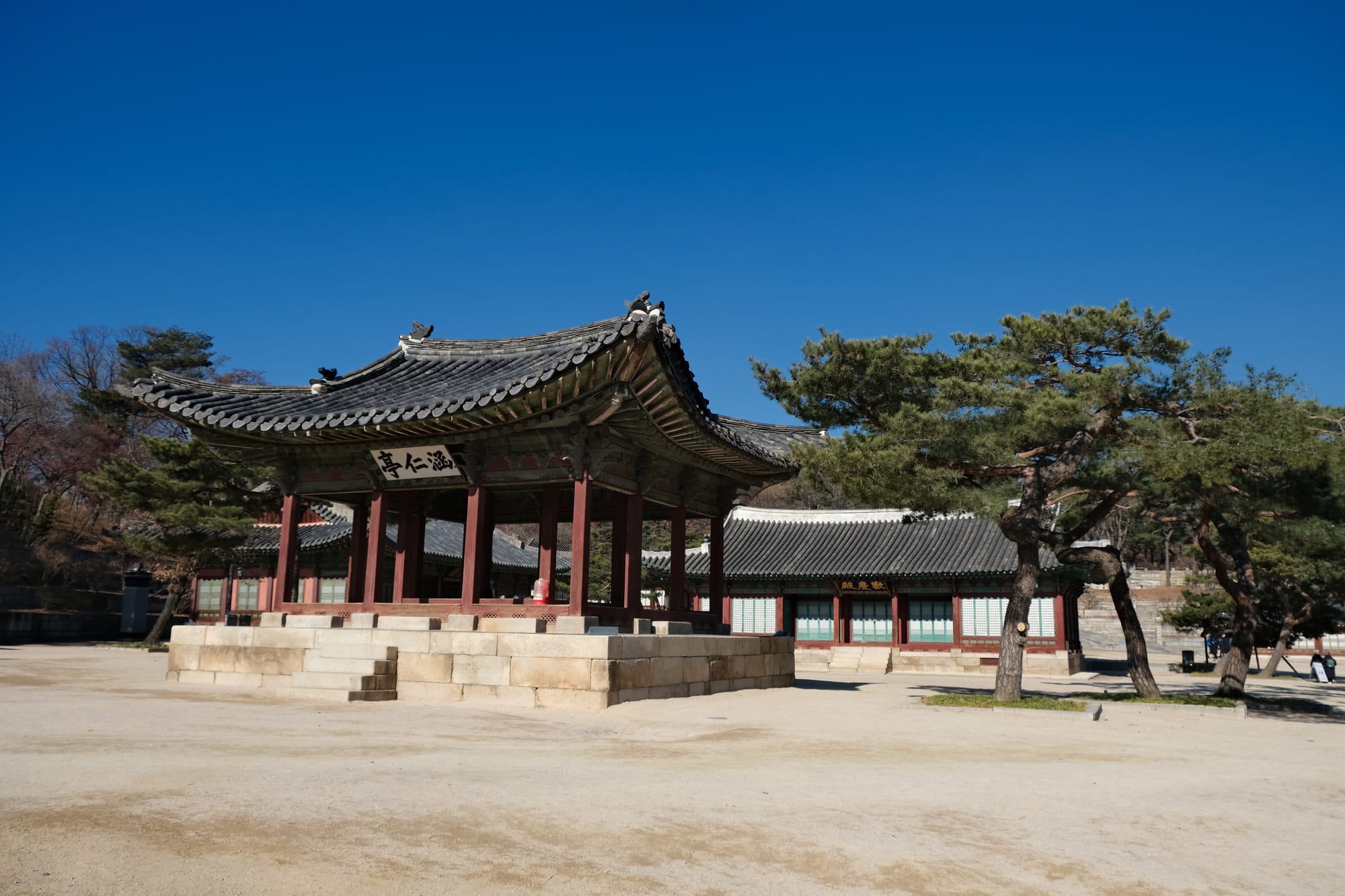
Some of the buildings on the palace grounds. These were situated behind the throne room, but since I entered from the back of the grounds I passed these buildings first.
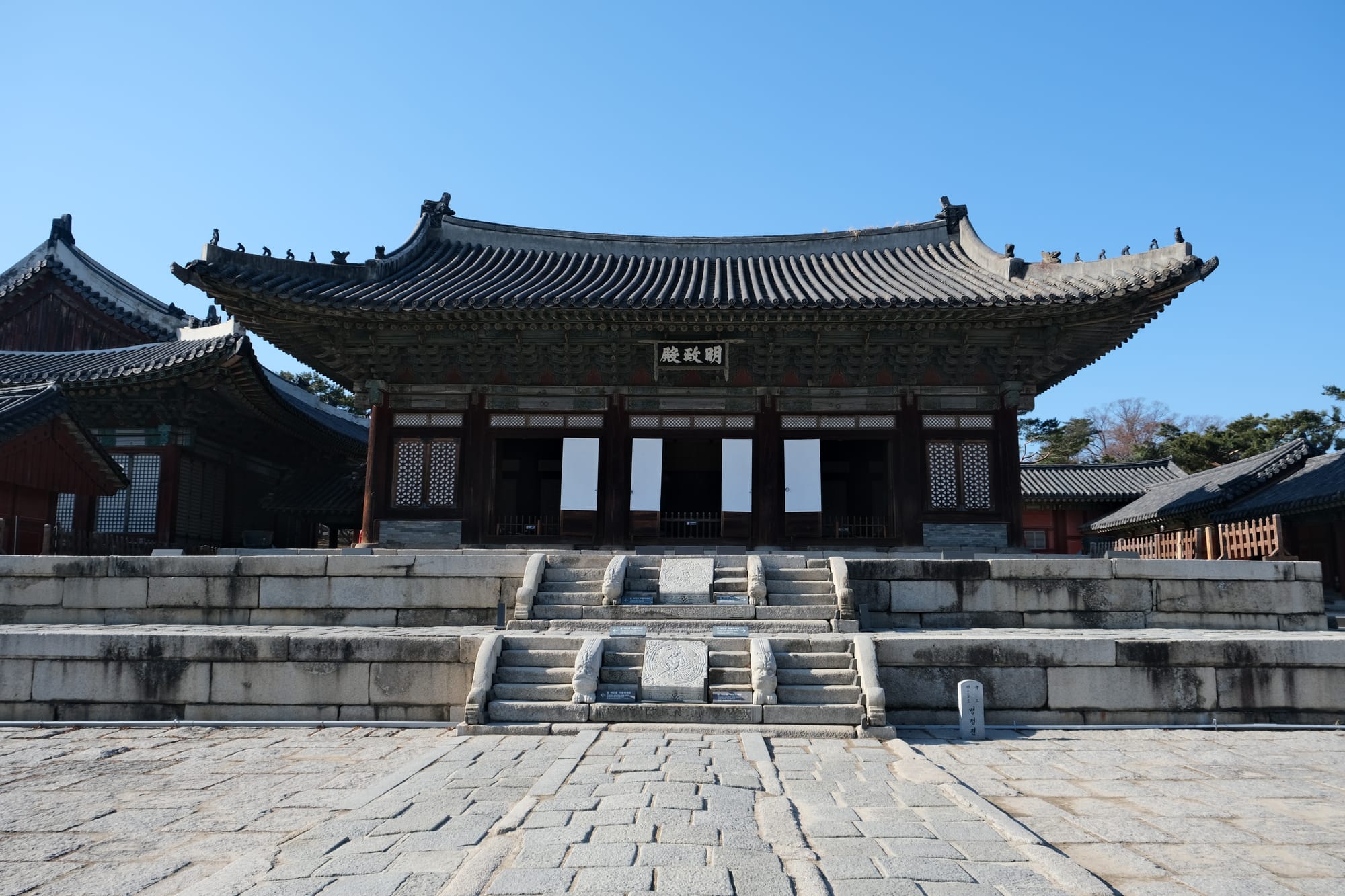
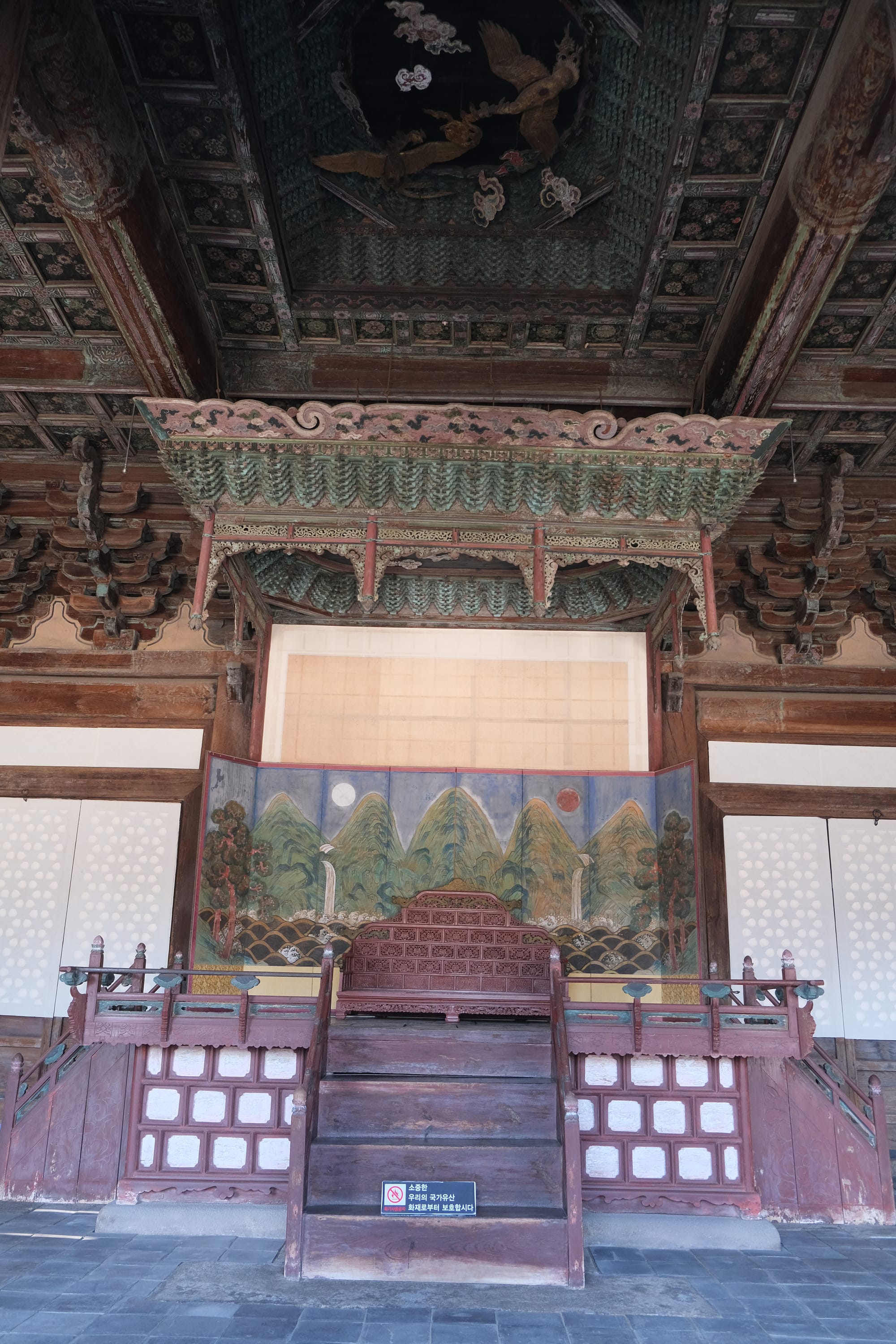
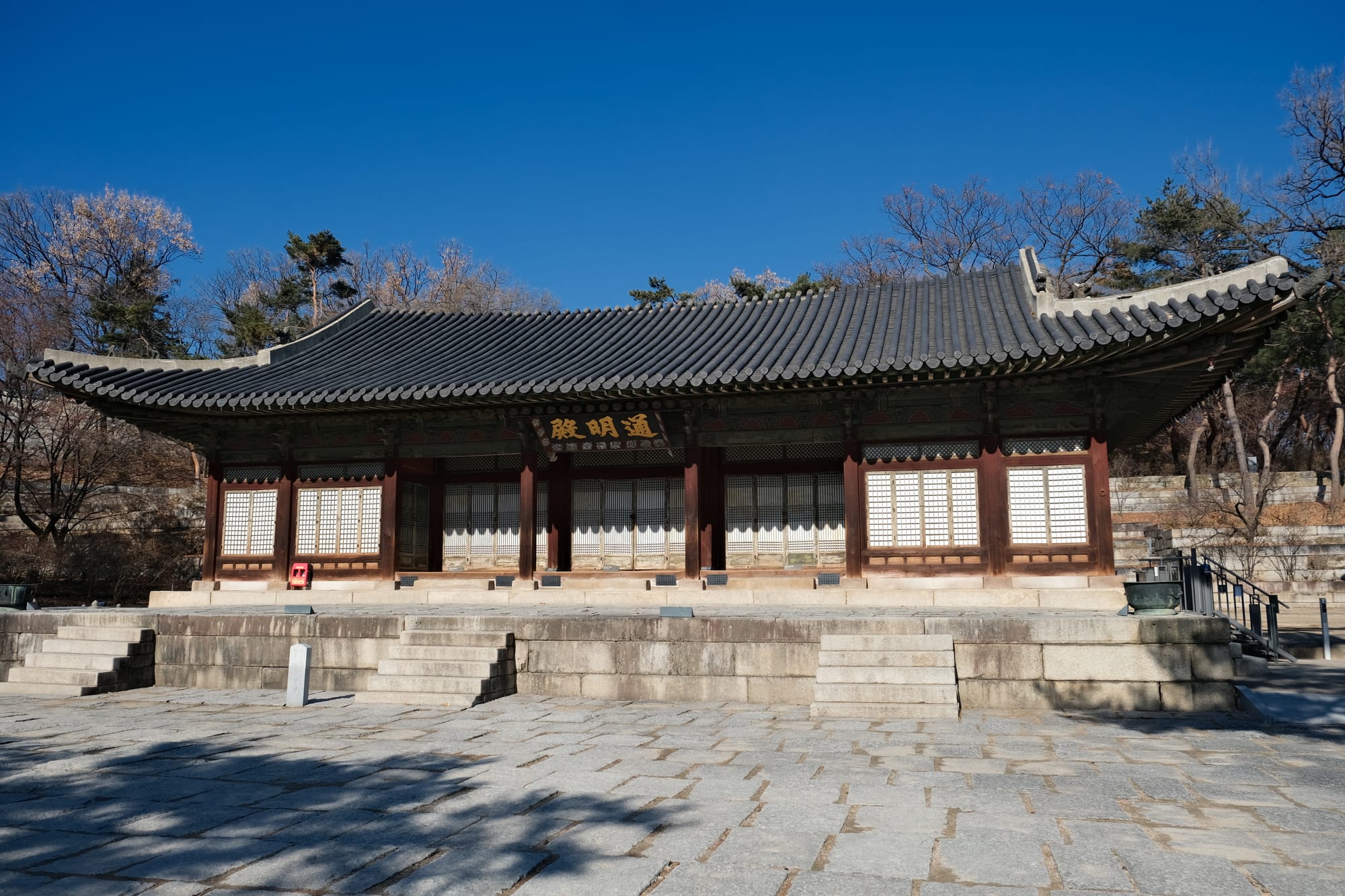
The throne room of Changgyeonggung Palace.
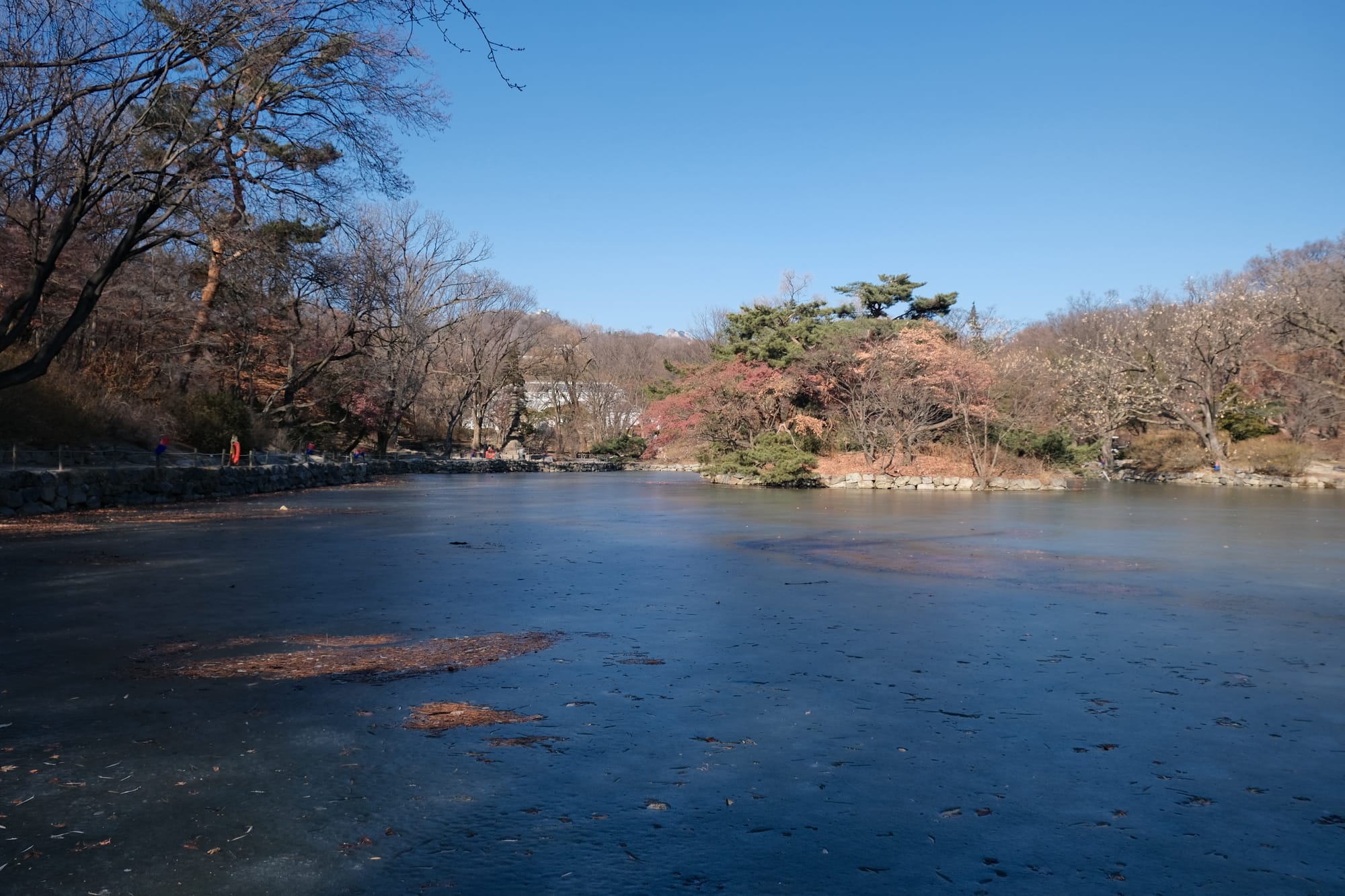
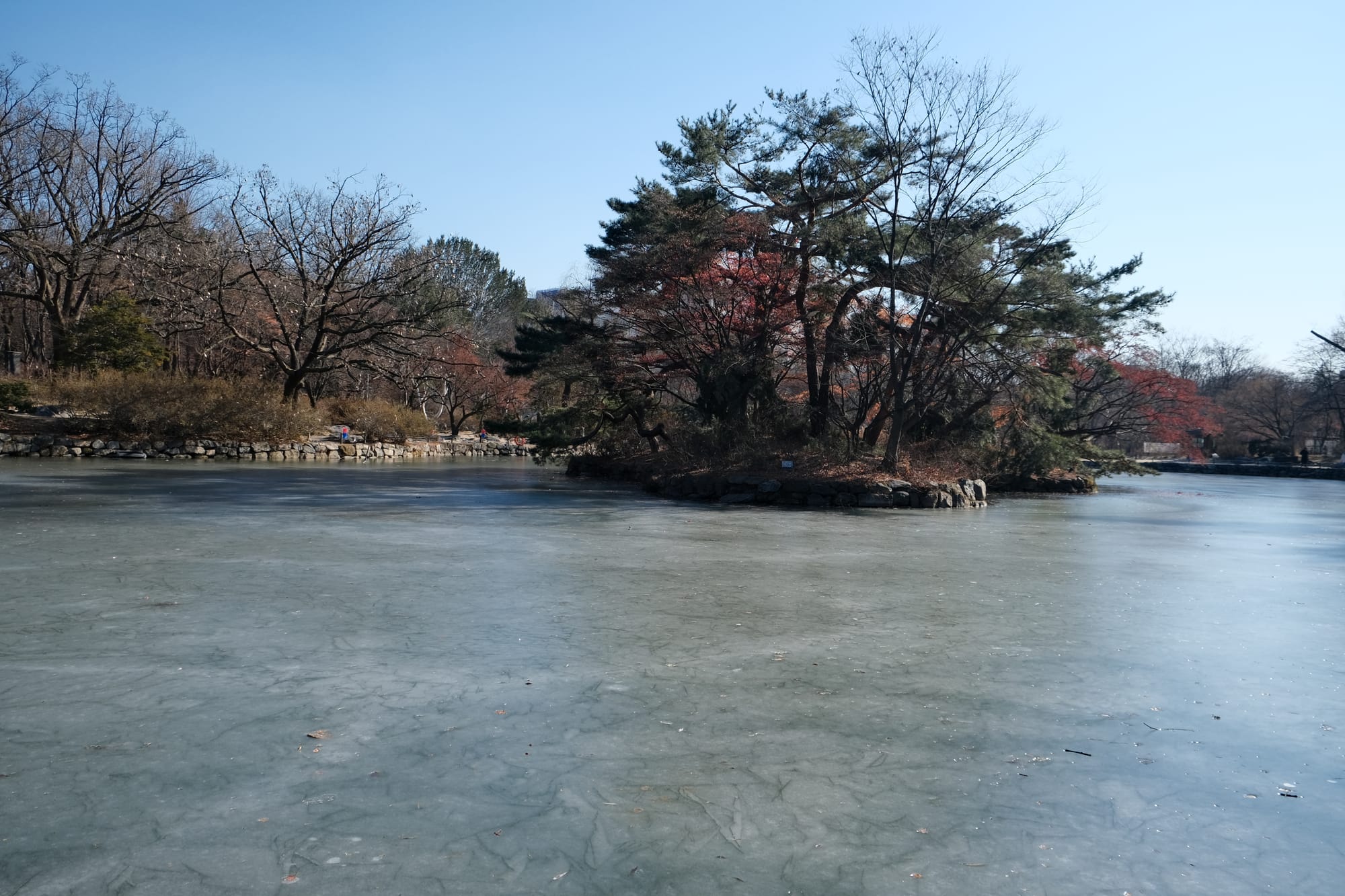
I was just about to leave the palace when I noticed a large lake on Google maps within the palace grounds. I decided to quickly go and take a look, and found it completely frozen, which I thought was beautiful in its own right.
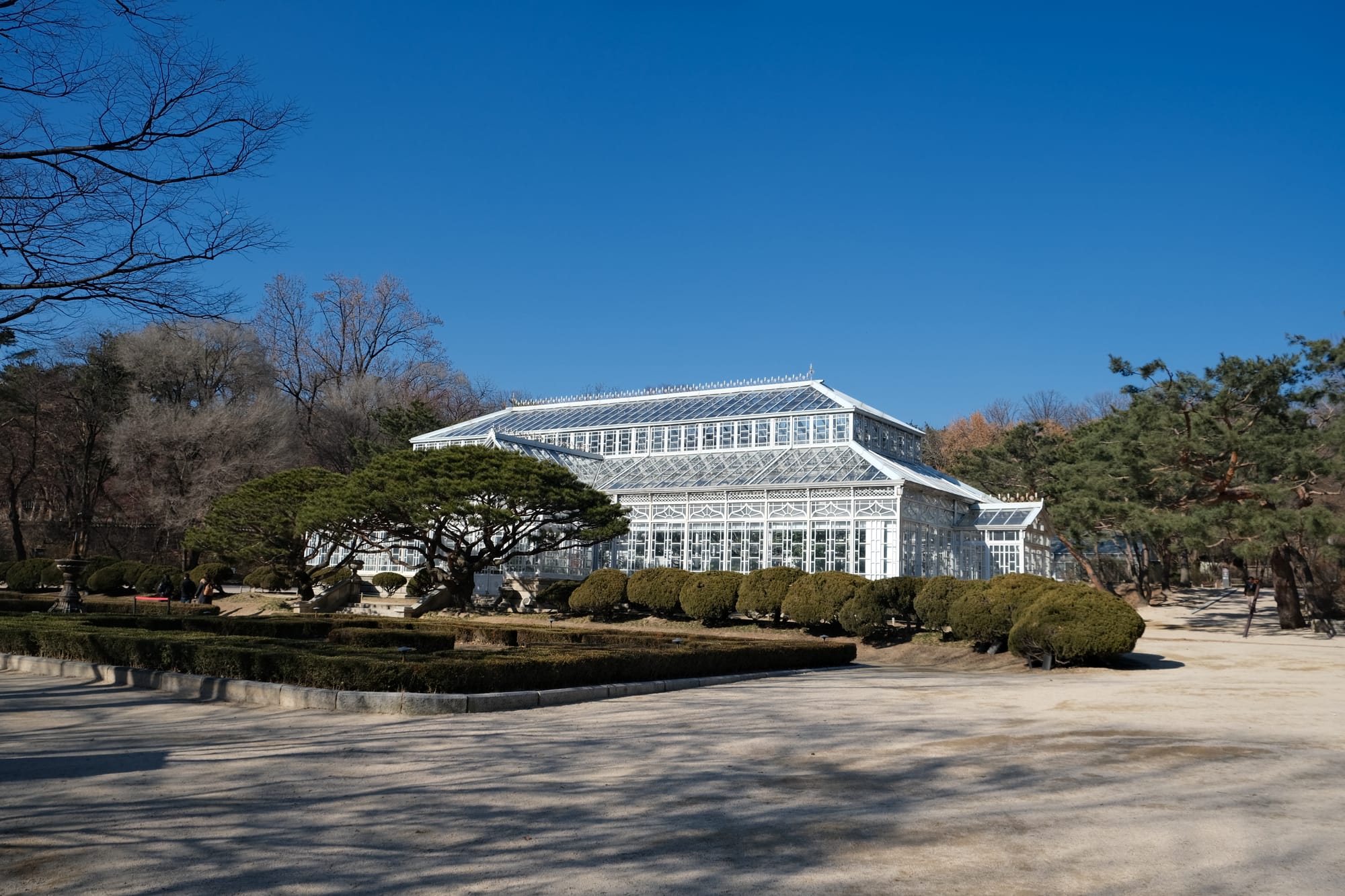
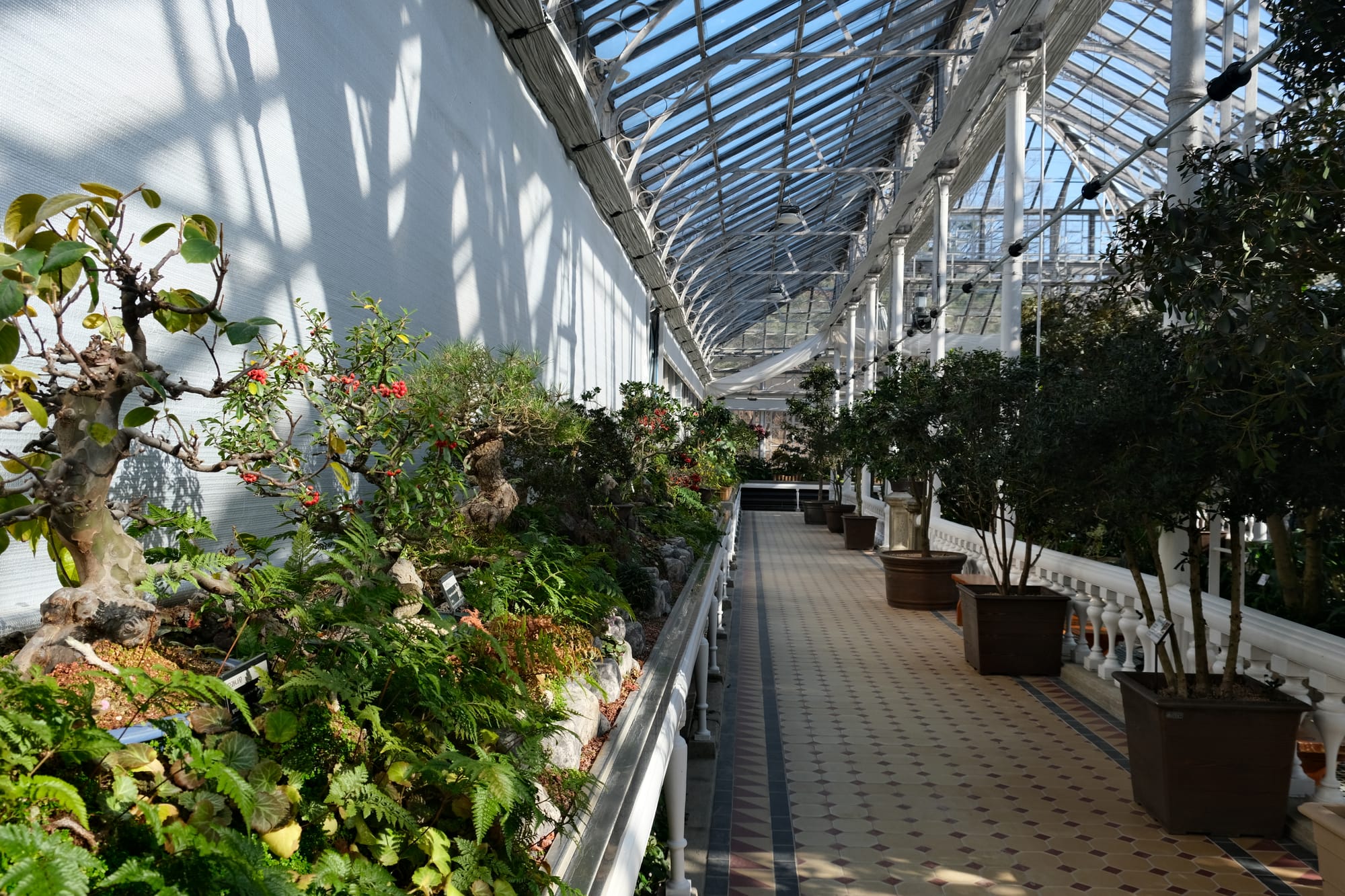
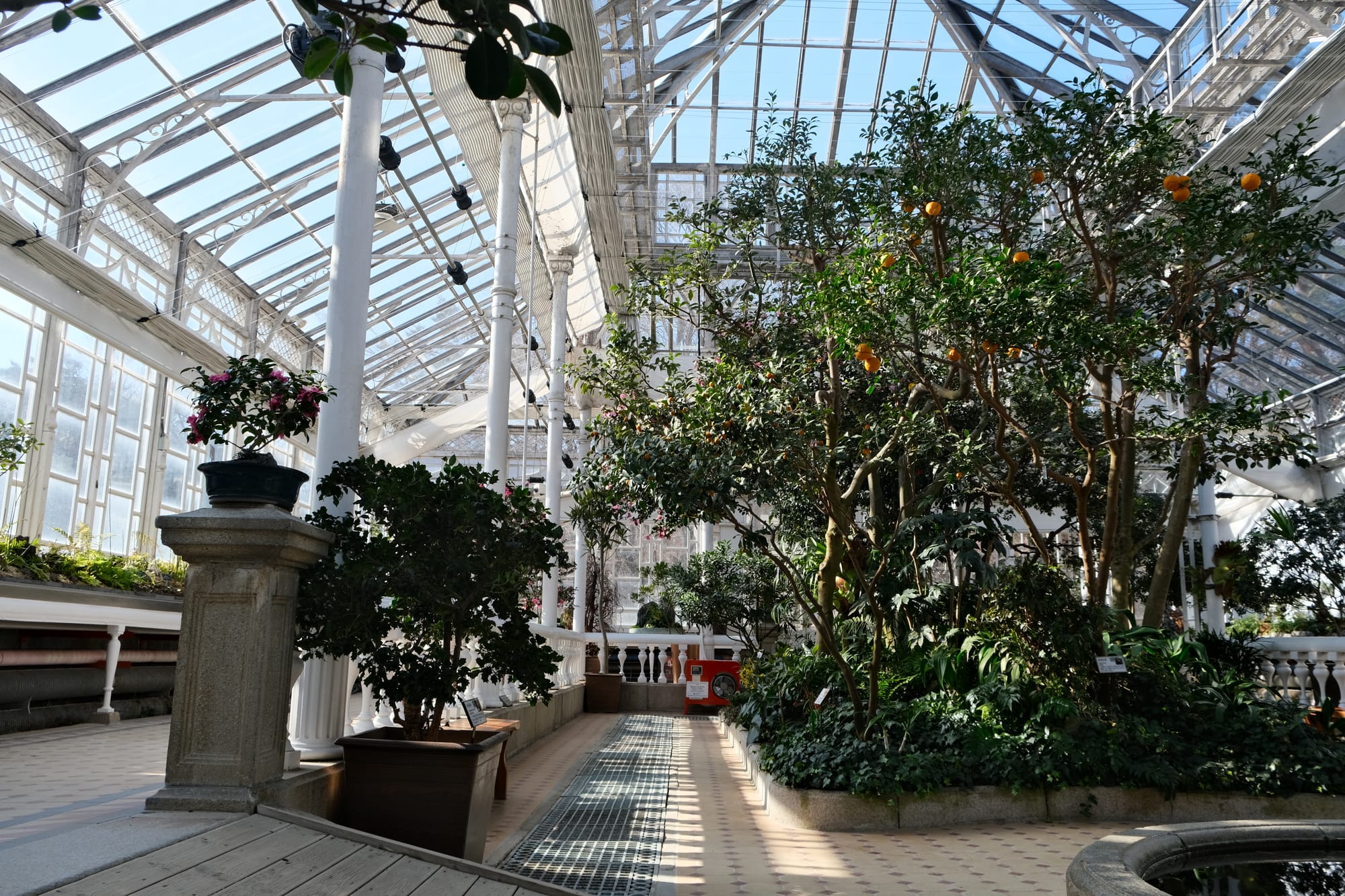
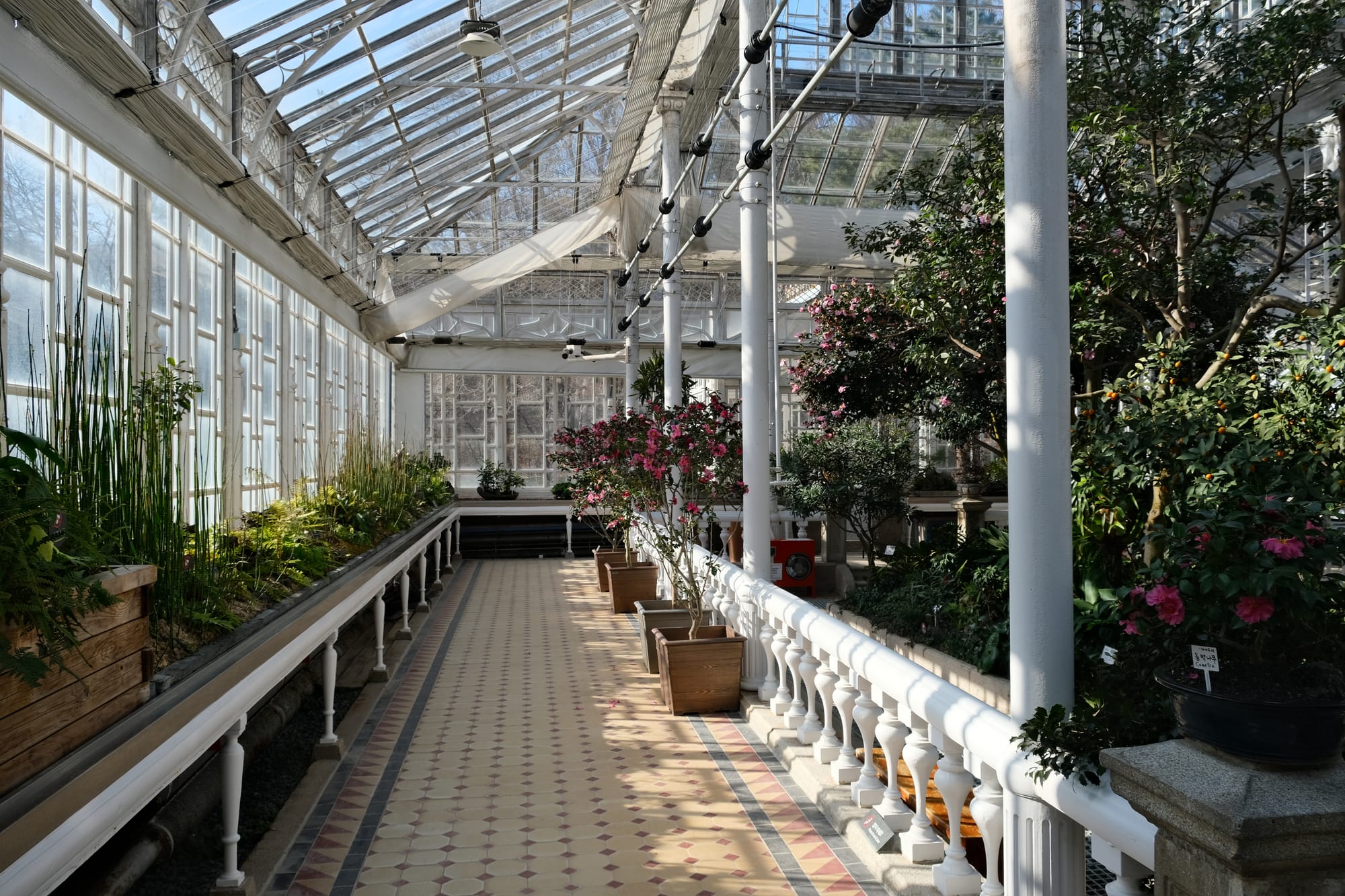
On the other side of the lake I found a greenhouse full of fascinating plants, including some bonsai trees.
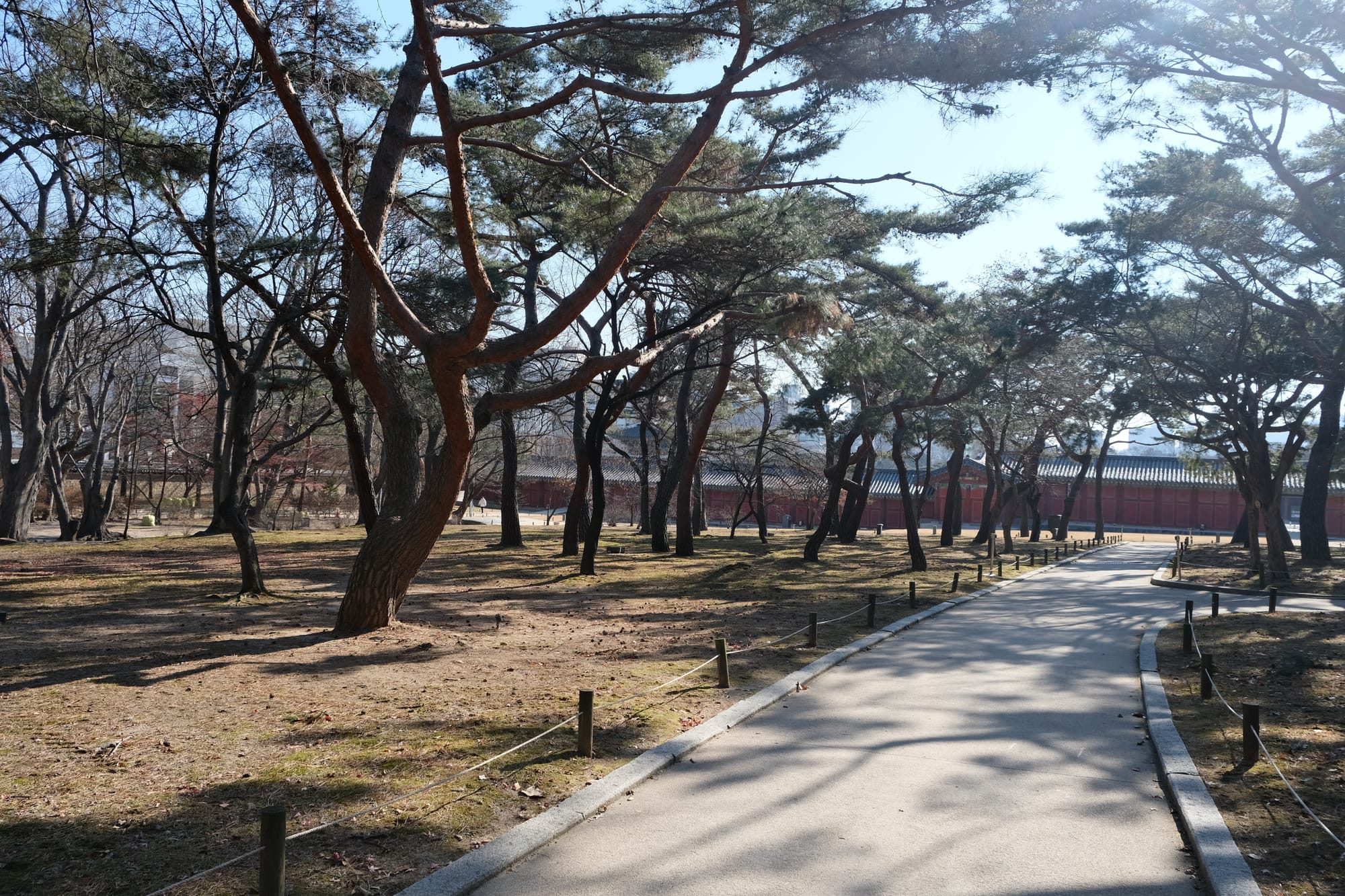
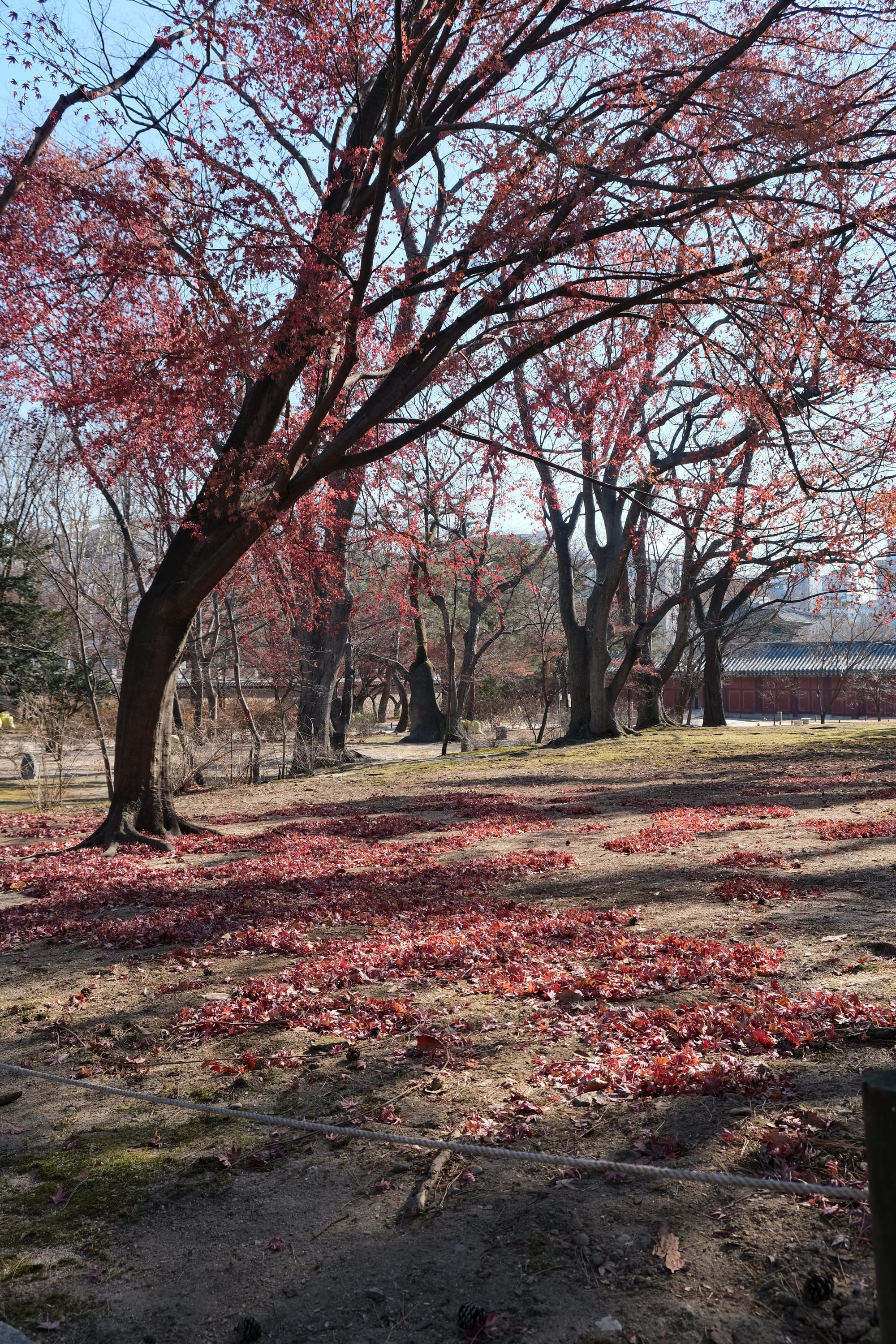
I returned to the main palace gate by way of a forest. One of the trees was still shedding its leaves that were a brilliant red.
I enjoyed visiting each of these palaces and I feel that through these I had a good experience of the ancient Korean culture. Each palace had its unique elements, but there were more common themes between them, that united the palaces, than there were elements that separated them. The throne rooms and the gates were always of a similar style, and many of the buildings had similar layouts and similar decorations. Things such as the decorative figures, the shape of the roofs, the posts on the ground, the doors into buildings, and the overall layout of courtyards, with gates and walls, among other things, were all of this same uniting design. I found it interesting to observe these things that are similar and I would have to conclude that these elements are some of the strong motifs that define the Korean culture.
Thanks for reading – Edward
Written 12th of March 2025
P.S. Yes, the names of the palaces are very similar and I was often confused. I tried to be as accurate as possible in writing this post and tried my best to get the spelling of each palace name correct.